Search Results

Search results for

0 result(s) found

Imagine a typical school day as a girl: note-taking during lessons, joining in on class discussions, taking tests and studying at home before bed.

Now, imagine doing all of that on an empty stomach.

Going without food makes it extremely difficult to focus in class. Yet millions of girls are trying to get their education on one small, low-nutrient meal a day — or no food at all.

The hunger crisis is pushing more than 820 million people into life-threatening circumstances. And when decisions need to be made about who can be fed, girls are too often left last in line. With nothing to eat, another layer has been added to the surplus of challenges girls face in making it to graduation.


In this story, we visit a school in South Sudan and give you a window into what it looks like to try and get an education as a girl during this emergency.Ā 

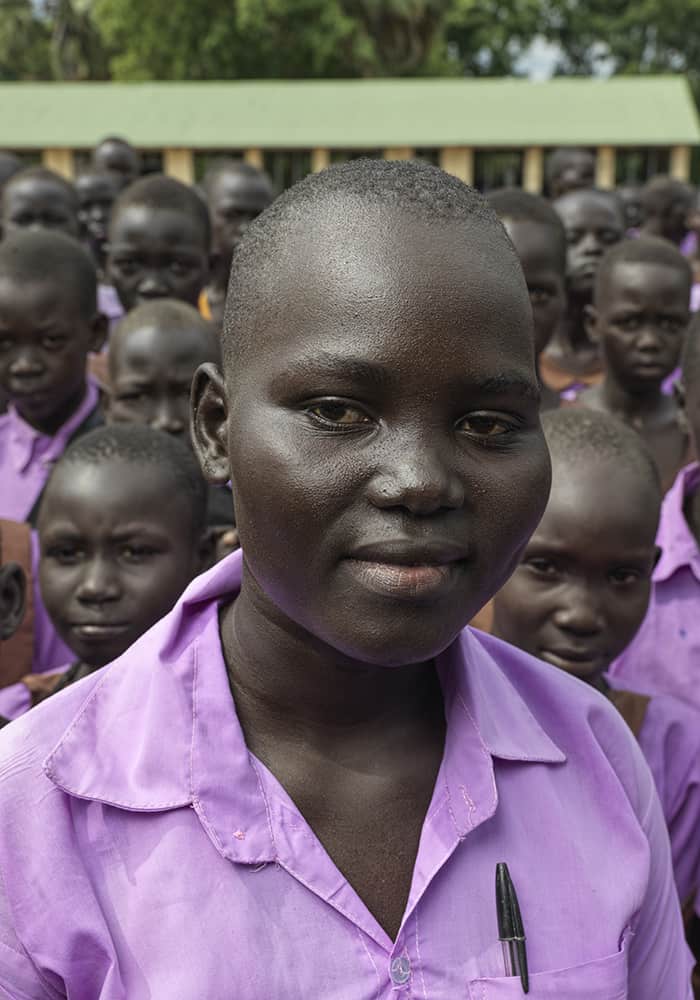
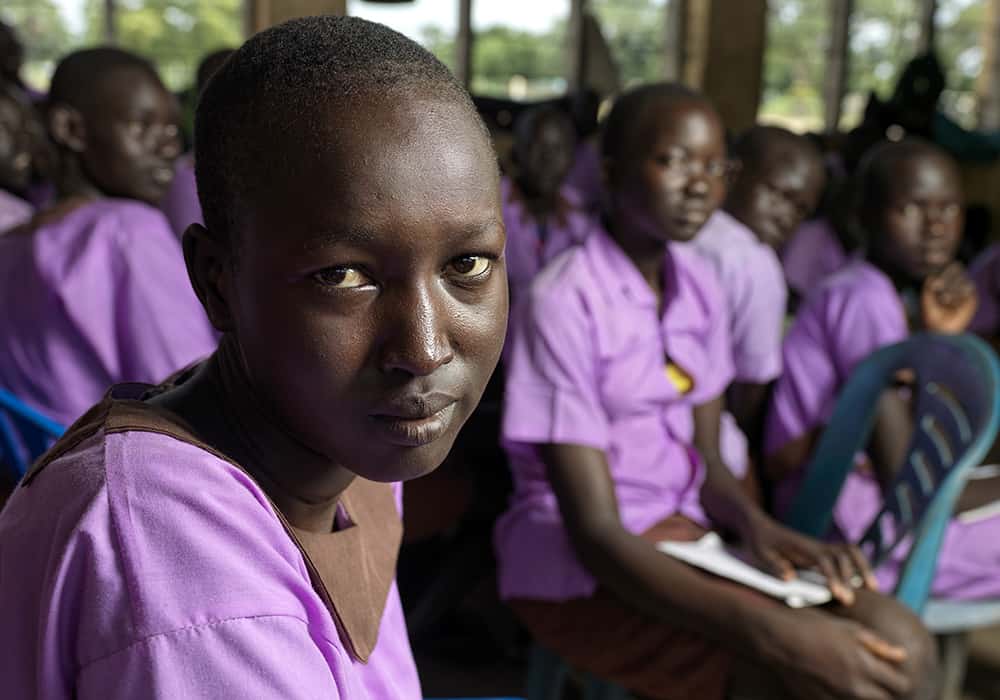
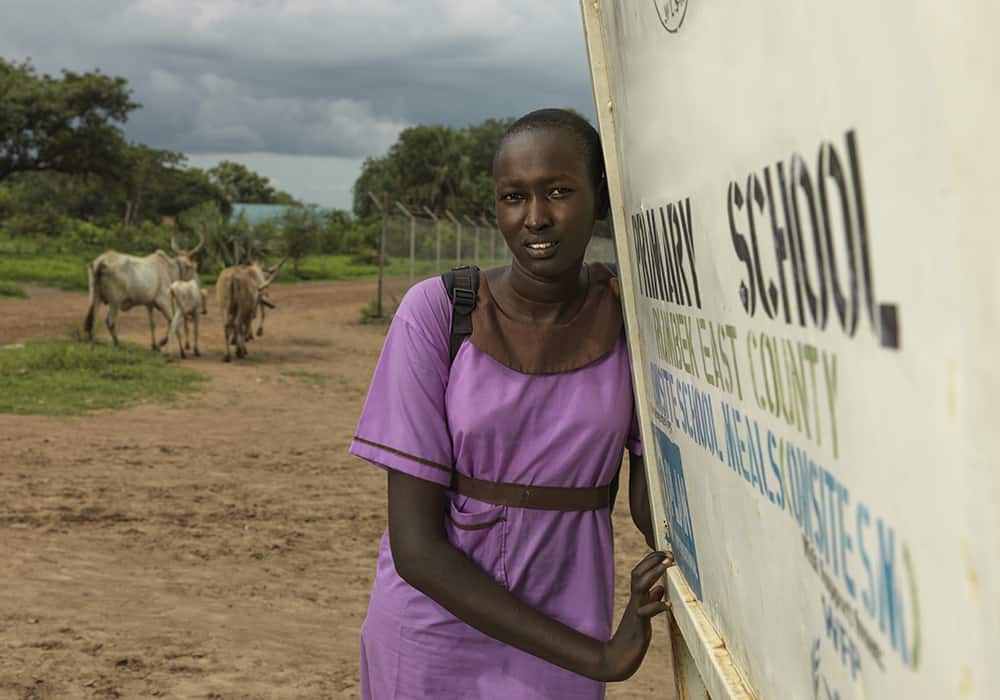
Hellena, a 17-year-old girl, lives in South Sudan’s Lakes State — where it hasn’t rained in almost two months. Her family depends on their farm for food as a source of income. But she tells us that the drought in South Sudan has left her family with little money to pay for tuition.


Hellena lives in South Sudan, where at least 7.2 million people — about 60% of the population — are in need of food assistance. Without immediate support, more than 2 million people are at risk of dying of starvation. Already, 1.4 million children are suffering from malnutrition.

Hellena lives in South Sudan, where at least 7.2 million people — about 60% of the population — are in need of food assistance. Without immediate support, more than 2 million people are at risk of dying of starvation. Already, 1.4 million children are suffering from malnutrition.

ā€œMy mother sells peanut paste and my father sells sugar,ā€ Hellena says. ā€œSometimes the money they earn isn’t enough to buy food. We can spend a whole day without eating. Sometimes it also takes a long time to pay the school fees and we struggle to pay them.ā€


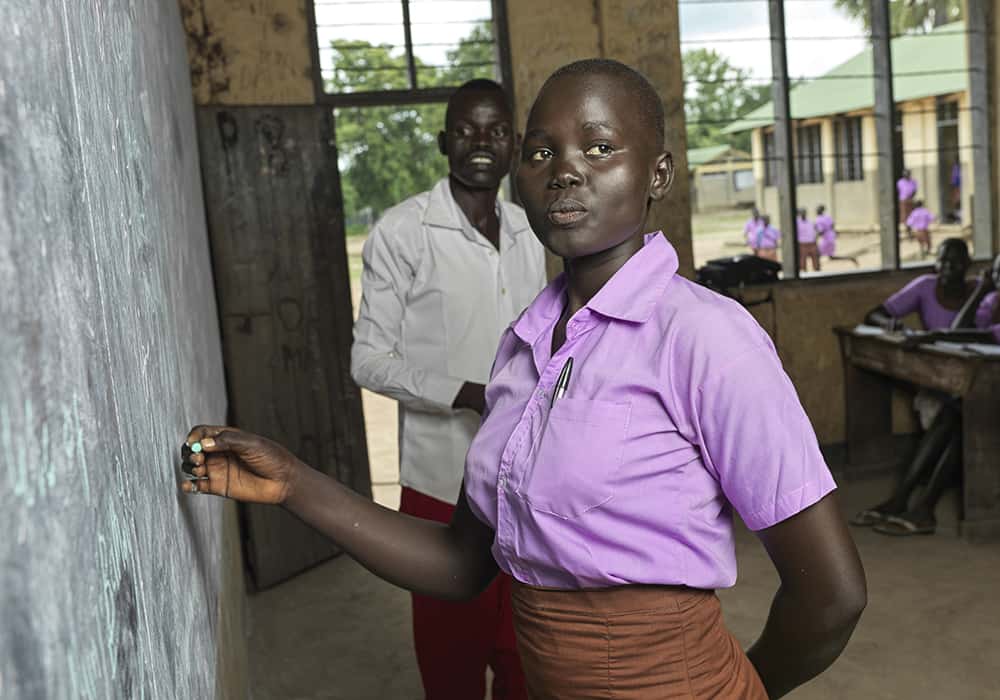
Hellena stands in her classroom in South Sudan. ā€œ[When my family and I] eat only once a day, in the evening,ā€ she says. ā€œBut in the morning and lunch time, we don’t eat. … we eat pumpkin leaves, it’s the only plant that survived the drought, but it doesn’t bear any fruit.ā€

Hellena stands in her classroom in South Sudan. ā€œ[When my family and I] eat only once a day, in the evening,ā€ she says. ā€œBut in the morning and lunch time, we don’t eat. … we eat pumpkin leaves, it’s the only plant that survived the drought, but it doesn’t bear any fruit.ā€

The school meal program at Hellena’s school has been put on pause since April due to the severity of food shortages. Many students like her rely on the school lunches when their families can’t provide anything to eat at home.

ā€œLife has become very difficult for me and my classmates,ā€ Hellena says. ā€œWe don’t understand afternoon classes anymore. The teacher is giving the lessons, but we can’t understand what the teacher says. I feel that I can only be very active and pay attention in the morning up to 11 a.m., but from then on I can no longer pay attention.ā€


School lunches provide girls like Hellena with sustenance, and also fuels their passion for learning and staying in school. For many students in South Sudan, the meals they get at home simply aren’t enough.

School lunches provide girls like Hellena with sustenance, and also fuels their passion for learning and staying in school. For many students in South Sudan, the meals they get at home simply aren’t enough.

And it’s not just the students who rely on the school meal programs — the teachers do, too.

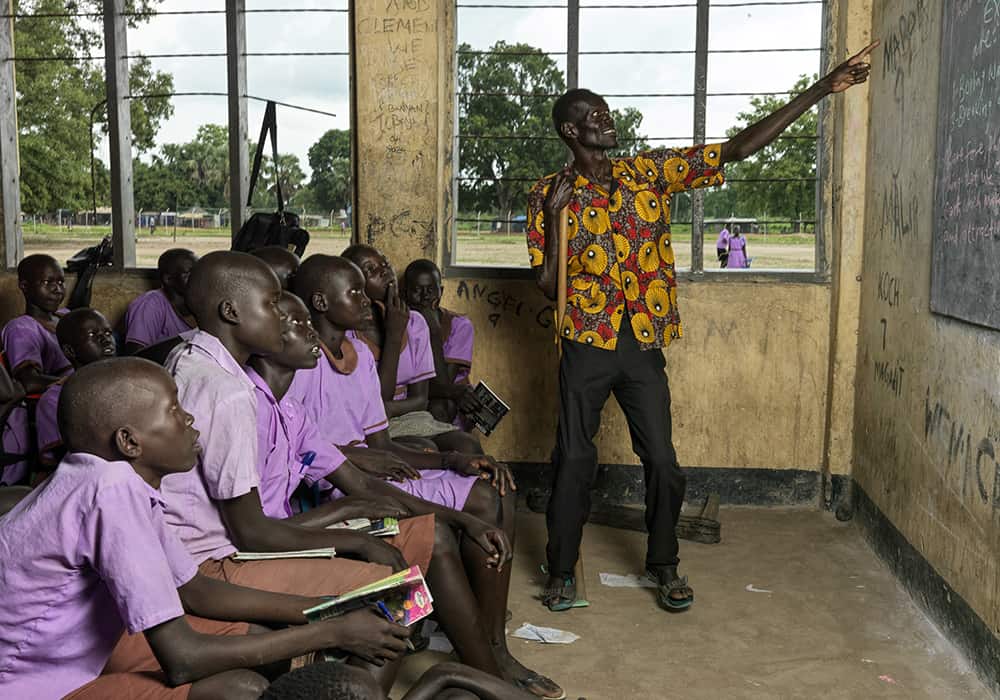
Clement, a teacher at Hellena and Grace’s school, says, ā€œEverybody’s nutrition, the children and even the teachers, is weaker. … In the mind of a child is that they know they’ll be in school and they’ll have something to eat. And in the mind of the parents is that their children will have their lunch at school. … The thing that we feared most has happened. There is no lunch at home and no lunch at school.ā€


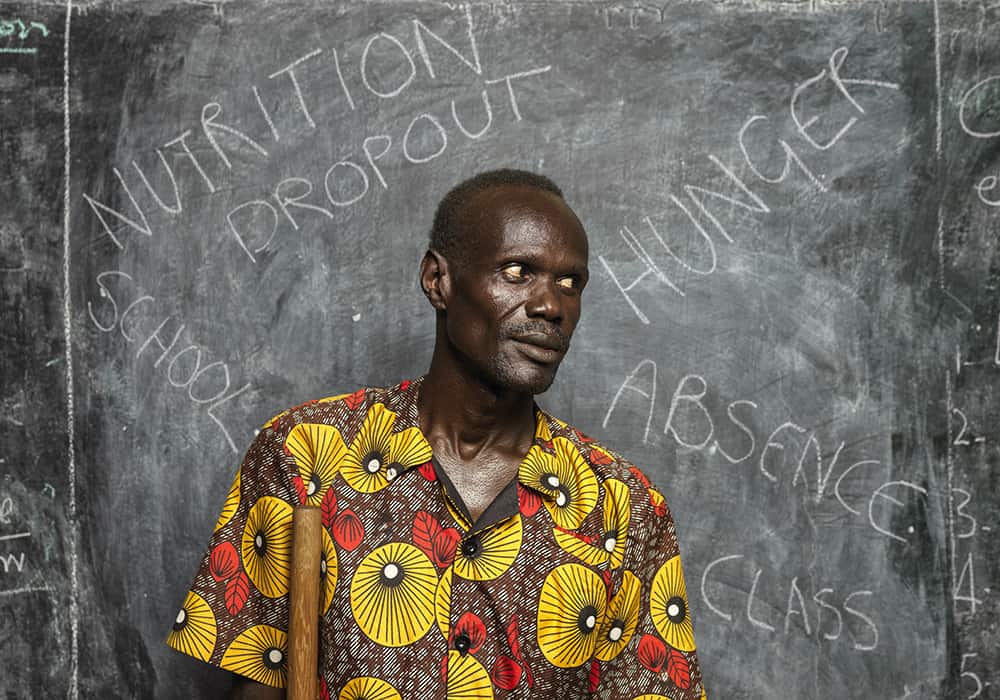
Clement has a mobility issue, but he doesn’t let his disability hold him back, and he advocates for the inclusion of all children with disabilities in the classroom. ā€œI am disabled, not unable,ā€ he says. ā€œI always tell myself, ā€˜Clement, there is nothing you can’t do.’ That is what I teach to the children, although lately my aim is to keep the children in school during the food crisis.ā€

Clement has a mobility issue, but he doesn’t let his disability hold him back, and he advocates for the inclusion of all children with disabilities in the classroom. ā€œI am disabled, not unable,ā€ he says. ā€œI always tell myself, ā€˜Clement, there is nothing you can’t do.’ That is what I teach to the children, although lately my aim is to keep the children in school during the food crisis.ā€

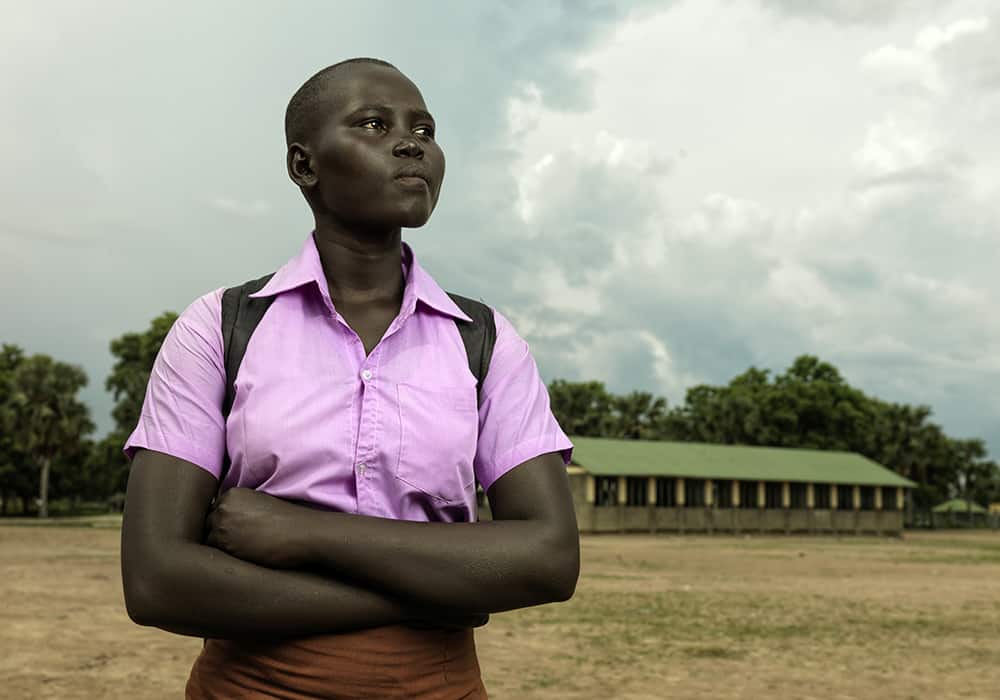
Another 15-year-old student named Martha tells us that she’s been living on one meal a day, and is also the one who’s responsible for serving the food to her family at home. She’s forced to give the biggest portions to her brothers.

ā€œJanuary was the last month that I ate two meals,ā€ Martha says. ā€œWhen I’m doing something, I can’t manage it like before. I also get stomach aches and headaches.ā€

While some girls struggle to stay focused on their lessons while hungry, other girls have decided to leave school altogether. Often, it’s the girls’ parents who pressure them to drop out — many families prefer to send their sons to school and keep their daughters at home to help with housework and finding food.

Hellena says she’s skipped school many times this year since there is no one else to look after her siblings while her mother looks for food.

ā€œSometimes you’ll see a friend at school, then the next day she is missing,ā€ Hellena says. ā€œTheir attendance can be on and off. … They used to come in the morning hoping that later they’d have lunch in school. Now, some of them don’t come at all.ā€

Clement adds, ā€œWhen I come to school and [call] the attendance in class, I’ve found some gaps. Girls especially are not turning up in school. I call out their names, asking, ā€˜Where is this or that girl?’ But they’re not in the classroom.ā€


The loss of the school feeding program weighs heavily on Clement’s mind. He knows how much the children used to look forward to their lunch — which for some is the only meal they receive that day. ā€œAlthough it is clear that both boys and girls are affected by this situation, girls will be more at risk,ā€ he says. ā€œI call the parents and tell them about the importance of a girl’s education.ā€

The loss of the school feeding program weighs heavily on Clement’s mind. He knows how much the children used to look forward to their lunch — which for some is the only meal they receive that day. ā€œAlthough it is clear that both boys and girls are affected by this situation, girls will be more at risk,ā€ he says. ā€œI call the parents and tell them about the importance of a girl’s education.ā€

When Martha’s name is called, Clement is often met with silence. If there’s a better chance of finding food outside of school than in the classroom, Martha can’t waste a missed meal.


On the days that Martha can attend school, she says she’s too far behind to understand what’s being taught. ā€œThere was a topic that was taught when I wasn’t at school, so I tried to catch up, but it’s difficult because the explanation my friends gave me was different from the way the teacher taught it,ā€ she says.

On the days that Martha can attend school, she says she’s too far behind to understand what’s being taught. ā€œThere was a topic that was taught when I wasn’t at school, so I tried to catch up, but it’s difficult because the explanation my friends gave me was different from the way the teacher taught it,ā€ she says.

ā€œThere are times when I feel so hungry that I think going to school would be a waste,ā€ Martha says. ā€œMy father sometimes asks me to stay at home and help him look for food.ā€


Martha says she would like to become a doctor one day, but worries that she has missed too much school due to hunger that she won’t be able to pass her secondary school exams. ā€œIf there is food, students will come in every day,ā€ she says.

Martha says she would like to become a doctor one day, but worries that she has missed too much school due to hunger that she won’t be able to pass her secondary school exams. ā€œIf there is food, students will come in every day,ā€ she says.

And for Hellena, it’s taking everything she has to keep from dropping out. But she has hope that she can keep holding on.

ā€œI keep coming to school because I want to learn,ā€ Hellena says. ā€œWhen there is no lunch at school, I can spend the entire day without food. Maybe I only ate the evening of the previous day. These are the challenges. Although there are difficulties, I still want to learn,ā€ she concludes to Plan staff, before rushing back to class as the bell rings.

Learning while hungry is incredibly challenging, but Hellena is doing everything she can to stay in school and get her education.

Learning while hungry is incredibly challenging, but Hellena is doing everything she can to stay in school and get her education.

Plan International is responding to this crisis in countries where hunger is most severe, including Burkina Faso, Ethiopia, Haiti, Kenya, Mali, Niger, Somalia and South Sudan. With your help, we’re providing lifesaving relief to girls and their families, including food and water kits, school meals and treatment for malnutrition. Your gift of just $33 can feed four children like Hellena or Martha with a month’s worth of school meals.

Featured Image This is what hunger does to girls’ education

By Nicole Rodger, Early Childhood Development Policy and Advocacy Lead, and Yona Nestel, Inclusive Quality Education Policy and Advocacy Lead

Young people around the world are calling on governments to include them in education decision making.

Education systems are not delivering the kind of education that children and young people want and need to be successful, engaged and empowered citizens and agents of change. In the face of a global climate catastrophe, COVID-19, exacerbating humanitarian crises and a rollback of rights, their rallying cry is that education must be accessible for all and provide the knowledge, skills and competencies for advancing social, gender and climate justice.

On September 17-19, governments, U.N. agencies, civil society, donors, philanthropists and young people will gather in New York City for the Transforming Education Summit. This summit, championed by the U.N. Secretary General, Antonio Guterres, aims to mobilize action, ambition, solidarity and solutions to transform education as part of the 2030 Agenda and beyond.

At TES, young people will share their vision and solutions for transforming education. Plan International will stand in solidarity with them and ensure that their perspectives and priorities are central to the Summit’s outcome.

Young people have a vision for education

When it comes to transforming education, young people have a clear agenda. Youth and feminist leadership is critical. The voices of those who are most affected must be heard. The potential of education to advance gender equality and dismantle systems of oppression and discrimination must be realized.

In practice, this means more support for holistic learning that goes beyond literacy and numeracy to include socio-emotional learning, climate change education, comprehensive sexuality education, civic education and peace building.

It also means investing in gender transformative education that goes beyond acknowledging and responding to gender disparities within the education system and the learning experience of the student. Gender transformative education must harness the full potential of education to transform attitudes and practices within and beyond the education system to contribute to a broader environment of gender justice for young people, in all their diversity.

Engaging young people in the development of inclusive education systems in a rapidly changing world fosters vital intergenerational partnerships that create opportunities for more responsive and transformational investments. When young people, particularly girls and young women, are empowered to actively participate, they will become critical actors in shaping a gender transformative education system.

Some progress is already being made. In Sierra Leone, in collaboration with the Ministry of Basic and Senior Secondary Education, Plan International Sierra Leone is supporting young people on a Youth Advisory Group. The YAG helps to ensure that children and youth are involved in decision-making about all aspects of the education system as key stakeholders.

The world is facing a global education crisis

The COVID-19 pandemic resulted in widespread school closures. The World Bank estimated that at the height of COVID-19, education for 1.6 billion students was disrupted.

Even before the shock of COVID-19, the world was far off track in achieving international commitments to education. For example, in 2019, UNICEF reported that more than 175 million children — around half of pre-primary children globally — were not enrolled in pre-primary education. In terms of access to primary and secondary education, UNESCO said that no progress had been made for several years.

Fewer than one in two children reach a minimum level of proficiency in reading and mathematics by the end of primary school. Access to, and quality of, education remains a challenge globally. Additionally, our recent research in the Middle East, East and Southern Africa region has shown that investments in education have stagnated or declined at a time where critical investments are needed. This trend is exacerbated with Overseas Development Aid to education stagnating in 2020, with significant cuts to ODA being made by several major donors to education.

The crisis in education is also an equity crisis, and children from marginalized groups are most at risk.

Lockdowns and school closures have hit girls’ education particularly hard and threaten to roll back years of progress. Being out of school doesn’t just have devastating consequences for girls’ life opportunities, it places them at risk of early and unintended pregnancy, child marriage, female genital mutilation and other forms of gender-based violence.

For adolescent girls in particular, the impacts of conflict and crisis are also devastating and compound the barriers they already face in accessing education, exacerbating pre-existing gender discrimination and harmful practices. The current hunger crisis also has severe education impacts, recognizing that hungry children cannot learn, and girls are even more likely to drop out of school.

Young people are clear that transforming education requires a power shift and investments in their meaningful and inclusive participation in decision-making and accountability processes. Education must be radically inclusive and prioritize the knowledge, skills and competencies that matter the most to young people as they fight for a more sustainable, equal and just world.

Girls gathered around a book

Powered by supporters, we partner with adolescent girls, children and young women to overcome oppression and gender inequality. We provide the resources that are unique to their needs and the needs of their communities, ensuring they achieve their full potential with dignity, opportunity and safety.

In fewer than 50 words, we’ve provided a summary of who Plan International USA is and what we do. You’ll notice the word ā€œsafetyā€ is included. Safeguarding of children, young people and program participants is at the heart of what we do, and Plan takes this work extremely seriously.

What is safeguarding? At Plan, we refer to safeguarding as the responsibilities and preventative, responsive and referral measures that we undertake to protect children and program participants, ensuring that no child or program participant is subject to any form of harm as a result of their association with Plan.

As we work with more than 50 million children around the world each year, we face many safeguarding risks. Thus, every Plan employee and associate completes safeguarding training, and all are taught that they must speak up if they have any concerns. We participate in an annual self-assessment exercise where each office reviews our adherence to Plan’s safeguarding requirements. At Plan USA, we remove any donors from our rolls who show up on public sex offender registries. We work hard to ensure that communications between sponsors and children is appropriate. New employees are carefully vetted before joining the organization. And so much more.

Another component of our commitment to safeguarding is being transparent about reports we’ve received. In FY21, we reported the following three incidents at Plan USA. Thankfully, none of these led to any harm.

  • A donor wondered if there were any ā€œyoung womenā€ available for marriage.
  • A sponsor wrote inappropriate things to their female sponsored child.
  • A sponsored child contacted their sponsor on Facebook.

In the first two instances above, the donors are no longer with Plan. In the third instance, we informed the sponsor that they should not engage with the child over Facebook, and in-country colleagues followed up with the child. To protect the child, and the sponsor, it is important that all communications flow through the Plan offices.

Plan worldwide collects each safeguarding incident on an annual basis and compiles a report which is shared publicly. We do this for the benefit of Plan, our donors, our employees and, most importantly, for the children and program participants with whom we work. You will notice that this report includes every safeguarding incident reported around the world, no matter how small or how serious.

As safeguarding becomes more and more ingrained in our work, we expect the number of incidents to increase, as people realize they can — and must — speak up when they have an inkling that something is wrong. But we also expect that the severity of the incidents will decrease, leading us back to our vision of partnering with adolescent girls and their communities to ensure they achieve their full potential with dignity, opportunity and safety.

Young girls walking hand in hand

In a study of more than 14,000 girls in 31 countries, Plan International found that 58% of surveyed girls have experienced harassment online. Even further, it found that girl activists face increased online harassment, particularly when speaking about feminism or gender equality, with 47% of respondents reporting being harassed for their opinions.

As a young queer woman, I’m no stranger to receiving hateful comments, unwanted lewd photos and cyberstalking. Domestic and foreign political actors are beginning to take note of this rapidly growing online violence and creating laws and programs to combat it. So, what is the U.S. Congress waiting for?

Given that internet access exists in most places around the world, violence can originate globally and cross borders at an unprecedented rate. With many major digital services companies based in the U.S., addressing online harassment is even more urgent. We have a responsibility to ensure these providers improve their safety measures; otherwise we model that it’s acceptable for other countries to ignore technology-facilitated gender-based violence, too.

With young people becoming increasingly active online and technology becoming ever prevalent in daily life, the U.S. should pass a federal law that makes violence online illegal, too. The growing laws and programming by domestic and foreign political actors to protect girls online demonstrate that this is an increasingly important frontier in politics, international development and grassroots activism alike. And it’s here to stay.

What is TFGBV?

The International Center for Research on Women defines technology-facilitated gender-based violence — TFGBV — as ā€œviolence that is motivated by the sexual or gender identity of the target or by underlying gender normsā€ carried out through a form of technology. This can include stalking, bullying, sexual harassment, defamation, hate speech, exploitation and gender trolling, among other forms of violence. Girls who identify as an ethnic minority, LGBTQIA+ or having a disability may also face increased online harassment because of these intersecting identities.

Who is doing it right?

Thankfully, various political actors are starting to act to protect girls online, and their efforts shouldn’t go unnoticed. For example, the U.S. Department of State recently launched the Global Partnership for Action on Gender-Based Online Harassment and Abuse, which will bring together countries, international organizations, civil society and the private sector to better prioritize, understand, prevent and address TFGBV. The coalition recognizes that online violence transcends borders and screen time. To truly make online spaces safer, we all need to act.

Similarly, President Biden signed a Presidential Memorandum just weeks ago to create the White House Task Force to Address Online Harassment and Abuse. With a focus on women, girls and LGBTQ+ individuals, the task force will ā€œproduce recommendations for the Federal government, state governments, technology platforms, schools and other public and private entities to prevent and address technology-facilitated gender-based violence, including a focus on the nexus between online misogyny and radicalization to violence.ā€

It is also anticipated that there will be a heightened focused on TFGBV and its impacts on girls’ political participation in the updated U.S. Interagency Global Strategy on Gender-Based Violence, which is expected to be release within the next two months. This inclusion would increase U.S. diplomatic efforts around this topic and would also signal future funding and programming on TFGBV in agencies like USAID.

U.S. state governments and select members of Congress also are taking action to curb illegal activity online. For example, Virginia and Texas recently adopted a law which permits individuals to sue someone who sent them lewd content without their consent up to $500 per instance. Senator Michael F. Bennet also introduced a federal bill proposing to create a five-person expert commission responsible for protecting digital consumers, particularly around foreign disinformation, child safety and antitrust laws.

With such focus on TFGBV around the U.S., why hasn’t the U.S. Congress brought this issue to the floor? The U.S. government wouldn’t even need to reinvent the wheel … it can look to the European Commission’s Digital Services Act.

What will the DSA do?

At its core, the DSA will transform how digital service providers, like Meta, Google, Amazon and Microsoft, function throughout the European Union. And, with proper enforcement, the DSA would also improve girls’ physical and mental safety, civic and political participation, and privacy of personal information online. Above all, it’s expected to set the global standard for the future of digital services, impacting each of us.

It moves us away from the idea that online violence exists separate from the ā€œreal world.ā€ It will take measures to counter the spread of disinformation, reduce surveillance and ads targeting minors, and eliminate illegal goods, services and content. In the case of serious repeated breaches, the European Commission can fine companies up to 6% of their total global revenue.

European Commission President Ursula von der Leyen explains that the DSA ā€œwill ensure that the online environment remains a safe space, safeguarding freedom of expression and opportunities for digital businesses. It gives practical effect to the principle that what is illegal offline, should be illegal online.ā€

At an INGO level, Claudia Prettner, legal and policy advisor at Amnesty International Tech, describes that ā€œthe DSA moves us towards an online world that better respects our human rights by effectively putting the brakes on Big Tech’s unchecked power.ā€

For one, the DSA works to make girls safer from harassment and hate speech by increasing content moderation, requiring disclosure of algorithms to auditors and cracking down on the sale of illegal goods, services and content. This includes criminalizing the sale of child sexual abuse images that may be used as harassment or blackmail. These provisions will not only keep girls physically and mentally safer but will also enable their continued social and political participation in online spaces that can often be hindered by harassment.

In addition, the DSA will limit surveillance and ban ads targeted toward minors. This change is crucial because Plan International’s study found that 41% of interviewed girls and young women believe that the unauthorized sharing of content and/or demonstrating knowledge of girls’ personal information is an issue.

What should the U.S. government learn from the DSA?

The DSA challenges exploitative aspects of big tech’s business model to ensure that technology remains human-centered. It shows the world that users can have control over their online experiences when governments choose to empower them. If the U.S. cares about protecting girls and young women like me online, creating a federal law that provides continuity of protections is key.

Overall, the DSA is doing it right. Violence online won’t stop unless we choose to combat it. For young people, receiving an unsolicited lewd image carries the same trauma as being illegally flashed on the street, and it’s far more likely. When we speak about gender-based violence, whether in politics, international development or activism, it must include TFGBV.

Technology develops rapidly and touches each of our lives in many ways. The U.S. Congress must develop federal policies just as quickly to keep the internet and girls, in all their diversity, safe.

PRESS RELEASES

Together, UNIQLO and Plan are highlighting why gender equality is essential to achieving Peace for All

WASHINGTON, DC, December 13, 2022 — Plan International USA, a global nonprofit organization partnering with adolescent girls, young women and children around the world to overcome oppression and gender inequality, is partnering with UNIQLO this holiday season. Plan has been selected as a nonprofit partner for UNIQLO’s Peace for All initiative during the holiday season, which includes matching customer donations up to $25,000 from Dec. 13 through Dec. 27, 2022.

ā€œBy partnering with UNIQLO, Plan is able to work toward a more peaceful world where everyone is able to choose the life they want to live,ā€ said Jen Trainor, chief marketing officer at Plan International USA. ā€œWhen girls are free of discrimination and gender norms, they can change the world.ā€

From now until Dec. 26, customers at UNIQLO will be able to donate to Plan at checkout in all of their U.S. stores. This comes on the heels of online customers being given the opportunity to donate at checkout in honor of Giving Tuesday, where donations were matched dollar-for-dollar, up to $15,000. UNIQLO, a Japanese casual fashion clothing manufacturer and retailer, supports organizations who work with those affected by violence, discrimination, armed conflict and poverty through its Peace for All project.

ā€œWe are very pleased to be partnering with Plan International USA in our combined goals of working toward a more peaceful and equal world,ā€ said Jean Shein, UNIQLO global director of sustainability. ā€œAt UNIQLO, our purpose is to make everyday life better, not only through clothes, but through our contributions to society. We are proud to support Plan and have enjoyed sharing its work with our customers, who have been able to play a part in positively impacting the lives of girls around the world.ā€

The partnership supports Plan’s We Are the Girls campaign, which focuses on fighting gender inequality with girls in more than 75 countries around the world. Launched on International Day of the Girl 2022, We Are the Girls is an innovative, world-changing initiative that will raise $200 million by 2024 to amplify the voices of girls in the U.S. and around the world and fight the root causes of gender inequality. To promote the effort, Plan will be taking over UNIQLO’s social media accounts on Dec. 13 to spread the word on how UNIQLO’s followers can join Plan and help support girls.

This holiday season, shoppers can make their dollars go further with this matching opportunity. You can learn more about Plan at a pop-up installation at UNIQLO’s New York City Fifth Avenue store on Dec. 17-18 or by visiting www.planusa.org/we-are-the-girls/.

Ā 

For more information or interviews, please contact:

Maria Holsopple

Director, Corporate Communications

Email: [email protected]

Mobile: 401.829.2796

About Plan International USA

Powered by supporters, Plan International USA partners with adolescent girls, young women and children around the world to overcome oppression and gender inequality. We provide the support and resources that are unique to their needs and the needs of their communities, ensuring they achieve their full potential with dignity, opportunity and safety. Founded in 1937, Plan is an independent development and humanitarian organization that is active in more than 80 countries.

For more information, and to learn about our commitment to safeguarding, please visit www.planusa.org.

Uniqlo logo

There are two mechanics regarded by their customers as some of the best car technicians in Guinea. The pair are N’Mahawa, age 25, and TeninkĆ©, age 28. Both are women.


Female mechanics at work


Being a girl in a lower-income country like Guinea can mean a lesser chance of completing your education, and a higher chance of becoming a child bride. For girls who are able to finish school, the opportunities in the job market are slim. And for those young women who do land a job, they end up getting paid less than their male counterparts. None of that has stopped TeninkĆ© and N’Mahawa in pursuing their career goals. N’Mahawa’s choice to enter the male-dominated field of mechanics was made after her father tried to force her to become a bride. ā€œAfter taking my school exams twice without success, my father decided to give me in marriage,ā€ she says. ā€œI told him that marriage was not a solution to my problem. I decided to leave home and join my uncle in Conakry.ā€

N’Mahawa, female mechanic


While in Conakry, N’Mahawa saw a training center for mechanics, supported by Plan International, operating to help uplift young people economically — especially women. She approached the building, and that’s when she saw TeninkĆ©. N’Mahawa was taken with Teninké’s passion for both the study of mechanics, and her fervent belief in gender equality. Their friendship blossomed into a business partnership. ā€œTo say that it is impossible for a woman to compare herself to a man is a complete fallacy,ā€ TeninkĆ© says. ā€œMy dream is to surpass men and I think I am in this dynamic.ā€

TeninkƩ, female mechanic


TeninkĆ© and N’Mahawa’s skills learned at the vocational center have made them stand out from other male-run businesses. The two are not only showing young girls that they can follow their dreams, but also changing the minds of men in their community. ā€œThrough them, I have come to understand that women, if given the opportunity, can do better than men,ā€ says Mohamed, one of TeninkĆ© and N’Mahawa’s male customers. ā€œI am even convinced that giving women the right to choose their life in complete autonomy, everywhere in the world, is one of the keys to meeting the challenges of this century.ā€

TeninkĆ© and N’Mahawa


Plan continues to work in Guinea to reduce inequalities within workplaces, households and society. But this requires action on several fronts, including help from people like you. Many of Plan’s vocational training participants are sponsored children; you can help make it possible for a girl to access opportunities like TeninkĆ© and N’Mahawa’s by becoming a child sponsor today. ā€œI invite my female colleagues to have confidence in herself — to become autonomous — because a dependent woman is an enslaved woman subjected to the dictates of men,ā€ TeninkĆ© says. ā€œWe should not accept that. We should not have to wait another 10 years for gender equality. Let’s act now.ā€


Two female mechanics working on a car

Plan International USA’s 2021 Annual Review highlights how evidence, accountability and girls’ leadership shaped our work in a complex global landscape.

2021 Annual Report Cover

Please note this story contains references to sexual violence and abuse which some may find upsetting.


ā€œYou can only have this job if you sleep with me.ā€

That’s what many women in Uganda hear during interviews.

When Jazeo had to drop out of school because her mother couldn’t afford to keep her enrolled, she was desperate to find employment.

ā€œSomeone called my mother and said they had found a job for me,ā€ Jazeo explained. ā€œI was very happy because I had no source of income. I had no options. My sister needed tuition, so I decided to take it.ā€

The job was at a restaurant in Kampala, the capital. The owner knew all about the financial desperation of young women, especially those with relatives to support. And he used this to his advantage. He not only forced Jazeo to have sex with him in order to get the job, but told her, if she wanted to get a raise, she’d have to live with him.

ā€œIt was the only way for me to survive,ā€ she said.

ā€œIt was the only way for me to survive,ā€ Jazeo said.

In Uganda, sexual abuse and exploitation often happens in the workplace — especially in the restaurant industry, where many women work. There, sexual exploitation meets economic exploitation. The pay is low and unreliable, and employees are expected to work long days with no breaks or food.

Another woman, Namusanza, started working at a bar in Kampala after her mother died and her father refused to pay for school fees. She was just 17 years old, and cried when her new boss propositioned her in the interview. He told her, ā€œIt is the role of waitresses in the bar to entice and to please the customers.ā€ In order to keep her job, Namusanza had to have sex with customers.

Joy also faced sexual exploitation at work.

Joy was in a similar situation. ā€œThe owner wanted me to put on attractive clothing and short miniskirts,ā€ she said. ā€œHe wanted me to sit with the customers, to keep them company and allow them to touch my body and kiss me. The boss would beat me if I didn’t allow that.ā€

Uganda image 1

Many young women in Uganda are conditioned to keep quiet about abuse and accept it as just part of their role. If they are brave enough to speak up, they’re often not taken seriously or able to seek justice.

But Jazeo, Namusanza and Joy have had enough. They’re breaking barriers by speaking out against sexual exploitation.

ā€œGirls working at bars are suffering,ā€ Namusanza said. ā€œWe cannot be at the bars because we are treated as animals, as non-human beings. I want the future generation of girls to live a better life. Their rights should be respected.ā€

Joy and Jazeo are both pursuing different career paths — Joy is earning money as a hair stylist and Jazeo saved up to study fashion design.

But what they still have in common is the determination to use their stories to create change.

ā€œThere are many girls who have lost parents, who are orphans, who go to these places to work and are exploited,ā€ Joy said. ā€œIf people hear my voice, they will know that it really exists, and I think action will be done if people hear what I’m saying.ā€

Like anyone else, young women deserve to find fair and safe employment opportunities that are free from exploitation. In some places, that’s harder for women to fight for on their own — that’s when Plan International steps in. As part of our programming in Skills & Work, Plan works with employers and governments to promote gender-inclusive workplaces and make sure there are avenues for reporting rights violations.

Joy is right — raising awareness on this issue is the first big step toward addressing it. Thanks to her, Jazeo and Namusanza, that’s more likely to happen in Uganda. We’re listening. And we hope their bosses are, too — because equality is coming.


The names in this story have been changed to protect the speakers’ identities.

Uganda image 1