Search Results

Search results for

0 result(s) found

Social media can be a dark place for girls, as Plan International’s recent global survey on digital harassment revealed. But something many people don’t realize is that social media can also be a playground for traffickers to target girls. And to sell them.

Traffickers use social media to deceive victims and maintain control over them. These platforms have been a game-changer for traffickers — with this kind of technology at their fingertips, they can reach more people faster and often don’t even ever have to meet their victims in person.

With our lives moving even more online because of COVID-19, we have to be more vigilant than ever. We have to be on the lookout. Because traffickers already are.

Here are 3 facts you should know about how traffickers use social media so you can help protect yourself and others.

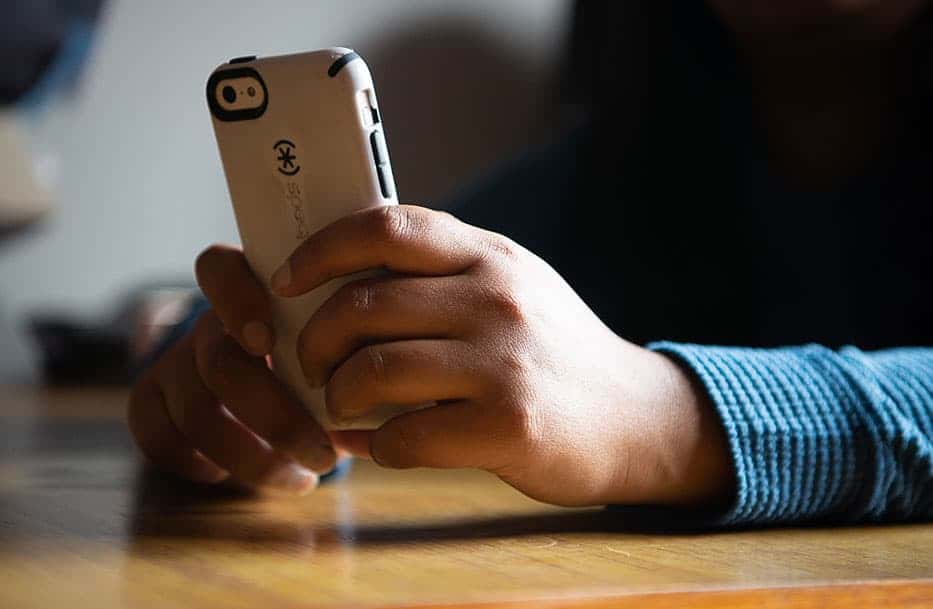
Zoom in on a child's hands holding a mobile phone

1. Traffickers don’t find their victims on social media by accident. They know what they’re doing. They target young people who they believe are vulnerable and could easily be groomed and victimized. How do they make that assessment? Traffickers look for posts that indicate low self-esteem, loneliness or unstable home situations. Then they make their move, empathizing and building trust. Look out for people on social media who seem to know a lot about you or know just the right things to say.

2. They’re professional frauds. These predators sometimes create fake social media accounts so they can portray themselves as friendly and trustworthy. Organized groups even set up fake accounts to pose as employment agencies so they can post bogus job opportunities. And traffickers are out there in the online dating world too — they pretend to be looking for a date in order to start a conversation with new potential victims. Be aware if someone’s profile looks suspicious or if what they’re offering seems too good to be true.

3. It’s all about control. Social media is a unique way that traffickers can control their victims. They might monitor or restrict their use of the platforms to disconnect them from their friends and family — anyone who they might ask for help — leaving them isolated. They sometimes impersonate their victims online, so they can start rumors or share intimate pictures to ruin their reputations. It’s all a means of control, because the more isolated someone is, the more vulnerable they are. Keep an eye out if someone seems to be behaving differently on social media.

When we know how traffickers tick, we’re better able to fight back. And there’s no time to waste — with the pandemic causing a global spike in trafficking and gender-based violence, we need to work together to protect girls now more than ever.

Zoom in on a child's hands holding a mobile phone

Do you want a gender just world? A world where girls and young women in all their diversity, are seen, heard and valued? A world where they can claim power over their bodies, lives and choices? A world where they are able be powerful leaders and shape the world around them?

If yes, this toolkit is for you — young activists, human rights defenders and change makers all over the world. Use this toolkit to design and implement your own campaigns for girls’ leadership and power in your own context.

Cover for Youth Toolkit for Girls Equality

Investing in teenage girls can strengthen the economy, according to a report from Plan International and Citi Global Insights. It causes a snowball effect — when adolescent girls have access to a quality education, the formal labor sector expands, and women’s participation in the market as consumers increases. The return on investment for creating interventions that target women’s education and economic empowerment are too large to ignore. Plan and Citi’s research reveals that if the completion rate for girls’ secondary education were to reach 100% by 2030, the GDP of countries with emerging economies would be lifted by an average of 10%.

Ā 

The economic return of a girl’s education

Graph visualizing the economic return of a girl’s education

What would it cost for low-income countries to reach a full completion rate of secondary education for girls? The answer is $1.53 per girl per day. The report’s analysis determines the low cost for the interventions needed to increase access to education, and address other barriers like child, early, and forced marriages and unions (CEFMU), as well as gender-based violence (GBV). The cost of these intervention scenarios differs by country — the report looks at beginning these investments in 2018, finding that El Salvador would only have needed to spend $1 billion to cover the expenses of girls’ high school education by 2030, while India would have spent nearly $270 billion by 2030 because of its much larger population. If all Indian girls were to finish their secondary education and begin participating in formal employment, though, the country would gain $800 billion annually by 2030 — far surpassing the investments India would need to eliminate barriers to girls’ education.

Barriers to unlocking girls’ potential

Education

The World Bank’s 2016 report found that, in low-income countries, only one in three girls completes their lower secondary education. The same report found that each additional year that a girl stays in secondary school ā€œreduces the likelihood of marrying as a child on average by 6.1 percentage points.ā€ When adolescent girls do not have access to a safe and quality education, they often have little economic agency and participate in precarious, informal work. Barriers to girls’ education leads to early marriages, increased births, a lack of financial literacy and little economic independence from their families.

CEFMU

CEFMU is a direct contributor to the low number of adolescent girls who complete their secondary education. The World Bank estimates that in some countries, CEFMU may account for anywhere from 10-20% of dropouts for girls at the secondary level. A study from UNESCO estimates that if 100% of girls completed their secondary education in low-income countries, CEFMU rates would drop 64%, and 59% fewer girls would become pregnant. The report found that the economic responses to these drops in CEFMU and early births are enormous.

  • In Niger, reducing early childbirth could produce an additional $1.7 billion annually by 2030.
  • In Nigeria, the gain from ending child marriage could reach $7.6 billion annually, while in Bangladesh it could produce up to $4.8 billion annually.
  • For every dollar spent on holistic interventions that protect adolescent girls and increase their access to secondary education in lower- to middle-income countries, a $2.80 return could be seen.

These numbers account for the money countries lose annually when women do not take an active role in the formal workforce and there is a correspondingly high population growth rate. When eliminating CEFMU and early childbirth, as well as ensuring adolescent girls are provided with a quality, secondary education, more women can enter the workforce and population growth can be reduced.

Violence and access to resources

Various forms of violence and abuse, such as intimate partner violence and trafficking, can also seriously harm adolescent girls’ likelihood of completing their secondary education and participating in the formal labor force. Plan International recently interviewed 7,000 adolescent girls and boys from 11 countries about issues they faced, and one-third of adolescent boys and girls said they agreed that girls never or seldom feel safe on their way to or from school. With other barriers to girls receiving education already deeply entrenched within societies globally, this particular effect of violence is detrimental.

Support for keeping girls in school

Low-income countries have much to gain from investing in girls, even if it takes more time to see greater returns. Uganda and Mali, which both have high rates of CEFMU driven by poverty and gender inequality, would need a decade’s worth of interventions before their GDPs finally saw resulting growth, but the projected increase could be 18-20%. When achieving high school education for girls by 2030 has the potential to lift national GDP levels by such large numbers, how can we not respond to the call to keep girls in school?

Along with many in the international development sector, Plan has been at the forefront of the fight to ensure adolescent girls complete their education by rallying behind important pieces of legislation like the Keeping Girls in School Act. Recently reintroduced in Congress with bipartisan support, the bill commits to ensuring girls’ education is a priority internationally, and that a U.S. strategy is in place to eliminate barriers that prevent girls from attending school. The bill requires the U.S. to join grant programs that address the barriers to girls’ education, listing 15 roadblocks that girls and women face throughout their lifetime. Among these roadblocks, the bill lists CEFMU, early pregnancy, cost of secondary school and lack of safety when going to and at school — all of which the Citi/Plan report included in its cost analysis.

Recommendations

  1. USAID must update its education and gender strategy to recognize the enormous economic benefits of girls finishing secondary school.
  2. Bills that protect adolescent girls, like the Keeping Girls in School Act, must gain enough momentum in Congress to become law.
  3. Girls’ education should be central to the U.S. government’s global COVID-19 strategy and to the work of the new White House Gender Policy Council.

Armed with the new analysis this report provides — when girls graduate from secondary school, GDP will rise by an average of 10% — global gender equality champions have new data to strengthen their advocacy with the most senior U.S. government decisionmakers.

For more articles of this nature, sign up for Insights, a quarterly newsletter that highlights the technical work of Plan International USA.

Group of girls holding a sign that reads "Break the barriers to girls' education"

SECAUCUS, N.J. / WARWICK, R.I., Aug. 25, 2021 — The Children’s Place, Inc. (Nasdaq: PLCE), the largest pure-play children’s specialty apparel retailer in North America, and Plan International USA, a children’s rights and girls’ equality organization, announce a new partnership to establish an early childhood development (ECD) center at the Hawassa Industrial Park in Ethiopia, the largest industrial park in Africa. The partnership is designed to advance gender equity in the apparel industry and to provide safe, dependable child care.

With women making up the vast majority of Hawassa Industrial Park’s workforce, there is a pressing need for quality child care services. Lack of child care options makes it difficult, sometimes impossible, for women to fully participate in the workforce. The Children’s Place and Plan International USA believe that in order to achieve gender diversity and equity in the workplace, improved access to child care is essential.

As a large importer of apparel from Ethiopia, The Children’s Place works with many suppliers and vendors based in Hawassa, and its funding of the Early Childhood Development Center is an investment in helping to promote worker well-being in the region. Plan International has operated in Ethiopia since 1995 and brings years of experience in education, having established 51 ECD centers in the country. This project builds on Plan’s strategic efforts around worker wellness and gender equity at the Hawassa Industrial Park since 2019. The funding provided by The Children’s Place will be used to provide the Hawassa Industrial Park workforce with much-needed child care services. The project will kick off in August 2021, with the goal of reaching over 1,000 children and adults when the center is operating at full capacity. At its core, the center is designed to provide a safe space for children, ages 0-6, of employees at the Hawassa Industrial Park to learn and grow in an inclusive and holistic way.

In addition to providing an essential service, the center will create job and skill development opportunities. The center will recruit staff from surrounding communities who will participate in a training program led by Plan International Ethiopia and receive certification in ECD. The center will also work to ensure workers’ needs are prioritized — for example, by offering staggered hours for early, midday or evening shifts. The center will not only work to provide a safe space for children to learn and grow, it will also help to remove barriers for the largely female workforce, increasing gender equality, improving access to higher paying jobs and enabling more women to achieve economic independence. The Children’s Place and Plan International USA are also excited about what this shared-value partnership can do to help prepare children for success later in life in a formal school setting.

ā€œThis early childhood development center initiative will help to improve the lives and well-being of apparel factory workers and their children,ā€ Jane Elfers, President and Chief Executive Officer of The Children’s Place, said. ā€œWe are honored to be part of something that can have such a profound impact on women and children. We know that access to safe, dependable child care and early education opportunities are critical to transforming the lives of children and contribute to gender equality and economic independence for women. We are proud to partner with Plan International in this first of its kind early childhood development center in the Hawassa Industrial Park.ā€

ā€œWe are thrilled to bring The Children’s Place on board as our latest partner in support of girls’ rights and gender equality,ā€ Shanna Marzilli, Chief Marketing Officer of Plan International USA, said. ā€œOur partnership holds great promise for breaking down barriers for women, who represent the majority of the global apparel industry workforce, and their children, to achieve their full potential. Through this investment in early childhood development and care, we hope to inspire other businesses to think strategically about how best to support worker well-being and gender equality around the world.ā€

About The Children’s Place

The Children’s Place is the largest pure-play children’s specialty apparel retailer in North America. The company designs, contracts to manufacture, sells at retail and wholesale, and licenses to sell fashionable, high-quality merchandise predominantly at value prices, primarily under the proprietary ā€œThe Children’s Place,ā€ ā€œPlace,ā€ ā€œBaby Placeā€ and ā€œGymboreeā€ brand names. As of July 31, 2021, the Company had 708 stores in the United States, Canada and Puerto Rico, online stores at www.childrensplace.com and www.gymboree.com, and the company’s eight international franchise partners had 208 international points of distribution in 17 countries.

Contact: Investor Relations at 201-558-2400 extension 14500

About Plan International USA

Powered by supporters, Plan International USA partners with adolescent girls, young women and children around the world to overcome oppression and gender inequality, providing the support and resources that are unique to their needs and the needs of their communities, ensuring they achieve their full potential with dignity, opportunity and safety. Founded in 1937, Plan International is an independent development and humanitarian organization that is active in more than 80 countries. For more information, visit planusa.org.

Contact: Brit Rocourt, Vice President of Philanthropy and Partnerships at [email protected].

Women working at a clothing factory

This study on women and girls’ participation in community-based disaster risk management in Bangladesh is part of Plan International’s Inclusive Community Disaster Risk Reduction and Management project. The project, funded by Margaret A. Cargill Philanthropies, aims to increase the level of inclusion and participation of women, girls and marginalized groups in disaster risk management.

In March, the international community marked the 10-year anniversary of the Syrian War. Sadly, Syria is far from the only place where children and families live in perpetual states of emergency. We live in a world in which the effects of protracted ideological conflict, natural disasters and climate change are shaping the daily existence and future lives of tens of millions of children, especially girls, who already face the greatest risk of physical, emotional and gender-related harm.

The death, destruction and human suffering created by persistent conflicts in places like Syria, Sudan, Somalia and so many other places require emergency responses that provide food, shelter and medical aid. And the humanitarian aid community has long responded, delivering vital assistance.

However, long-term civil conflicts and major population displacements caused by complex and natural disasters and climate change also raise questions about how best to address the cascade of longer-term economic, social, health care, civil rights and other challenges that emerge from, and in many cases perpetuate, the state of emergency. In brief, how can we address these key development issues in the context of such emergencies, ideally even as the emergency is still unfolding? To meet this challenge, Plan is collaborating with Relief International as part of a broader effort to explore how short-term relief and longer-term development programming can work together to serve vulnerable populations and build more resilient futures in the most fragile parts of the globe.

Humanitarian assistance: International development

Over the last 10 to 15 years, there has been a growing recognition that it is essential to think longer-term while addressing emergency needs. And we have a growing body of evidence that provides sound approaches to managing immediate response tools, like cash-for-work, in a way that supports longer-term efforts to sustainably rebuild infrastructure and labor markets. But making these programs work well requires more than new ideas for programming and thinking differently about ā€œwhatā€ we do in emergencies. It requires thinking differently about the ā€œhowā€ we do it, including whether and how humanitarian and development actors are able to work within and through government systems and structures in places where government is often seen as part of the problem. Hence, the question is as much, if not more, about how we do the programming rather than just what programming we can do.

Humanitarian assistance is supposed to be apolitical and strictly needs-based. Development is by definition a political process and often builds off rights-based approaches to determine priorities. Humanitarian assistance and international development programming often have different funding sources, budgets, and timelines; the former characterized by 12- to 18-month interventions and the latter by three- to five-year projects.

In the face of modern challenges, the rules and lines that divide humanitarian relief work and development need to be rethought. As a former Plan colleague noted, ā€œPeople don’t live their lives in silos, so we shouldn’t respond that wayā€¦ā€ Moreover, the divide may itself be contributing to the endless nature of the crises. My colleague has it right: ā€œIf you want to change anything in this crisis, you need to address the root causes, while at the same time making sure you cover humanitarian needs.ā€

It’s time for change.

Talking about change is easy. Figuring out the mechanics of how to bring about such change in challenging contexts is something else entirely, but we believe a solid first step is through partnership. As a first step, Plan International USA has begun collaborating with Relief International to explore how our two organizations can leverage our complementary missions, expertise and geographic footprints.

For Plan, partnering with a humanitarian organization like Relief International means expanding our programming reach to more vulnerable children and girls in some of the most fragile areas of the world — including the Middle East, where historically our access and resources have been limited. It also expands our capacity and ability to influence government policies around child protection, gender-based violence and expanded access to sexual and reproductive health and rights in emergencies. For Relief International, collaborating with Plan strengthens the child protection and gender-sensitive elements of its broader humanitarian assistance. The partnership offers the opportunities to collaborate on essential relief and development programming critical geographies including the Sahel and Lake Chad Basin, Central Africa, and the Americas.

The world’s challenges in 2021 will not be solved with funding and programmatic divisions founded for another time. We hope that cooperation between two organizations like Plan and Relief International and their combined 140 years of experience — responding to the world’s greatest needs and partnering with communities to build stronger futures — helps bridge the perennial, and increasingly problematic, development-humanitarian assistance divide, creating more relevant and impactful programming for the world’s most fragile populations. Watch this space for more news as we continue to collaborate and learn.

Two girls standing outside next to building rubble and fallen tree

Search Results for:

Agreement to terms

By using the Plan International USA website (planusa.org), creating an account, accessing content or downloading materials, you agree to these Terms and Conditions. The organization may update the Terms at any time; continued use of the site means you accept the revised version.

Purpose of the site

The website provides:

  • Educational, non‑commercial information about Plan’s work.
  • Opportunities to donate, sponsor a child, participate in events or support programs.
  • Plan does not endorse third-party individuals or organizations that choose to support it.

User accounts and responsibilities:

  • You may be required to create an account and provide accurate information.
  • You must keep passwords confidential and are responsible for activity under your account.
  • Usernames must not impersonate others, violate rights or be offensive.

Privacy

  • Use of the website also requires agreement to Plan’s Privacy policy.

Acceptable use

Users may not:

  • Use the site unlawfully or disrupt its function.
  • Mine data or harvest emails.
  • Upload harmful, offensive or infringing content.
  • Impersonate others or misuse accounts.
  • Share private third‑party data or spread malware.
  • Post spam or engage in harassment.

Intellectual property and use of materials

  • All content is owned or licensed by Plan.
  • You may use materials only for educational or fundraising purposes.
  • Written permission is required to use Plan’s logos, images or sell goods/services benefiting Plan. (Email [email protected] for written permission of use.)
  • Copyright notices must remain intact.
  • The names used on this site are not necessarily those of the actual children concerned, in accordance with our Safeguarding Children and Program Participants policy. All name changes will be noted in the caption.

Fundraising activities

  • Users may fundraise on the site but must deliver all funds raised to Plan.
  • Users are solely responsible for their events and agree to hold Plan harmless.

Liability disclaimer

The site and materials are provided ā€œas isā€ without warranties (express or implied). Plan is not liable for:

  • Errors, interruptions or inaccuracies.
  • Losses from site use.
  • Damages arising from user interactions or third‑party content.
  • Plan takes no responsibility for the content of external sites linked to or cited on this site.

Indemnification

You agree to defend and hold Plan harmless from claims arising out of:

  • Your use of the site.
  • Your submissions.
  • Your violations of these Terms.

At the end of 2020, Plan International closed a program in Vietnam that was using a graduation approach to move people out of extreme poverty. The program was implemented alongside two others, in Mexico and Bangladesh, under a three-country project led by Trickle Up and funded by MetLife. While the project had positive results, Plan learned a number of lessons along the way, and a set of recommendations have been created to help international development professionals get the best results when implementing a graduation approach.

What is a graduation approach?

Graduation (or graduated) programs, based on a model originated by BRAC, take a step-by-step approach to building greater economic prosperity and stability among extremely poor populations (living on less than a few dollars a day). These populations often can’t benefit from traditional economic development interventions because the same features that keep them in poverty — isolation, lack of access to services, social marginalization, a weak social safety net — also make it hard for them to participate effectively.

UNHCR describes the basic elements of a graduation approach like this:

  • Identify the most vulnerable households within a community.
  • Provide cash transfers for basic needs.
  • Help families plan their livelihoods and transfer their productive assets.
  • Develop their ability to save money.
  • Provide livelihood enhancement through technical and entrepreneurial training.
  • Mentor participants throughout the process in a way that develops their self-confidence.

As it continues to be used and integrated into more programs, evaluators are providing strong evidence — using experimental, quasi-experimental or other rigorous evaluation approaches — that the graduation approach can be a powerful tool in alleviating extreme poverty.

The program

Over three years, Plan reached 7,000 households in the Quang Tri and Kon Tum provinces, both located in the rural central highland regions of the country. Our activities targeted the very poor and ultra-poor (terminology designating the most impoverished groups), and provided trainings, coaching, financial and material support, connections to government services and support for the creation of social solidarity groups to build good financial practices and savings.

As a result of these activities, the program achieved some compelling results, according to a third-party program evaluation.

  • 272 Village Savings and Loans (VSL) groups established and functioning.
  • 97% of ultra-poor participants passed at least six out of nine project-defined benchmarks for being considered out of extreme poverty, and almost 40% passed nine out of nine benchmarks.
  • 94% of ultra-poor households reported every member was eating at least one meal with meat/fish/eggs per week, and had at least two meals per day.
  • 97% of ultra-poor households had at least one youth member engaged in at least two livelihood activities.
  • 94% participants had knowledge of available government programs and services (social services, insurance).
  • 94% of household children (5-14) were in school.
  • 99% of household members had access to health care services.

Key learnings

Like almost every other activity in 2020, the program was disrupted by COVID-19. As periodic lockdowns introduced social distancing measures and unexpected expenses, it became harder for savings groups to keep in contact, and to keep saving. As a result, some of the groups lost cohesion, and 11 of them stopped functioning.

Beyond COVID-19, 2020 also saw incidences of extreme weather phenomena increase. Particularly in the last quarter of the year, a series of floods, storms and prolonged heavy rain affected many project sites. More than 800 program households suffered at least some form of damage to either homes, livestock, crops or other property.

The project responded by working with the local Women’s Union to deliver emergency relief, recovery help, cash assistance, supplemental training and home visits. Unfortunately, the prevalence of severe weather is likely to increase as the climate warms.

Recommendations

Over the course of the program, Plan tailored and adapted the approach to respond better to local context and arising needs. We hope other implementers can learn from our experience.

1. Apply wealth-ranking methods for recruitment to the program, and make the selection process as participatory and transparent as possible to avoid unintended social or economic consequences (i.e., do no harm).

2. Recruit local coaches from the communities who understand the situation, culture and language of participants for more effective daily interactions and support.

3. Use community-based groups (VSLs, parenting groups, girls club, etc.) as platforms for skills building beyond financial education, such as life skills, gender equity, decision-making, advocating and advancing the social engagement of girls and women.

4. Align with government partners and their initiatives and policies whenever possible, to leverage existing resources and programs, improve accessibility and gain their buy-in.

5. Include disaster-risk reduction activities such as training, communication and the creation of emergency response plans to help VSL and other groups be resilient in the face of disasters.

For more articles of this nature, sign up for From Plan to Action, a quarterly newsletter that highlights the technical work of Plan International USA.

Child writing a letter