Search Results

Search results for

0 result(s) found

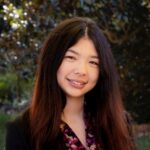
Leila Zak is a student activist at Duke University from Hong Kong and Chicago, Illinois, majoring in Political Science and International Comparative Studies. She devotes her work and care to the advancement of (im)migrant rights, gender-equitable education, community-led peacebuilding and intersectional solidarity.

Leila is a leader at Flowers for the Future, an international initiative which provides education to young women in Afghanistan who are systematically denied it, in collaboration with a clandestine learning center in Kabul. On campus, she is the co-President of Beyond Borders, Duke’s advocacy organization for immigrants, refugees and asylum-seekers. She coordinates action through community education, Know Your Rights workshops, collaborations with local and national nonprofits, storytelling and legislative advocacy. Leila has had the privilege of interpreting for legal appointments, operating Siembra NC’s hotline to provide support in cases of detention and wage theft, and leading advocacy and mutual aid efforts to support staff at Duke impacted by the termination of Temporary Protected Status.

Having grown up in Hong Kong, Leila is an advocate against authoritarianism and state violence in her hometown(s) and across the world. She speaks Cantonese, Spanish and Mandarin, while currently learning Persian.

Supported by Davis Projects for Peace, she is currently co-creating a long-term peacebuilding project in CaquetĆ”, Colombia, collaborating with local leaders to translate bottom-up practices of collective resource management, memory preservation, and environmental peacebuilding into municipal educational infrastructure. Leila is passionate about countering the structural violences that produce silence, ā€œillegality,ā€ disappearance, and preventable death. She views writing, education, and human-centered policy as channels for memory and repair; her creative work has been honored by the Pulitzer Center.

Quote: “I’m grateful to represent the communities I care for and which nourish me through the Youth Advisory Board. Alongside such a lovely team, I’m excited to bring all of myself and the on-the-ground experiences I have into projects and advocacy with Plan for a more compassionate world.”

Leila Zak headshot

Rachel (she/her) is a 16-year-old writer, advocate and community organizer from Southern California. She is the founder of HERA Foundation, a youth-led Title IX initiative that has equipped more than 2,000 students and families in underserved communities with the knowledge to advocate for their rights through Title IX education.

Rachel’s work lives at the intersection of global dialogue and grassroots action. As one of the youngest U.S. fellows in Plan International’s Global Young Influencers Group and Communications Director for UNA-LA, she helps translate international conversations on gender equity into tangible change within local communities. Whether drafting youth-informed policy proposals, shaping legislative advocacy in her spare time or writing poetry that explores girlhood and belonging, she is drawn to work that transforms ideas into institutions and stories into action.

She hopes to spend her life building systems that are as compassionate as they are enduring. Outside of advocacy, Rachel can usually be found getting lost in fantasy novels, wandering through museums, curating outfits to make ordinary days feel a little more beautiful or searching for the perfect Korean cafƩ to visit.

Quote:Ā ā€œGender inequality is profoundly intimate. It lives in our homes, classrooms, workplaces, and expectations that shape our lives. So, I am honored to join the YAB where I will work alongside extraordinary young women to ensure gender equality is treated as an imperative.ā€

Headshot of Youth Advisory Board member rachel

Today, July 3, marks 1,000 days since the October 7, 2023 attacks in Israel and the ensuing escalation of war that has devastated lives across Gaza, West Bank and Israel.Ā 

The human cost has been catastrophic, with over 1,200 people killed in Israel during the October 7 attacks and more than 73,000 people reported killed in Gaza since the war began.Ā 

Despite the ceasefire announced in October 2025, children in Gaza and the West Bank continue to pay a heavy price.Ā Ā 

According to a UN report citing Gaza’s Ministry of Health, over 173,000 people have been injured since October 2023. More than 21,000 children have been identified among those killed, underscoring the devastating toll the conflict has taken on young lives.Ā 

ā€œSince the October ceasefire more than 1,000 people, including 265 children, are reported to have been killed. A ceasefire that cannot keep children alive is a failure,ā€ said Dr Unni Krishnan, Plan International’s occupied Palestinian territory Country Director and Global Humanitarian Director.Ā 

He added: ā€œChildren should not be killed on their way to school, in their homes, or while trying to access food and aid. Yet for many children in Gaza, fear, loss and displacement remain a daily reality. They are still losing parents, they continue to live in tents through freezing winter conditions and harsh summer heat. There are no playgrounds and play materials.Ā 

ā€œChildren should be safe walking to school, not risking their lives. Just recently 16-year-old Raghad Ashour was killed while on her way to take an exam in Gaza City.Ā 

ā€œMore than 637,000 children remain cut off from learning, with 93% of schools destroyed or damaged. No new homes, schools or hospitals have been built since the announcement of the ceasefire.Ā 

ā€œTheir childhoods are still being stolen by violence. The world cannot accept this as normal. Children must be protected, the ceasefire must hold, and all parties must ensure unhindered humanitarian access and uphold their obligations under international law. What children in Gaza urgently need is safety, dignity and a real pathway to recovery. This means not only ending the violence, but investing in rebuilding Gaza, including its shattered educational and child protection support system, so children can recover and thrive.ā€Ā Ā 

For the children of Gaza, 1,000 days is not just a number, it is almost three years shaped by conflict, displacement and a ceasefire that holds more on paper than in daily life. We must recognize the profound tragedy of loss that the children in Gaza are carrying. These scars will last a lifetime without sustained support.Ā Ā 

Plan International’s partner in Gaza has been supporting Islam, a mother to five children. Before the escalation of the conflict, Islam lived in a home in northern Gaza with her husband, ā€œMy house was simple…but to me it felt like heavenā€ she says.Ā 

That life ended when the war erupted. In less than three years, Islam has been displaced twenty times. Her husband was killed. During one displacement, she said goodbye to her own mother, they fled in different directions, and Islam never saw her again.Ā 

Today, Islam is holding her family together, drawing on humanitarian assistance to support her five children. What keeps her going, she says, is watching them return to school: ā€œI see their excellence returning, and I receive messages from teachers praising them and thanking me for supporting them. These messages give me strength and make me feel I managed to stand on my feet again despite everything.ā€Ā 

For a family to move twenty times in less than three years is not living, it is a desperate struggle for survival.Ā 

Despite the war and suffering, children dare to dream like Zuhair, 11, who wants to become an engineer “to rebuild the destroyed homes.”Ā 

Plan International continues to deliver life-saving assistance through trusted local partners inside Gaza, and West Bank and remains committed to principled humanitarian action for children and all civilians in the occupied Palestinian territory.Ā Ā 

Plan International calls on all involved parties to uphold their obligations under International Humanitarian Law and to protect civilians and civilian infrastructure. We call on the international community to use every means available to ensure sustained, predictable and unimpeded humanitarian access to Gaza. Children and all civilians cannot wait.

For further information please contact:  

Juan Estrella, Emergency Communications Specialist, Plan InternationalĀ Ā 

Tel: +593 995 595 893Ā 

Email: [email protected]

About Plan InternationalĀ 

Plan International is an independent development and humanitarian organization that advances children’s rights and equality for girls. We believe in the power and potential of every child but know this is often suppressed by poverty, violence, exclusion, and discrimination. And it is girls who are most affected.  

Working together with children, young people, supporters, and partners, we strive for a just world, tackling the root causes of the challenges girls and vulnerable children face. We support children’s rights from birth until they reach adulthood, and we enable children to prepare for and respond to crises and adversity, while particularly focusing on the experiences of girls. We drive changes in practice and policy at local, national, and global levels using our reach, experience, and knowledge.      

For over 85 years, we have worked to transform the lives of children in more than 80 countries. 

A child's toy and debris in the aftermath of earthquakes, in La Guaira, Venezuela, July 1, 2026.
Image Credit: REUTERS/Ricardo Arduengo

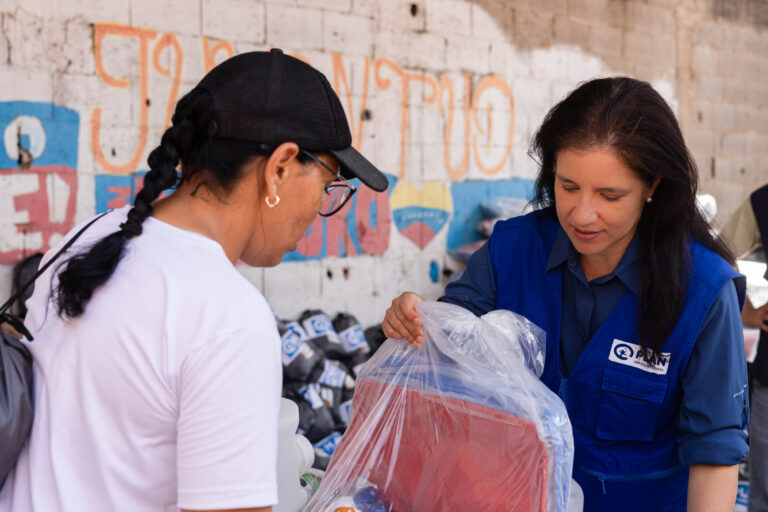
Following the two earthquakes that struck Venezuela on June 24, thousands of families who lost their homes have moved into temporary shelters and collective site where children face specific risks that need urgent attention. Plan International is responding to the emergency alongside partner organizations and calls for the protection of children to be made a priority within humanitarian response. This article highlights the needs within Venezuela and quotes Plan staff member Geraldine Gomez.

US News and World Report logo

Discover how child sponsorship helped a 12-year-old girl in Benin recover from kidney failure and return to school with hope for the future.

Anne, a 12-year-old girl in Benin, survived kidney failure with support from Plan International’s child sponsorship program. Today, she is back in school and dreaming of becoming a doctor.

Adult woman and female child sit together outside
When Anne became seriously ill, her mother (photographed with Anne outside their home in Benin) rushed her to the local health center. It was the start of a long and difficult road to recovery.

The day everything changed

When Anne woke up that morning, everything felt different. She didn’t feel like herself.

A bright student and natural leader, Anne loved going to school and spending time with her friends. She dreamed of one day becoming a doctor so she could help save lives. At her local children’s club, she encouraged others to stay positive and work hard, often leading by example.

But that morning, even getting out of bed felt impossible. Something was very wrong.

A life-threatening diagnosis

With growing worry, Anne’s mother took her daughter to a local health center. After two weeks without improvement, doctors diagnosed Anne with kidney failure. Her condition was serious and required urgent, specialized care.

"I couldn’t walk or even talk. I was very scared. But I never gave up hope."

Critical care and lifesaving support

Anne was transferred to the nearest hospital, where she received weeks of intensive care. The treatment saved her life. Anne’s recovery was made possible with support from Plan International’s child sponsorship program in Benin.

For four years, Anne has been a sponsored child. When she became critically ill, Plan helped ensure she could access lifesaving care. Support included:

  • Coverage of her hospital costs.
  • Daily meals for Anne and her family.
  • Ongoing emotional and psychosocial support.

This support eased the financial burden on her family and made it possible for Anne to focus on healing.

Girl sits in a hospital bed in Benin, where she received lifesaving care.
With support from Plan’s child sponsorship program, Anne received lifesaving care at a hospital in Benin.

A return to school and renewed hope

As Anne regained her strength, she was finally able to return home. Her community gathered to welcome her, with members of her children’s club singing and dancing to celebrate her recovery.

Girl dances in the middle of circle
Anne dances at her children’s club, glad to be back home with her friends.

ā€œWe prayed for her every Wednesday,ā€ her friend Clementine said. ā€œWhen we saw her again, we shouted with joy.ā€ Another friend added, ā€œAnne inspires us. She shows us we should never give up.ā€

A future filled with possibility

Today, Anne is healthy and back in school. She spends her days learning, playing with friends and thinking about what comes next. Her experience has strengthened her determination to achieve her goals. She remains focused on her dream of becoming a doctor and helping others in need.

Girl is outside with items on a table and smiling
Fully recovered, Anne can focus on her studies and her dream of becoming a doctor.

ā€œI can smile again. Thank you to Plan International and my sponsor for never giving up on me."

The impact of child sponsorship

Child sponsorship helps children like Anne access health care, stay in school and feel supported during times of crisis. Anne’s story shows how sponsors like you can make a lasting difference — especially when families face unexpected challenges.

Girl is outside with items on a table and smiling

Vanity URL Requests

An online form for collecting vanity URL requests/information for the Plan International USA website.

Name(Required)
Email(Required)
Please indicate which page you are requesting a vanity URL for.
Please provide a link to the webpage you are requesting a vanity URL for.
Please include the proposed name for the vanity URL. If there is a conflict with the proposed name, the web content manager will reach out with alternate options.
Please include a brief description of the intended use of the vanity URL and which project it is associated with.
Please include the "go live" date for the vanity URL. This is the date that website users/clients will be using the link and when analytics data will be tracked from.
Please indicate the date that the link is needed for review and/or testing.
Please include any additional information and/or context for the vanity URL request. If other collaborators need updates and/or the link sent directly please include their names and email addresses. Thank you!

Charlotte Yvette P. Chishava, SAGE Program Manager, wrote this article. To learn more about Plan’s work, get in touch: [email protected]

In global education, girls who aren’t able to access education isn’t a hypothetical. They’re the 14-year-old new mother. The sibling-caregiver. The child with a disability. The girl displaced in a village where no one speaks her language. These are the real out-of-school girls, and they are systematically being overlooked.

Too often, education programs assume that inclusion means offering the same solution to everyone. In many programs, girls aren’t just underrepresented, they’re structurally excluded. And when they are included, it’s often through a single pathway: formal school re-entry. But what if traditional school isn’t where she needs to go? Or what if the system itself — rigid, age-bound or language-exclusive — is part of what pushed her out?

A different approach: Meeting girls where they are

The Supporting Adolescent Girls’ Education program, known as SAGE, in Zimbabwe was designed around a different question: What does success look like for her, today?

Rather than treat ā€˜marginalized girls’ as a fixed label, SAGE treats it as a lived condition shaped by age, gender, disability, motherhood, religion, labor and language. Sometimes these identities overlapped. And when they did, the barriers to participation multiplied.

To respond, SAGE created four flexible, girl-led transition pathways:

  • Re-entry into formal education for girls who the right choice is returning to school.
  • Informal or community-based learning for those who needed different environments or timing.
  • Skills training for self-employment through the Improved Skills for Out-of-School Girls Program and technical vocational education training, combining it with life skills and grants access through banking institutions.
  • Fairly paid employment for girls needing immediate income.

This approach didn’t prescribe a single solution. It created multiple, flexible entry points.

ā€œWhat sets SAGE apart is that it doesn’t treat marginalization as a concept, It treats it as a lived reality, something that requires multiple entry points, not one path.

The impact: what happened when girls had real options

According to the program’s independent endline evaluation:

  • More than 70% of learners demonstrated at least Grade 5 levels in literacy and numeracy.
  • The average learner improved by three to four grade levels during the program.
  • Girls who began with the lowest scores showed the greatest gains.
  • 67% of participants, or 12,839 of 19,102, transitioned into education, skills training or income-generating opportunities.
  • 86% of girls found vocational training the most valuable part.
  • 55% reported increased income after completing the vocational pathway.
  • 8% or 1,528 have returned to traditional school settings.
  • 5% of followed girls are now employed.
  • 8% of followed girls had started own small businesses.

These outcomes weren’t limited to academics. They reflected new agency, new options and new confidence, especially for girls who had never seen themselves as students in the first place.

ā€œBefore SAGE, I thought it was too late. I had a child, I had no education. Now, I am running my own tailoring business. I teach my younger sister what I’ve learned.ā€

Lessons for the wider sector

SAGE offers insights that go beyond Zimbabwe, especially as global learning poverty rises and humanitarian crises displace more girls from education systems.

  • Programs must design for multiple success pathways, not just one.
  • We must measure progress beyond test scores, including income, agency and social participation.
  • Wraparound support matters, from norm-shifting dialogues to mental health services.
  • Most importantly, we must co-create programs with girls, not for them, and treat their lived experience as a form of technical expertise.

Too often, education programs are built around what’s scalable or a single solution instead of what’s equitable. But for the most out of school girls, real change doesn’t come from scaling up. It comes from showing up differently.

To truly reach them, we must start with where they are, not where we wish they were.

Beyond buzzwords

Let’s stop designing for the ā€œtypical girlā€ and start designing for the girl who’s been made invisible.

She’s still out there, navigating the margins, waiting for a pathway that fits her reality. Programs like SAGE show it’s not too late. We just have to ask better questions and build pathways that reflect real lives.

Who are the girls your programs might be missing, and what would it take to truly reach them?

Note: Quotes and findings are drawn from Plan International’s independent endline evaluation of the SAGE Zimbabwe program.

From Plan to Action

Stay updated on Plan International’s technical work by signing up for ā€œFrom Plan to Action,ā€ our quarterly newsletter.

Around the globe, children facing conflict, displacement and climate emergencies are healing and finding resilience and hope through play. Here's how Plan International is creating environments where children can recover, thrive and enjoy being young. Plan International creates safe spaces, supports schools and community programs, provides mobile libraries and play buses, and integrates play into education and child protection initiatives worldwide.

Why Play Matters for Children in Crisis​

A boy runs barefoot beside a rolling bike tire, guiding it with a stick in a game called ā€œSticks and Wheels.ā€ A girl skips rope with a laundry line. Children tie string to rusted cans, dragging them behind like clattering parade floats. Another fashions a toy car from a plastic bottle, tugging it proudly across the dirt with a piece of twine. In the heat, they gather beneath mango trees to clap, chant and laugh through hand games. And when the rains come, they stomp and splash barefooted under the torrential downpour — soaked, singing and smiling, completely unbothered.

This might sound idyllic; however for many children, safe places to play and the equipment to do so simply didn’t exist. There are no playgrounds.

Play isn’t a luxury. It’s a necessity. It’s how children recover from trauma, build resilience, develop critical skills and connect with the world around them. It’s how they stay kids, even when the world feels anything but safe.

This International Day of Play, we’re spotlighting the children and communities who remind us that play is never just play. From war zones to drought zones and from early childhood centers to football fields, here’s how Plan International is making space for joy — through programs designed to protect childhood and promote learning, healing and equality.

Moldova: The Mobile Play Bus ​

Children playing with a parachute in Moldova
Children in Moldova lift a colorful parachute during a Ludobus visit — a mobile play bus run by Plan that brings educational games and psychosocial support to refugee and host communities affected by the conflict in Ukraine. | Ā© Plan International

The Ludobus — short for ā€œplay busā€ — is a traveling toy library filled with educational games, books and puzzles. It visits villages and refugee centers across Moldova, creating joyful spaces for children and relief for mothers affected by the conflict in Ukraine. As children engage in play, mothers can rest or meet privately with psychologists to discuss their needs in a safe, supported environment.

Gaza: Reclaiming Joy During Conflict

Children playing in a circle in Gaza
Children in Gaza take part in recreational activities supported by Plan’s emergency relief project, implemented in partnership with local organizations ACHA and Taawon. These safe spaces help children cope with trauma through joyful, healing play. | Ahmed Salama, Ā© Plan International

In Deir al-Balah, Gaza, where thousands of displaced families have sought shelter, Plan and its local partners are creating moments of joy amid unimaginable hardship. Through an emergency relief project with the Abdel-Safi Community Health Association and Taawon, we support recreational activities for children affected by conflict. In these safe spaces, girls and boys dance, laugh and take part in interactive games designed to ease trauma and rebuild a sense of safety. These sessions do more than entertain — they offer psychological support and a path to healing.

Lebanon: Playing Between the Lines of Conflict

Children playing outside in a courtyard in Lebanon
Children play in a courtyard repurposed as a shelter in Lebanon, where ongoing conflict has forced over a million children out of school. Plan continues to support safe spaces for children amid the crisis. Rachel Chalita, Ā© Plan International

In a dusty courtyard surrounded by barbed wire, children play as war unfolds just miles away. With more than 1 million children out of school due to conflict, Plan-supported play activities have become one of the few constants in their lives.

Peru: The Healing through Play After El NiƱo

Children playing at school in Peru
Children in Piura, Peru, play a giant board game during a Plan of Joy session — part of Plan’s response to El NiƱo floods. The sessions teach children about resilience, safety, and emotional well-being through play. | Ā© Plan International

After floods devastated her village, 9-year-old GĆ©nesis found solace at a ā€œPlan of Joyā€ play session. ā€œWhen we started playing, I didn’t think about the rain anymore,ā€ she says. Games helped her manage fear, build confidence and feel less alone.

Zimbabwe: A Playground Helps Keep Children in School​

A girl on a playground in Zimbabwe
Kimberly, 11, smiles on the playground at her school in Zimbabwe. With support from Plan International, the school has new classrooms and a safe play space — a rare and cherished place for children in her drought-affected community. | Tendai Marima, Ā© Plan International

In drought-affected Tsholotsho, Kimberly, 11, finds joy in a rare safe space: the school playground built with support from Plan International. ā€œAt home I only have my cat to play with,ā€ she says. ā€œI love the playground — it’s a safe place for us to be children.ā€ As water becomes harder to find and more children drop out of school, Kimberly holds on to her dream: to stay in school and one day become a nurse.

Ethiopia: Learning Through Play in Crisis-Affected Communities​

Children playing at school in Ethiopia
A teacher leads a Learning through Play session with young children in Benishangul-Gumuz, Ethiopia. Through Plan’s PlayMatters project, refugee and host community children build skills and resilience in safe, engaging environments. | Natnael Tesfaye, Ā© Plan International

In Benishangul-Gumuz, a region in northwestern Ethiopia affected by conflict and displacement, Plan’s PlayMatters project is helping children recover and grow. The program equips teachers and facilitators with tools to integrate learning through play into classrooms. Through guided, hands-on activities, children ages 3 to 12 in both refugee and host communities strengthen cognitive, emotional and creative skills — building resilience in safe, inclusive spaces.

Benin: Girls Building Leadership Through Sports

Girls playing soccer in Benin
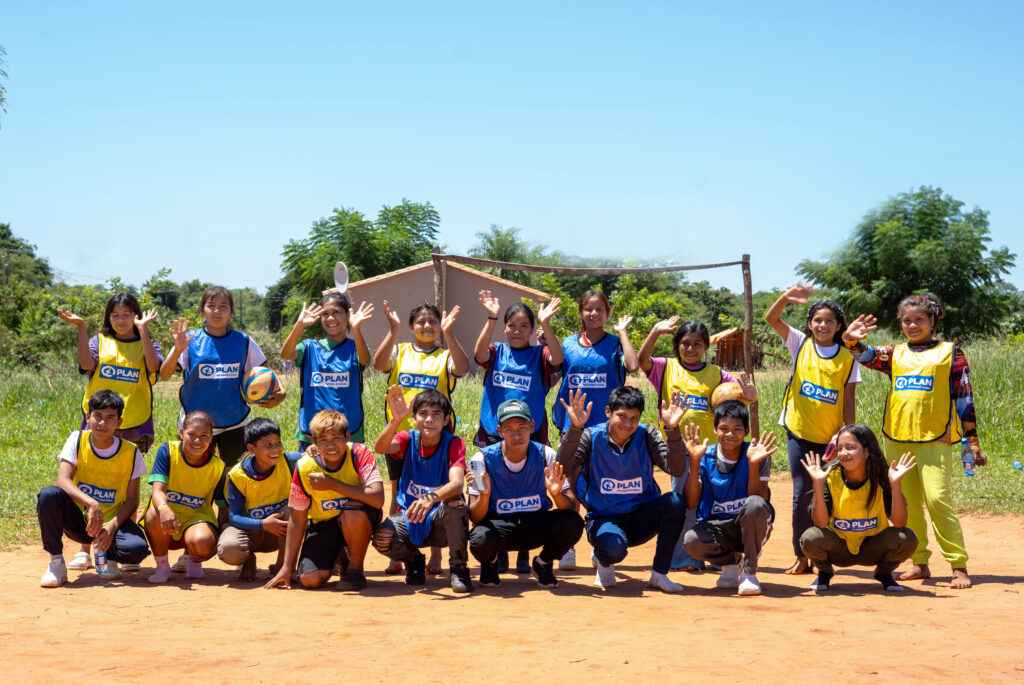
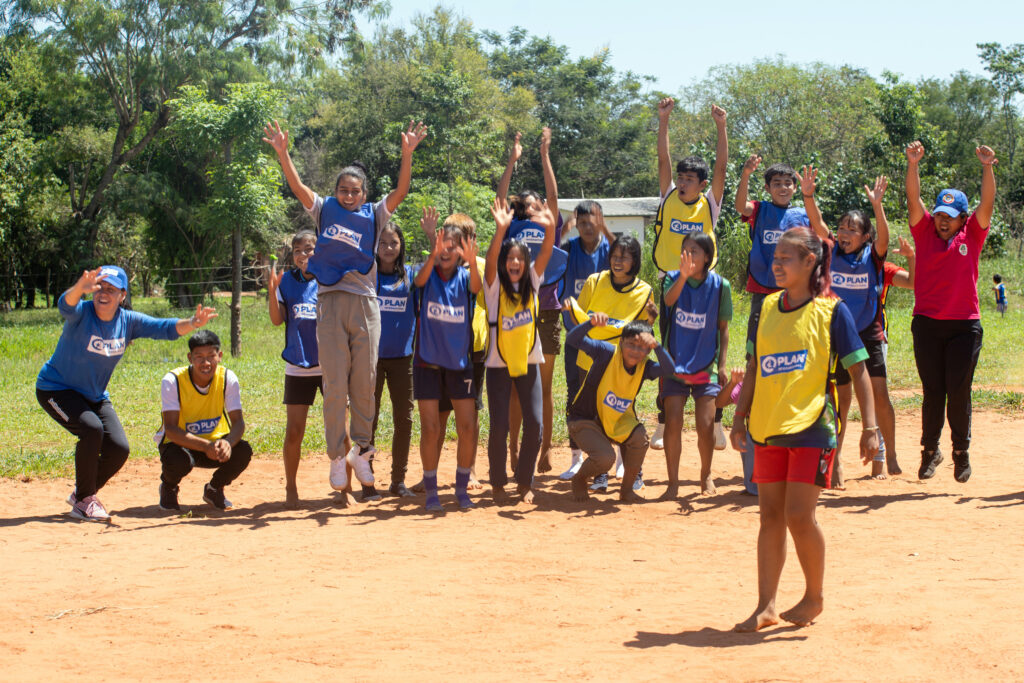
Girls play football in Atacora, Benin, as part of Plan’s Impact-Elle project. The program promotes girls’ leadership and gender equality through sport, while also reducing financial barriers with equipment and school supplies. | Isabelle Lemou, Ā© Plan International

Through the Impact-Elle project, Plan supports 16 girls’ football teams in Atacora, creating safe spaces where girls can play, lead and be seen. What begins on the field ripples out: the program challenges gender norms, fosters leadership and encourages parents to support their daughters’ participation — helping change the story for the next generation.

Poland: Empowering Children With Disabilities through Play​

A girl and a teacher playing
Alesia plays during a therapy session in Poland, supported by the Patchwork Association in partnership with Plan. The organization helps refugee children with disabilities access education and psychosocial services. | Weronika Jurkiewicz, Ā© Plan International

After fleeing Ukraine, Nataliia found support for her daughter Alesia, a child with special needs, through Plan-supported therapeutic play sessions. There, Alesia began to thrive again. For this family, play is more than fun — it’s foundational.

Brazil: Leading the Way Through Play​

Girls playing basketball at Plan's Leadership Academy in Brazil
Participants in Plan’s Leadership School for Girls gather on a basketball court in Brazil. The program uses games and team-building activities to help girls develop leadership skills and advocate for their rights. | Rafael Gardini, Ā© Plan International

Girls in Brazil are learning to lead through Plan’s Leadership School. It starts with teamwork and games, then grows into advocacy, public speaking and organizing. It’s play with purpose — and the girls are ready.

Timor-Leste: Imagination on Wheels in Rural Communities

Girls playing outside in Timor-Leste
Children gather around Plan’s mobile library in Timor-Leste, where storytelling and interactive learning promote early childhood development and a love for reading. | Rogerio Mendes Lopes, Ā© Plan International

In the rural hills of Timor-Leste, a mobile library van rolls into view — and children run to meet it. For many, it’s their first chance to hold a book, hear a story or experience a structured learning activity. Plan supports this mobile library to bring storytelling, games and early learning tools to children in remote communities. These sessions nurture imagination and build the cognitive, emotional and social skills that children need to thrive. In places where access to quality education is limited, the joy of reading becomes a powerful form of play — and a stepping stone to a brighter future.

Radical Joy: The Impact of Play for Communities in Crisis

Every story here is different, but the theme is the same. For children affected by conflict, displacement, disasters and poverty, safe opportunities to play can build resilience, empower kids, make communities safer and pave the way for brighter and more just figures. That’s why Plan creates these spaces — in classrooms, on dirt fields and even through mobile buses. Play is more than recreation; it is transformative and healing. Psychosocial support through play uses games, creative activities and structured recreation to help children process experiences, strengthen coping skills and improve well-being.

Across continents and crises, these moments of joy reveal something deeper: play is a lifeline. And a declaration that childhood matters, even in the hardest places. Play is an experience that should be universal for all children; regardless of their country of origin or circumstances in life. It strengthens relationships in the community, provides a sense of normalcy during crisis, and inspires.

This International Day of Play, join us in protecting and celebrating childhood.

Not just play: How Ukraine’s children heal from war​​

Three years have passed since the escalation of the war in Ukraine — a conflict that has shattered lives and displaced millions.

While the damage to buildings is visible, there are also hidden wounds in children’s minds.

Girls Everyday Resistance Report: 2025​

Across Benin to Vietnam, young girls are pushing back against gender expectations.

Through Plan International’s 18-year study, we uncover powerful stories of resilience, defiance and change driven by girls navigating and reshaping their worlds

Children playing with a parachute in Moldova