Imagine a typical school day as a girl: note-taking during lessons, joining in on class discussions, taking tests and studying at home before bed.
Now, imagine doing all of that on an empty stomach.
Going without food makes it extremely difficult to focus in class. Yet millions of girls are trying to get their education on one small, low-nutrient meal a day — or no food at all.
The hunger crisis is pushing more than 820 million people into life-threatening circumstances. And when decisions need to be made about who can be fed, girls are too often left last in line. With nothing to eat, another layer has been added to the surplus of challenges girls face in making it to graduation.
In this story, we visit a school in South Sudan and give you a window into what it looks like to try and get an education as a girl during this emergency.
Hellena, a 17-year-old girl, lives in South Sudan’s Lakes State — where it hasn’t rained in almost two months. Her family depends on their farm for food as a source of income. But she tells us that the drought in South Sudan has left her family with little money to pay for tuition.
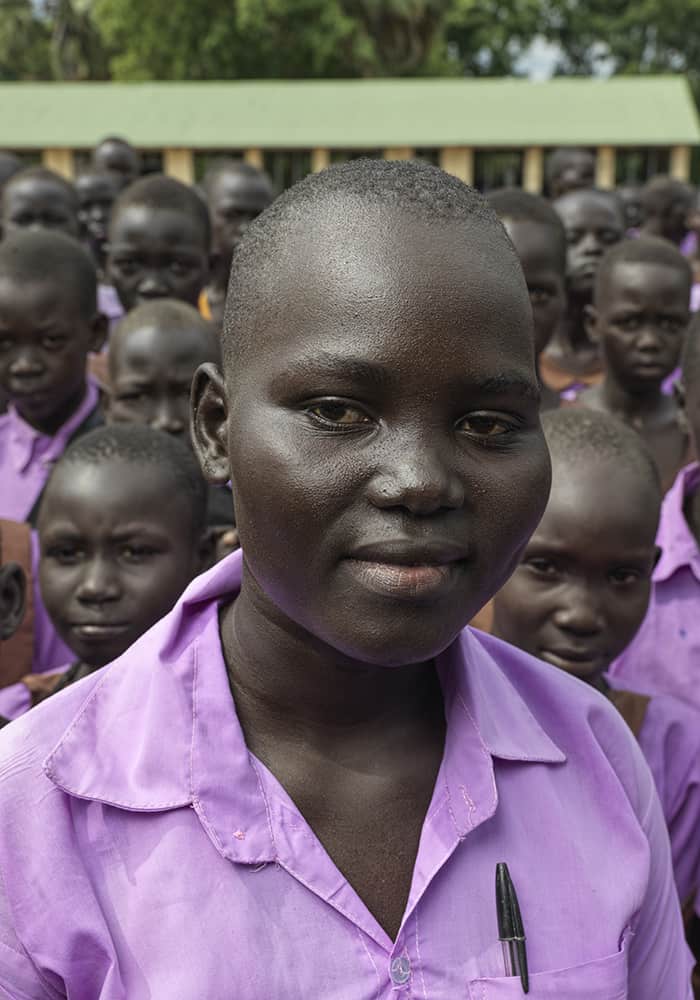
Hellena lives in South Sudan, where at least 7.2 million people — about 60% of the population — are in need of food assistance. Without immediate support, more than 2 million people are at risk of dying of starvation. Already, 1.4 million children are suffering from malnutrition.
“My mother sells peanut paste and my father sells sugar,” Hellena says. “Sometimes the money they earn isn’t enough to buy food. We can spend a whole day without eating. Sometimes it also takes a long time to pay the school fees and we struggle to pay them.”
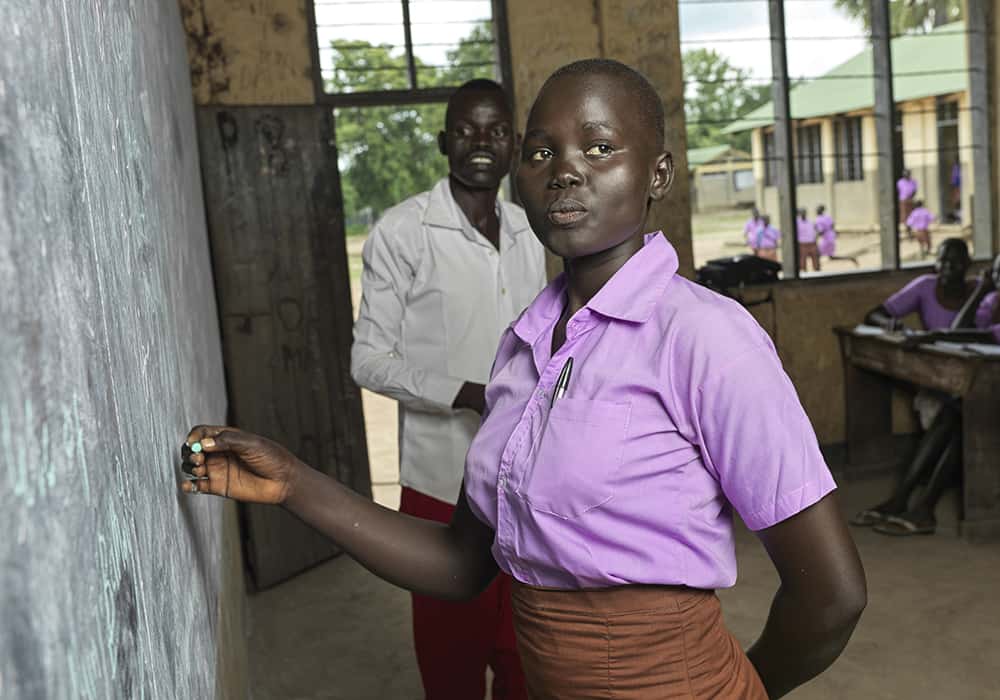
![Hellena stands in her classroom in South Sudan. “[When my family and I] eat only once a day, in the evening,” she says. “But in the morning and lunch time, we don’t eat. … we eat pumpkin leaves, it’s the only plant that survived the drought, but it doesn’t bear any fruit.”](https://planusa-org-staging.s3.amazonaws.com/public/uploads/2022/09/202207-SSN-73-1.jpg)
Hellena stands in her classroom in South Sudan. “[When my family and I] eat only once a day, in the evening,” she says. “But in the morning and lunch time, we don’t eat. … we eat pumpkin leaves, it’s the only plant that survived the drought, but it doesn’t bear any fruit.”
The school meal program at Hellena’s school has been put on pause since April due to the severity of food shortages. Many students like her rely on the school lunches when their families can’t provide anything to eat at home.
“Life has become very difficult for me and my classmates,” Hellena says. “We don’t understand afternoon classes anymore. The teacher is giving the lessons, but we can’t understand what the teacher says. I feel that I can only be very active and pay attention in the morning up to 11 a.m., but from then on I can no longer pay attention.”
School lunches provide girls like Hellena with sustenance, and also fuels their passion for learning and staying in school. For many students in South Sudan, the meals they get at home simply aren’t enough.
And it’s not just the students who rely on the school meal programs — the teachers do, too.
Clement, a teacher at Hellena and Grace’s school, says, “Everybody’s nutrition, the children and even the teachers, is weaker. … In the mind of a child is that they know they’ll be in school and they’ll have something to eat. And in the mind of the parents is that their children will have their lunch at school. … The thing that we feared most has happened. There is no lunch at home and no lunch at school.”
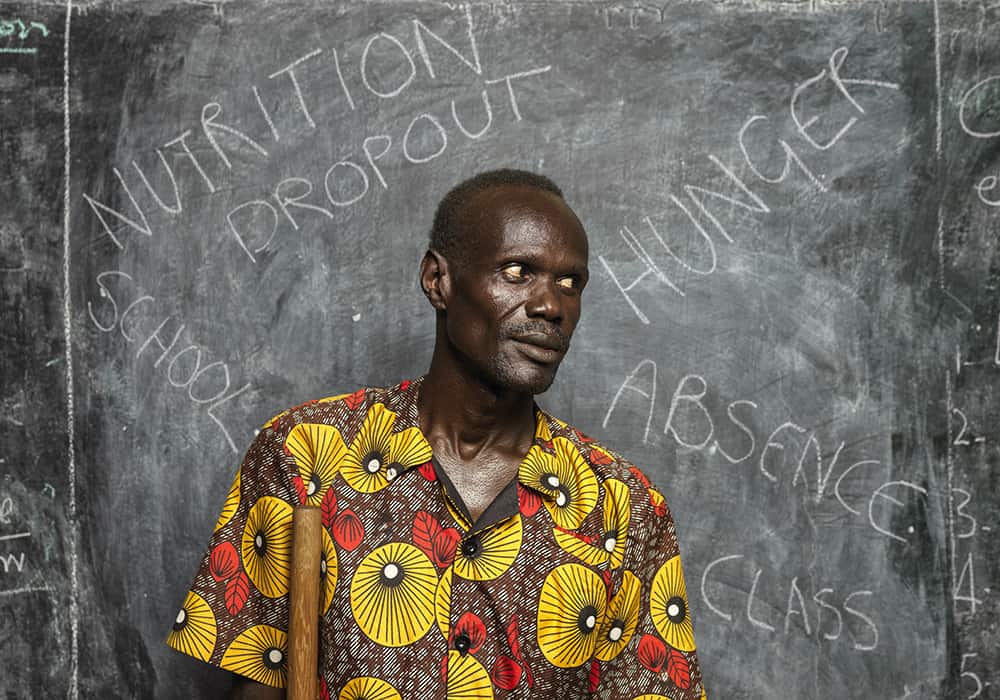
Clement has a mobility issue, but he doesn’t let his disability hold him back, and he advocates for the inclusion of all children with disabilities in the classroom. “I am disabled, not unable,” he says. “I always tell myself, ‘Clement, there is nothing you can’t do.’ That is what I teach to the children, although lately my aim is to keep the children in school during the food crisis.”
Another 15-year-old student named Martha tells us that she’s been living on one meal a day, and is also the one who’s responsible for serving the food to her family at home. She’s forced to give the biggest portions to her brothers.
“January was the last month that I ate two meals,” Martha says. “When I’m doing something, I can’t manage it like before. I also get stomach aches and headaches.”
While some girls struggle to stay focused on their lessons while hungry, other girls have decided to leave school altogether. Often, it’s the girls’ parents who pressure them to drop out — many families prefer to send their sons to school and keep their daughters at home to help with housework and finding food.
Hellena says she’s skipped school many times this year since there is no one else to look after her siblings while her mother looks for food.
“Sometimes you’ll see a friend at school, then the next day she is missing,” Hellena says. “Their attendance can be on and off. … They used to come in the morning hoping that later they’d have lunch in school. Now, some of them don’t come at all.”
Clement adds, “When I come to school and [call] the attendance in class, I’ve found some gaps. Girls especially are not turning up in school. I call out their names, asking, ‘Where is this or that girl?’ But they’re not in the classroom.”
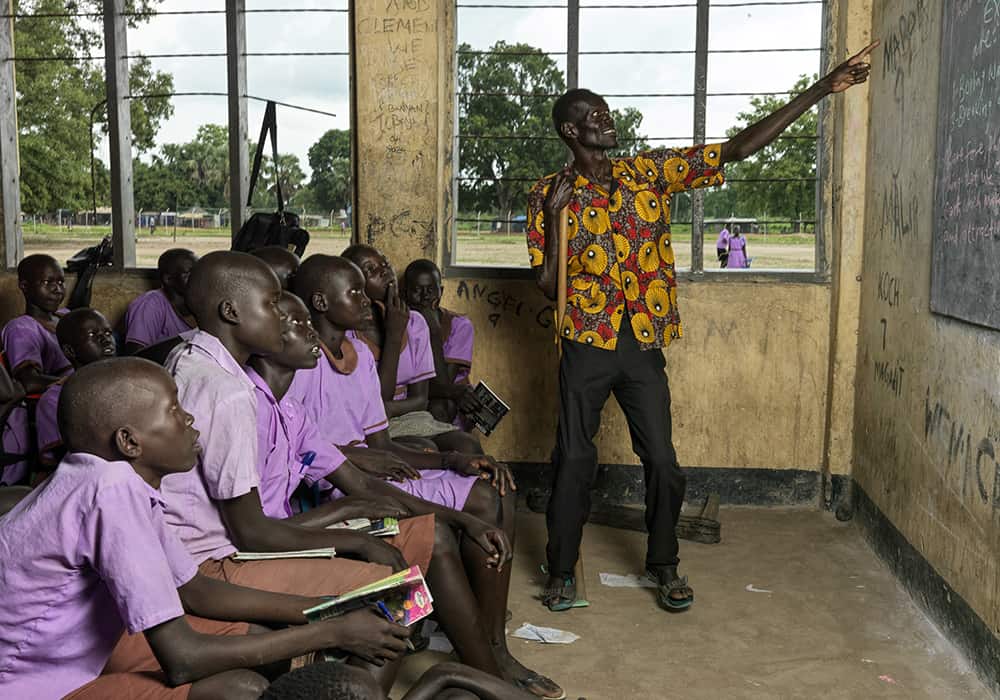
The loss of the school feeding program weighs heavily on Clement’s mind. He knows how much the children used to look forward to their lunch — which for some is the only meal they receive that day. “Although it is clear that both boys and girls are affected by this situation, girls will be more at risk,” he says. “I call the parents and tell them about the importance of a girl’s education.”
When Martha’s name is called, Clement is often met with silence. If there’s a better chance of finding food outside of school than in the classroom, Martha can’t waste a missed meal.
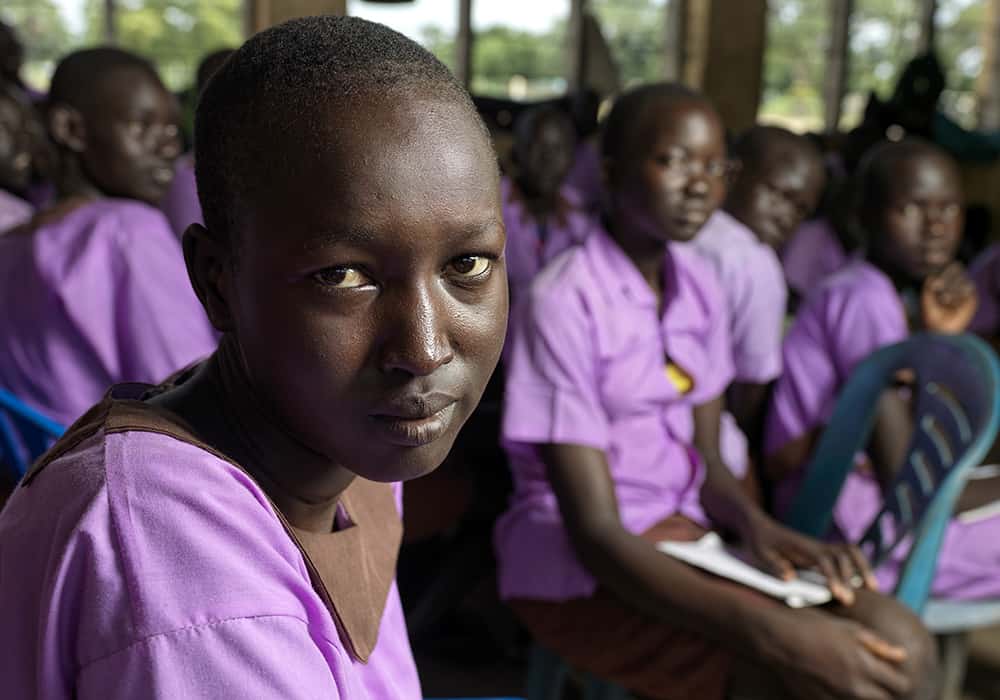
On the days that Martha can attend school, she says she’s too far behind to understand what’s being taught. “There was a topic that was taught when I wasn’t at school, so I tried to catch up, but it’s difficult because the explanation my friends gave me was different from the way the teacher taught it,” she says.
“There are times when I feel so hungry that I think going to school would be a waste,” Martha says. “My father sometimes asks me to stay at home and help him look for food.”
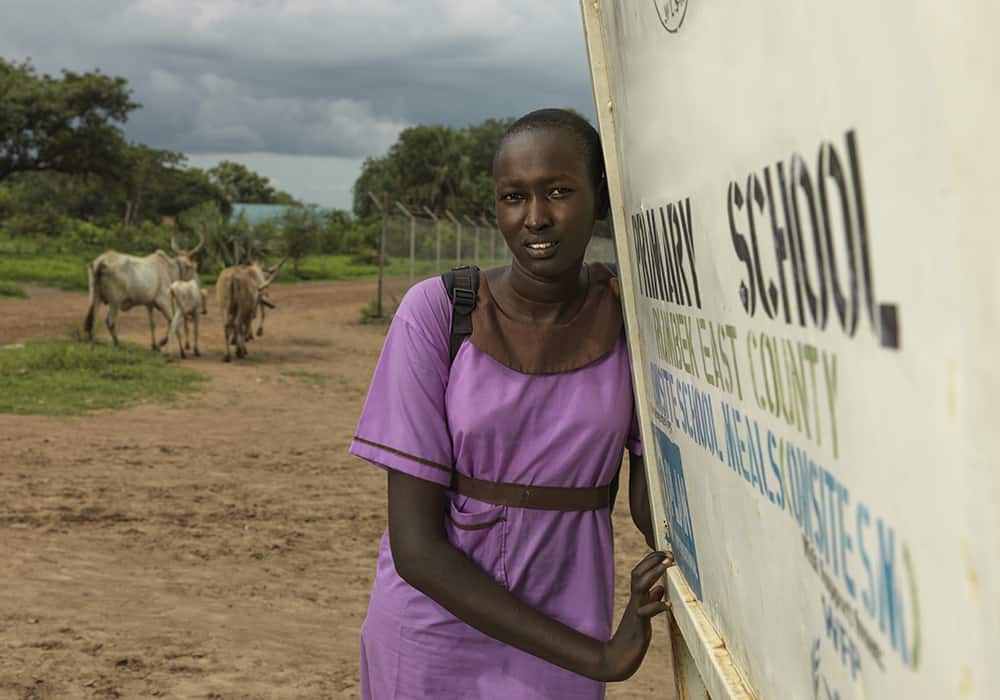
Martha says she would like to become a doctor one day, but worries that she has missed too much school due to hunger that she won’t be able to pass her secondary school exams. “If there is food, students will come in every day,” she says.
And for Hellena, it’s taking everything she has to keep from dropping out. But she has hope that she can keep holding on.
“I keep coming to school because I want to learn,” Hellena says. “When there is no lunch at school, I can spend the entire day without food. Maybe I only ate the evening of the previous day. These are the challenges. Although there are difficulties, I still want to learn,” she concludes to Plan staff, before rushing back to class as the bell rings.
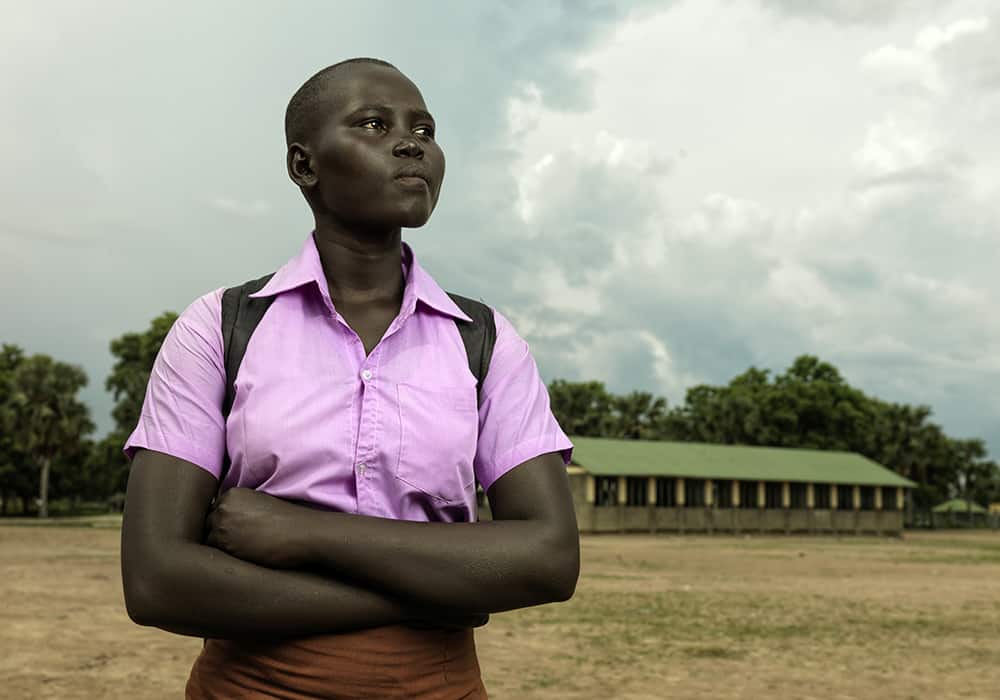
Learning while hungry is incredibly challenging, but Hellena is doing everything she can to stay in school and get her education.
Plan International is responding to this crisis in countries where hunger is most severe, including Burkina Faso, Ethiopia, Haiti, Kenya, Mali, Niger, Somalia and South Sudan. With your help, we’re providing lifesaving relief to girls and their families, including food and water kits, school meals and treatment for malnutrition. Your gift of just $33 can feed four children like Hellena or Martha with a month’s worth of school meals.