Search Results

Search results for

0 result(s) found

Missing a few days of school here and there might not seem like a big deal to most students, but for millions of girls and young women around the world, it’s a monthly occurrence with dire consequences. Without the necessities to manage their periods at school, girls stay home, falling behind on nearly two months’ worth of lessons every year.

The lack of access to menstrual products, education and sanitation facilities (at home and in public spaces) is commonly referred to as period poverty. It disproportionately affects marginalized communities, including those living in poverty, rural areas and conflict zones.

Period poverty is a global crisis that forces countless individuals to make impossible choices between their education, health and dignity — and often leads to suffering in silence. It’s a major problem in the U.S., too. According to Harvard Public Health, one in four teens in the country miss class because they don’t have products to manage their periods effectively.

[Read more: It’s time to talk: Menstrual health in the U.S.]

Beyond the immediate physical discomfort, period poverty has far-reaching consequences. It can lead to health problems, educational disruptions and limited economic opportunities.

As a global humanitarian organization dedicated to advancing children’s rights and equality for girls, Plan believes that recognizing and addressing menstrual health needs as part of girls’ overall well-being is vital to realizing a more equal world. We’ve implemented programs around the world to address period poverty.

Menstrual health in Sierra Leone

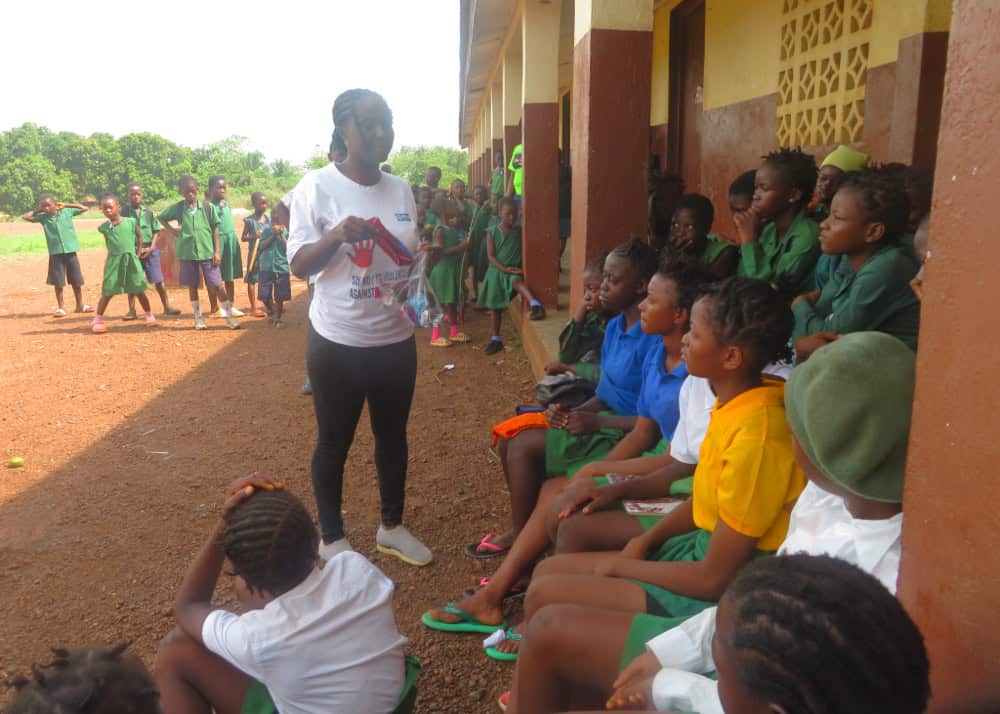
In Sierra Leone, poor access to sanitary products means that thousands of girls are forced to miss school and stay home during their periods. When 15-year-old Isatu first started her period, she didn’t have menstrual pads, so she resorted to using a waist scarf to keep her school uniform clean.

“I used to struggle with feeling uncomfortable,” she says. “I often got infections and had to miss a lot of school during my periods. I even had to repeat a year because of it. Some of my friends dropped out of school because they had similar problems.ā€

Through a menstrual health project that Plan implemented in Isatu’s community, she received menstrual health education, as well as reusable pads. Isatu told us that it has become much easier to talk openly about periods, too, and she even feels comfortable bringing the subject up with her grandmother and father.


A woman in a white t-shirt stands in front of a group of girls sitting along a wall as more children in green stand in the background.

In addition to providing reusable menstrual pads, project staff also taught girls in the project how to wear and wash them. | ©Plan International Sierra Leone


“I hope that more girls who can’t afford pads will be supported and that pads will be distributed regularly,ā€ Isatu says. ā€œIt’s important to educate everyone about periods so that there is less stigma. Pads help girls like me go to school and feel better about ourselves.ā€

Menstrual health in Brazil

Plan International has implemented a comprehensive menstrual health program in Brazil to address the challenges girls and women face in accessing essential products and education.

The program aims to break down stigma, provide menstrual products and promote positive attitudes toward menstruation. By partnering with local communities and organizations, we’re able to reach thousands of girls and women in need.

Through educational workshops and awareness campaigns (that also include boys and young men), the program has challenged cultural taboos and promoted a better understanding of menstrual health. Additionally, the program has provided access to menstrual products, enabling girls and women to stay in school and participate fully in their communities.

Menstrual health in South Sudan

For girls living in South Sudan, managing their periods is not easy. The lack of access to menstrual pads has grown due to conflict that has disrupted the local economy. Young women, like 19-year-old Awil, were using unsafe materials to try and manage their periods.


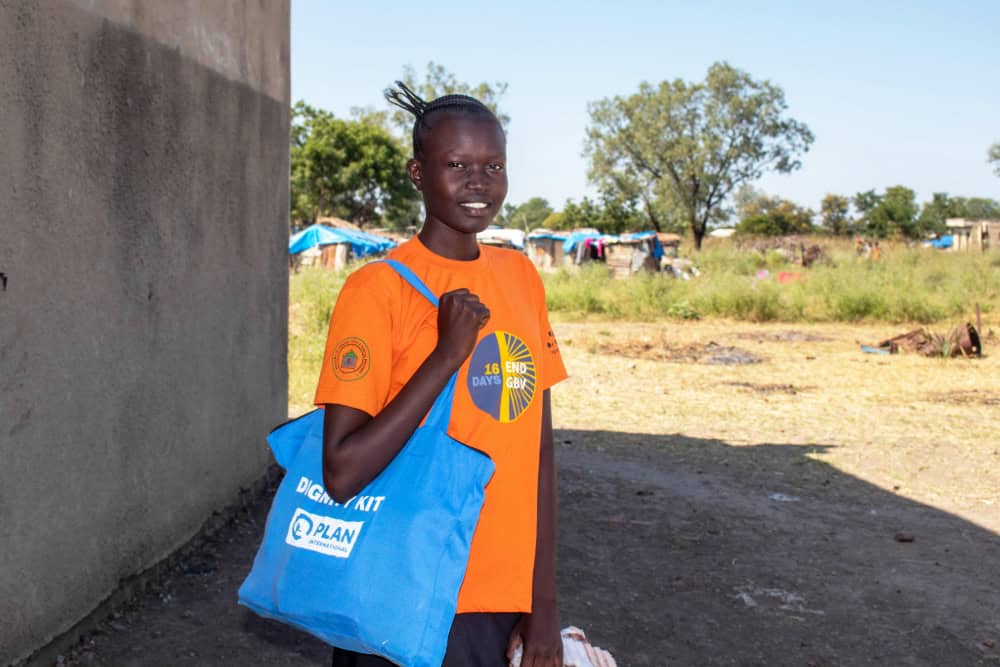
Young woman in South Sudan wearing a bright orange t-shirt holds a blue tote bag with the Plan International logo and smiles.

Awil says that her parents have always struggled to afford menstrual pads for her and her five sisters, but conflict in the region has made their financial situation worse. | Steven Kamponda, ©Plan International South Sudan


ā€œBesides not being able to pay our school fees, my sisters and I have skipped classes because we did not have sanitary pads during our periods,ā€ Awil says.

Part of Plan’s emergency response project in the country addressed this issue by providing these supplies. We distributed cash vouchers and health kits to Awil’s community that included items like pads, soap and underwear.

ā€œThis will relieve some of the pressure off my parents, who have always had to work extra hard to provide for the needs of us children,ā€ Awil says.

Girls in conflict and other emergency settings like Awil face especially chaotic conditions that prevent them from accessing the menstrual products they need.

Youth leaders fighting period poverty

Young people are at the forefront of the movement to end period poverty, especially during emergencies. Through community events, peer-to-peer fundraisers and educational campaigns, they are inspiring others to take action and challenge societal norms.

ā€œYoung leaders should have the ability to lead, solve and change things,ā€ Byronie, a Youth Advisory Board member and campaign leader, says. ā€œThese skills can’t be developed without the space and opportunity to be involved.ā€

Plan’s Youth Advisory Board is leading It’s Bloody Normal, a period campaign that’s destigmatizing menstruation and helping provide menstrual health products to girls in emergencies — like Awil. Backed by the organization and its network of supporters, these young leaders are raising awareness and funds for Plan’s programs, turning the tide on period poverty.Ā 

Young people led a webinar to discuss Plan’s menstrual health programming and periods in emergencies. Watch it here!Ā 

The fight against period poverty requires a collective effort from individuals, communities and organizations worldwide. Plan and its supporters are a part of the collective action that helps dismantle barriers children, especially girls, face to their futures.

ā€œThese are our problems, moreover our community,ā€ Byronie says. ā€œThe sense of shared community creates strength and a sense of motivation that is so inspirational and unique. In my experience, the most powerful movements are formed with the collaboration of young people — the more of this there are, the more good gets done.ā€

By making a matching gift, you amplify the work of young leaders like Byronie and create a lasting impact. Your donation will help reach even more girls and young women around the world with menstrual products, education and support to communities struggling with period poverty.

Join us in empowering young people to drive change and end period poverty.Ā 

Devex: Why is localization surging in some countries and stalling in others?

A Testimonial from the Technical Lead on Plan International’s Health Risk Management Project Supported by the Astellas Global Health Foundation

By Needa Malik, Disaster Risk Management Manager, Plan International USA

For 30 years, Plan International has been dedicated to working alongside Indigenous and mestizo populations in Peru, tackling the root causes of challenges and inequalities faced by children, in particular young girls. Frequent natural hazards, such as floods, have underscored the importance of advancing disaster risk reduction and community health infrastructure work.

In the Amazon region of Peru, particularly in the underserved rural and urban communities of Nauta and San Bautista districts in Loreto, our mission focuses on mitigating the negative impact of life-threatening water and insect-related diseases that arise from floods, torrential rains, and other water-related events. This region has been prioritized given the high incidence of water- and insect-borne diseases, frequent flooding, limited healthcare infrastructure, lack of access to clean water and proper sanitation facilities, and geographic isolation. These challenges complicate efforts to provide timely medical care and implement preventive measures amongst communities.

Thanks to the generous support of the Astellas Global Health Foundation, our Community Health Risk Management Project in Peru is designed to make a transformative change!


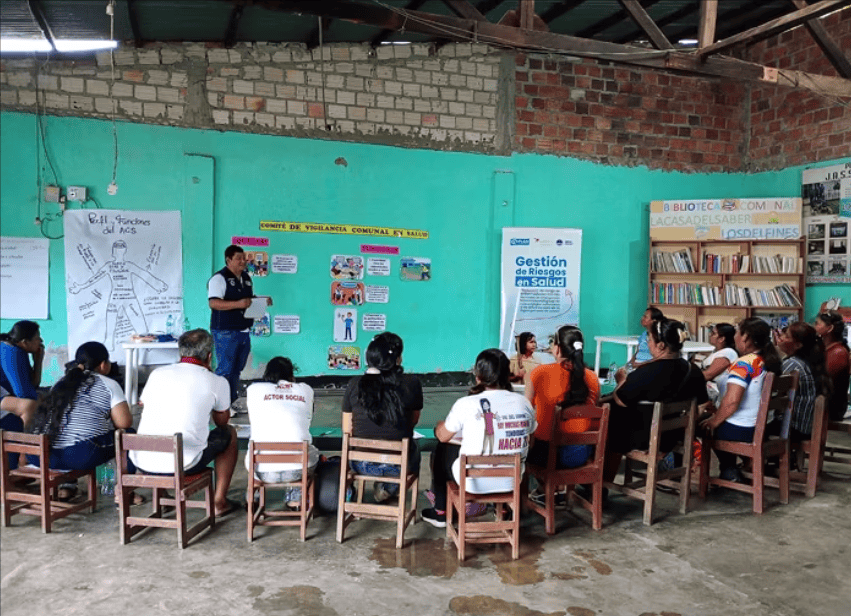
A community health worker leads a disaster preparedness and disease prevention session in Loreto, promoting community health resilience in Peru.

Community members in Loreto participate in a disaster preparedness and health resilience workshop. | Ā© Plan International


With this grant, we are increasing the capacity of existing healthcare systems, providers, community groups, and community members in responding to flood risk and consequent diseases by improving their knowledge and skills on disaster management; strengthening community response networks; and raising disease prevention awareness among vulnerable households. Our goal is to build capacity, foster local ownership, and drive sustainable development. By the end of the project, we plan to impact nearly 12,000 individuals, including families, community groups, healthcare workers, and government officials.

Plan International’s longstanding relationships within the chosen communities and strong collaborations with regional and local government authorities are instrumental in delivering sustainable change. A cross section of these communities and their leaders are engaged throughout the project’s design and implementation phases. By adopting a community-centric approach, we ensure the project speaks to the communities’ real-time challenges and needs and is respectful of the local culture. One such example is seed funding and technical support for 10 community-led initiatives to reduce the risk of water- and insect-related diseases in their respective communities. The proposal and implementation plans for these initiatives come directly from the community groups’ members. Given that disasters disproportionately impact the most vulnerable, we emphasize the involvement of women, youth, the elderly, and other marginalized groups in our disaster-planning efforts.

We are immensely proud of the progress we are making toward improving health outcomes and driving positive change in Loreto. Plan International looks forward to continued collaboration with the people of Peru, our supporters, and partners like the Astellas Global Health Foundation as we strive for a just world where equality is a reality for all.

About Needa Malik

Needa Malik has 10 years of experience as an international development and humanitarian professional. As a Disaster Risk Manager at Plan International, she leads initiatives focused on humanitarian response, disaster risk reduction, and girls’ rights. She is the technical lead on the Astellas Global Health Foundation-funded project and is responsible for steering the overall design of the project as well as ensuring program quality. Needa has worked with communities across regions experiencing conflict or disaster, promoting sustainable development and resilience. She holds a master’s degree in international development from George Washington University and is passionate about increasing resilience among all people and sectors.

About Plan International USA

Plan International USA is an independent development and humanitarian nonprofit that advances children’s rights and equality for girls. We believe in the power and potential of every child but know this is often suppressed by poverty, violence, exclusion, and discrimination — and it is girls who are most affected.

Working together with children, young people, supporters, and partners, we strive for a just world, tackling the root causes of challenges children face. We’re there from birth until adulthood and support children to prepare for and respond to crises and adversity, while focusing on the experiences of girls. We drive changes in practice and policy at the local, national, and global levels using our reach, experience, and knowledge.

With more than 85 years of experience, Plan is currently working to transform lives in over 80 countries. Plan has been operational in Peru since 1974. We won’t stop until we are all equal. For more information, and to learn about our commitment to safeguarding, please visit www.planusa.org.
A community health worker leads a disaster preparedness and disease prevention session in Loreto, promoting community health resilience in Peru.

PRESS RELEASE


PLANO, TX, August 12, 2024 — In celebration of International Youth Day, KFC today announces a partnership withĀ Plan International to support youth in their pursuit of skills and work of their choosing — at KFC restaurants and beyond.

Plan International is working toward a world where all are equal. They partner with young people and their communities to provide resources and support to help youth overcome barriers and achieve their full potential. With a presence in 80+ countries, Plan International is one of the oldest and widest-reaching organizations that advances children’s rights and equality for girls.

Nearly 75 percent of young people aged 15 to 24 in 92 countries lack the basic skills needed for employment, according to the Education Commission andĀ UNICEF. KFC’s partnership with Plan International will empower young people, especially girls and persons with disabilities, to pursue their professional dreams and goals through tailored training and resources. The partnership has four key objectives:

  • Providing pathways for young people to pursue decent work of their choosing
  • Supporting young people to develop market-driven, relevant skills
  • Fostering a work environment where youth can be authentically themselves
  • Promoting positive social norms about young people as economic actors and valuable contributors

ā€œWe are so proud to link arms with Plan International to help feed the potential of youth around the world,ā€ said Meredith Krones, Integrated Communications and Social Purpose Lead at KFC Global. ā€œWorking to address inequities and support individuals is one way KFC can make lasting impact in the communities we serve. Whether you choose to work at KFC or pursue a different passion, we know this work is building a brighter future for everyone involved.ā€

To achieve its partnership objectives, KFC will contribute to Plan International’sĀ Skills & Work Fund, co-develop best practice guides on youth-friendly recruitment, training and retention, and welcome young people to its corporate offices to experience a day in the life of a KFC executive.

“Our partnership with KFC Global will create real opportunities for young people, especially young women and those with disabilities,ā€ said Shanna Marzilli, President and CEO at Plan International USA. ā€œThis is about more than just jobs; it’s about helping young people who seem to have the odds stacked against them to build the skills and confidence they need to shape their own futures.”

This work builds on KFC’s existing efforts to support youth employability, including initiatives in Thailand and the UK.Ā KFC Thailand’s Bucket Search programĀ unlocks opportunities for drop-out students through confidence-building and vocational exploration. These work and study opportunities are aimed at socially re-integrating youth in support of Thailand’s zero dropout vision. Since 2023, Bucket Search has helped 130 school dropouts reintegrate into the education system.

KFC United Kingdom and Ireland’s HatchĀ employability program focuses on opening doors to young people and unlocking the life-changing power of a first job.Ā Through Hatch, 825 young people have increased access to growing skills and opportunities to promote confidence, resilience and aspiration while providing a viable pathway to sustainable employment.

About KFC

KFCĀ is a global chicken restaurant brand with a rich, decades-long history of success and innovation. It all started with one cook, Colonel Harland Sanders, who created the Original Recipe more than 90 years ago, a list of 11 secret herbs and spices scratched out on the back of the door to his kitchen. Today, while honoring our heritage, we remain committed to modernizing the colonel’s vision, by serving feel-good food, at scale, through inclusive, equitable and sustainable business practices.Ā  We continue to follow his formula for success, with real cooks breading and freshly preparing our delicious chicken by hand in more than 30,000 restaurants in 150 countries and territories around the world. KFC is a subsidiary of Yum! Brands, Inc. (NYSE: YUM.)​


About Plan International

Plan International is an international development and humanitarian nonprofit that advances children’s rights and equality for girls. Working together with children, young people, supporters and partners, we strive for a just world, tackling the root causes of challenges children face. We are there from birth until adulthood, and we support children to prepare for and respond to crises and adversity, while particularly focusing on the experiences of girls.

With more than 85 years of experience, we work to transform lives in more than 80 countries.

We won’t stop until we are all equal.Ā 


For more information or interviews, please contact:

Maria Holsopple

Director, Corporate Communications

Email:Ā [email protected]

Mobile:Ā 540.383.3628

Plan International logo

Every year on August 12, the world celebrates International Youth Day. It’s a time for all of us to amplify the voices of young people and recognize their power to build a better world. This year, we’re spotlighting two amazing young leaders who are making waves in their communities and beyond.Ā 

Aanya and Himangini are passionate about supporting girls and young women to lead their lives with confidence and fulfill their potential. As Plan International Youth Leadership Academy alum, they’ve accelerated their advocacy and founded their own organizations, one to support girls’ menstrual health and the other to encourage girls to pursue STEM. Their stories are a testament to the power of youth to drive positive change.Ā 

Fighting period poverty

Aanya is a passionate advocate for menstrual health who transformed her personal experience into a powerful movement that is supporting girls around the world. During the summer of freshman year in high school, Aanya learned about period poverty through a menstrual health activist in India.Ā Ā 

ā€œWith no access to period products, thousands of Indian girls frequently missed days of class, and even dropped out of school, all because they didn’t have a basic hygiene necessity!ā€ she says. ā€œTaught to be ashamed of this natural process, these girls were embarrassed to reach out for help.ā€Ā 

This realization led her to researching period poverty in the U.S., including the school system in her home state of Florida.Ā 

According to Plan’s research with Always in 2021, about 10% of girls miss school because they don’t have period products.

ā€œIt was the beginning of the school year [when] I reached out to my school nurse about the situation,ā€ Aanya says. ā€œShe said the school lacked a budget for period products, and that dozens of students were turned away each week. … I wanted to make a change, so I took action.ā€

That’s when she launched the Periods During the Pandemic initiative, which collected 5,000 period products for her school. After being featured on a news channel, she received 50,000 donated period products, distributing them to 37 low-income middle and high schools in the area.


Aanya in a white t-shirt and jeans holds a large product dispenser box with a light blue to red gradient and a clear window showing menstrual pads inside.

Through her work, Aanya developed a new menstrual product dispenser to install in public buildings like schools and provide free access for all people who menstruate. | ©Global Girls Initiative


Aanya knew she could go even further. After joining the Youth Leadership Academy, she founded the Global Girls Initiative for her leadership project. The organization is focused on three main programs:Ā 

  • Kindness Matters, which provides period products to underserved communities, like Title I schools, refugee centers and homeless shelters.Ā 
  • Period Awareness with Dignity & Self-Esteem, which offers menstrual health education to young people.Ā 
  • Period Care Menstrual Dispenser, which installs dispensers in schools to provide free menstrual products.Ā 

ā€œPeriod poverty is one of the biggest obstacles in front of girls’ education, yet very few people know about it,ā€ she says. ā€œMy goal is to change that by spreading awareness and providing a solution to end period poverty through the Global Girls Initiative programs. We cannot achieve gender equality without ending period poverty.ā€Ā 

To date, Aanya has donated over 500,000 period products and reached more than 35,000 people. Her commitment to period equity is empowering girls and young women to break the silence on periods and advocate for access to menstrual health care around the world.Ā 

[Read more: YLA leadership project spotlight: Aanya]Ā 

Creating gender equality in STEMĀ 

By the time she was 16, Himangini was already transforming STEM education in her Baton Rouge community. Her organization, Geaux Girls STEM, is on a mission to empower and educate girls in science, technology, engineering and mathematics. With the barriers girls face when pursuing these subjects, it’s not surprising that Himangini faced her own challenges.Ā 

ā€œIn the beginning, it was challenging to jump-start the program because adults wouldn’t take me seriously because of my age,ā€ she says.Ā 

Still, she persisted.Ā 

Through hands-on workshops, mentorship opportunities and an open door to all, Himangini is growing a community of young STEM enthusiasts through her work. As a mechanical engineering student at LSU, a lab assistant and founder of Geaux Girls STEM, she’s showing other girls and young women around her that they can achieve so much through their hard work.


Himangini stands in a library at the end of a bookcase holding a Geaux Girls STEM brochure and smiles at the camera.

Although much of her initial outreach asking for support for Geaux Girls STEM was met with silence and rejection, Himangini learned to hold out for that one person who would (and did) say “yes!”


ā€œI want to encourage everyone to pursue education, especially if you’re a minority, to break these barriers,ā€ she says.Ā 

Over the years, Himangini has grown her organization into a nonprofit through her participation in Plan’s Youth Leadership Academy, alongside Aanya. Now, Geaux Girls STEM hosts two free workshops for children every month, where some as young as five get hands-on guidance with science subjects.Ā Ā 

Himangini herself has hosted more than 30 of these workshops and does activities like making ice cream, gardening and, to the children’s excitement, making slime.Ā Ā 

After she finishes college, Himangini plans to continue her work with Geaux Girls STEM and grow the organization to reach even more girls.Ā 

Aanya and Himangini are extraordinary young leaders that the world needs. As we celebrate International Youth Day, let’s recognize their contributions and support young people like them in their efforts to create a better future for us all.Ā 

Give a gift in honor of young changemakers everywhere.

These young changemakers will inspire you feature image

Since the conflict between Israel and Hamas began on October 7, we’ve seen heartbreaking images of families struggling to survive and children suffering the worst effects of war, poverty and trauma.Ā  Quick facts on Gaza [s]:Ā 

  • More than 38,000 people in Gaza have been killed.Ā 
  • Over 88,000 people in Gaza have been injured.Ā 
  • About 1.9 million people across the Gaza Strip have been displaced.Ā 

Children are always innocent victims of war. Here are a few of the ways we are seeing this devastating situation affect them, especially girls.Ā 

Children in Gaza are unsafe:Ā Ā 

It’s estimated that about 90% of Gaza’s 2.2 million people have been displaced – many multiple times [s]. No child is attending school, either. The education and health care systems have been destroyed, with many schools turning into makeshift hospitals and refugee centers for people in need of shelter.

The violence has also led to at least a thousand children needing amputations of one or more of their limbs, but this number is likely higher [s]. Most hospitals have become nonfunctional as well, so children are not able to have their injuries treated.


Women pack small colorful boxes into larger cardboard boxes with the Plan International logo on the outside.

Plan staff pack boxes of first aid kits to deliver to children and families in Gaza. | Omar Jihad, Ā© Plan International Egypt


In response to the humanitarian disaster in Gaza, Plan International is supporting the Egyptian Red Crescent to deliver much-needed first aid kits to families in Gaza. These kits include items like bandages, antiseptics and pain relief medication.Ā 

Hunger in Gaza

The IPC has designated 95% of the Gaza Strip under the highest levels of food insecurity and warned of imminent famine [s]. Nine out of 10 children don’t have enough food to keep growing, and so far, estimates show that at least 8,000 children have already been diagnosed with acute malnutrition [s].

What headlines make clear is that there just isn’t enough food in Gaza. It has been extremely difficult to get food and other relief into the area, and experts fear widespread famine could occur soon — and that more children will die.

Ā 

Man wearing a tan vest and black long-sleeved shirt hands a plastic wrapped plate to a small child.

Children in Gaza receive hot meals from Plan and its partner Taawon. | Ā© Taawon Welfare Association


Plan is working in partnership with Gaza’s welfare association, Taawon, to provide hot meals to children and their families in Gaza. So far, we’ve delivered over 11,000 meals and are working to provide even more.Ā Ā 

Girls’ menstrual health is sufferingĀ 

As families are displaced from one location to the next, reliable access to safe water is diminished.

Reporting shows that there’s only one toilet for every 341 people, and only one shower for every 1,292 people [s]. When girls and women get their period, they don’t have the water, supplies or privacy to manage their health. Without a health care system in place, routine and preventative care stops.Ā  Put together, these conditions can lead to dangerous infections that threaten girls’ lives.


Woman wearing a tan vest and white t-shirt grabs items wrapped in plastic while holding a large cardboard box open.

Workers fill boxes with menstrual health kits for girls and women in Gaza. | Peter Amgad, Ā© Plan International Egypt


For girls in Gaza, routine menstrual health care is vital to their ability to survive and recover from humanitarian crises. In collaboration with Plan’s partner ActionAid in Egypt, we’re packaging and distributing menstrual health kits to girls and young women in Gaza. These kits include items like pads, underwear and clean dresses so girls have one less thing to worry about as they live through this humanitarian crisis in Gaza.Ā 

How you can help children in GazaĀ 

With partners in the Middle East, Plan is responding to mass displacement and providing relief like safe spaces for children, mental health support, education for children and menstrual health kits for girls. We’re also working with local and national partners within Gaza to scale up emergency relief efforts that provide children with food, first aid and health care.

Your gift today supports this critical work, protecting children in Gaza and providing life-saving support.


Live blog: Children in Gaza affected by conflict feature image

Monday, July 22, 2024 was a record-breaking day for Earth. Do you know what for?

It was literally the hottest day we’ve ever had. At least, it was the hottest day we’ve been able to measure since data collection began in 1940. That doesn’t mean everywhere experienced high temperatures, but the average came out to about 62.87°F. This is .11 degrees higher than the last record-breaking number — which was set the day prior.

For regions around the world that are living through scorching temperatures and decreasing rainfall, this tracks with what they already know. Climate change is heating up the planet and making it harder for millions of people to survive.

Droughts are especially devastating because we rely on water for everything. Drinking, cooking, sanitation and plumbing are just a few daily uses for water. As sources diminish, people must walk further to collect what remains. And by people, we mean girls — like 10-year-old Kathiana from Haiti.


Semi-wide shot of a girl in Haiti standing with her arms crossed as she looks into the camera with a serious facial expression.

Kathiana used to go straight to the nearby river after school to collect water for her family. Ā© Plan International Haiti


Luckily, the river she goes to isn’t too far away from home, but fetching water still takes an hour out of her day. That hour could be spent studying or playing with friends.

ā€œI usually collect water the day before and store it for the next day, so I don’t have to do it before school, although sometimes it keeps me from doing my homework,” she says.

That’s why Kathiana was excited when Plan International came to her village to install a water pump. The new pump means a safer and shorter journey, reducing the risk of violence that girls like her experience when travelling long distances to fetch water. And with dreams of being a doctor someday, Kathiana now has more time for her studies.


Girl in Haiti holds the handle of a water pump as water fills a white plastic jug.

Kathiana collects water from the pump in her village instead of walking to the nearby river. Ā© Plan International Haiti


So far, Plan has installed and repaired 16 manual water pumps throughout the north-east region of Haiti where Kathiana lives and is working toward solar pumps.

Unfortunately, there are girls and young women who walk for hours and come back home with less water each time. They’re missing entire school days, trekking along unsafe pathways and risking their health by drinking from potentially contaminated sources.

Their stories are a stark reminder of the urgent need to address the water crisis fueled by climate change. While global efforts are necessary, we can all make a difference.

As you think of the individual steps you can take to mitigate the negative effects of climate change for the future, here’s something that will make a huge impact right now: helping people on the frontlines of water scarcity. Here are three ways you can act:Ā 

1. Give a Water Gift of Hope

Gifts of Hope are real gifts for children and their families around the world, and giving a gift from the water section of our catalog means you’ll provide resources to people who don’t have clean water at home.


Girl in Nepal wearing a light blue shirt and dark blue pants holds the handle of a water pump as she drinks from her other hand.

Clean water at school is also vital for girls so they can manage their periods safely. Tilak Gaha Magar, Ā© Plan International Nepal


Gifts like Form a Water Committee fund community groups that develop and implement clean water strategies while gifting a Smart Pump Device for a Community will help those committees keep track of clean water supplies.

You can also join other climate-conscious and compassionate individuals and gift a Share of Clean Water for 1 School to help build a clean water system for children in Cambodia.Ā 

2. Give to Plan

A simple donation to Plan goes a long way to support projects that provide clean water to families around the world (like the one that installed a water pump for Kathiana’s community).

For example, in Zambia, El NiƱo exacerbated a drought that is negatively impacting agriculture, food and water supplies, and energy production for half of the country.

[Read more: What is El NiƱo, and why are we worried about it?]

In addition to providing emergency relief, Plan is also implementing long-term solutions. This includes drilling wells to ensure families have water for home use and to irrigate their land so they can restart their farms.


Ten young children in Zambia watch diggers drill a well in their community.

Plan implements projects to dig water wells in regions like Zambia where climate change has depleted many sources of this life essential. Ā© Plan International Zambia


Projects like this need your support, especially as more and more places around the world experience drought and water shortages.Ā Ā 

3. Sponsor a child

Sponsoring a child through Plan is a direct way to combat the water crises for children, particularly in regions impacted by climate change. Your monthly gift empowers not only your sponsored child but also their entire community, providing access to clean water, sanitation and hygiene resources essential for combating the effects of climate change.


Blue and white concrete bathroom stalls with the designations

In Liberia, Plan build two new public bathroom stalls and clean water towers in a sponsorship community for children and their families. Ā© Plan International Liberia


By investing in child sponsorship, you’re not only improving the lives of individual children but also building resilient communities equipped to withstand the challenges posed by climate change.


3 ways you can fight climate change for girls feature image
Medium: The Normalization of Violence Against Women on Social Media