Search Results

Search results for

0 result(s) found

This year’s State of the World’s Girls Report focuses on the experiences of young people whose lives are dominated by conflict.

The State of the World's Girls Report 2024 cover

The future girls want is one where they can learn, lead and live without limits. But right now, too many obstacles stand in their way. In our ā€œFuture girls wantā€ blog series, we’re shining a light on how education is the key to unlocking the future girls want for themselves, and how it impacts every area of their lives — from health to safety to civic participation.

Girls around the world are calling on leaders – from classrooms to boardrooms to executive offices – to pass the megaphone and let them lead the future they want.

At Plan, we know that an educated girl is an empowered girl. Empowered with knowledge and skills that strengthen her critical thinking and self-esteem. Empowered to raise her voice on the challenges holding her back. Empowered to join others in building a world where all girls can thrive.

Chu, a teenage girl from Vietnam, is a shining example of this. At 15, Chu’s parents arranged her marriage to a boy she had only gone on two dates with.

With dreams of going to college and beginning her career first, Chu pleaded with her father to call the marriage off.


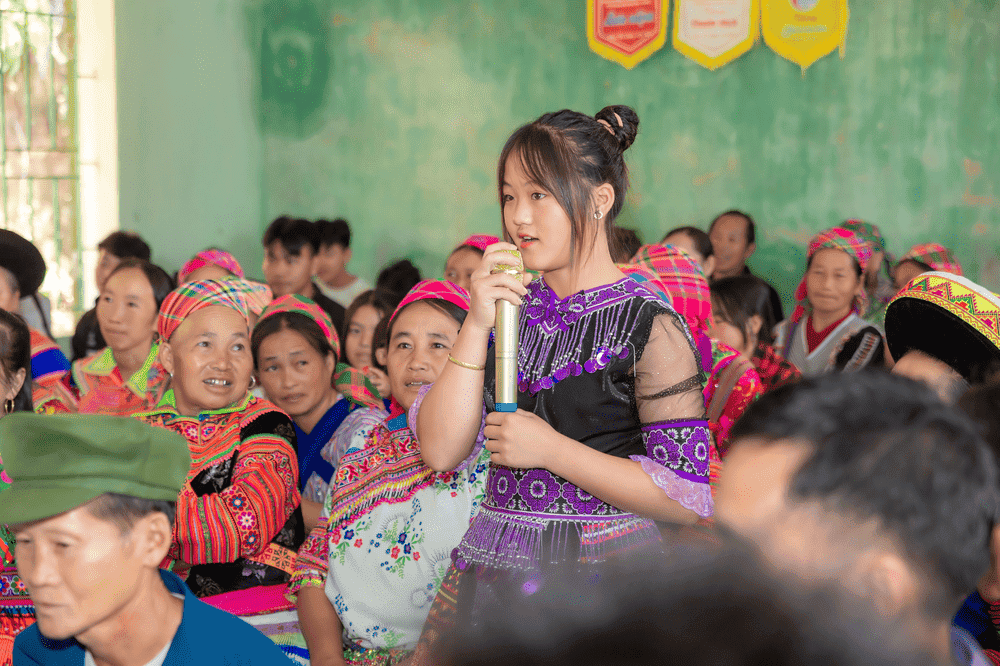
Girl wearing purple and black stands in a classroom full of people speaking into a golden microphone.

Before Chu found out about her potential marriage, she wrote in her diary, ā€œOne day I will go to college, have a stable job, get married, and fill my life with happiness.” | Vu Quang, Ā© Plan International Vietnam


Then, another shoe dropped. Her boyfriend’s parents wanted her to drop out of school. The school dormitory was no place for a wife, they said.

That’s when Chu reached out to her teachers, who reached out to Plan for help. Multiple visits with the community child protection board finally convinced Chu’s father to call off the marriage and let Chu continue her education.

Unfortunately, Chu had missed high school entrance exams and fallen behind on her studies due to the stress of a potential marriage. But with a new door opening, she was not deterred.

ā€œThis time, I will determine my own destiny,” Chu says.

First, she joined a youth economic development club through Plan and took several classes, learning new skills from pig farming to hairdressing. Then, she joined Plan’s Champions of Change club where she learned life skills, developed new friendships and participated in community activities.

Chu blossomed in the Champions of Change club, grew more confident and took on new opportunities to lead club sessions. Eventually, she was chosen to become a program facilitator.


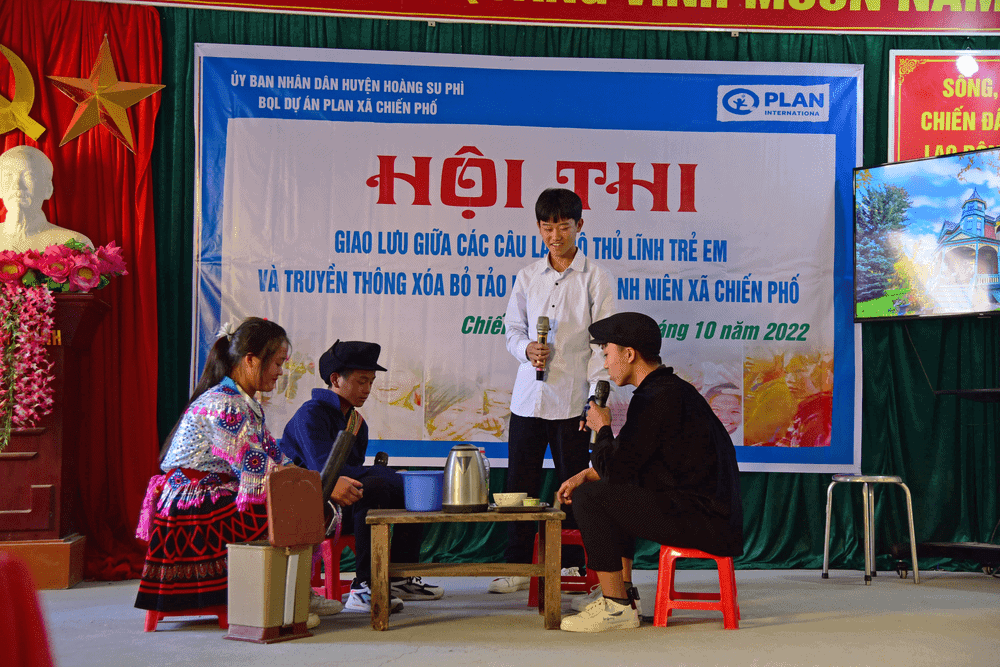
Four young people sitting around a small table in front of a sign written in Vietnamese.

Chu regularly participates in anti-child marriage initiatives in her community. | Vu Quang, Ā© Plan International Vietnam


Now a skilled leader and dedicated volunteer who is supporting the children in her community, Chu shares her story with other girls to encourage them to shun early marriage and choose their education instead.

Chu’s journey is not just a personal triumph — it’s a testament to the transformative power of education and leadership programs like Champions of Change.

In the program, implemented in over 43 countries so far, adolescent girls and boys challenge harmful gender norms in their communities through the creation of safe spaces and peer-to-peer activities.

Plan also helps connect young people in the program with youth networks and civil society organizations, forming a foundation for grassroots activism and deeply rooted change. For girls like Chu, Champions of Change is crucial for empowering girls with the tools to fight gender inequality and become leaders of the future they want.


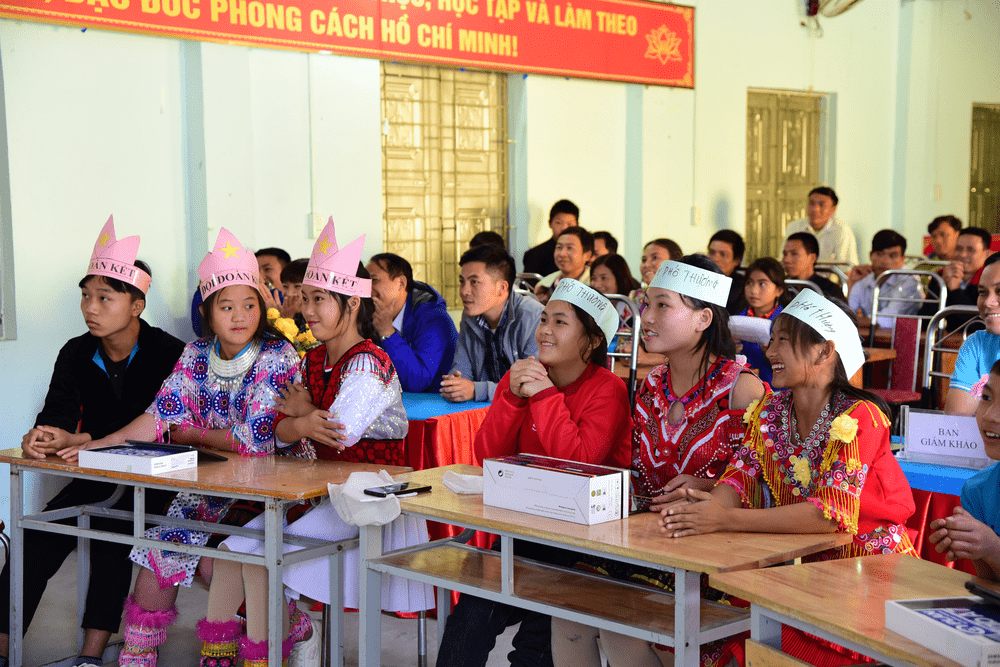
A row of young people with paper crowns sit at desks in front of a classroom full of students.

Champions of Change clubs help girls build their self-esteem and awareness of their rights while helping boys challenge toxic masculinities so they can become allies to girls. | Vu Quang, Ā© Plan International Vietnam


And we don’t stop at training girls to be leaders. We’re also helping to directly support their leadership through our Equality Accelerator. This girl-led funding platform connects young activists around the world with resources to implement their initiatives, taking what they learn in projects like Champions of Change to the next level.

[Read more: This young activist is ending child marriage in Guatemala]

Access to education is not just about acquiring knowledge — it’s about unleashing potential and generating a ripple effect. A girl who stays in school can grow into a woman who leads her community, ensuring that other girls have the same opportunity she did. It’s a virtuous cycle, one that perpetuates progress and breaks down barriers.


The future girls want feature image

The future girls want is one where they can learn, lead and live without limits. But right now, too many obstacles stand in their way. In our ā€œFuture girls wantā€ blog series, we’re shining a light on how education is the key to unlocking the future girls want for themselves, and how it impacts every area of their lives — from health to safety to civic participation.

The future girls want is brimming with possibilities. They envision classrooms filled with knowledge, not fear. They see themselves as leaders, confidently shaping their communities. But for many girls around the world, these ambitions are overshadowed by a lack of safety — both online and offline.

Plan International believes that education is the key to unlocking a safe and empowering future (and present) for girls. Here’s why:

Education shields girls from abuse

Girls with access to education are less likely to become victims of early marriage, trafficking or other forms of abuse, but poverty often gets in the way of a girl finishing school. Desperate to survive, parents might arrange a marriage for their daughter or send her off with a recruiter looking for workers under the belief she’ll be supported.

Only when it’s too late do they find out their child has been taken by a human trafficker.

Plan’s PROTECT project helped fight back against trafficking in India and Nepal. By running activities in both community centers and schools, Plan trained students and families how to spot and stop human trafficking, child marriage and gender-based violence. And, we helped provide skills trainings so young women can get real, safe jobs instead of falling victim to false promises.

ā€œNow if there are child marriages taking place, the parents and mothers are themselves raising their voices, saying that we have to stop the child marriages. I feel happy to see that change.ā€ — Project participant in Nepal

Additionally, child protection groups, transportation workers and border patrol agents received training on intervention and prevention of trafficking.

Through PROTECT, more than 12,100 children were educated on human trafficking, gender-based violence and inappropriate behavior, and 900 people at risk of trafficking were intercepted at the India-Nepal border.

The project also trained ambassadors to spread awareness about trafficking and gender-based violence in their communities.


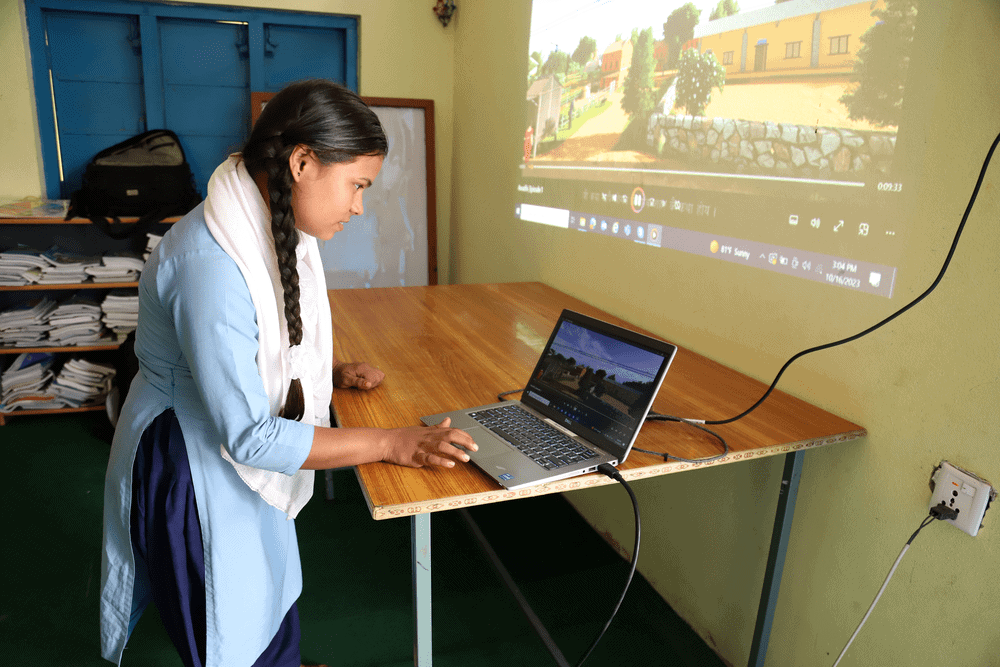
Girl scrolls on computer at desk while screen projects onto wall.

Youth ambassadors facilitate social and behavioral change sessions at schools to teach other young people about what they can do to protect themselves from trafficking. | Naresh Newar, Ā© Plan International Nepal


ā€œIf anyone tried to entice us with promises of a good education, lucrative jobs and the notion that you don’t have to work hard — [that] you can make good money comfortably — then we should not fall into that trap,ā€ Hima, an ambassador in Nepal, says.

Education builds the foundation for online safety

Education empowers girls to recognize and navigate the digital world safely. By developing critical thinking skills and digital literacy, girls can better identify online harassment and abuse and distinguish between reliable and unreliable information.

Plan International’s groundbreaking report, Building Digital Resilience, reveals the alarming reality of girls’ online experiences. Published in partnership with CNN As Equals, the research offers critical insights into the challenges girls face in the digital world. A staggering 75% of girls and young women surveyed reported having harmful online experiences, and 40% experienced monthly harassment.

Educators, community leaders and policymakers can use this data to develop effective strategies to protect girls online. Girls across South America, Africa, and Asia emphasized the need for better digital literacy education. By understanding these specific challenges, schools and governments can implement measures that both teach girls how to stay safe and create safer online environments for everyone.

To support girls’ digital literacy and increase safety in digital spaces, PROTECT developed an AI chatbot for Facebook messenger to share information about trafficking with users. More than 30,000 people have used the chatbot to learn about human trafficking.

ā€œWhether it’s listening to stories, obtaining information about human trafficking, or learning how to file cases, all the necessary information is easily accessible,ā€ Regina, another project ambassador, says. ā€œOverall, I found the app to be quite helpful and engaging,ā€


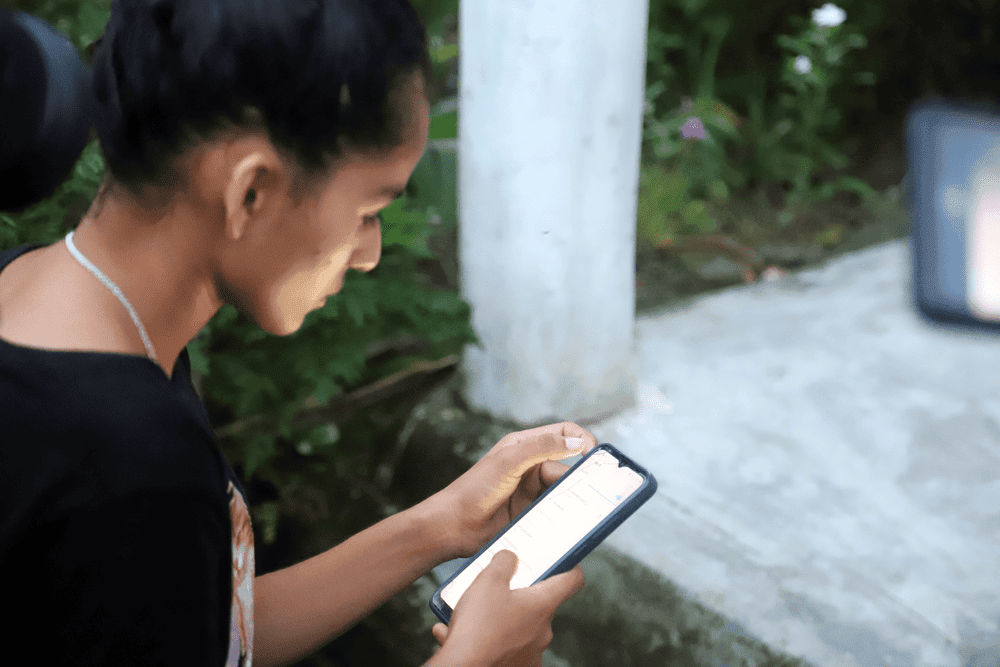
Girl faces away from the camera, looking at phone screen.

With more and more children accessing technology, bringing safety education to the platforms they use the most is important for protecting as many girls and young women as possible. | Naresh Newar, Ā© Plan International Nepal

Education empowers girls to become advocates for change. When a girl is educated, she gains the confidence and knowledge to shape her community and fight for a better future. Plan International and its partners are at the forefront of this movement, advocating for legislation like the Kids Online Safety Act to protect young people online.

No longer a statistic in a report about online harassment, an educated girl can become a vocal advocate for online safety. She can rally movements to protect more girls and young women and create the safe spaces – online and offline – that they need to build the future they want.


The future girls want feature image

Music has the extraordinary ability to transcend barriers and bring people together. Today, we’re sharing the story of a young woman who is harnessing that transformative power to inspire meaningful change for girls around the world.

Meet Sophia, a high school student in Massachusetts who is passionate about three things: singing, gender equality and giving back.

ā€œI don’t even know when I fell in love with singing,ā€ Sophia says. ā€œIt has always felt innate.ā€

The 16-year-old started taking classical voice lessons nearly 10 years ago. Over the past decade, she competed in — and won — local, national and even international competitions, performing in iconic venues, including Carnegie Hall in New York City.

Years of hard work and training culminated in her first solo recital this June.

ā€œIt was my most important milestone in my classical voice career,ā€ Sophia shares.


Sophia stands in front of the piano and sings at her recital.

Sophia takes center stage for her first solo recital in June.


As significant as this achievement was for her personally, Sophia recognized that it was an opportunity to showcase more than just her musical talents — it was a way to make a meaningful impact for girls around the world, shining a spotlight on a cause close to her heart.

Just like singing, giving back has been a part of Sophia’s life for as long as she can remember. She credits that to her family, and especially to her mother’s example.

ā€œEver since before I was born, my mother has consistently sponsored the education of children in the Yunnan province of China,ā€ she shares. ā€œWith this project, my mother and her partners would take yearly trips to the mountain town and meet with the children they were sponsoring and reconnect with the local teachers and school administrators. I accompanied her on these trips.

“The most recent visit was just last summer, where I got to visit the elementary school, and meet the principal, students my mom was currently sponsoring, as well as two of the first children my mom sponsored, who are now working as nurses after graduating universities in major cities.

“Being raised alongside these impactful experiences from childhood has definitely inspired me to continue the cycle of giving back and fighting for social justice around the world.ā€


Sophia and her mother smile for the camera; Sophia holds flowers in her arms.

Sophia’s mother inspires her to give back and to fight for what she believes in.


The social justice issue that inspires Sophia the most is the fight for gender equality and girls’ rights.

ā€œBeing a girl means being subjected to discrimination and misogyny no matter where you are from,ā€ Sophia says. ā€œAnd ever since I could recognize injustice upon myself and my gender identity, I educated myself about gender inequality around the world and became fascinated with initiatives against gender injustice.ā€

As she prepared for her recital, she thought about the many girls who are denied the freedom and opportunities to pursue their dreams.

ā€œI acknowledge my massive privilege to be provided with resources and societal permission to hone my passions — many girls do not have these things,ā€ Sophia says. ā€œWhether it is being bound by gendered, sexist obligations, hygiene stigma and under-resource, or not being able to afford school, more than 120 million girls are forbidden from pursuing education, let alone the arts.ā€

Sophia decided to turn her recital into a fundraiser, asking friends and family to donate the cost of their recital ticket to support girls through Plan.

ā€œI first heard about Plan International as a part of all school council freshman year of high school when we discussed and voted from which nonprofit to donate our event proceeds to,ā€ Sophia says. ā€œI loved Plan’s mission.ā€

Initially, Sophia set a fundraising goal of $500, but she was blown away by the response.

ā€œTo my surprise, recital attendees and friends and family alike showed overwhelming support,ā€ she says. ā€œAs of right now, we have raised $2,000!ā€

When asked what advice she has for young fundraisers who aren’t sure where to begin, Sophia emphasized the importance of doing your homework and spreading the word about your fundraiser to your personal network — and beyond.

ā€œI truly believe that anyone deciding to hold a fundraiser should really do their due diligence into what purpose they are supporting and be passionate about helping the cause,ā€ Sophia says. ā€œI partnered the fundraiser with my solo voice recital, so I was able to spread the word about it to attendees. I also posted the fundraiser and my concert invitation to my school forum, social media, personal friends and family group chats!ā€


Sophia smiles with her arms full of flowers after her recital.

ā€œI am definitely looking forward to a career involving music and voice, and am hoping to minor in classical voice in college!ā€ Sophia says. One thing is for sure — she will continue to make her voice heard, advocating for a world where every girl is free to reach her full potential.


Young leaders like Sophia give us hope for the future. Their spirit and determination inspire the work we do every day. Together, we won’t stop until we are all equal.

Sophia holding flowers

It’s August. Nerves are running high as stage lights beam and an audience rumbles with anticipation. It’s almost time for the next act to perform at the annual Petronio Ɓlvarez Pacific Music Festival. Thousands of people have arrived to eat, sing and dance their way through the streets of Cali, Colombia, and 16 young people are about to go on stage, drums and violins in hand, with a single message:

Put down your weapons and pick up an instrument, instead.


Annual Petronio Ɓlvarez Pacific Music Festival

Since 1997, the festival has welcomed locals and international travelers to celebrate Afro-Colombian food, art, fashion and dance. | Nelson Pacheco, Ā© Plan International


The group, named Renacer Bonaerense, is born from a project Plan International started in Colombia to promote peacebuilding through art in areas affected by ongoing armed conflict. Widespread instability has caused families to flee their homes and girls to face increased gender-based violence and exploitation throughout the country.

For children and young people, processing their experiences and learning self-expression skills through art has positive impacts on their wellbeing, and can unleash their potential to change their communities for the better.

Ada Luz and Valery, two members of Renacer Bonaerense, are using their talents to advocate for peace in Colombia and encourage others to explore art instead of participating in the violence.


Valery (in yellow) and Ada Luz (in red) spoke about their passion for art and the importance of it in building peace in the country.

Valery (in yellow) and Ada Luz (in red) spoke about their passion for art and the importance of it in building peace in the country. | Nelson Pacheco, Ā© Plan International


ā€œI think the most important role we can play is to take action,ā€ 18-year-old Valery says. ā€œWe, as young people, are called to change the things our ancestors did that perhaps didn’t contribute to peacebuilding. Instead of picking up a gun, we can pick up an instrument, a book, or start making art or poetry. We need to move away from violence and explore other possibilities.ā€


Image of Valery

Valery is passionate about advocacy and has taken on a leadership role as a cultural advisor in her community, working tirelessly to advocate for the rights of girls and young women. | Nelson Pacheco, Ā© Plan International


A violinist and drummer, Valery also serves as the director of the music group and has been involved in art programs and initiatives with Plan since she was 10 years old. Her journey through music and leadership is an inspiration to her entire community.

ā€œFor me, music has been the lifeline I needed,ā€ she says. ā€œFrom the moment I started, I knew it was what I wanted to do. Many girls and boys are now seeing music as an alternative way to make the most of their free time and as a way to build peace.ā€


Image of Valery playing the violin

For years, Valery asked her father for one thing on her birthday: a violin. | Nelson Pacheco, Ā© Plan International


ā€œBeing a woman who plays traditional music wasn’t easy at first. The violin and drum are instruments mostly played by men, and in our community, there was a lot of machismo. It was strange for girls to be seen playing these instruments. There was a belief that we would loosen the drums, break the violin strings or somehow ruin the instruments. It hasn’t been easy, but we’ve been able to break down those false beliefs.ā€


Image of Valery playing the violin in a group

Valery has been the group’s director since she was just 14 and has no plans of leaving any time soon. | Nelson Pacheco, Ā© Plan International


Fifteen-year-old Ada Luz is both a violinist and singer in the group. Having grown up living through armed conflict, she sees art and music as powerful tools for children and young people to express themselves in a healthy way and to build social bonds.


Image of Ada Luz standing near a tree

In addition to her music career, Ada Luz also loves theater and is a member of an experiential theater group in her community. | Nelson Pacheco, Ā© Plan International


ā€œWe want to turn the pain of the armed conflict into something lighter, into jokes and laughter, so that all this suffering becomes a thing of the past and is forgotten,ā€ Ada Luz says. ā€œAnd it’s the same with the music, it moves you so much. It can remove the pain or mixed feelings that you have. In other words, it helps you to let go. I like to sing, share with my friends, do theater and express myself in front of other people and tell them about everything I have experienced.ā€


Image of Ada Luz standing in a group

Ada Luz comes from a family of artists. Her aunt is the director of a local theater group, and her father is also a renowned artist. | Nelson Pacheco, Ā© Plan International


Ada Luz has represented her community in multiple forums, including being an ambassador for a day for Sweden and participating in the construction of a governance pact for children. She is determined to ensure that the voices and opinions of girls are heard and hopes to eventually create her own foundation to help people in need.

ā€œThere are songs that are made for peace,ā€ Ada Luz says. ā€œThey motivate people to leave armed conflict behind and focus more on the present and what lies ahead. To not just focus on all the bad things that have happened in my community but on what’s coming in the future, and everything that we can live for and what’s beautiful.ā€


Image of Renacer Bonaerense

Renacer Bonaerense continues to advocate for children’s rights through their music, infusing messages of peace and equality in their songs. | Nelson Pacheco, Ā© Plan International


ā€œFor me, peace is a dream — a dream I hope will soon come true,ā€ Valery says. ā€œI hope that in the future, not only for myself but for the children younger than me, they will be able to live a peaceful life without fear.ā€

Inside the Cali music festival feature image

Back-to-school season is always bittersweet. It’s a fresh chapter for students around the world to continue their work toward a bright future, even if that also means the less-anticipated return of late-night study sessions and class presentations.

Anyone who has been through school knows that getting an education is one of the most important achievements in your life, and overcoming the not-so-fun parts of school is always worth it. Yet, many children around the world are unable to experience even these small stresses from school because they’re facing an even harsher reality: being unable to attend class altogether.

Plan International’s education programs are designed to help children experiencing poverty, conflict and other barriers go to school, stay in school and graduate so they can build the futures they really want.

Back to school against the odds

Christina, a 16-year-old girl from Tanzania, is one of those children. After being abandoned by their parents, Christina and her six siblings were taken in by their grandfather.

While still in primary school, Christina worked on farms to earn money for school supplies and food for her family. Despite these hardships, she completed her primary education. However, poverty and her family’s belief that marriage was the only way out of their financial difficulties eventually halted Christina’s education.

“Every day was a struggle to provide for my family and keep my dreams alive,ā€ Christina says. ā€œI saw my sister forced into marriage to pay for our grandfather’s medical bills, and I feared that would be my fate also.”

Christina’s story took a turn when staff from a Plan project to keep adolescent girls in school heard about her situation. She was immediately encouraged to join.


Close up shot of a smiling girl wearing a white button-up shirt and black tie.

Christina says that being able to return to school has changed her life for the better. | Lilian Mmbaga, ©Plan International Tanzania


“Christina’s determination is truly inspirational,ā€ one of the project facilitators says. ā€œDespite the obstacles she faced, she never gave up on her dreams. Giving her the opportunity to return to school and supporting her along the way was an easy decision.ā€

The project works with the government and community organizations in Tanzania to help girls exercise their right to education by engaging parents and community members in conversations about the value of girls’ education and providing tangible support, like school supplies, to reduce costs.

Although Christina started the program five months late, she was undeterred. She approached her studies with courage and resilience, and quickly became one of the top students in her class.

Now Christina hopes to become an advocate for girls’ education. Deeply aware of how the lack of education affected her family, she is determined to ensure that no other girl goes through the same struggles she has.Ā Ā Ā 

“Now I am full of hope,ā€ Christina says. ā€œGoing back to school has changed my life. I’m so happy to be here. I know that education is my way out of poverty and my chance to help other girls avoid the same fate. I’m not going to let anything stand in my way.ā€

From sponsored child to certified nurse

When Jenny was 10 years old, she joined Plan’s sponsorship program in Ecuador. Growing up in a remote village limited her parents’ financial prospects and made it difficult for Jenny to get an education. Once she entered secondary school, she had to travel an hour and a half just to get to the closest school. Through the sponsorship program, she was able to stay the course (pun intended).

“I am very grateful to all the people from Plan International,ā€ Jenny says. ā€œWith the support they gave me, I was able to buy the school supplies I needed.ā€

After graduating from high school and completing Plan’s sponsorship program, Jenny decided to go to university to study nursing, but the high costs involved in continuing her education made it seem impossible.

Although education in Ecuador is free, universities are in big cities, far from the rural communities where young people like Jenny live. Expenses like transportation, food, internet and books can be barriers to higher education.

Plan was there to help Jenny keep her dreams alive. Since 2016, Plan has been awarding students (especially young women) in Ecuador with university scholarships to help cover the extra costs, and when Jenny heard about this, she applied for this support.


Photo of a young woman wearing a white graduation gown with red and green sashes and a black cap holding open her university diploma.

Along the way, Jenny’s parents have been her rock. “I value every sacrifice they made for me and my siblings,” she says. | Ā©Plan International Ecuador


Now, after years of studying, Jenny is officially a nurse! Despite the challenges she had to overcome, with the support of Plan, her family and a lot of determination, she is the first person in her family to graduate from university.

“I want to be a role model for my siblings, so they know that they can achieve their goals and dreams,ā€ Jenny says. ā€œI want to tell all women to follow their dreams so that they can be great leaders and can continue sharing their knowledge. We are all capable.ā€

Plan believes that every child deserves a quality education, regardless of their circumstances. With the support of compassionate people who contribute to education programs for students like Christina and Jenny, we are breaking down barriers that prevent children from accessing school to ensure they can reach their full potential.

By investing in education, we are investing in the future of our world.

Back to school, back to building the future feature image
American Counseling Association: Rethinking Masculinity