Search Results

Search results for

0 result(s) found

After years of exchanging letters and photographs, Plan International sponsor Wendy finally met her sponsored child Obed face-to-face during a recent trip to Rwanda. The visit, coordinated through Plan, turned out to be a day she will never forget. Here’s what Wendy had to say about the transformative experience.

What inspired you to sponsor a child with Plan?

Sponsoring a child was an easy decision for me. I used to live and study in Ghana, West Africa, in college so I have a personal connection to needs in that region. It was a no brainer since I have always known about the very real issues in Africa.

What do you enjoy most about being a sponsor?

I think it is a very special thing to help people in this way. The issues for children in that region in Rwanda are serious, and I know how much of an impact it makes to be a sponsor, whether it’s a donation or the monthly sponsorship of a child. I think in our everyday lives, it is easy to disconnect from the reality of life in other parts of the world, and I knew that even a little goes a long way. Obed was also very young when I first saw his picture. He seemed so little and we were excited to get to see him grow up.

How did it feel to meet your sponsored child in person?

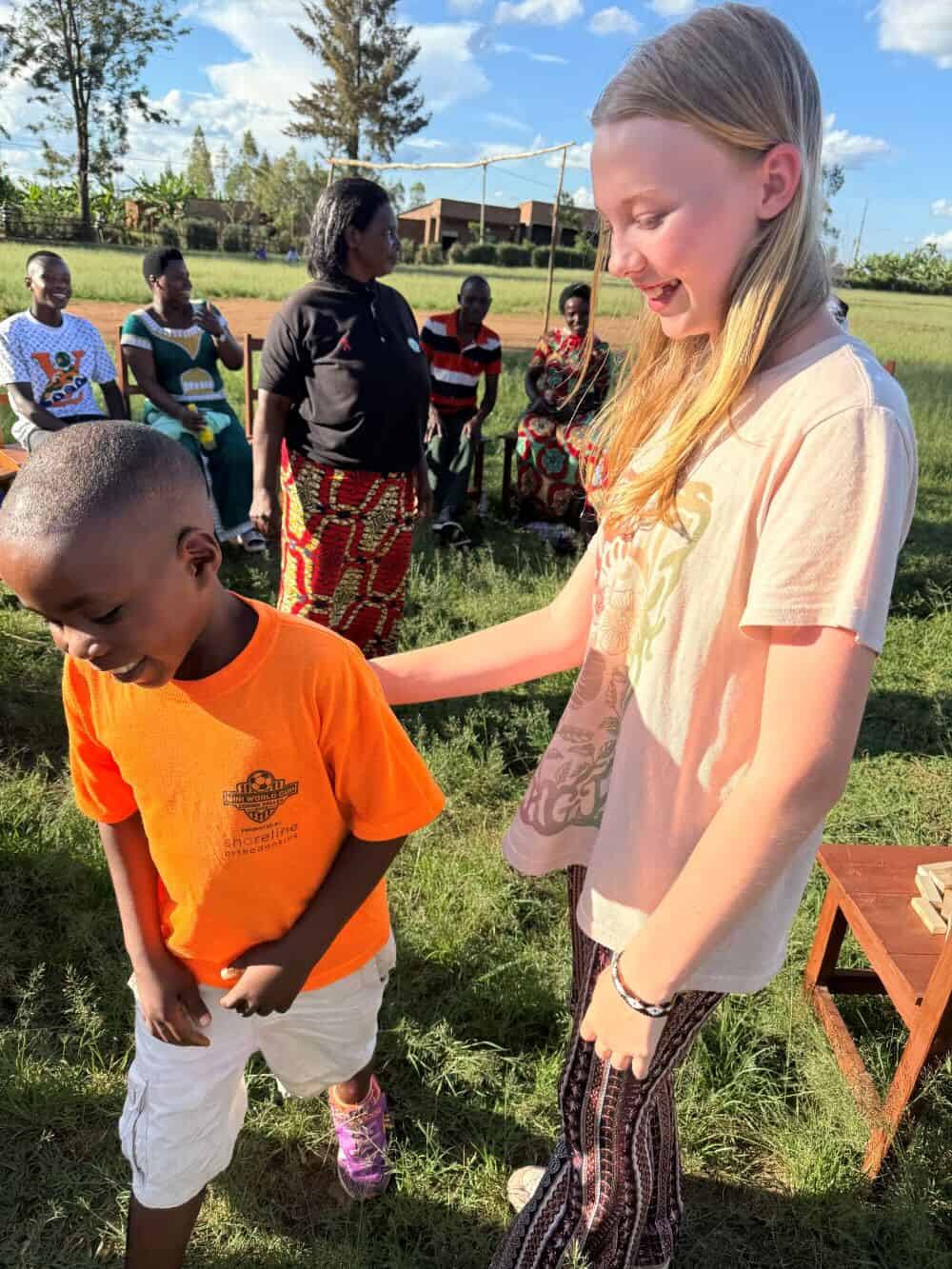
It was incredible! And surreal! I mean, we had only seen our sponsored child in pictures, so to meet in real life was really quite something. My daughter, who is 12, was so excited to meet him, and I think she was surprised that all of the other kids in the village came out to see what was going on. We also met Obed’s parents, family members, teachers and school principal. Everyone was so gracious and kind. I felt a huge sense of community and togetherness and that we were really doing something rare and special, bridging a gap across oceans. I think we became real for them just as much as they became real for us.


Obed, wearing an orange shirt and shorts, and Avery, wearing a pink shirt and patterned pants, smile together outside.

Wendy’s daughter, Avery, was excited to finally meet Obed.


What was the best part of the day?

To be honest, the whole day really was one of the more incredible experiences of my lifetime. Everyone was so kind and welcoming and truly happy to meet us. It was truly a privilege to be welcomed by the family to their village.

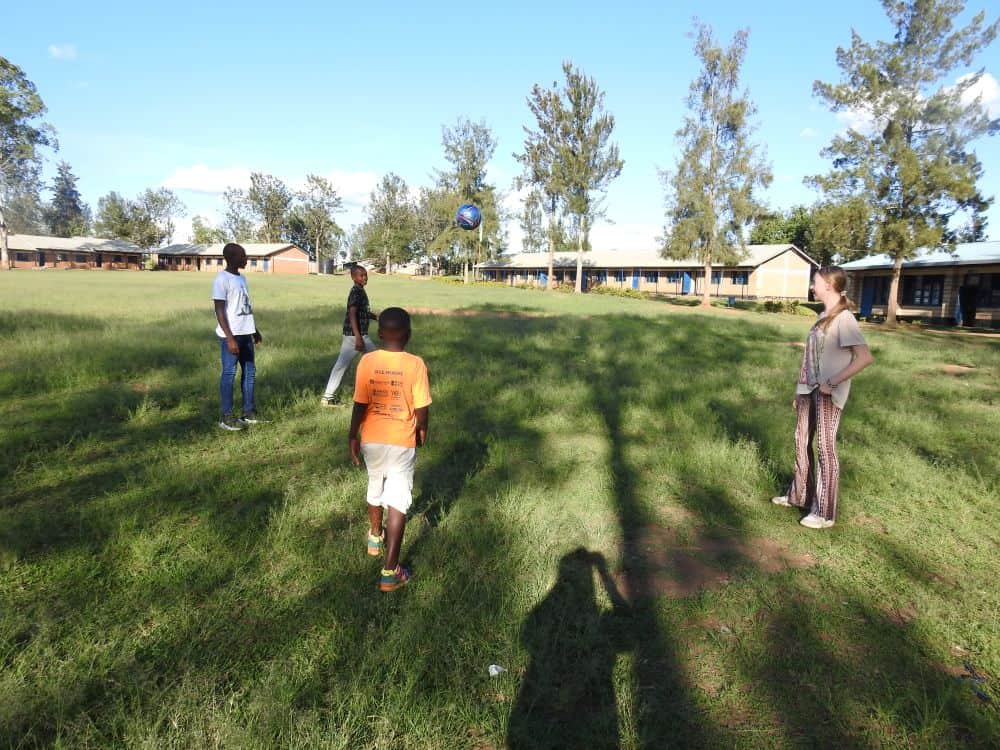
My daughter Avery wanted to give Obed a soccer ball as a gift. This was a big success and he really loved it. The kids formed a circle and got to pass the ball. She loves soccer, and these kids did too, so it was an amazing thing to see them getting along and playing in this way. It was the moment when Avery realized how much she had in common with all the kids.

The Plan staff were also so helpful at showing us around. I was personally most surprised to meet the person who translates the letters to the sponsors and the staff member who takes the pictures of the kids that you see in the mailers. Meeting the people behind the scenes firsthand brought everything to life!


A small group of children play soccer outdoors in a large, grassy area.

Wendy’s daughter Avery had a great time playing soccer with Obed and children from his community. | Vanessa, Ā©Plan International


How did you see Plan’s work making a difference in the area?

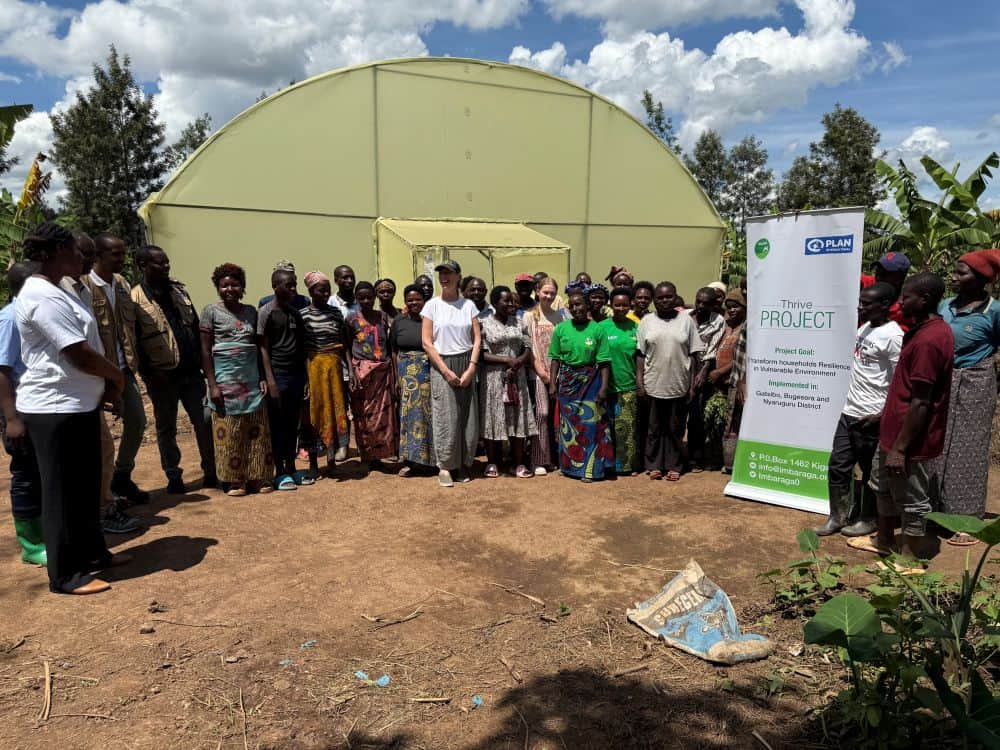
We started our day by visiting one of the farming projects aimed at improving nutrition in the community and for the children. We were greeted by the whole farming co-op of around 50 people and got to tour the new greenhouse. The community took so much pride in their project. They had done such work and we felt so honored that everyone took the time out of their day to show us what they had done. It was then that I realized what amazing and diverse work Plan is doing to improve the overall health and wellness of the communities. We were also able to visit one of the schools that Plan helped to construct. It was beautiful. We learned that the school allowed more children to go to school and also eliminated the long distance they used to walk. Some of the kids had been walking more than an hour to school before the school was built!


A group of people stand outside a tan structure with a sign next to it that says Thrive Project.

Wendy and Avery visit Plan International’s Thrive project and tour the new greenhouse.

Ā 

What would you tell other sponsors thinking about visiting their sponsored child?

If it is a possibility to go, you absolutely must go see the work Plan is doing in the region where you are sponsoring. It will be a life-changing experience and you will see how incredible this organization really is. A visit like this connects you to the world in ways you never expected. It makes you realize how big your monthly contribution is and how much it means to those receiving it. Visiting also makes you realize how lucky you are to have what you have. We came back with so much gratitude, feeling reinvigorated to help.


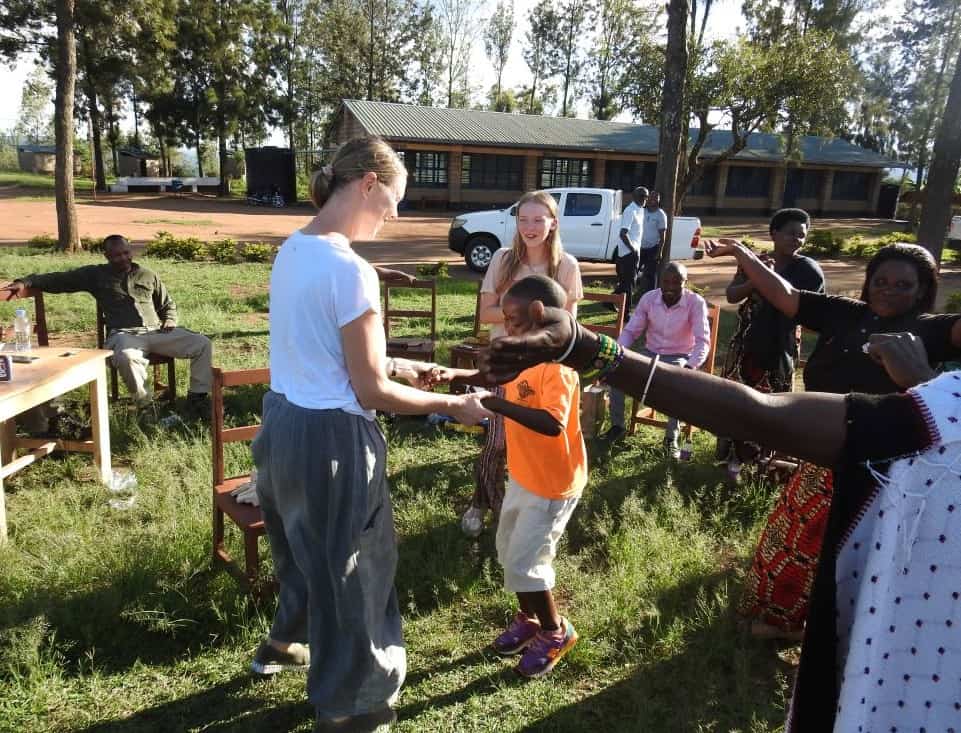
A woman wearing a white t-shirt holds hands with a boy wearing an orange t-shirt, surrounded by people celebrating outside.

Wendy’s visit with Obed was a community celebration — and a day she’ll never forget. | Vanessa, Ā©Plan International

Ā 

If you could share one message with someone considering child sponsorship, what would it be?

Don’t hesitate. It is the easiest and best decision you can make. And you will live with knowing you are making a big difference in the world.Ā  Your help is needed.


If you are interested in visiting your sponsored child, we would be thrilled to help organize that for you! All sponsor visits must be coordinated through Plan. Learn more here or call 800.556.7918 to speak with a friendly donor loyalty representative.

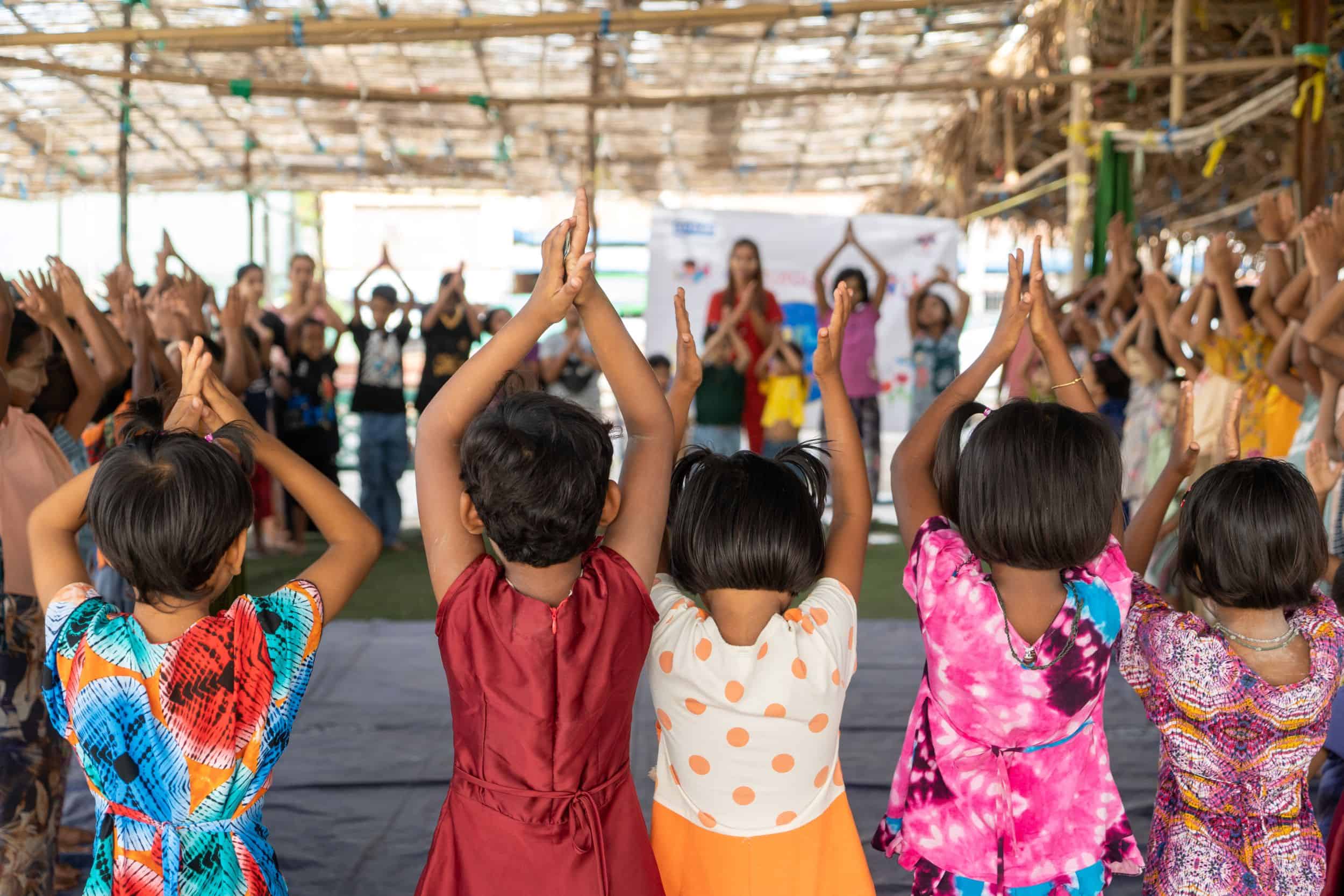
Sp-visit-dance image


InterAction, the largest alliance of U.S.-based international NGOs, has announced three new appointments to its board of directors — including Plan International USA president and CEO, Shanna Marzilli. Shanna joins leaders from Habitat for Humanity International and the Alliance for Peacebuilding, bringing decades of experience in nonprofit leadership, global development and strategic communications.

This role positions Shanna to help guide the broader development and humanitarian sector at a pivotal time. As Plan continues to advocate for children’s rights and equality for girls, her appointment reflects growing recognition of the organization’s leadership and expertise.

Read the full article here: InterAction welcomes three new board members

InterAction logo


In an interview with NBC Washington, Katherine Williford, chief development officer at Plan International USA, shared what it feels like to see decades of progress unravel in real time. ā€œHonestly, it’s heartbreaking,ā€ she says. ā€œI think all of us in the sector are walking around feeling nauseous.ā€ Plan USA has lost $38 million in funding from USAID and has already been forced to cancel key projects focused on protecting girls’ rights.

Williford explains that the programs being cut are not theoretical — they’re the difference between a girl staying in school or being forced into early marriage. ā€œWe know that when girls in developing nations get access to education, their communities thrive, their economies thrive,ā€ she says. The organization is now scrambling to fill the gap through private donations in order to continue supporting girls when they need it most.

Read the full article here: USAID cuts could lead to millions of deaths, researchers warn

Channel 4 Washington logo

Rachidatou stands confidently in class. Text reads: ā€œSeen and Supported — a story of disability, resilience and education.ā€

In the Savanes region of northern Togo, 18-year-old Rachidatou sits at a wooden desk with her notebook open, waiting for the end of class. She can’t see what the teacher writes on the blackboard — not clearly. So she borrows her friend’s notes and copies them down, line by line.

ā€œIn class, when teachers write on the board, I struggle to see clearly because of my eye condition,ā€ she says. ā€œSo I wait until the end of the class to borrow my friend’s notebooks and copy the lessons.ā€

Rachidatou lives with albinism, a genetic condition that affects her eyesight and makes her skin sensitive to the sun. She also lives with determination, driven by a clear goal: to become a doctor.

This Disability Pride Month, we’re honoring young people like Rachidatou who are often overlooked or excluded but continue to lead, speak out and show us what’s possible when education is inclusive and accessible to all.

From fear to belonging

Rachidatou, a student with albinism, listens attentively in class in northern Togo while holding a piece of paper.
Rachidatou listens closely during class. Although she has trouble seeing the board due to albinism, she stays engaged by borrowing notes and using her voice. | Abdul-Manaph Ouro-Djeri, Ā© Plan International

In 2023, Rachidatou and her mother fled Burkina Faso because of attacks by armed groups. They crossed the border into Togo's Savanes region, seeking safety and a chance to rebuild their lives.

ā€œWhen I arrived, my classmates treated me with kindness. At first, I was scared. It was my first time going to school in Togo,ā€ she says. ā€œI didn’t know how the school system worked here compared to my country. Thanks to the support of my friends, I adapted quickly. Now I am proud to be a student here in Togo.ā€

She had lost contact with her friends in Burkina Faso — a quiet heartbreak. But in her new school, kindness replaced fear. Community replaced isolation.

ā€œHere, I made new friends who treat me just like the ones back home did,ā€ she says.

Her words reflect something powerful: not just resilience but belonging.

What inclusion really looks like

Today, Rachidatou is in her third year of secondary school. She’s one of thousands of students benefiting from PAREC II, a national education initiative supported by Plan and Action Education, and funded by the Agence FranƧaise de DĆ©veloppement.

The program focuses on increasing access to quality secondary education in underserved regions like Savanes, with special attention to girls and children with disabilities.

PAREC II supports:

  • Inclusive teaching practices that adapt to students’ diverse learning needs.
  • Improved infrastructure so schools are accessible for students with disabilities.
  • Community awareness campaigns that encourage gender equity and student retention.
  • Safe learning environments that promote social cohesion between refugees and host communities.

ā€œInclusive education isn’t just about getting students through the door,ā€ said Meghan Mattern, inclusive quality education advisor at Plan International USA. ā€œIt’s about creating classrooms where every learner feels safe, valued and supported to thrive — including girls and students with disabilities.ā€

Rachidatou stands in a classroom with a group of fellow students, all smiling.
Rachidatou found a sense of belonging in her new school, where classmates welcomed her with kindness after she fled conflict in Burkina Faso. | Abdul-Manaph Ouro-Djeri, Ā© Plan International

Globally, children with disabilities are 10 times less likely to attend school than their peers without disabilities. Girls with disabilities face even more barriers due to gender norms, caregiving roles and higher risk of discrimination or violence. But when they are included, they thrive.

Rachidatou’s experience shows us that inclusion isn’t an abstract goal. It’s a student who can’t see the board, but is seen by her peers. It’s a classroom that doesn’t push her out but pulls her in.

A future filled with hope

Even after all she’s faced, Rachidatou speaks with calm certainty about what will come next.

ā€œMy dream is to become a doctor, so I can help my family and others in need,ā€ she says.

ā€œMy message to other refugees is to be strong. This situation won’t last forever. When I came to Togo, I found peace. And one day, peace will return to Burkina Faso too.ā€

Rachidatou sits in class in northern Togo, smiling and looking directly at the camera.
In northern Togo, Rachidatou is thriving in school and looking ahead with determination. Her dream? To become a doctor and help others. | Abdul-Manaph Ouro-Djeri, Ā© Plan International


Her words carry more than hope. They carry direction, for herself and for others like her.


At Plan, we believe that every child deserves the chance to learn, no matter who they are or what barriers they face. Through inclusive education, we’re supporting girls like Rachidatou to lead, heal and shape the world they want to live in.


We won’t stop until we are all equal.

Blog-Banner-Disability-Pride-Month-Rwanda-Albinism image

When we think of displacement, we often focus on the destination — the border crossed, the asylum granted. But what about the children who never make it across — or those left waiting indefinitely in unfamiliar cities, without protection or support?

Young girl with a purple backpack walks alone near a mural in Mexico, highlighting the dangers faced by unaccompanied children on the migration route.

This World Refugee Day, Plan International is spotlighting the children left in limbo at Mexico’s northern border. A new report by Plan and Save the Children — Unaccompanied Children: Risks and Violence Along the Migration Route Through Mexico — shares the stories of 155 children and caregivers navigating three of the country’s most high-risk border cities: Ciudad JuĆ”rez, Reynosa and Tijuana.

The data highlight significant gaps in the protection and support available to migrant children. These children are exposed to multiple forms of violence and often lack access to the assistance they need. Mental health services and education systems are struggling to meet their needs, leaving many without critical support. This report underscores the need to strengthen care for migrant children — not only at border crossings, but also within the systems intended to ensure their well-being.

A journey defined by risk

For most children, migrating through Mexico isn’t something they choose — it’s something they’re forced into. Forced internal displacement and the transit of foreign populations through high-risk zones have become defining features of this corridor. The majority of children interviewed — ages 7 to 16 — came from Colombia, Guatemala, Haiti, Honduras, Mexico, Venezuela and even Afghanistan.

In Ciudad JuĆ”rez, nearly two-thirds of children began their journey accompanied by a parent or guardian. But by the time they reached Mexico’s northern border, only one-third remained with them. This separation significantly increases children’s risk of gender-based violence, trafficking and recruitment by organized groups — a pattern echoed across multiple case narratives in the report.

ā€œThe testimonials from our research reveal a heartbreaking reality: children are being separated from their families during their journey through Mexico, leaving them vulnerable to trafficking, violence and recruitment by organized crime groups. These children endure months of delays that keep them apart from their families, face discrimination in education and experience isolation within a system that fails to uphold their fundamental rights. This protection crisis demands immediate and coordinated action from all parties involved.ā€

— Carmen Elena AlemĆ”n, Plan International Americas Regional Director

Close-up of two children’s hands. Text: '58% of migrant children and adolescents surveyed across three cities in Mexico are no longer attending school after displacement.'

When protection systems fail

The threats don’t end at the border. In Reynosa, one in three interviewed girls had lived in displacement shelters for over six months — often in overcrowded, high-risk areas where going outside means risking kidnapping or extortion.

Education, a critical anchor in children’s lives, is often one of the first things to be lost. In the three cities analyzed, while more than 70% of children surveyed had been enrolled in school before migrating, 58% were no longer attending classes at the time of the interview. Children are often kept out of school by a mix of bureaucracy, missing documents, overcrowded classrooms and xenophobia from host communities. Inconsistent shelter policies and social discrimination only deepen the barriers to learning.

ā€œThe mothers, fathers and caregivers of the Mexican population do not want their children to live with children on the move,ā€ one interviewee said, reflecting widespread social discrimination.

The silent burden: mental health

The emotional weight of displacement is often the hardest to see — and the easiest to overlook. Many children struggle to understand why they were separated from caregivers or why they remain in prolonged uncertainty. Some describe learning how to spot predators or protect younger siblings in situations no child should face alone.

Despite the evident trauma, access to formal mental health support is nearly nonexistent. Cuts to international funding have forced the withdrawal of psychosocial programs, leaving children without even a basic outlet for care.

Child with a drink sitting at a lunch table. Text: 'None of the children interviewed reported receiving mental health support.'

ā€œWhat we’re witnessing is a mental health crisis that requires urgent attention. Children in our programs describe living with constant fear and uncertainty — some tell our staff to ā€˜be careful who you talk to’ even in safe spaces. We’re seeing parents focused on immediate survival needs, often saying ā€˜when we reach our destination, then I’ll focus on my child’s emotional needs,’ but these children need support now. We’re working with our partners to address these gaps, but the need far exceeds current capacity.ā€

— Arturo Estrada, Interim Country Director of Plan International Mexico

Child in a wheelchair with red gloves. Text: 'The study found that there are several children with disabilities who are in a situation of mobility, which increases their vulnerability.'

What the research is calling for

The findings from this report reinforce a critical truth: migrant children are not being adequately seen, heard or protected. The evidence points to an urgent need for coordinated, multi-sectoral action that responds to the rights, needs and lived realities of children on the move.

Based on the research, the report calls for:

— Immediate, trauma-informed mental health support — services must be accessible, culturally sensitive and designed specifically for children and adolescents, especially those who are unaccompanied.

— Protection systems that respond to the gendered risks girls and young women face — including the prevention of gender-based violence, trafficking and exploitation in shelters and transit zones.

— Uninterrupted access to education — flexible enrollment policies, language support and safer school pathways are urgently needed, even within temporary displacement.

— Safe, dignified shelter options — facilities must prioritize children’s well-being, offer safe recreational and learning spaces, and include family tracing and reunification services.

— Institutional strengthening and interagency coordination — especially at the municipal level, where high staff turnover and fragmented systems continue to impede continuity and accountability.

At Plan, we implement humanitarian emergency response actions in Mexico along both the southern and northern borders, where we support shelters by providing care services, mental health support and school reintegration programs.

In 2024, the organization served more than 54,000 people, including 21,000 girls and young women who received humanitarian assistance through the creation of safe spaces, access to education, emotional wellbeing support and other services. We have also worked hand-in-hand with various state institutions and local organizations to prioritize differentiated care for children.

Toward a more protective future

Children on the move are not just crossing borders. They are navigating broken systems that often render them invisible. But their vulnerability is not inevitable. With the right investments, policies and political will, migration can be met with protection — not peril.

As we mark World Refugee Day, this report stands as a timely reminder: The right to protection goes beyond survival. It means acknowledging children as rights-holders, as participants and as leaders in shaping their futures.

The report offers timely insights for programming, particularly in light of ongoing displacement trends. These findings call for action that child protection actors, governments and donors can adapt across borders.


Read the full report


Stay updated on Plan International’s technical work by

signing up for ā€œFrom Plan to Action,ā€

our quarterly newsletter.

As the U.S. government shutters USAID and absorbs its responsibilities into the State Department, Plan International’s director of policy, Justin Fugle, spoke to UPI about the devastating consequences for international aid programs. In the interview, he describes how life-saving work — including girls’ education efforts reaching hundreds of thousands of students — has ground to a halt without clear direction or support.

Fugle shares a candid assessment of what’s being lost: not just funding, but deep technical expertise and momentum built over decades. ā€œThe staff who knew how to do these things have to move on with their lives,ā€ he says. ā€œYou won’t be able to bring the capability back.ā€ With millions of lives on the line, he calls for an immediate extension of existing programs and long-term clarity on the future of U.S. foreign assistance.

Read the full article here: Aid organizations left in dark months after USAID cuts begin

UPI logo
A boy runs barefoot beside a rolling bike tire, guiding it with a stick in a game called ā€œSticks and Wheels.ā€ A girl skips rope with a laundry line. Children tie string to rusted cans, dragging them behind like clattering parade floats. Another fashions a toy car from a plastic bottle, tugging it proudly across the dirt with a piece of twine. In the heat, they gather beneath mango trees to clap, chant and laugh through hand games. And when the rains come, they stomp and splash barefooted under the torrential downpour — soaked, singing and smiling, completely unbothered. In Liberia, where I raised my daughter during her first three years, I saw children invent joy from nothing every day.

Even when playgrounds existed, they were often rusted and broken down — the kind that came with splinters, sharp edges and a side of tetanus. I was privileged to be able to send my daughter to a school that prioritized learning through play. I could create safe spaces for her at home. But for many children around us, safe places to play simply didn’t exist. There were no reliable playgrounds. No protection. No peace of mind.

Play isn’t a luxury. It’s a necessity. It’s how children recover from trauma, build resilience, develop critical skills and connect with the world around them. It’s how they stay kids, even when the world feels anything but safe.

This International Day of Play, we’re spotlighting the children and communities who remind us that play is never just play. From war zones to drought zones and from early childhood centers to football fields, here’s how Plan International is making space for joy — through programs designed to protect childhood and promote learning, healing and equality.

Children in Moldova stand in a circle holding up a colorful parachute during a visit from the Ludobus, Plan’s mobile play bus that offers games, books and psychosocial support for refugee and host community families.
Children in Moldova lift a colorful parachute during a Ludobus visit — a mobile play bus run by Plan that brings educational games and psychosocial support to refugee and host communities affected by the conflict in Ukraine. | Ā© Plan International

Moldova: The play bus brings joy and relief

The Ludobus — short for ā€œplay busā€ — is a traveling toy library filled with educational games, books and puzzles. It visits villages and refugee centers across Moldova, creating joyful spaces for children and relief for mothers affected by the conflict in Ukraine. As children engage in play, mothers can rest or meet privately with psychologists to discuss their needs in a safe, supported environment.
Children in Gaza smile and play a hula hoop game during a recreational session organized by Plan and partners to support displaced families and provide psychosocial relief through play.
Children in Gaza take part in recreational activities supported by Plan’s emergency relief project, implemented in partnership with local organizations ACHA and Taawon. These safe spaces help children cope with trauma through joyful, healing play. | Ahmed Salama, Ā© Plan International

Gaza: Reclaiming joy in a time of crisis

In Deir al-Balah, Gaza, where thousands of displaced families have sought shelter, Plan and its local partners are creating moments of joy amid unimaginable hardship.

Through an emergency relief project with the Abdel-Safi Community Health Association and Taawon, we support recreational activities for children affected by conflict. In these safe spaces, girls and boys dance, laugh and take part in interactive games designed to ease trauma and rebuild a sense of safety. These sessions do more than entertain — they offer psychological support and a path to healing.

Children play in a concrete courtyard surrounded by barbed wire in Lebanon, where public schools are closed and many serve as shelters due to ongoing conflict and displacement.
Children play in a courtyard repurposed as a shelter in Lebanon, where ongoing conflict has forced over a million children out of school. Plan continues to support safe spaces for children amid the crisis. | Rachel Chalita, Ā© Plan International

Lebanon: Playing between the lines of conflict

In a dusty courtyard surrounded by barbed wire, children play as war unfolds just miles away. With more than 1 million children out of school due to conflict, Plan-supported play activities have become one of the few constants in their lives.

Children in school uniforms play a large floor board game during a Plan ā€œPlan of Joyā€ session in Piura, Peru, designed to support emotional recovery and resilience after flooding.
Children in Piura, Peru, play a giant board game during a Plan of Joy session — part of Plan’s response to El NiƱo floods. The sessions teach children about resilience, safety, and emotional well-being through play. | Ā© Plan International

Peru: The healing power of play after El NiƱo

After floods devastated her village, 9-year-old GĆ©nesis found solace at a ā€œPlan of Joyā€ play session. ā€œWhen we started playing, I didn’t think about the rain anymore,ā€ she says. Games helped her manage fear, build confidence and feel less alone.
An 11-year-old girl in a green school uniform smiles while standing inside a colorful playground structure at her school in Zimbabwe, supported by Plan International.
Kimberly, 11, smiles on the playground at her school in Zimbabwe. With support from Plan International, the school has new classrooms and a safe play space — a rare and cherished place for children in her drought-affected community. | Tendai Marima, Ā© Plan International

Zimbabwe: A playground becomes a reason to stay in school

In drought-affected Tsholotsho, Kimberly, 11, finds joy in a rare safe space: the school playground built with support from Plan International.

ā€œAt home I only have my cat to play with,ā€ she says. ā€œI love the playground — it’s a safe place for us to be children.ā€

As water becomes harder to find and more children drop out of school, Kimberly holds on to her dream: to stay in school and one day become a nurse.

A teacher in Ethiopia leads a group of young children through hands-on play activities as part of Plan’s PlayMatters project, which supports learning and emotional development in refugee and host communities.
A teacher leads a Learning through Play session with young children in Benishangul-Gumuz, Ethiopia. Through Plan’s PlayMatters project, refugee and host community children build skills and resilience in safe, engaging environments. | Natnael Tesfaye, Ā© Plan International

Ethiopia: Learning through play in a region affected by crisis

In Benishangul-Gumuz, a region in northwestern Ethiopia affected by conflict and displacement, Plan’s PlayMatters project is helping children recover and grow. The program equips teachers and facilitators with tools to integrate learning through play into classrooms. Through guided, hands-on activities, children ages 3 to 12 in both refugee and host communities strengthen cognitive, emotional and creative skills — building resilience in safe, inclusive spaces.

Girls in Atacora, Benin, play football in matching uniforms on a dirt field as part of Plan International’s Impact-Elle project, which uses sport to promote gender equality and leadership.
Girls play football in Atacora, Benin, as part of Plan’s Impact-Elle project. The program promotes girls’ leadership and gender equality through sport, while also reducing financial barriers with equipment and school supplies. | Isabelle Lemou, Ā© Plan International

Benin: Girls take the field — and their power

Through the Impact-Elle project, Plan supports 16 girls’ football teams in Atacora, creating safe spaces where girls can play, lead and be seen.

What begins on the field ripples out: the program challenges gender norms, fosters leadership and encourages parents to support their daughters’ participation — helping change the story for the next generation.

A smiling girl in Poland with long brown hair plays with colorful therapy blocks during a support session, part of a refugee assistance program run by Patchwork and Plan.
Alesia plays during a therapy session in Poland, supported by the Patchwork Association in partnership with Plan. The organization helps refugee children with disabilities access education and psychosocial services. | Weronika Jurkiewicz, Ā© Plan International

Poland: For children with disabilities, play is therapy

After fleeing Ukraine, Nataliia found support for her daughter Alesia, a child with special needs, through Plan-supported therapeutic play sessions. There, Alesia began to thrive again. For this family, play is more than fun — it’s foundational.

A group of teenage girls in Brazil, part of Plan’s Leadership School for Girls, stand smiling on a basketball court after a team-building activity that supports leadership and advocacy.
Participants in Plan’s Leadership School for Girls gather on a basketball court in Brazil. The program uses games and team-building activities to help girls develop leadership skills and advocate for their rights. | Rafael Gardini, Ā© Plan International

Brazil: Where play becomes power

Girls in Brazil are learning to lead through Plan’s Leadership School. It starts with teamwork and games, then grows into advocacy, public speaking and organizing. It’s play with purpose — and the girls are ready.

Children in Timor-Leste sit around a mobile library van, exploring books and participating in storytelling activities supported by Plan to spark imagination and learning through play.
Children gather around Plan’s mobile library in Timor-Leste, where storytelling and interactive learning promote early childhood development and a love for reading. | Rogerio Mendes Lopes, Ā© Plan International

Timor-Leste: Imagination on wheels

In the rural hills of Timor-Leste, a mobile library van rolls into view — and children run to meet it. For many, it’s their first chance to hold a book, hear a story or experience a structured learning activity.

Plan supports this mobile library to bring storytelling, games and early learning tools to children in remote communities. These sessions nurture imagination and build the cognitive, emotional and social skills that children need to thrive. In places where access to quality education is limited, the joy of reading becomes a powerful form of play — and a stepping stone to a brighter future.

Let them play

Every story here is different, but the theme is the same. Play builds stronger kids, safer communities and more just futures. That’s why Plan creates spaces like these — in classrooms, on dirt fields and even through mobile buses.

Across continents and crises, these moments of joy reveal something deeper: play isn’t just a distraction — it’s a defense. A lifeline. And a declaration that childhood matters, even in the hardest places.

This International Day of Play, join us in protecting and celebrating childhood.

Donate to Plan International today and help give every child a reason to play.

Participants in Plan’s Leadership School for Girls gather on a basketball court in Brazil

This article was written by members of theĀ Youth Advisory BoardĀ at Plan International USA. To get in touch with the YAB, contactĀ [email protected].

Blue graphic with bold white text reading ā€œTHANK YOU to the ones we won’t meet and the ones still fighting.ā€ The words ā€œstill fightingā€ are underlined in yellow. Above ā€œTHANK YOUā€ is a yellow doodle of radiating lines. At the bottom is the hashtag #TakeItDownAct.

Thanks to the bravery of survivors and your help, the Take it Down Act was signed into law on May 19, 2025. But we are still fighting.

Over the years, dozens of survivors of online violence have testified before Congress, sharing personal and harrowing experiences they have lived through, like deep-fakes and revenge porn. Their continued courage to speak up played an immense role in the recent landmark passing of the Take it Down Act, signed into law on May 19, 2025. Take it Down combats the publication and sharing of non-consensual intimate images, both by criminalizing the distribution of such images and requiring platforms to remove the content within 48 hours of being reported.

We wanted to take a moment to extend our heartfelt gratitude to all survivors of such online abuse for their role in this success. Whether through public testimony or personal resilience, your strength has been instrumental in bringing this legislation to fruition. You have paved the way for a safer world online for countless women, girls and young people. Thank you.

What the Take It Down Act does for survivors

With your help, this federal law now criminalizes sharing or threatening to share non-consensual intimate images, including AI-generated content of real people. As we wrote in our last blog post, it requires platforms to remove reported NCII within 48 hours and includes protections for medical/law enforcement use while targeting only images of real individuals.

What WE can do to make sure this will further protect us

Ā  Ā  Ā  Ā 1. Long-term support for victims of NCII abuse — Support should be directed toward mental health resources that are accessible through multilingual services.Ā 

Ā  Ā  Ā  Ā 2. More transparency from tech companies — We need stronger regulations requiring social media companies to publish clear reports about the amount of NCII content and their removal times.

Ā  Ā  Ā  Ā 3. Stronger enforcement — Strengthen enforcement through theĀ  Federal Communications Commission and Department of Justice. The act’s effectiveness depends on proper enforcement. The FCC and DOJ must have designated resources and staff to oversee platform compliance, especially with the 48-hour removal rule.

Ā  Ā  Ā  Ā 4. Culture change — Combating NCII also means shifting cultural understanding. We need investment in public awareness to challenge the stigma around victimhood in order to educate youth about digital boundaries and reporting mechanisms.

Ā  Ā  Ā  Ā 5. Careful oversight of ā€œgood-faithā€ protections — Increased measures and monitoring to ensure content made in ā€œgood faithā€ is not censored on platforms, and guarantee more accurate reporting of NCII.

Why we’re also pushing for the Kids Online Safety Act

While the Take it Down Act will now champion child online safety, there is still more to do, and you can help us. The Kids Online Safety and Privacy Act is a bipartisan bill that ensures internet platforms undertake a ā€œduty of careā€ to protect minors from the negative privacy and mental health impacts by preventing unwanted strangers viewing their personal data online.Ā 

With harassment and abuse rife online, KOSA will further reaffirm the Take it Down Act’s commitment to children’s online safety and protection from harmful content, such as online bullying and eating disorders. Though this bill had gained significant progress previously, we still need your help advocating to pass this bill and fully combat technology-facilitated gender-based violence.Ā 

All in all, in moments of celebration for the passage of Take it Down, we at Plan International hold gratitude for survivors of TFGBV. This legislation is the result of your tenacious efforts and bravery speaking up about your experiences and the need for change. As we continue to advocate for a safer, more inclusive online world, we will continue to honor your strength and commitment. And we won’t stop until we are all equal.