Search Results

Search results for

0 result(s) found

By Amanda Newlove and Ashley Weber

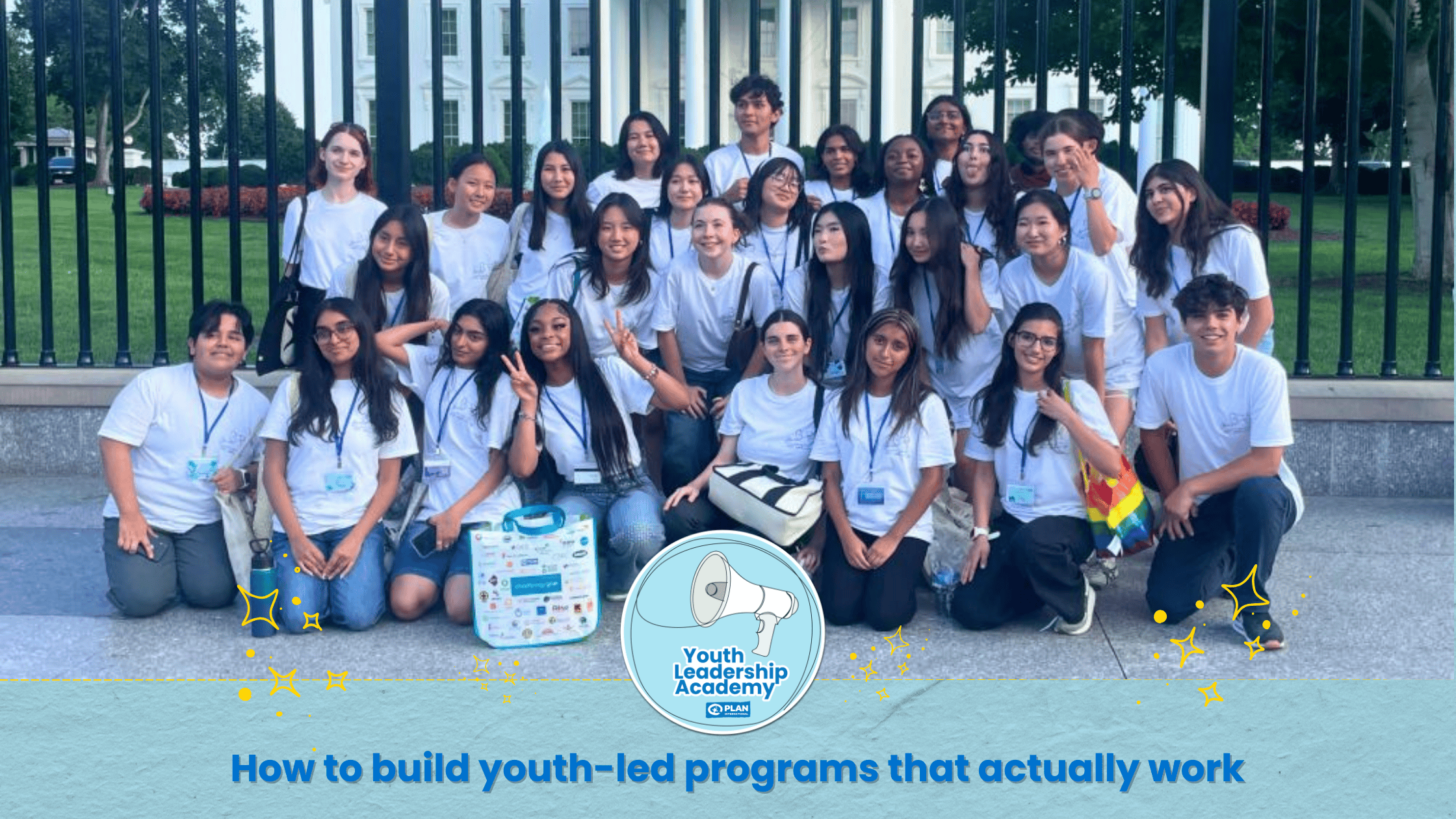
2025 Youth Leadership Academy participants posing for a group photo in white shirts outside the White House in Washington, D.C.

The Youth Advisory Board is a group of young people from the U.S. who vocalize youth priorities by serving as ambassadors to Plan International. Each year, they organize their largest deliverable — the Youth Leadership Academy.

The Youth Leadership Academy (YLA) is a yearlong program focused on providing leadership and advocacy tools to young activists through training and mentorship to create change locally and globally. Designed by and for youth, the program brings together participants from across the U.S. to meet and learn from inspiring activists, influencers and experts.

The five-day residential academy in Washington, D.C., held each July, kicks off a year of project-based leadership. During the weeklong intensive, participants learn about networking, fundraising, advocacy, and leadership. They explore how their talents can drive change in their communities. Afterward, they’re paired with a mentor from Plan’s Youth Advisory Board to support their leadership journey.

So, how do you build a program that’s truly youth-led — not just youth-involved? Here’s how Plan centered choice, safety, information, and voice to make the YLA a model for meaningful youth engagement.

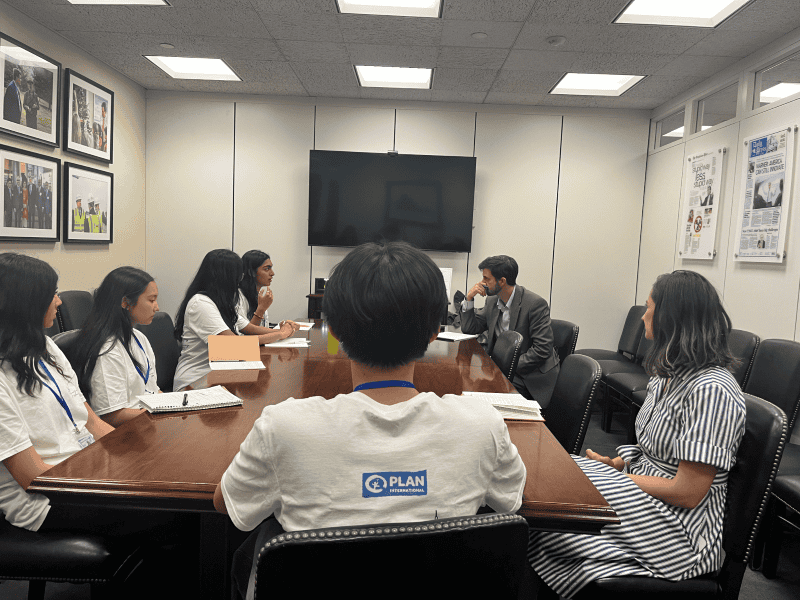
Young people meet with congressional staff during the Youth Leadership Academy’s D.C. Day advocacy visit.
Youth Leadership Academy participants meet with congressional staff during D.C. Day to share their perspectives.

Empowering youth through choice

Youth Advisory Board members chose how they wanted to contribute — whether through curriculum design, recruitment, coordination or creative storytelling.

Participation in the YLA was based on an application process, putting ā€œchoiceā€ at the center. Youth chose to attend — and before each session during the in-person academy, facilitators shared what would be discussed and gave participants space to opt out if needed. Choice remained embedded throughout the experience.

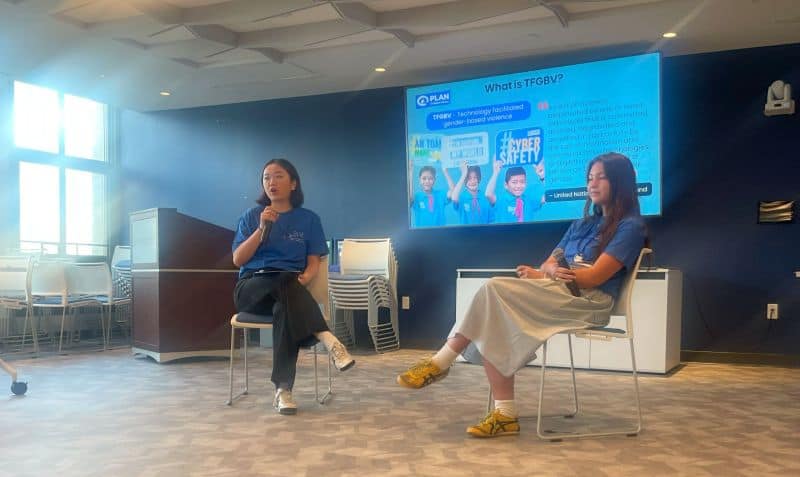
Youth Advisory Board members leading an interactive workshop at the Youth Leadership Academy.
Youth Advisory Board members led sessions on leadership, advocacy and storytelling.

Creating safe spaces

Planning for the YLA began with risk assessments for both virtual and in-person settings. These weren’t one-time tasks — they were ongoing tools, used throughout planning and implementation.

Key steps included:

— Identifying the types of potential risks and who they might impact

— Evaluating likelihood and impact

— Implementing mitigation strategies

— Assigning clear responsibilities

This was a cross-team effort, shared with youth creators, facilitators and chaperones. Everyone involved needed to understand the risks and how to manage them. A safe environment is essential for youth to thrive.

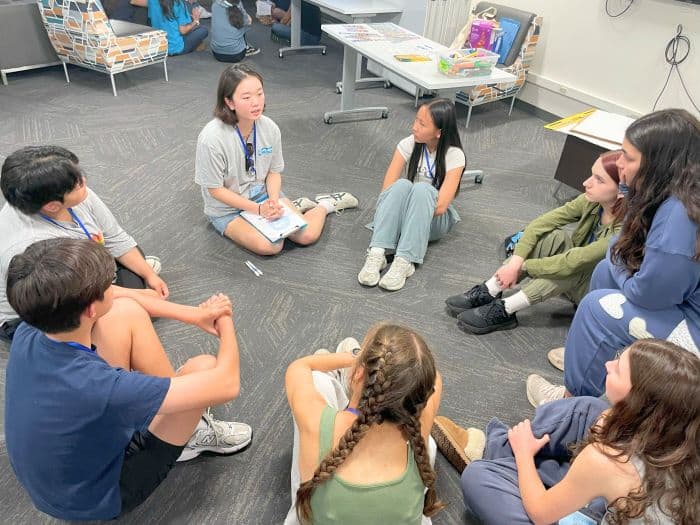
Young participants and facilitators in discussion during a Youth Leadership Academy session.
Creating safe and supportive spaces is central to Plan USA’s youth-led model.

Keeping youth informed

Plan ensured that YAB members had access to all the information they needed to lead effectively. This included reviewing agendas, outcomes and feedback from previous academies to guide 2025 planning.

YLA participants also received youth-friendly materials and program details. Plan transformed Excel-based schedules into fun, easy-to-read graphics, and held youth-only pre-YLA webinars with engaging presentations to build excitement and set expectations.

Even digital platforms were tailored to youth preferences — for example, switching from Slack to GroupMe for more accessibility.

Centering youth voices

Plan prioritized collective youth power by creating space for the YAB to set the agenda, design the curriculum, and build out materials from start to finish.

Staff deferred to youth decision-making throughout. When staff decisions were needed, they ensured YAB members understood why and how their input shaped the final outcome.

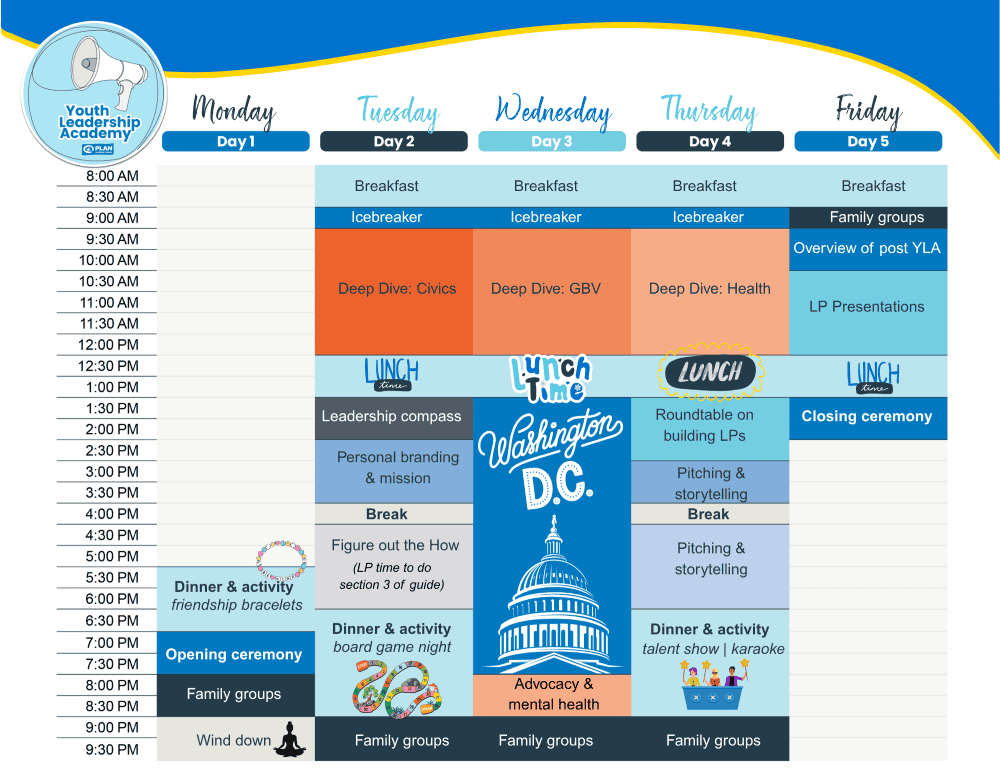
Sample schedule from the Youth Leadership Academy showing daily leadership sessions
A sample schedule from the 2025 Youth Leadership Academy shows the mix of deep-dive sessions, leadership training and group activities.

When youth lead, everyone wins

Plan was intentional about making the 2025 Youth Leadership Academy a truly youth-led initiative — one that honored the skills, perspectives and leadership of young people to create something that belonged to them.

We invite you to support youth-led efforts and amplify young voices — because when youth lead, everyone benefits.

ā€œWhere I come from, things can get really competitive. I feel like oftentimes I get in the headspace where I don’t feel comfortable being myself. I love it here because I get to be myself. I get to be vulnerable with people. People can feel safe around me. I just love talking to people about what they’re passionate about, like their leadership projects. Hearing everyone’s ideas and what everyone has to say, it’s so inspiring. This environment is so amazing, and I’m having the best time ever. I’m so honored to be here.ā€

— Tanya, YLA participant

Amanda Newlove and Ashley Weber co-authored this article.

Amanda Newlove is the senior manager of safeguarding, risk and internal compliance at Plan International USA.

Ashley Weber is a senior program coordinator working with Plan’s Youth Advisory Board on youth leadership initiatives.

To learn more about Plan’s work, get in touch: [email protected] | [email protected]

Stay updated on Plan International’s technical work by signing up for From Plan to Action, our quarterly newsletter.

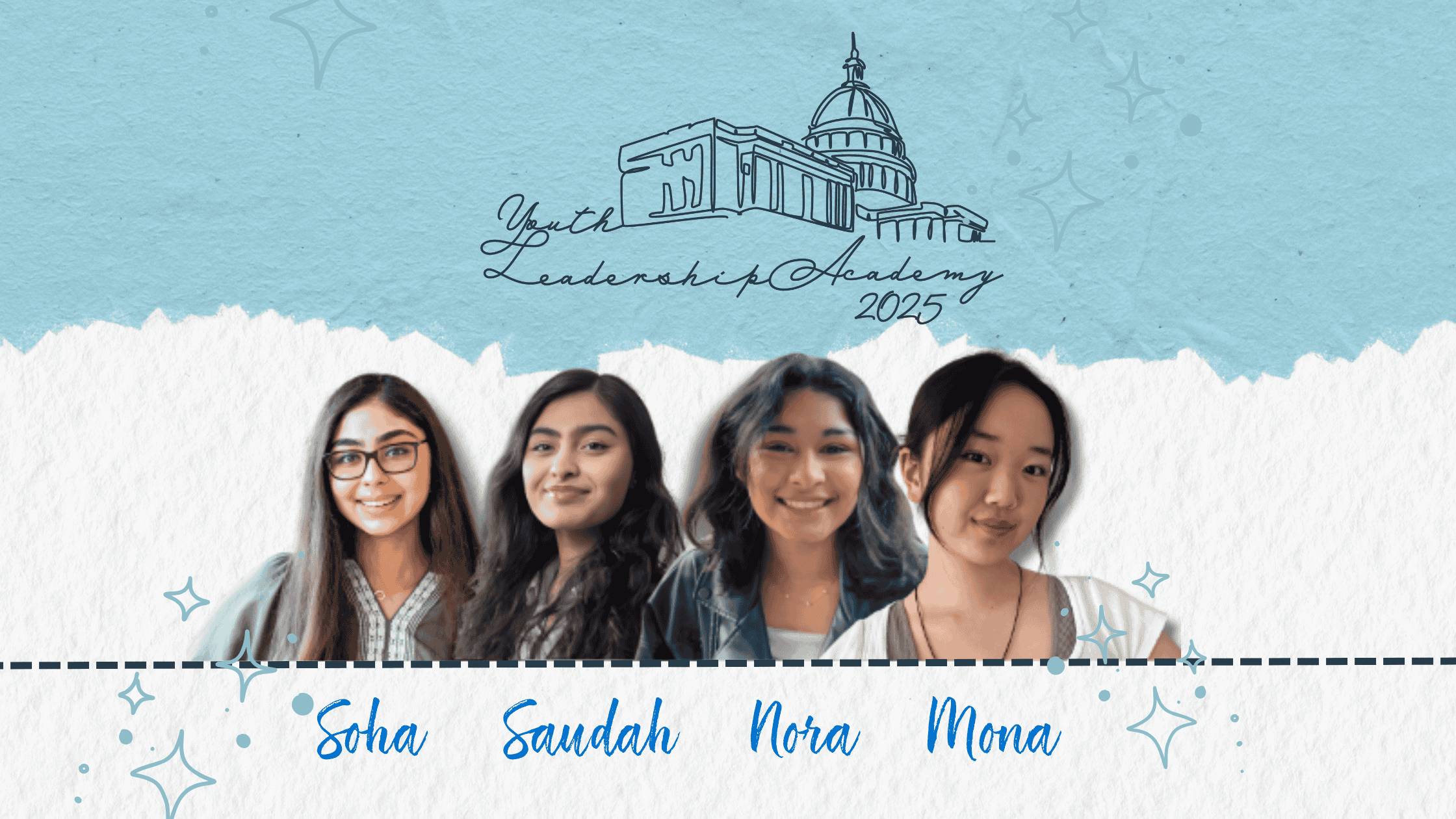
By Mona, Nora, Saudah and Soha

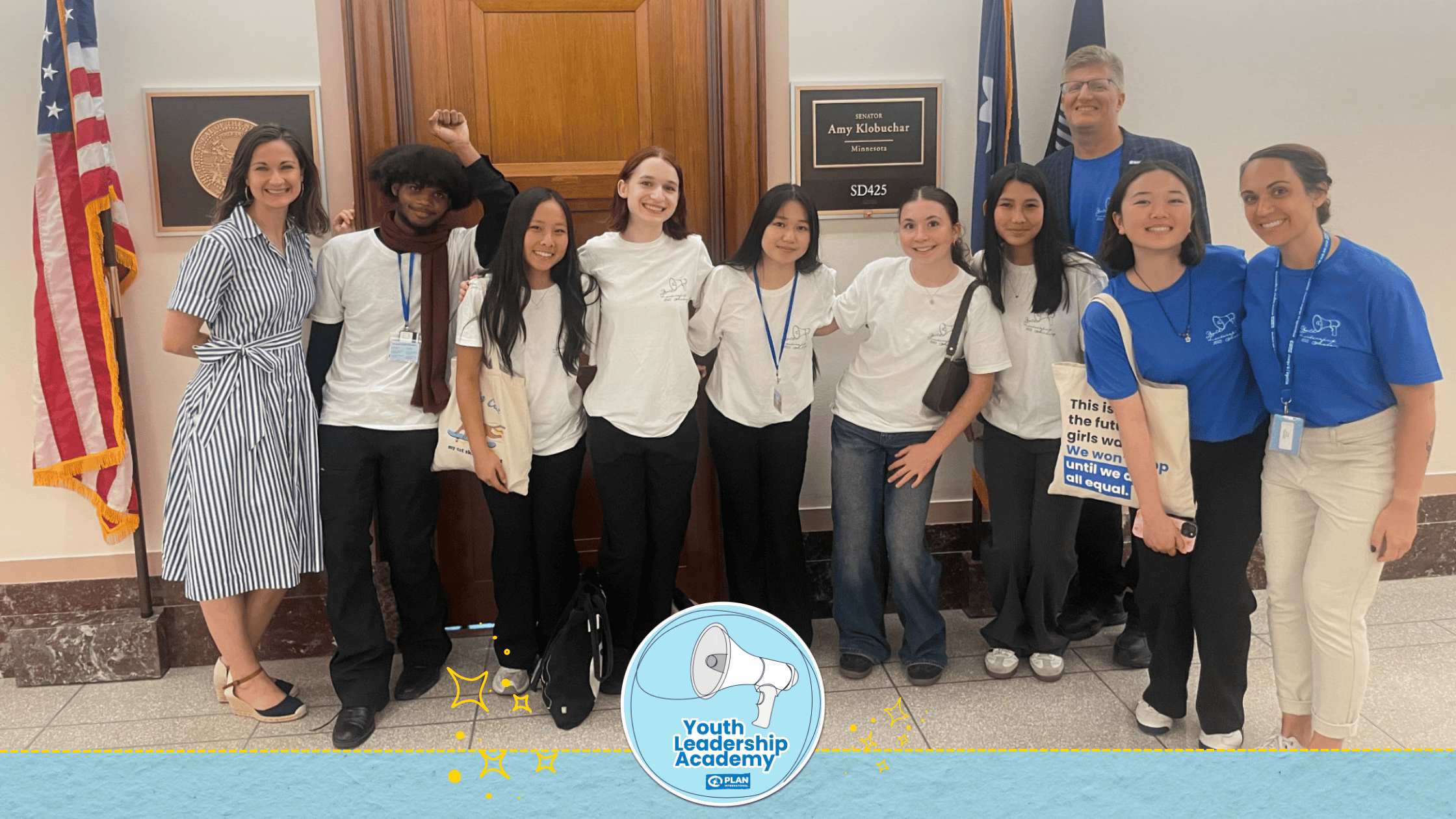
Youth Leadership Academy participants outside the office of Sen. Amy Klobuchar after a meeting on the TAKE IT DOWN Act

In July, Plan International USA kicked off its annual Youth Leadership Academy in Washington, D.C. The YLA was created to engage emerging activists in a year‑long program, equipping them with essential advocacy and leadership skills for their upcoming leadership projects.

This five‑day intensive at American University advanced their knowledge on youth civic and political participation, protection from violence and health equity through workshops and discussions, while meeting influential staffers in Senate offices and learning from powerful guest speakers. Made possible thanks to Plan staff and the Youth Advisory Board, the YLA was not only successful in bringing their leadership projects to life, but ensured that youth advocacy is here to stay.

D.C. Day

One of the highlights of the Academy for many participants was ā€œD.C. Day,ā€ held on the third day of the program. The day kicked off with a session led by the Youth Advisory Board on gender‑based violence featuring guest speaker Cailin Crockett, a strategy consultant and advisor for online safety and responsible tech policy, former senior advisor at the White House Gender Policy Council, and long‑time expert in violence protection.

Ms. Crockett discussed her own professional journey and positions she has held across three presidential administrations in roles targeting violence against women. She also offered lessons learned from advocating in many different spaces and explored cultural and policy shifts for greater online safety and protection from gender‑based violence.

Ms. Crockett also shared her expertise to prepare participants for meetings with Senate staffers from five different offices later that day to discuss the TAKE IT DOWN Act and future provisions for successful implementation. In addition to providing an overview of the TAKE IT DOWN Act provisions, YAB counselors and Ms. Crockett also provided guiding principles for productive and forward‑looking conversation. Plan’s Head of Policy, Justin Fugle, also briefed the YLA participants and supported their Senate meetings.

Youth voices in action

At the meetings, the YLA participants met with the Senate offices of Sen. Jacky Rosen, D‑Nev.; Sen. Mark Warner, D‑Va.; Sen. Ted Cruz, R‑Texas; Sen. Richard Blumenthal, D‑Conn.; and Sen. Amy Klobuchar, D‑Minn., to thank them for their involvement in passing the TAKE IT DOWN Act and to request measures for how the law should look in practice.

The staffers asked the YLA participants questions about their experiences online and the best way to implement the new law. Additionally, the staffers extended the meetings to keep talking with YLA participants, an unusual move on the Hill.

Reflections from participants

YLA participant Mia appreciated how Ms. Crockett shared ā€œvaluable tips on how to project confidence and speak effectively in a room full of influential people,ā€ prompting her to feel more engaged and ā€œshowing me the importance of using my voice to create positive change.ā€

Katelynn shared her thoughts, too:

ā€œHaving Cailin as a speaker was both inspiring and eye‑opening. It was fascinating to hear from someone who has worked on gender‑based advocacy across different administrations and to learn what that work looks like in practice. She reminded us that the fight doesn’t end with passing the TAKE IT DOWN Act, inspiring us to use our voices not only to thank staffers for their work but also to urge them to relay broader priorities to the Senator.ā€

Reflecting on Ms. Crockett’s presentation, YLA participant Sriya shared:

ā€œNot only did she provide us with valuable insight for our Senate Office meetings, but she also provided us with something even more powerful: hope. Cailin’s journey into advocacy isn’t far from many of our beginnings.ā€

Nuri, who visited Sen. Blumenthal’s office, shared:

ā€œBeing with the Senate staffers felt amazing. We were all passionate about the work they were doing, which made it easy to connect with them and exercise our youth voice. The atmosphere was very friendly and welcoming, and we could all tell that they wanted us there. I also got to briefly speak with Sen. Blumenthal (whom I met in one of the Senate office hallways), which was an amazing experience, since he is one of my Senate idols.ā€

Mia, who was in Nuri’s group and also spoke with Sen. Blumenthal’s office, added:

ā€œDuring our conversation, I also learned more about why Mr. Anderson [Sen. Blumenthal’s tech advisor] is so passionate about digital safety and the strategies he believes are important for creating a safer online environment in the future. It was fascinating to hear about the legislative process from someone with firsthand experience, and I gained a deeper understanding of how policies are developed, debated and implemented.ā€

Shrayanthi’s experience encapsulates a common theme:

ā€œI typically find the kindness and compassion from both Ms. Crockett and Sen. Warner’s staffer to be rare when speaking with adults in positions of authority as a teenager, so coming out of the Senate meeting and YLA intensive I felt incredibly validated in my experiences and honestly, it made me more hopeful that there are adults who are willing to not only listen to youth voices, but follow through and take action.ā€

Tanya reflected:

ā€œIt gave me a renewed sense of confidence in the value of youth perspectives and reminded me how important it is that we continue to claim space in these conversations. In that moment, I truly felt that I was able to exercise my youth voice in a way that mattered. It deepened my belief that advocacy is not about waiting until we are older or more ā€˜qualified,’ but about speaking up now and continuing to claim space in the decision‑making process.ā€

Why youth advocacy matters

Reading through these reflections, one thing becomes evident: when young people are given the support and space to lead, they do not just speak up; they are empowered to drive change in their communities.

The 2025 YLA participants made it clear that their voices and experiences belong in the rooms where decisions are made, particularly when the choices affect their futures.

Through the YLA, Plan aims to provide the tools — mentorship, workshops and opportunities — necessary for youth to grow as advocates, fostering the change they believe in. Whether that is in online safety, health care or civic participation, young people will continue to be a powerhouse of change, and Plan will continue to stand alongside them every step of the way.

This blog was co-written by Mona, Nora, Saudah and Soha, members of Plan International USA’s Youth Advisory Board.

Soha, Saudah, Nora, Mona

Nora is a Plan International USA Youth Advisory Board Member and a 2023 Youth Leadership Academy alumna. She is deeply passionate about advocating for refugee rights and climate activism. She has helped co-create resources for youth activism, supporting initiatives that engage young leaders in activism across 30 countries.

Mona is a Plan International USA Youth Advisory Board Member, a 2023 Youth Leadership Academy alumna, and served as a counselor at the 2025 Youth Leadership Academy. As a Plan Youth Leadership Academy member, she created a youth-led nonprofit organization called Digital Online Safety and Empowerment Initiative, where she leads a group of 19 young women to raise awareness about technology-facilitated gender-based violence in their communities.

Saudah is a Plan International USA Youth Advisory Board Member. She served as vice-president of her educational inequality nonprofit Scholars for Society UK, where she hosted conferences and workshops to bridge the gap of political education and involvement for state school teens.

Soha is a Plan International USA Youth Advisory Board Member and a 2021 Youth Leadership Academy alumna. Through her YLA participation she initiated Green Allies and Environmental Advocacy, a youth-led space for climate conversations. Through her work with Plan International she was involved in Innovations Hub with The Body Shop for their youth equality campaign in 2021 and an International Day of the Girl Takeover at AstraZeneca in 2022.

Stay updated on Plan International’s technical work by signing up for From Plan to Action, our quarterly newsletter.

The 2025 Youth Leadership Academy

Education Under Attack in West and Central Africa: 2025 Update

In 2025, conflict and insecurity have led to the closure of 14,829 schools in West and Central Africa — affecting more than 3 million children. The crisis continues to deepen, especially in Nigeria, the Democratic Republic of Congo, and the Central Sahel region. Children are not only being denied education but also exposed to violence, recruitment by armed groups, child labor, and sexual exploitation.

Girls are hit hardest — often abducted, married early, or forced to stay home permanently after an attack. Even when schools reopen, years of missed education can leave lasting scars. Education is under attack, and the consequences ripple far beyond classrooms.

Plan International contributed to the 2025 regional update through the Education in Emergencies Working Group. Together with partners, the report urges immediate action: implement the Safe Schools Declaration, increase flexible education funding,= and deliver innovative learning solutions like radio-based education and accelerated learning programs.

Without urgent global support, the education dreams of an entire generation could vanish.

Read the full update and learn how to act: West and Central Africa -Regional Education in Emergencies Working Group: Protecting Education in West and Central Africa (September 2025 update)

Why education in emergencies matters

When conflict breaks out, when hunger spreads, when disasters strike, one of the first things children lose is school. Yet education is more than a classroom. It is protection, stability and the foundation for recovery, especially during conflict and crisis. And when we talk about protecting schools, we are really talking about keeping education going, even in the toughest places.

Globally, 224 million school-age children living in crisis-affected countries need education support. Of these, 72 million are completely out of school, while another 127 million are in classrooms but not learning at even the most basic levels. Still, children and families show extraordinary determination to hold on to learning. Because every child deserves the chance to build a better future — no matter the crisis.

That’s why the United Nations established Sept. 9 as the International Day to Protect Education from Attack. Schools should be safe havens, not targets. And education must never be used as a weapon or sidelined in emergencies.

At Plan International, we work with children, families and communities to make sure learning continues — from temporary classrooms to school kits to long-term research on girls’ lives.

Here are five examples of how conflict and crisis are disrupting learning and what we’re doing to fight back.

1. Gaza: Education interrupted by airstrikes

In Gaza, schools lie in ruins after months of airstrikes. Families say their children are desperate to return to learning — not just to keep up with lessons but to reclaim a sense of normal life.

A bomb-damaged school in Gaza
Education should never be a casualty of war. In Gaza, nine out of 10 schools have been damaged or destroyed, with many turned into shelters for displaced families. | Ā© Plan International, Ahmed Salama

Plan and partners have set up temporary learning spaces so 500 children can continue their education, play and begin to heal. In the weeks leading up to this, we also reached nearly 100,000 people with hot meals, dignity kits and clean water — urgent support that helped families survive long enough to think about schooling again.

2. Sudan: Displacement can’t stop learning

Sudan is now the world’s largest displacement crisis. In Gedaref state, more than 1 million displaced people have arrived, overwhelming already stretched schools. Families who lost everything in the conflict want only one thing for their children: to keep learning.

To help, 1,000 displaced children recently received school kits — each containing a bag, pens, pencils, notebooks and basic supplies.

A girl in Sudan receiving school supplies
A girl in Gedaref, Sudan receives a school kit from Plan International, helping children continue learning despite conflict and displacement. | Ā© Plan International, Abdelrahman Justen

ā€œDespite not having pens, paper and textbooks, we have seen determined teachers volunteer in their communities to ensure that children can keep learning, even through this brutal conflict.ā€

— Mohamed Kamal, Sudan country director, Plan International

In crises like Sudan’s, girls often face the steepest barriers — including caregiving burdens and early marriage — that keep them out of school.

3. Myanmar: Earthquake recovery through learning

On Mar. 28, 2025, a massive earthquake struck central Myanmar, destroying nearly 4,000 schools and displacing more than 200,000 people. Children were left in shelters and open spaces, afraid and cut off from routine.

Nan, 23, remembers what it felt like. ā€œI was quite scared when it happened. I had never experienced anything like it before. I didn’t expect an earthquake like that.ā€

Instead of dwelling on fear, Nan chose action. ā€œRather than dwelling on this, I should overcome it and focus on the things I can do for my future.ā€ Today, she volunteers at a child-friendly space in Mandalay, helping children recover through play and learning.

Nan, Myanmar volunteer with children
Nan*, 23, volunteers at a child-friendly space in Mandalay, Myanmar, supporting children after the earthquake. | Ā© Plan International, Plan staff

ā€œAt the child-friendly space, I registered the children and their parents. We read poems to them. We played games with them.ā€

4. Ethiopia: Hunger’s hidden toll on education

In Ethiopia’s Borena Zone, drought killed crops and cattle, leaving families without food. For 11-year-old Dabo, it also meant leaving school.

ā€œI feel hungry and sad when there is no food at home. We don’t have food, so we are hungry every day. When there is no food, I feel faint and very tired. Hunger changes people’s lives and doesn’t make anyone happy.ā€ — Dabo, 11-year-old girl, Ethiopia

Dabo, Ethiopia
Dabo, 11, left school three years ago when her family could no longer afford supplies and food. She dreams of returning to class in Borena Zone, Ethiopia. | Ā© Plan International, Izla Bethdavid

Her neighbor Liban, a mother of six, knows the same struggle.

ā€œMy daughter, who is deaf, is supported by Plan to go to school. She received a school bag, pens and books, and a torch so she can study. If it wasn’t for Plan, she wouldn’t be able to go to school.ā€ — Liban, 37-year-old mother, Ethiopia

Liban's daughter in Ethiopia
Liban’s daughter, Dabo, 14, who is deaf, is supported by Plan International with school materials so she can continue her education in Borena Zone, Ethiopia. | Ā© Plan International, Izla Bethdavid

5. Global trends: Girls at highest risk of school dropout

When education is disrupted — whether by conflict, poverty or disaster — girls are often the first to lose their chance to learn:

  • Out-of-school risk: Girls in crisis-affected areas are nearly 2.5x more likely to be out of school.
  • Violence link: In Plan’s Real Choices, Real Lives study, 91% of girls reported experiencing violence, often in or near school.
  • Child marriage: According to Plan’s State of the World’s Girls 2024 report, over half of surveyed girls had missed school due to conflict, with many forced into marriage.

Why we must protect schools as safe havens

From the rubble of Gaza to the displacement camps of Sudan, from Myanmar’s earthquake recovery to Ethiopia’s hunger crisis, one truth is clear: children refuse to give up on learning.

And the threat isn’t limited to conflict zones. Around the world, even in wealthier countries, education is under pressure. Abrupt foreign aid cuts and shrinking domestic budgets put children’s futures at risk.

Children and their families are fighting to hold on to learning. Our responsibility is to stand with them — and to protect education from attack, neglect and disruption.

We’re calling on you to take action, because every child deserves the chance to learn, lead, decide and thrive.


Help protect a child’s education


FAQs: Protecting education from attack

Q: What does it mean to protect education from attack?

A: It means ensuring schools remain safe spaces during conflict or disaster, free from military use or violence.

Q: Why are girls more affected in education emergencies?

A: Girls face higher risks of child marriage, early pregnancy, and violence when schools close, making them 2.5 times more likely to drop out than boys.

Q: How does hunger impact learning?

A: Hunger forces children to leave school and prevents them from concentrating. Families often must prioritize survival over education.

Q: Why is uninterrupted learning so important?

A: It provides safety, routine, and hope. Education is as vital in emergencies as food, water, or shelter.

Q: What can I do to help protect schools in crisis zones?

A: You can advocate, share their stories, and donate to Plan’s education in emergencies programs that help children continue learning.

A composite image showing three people in Gaza: a young girl smiling in a hoodie, a woman doctor in a white coat with a stethoscope, and a mother hugging her child. The text overlay reads: ā€œFaces of Gaza — Three stories of resilience and hope.ā€

In Gaza, daily survival has become a race no one should ever have to run. Families cling together as bombs reduce schools and neighborhoods to rubble. Parents risk their lives just to stand in line for bread. Crowds push and scramble in desperation to reach humanitarian aid, knowing they could be shot on the way. For Gaza’s children, this daily race for survival means lost childhoods, lost classroom education, and lost futures.

It’s been likened to a scene from The Hunger Games, except this isn’t fiction. This is real life for millions of children and families in Gaza.

Faces of Gaza

Behind every headline are children still dreaming of classrooms, mothers determined to keep their families safe and doctors who refuse to stop fighting for life.

Hope in Gaza has many faces: Asmaa, who writes poems by candlelight; Dr. Walaa, who heals children in collapsing hospitals; and Latifah, who carries her family forward after unimaginable loss.

Asmaa’s dream: A girl’s fight for education in Gaza

For 12-year-old Asmaa, dreams come alive in poetry. She writes about the sky, her future and the hope she refuses to let go of.

Before the war, school was her favorite place. She loved her Arabic lessons, playing with friends during recess and helping her younger siblings with homework. She dreamed of becoming a writer — maybe even a poet whose words would travel the world.

Asmaa, 12, lives in a displacement camp in Gaza. She dreams of returning to school and one day becoming a poet. | Ā© Plan International / Ahmed Salama

Now, her classroom is gone. Her family lives in a crowded displacement camp, where electricity has been cut for months. She studies by candlelight, her schoolbooks worn thin from the dust and damp. Outside, the sound of shelling rattles her window. Inside, she keeps scribbling verses on scraps of paper, determined to hold on to her education.

ā€œEducation is the only thing that no one can take away from me.ā€

— Asmaa, 12, Gaza

She still dreams of returning to school one day: of graduating, publishing her poems and telling her story to the world. Even in the middle of destruction, Asmaa finds words of hope.

Dr. Walaa’s mission: Healing children in Gaza’s collapsing hospitals

Dr. Walaa Wissam Abu Samra has spent her life working to protect children’s health in Gaza. Before the war, she was a pediatrician who dreamed of opening her own practice — a safe place where parents could bring their children for care.

Now, that dream feels impossibly far away. Every day she walks into overcrowded hospital corridors lined with children lying on the floor because there are no more beds. Supplies are nearly gone, and even the simplest medicines are out of reach. Still, she refuses to leave.

ā€œI have treated children with burns, shrapnel wounds and starvation,ā€ she says. ā€œOne father held my hands and cried because I couldn’t save his son. I will never forget his face.ā€

Dr. Walaa Wissam Abu Samra tends to children in Gaza’s overcrowded hospitals despite extreme shortages.

Dr. Walaa Wissam Abu Samra continues treating patients in Gaza despite extreme shortages of doctors, medicine and safe facilities. | Ā© Plan International

ā€œWe need the world to stand with us. Gaza’s children cannot survive this alone.ā€

— Dr. Walaa, Gaza

For Dr. Walaa, the future is uncertain. But as long as there are children who need her, she will continue to fight to keep them alive — one patient and one family at a time.

Latifah’s strength: A mother’s fight to protect her family in Gaza

Before the war, Latifah’s days were filled with simple joys like cooking meals for her husband and five children, watching them play and planning for their future together.

That life suddenly ended when an airstrike killed her husband and two of her sons. ā€œMy husband and two of my sons were killed in an instant. My world collapsed that day,ā€ she recalls.

Latifah, a widowed mother of three, sits with her children in a crowded displacement shelter in Gaza.

In Rafah, Latifah, a widowed mother of three, faces unimaginable loss while fighting to protect and provide for her children amid Gaza’s ongoing crisis. | Ā© Plan International / Ahmed Salama

Now, in a crowded displacement shelter in southern Gaza, she struggles to care for her three surviving children. Every day is a test of strength. They share cramped rooms with other families, stretching the little food they receive as she shields her children from the chaos outside.

ā€œI have to stay strong for them. But I feel empty inside.ā€

— Latifah, Gaza

More than statistics

These are not just numbers on a page. They are children still determined to learn, doctors pushing past exhaustion to save lives with what little they have and parents fiercely fighting to protect their families. Each one carries dreams, hopes and goals — just like any of us.

Yet what they long for most is the simple safety of a home. And every day, their lives hang in the balance.

How you can help families in Gaza

Every child matters. Every truck matters. Every hour matters.

Your gift today will give children food when they’re hungry, medicine when they’re sick and clean water when they’re thirsty. It will provide dignity kits that restore safety and comfort, and help keep children in school so they can hold on to routine, community and hope.

Donate now to support children in Gaza


A crisis children can’t escape

For nearly two years, Gaza’s children have been living through the unthinkable. They have endured bombings, rapid displacements and the constant fear of losing everything. Homes and schools lie in rubble and entire neighborhoods have been erased. Families are starving. Hospitals are overwhelmed. Parents tell us their children go to bed hungry, and some whisper that they would rather die than endure another day without food.

More than half of Gaza’s population is under 18. Children make up a heartbreaking share of the casualties, and those who survive face hunger, trauma and disease every single day.

Earlier this month, the Integrated Food Security Phase Classification, the global authority on hunger crises, officially declared that famine is now gripping Gaza City, affecting more than half a million people, with numbers expected to rise to over 640,000 by the end of September. It is a catastrophic, man-made crisis.

Why getting aid to children in Gaza is so difficult

The world has sent trucks filled with food, medicine and clean water, but many are stopped at the border or delayed for days. Restrictions, destroyed roads and ongoing airstrikes make it nearly impossible to get aid to families when they need it most. Parents tell us they risk their lives just to collect bread, as even aid distribution points have been struck, leaving people injured or killed. Even humanitarian offices have been bombed and aid workers themselves are among the casualties.

And yet, despite the danger and delays, Plan and our partners have managed to get life-saving supplies into Gaza, proving it can be done. With more resources, we could deliver much more, much faster.

A bomb-damaged school in Gaza with a bullet-riddled mural of children in the foreground and a partially destroyed building in the background.

Education should never be a casualty of war. In Gaza, nine out of 10 schools have been damaged or destroyed, with many turned into shelters for displaced families. | Ā© Plan International / Ahmed Salama

How Plan is responding to the humanitarian crisis in Gaza

Plan International is on the ground, working with trusted local partners. Despite the obstacles, we have reached nearly 98,000 people with food, water, medicine and psychosocial support in just three weeks. Working closely with our partners in Egypt and Jordan, we have been able to get trucks into Gaza and critically needed aid into the hands of children and families.

Two large trucks in Gaza covered with Plan International banners deliver food baskets to families as part of emergency humanitarian aid.

Ten trucks carrying 11,250 food baskets have crossed into Gaza, reaching 45,000 people with three days of rations. Another 14 trucks with thousands more baskets are prepared and awaiting entry. | Ā© Plan International

We are also setting up temporary learning spaces so children can continue their education, even in tents. Education in emergencies is more than lessons, it is lifesaving. It provides children with safety, routine and hope in the middle of chaos. For girls especially, staying in school reduces the risk of early marriage, exploitation and gender-based violence. For every child, it builds resilience and protects their future.

Children in Gaza play an outdoor game with hula hoops in a group activity, supported by Plan International safe spaces for displaced families.

Children in Deir al-Balah, Gaza, take part in play-based activities in safe spaces created to help them cope with trauma and rebuild a sense of childhood. | Ā© Plan International / Ahmed Salama

We are distributing dignity kits filled with essentials like soap, sanitary pads, toothbrushes, underwear and slippers. For women and girls who have lost everything, these kits offer safety, comfort and a small sense of normalcy in the chaos.

A table displays hygiene kit items in Gaza, including soap, sanitary pads, toothpaste, slippers, clothing and other supplies, with packed kits stacked behind.

Plan distributes hygiene kits in Gaza, including soap, sanitary pads, toothpaste, clothing and other essentials for displaced families. | Ā© Plan International / Ahmed Salama

Infographic showing the impact of Gaza’s humanitarian crisis on children, with statistics on hunger, hospitals, food deliveries, hygiene kits and education support from Plan International.

Scaling up humanitarian aid in Gaza

Right now, Plan is one of the few organizations able to get trucks into Gaza. Even registered international NGOs have had their trucks denied, but through relentless negotiation, strong partnerships and creative problem-solving, we have managed to break through.

This access did not come easily. It took exhausting every avenue, exploring multiple alternatives and leveraging every humanitarian relationship we had. But it worked. In the last few weeks, we have delivered food, water and essential supplies to more than 100,000 people.

But survival is only the first step. To truly protect children, we also have to safeguard their futures. That is why we are preparing temporary learning spaces and planning to launch education in emergencies programs for 500 children by September 1. In Gaza, education is lifesaving. It gives children safety, structure and hope in the middle of chaos. For girls especially, staying in school reduces the risk of early marriage, exploitation and violence.

With enough resources, we could send dozens more trucks every day and expand education support to thousands more children. The window is open, but only as long as we can keep filling it.

Numbers can never capture the full pain of this crisis, but they help show just how deeply children are being affected.

How you can help families in Gaza

Every child matters. Every hour matters. Every truck matters.

Your gift today will mean more children have food to eat, medicine when they are sick, clean water to drink and dignity kits to protect their health and safety, and continued education so they do not fall too far behind and have the routine and sense of community they need to stay strong.

Every child deserves to learn, lead, decide and thrive. So, together, we will not stop until we are all equal.

Donate now to support children in Gaza


Meghan Mattern, senior technical advisor at Plan International USA, wrote this article. To learn more about Plan’s work, get in touch:

[email protected].


When young people have skills, confidence and supportive environments, they thrive. They graduate. They start businesses. They drive innovation and contribute to healthier, more prosperous communities.

But what happens when girls grow up believing that public spaces aren’t meant for them? When they internalize fear, limit their movements and step back from opportunity?

Plan International’s Real Choices, Real Lives study reveals how deeply rooted gender norms around violence and protection shape girls’ behavior — and how those behaviors have a lifelong effect on their access to education, skills and decent work.

How social norms limit girls’ access to education and work

Too often, youth employment challenges are framed in technical terms — skills gaps, lack of opportunity or underemployment. But adolescent girls face significant barriers before they even enter secondary or vocational school, with lifelong impacts.

Plan’s longitudinal study, which followed 142 girls across nine countries from birth to age 18, revealed how harmful social norms are internalized during adolescence. The findings are sobering:

  • 91% of girls reported experiencing violence, starting as early as age 11.
  • By ages 14–15, 68% believed male violence was ā€œjust the way things are.ā€
  • By 18, 67% believed it was their personal responsibility to protect themselves — even if that meant limiting their movement, dress or activities.

These beliefs shape behavior. When girls feel unsafe or solely responsible for their protection, they often withdraw by skipping school, avoiding training opportunities or disengaging from everyday spaces. In losing access to these spaces, girls lose critical opportunities to develop the life and employment skills they need for the future.

ā€œWe are told to be careful, to protect ourselves, but no one is telling boys not to hurt us.ā€ — Girl, 17, Brazil

The connection between girls’ safety and skills-building

Skills-building doesn’t happen in a vacuum. If girls don’t feel safe, they miss out on training programs, apprenticeships and other economic opportunities.

And the issue isn’t limited to physical safety.

As digital platforms become essential for education, employment and connection, online environments must also be safe. Plan’s Building Digital Resilience report — developed in partnership with CNN’s As Equals series — found that fear of harassment and gender-based abuse online is pushing girls offline. Many avoid sharing opinions, joining forums or using learning platforms due to threats, stalking or trolling.

This exclusion from digital spaces directly affects their ability to build skills, networks and confidence in a digital economy.

This personal exclusion has societal costs as well. According to the World Bank, violence against women can result in economic losses of up to 3.7% of a country’s GDP.

Tackling these barriers requires more than training — it demands a shift in how programs are designed and delivered.

What program implementers can do to shift norms and boost economic outcomes

The data is clear: Adolescence is a critical window to act. When we address social norms during this formative time, we can positively shape girls’ safety, agency and long-term economic participation.

Recommendations for technical practitioners and donors:

  • Pair skills and livelihoods programming with gender norms transformation. Combine financial literacy or vocational training with sessions that unpack social expectations and beliefs.
  • Engage caregivers and communities. Girls’ mobility and access to opportunities are often shaped by parents or extended family. Norm change must extend beyond the classroom.
  • Design for safe access. Consider transit, location and public space safety in every program — in urban, rural or conflict-prone areas.
  • Follow girls’ lead. Young people know what they need to be successful. Support mentorship groups, youth clubs or collectives where leadership and technical skills grow together.

Safety is the foundation of learning. In Cambodia, girls take part in a disaster preparedness drill through Plan International’s Safe Schools programme — one way we help close the safety gap that limits girls’ education and opportunities. Ā© Plan International

Program case studies: skills, safety and success

Across multiple countries, programs that integrate psychosocial safety, self-belief and work readiness are showing real impact.

In 20 cities globally, Plan’s Safer Cities for Girls program has worked to build safer, more inclusive urban environments for adolescent girls (ages 13–18). The program focuses on three goals:

  • Increasing safety and access to public spaces.
  • Expanding meaningful participation in urban governance.
  • Enabling autonomous mobility for girls.

A midline evaluation in Kenya, Ethiopia, Uganda and Zimbabwe found 53% of participants were engaged in decent work, an 18% increase from baseline.

In Guatemala, the Connection to Success project supports young women’s economic futures by combining:

  • Entrepreneurship and vocational training
  • Access to internships and startup funding
  • Shifting community attitudes and expectations around gender

Among the program’s second cohort, 54% of participants improved their well-being through increased earned income (defined as the percentage of youth who can fully cover a minimum set of basic necessities).

ā€œBoys can be taught to stop being aggressive.ā€ — Girl, Real Choices, Real Lives study

Why safety must come first in youth economic empowerment

Too many girls grow up believing that their lives must be small to be safe. This belief, formed early, undermines their ability to develop skills, join the workforce and achieve economic independence.

But the Real Choices, Real Lives study also shows hope: By age 18, most girls involved in the study were vocal in their belief that they deserve the same freedoms as boys. They’re calling on adults to listen to their voices and include them in decisions that affect their safety and protection. Girls are questioning the norms they inherited. They’re demanding safer, more equitable futures.

It’s time for the systems around them to catch up.

Economic empowerment begins with belief.

Belief that girls are capable, that the world can be safe and that adolescence isn’t the end of possibility — but the beginning.

As famine grips Gaza, putting over a million children at risk, Plan International is demanding a ceasefire and unrestricted humanitarian access.

Famine has taken hold in Gaza Governorate and will expand to Deir al-Balah and Khan Younis without urgent action, according to a new report from the UN-backed Integrated Food Security Phase Classification (IPC) published today, Friday 22 August.

Preventable catastrophe

Responding to the IPC’s latest report, Dr. Unni Krishnan, Global Humanitarian Director at Plan International said:

ā€œThe fatal consequences of Israel’s weaponization of hunger and blocking of humanitarian aid are devastatingly clear for all to see. No conflict should ever reach this point. What we are seeing in Gaza today is an entirely man-made and preventable catastrophe that is leaving more than a million Palestinian children – and 2.2 million people in total – struggling to stay alive.

ā€œFamine in Gaza is not a failure of logistics or aid — it is the outcome of brutal war and deliberate starvation.ā€

Dr. Unni Krishnan, Global Humanitarian Director at Plan International

ā€œPlan International has recently managed to deliver urgently needed aid into Gaza, but far more is needed. The continued illegal blockade of life-saving supplies means children and families are being condemned to die, painfully and needlessly.

Profound impact on generation of children

ā€œChildren in Gaza are not only being starved, they are also being maimed and permanently disabled in staggering numbers due to the Israeli army’s excessive use of force and newly intensified military campaign. Since the escalation of conflict in Gaza, disabilities have risen by 60% and Gaza now has the highest number of child amputees in the world. Hunger, injury and forced displacement into militarized zones are all highly traumatic events and will have a profound impact on an entire generation of children.

ā€œThe world cannot look away. Every hour lost costs more lives. Famine in Gaza is not a failure of logistics or aid — it is the outcome of brutal war and deliberate starvation. We demand – without delay – an immediate and sustained ceasefire, a complete halt to arms transfers to Israel, and the full lifting of Israel’s illegal blockade on humanitarian aid. This must include safe and unrestricted humanitarian access, so that we can reach more children and families with food and the basics needed for survival.ā€

For further information or interview requests, please contact:

MƩlina Froidure, Global Media Officer, Plan International
Tel: +33685583513
Email: [email protected]

About Plan International

Plan International is an international development and humanitarian nonprofit that advances children’s rights and equality for girls. Working together with children, young people, supporters and partners, we strive for a just world, tackling the root causes of challenges children face. We are there from birth until adulthood, and we support children to prepare for and respond to crises and adversity, while particularly focusing on the experiences of girls. With more than 85 years of experience, we work to transform lives in more than 80 countries. We won’t stop until we are all equal.

For more information, please visit www.PlanUSA.org.

Children at gravest risk as full-fledged famine unfolds in Gaza