Search Results

Search results for

0 result(s) found

PRESS RELEASE

Global campaign launches on International Day of the Girl Child to support girls’ education and gender equality
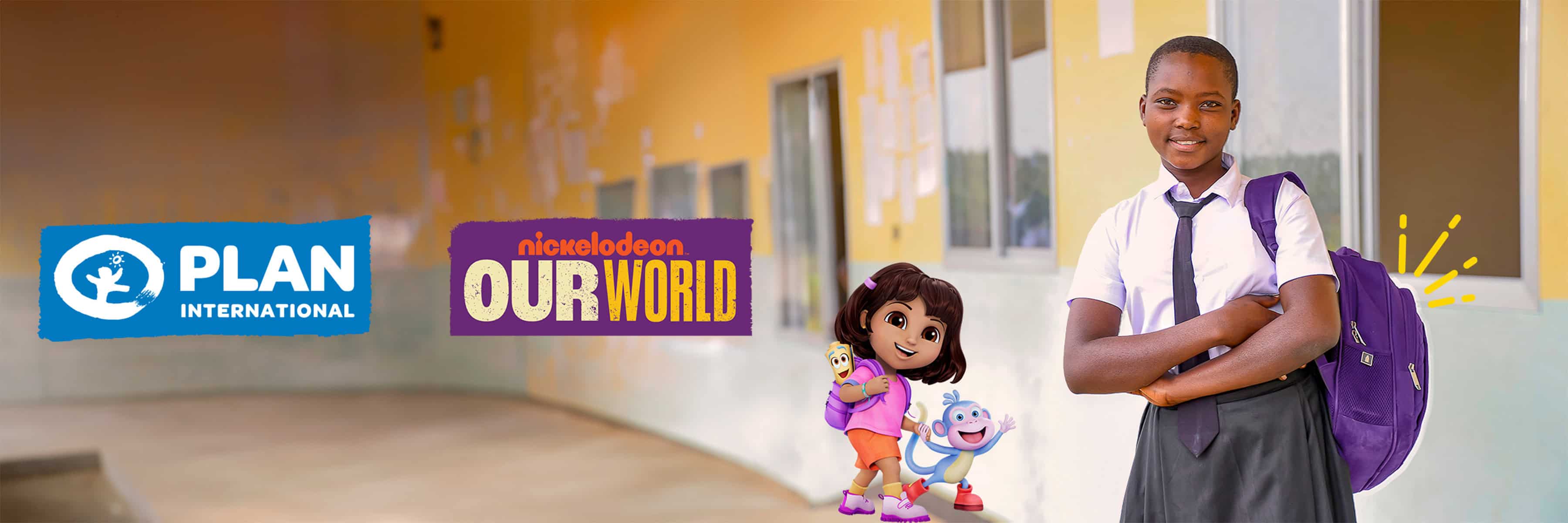
A young girl in a school uniform stands confidently with her arms crossed, wearing a purple backpack. Beside her are animated characters Dora the Explorer and Boots from Nickelodeon, both smiling and wearing backpacks. The background shows the exterior of a school building. Logos for Plan International and Nickelodeon Our World are prominently displayed on the left side of the image.

Washington, D.C., Oct. 11, 2024 – In celebration of International Day of the Girl Child (Oct. 11), Plan International has announced a partnership with Paramount to launch a new global campaign, featuring Nickelodeon’s iconic Latina heroine Dora, to champion girls’ access to education and gender equality. Kicking off today, the multiplatform initiative includes:

— The establishment of a new Dora Fund: Provides grants for youth-led organizations dedicated to girls’ education.

— Backpacks and supplies: Paramount will provide funding for the distribution of backpacks filled with school supplies. Audiences can choose to contribute to this through Plan’s Gifts of Hope initiative.

— Global PSA: A powerful public service announcement airs across Paramount networks.

— A Plan International resource hub: Offers additional ways for audiences to get involved in the campaign and learn more.

Globally, 224 million children and youth are out of school, with girls facing the greatest barriers to education. To help address this crisis, Plan reached 10.5 million people through inclusive, quality education programs in 2023 alone. Building on this impact, the campaign invites the public to help break down these barriers and ensure all children, especially girls, have the opportunity to learn.

“This partnership showcases the power of education to transform girls’ lives,” said Shanna Marzilli, president and CEO of Plan International USA. “By partnering with Paramount, we are raising awareness about the barriers girls face and providing ways for people to help break them down. Together, we won’t stop until every girl can access the education she deserves.”

Bradley Archer-Haynes, senior vice president, cross company impact at Paramount, said: ā€œWe are so proud to partner with Plan International to encourage discussions about access to education and gender equality for the next generation of female leaders, innovators and groundbreakers around the world. Kids are powerful contributors to societal change, and we hope Dora’s legacy of empowerment, inclusivity and adventure continues to inspire positive transformation through this campaign.ā€

Watch the PSA here.

Campaign details

The campaign kicks off on Oct. 11 with a 60-second PSA airing across Paramount’s networks in more than 160 markets worldwide including Nickelodeon and MTV global feeds, as well as social media, along with a shorter version for broader distribution. The PSA celebrates the limitless potential of every girl, encouraging them to face challenges and pursue their dreams with courage and determination, embodying Dora’s core values of bravery and empowerment.

The campaign also offers an online landing page offering an opportunity for girl- and youth-led organizations to apply for grants to support their work to promote girls’ education, a quiz to test your knowledge of the futures girls want, inspiring stories of changemakers, and other content featuring practical information on how to support girls’ rights.

As part of the campaign, the ā€œDora Fundā€ has been created to provide grants to organizations that support projects aimed at advancing girls’ education in communities around the world. Paramount will also fund the distribution of backpacks filled with school supplies to children in need, and audiences will be able to directly contribute to this effort through Plan’s Gifts of Hope initiative, an affordable way to address global challenges and injustices.

“This campaign opens doors for girls to become leaders, teachers or explorers by providing the resources, support and encouragement they need to pursue their dreams,” Marzilli added. “Through education and community, we can help girls break barriers and create the futures they want.”

Get involved

Be a part of the movement for change. Scan the QR code in the PSA or visit www.planusa.org/dora to join the campaign, apply for grants through the Dora Fund and discover more ways you can champion gender equality today.


##

Ā 

About Plan International

Plan International is an international development and humanitarian nonprofit that advances children’s rights and equality for girls. Working together with children, young people, supporters and partners, we strive for a just world, tackling the root causes of challenges children face. We are there from birth until adulthood, and we support children to prepare for and respond to crises and adversity, while particularly focusing on the experiences of girls. With more than 85 years of experience, we work to transform lives in more than 80 countries. We won’t stop until we are all equal.


About Paramount

Paramount Global (NASDAQ: PARA, PARAA) is a leading global media, streaming and entertainment company that creates premium content and experiences for audiences worldwide. Driven by iconic consumer brands, Paramount’s portfolio includes CBS, Paramount Pictures, Nickelodeon, MTV, Comedy Central, BET, Paramount+ and Pluto TV. Paramount holds one of the industry’s most extensive libraries of TV and film titles. In addition to offering innovative streaming services and digital video products, the company provides powerful capabilities in production, distribution, and advertising solutions.

For more information about Paramount, please visit www.paramount.com and follow @ParamountCo on social platforms.


For more information or interviews, please contact:

Vannette Tolbert

Senior Communications Manager

Email: [email protected]

Mobile: 240.778.9077

www.planusa.org

PRESS RELEASE


ā€œThe Future Girls Wantā€ campaign amplifies girls’ voices to drive gender equality, while 2024 reports reveal the dangers girls face in conflict zones and online spaces

Washington, D.C., Oct. 8, 2024: On International Day of the Girl, Plan International USA launches “The Future Girls Want” campaign to amplify girls’ voices and accelerate progress toward gender equality worldwide. Building on the organization’s ongoing work, the campaign empowers girls to lead the programs that shape their lives and calls on people everywhere to support their rights, safety, education and leadership opportunities.

Take the Future Girls Want Quiz here: https://planusa-quiz.cdn8.app/L1cQFKOf

Plan’s GirlEngage approach empowers girls to drive the changes they need in their lives by leading our programs — from designing projects to measuring success. This unique development model ensures girls have a say in their futures and are central to the decision-making processes that affect them. Ā We asked girls what they want, and they told us: They want to feel safe and to have access to quality healthcare — including mental health support, opportunities for civic participation and leadership, and a good education Yet, it will take 134 years for the world to achieve gender equality — that’s five generations of girls held back from reaching their true potential.

Plan is bringing critical global issues to light with the release of the 2024 State of the World’s Girls Report, ā€œStill We Dream: Girls and Young People Living Through Conflict.ā€ Based on a survey of nearly 10,000 participants from 10 countries, the report reveals that it is not safe to be a girl, particularly in conflict zones.

Key findings from the report include:

— 55% of young people report sleep disturbances, with girls experiencing significantly higher emotional stress than boys.

— 38% feel unsafe or very unsafe, with girls feeling less safe than their male counterparts.

— Over 50% have missed out on education due to conflict, with girls facing distinct risks such as early marriage and sexual violence.

— 63% have seen their livelihoods affected, calling for financial support and opportunities to rebuild their futures.

— Girls are disproportionately subjected to sexual viol ence, including rape, often resulting in unintended pregnancies, while boys are more likely to be recruited into armed forces, facing different but equally severe forms of trauma.

— 65% of young people want peace talks and greater youth involvement, with girls being more in favor of including young people, particularly girls, in peace-building processes.

These findings highlight the urgent need to protect girls’ rights, ensure their safety and support their involvement in decision-making and peace-building efforts in conflict-affected areas.

The campaign also highlights that girls aren’t just unsafe in the real world — but in their online lives too. Findings from the recent CNN As Equals report, conducted in collaboration with Plan International, reveal the pervasive dangers girls face in digital spaces:

— 75% of young women and girls aged 13 to 24 across nine countries have faced harmful content online, with over 10% encountering it daily.

— Nearly 50% reported receiving unwanted sexual images or videos.

— A significant number of participants cited a need for systemic changes, such as stricter enforcement by platforms, stronger legal measures and better education on digital safety.

In 2024, populations in 78 countries will head to the polls in national elections, making this a super election year with far-reaching implications for girls around the world. As political leaders are elected and policies are shaped, it is more important now than ever that girls’ voices are heard, and their rights are prioritized. Plan’s ā€œThe Future Girls Wantā€ campaign urges global action to ensure girls can participate in decision-making and lead the way toward a more equal future.

Globally, 1 in 5 girls are married before they turn 18. It will take 143 years to achieve equal representation in workplace leadership. Seven out of 10 human trafficking victims are women and girls. Six hundred million women and girls live in conflict zones, a 50% increase since 2017. Eighty percent of people displaced by climate change are women and girls, and 500 million women and girls are facing period poverty today.

ā€œPlan remains committed to ensuring that girls can safely participate in decision-making processes and have the opportunity to shape their futures. As we commemorate International Day of the Girl, we ask: What is the future girls want? ā€˜The Future Girls Want’ campaign is an opportunity for everyone to stand with girls, listen to their voices and support their right to a safe and equitable future,” Shanna Marzilli, president and CEO of Plan International USA, said. “Together, we can make meaningful progress toward a world where all girls can thrive.”

Join us on International Day of the Girl by taking the ā€œFuture Girls Wantā€ quiz, exploring our blog series and following along on social media as girls take over leadership roles and voice the future they want. Visit our website to learn more about how you can support girls’ rights and help build a future where every girl has access to safety, education, healthcare and opportunities for leadership and civic participation.

About Plan International

Plan International is an international development and humanitarian nonprofit that advances children’s rights and equality for girls. Working together with children, young people, supporters and partners, we strive for a just world, tackling the root causes of challenges children face. We are there from birth until adulthood, and we support children to prepare for and respond to crises and adversity, while particularly focusing on the experiences of girls. With more than 85 years of experience, we work to transform lives in more than 80 countries. We won’t stop until we are all equal.


For more information or interviews, please contact:

Vannette Tolbert

Senior Communications Manager

Email: [email protected]

Mobile: 240.778.9077

www.planusa.org

Plan International logo


October 4, 2024


This time marks a year since the October 7 attack on Israel and a year of retaliatory military strikes on Gaza and the West Bank. As a humanitarian organization which advocates for children’s rights around the world, we are heartbroken by the horrific violence that has engulfed Gaza, Israel, the West Bank and Lebanon since October 2023. Every day that passes without a permanent ceasefire means more children will be killed. Those who survive are constantly being exposed to highly traumatic events which will leave mental and physical scars for years to come. All children have the right to grow up without fear of violence yet all too often, in conflict and war, children pay the highest price.

For the sake of children everywhere, it is more urgent than ever before that all States with influence over the parties to this conflict take concrete action to ensure an immediate and permanent ceasefire. Together with our peers, we call for the remaining civilian hostages in Gaza, all Palestinian children detained in Israeli prisons and all Palestinians who have been arbitrarily arrested and detained to be released immediately and unconditionally. No child should ever be abducted.

We implore all parties to respect International Humanitarian Law (IHL). States must, in accordance with international law, halt the transfer of weapons, parts and ammunition to parties to the conflict as these are at risk of being used to commit violations of IHL. The unacceptable obstruction of humanitarian access and the targeting of humanitarian aid and workers in Gaza by the Israeli military must end immediately.

As humanitarians, we at Plan International are working to scale up life-saving assistance to children and civilians in the region and to support the work of partners who are also doing so. But the only way to truly start to alleviate the unimaginable suffering children are enduring every day is an immediate ceasefire, now.


About Plan International USA Powered by supporters, Plan International USA partners with girls and their communities around the world to overcome oppression and gender inequality. We provide the support and resources that are unique to their needs and the needs of their communities, ensuring they achieve their full potential with dignity, opportunity and safety. Founded in 1937, Plan is an independent development and humanitarian organization that is active in more than 80 countries. For more information, and to learn about our commitment to safeguarding, please visit www.planusa.org.

Do you know what girls want for their future?

Girls around the world have big goals to achieve and lives to lead, but there are many barriers that stand in their way. Poverty, violence and discrimination are just a few. They key to overcoming them? Education.

Education empowers girls to understand their rights, advocate for their safety and make informed decisions about their health, setting the stage for a future where girls can learn, lead and thrive freely.

Read our blog series for International Day of the Girl to learn how access to education supports (and is supported by):

Girls’ safety and protection, online and offline

Opportunities for girls to lead change in their communities

Girls’ holistic health care


Together, we won’t stop until we are all equal.

This is the future girls want. Are you with them? feature image

The future girls want is one where they can learn,Ā leadĀ and live without limits. But right now, too many obstacles stand in their way. In our ā€œFuture girls wantā€ blog series,Ā we’reĀ shining a light on how education is the key to unlocking the future girls want for themselves, and how itĀ impactsĀ every area of their lives — from health to safety to civic participation.Ā 

Today, we’re talking about how education impacts a girl’s menstrual health — and vice versa.

It’s no secret…

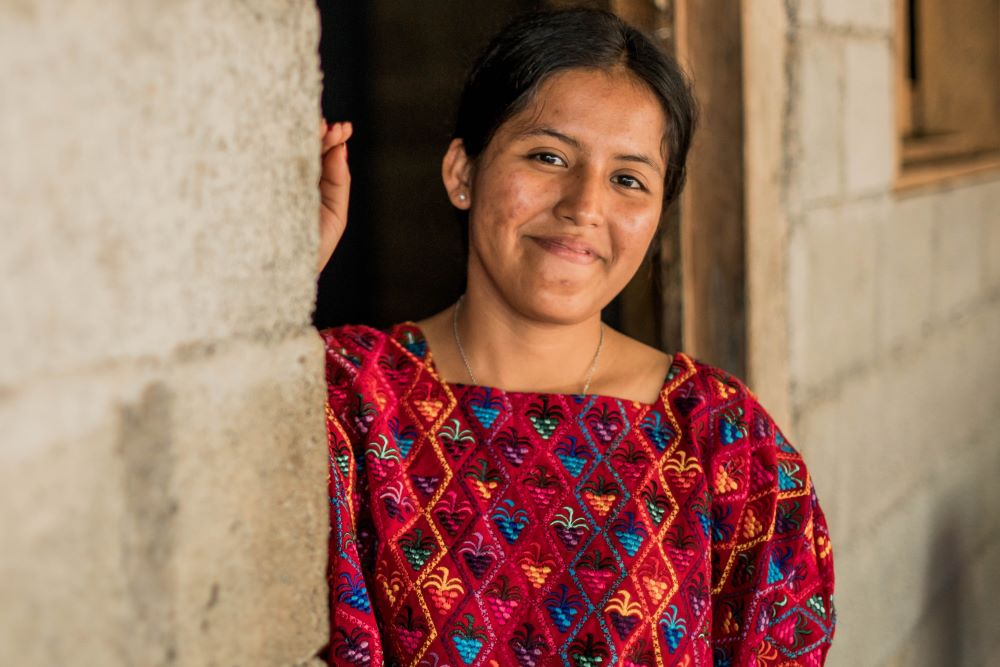
Norma was 9 years old when she got her first period.

When she saw that she was bleeding, she was scared and thought something was wrong.

Like many girls in Guatemala — and around the world — Norma hadn’t learned about her period, so she had no idea what was happening to her.

Menstrual health is an important part of girls’ and women’s overall well-being. But it’s a topic that isn’t talked about enough. In many cultures, menstruation is considered taboo — and girls are paying the price for the silence that surrounds it.

The stigma around menstruation reinforces negative gender stereotypes, keeping girls and women from confidently navigating school and work environments. It allows myths to persist, such as the belief that menstruation makes girls unclean. This can isolate girls, making it difficult for them to feel comfortable during their periods.

The futures girls image
ā€œI was 9 years old when I got my period — I was so surprised,ā€ Norma, 17, shared. She hadn’t learned about menstrual health and didn’t know what was happening to her. | Ā©ļøPlan International Guatemala

Without open conversations, girls may not receive accurate information about their bodies, leading to confusion and fear. This can result in unhealthy practices or misunderstandings about reproductive health.

Studies show period poverty — the lack of access to menstrual products, adequate sanitation and education about menstruation — not only affects girls’ health and well-being but also significantly limits their educational potential.Ā Forced to miss days of school each month, girls fall further and further behind, and in some cases, they drop out altogether.

For those who do attend school, discomfort and embarrassment can prevent them from fully participating. This affects their confidence and ability to concentrate, leading to reduced engagement. When girls fall behind, it affects their career prospects, economic opportunities and personal development. This, in turn, perpetuates cycles of poverty and gender inequality.

For Norma, her struggles with menstrual health didn’t end with her first period.

ā€œOnce, I stained my clothes at school and they teased me,ā€ Norma said. ā€œBoys would start pointing me out. I was afraid to go to school in case I stained myself again. I had a lot of fear and embarrassment, I didn’t want to go to school.ā€

Education is key

So, how do we break the cycle? Well, the first step is to talk about it.

Education is one of the most powerful tools in breaking down the menstrual health barriers that girls face. With accurate information and support, girls can manage their period with dignity and confidence. Without it, the consequences can be dire.

That’s why Plan International embarked on aĀ partnership with Kimberly-Clark, its foundation and the company’s KotexĀ® and Scott brands in 2020, with a goal to shape a future where no girl is held back from reaching her full potential.Ā Together, we have implemented 12 menstrual health and water, sanitation and hygiene projects in 10 countries in South America, Asia and Africa.

We know from experience that the reach and impact of menstrual health programs is significantly increased when there is a strong educational component. So, our projects take a comprehensive approach to menstrual health, meeting girls’ immediate needs for supplies, ensuring they have the knowledge and skills to understand menstruation and creating a supportive environment that is free of period myths and stigmas.

"I learned about what happens in the evolution of our body and the different changes, as well as the freedom and security to express ourselves in public, breaking those taboos that perhaps at some point made us women feel afraid or insecure about issues related to our menstruation.ā€ – Program participant in Colombia

Gender-inclusive menstrual health education fosters empathy, breaks down harmful stereotypes and promotes community-wide support. We engage with entire communities — girls, boys, parents, teachers and leaders —to change harmful beliefs, debunk myths and encourage open discussions, creating platforms of learning with and from youth and families, students and teachers, and children and community leaders alike.

92% of young people surveyed in Colombia now have a moderate understanding of menstrual health, compared to 18% when the project started.

Image 2
Plan Peru celebrated International Menstrual Health Day with an awareness-raising campaign that reached over 200,000 people. As part of the campaign, more than 100,000 menstrual health products and thermal bags for menstrual cramps were delivered to 24 schools, as well as educational materials to debunk menstruation-related myths and notes on talking about menstruation in schools. | Ā©ļøPlan International Peru

Since 2021, 1.5 million people in 10 countries have been reached through awareness-raising campaigns.

We also work with health care providers to make sure their services are adolescent-friendly, so that girls don’t feel ashamed to go to the doctor and talk about their period.

ā€œBefore the project, menstruation was a very secretive and sensitive topic, and no one ever dared to mention or discuss it. We would be very embarrassed if someone found out we’re menstruating.ā€ — Program participant in Vietnam

Young people taking the lead

An essential component of our menstrual health programs is youth leadership. The active involvement of girls in every step of the process ensures that programs align with their needs and priorities, promoting local ownership and sustainability.

Plan, in partnership with Kimberly-Clark, trains young people in menstrual health education to act as advocates and lead trainings with their peers in the community. This peer education model empowers adolescents to be leaders of change, instilling values of confidence and agency, while creating a ripple effect of knowledge dissemination within and across communities.

10,481 young people trained as advocates to lead educational trainings with other youth and community members.

Image 3
Girls participate in a peer educator training session in Vietnam. | Ā©ļøPlan International Vietnam

In Brazil, 475 girls graduated from the Leadership School for Girls course, which required participation in 20 classes on knowing your rights, menstruation, dignity and respect, equality, leadership and empowerment. The girls created a campaign called ā€œMy Cycle, My Rules,ā€ making and distributing bracelets with beads that represented the stages in the menstrual cycle. They reached more than 400,000 people, educating their peers and creating a movement to wear the bracelets as a symbol of breaking the stigma around menstruation.

ā€œThe project awakened my potential in me, you know? The best I can be, because we are often told that we can’t do anything, that our place is only at home, but that’s not it, we can be where we want and we can fight for it.ā€ Maria LuĆ­za, program participant in the Leadership School for Girls course in Brazil. | Ā©ļøPlan International Brazil

"The project has given us the opportunity to feel recognized and that we are heard. It has allowed us to have more confidence that we can talk about menstruation among women, but also with our classmates and with our family." — Alina, a program participant in Peru

Image 5
ā€œI have been empowered by acquiring skills to express myself effectively and communicate in an impactful way,ā€ Luna, a program participant in Colombia shares. ā€œExploring the various communication tools, especially social media, has given me unparalleled creativity and motivates me to continue to raise my voice on behalf of all the girls in my community.ā€ | Ā©ļøPlan International Colombia

79% of program participants surveyed in Peru can identify harmful period myths and stigmas, compared to only 35% when the project started.

Setting girls up for success

Making period products available for free or at low cost in schools, communities and workplaces is essential in the fight against period poverty, and this is a key component of our menstrual health programs.

In partnership with Kimberly-Clark, we’ve distributed 41,972 menstrual health and hygiene kits in 10 countries since 2021.

"Introduction of the pad bank has helped to keep us in school whenever we are menstruating," a program participant named Aisha said. "We are also given uniforms to change into by the school.ā€ | Ā©ļøPlan International Nigeria

But girls need more than pads or tampons to manage their periods — they also need access to clean water and private bathrooms.

Unfortunately, many schools lack adequate girl-friendly bathroom facilities.

15% of adolescent girls surveyed in Nigeria now skip school due to their period, compared to 49% when the project started.

Our menstrual health work involves building bathrooms where students can safely manage their periods while at school. This means creating spaces that have locking doors for privacy, enough space to move around, access to clean running water, enough light to see and a spot to set down their personal items so they’re not on the floor.

Programs that integrate menstrual health with water, sanitation and hygiene initiatives are more effective in holistically responding to the needs of adolescent girls and young women. This multisectoral approach proves to be the most powerful and impactful.

Girls wash their hands in the new bathroom at their school in Brazil. | Ā©ļøPlan International Brazil

"Now going to the bathroom is different, it is clean, well-cared for and everything is working; in addition to that there is security at the doors. Before I didn’t like going to the bathroom because they were useless, and it was unsafe.ā€ — Gladys, program participant in Ecuador

Girls want a future where they have the information, resources and support to manage their period with confidence and dignity, so they can pursue their dreams without interruption. Together, we can break the cycle of inequality, one school day at a time.

The futures girls image

This year’s State of the World’s Girls Report focuses on the experiences of young people whose lives are dominated by conflict.

The State of the World's Girls Report 2024 cover

The future girls want is one where they can learn, lead and live without limits. But right now, too many obstacles stand in their way. In our ā€œFuture girls wantā€ blog series, we’re shining a light on how education is the key to unlocking the future girls want for themselves, and how it impacts every area of their lives — from health to safety to civic participation.

Girls around the world are calling on leaders – from classrooms to boardrooms to executive offices – to pass the megaphone and let them lead the future they want.

At Plan, we know that an educated girl is an empowered girl. Empowered with knowledge and skills that strengthen her critical thinking and self-esteem. Empowered to raise her voice on the challenges holding her back. Empowered to join others in building a world where all girls can thrive.

Chu, a teenage girl from Vietnam, is a shining example of this. At 15, Chu’s parents arranged her marriage to a boy she had only gone on two dates with.

With dreams of going to college and beginning her career first, Chu pleaded with her father to call the marriage off.


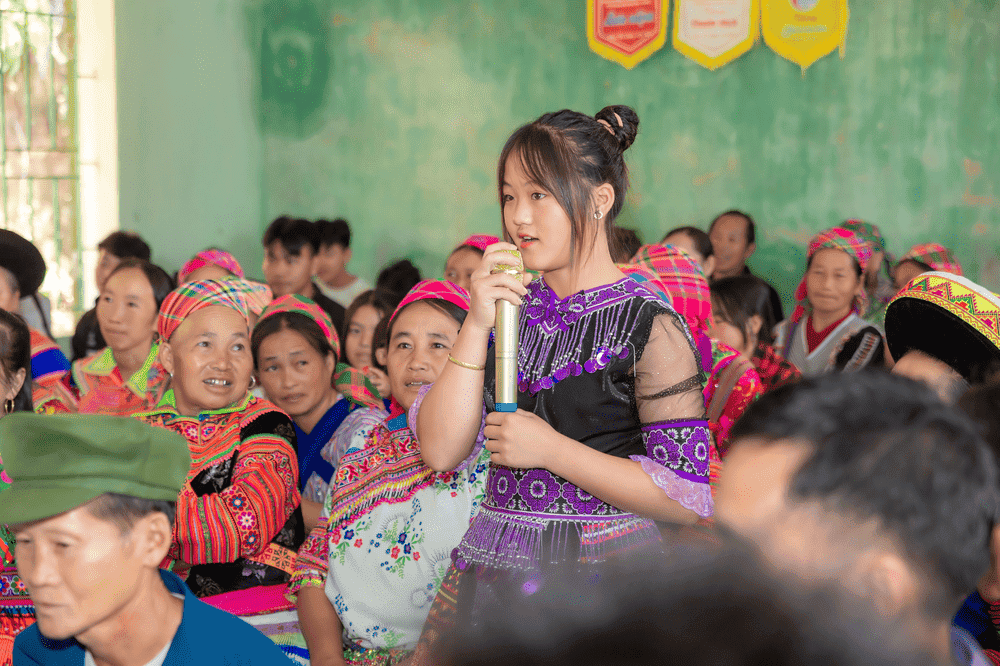
Girl wearing purple and black stands in a classroom full of people speaking into a golden microphone.

Before Chu found out about her potential marriage, she wrote in her diary, ā€œOne day I will go to college, have a stable job, get married, and fill my life with happiness.” | Vu Quang, Ā© Plan International Vietnam


Then, another shoe dropped. Her boyfriend’s parents wanted her to drop out of school. The school dormitory was no place for a wife, they said.

That’s when Chu reached out to her teachers, who reached out to Plan for help. Multiple visits with the community child protection board finally convinced Chu’s father to call off the marriage and let Chu continue her education.

Unfortunately, Chu had missed high school entrance exams and fallen behind on her studies due to the stress of a potential marriage. But with a new door opening, she was not deterred.

ā€œThis time, I will determine my own destiny,” Chu says.

First, she joined a youth economic development club through Plan and took several classes, learning new skills from pig farming to hairdressing. Then, she joined Plan’s Champions of Change club where she learned life skills, developed new friendships and participated in community activities.

Chu blossomed in the Champions of Change club, grew more confident and took on new opportunities to lead club sessions. Eventually, she was chosen to become a program facilitator.


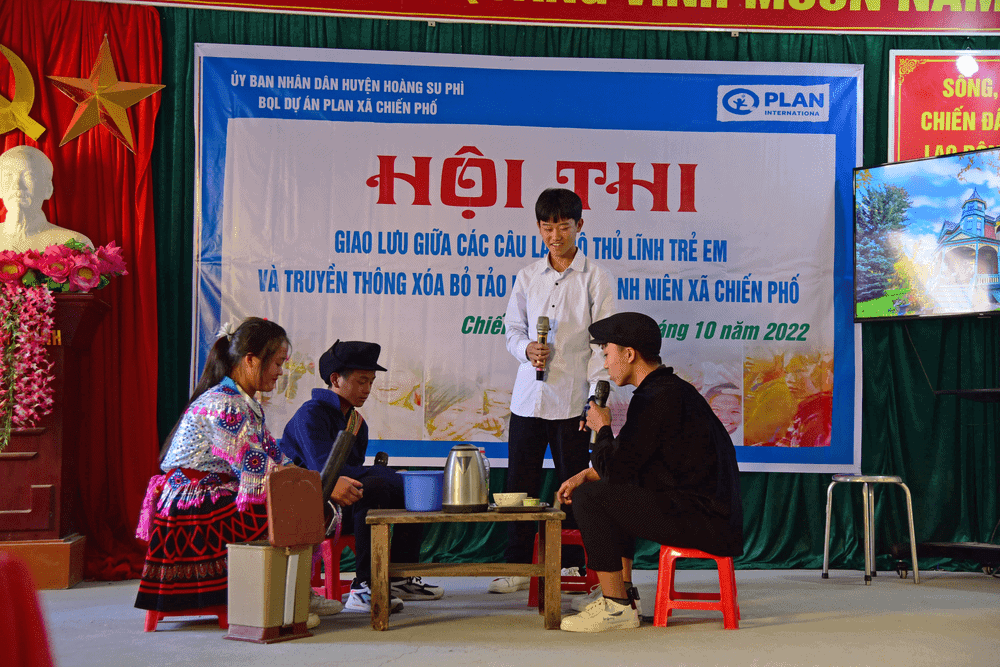
Four young people sitting around a small table in front of a sign written in Vietnamese.

Chu regularly participates in anti-child marriage initiatives in her community. | Vu Quang, Ā© Plan International Vietnam


Now a skilled leader and dedicated volunteer who is supporting the children in her community, Chu shares her story with other girls to encourage them to shun early marriage and choose their education instead.

Chu’s journey is not just a personal triumph — it’s a testament to the transformative power of education and leadership programs like Champions of Change.

In the program, implemented in over 43 countries so far, adolescent girls and boys challenge harmful gender norms in their communities through the creation of safe spaces and peer-to-peer activities.

Plan also helps connect young people in the program with youth networks and civil society organizations, forming a foundation for grassroots activism and deeply rooted change. For girls like Chu, Champions of Change is crucial for empowering girls with the tools to fight gender inequality and become leaders of the future they want.


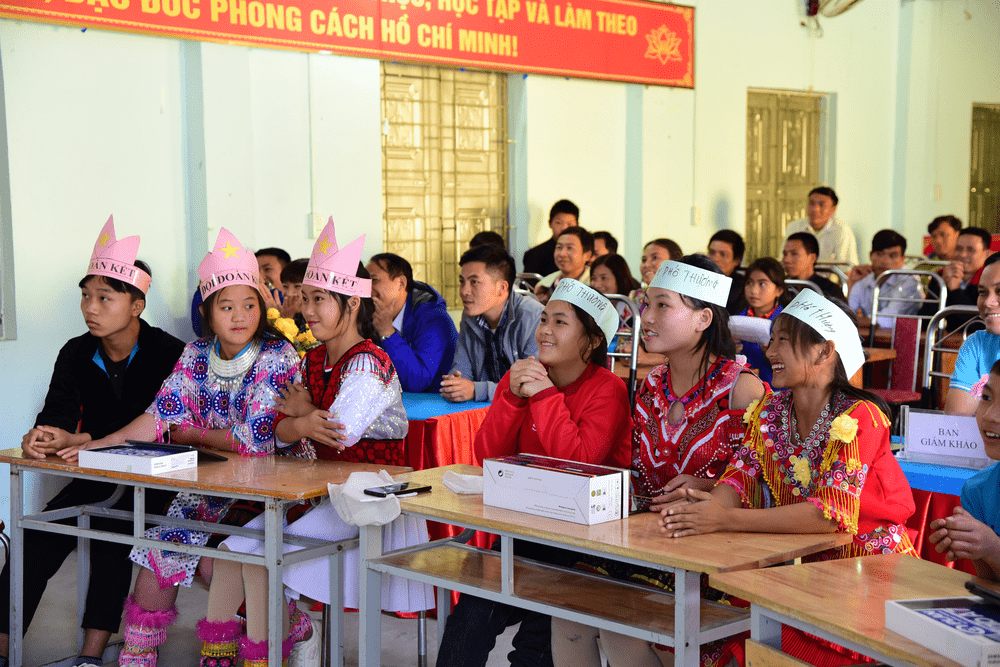
A row of young people with paper crowns sit at desks in front of a classroom full of students.

Champions of Change clubs help girls build their self-esteem and awareness of their rights while helping boys challenge toxic masculinities so they can become allies to girls. | Vu Quang, Ā© Plan International Vietnam


And we don’t stop at training girls to be leaders. We’re also helping to directly support their leadership through our Equality Accelerator. This girl-led funding platform connects young activists around the world with resources to implement their initiatives, taking what they learn in projects like Champions of Change to the next level.

[Read more: This young activist is ending child marriage in Guatemala]

Access to education is not just about acquiring knowledge — it’s about unleashing potential and generating a ripple effect. A girl who stays in school can grow into a woman who leads her community, ensuring that other girls have the same opportunity she did. It’s a virtuous cycle, one that perpetuates progress and breaks down barriers.


The future girls want feature image

The future girls want is one where they can learn, lead and live without limits. But right now, too many obstacles stand in their way. In our ā€œFuture girls wantā€ blog series, we’re shining a light on how education is the key to unlocking the future girls want for themselves, and how it impacts every area of their lives — from health to safety to civic participation.

The future girls want is brimming with possibilities. They envision classrooms filled with knowledge, not fear. They see themselves as leaders, confidently shaping their communities. But for many girls around the world, these ambitions are overshadowed by a lack of safety — both online and offline.

Plan International believes that education is the key to unlocking a safe and empowering future (and present) for girls. Here’s why:

Education shields girls from abuse

Girls with access to education are less likely to become victims of early marriage, trafficking or other forms of abuse, but poverty often gets in the way of a girl finishing school. Desperate to survive, parents might arrange a marriage for their daughter or send her off with a recruiter looking for workers under the belief she’ll be supported.

Only when it’s too late do they find out their child has been taken by a human trafficker.

Plan’s PROTECT project helped fight back against trafficking in India and Nepal. By running activities in both community centers and schools, Plan trained students and families how to spot and stop human trafficking, child marriage and gender-based violence. And, we helped provide skills trainings so young women can get real, safe jobs instead of falling victim to false promises.

ā€œNow if there are child marriages taking place, the parents and mothers are themselves raising their voices, saying that we have to stop the child marriages. I feel happy to see that change.ā€ — Project participant in Nepal

Additionally, child protection groups, transportation workers and border patrol agents received training on intervention and prevention of trafficking.

Through PROTECT, more than 12,100 children were educated on human trafficking, gender-based violence and inappropriate behavior, and 900 people at risk of trafficking were intercepted at the India-Nepal border.

The project also trained ambassadors to spread awareness about trafficking and gender-based violence in their communities.


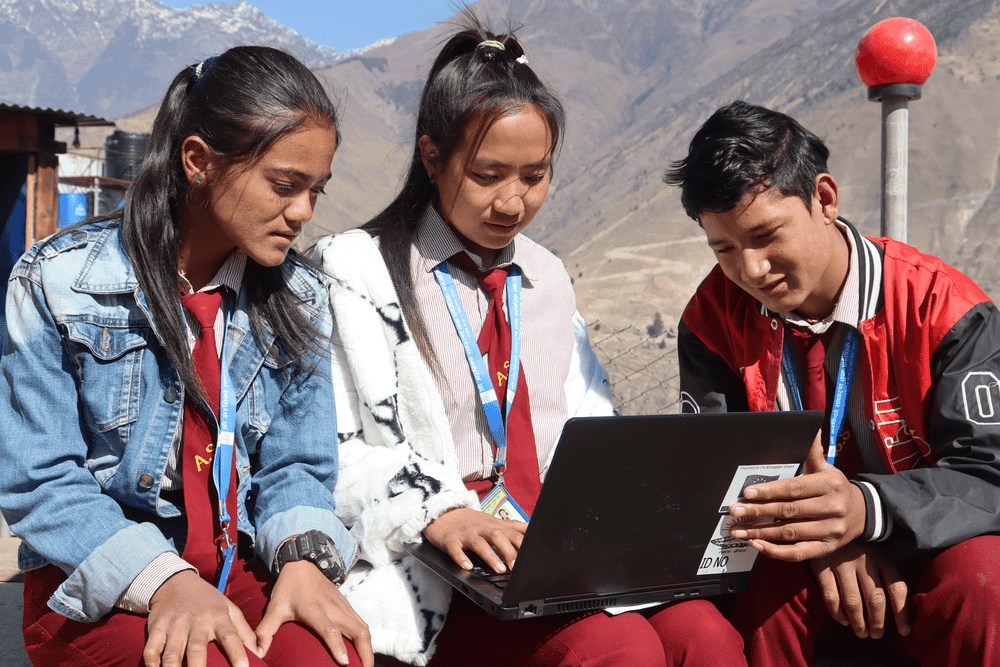
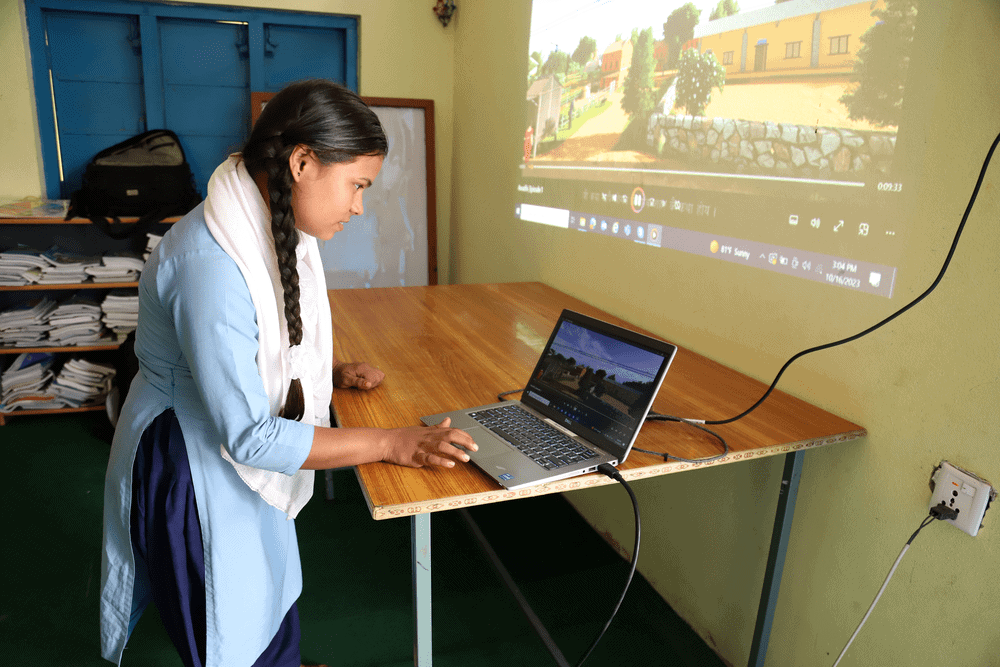
Girl scrolls on computer at desk while screen projects onto wall.

Youth ambassadors facilitate social and behavioral change sessions at schools to teach other young people about what they can do to protect themselves from trafficking. | Naresh Newar, Ā© Plan International Nepal


ā€œIf anyone tried to entice us with promises of a good education, lucrative jobs and the notion that you don’t have to work hard — [that] you can make good money comfortably — then we should not fall into that trap,ā€ Hima, an ambassador in Nepal, says.

Education builds the foundation for online safety

Education empowers girls to recognize and navigate the digital world safely. By developing critical thinking skills and digital literacy, girls can better identify online harassment and abuse and distinguish between reliable and unreliable information.

Plan International’s groundbreaking report, Building Digital Resilience, reveals the alarming reality of girls’ online experiences. Published in partnership with CNN As Equals, the research offers critical insights into the challenges girls face in the digital world. A staggering 75% of girls and young women surveyed reported having harmful online experiences, and 40% experienced monthly harassment.

Educators, community leaders and policymakers can use this data to develop effective strategies to protect girls online. Girls across South America, Africa, and Asia emphasized the need for better digital literacy education. By understanding these specific challenges, schools and governments can implement measures that both teach girls how to stay safe and create safer online environments for everyone.

To support girls’ digital literacy and increase safety in digital spaces, PROTECT developed an AI chatbot for Facebook messenger to share information about trafficking with users. More than 30,000 people have used the chatbot to learn about human trafficking.

ā€œWhether it’s listening to stories, obtaining information about human trafficking, or learning how to file cases, all the necessary information is easily accessible,ā€ Regina, another project ambassador, says. ā€œOverall, I found the app to be quite helpful and engaging,ā€


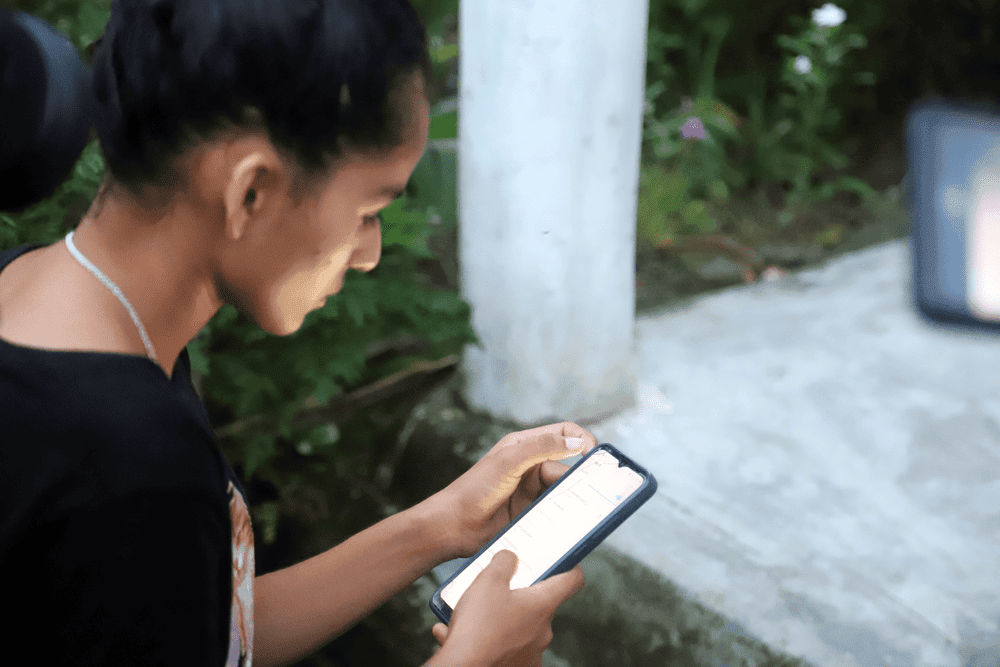
Girl faces away from the camera, looking at phone screen.

With more and more children accessing technology, bringing safety education to the platforms they use the most is important for protecting as many girls and young women as possible. | Naresh Newar, Ā© Plan International Nepal

Education empowers girls to become advocates for change. When a girl is educated, she gains the confidence and knowledge to shape her community and fight for a better future. Plan International and its partners are at the forefront of this movement, advocating for legislation like the Kids Online Safety Act to protect young people online.

No longer a statistic in a report about online harassment, an educated girl can become a vocal advocate for online safety. She can rally movements to protect more girls and young women and create the safe spaces – online and offline – that they need to build the future they want.


The future girls want feature image