Search Results

Search results for

0 result(s) found

The holidays are upon us, and with them come the honored traditions of giving and merriment we hold dear. But for many mothers in Guatemala, their biggest wish this holiday season is simply for their children to have enough food to eat.

You see, families who have farmed the land they love for generations with great success now find themselves unable to yield a meaningful harvest. Ā From severe drought to torrential rain, unpredictable weather is wreaking havoc on families’ food supplies and their ability to earn an income.

YOU can help

Fortunately, we have great news! A group of generous donors who — like you — want to see children have plenty to eat and have bright and healthy futures has agreed to match every gift received DOLLAR FOR DOLLAR up to $64,000! That’s right! Your gift today will be matched to have DOUBLE the impact and help even more children and their families in Guatemala and all over the world.

Families are suffering

Norma, a resident of San Pedro CarchĆ” in the Guatemalan department of Alta Verapaz, lives close to the Polochic River, which often floods — destroying crops and livestock in its wake.

ā€œWe lost our crops, such as coffee, cardamom, maize.ā€

Norma shares.


Most families living in Alta Verapaz have similar stories to share — their crops and livelihoods being washed away by floodwaters, followed by intense droughts that turn the soil into unfarmable dust.

Crops cannot grow in these conditions. In fact, research suggests that yields of maize and beans will likely be reduced in Guatemala by around 14% by 2050, with sugarcane dropping as much as 35%.

Those living close to rivers or on the slopes of the mountains, which are greatly impacted by floods, landslides and mudflows, are most at risk.


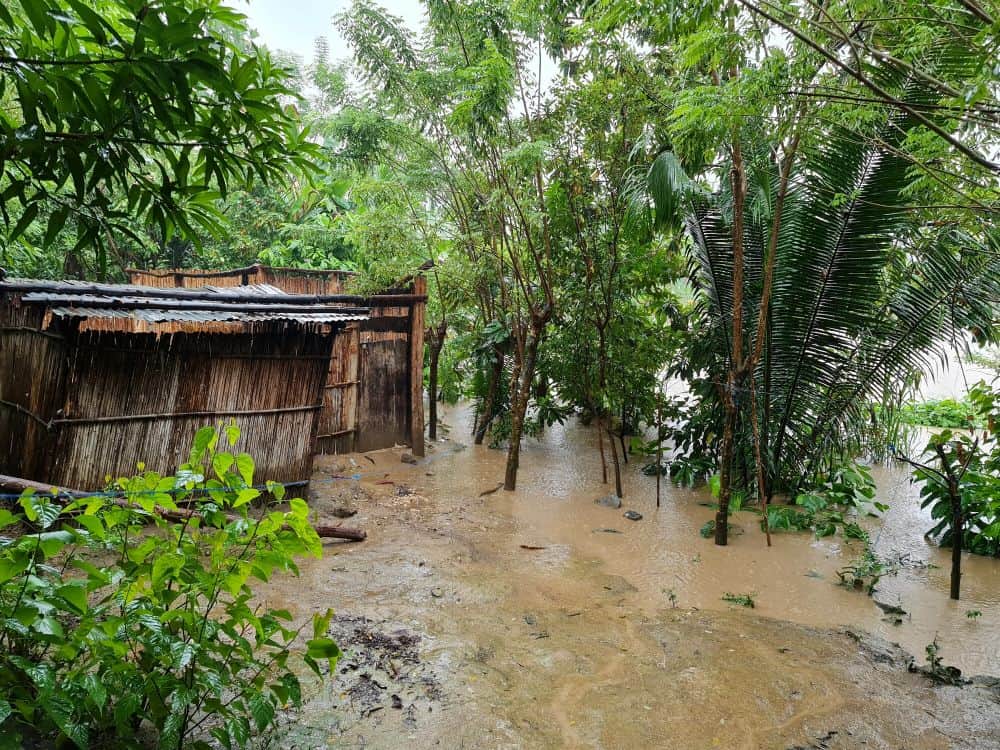
Muddy water washes against a home in Guatemala.

Floods ravage homes like this one in Guatemala. Your gifts can DOUBLE to help families rebuild. | ©Plan International


ā€œWe lost our harvest because of the floods,”

Carmelina says.

“We were worried about how and where we were going to get money for food.”

Children are starving for nutrients as hunger crisis looms

Irma’s 4-year-old son is not able to develop properly due to lack of food.

ā€œMy son is really malnourished,ā€

a worried Irma shares.

ā€œThere have been difficult times with my little boy. About a month ago, he fainted.ā€


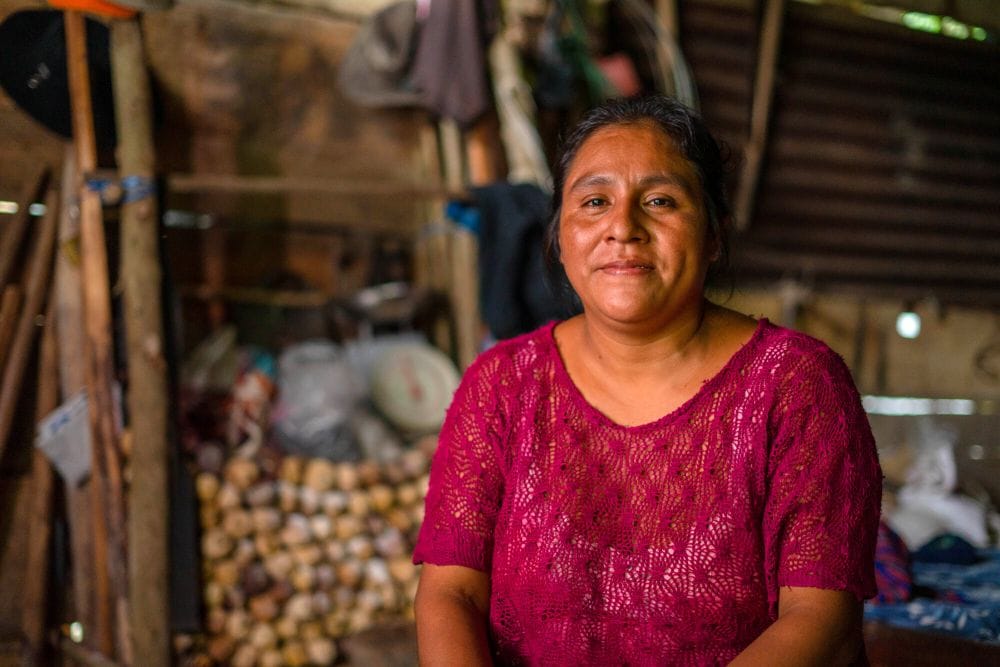
A woman wearing a pink shirt smiles at the camera.

Your compassionate support can double to help ease a worried Irma’s burdens. | Nelson Pacheco, Ā©Plan International

As the hunger crisis in Guatemala deepens, nearly half of children under the age of 5 are suffering from chronic malnutrition. In rural areas, this number is even higher.

Your generous gift today will be MATCHED to help even more mothers like Irma feed their children and ensure they have a bright, healthy future.

Sharing solutions for a better tomorrow

Irma’s son was on the verge of being sent to the hospital due to lack of nourishment.

But thanks to the support of compassionate people like you, Irma’s wish came true — in the form of a lifesaving cash transfer — empowering her to purchase the nutritious food her son desperately needed.Ā 

ā€œWe received 665 Quetzals ($85 USD),ā€

Irma says.

ā€œThanks to that, I was able to buy some vegetables and everything we needed. I bought tomatoes, onions, garlic for the food — because with that, we can keep our children healthy.ā€


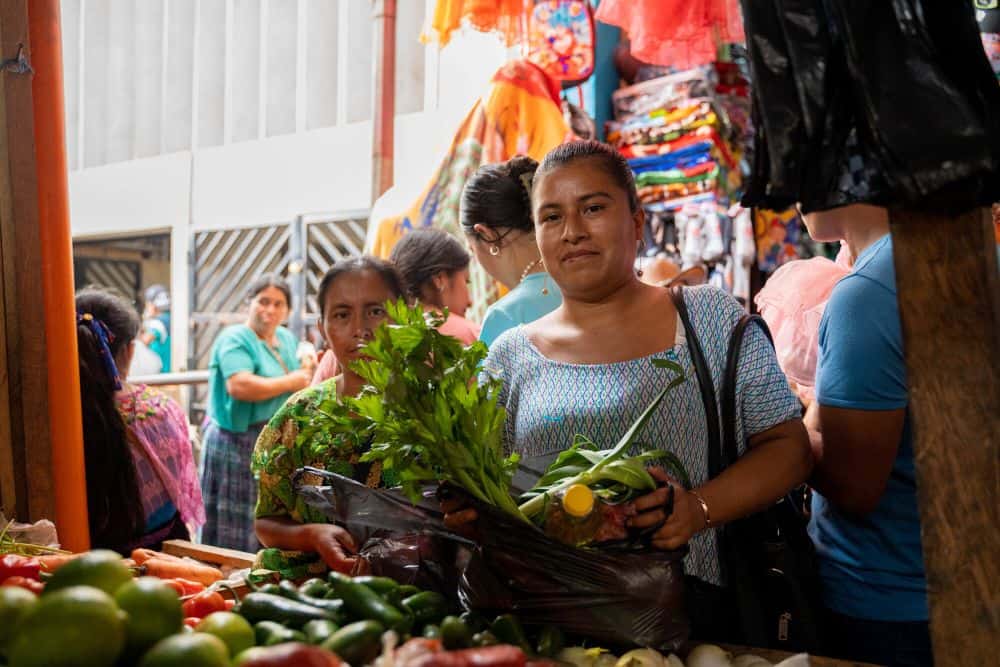
A woman collects vegetables at an outdoor market.

Your gifts helped a grateful Carmelina buy vegetables for her children. | Nelson Pacheco, ©Plan International


ā€œI feel happy because I now have a little money to buy some food for the children,”

Carmelina says.

Imagine the children you can help when your gift today — of any amount — is doubled.

DOUBLE the impact … how ’bout them apples?

For Irma’s son, the excitement to finally be able to eat an apple, his favorite food, brought so much joy to both of their hearts.


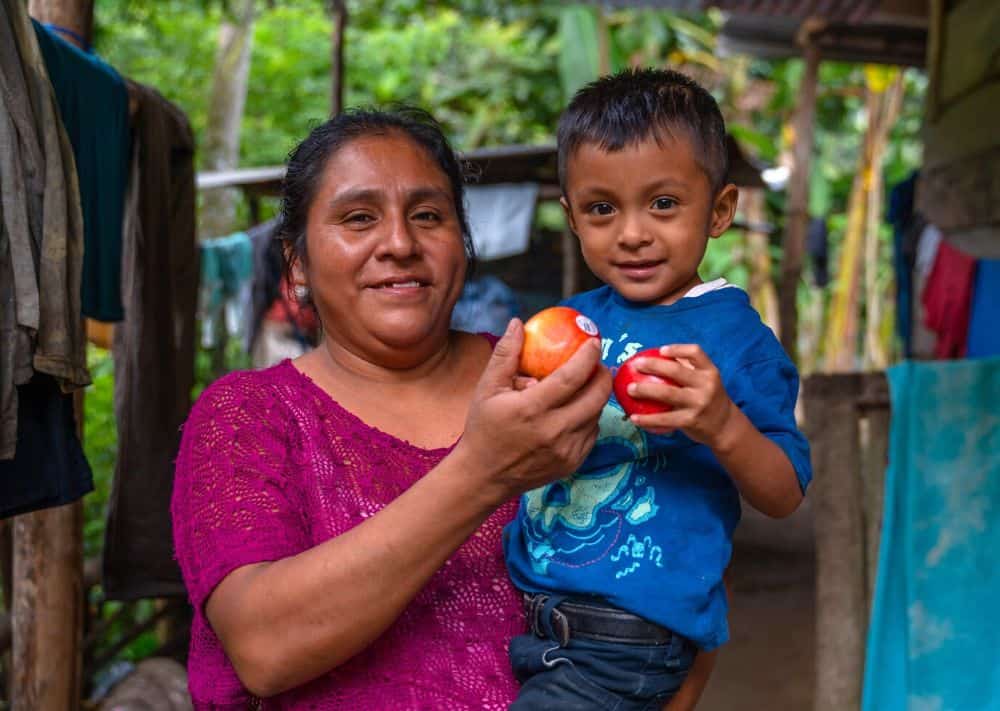
A mother holds her son in her arms as they both hold up apples and smile for the camera.

Irma and her son enjoy his favorite food — apples — thanks to you! | Nelson Pacheco, Ā©Plan International


ā€œMy son is getting better. He is recovering,ā€

a grateful Irma shares.

ā€œI see his joy, and I feel happy too. When he starts going to school, he will be strong, and he will be happy. That support for us is thanks to Plan.ā€

You can deliver hope, comfort, and joy to mothers like Irma this holiday season with your gift today.

All donations will be DOUBLED up to $64,000, bringing more nourishing food, love and support to families in need this holiday season.

Thank you for your support!

DOUBLE your impact this holiday season feature image

Across Malawi, Plan’s programs are transforming the lives of young people. By working together with communities, girls can stay in school and access quality education, unlocking opportunities for them to go to college or get the jobs they want to achieve success.

To increase opportunities for their futures, girls took over business and government roles on International Day of the Girl to shine light on the importance of girls’ education and leadership opportunities. Fittingly called Takeovers at Plan, this signature initiative is more than just a symbolic gesture; it’s a powerful catalyst for change, empowering girls to challenge gender norms, fuel their ambitions and take charge of their lives.

Girls take over the World Bank

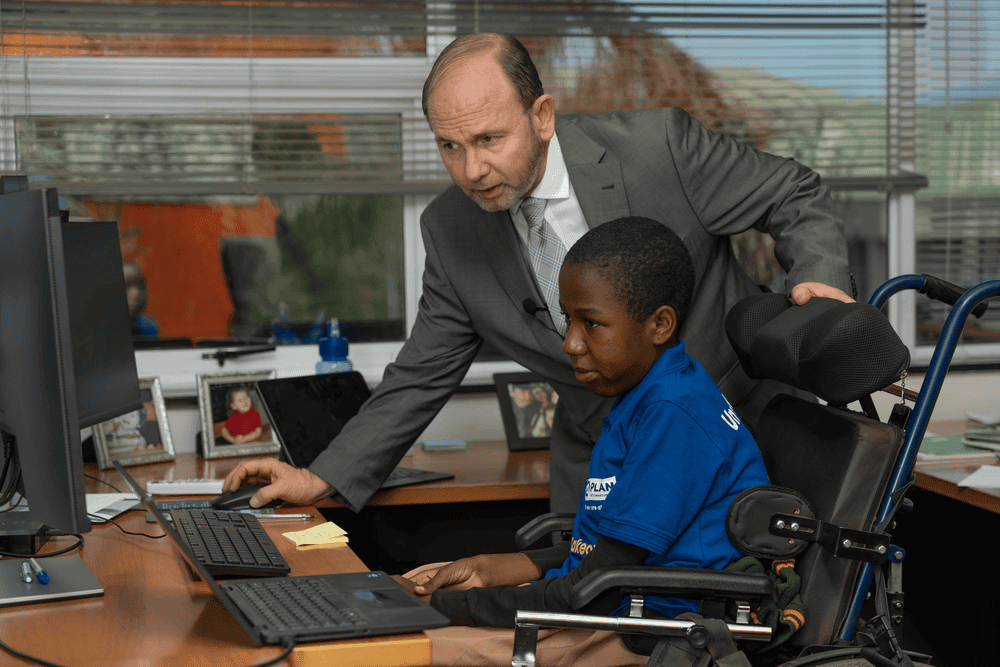
At the World Bank, 15-year-old Peace, 14-year-old Chifuniro and 14-year-old Beatrice took over the country manager’s office, participating in meetings, learning about team management and sharing their perspectives on supporting special needs and inclusivity in the classroom.


Peace sits in a wheelchair at a desk as World Bank Malawi country manager leans over and directs her on a computer.

Peace sits at the desk of the World Bank country manager in Malawi, learning about the role’s daily tasks, like answering emails and reporting to other managers. | Ā©Plan International Malawi


During the day, the girls joined the education team in a meeting to discuss education programs across the country. There, they advocated for girls with disabilities to receive more support so they can access quality education and opportunities to succeed after graduating.

ā€œIt was great to meet [Peace] and hear about her dreams as a young Malawian,ā€ Firas Raad, World Bank country manager for Malawi, says. ā€œThe key highlights were engaging the education team, and Peace really taking over in chairing the meeting and listening to our education experts talk about different education programs in the country.ā€


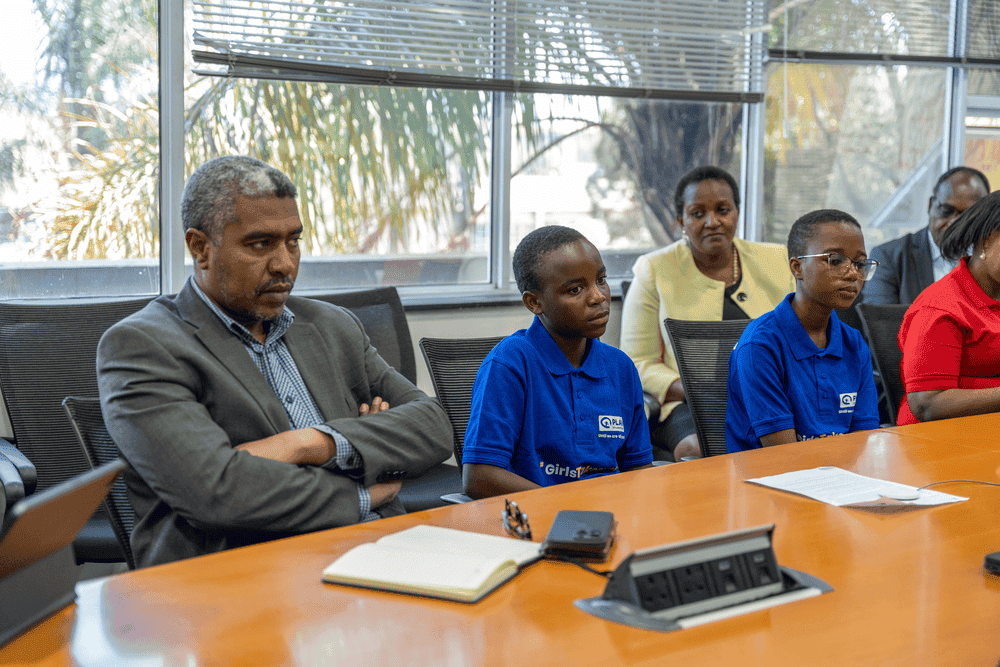
Two girls wearing blue t-shirts sit at a table next to staff on the education team at the World Bank.

Peace, Chifuniro and Beatrice sat with the education team on a briefing about Malawi’s Education Reform Program. | Ā©Plan International Malawi


Through mentorship, role modeling and exposure to diverse opportunities, girls are developing the confidence and resilience to overcome obstacles and achieve their dreams. With private sector engagement from businesses like the World Bank, Plan leverages community resources to ensure girls build support networks so they can achieve their goals.


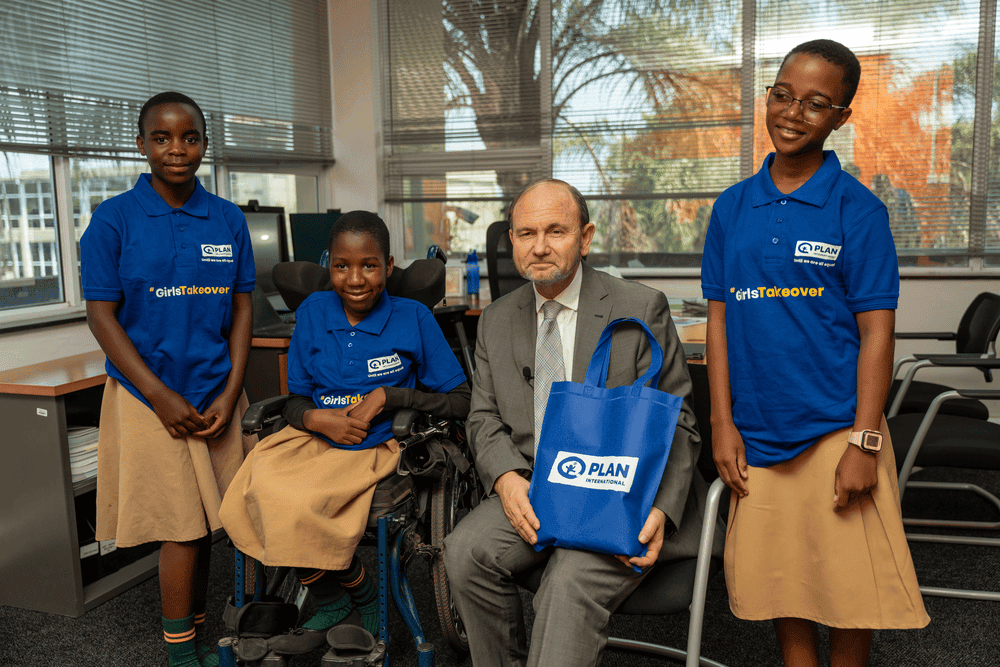
Peace, Chifuniro and Beatrice sit with Firas Raad for a photo.

The girls asked Firas Raad questions about his role and the work that the World Bank does for countries like theirs. | ©Plan International Malawi


ā€œToday I learned that girls can change the world,ā€ Peace says. ā€œTogether, we take the lead, turning dreams into action and making our voices heard. This Takeover is just the beginning.ā€

Becoming university vice chancellors

At Malawi University of Science and Technology, 21-year-old Fanny and 19-year-old Margaret took over as vice chancellors.


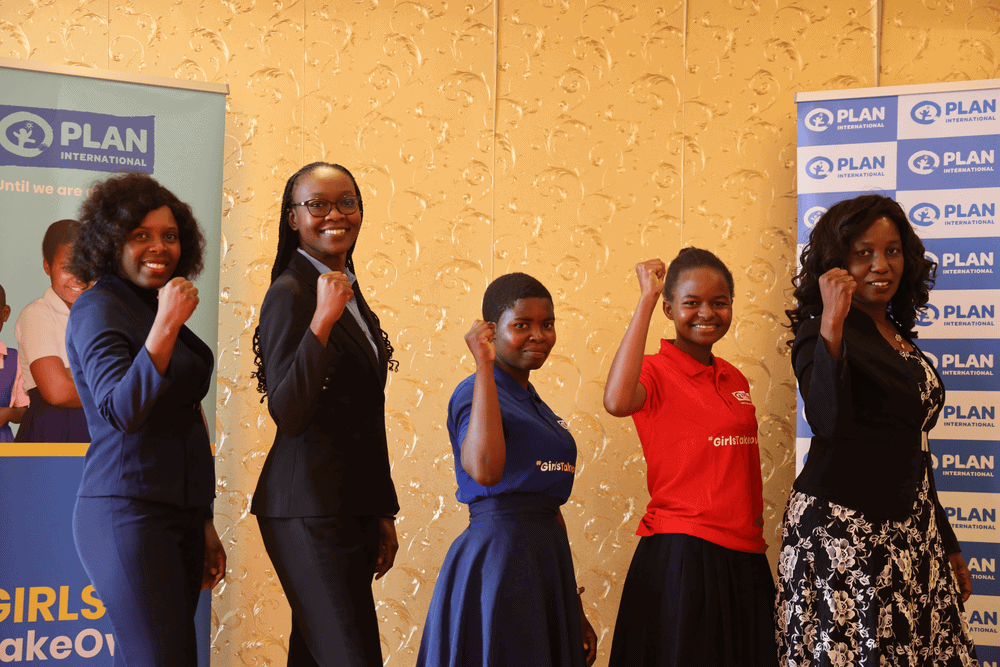
Two young women stand and hold up their arms alongside three members of the Malawi University of Science and Technology.

Connecting girls and young women like Fanny and Margaret with women in professional careers serves as a source of inspiration and motivation to achieve their dreams. | ©Plan International Malawi


After touring the campus, the two girls met with staff at the university to learn about the university’s commitment to reaching students in under-served communities across Malawi.


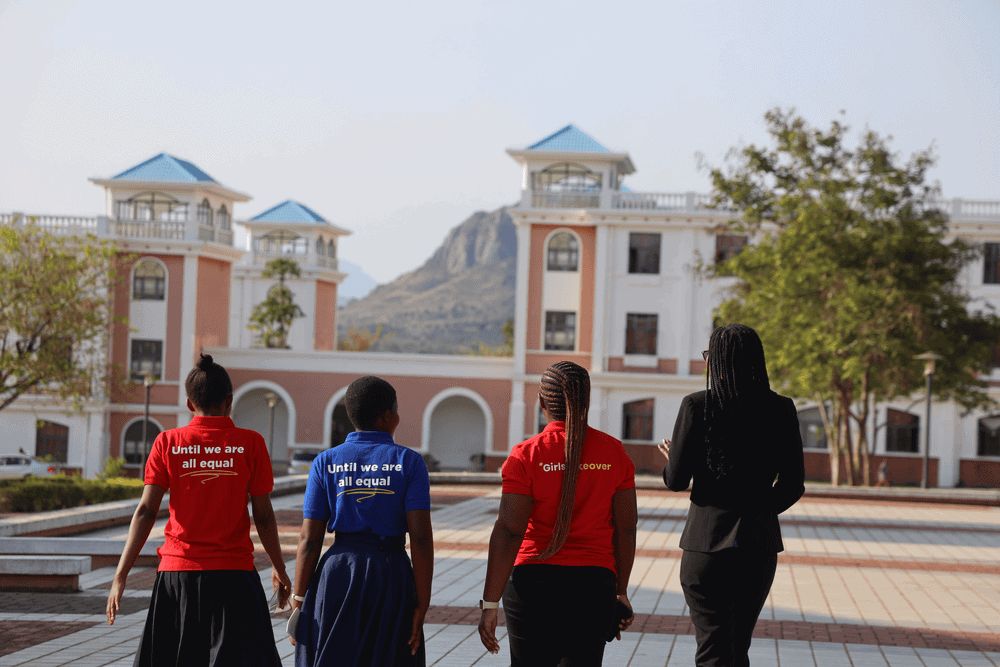
Three young women and a Malawi University faculty member face away from the camera as they walk outside.

When the young women arrived on campus, they were taken on a tour to see all the different academic buildings and learn about some of the university’s programs. | Ā©Plan International Malawi


At the top of Fanny and Margaret’s list of discussion topics was school fees. They spoke with the university’s vice chancellor, Dr. Marion Chirwa Kajombo. For girls across the country, tuition is a common barrier that prevents them from continuing their education after secondary school. In response, Dr. Chirwa Kajombo assured the girls that the university would increase awareness about scholarships.

ā€œTheir energy and fresh perspectives are incredibly inspiring,ā€ Dr. Chirwa Kajombo says. ā€œThe insights shared by these young leaders reaffirmed our commitment to expanding our university’s outreach to rural community.ā€


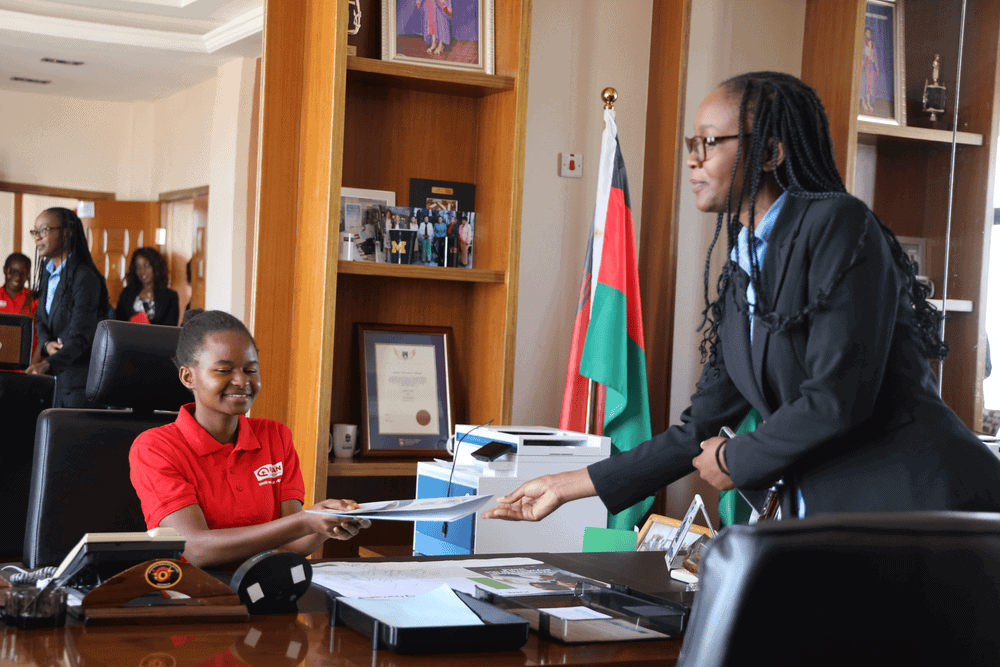
Dr. Chirwa Kajombo hands papers to Fanny who sits at her desk.

Fanny took over some of Dr. Chirwa Kajombo’s responsibilities during the Takeover. | Ā©Plan International Malawi


Takeovers like this are a meaningful way to foster youth leadership and girls’ self-confidence. When girls have allies and mentors in universities, companies and other professional settings, they feel like their dreams and goals are within reach.

ā€œI feel really inspired being the vice chancellor for today because it has really proved to me that it’s really possible for a girl child to be in this office, and as much as we can work hard, all these things are possible,ā€ Fanny says.

Serving as Chief Justice of Malawi for a day

To learn about the judicial system in Malawi, 15-year-old Faith and 16-year-old Christina took over the Chief Justice’s office.


Three girls in court justice robes speak from the bench of Malawi's appeals court.

The girls were tasked with leading an appeal’s court session as part of their Takeover. | Ā©Plan International Malawi


One of the major issues Faith and Christina discussed with the Chief Justice was access to the justice system in rural communities. They proposed an initiative to bring mobile justice clinics to these areas so girls and young women can access legal support.

ā€œYour advocacy for mobile justice clinics is both timely and commendable,ā€ Chief Justice Rezine Mzikamanda says to the girls. ā€œEnsuring access to justice, particularly for young women and girls in rural communities, aligns with our efforts to promote equality before the law.ā€


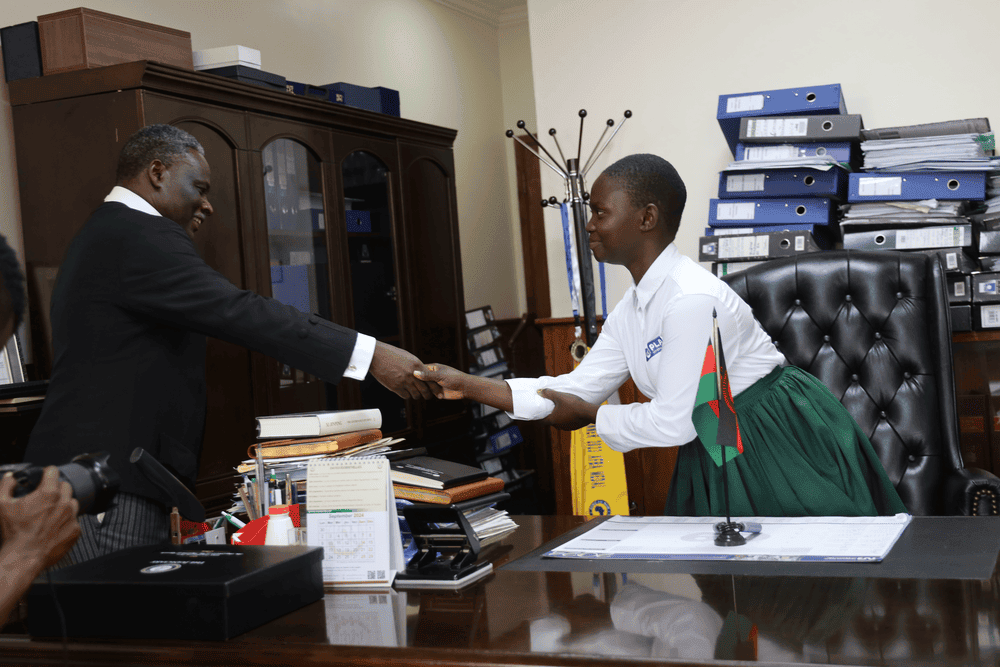
A girl wearing a white shirt and green skirt and shakes the hand of Chief Justice Rezine Mzikamanda.

Faith sat at Chief Justice Rezine Mzikamanda’s desk, overseeing some of the tasks he completes in his role in Malawi’s government. | Ā©Plan International Malawi


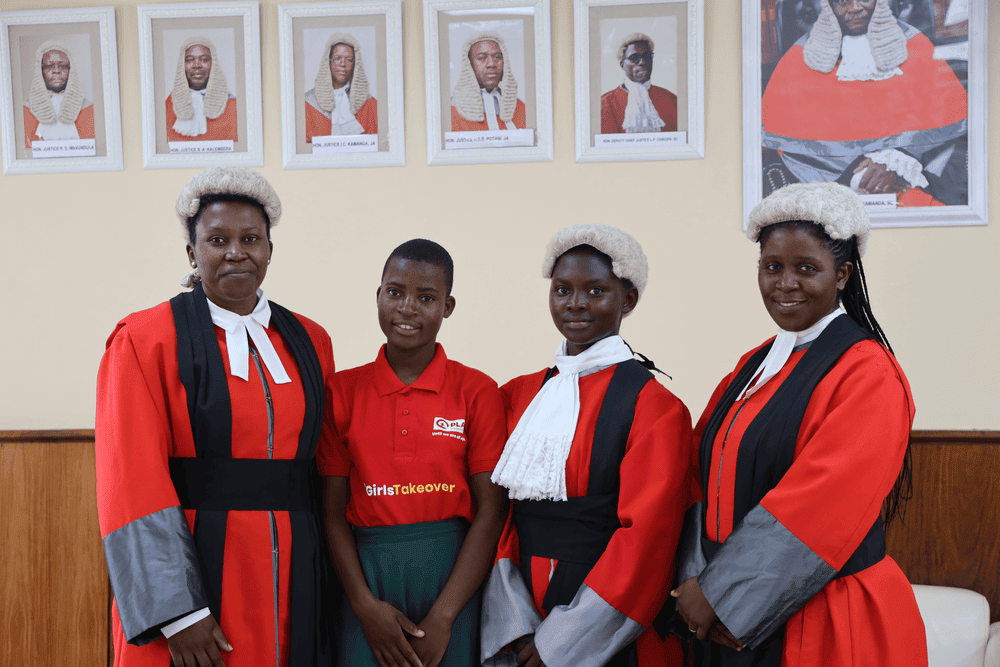
During the Takeover, Faith and Christina also met with women appointed as high court justices. They led a session in the Supreme Court of Appeals, experiencing firsthand how judicial processes lead to laws that shape their futures.


Two girls stand with women serving on the judiciary of Malawi's supreme court.

The girls met with women in the judiciary, who briefed them before they led a session in the Supreme Court of Appeals. | ©Plan International Malawi


ā€œParticipating in the girl Takeover gave me a voice I never thought I had,ā€ Faith says. ā€œIt was empowering to step into a leadership role and make decisions that affect our future.ā€

Four girls in court justice robes

This article was written by Maya Rao, a Plan International monitoring, risk, evaluation and learning advisor. For more information on Plan’s work, please reach out to [email protected].Ā 

BackgroundĀ 

In Senegal, nearly a third of girls marry before age 18, with a significant proportion marrying before they turn 15. Child marriage can start a domino effect, endangering girls’ health, safety and education. In the KĆ©dougou region, these challenges are even more pronounced, and child marriage remains a major reason for girls dropping out of school.Ā 

Through Plan International’s Girls Learn & Thrive project, girls in southeastern Senegal are given the opportunity to put their education first and are protected from early marriage. With life skills training that builds their confidence in decision-making, girls can pursue secondary education without fear of being pressured into marriage.Ā Ā 


Using Plan’s GirlEngage model, girls actively drive change in every phase of the project, acquiring skills and confidence to create the transformations they want to see in their community. Now in its second phase, the project is working with its third cohort of 378 girls from rural areas in the KĆ©dougou Region.Ā 

Plan conducted an evaluation mid-way through its second phase to measure progress toward strengthening girls’ self-esteem, confidence in making life decisions, communication and leadership skills. The evaluation also measured community support for girls’ rights to education and reproductive health. By comparing midline data collected in May–June 2024 with baseline data from May 2022, the evaluation revealed substantial progress.Ā 

The evaluation surveyed 103 girls from the program’s third group of participants (Cohort 3), ages 13 to 21. Data collectors also interviewed community leaders, teachers and health facility staff and held focus groups with mothers and male peers. These discussions provided diverse, in-depth perspectives on how the project is challenging gender norms and reshaping attitudes toward girls’ education and early marriage in KĆ©dougou. Through increased community support and girls’ confidence to make life decisions, the project aims to boost girls’ retention and graduation from secondary school.Ā 

Key resultsĀ 

Nearly all survey results showed improvements from baseline to midline.Ā Ā 

Ā  Ā  —  Girls who are better able to make choices about their future, like staying in schoolĀ 

Ā  Ā  Ā  Ā  Ā  —  Baseline 31% Ā 

Ā  Ā  Ā  Ā  Ā  —  Midline 63%Ā Ā 

Ā  Ā  —  Girls who feel confident in making decisions about whom and when to marryĀ Ā 

Ā  Ā  Ā  Ā  Ā  —  Baseline 29%Ā Ā 

Ā  Ā  Ā  Ā  Ā  —  Midline 62%Ā Ā 

Ā  Ā  —  Girls who report feeling supported by family members, teachers, peers and community to pursue their educational aspirationsĀ Ā 

Ā  Ā  Ā  Ā  Ā  —  Baseline 49%Ā 

Ā  Ā  Ā  Ā  Ā  —  Midline 90%Ā 

Ā  Ā  —  Parents who support and allow girls to pursue their educational goalsĀ 

Ā  Ā  Ā  Ā  Ā  —  Baseline 49%Ā Ā 

Ā  Ā  Ā  Ā  Ā  —  Midline 91%Ā 

In focus groups, girls highlighted positive changes in themselves, including increased self-confidence, stronger public speaking skills and greater awareness of their rights. One girl shared, ā€œI feel able to lead projects and mobilize other young people for important causes.ā€ Another shared, ā€œNow our parents are starting to understand the importance of letting young girls study.ā€Ā 

The community feedback also reflected this shift. A mother in Salemata village noted, ā€œWe are ready to support [our daughters], encourage them to go far in their studies and succeed in their lives.ā€Ā 

In a context where parents commonly marry girls off at an early age, the midline assessment results revealed an important shift in girls’ agency to prioritize education over marriage.

Sustainability and next stepsĀ 

To ensure progress continues beyond the project, community stakeholders suggested further intensifying awareness-raising efforts on reproductive health and rights and increasing involvement of health workers, teachers and community leaders in the process. These efforts could also include actively involving boys and men to promote gender equality, advocating for local authorities to improve community infrastructure — such as street lighting — and supporting parents and girls with small business initiatives to help cover education costs.Ā 

Along these lines, Plan has developed a sustainability plan that prioritizes community leadership in promoting girls’ rights. This includes an alumni organization with an action plan that features peer mentoring, participation in International Day of the Girl, representation at national youth federations and collaboration with Guinea on cross-border initiatives for girls’ rights. The alumni organization will enable graduates to continue advocating for their communities while building valuable leadership experience.Ā 

A final evaluation in May 2025 will measure the effectiveness of these sustainability efforts, assessing whether local stakeholders are equipped to sustain these initiatives independently.Ā 

This evaluation underscores a critical lesson: when girls are active participants in shaping solutions, programs become more impactful, sustainable and transformative — not just for them, but for their entire communities. With sustained community engagement, these initiatives pave the way for lasting change in KĆ©dougou and set a powerful precedent for similar programs across Senegal.Ā 


For more articles of this nature,Ā sign-up to receive From Plan to Action, a quarterly newsletter highlighting Plan International USA’s technical work.

high-school-graduation-ceremony-kedougou-girls-learn-thrive image

There are so many ways that you can make a difference this holiday season. No matter which you choose, your year-end gift will help children, especially girls, to have a safer and healthier 2025. We hope this guide will make it easier to find the one that’s the right fit for you!

Make a one-time donation to support the future girls want

Your gift today will help to support children, especially girls, and communities around the world. Together, we’re fighting to build a better future where every child is free to reach their full potential. We won’t stop, until we’re all equal.

Prefer to give through the mail? You can also send your donation by mail to Plan International P.O. Box 9747 Providence, RI 02940.

Give a Gift of Hope

Supporting equality and positive change is important. It can also be fun! When you explore the all-new holiday Gifts of Hope catalog, you’ll find family favorites like farm animals and gifts of life-changing education for girls and young people in vulnerable communities. Gifts of Hope are great examples of what’s possible when caring friends like you give gifts from the heart to help create sustainable change and address the root causes of poverty and inequality. A Gift of Hope is also a great way to celebrate the people in your life who care about making a difference as much as you do — and it’s a perfect gift for anyone on your list who says they don’t need or want anything this holiday season. Simply browse our online catalog to find gifts that can help to create sustainable change for children around the world. Then, select an e-card after checkout to let your loved one know that you donated in their name.

Send your sponsored child a gift they will treasure!

Every child should experience the magic of opening a present that’s just for them. With Little Treasures, you can send a special gift that will brighten your sponsored child’s holiday season — and your own.

Not a sponsor? When you sponsor a child with Plan International, you have the opportunity to develop a meaningful connection with a determined child or young person, while helping to improve the community and resources surrounding them.

Tax-smart giving options

Donor-advised fund If you have a donor-advised fund, there’s never been a better time to turn your charitable dollars into impact! A gift from your donor-advised fund will go to work immediately, helping to create a better future for all of us.

IRA charitable rollover If you’re over 70 ½ years old, you can maximize the tax benefit of your charitable contributions through an IRA charitable rollover. Transferring a portion of your IRA directly to Plan reduces your taxable income and makes a difference at the same time!

Gifts of stock If you’ve held your stock for more than a year and it’s appreciated in value, giving the stock directly to Plan can save you money. You’ll avoid any potential capital gains tax and increase the impact of your gift by up to 20%! And, when you donate appreciated stock, you can still claim an income tax deduction up to the full fair market value of the gift.

Create your legacyĀ Ā  A gift in your will or trust to Plan ensures that we continue to work with girls and their communities toward better futures. If you’ve remembered Plan in your estate plans, or made Plan the beneficiary of your retirement or life insurance account, now is a great time to let us know. Notify us of your gift.

If you’d like your gift to go even further…

Did you know that your gift to Plan could be matched by your employer? It’s a quick and easy way to maximize the impact of your contributions. Check to see if your employer will match your gift here!

Want to make an even bigger impact?

With an endowed sponsorship, you can provide support for one child and family at a time, for generations to come. Endow your sponsorship with a one-time gift, through installments or with a legacy commitment through your will or trust. No matter how you choose to give, you’ll be investing in a brighter future for children around the world — and building a lasting legacy.

PRESS RELEASE

New board members bring diverse expertise to strengthen Plan USA’s mission of gender equality and youth empowerment.Ā 

WASHINGTON, D.C., Nov. 12, 2024 — Plan International USA announces the addition of four new members to its board of directors, who joined in September 2024. Each brings valuable expertise and a commitment to advancing children’s rights and gender equality, further enhancing Plan’s ability to drive impactful programs worldwide.Ā 

ā€œWe’re excited to welcome these new members to our board,ā€ Shanna Marzilli, president and CEO of Plan International USA, said. ā€œTheir expertise and leadership will be invaluable as we deepen our advocacy, strengthen community partnerships and expand our resources to support girls and young people in overcoming the challenges they face. Each member’s unique background — whether in shaping innovative technology, advancing health equity or fostering sustainable development — will help us build an even stronger foundation for achieving gender equality.ā€Ā 

The new board members include:Ā 

— Daniela Muhaj — Associate director for research and technology initiatives at Georgetown University’s Baratta Center for Global Business, Daniela has held roles at institutions like the Massachusetts Institute of Technology, the International Monetary Fund and Amazon Web Services. Her work centers on the impact of technology on global business practices and economic equity. On her motivation to support Plan’s work, Daniela said, ā€œI am honored to support Plan’s mission of advancing children’s rights and achieving gender equality. Growing up in a small village in Albania, I saw firsthand how education can transform lives, especially for young girls. I look forward to contributing my expertise to drive long-term impact.ā€Ā 

— Maham Sewani — A passionate youth advocate with Plan since 2021, Maham has helped shape Plan’s Youth Leadership Academy and represented the organization at high-profile venues like the White House Gender Policy Council and the United Nations Commission on the Status of Women. ā€œPlan has played such an integral role in my development as a young leader. The organization holds a close place in my heart, as it gave me the tools and space to pursue my passion in gender equity and sexual and reproductive health and rights,ā€ Maham said. ā€œI’m excited to extend this commitment to youth voices and help bridge Plan’s youth network and the board. I look forward to collaborating with the Youth Advisory Board and fostering advocacy opportunities for others.ā€Ā 

— Marek Wolek — Senior vice president and chief strategy and commercial officer at Fluence, Marek leads the company’s global strategy, partnerships and mergers and acquisitions, overseeing sustainable energy solutions. Formerly managing director at The AES Corporation, Marek has been instrumental in driving growth and innovation in the energy sector. As a longtime donor and supporter of Plan, Marek shares a deep commitment to its mission. ā€œI’ve been involved with Plan since 2002, and I’m continually impressed by the impact this organization has created,ā€ Marek said. ā€œAs a father of two girls, I believe empowering girls has the power to change the world. I’m excited to help amplify Plan’s reach and create lasting change for young people everywhere.ā€Ā 

Each of these new board members will serve a three-year term, bringing fresh perspectives and strengthening Plan’s capacity to support children, especially girls, in reaching their full potential. To learn more about Plan’s board of directors, please visit www.planusa.org/about-us/leadership.Ā 

Ā 

About Plan International

Plan International is an international development and humanitarian nonprofit that advances children’s rights and equality for girls. Working together with children, young people, supporters and partners, we strive for a just world, tackling the root causes of challenges children face. We are there from birth until adulthood, and we support children to prepare for and respond to crises and adversity, while particularly focusing on the experiences of girls. With more than 85 years of experience, we work to transform lives in more than 80 countries. We won’t stop until we are all equal.Ā 

For more information, please visit www.PlanUSA.org.Ā 

Ā 

For more information or interviews, please contact:Ā 

Vannette Tolbert

Senior Manager, Communications

Email: [email protected]

Mobile: +1 240-778-9077

www.planusa.orgĀ 

PRESS RELEASE

UNIQLO logo featured in the Global Photo Exhibition-PEACE FOR ALL campaign.

Exhibition To Launch in New York City and in Over 10 Cities Around the World

New York, NY – October 30, 2024 – Global apparel retailer UNIQLO announces the launch of a major global photography exhibition. Created in close partnership with internationally renowned photographic cooperative Magnum Photos, Global Photo Exhibition-PEACE FOR ALL will be held in over 10 major world cities, hosted in public locations over several weeks, and freely accessible to all. The global initiative was first launched in London in September with other participating cities to follow, including New York City.

Collage of three photographs from the UNIQLO PEACE FOR ALL project, capturing moments of peace and community in Vietnam, Ethiopia and Romania.

In honor of the stateside unveiling, Global Photo Exhibition-PEACE FOR ALL debuted locally with an in-store installation at UNIQLO’s Fifth Avenue Flagship. In addition, the brand hosted a Magnum Photos-led photography workshop in partnership with the NYC Department of Social Services, with guests like Lindokuhle Sobekwa introducing youth to the art of photography and giving them firsthand practice under expert teachers.
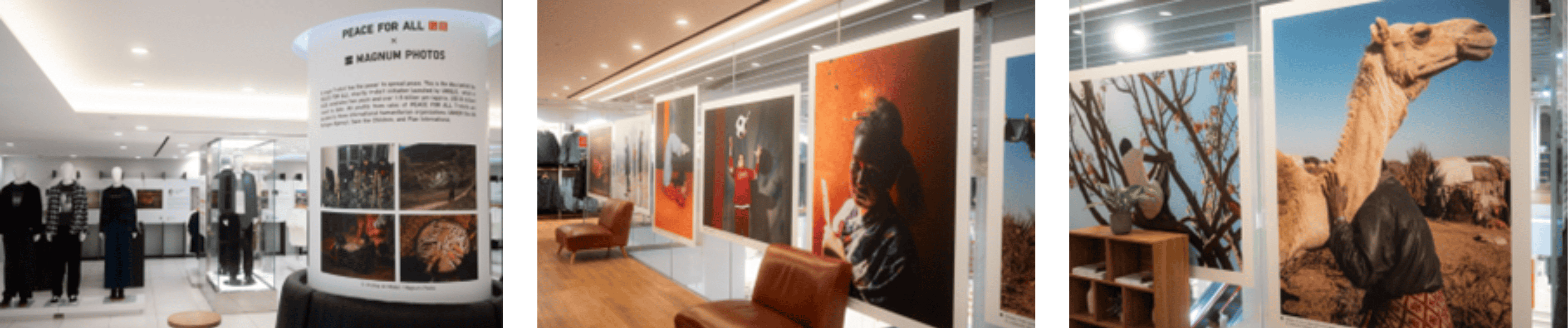
Collage of three photographs from the UNIQLO PEACE FOR ALL project, capturing moments of peace and community in Vietnam, Ethiopia and Romania.

Also in New York, UNIQLO is partnering with NYC Parks for a public exhibition opening on Wednesday, October 30th in several of the city’s most iconic parks. The exhibits on view in NYC parks will offer an opportunity for New Yorkers and visitors to experience the PEACE FOR ALL project through the works of celebrated Magnum Photos photographers, helping to make art accessible to all through a message of peace.


Jean Shein, Global Director of Sustainability at UNIQLO expressed his excitement for the partnership, stating, “Art and sustainability have the power to transform perspectives, and through this exhibition in partnership with NYC Parks, we hope to inspire reflection on peace and the positive impact collective action can have on communities around the world.”


Elizabeth Masella, Senior Public Art Coordinator at NYC Parks added, “We are thrilled to bring this exhibition to New York City’s public spaces. By making these moving images accessible to all, we’re enriching out public greenspaces with high-quality art furthering our mission to create spaces of reflection and beauty amid the bustle of the city.”


Global Photo Exhibition-PEACE FOR ALL is a creative photography exhibition to tell a unique story. The exhibition features a curated collection of striking, joyful, profound photographs from Magnum photographers Cristina de Middel, Lindokuhle Sobekwa, and Olivia Arthur, who travelled to Vietnam, Ethiopia, and Romania to capture moments of PEACE FOR ALL-funded support activities from their own perspectives. The project is intended as a worldwide reflection on the value of peace, to showcase the real-world impact of UNIQLO’s ongoing PEACE FOR ALL project.


The exhibition of 63 works, combining UNIQLO’s ā€˜power of clothing’ with Magnum Photos’ ā€˜power of photography’ ideals, shows the impact of ongoing customer support for UNIQLO’s PEACE FOR ALL charity T-shirt project, which in 2024 celebrates two years and over 1.5 billion yen (approx. US$10 million) raised to date. All profits from sales of PEACE FOR ALL T-shirts are donated to three international humanitarian organizations – UNHCR (the UN Refugee Agency), Save the Children, and Plan International – whose ongoing projects are captured in the exhibition.


The exhibition photographs shine a light on everyday lives of real people in Vietnam, Ethiopia, and Romania who are beneficiaries of funds raised through PEACE FOR ALL, powerfully illustrating how each partner makes good use of funds raised through the initiative. Moreover, Global Photo Exhibition-PEACE FOR ALL presents an important opportunity for UNIQLO customers everywhere to witness the positive impact of their kind participation in PEACE FOR ALL.
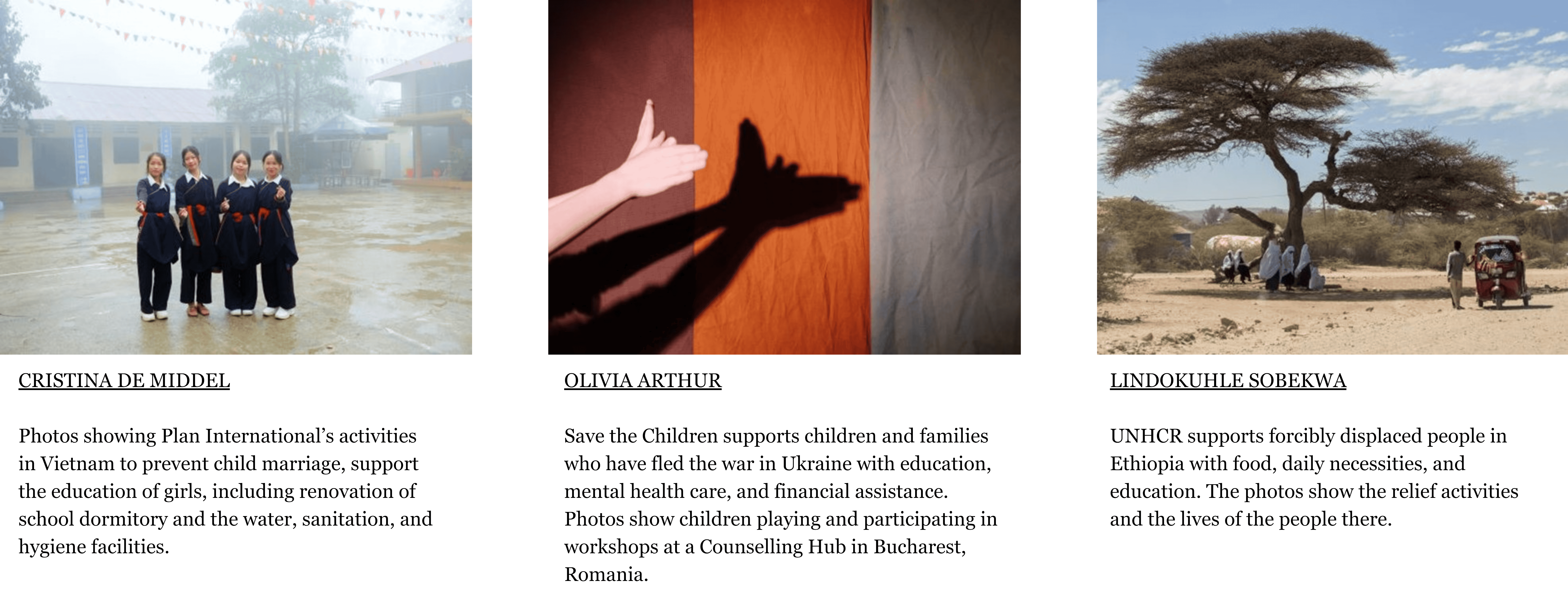
Collage of photographs from the UNIQLO PEACE FOR ALL project in partnership with Plan International and Magnum Photos, highlighting communities in Vietnam, Ethiopia and Somalia.

Global Photo Exhibition-PEACE FOR ALL launched first in London’s King’s Cross at Coal Drops Yard in September. In addition to New York City, similar exhibitions will be on view in other world cities, including Tokyo, Hanoi, Paris, Milan, Shanghai, Singapore, Seoul, Manila, Kuala Lumpur, and Stockholm. More exhibition details will soon be announced locally in each city.


New PEACE FOR ALL T-shirt Designs

To mark the collaboration between UNIQLO and Magnum Photos, three new PEACE FOR ALL designs launched on September 19 at UNIQLO stores and on uniqlo.com, showcasing photos used around the world at Global Photo Exhibition-PEACE FOR ALL. Each design depicts moments of PEACE FOR ALL-supported humanitarian activities in Vietnam, Romania, and Ethiopia, as seen from the perspective of Magnum photographers involved in the exhibition.


All profits from sales of PEACE FOR ALL T-shirts are donated to international humanitarian organizations UNHCR (the UN Refugee Agency), Plan International, and Save the Children.

UNIQLO PEACE FOR ALL T-shirt featuring Magnum Photos design promoting global peace. UNIQLO PEACE FOR ALL T-shirt featuring a unique design by Magnum Photos, part of a global initiative with Plan International to promote peace and support humanitarian efforts.

Product nameĀ  Ā  Ā  Ā  Ā  Ā  Ā  Ā  Ā  Ā  Ā  Ā  Ā  Ā  PEACE FOR ALL Charity T-shirt

Launch dateĀ  Ā  Ā  Ā  Ā  Ā  Ā  Ā  Ā  Ā  Ā  Ā  Ā  Ā  Ā  Ā Thursday, September 19, 2024

PriceĀ  Ā  Ā  Ā  Ā  Ā  Ā  Ā  Ā  Ā  Ā  Ā  Ā  Ā  Ā  Ā  Ā  Ā  Ā  Ā  Ā  Ā  Ā  $24.90

SizesĀ  Ā  Ā  Ā  Ā  Ā  Ā  Ā  Ā  Ā  Ā  Ā  Ā  Ā  Ā  Ā  Ā  Ā  Ā  Ā  Ā  Ā  Ā  XXS-3XL (Sizes available in stores are XS-XL)

Product websiteĀ  Ā  Ā  Ā  Ā  Ā  Ā  Ā  Ā  Ā  Ā  Ā  Ā  Ā www.uniqlo.com/peace-for-all/


Comments from photographers

Cristina de Middel

ā€œIt is well known that creativity sits in our capacity to subvert the given order of things and the meanings we learned in our journey to adulthood. In my work, I reconnect to the absolute power that we are born with and use while we are still children. It’s the same power that turns a folded piece of paper into a boat or a pencil into a rocket and I believe that looking at the world as a place you can change and modify is an essential skill to remind the next generation if we want to make a change. Working with these children in Vietnam gave me plenty of hope for what was to come and it was also a lot of fun.ā€


Olivia Arthur

ā€œThe most powerful tool that children have is their imagination. So I wanted to create a space where these children could come and express themselves and play with whatever came into their heads. There was a lot of giggling and some inventive creatures and poses.ā€


Lindokuhle Sobekwa

ā€œI learn so much from the people I photograph. Working with people in Aw-barre Camp, Hope, Dreams, and Resilience became a central conversation I wanted my work to represent. I wanted to play with metaphors of the rainbow that symbolize hope and promise of a better time to come, as well as a powerful quote from one of the people I worked with. The image is set in a landscape on a border that separates the Ethiopian Jijiga from the Somali border, inhabited by Somalian refugees.ā€

Ā 

#####

About Plan International

Plan International is an international development and humanitarian nonprofit that advances children’s rights and equality for girls. Working together with children, young people, supporters and partners, we strive for a just world, tackling the root causes of challenges children face. We are there from birth until adulthood, and we support children to prepare for and respond to crises and adversity, while particularly focusing on the experiences of girls.

With more than 85 years of experience, we work to transform lives in more than 80 countries.

We won’t stop until we are all equal.Ā 


About PEACE FOR ALL

UNIQLO launched the PEACE FOR ALL project on 17 June 2022, and to date has featured designs from 38 collaborators (including this most recent collection). As of July 2024, more than 5 million T-shirts have been sold worldwide, raising more than JPY 1.5 billion (approx. US$10 million). UNIQLO parent company Fast Retailing contributes 100% of profits from the sale of these T shirts (equivalent to 20% of the selling price) to three international aid organizations, UNHCR, Save the Children, and Plan International Inc., which aid people impacted by poverty, discrimination, violence, and conflict.


About UNIQLO LifeWear

Apparel that comes from the Japanese values of simplicity, quality and longevity. Designed to be of the time and for the time, LifeWear is made with such modern elegance that it becomes the building blocks of each individual’s style. A perfect shirt that is always being made more perfect. The simplest design hiding the most thoughtful and modern details. The best in fit and fabric made to be affordable and accessible to all. LifeWear is clothing that is constantly being innovated, bringing more warmth, more lightness, better design, and better comfort to people’s lives.


About UNIQLO and Fast Retailing

UNIQLO is a brand of Fast Retailing Co., Ltd., a leading Japanese retail holding company with global headquarters in Tokyo, Japan. UNIQLO is the largest of eight brands in the Fast Retailing Group, the others being GU, Theory, PLST, Comptoir des Cotonniers, Princesse tam.tam, J Brand and Helmut Lang. With global sales of approximately 3.1 trillion yen for the 2024 fiscal year ending August 31, 2024 (US $21.39 billion, calculated in yen using the end of August 2024 rate of $1 = 144.9 yen), Fast Retailing is one of the world’s largest apparel retail companies, and UNIQLO is Japan’s leading specialty retailer.

UNIQLO continues to open large-scale stores in some of the world’s most important cities and locations, as part of its ongoing efforts to solidify its status as a global brand. Today the company has a total of more than 2,500 UNIQLO stores across the world, including Japan, Asia, Europe and North America. The total number of stores across Fast Retailing’s brands is now close to 3,600.

With a corporate statement committed to changing clothes, changing conventional wisdom and change the world, Fast Retailing is dedicated to creating great clothing with new and unique value to enrich the lives of people everywhere.Ā  For more information about UNIQLO and Fast Retailing, please visit www.uniqlo.com and www.fastretailing.com.


For more information or interviews, please contact:

Vannette Tolbert

Senior Manager, Communications

Email:Ā v[email protected]

Mobile: +1 240.778.9077

A call to action on the Pact for the Future

This article was written by Anya Gass, Policy & Advocacy Lead on Meaningful Youth Engagement at Plan International. For more information on Plan’s work, please reach out toĀ [email protected].

Last month, the world gathered at the UN in New York for the Summit of the Future. This conference was an opportunity to rally the global community in a commitment to accelerate progress toward the Sustainable Development Goals and make sure the international system is fit-for-purpose for the future.

For us at Plan International, this was an important space to raise the profile of girls’ rights and center youth voices. In our work with Member States and other key stakeholders, we aimed to secure recognition of, commitment to and investment in adolescent girls’ rights in the Summit of the Future and its outcome documents (Pact for the Future, Declaration on Future Generations and the Global Digital Compact). Specifically, we advocated to:

Protect against the backsliding of girls’ rights and gender equality: Ā From sexual and reproductive health and rights to girls’ participation in decision-making, hard won gains we have made for girls and young women are being questioned. It is critical that allies of girls’ rights continue to push for those rights to not only be protected but advanced.
Support meaningful youth influencing and engagement: Young people are too often left out of critical decision-making spaces at all levels, and at best, they are involved in a tokenistic manner. Plan International advocates to make sure that they can meaningfully engage and that they are part of policymaking from the beginning.

In support of this second objective, Plan worked with a group of 35 young people from 22 countries in the months leading up to the Summit to advocate jointly to ensure that their priorities were reflected in the Summit. One of the key outputs of the Youth Task Force for the Future was theĀ Girls’ Pact for the Future, a youth-led manifesto outlining adolescent girls’ and young people’s vision for a gender-equal future, and putting forward their recommendations to reach that future.

The Girls’ Pact for the Future led to the identification of theĀ Eight Transformative Actions for Adolescent Girls and Young People, the top actions from the Girls’ Pact for the Future that young people believed would be most impactful in propelling us toward the future they envision.

Given this backdrop of rights under threat, how does the UN’s Pact for the Future measure up? Is this the framework that will deliver the change adolescent girls and young people are calling for?

Image 1
A youth activist amplifies youth voices for gender equality in Vietnam. | Long Vu, Ā© Plan International Vietnam

Here are some of the areas where the Pact for the Future and its two annexes were strong:

— Girls’ rights:Ā Gender equality is at the heart of the Pact of the Future, which highlights the importance of the empowerment of all women and girls for the achievement of sustainable development. Adolescent girls are also explicitly mentioned in the text. In addition, all three texts emphasize the need to address sexual and gender-based violence, a critical barrier for the fulfilment of girls’ rights.

— Youth participation:Ā Youth features prominently in the Pact, the Declaration on Future Generations and the Global Digital Compact. Two of the actions in the Pact are dedicated to the full, meaningful and effective participation of youth in decision-making at both the national and international levels.

— Inclusion and non-discrimination:Ā The Pact recognizes the specific discrimination and vulnerabilities faced by certain groups, including persons with disabilities and those facing racism, xenophobia and other forms of discrimination.

Where does the Pact fall short?

But there were also numerous challenges and areas where the Pact could have been much stronger:

— Education:Ā The Pact falls short of setting out concrete actions to increase global investment in inclusive quality education as the foundation for advancing gender equality and a more sustainable and peaceful future.

— Sexual and reproductive health and rights:Ā We welcome references to the Program of Action of the International Conference of Population and Development and the Beijing Platform for Action, which remain critical frameworks for advancing SRHR and rights for girls. However, we regret that the Declaration on Future Generations missed an opportunity to include an express reference to SRHR.

What comes next is all the more critical: implementation. The UN and its Member States are at no loss for commitments. But what is missing is concrete action, investment and accountability.

We call on governments to work together with adolescent girls and young people to find creative and radical ways of implementing the Pact and particularly the Eight Transformative Actions. We urge all stakeholders to build on these actions in the run-up to COP29, the 30th anniversary of the Beijing Conference and numerous other global policy forums taking place in the next year.

Ā 

For more articles of this nature,Ā sign-up to receive our From Plan to Action, a quarterly newsletter that highlights the technical work of Plan International USA.

Image 1

This article was written by Needa Malik, a Plan USA disaster risk manager. For more information on Plan’s work, please reach out toĀ [email protected].

Localization is now central to every international development and humanitarian organization’s strategy, but its adoption has been slower than expected. This offers an opportunity to realign and ensure we are genuinely shifting power. As we transition to locally led development, how do we ensure that the voices of girls and young people are not diluted, tokenized or ignored? Having just observed International Day of the Girl on Oct. 11, it’s a timely moment to reflect on how centering girls in localization efforts can drive broader, long-lasting change in communities.

Here are three ways we can center girls’ voices in localization efforts — and why doing so benefits entire communities:

1. Support young people — especially girls — by including them in decision-making.

In the recently releasedĀ 2024 State of the World’s Girls report, a survey of nearly 10,000 children and young people across 10 conflict-affected countries revealed that 65% of young people want greater involvement in peace-building efforts, with 39% specifically favoring girls’ and young women’s participation. Including girls in decision-making strengthens their leadership and is crucial for the resilience of entire communities.Ā ResearchĀ shows that women’s participation in peace negotiations significantly increases the durability of peace agreements.

Young people bring unique perspectives on how to rebuild after conflict. Their creativity and adaptability can shape more effective development and humanitarian responses. Identifying and creating meaningful opportunities for girls and youth to participate ensures that localized solutions reflect the diverse needs of the entire community, leading to stronger, more sustainable outcomes.

2. Provide targeted, gender-sensitive humanitarian aid.
Ensuring equal access to basic necessities like food, water and shelter is foundational, but prioritizing services for survivors of violence — especially girls and young women — is essential. In the same survey, 59% of young people reported limited or no access to electricity, and 41% had limited access to water. When local communities design and implement programs, barriers to essential services like healthcare and education are reduced, especially for girls and women.

While localization enables swifter responses to both acute crises and protracted conflicts, it’s vital to recognize and address the differing needs across genders, age groups and identities to ensure effectiveness. Girls face specific challenges in conflict, including an increased risk of sexual violence, childcare responsibilities and higher dropout rates from school. Unsurprisingly, the survey highlights significant emotional distress among conflict-affected youth, with girls reporting more severe impacts than their male counterparts. Many report sleep disruptions, constant worry and limited access to mental health and sexual and reproductive health services. Girls and young women are especially vulnerable, with 38% of young people feeling unsafe and 27% of girls identifying sexual violence as a constant threat.

By providing access to mental health and psychosocial services for girls and young women, we can create a ripple effect that improves well-being across entire communities. When girls are supported, they contribute more effectively to rebuilding efforts — ultimately benefiting everyone.

3. Invest in the well-being and leadership of girls.
Prioritizing girls’ needs leads to better outcomes for entire communities. Programs focused on girls’ mental health, education and protection from violence help them recover and thrive, while simultaneously strengthening community resilience. These initiatives create safe spaces for community healing, fostering sustainable, long-term recovery and community growth.

Mentoring girls and helping to deepen their leadership skills are essential to promoting inclusivity and bridging generational gaps. By investing in girls’ leadership, we support their ability to participate in decision-making and tackle local challenges from a position of strength. This builds a more inclusive, resilient and innovative environment that supports long-term development goals.

When girls are given the tools and opportunity to lead, they contribute to stronger, more equitable communities. Investing in girls not only transforms their lives but strengthens the fabric of society, laying the foundation for sustainable development.

It takes an extra step to include girls’ and young people’s voices in localization efforts, but it is the only way to ensure sustainable, long-lasting transformation. Successful localization requires amplifying the voices of those often overlooked, creating culturally relevant solutions that drive positive change. By centering girls and youth in localization efforts, communities can challenge existing social norms, promote equality and dismantle barriers. When girls and young people are engaged in localization, they are more likely to invest in and advocate for their communities in the long run, ensuring lasting, positive change.

Ā 

For more articles of this nature,Ā sign-up to receive our From Plan to Action, a quarterly newsletter that highlights the technical work of Plan International USA.