Search Results

Search results for

0 result(s) found

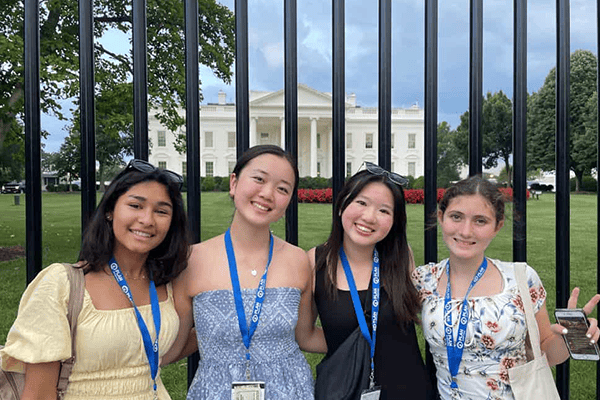
This is a guest blog post written by Elsa, a high school student based in Washington, D.C.

Elsa Image 2

As ice caps melt and natural disasters intensify, women experience the biggest impacts.

When hosts of natural disasters borne by heat and human irresponsibility sweep the globe, the ensuing conflict makes women and girls even more vulnerable to gender-based violence. Additionally, it creates a peril that women are also more vulnerable to: the destruction of natural resources. Women of color, LGBTQIA+ women, migrant women and many other marginalized groups are especially at risk from the instability resulting from climate disaster.Ā As injustices intersect, climate change can worsen gender disparities — but uplifting girls and women under two key areas can create positive change.

1. Farming and natural resources

Women are more at risk when disaster strikes natural resources. Since the man is viewed as theĀ ā€œhead of household,ā€Ā his nutritional needs too often come first when disaster strikes. Furthermore,Ā barriers to education and informationĀ conspire to prevent women from receiving information on crop patterns and natural disasters, and from innovating to respond to them. And in addition to this increased vulnerability to climate change, women already have less access to the rapidly declining backbones of life, like crops and building materials.

Girls also bear the worldwide burden in collecting water, meaning in times of drought (which are more and more common due to climate change), girls are more likely than boys to drop out of school. On top of this, women are repeatedly marginalized from farming, being characterized asĀ ā€œthe farmer’s assistantsā€Ā across the world. Yet, studies show that maternal income plays a much greater role than the income of fathers in improving family nutrition and children’s survival rates.

Empowering women farmers would improve land use efficiency and increase crop yields, serving as a bastion against deforestation, starvation and other effects of climate change. Women have always been stewards of natural resources — food, plants, water — so with training, women can use these traditional roles and newfound knowledge to create new, sustainable solutions to climate issues.

2. Education

It’s not just that women and girls are more vulnerable to climate change, they’re also discouraged from working to solve it.Ā Well below 10%Ā of climate tech startup funding goes toward women. This means it’s essential to give girls and women the training and financial support required to participate in fields previously made unavailable to them — not just for gender equality, but also for climate justice. Because what if we could work toward both at once?

A2013 studyĀ cited by Project Drawdown, a climate justice nonprofit, found that educating girls is ā€œthe single most important social and economic factor associated with a reduction in vulnerability to natural disasters.ā€ This could be because educated girls receive higher wages, experience lower rates of maternal mortality and are less vulnerable to HIV/AIDS and malaria — the ā€œsocial vaccine effect.ā€

How young people are taking action

An intersectional approach to climate justice is key. Women-led initiatives and nonprofits are taking this kind of climate action every day, but they need more support. Women’s solutions for development remain heavily underfunded. And, overall, nonprofit organizations like Plan that focus on girls and women receiveĀ less than 2%Ā of all charitable giving.

One example of the power of investing in women is thriving businesswoman, Gladness Gilole. Gladness is a mentor for girls in her northern Tanzanian village of Sale. She participated in an environmental entrepreneurship training through the U.N.’sĀ Energize Project, which helped her launch her career.

ā€œI moved back to Sale and now I own a farm, manage a tailoring business and I sell and install solar equipment,ā€ Gladness says.

Including girls in the climate conversation like this means more than simply listening to their perspectives — it means elevating pre-existing solutions by girls, for girls, and embracing locally-led development.

Young people like Gladness are leading the charge for climate justice across the world. But young women still have to jump significant systemic hurdles to participate in climate leadership roles.

Girls for Climate Action, a youth-led movement, makes it possible for girls to prototype and launch climate change solutions. The organization has helped place young women in leadership roles on historically male-dominated local environmental committees, emphasizing the importance of leadership in the fight for climate action and gender justice.Ā Sometimes, it just takes one person to change a community.

And, at Texas State University, students are transforming the way we interact with our climate. The unruly hyacinth, an aquatic plant, grows rapidly over the banks of the San Marcos River, blocking sunlight and oxygen from reaching the placid water below. If not removed, it has the potential to crowd out biodiversity by preventing nearby plants from performing photosynthesis. But local youth are fighting back. As part of theĀ HEDGEĀ team, TSU students sail the river, cutting excess water hyacinth and sending it to industrial-grade ovens to be dried and mixed with cotton, transforming the hyacinth fibers into biodegradable menstrual products!

Many HEDGE members are young women. Graduate studentĀ Wren VogelĀ says participating in HEDGE has inspired her to continue discovering ā€œhow we can take something harmful and use it to make something good.ā€ And utilizing the water hyacinth’s natural capabilities to make pads does create the perfect balance, strengthening the river’s ecosystem while decreasing menstrual inequities. By inviting youth to be part of the solution to local climate nightmares and global period poverty, HEDGE is one of the many initiatives springing up that use the voices of young women to combat climate change and gender inequality.

As part of my own personal advocacy work, I spoke on a NOAA youth climate panel and was happy to see that many of the faces I was addressing belonged to girls. Some of these young women have gone on to make highly innovative projects (such asĀ Kennesha Garg’s mangrove root prototype to reach and manage greenhouse gasses in landfills). Others were already trailblazing in their own communities.Ā Working toward gender justice is not wiping a slate clean or reinventing the wheel — it’s elevating the passion that girls and women across the globe have for the climate, and making it known to the world.Ā 

So, when you think of climate change, forest fires and melting ice might come to mind. But so should the many girls and women who are fighting to improve their lives while helping their environment. As Vanessa Nakate, a Ugandan climate change activist, says: ā€œWe can’t have climate justice without gender equality … we need women in spaces where decisions on their wellbeing are discussed, especially decisions about the future of the planet.ā€

The Secret Weapon to Fighting Climate Change? Girls feature image

PRESS RELEASE

WASHINGTON, D.C., Nov. 14. 2023 — Plan International USA surpassed its’ $200 million fundraising goal for its We Are the Girls campaign. The funds raised as part of the campaign are supporting girl-led programs that fight gender inequality internationally and in the U.S.

Over the past five years, the campaign has impacted the lives of more than 15.5 million people through programs focused on girls’ unique needs. In a quest to change the way the world sees girls, and the way girls see themselves, Plan developed an approach called GirlEngage. GirlEngage places girls at the center and includes them as a critical partner from program design to implementation to evaluation.

ā€œWe set out to ensure that girls were safe, educated and economically empowered,ā€ Shanna Marzilli, chief executive officer and president of Plan International USA, said. ā€œWhat we found is that girls are best positioned to understand and solve the challenges they face. When given resources and opportunities, they can lead positive change in their communities.ā€

An example of GirlEngage in action is The Graduation Project in Zimbabwe, which is focused on increasing the number of girls who complete secondary school. Many girls travelled long distances to school and would stay in unsafe places, like abandoned buildings, during the week to avoid the lengthy trip. When Plan decided to build dormitories, it was assumed girls would want things like WiFi and technology. However, when asked, girls were most concerned about safety, requesting features like a barbed wire fence and a female security guard. This challenged assumptions, but allowed for a dorm to be built that better fit the needs of girls. As one participant noted, ā€œthis project is for us, by us.ā€ Today, the dormitories are at full capacity.

ā€œGirlEngage is providing girls with the tools to choose their future rather than have it dictated for them,ā€ Vicki Escarra, campaign cabinet chair and senior advisor at Boston Consulting Group, said. ā€œI have been so inspired not only by the girls themselves, but also by those who saw the potential of girls and have supported this campaign. I am excited to see what can be accomplished next!ā€

Inspired by the suite of projects developed by We Are the Girls, Plan mobilized support from nearly 300,000 individual, corporate and foundation donors. The resources raised by the campaign were also used in the U.S. to partner with young people through leadership training community-building. In addition, Plan worked with Unsplash, the internet’s source of freely usable visuals, to portray girls on their own terms and change Unsplash’s search algorithm to feature real, confident girls.

Building on the campaign’s successes, Plan is creating additional programs in new communities to inspire even more transformational change alongside adolescent girls. As the world faces crises and growing inequality, you can join in the fight to achieve gender equality by joining Plan’s community of We Are the Girls activists.

Ā 

For more information or interviews, please contact:

Maria Holsopple
Director, Communications and Creative Services

Email: [email protected]

Mobile: 540.383.3628

Ā 

About Plan International USA

Powered by supporters, Plan International USA partners with girls and their communities around the world to overcome oppression and gender inequality. We provide the support and resources that are unique to their needs and the needs of their communities, ensuring they achieve their full potential with dignity, opportunity and safety. Founded in 1937, Plan is an independent development and humanitarian organization that is active in more than 80 countries.

For more information, and to learn about our commitment to safeguarding, please visit www.PlanUSA.org.

Girls in Zimbabwe gather together in their classroom.

This year Plan International’s State of the World’s Girls Report focuses on activism. It provides a unique insight from over a thousand participants into what it’s like to be an adolescent girl or young woman activist in 2023: how are they treated, do they feel safe, what keeps them going? The research, one of the largest studies of girl and young women activists to date, is groundbreaking, not least because the face-to-face interviews were led by 70 young women researchers who are themselves activists and their findings are supported by focus group discussions using participatory techniques.

Cover for The State of the World’s Girls Report 2023

Authors: Meghan Mattern, Inclusive Quality Education Advisor; Artmore Muguse, Monitoring, Evaluation, Research and Learning Coordinator; Alisha Parikh, Inclusive Quality Education Associate

Across the world, girls face disproportionate challenges due to entrenched gender inequality. Gender norms, stereotypes and discrimination lead to girls often experiencing multiple and varied barriers in accessing their rights, especially in education.

In many parts of Zimbabwe, the rate of girls graduating from secondary school is stubbornly low. The upper secondary completion rate for children in rural schools is 6% and the overall completion rate for girls in Zimbabwe is 14%. When Plan International first started exploring ways to work with girls and their communities to address barriers, we quickly learned through comparing interviews with girls to existing research that there are large discrepancies between what a standard desk review and local officials would say the reason is for these realities and what girls themselves say.

Girls in Zimbabwe gather together in their classroom.

GirlEngage

Working with girls and positioning them as the drivers of change is the essence of Plan’s GirlEngage approach, a socioecological model that positions girls as partners and co-designers in all phases of a project — from planning to developing solutions that reflect their needs, priorities and aspirations. Through this approach, girls in Zimbabwe identified specific factors that impeded their graduation from secondary school. These included needing to walk long distances to school, lack of safe drinking water, protection risks, lack of confidence, child marriage and teenage pregnancy.

When asked how they would solve these challenges, girls identified and designed solutions such as building secure dormitories, improved access to potable water, confidence-building activities and building supportive families, schools and communities that respect gender equality. Thus, The Graduation Project was born.

Participatory action research

In order to further develop our understanding of what drives girls to leave school in the target districts and help us effectively address those factors, the project employed the use of youth-led participatory action research. YPAR involves researchers and program participants working alongside one another to design and execute the research process. This allows for methods and findings to reflect the important perspectives and priorities of those involved in the study.

A select group of girls went through a PAR training, which showed them how to design and implement the research to address identified challenges. Girls chose research topics based on their concerns about so many girls dropping out in the last few years of their education, and Plan staff showed them how they could use PAR to explore their research interests. The girls developed survey questions and conducted in-depth interviews, focus group discussions and key informant interviews with 33 girls who dropped out of school, 10 boys, nine parents and four other key informants.

Through the research, girls found that economic hardships and complex family situations, as well as gender-specific barriers such as the of lack of safety while walking long distances to and from school, stigmas and inadequate materials to manage their menstruation, gender bias, early marriage and teen pregnancy, are factors that led girls to drop out of school.

Based on these findings, the interviewed girls recommended greater economic empowerment; raising awareness about gender biases; increasing sex education and access to birth control; and creating a safe, enabling environment for girls to return to school.

These recommendations informed Plan’s work to address the barriers that prevent adolescent girls’ successful graduation from secondary school. A key aspect of these recommendations is that they reflect solutions involving actors at various levels. At the individual level, increasing access to birth control and economic opportunities gives girls greater control in decisions that affect their bodies and livelihoods. At the school level, improving sex education and creating an enabling environment for girls to return to school — particularly for pregnant and married girls — not only enriches the education of students in school, but also provides opportunities for those not in school to continue their education. At the family level, economic opportunities contribute toward preventing financial constraints as a barrier to girls’ education. Finally, at the community level, raising awareness about gender biases — particularly among men and boys — fosters a shift in mindsets, attitudes and behaviors.

Results

Girls are best placed to highlight existing challenges that prevent their access to inclusive, quality education, and thus, best placed to design the solutions to address these challenges. The cohort of girls in The Graduation Project, which utilized the GirlEngage approach, reported an increase in agency and life skills, based on the project baseline and endline.

The use of PAR created an opportunity for girls to discuss issues that affect them and develop solutions. Girls who are in school and living in the dorms shared their experiences of bush boarding. Those interviewed shared their experiences of local young men, or ā€œJonie-Jonies,ā€ luring them into sexual relationships, resulting in unwanted pregnancies and early marriages. This lived reality of many girls prompted their recommendations to improve sex education and raise awareness about gender biases among community members, especially men and boys. Girls also identified secure dormitories as a solution to improve their safety and access to schooling.

The GirlEngage approach epitomizes girls’ meaningful and active participation, which often is lacking in traditional education projects, and is what differentiates it from other approaches. It is also an evolving approach, which allows girls to iteratively adjust their situations. PAR is an example of this evolution as girls deepened their understanding of the issues and refined solutions.

Moving forward

Through implementing The Graduation Project, and with the use of PAR, we learned that we must allocate significant time during the co-creation phase for girls to develop and design actionable solutions, and then be ready to change course to reflect those solutions. Based on findings from the endline, adaptive management and the ability to change a project implementation strategy on the basis of new information is important when managing projects such as The Graduation Project. While it was critical to focus on girls, it was important to include other stakeholders to achieve the girls’ vision and ensure sustainability.

It will be also be critical to conduct meetings with girls and community members to present the main findings from this project, and encourage feedback and suggestions. Using these results and feedback, future work will focus design activities tailored to reducing dropout rates and encouraging the return of out-of-school girls.

Using PAR with adolescent girls, which is now integrated into the GirlEngage approach, can help us design innovative ways to address barriers to girls’ education. In this way, we work with girls as partners and position them as the drivers of change to promote access to inclusive, quality education.

Girls in Zimbabwe gather together in their classroom.

First published by the U.S. Department of Labor.


The global demand for cheap seafood has led the seafood industry to rely heavily on sourcing from the Asia-Pacific region. There, a large workforce of migrant workers catch, farm and process most of the world’s seafood supply. Many are subjected to labor exploitation in illegal, unreported and unregulated fishing, also known as IUU fishing. Employers subject workers to emotional and physical abuse, excessive overtime, poor living conditions, deceptive or coercive recruiting, and nonpayment or underpayment of wages. The isolated nature of fishing activity makes addressing forced labor in the industry especially challenging.

In 2017, we launched the Safe Seas Project with Plan International to address systemic issues that allow labor exploitation to flourish at sea in Indonesia and the Philippines. Five years later, the project has ended. We spoke with Plan International’s Kate Ezzes, who has been overseeing the project since 2018, about the challenges and successes of the project.

Officials get ready to inspect a fishing boat.

Officials get ready to inspect a fishing boat.


Why is labor exploitation at sea often considered labor trafficking?

Recruiters promise Indonesian and Filipino fishers, primarily young men, high-paying, decent, safe jobs on fishing vessels. They are then trafficked into international waters and held on boats, where they are exploited for their labor while receiving little to no pay.

Victims of trafficking report that employers exert control by withholding their wages, denying them freedom of movement, seizing their documents and holding them in cycles of debt bondage. Over 83% of victims have reported suffering both psychological and physical abuse.

Most forced labor and human trafficking victims in Rambang and Tagal, major Indonesian port areas, are between 12 and 29 years old. Children and youth often face pressure to help support their families, and it is relatively easy to influence and illegally recruit them globally.

What are the challenges of addressing labor exploitation at sea that became evident through the project?

In Indonesia and the Philippines, fishing regulations were insufficient, and the government lacked the capacity to conduct inspections and take follow-up action. In many cases, there were gaps in the regulations and policies that prevented the proper implementation of laws. IUU fishing is not considered a crime in either country. And, national human trafficking task forces do not formally recognize the fishing industry as a source of human trafficking and exploitation. So even when law enforcement searches vessels, labor trafficking is not always among the criminal activities they look for.

Another challenge was that fisher folk were unaware of their rights, and existing grievance reporting mechanisms were ineffective.

How did the Safe Seas Project address these challenges?

One of our strategic interventions was establishing Safe Fishing Alliances in both countries. The strategy behind the SFAs was to promote a common understanding of forced labor and trafficking while ensuring collaboration and coordination between government agencies, the private sector, civil society and fishing communities.

For example, the project regularly shared updates about the work conditions faced by Indonesian migrant fishers and discussed case reports from the Fisher Centers. These reports spurred relevant ministries to strengthen collaboration with destination countries proactively. Working collaboratively, the SFAs resolved the problem of different mandates and overlapping regulations and closed the legal gaps that allowed fishers to fall through the cracks.

We also established a training program for government officials and relevant stakeholders on how to carry out inspections on fishing vessels. The program worked with government agencies to develop procedures to identify fishing vessel labor violations. Through a participatory process with government agencies, we helped formulate site-specific labor inspection procedures for critical ports. We then developed these procedures into a Multi-Disciplinary Inspections training manual. Newly trained vessel inspectors then piloted the procedures on vessels at port.

Educating fishers and their families about their rights and providing a space to voice complaints was as critical as addressing the regulatory and legal issues. We did this by setting up community-based Fisher Centers in eight villages near ports where fishers can report grievances and access referral services and information about workers’ protection and rights.

Hundreds of fishers and their families have used the centers, which will continue to operate beyond the life of the SAFE Seas Project as hubs for community action to support fishers.

What was innovative about the Safe Seas Project?

One of the project’s most innovative aspects was engaging all stakeholders from the beginning, including the Indonesian and Filipino governments, fishers, the private sector, civil society and communities. We worked closely with local community organizations and the government to ensure buy-in and participation from day one, and sustainability once we turned the project over to local leaders and community-based organizations.

What was one key lesson learned from the project?

A program focused on IUU fishing is incredibly complex and includes many stakeholders. One key lesson learned is the need to increase engagement with the governments of destination countries in addition to the source countries. In the Asia region, this would include a specific focus on Taiwan.

Looking back, what project result are you most proud of? What were the biggest successes in terms of impact?

The level of commitment and engagement from communities has been remarkable. In Indonesia, dedicated volunteer groups serve as a community-based protection mechanism for fishers. They raise awareness about fishers’ rights, receive grievance reports and connect fishers to the Fisher Centers, service providers and relevant government agencies for follow-up assistance. The women members have been vital to the successful functioning of the groups. They play a significant role in reporting complaints or fishers’ rights violations on behalf of their male relatives/husbands. They have become crucial and adept advocates against forced labor and trafficking in their communities.

Another 100% volunteer-based organization protecting fishers is SAKTI, a network of 250 paralegal village volunteers trained by local organizations. The group educates fishers about their rights, provides legal assistance and assists with securing vital documentation such as contracts and passports.

Seeing how communities are taking ownership of the work we started is deeply gratifying and a great example of what communities can accomplish when empowered with knowledge. Working alongside communities as they learned about fishing exploitation and worker rights and then participated in developing solutions has been a rewarding experience.

To learn more about the Safe Seas Project, please visit:Ā https://www.planusa.org/projects/indonesia-philippines-safeguarding-against-addressing-fishers-exploitation-at-sea/

This blog was updated on June 8, 2023.

The #GirlDad movement — it started in tribute to Kobe Bryant, honoring his words about being a father to four daughters.

ā€œGirls are the best,ā€ Bryant said in a conversation with ESPN reporter Elle Duncan in 2018. ā€œI would have five more girls if I could. I’m a girl dad.ā€

Fathers everywhere are proudly claiming that same love for their girls. They recognize that the potential of their daughters is the same as that of their sons. And because of that, they’re making serious strides toward gender equality.

In honor of Father’s Day, we’re highlighting five ā€œgirl dadsā€ from around the world who are doing amazing things for their daughters — and for girls everywhere.

Juan Carlos from Ecuador

Juan Carlos and his family

Juan Carlos has been participating in Plan International’s programs since he was a sponsored child himself. After turning 18, he joined and became president of several children’s groups, advocating for their rights and equality. Today, he works as a psychologist. And for about eight years now, he’s also been a sponsorship facilitator for Plan in his community.

But his greatest accomplishment to date is becoming a father.

ā€œ[My daughter] gives me the opportunity to be a hands-on parent,ā€ Juan Carlos says. ā€œMy wife and I share the responsibilities of feeding, caring, dressing and bathing our daughter. We are both clear that it is not help or support, it is the responsibility of both of us to love and guide Brianna toward healthy growth and well-being.ā€

As a psychologist, Juan Carlos knows how important him being an active and positive parent is for his daughter’s development, a belief that is uncommon in machismo culture in Ecuador. And, with all of the experience he’s had advocating for children’s and young people’s rights, Juan feels confident in raising his daughter to become whoever she chooses.

“I want to invite other fathers to share the upbringing of their children, to show affection, to learn to take care of them, so that we can build a more equitable world,” he says.

Yusuf from Indonesia

Yusuf, a dad from Indonesia who is a role model for preventing child marriage, looking out his window

Everything was in place for Yusuf to marry off his daughter when she entered her second year of high school. The entire wedding was planned without his daughter’s knowledge.

This isn’t an easy decision for many parents like Yusuf. If they can’t make ends meet, they might think an older husband will provide their daughters with more security. They want to help her survive. But it comes at the cost of their daughter’s freedom.

Before his daughter’s wedding, Yusuf and his wife, Naimunah, attended an awareness-raising session on child protection, set up with the help of Plan. Yusuf learned about the dangers of child marriage — and he realized that if his daughter were to be married, it would affect her long-term physical and mental health.

The session was a turning point for Yusuf. He didn’t want to take away his daughter’s future. So he decided to break tradition and cancel his daughter’s wedding.

And he didn’t want others in his village to make the same mistake, which is why he joined the village child protection group. Now, he spends his time teaching other families about the dangers of child marriage and helping girls like his daughter stay safe.

Ismael from the Dominican Republic

Ismael, a dad from the Dominican Republic, and his daughter

Bienvenida, who is 15 years old, leads a group at her school about preventing sexual exploitation. She’s super enthusiastic about her advocacy work with Plan, and she has an ally she can always count on — her dad, Ismael.

Ismael brought Bienvenida up by himself, defying gender norms in a society where single fathers aren’t common. Together, the father-daughter duo is determined to help girls live free from violence.

ā€œChild exploitation is rife around here,ā€ Ismael says. ā€œThere are lots of tourists who talk to girls of 14, 15 years old, and come looking for them. Sometimes they’re girls who have been abused by their families or who have parents who want money. ā€˜Take my daughter,’ they say. That happens a lot. They do it because they don’t have enough to eat. They don’t have anything.

ā€œWe don’t have much more than those people. But no matter what, I won’t let my daughter be sexually exploited. I don’t know if I’ll be able to afford to send her to university. But I want to try. ā€˜Study so that you don’t have to depend on any man, so that you can support [yourself], so that you don’t end up like me.’ That is what I say to her.ā€

[Read more: Meet the taxi driver putting girls’ safety before money]

Lan from Laos

Lan, a dad from Laos and his daughter Khaimouk, who Lan makes sure gets her chance to go to school

Lan knows that educating girls can break the cycle of poverty. That’s why he makes sure his daughter, Khaimouk, gets the chance to go to school — just like her brother.

Lan’s family lives in the mountains of northern Laos along their rice paddy field. The harvest is small. And it’s not easy work. But Lan is motivated to make sure his children have every chance to make their dreams come true.

ā€œI hope my children receive a good education so they can lead good, successful lives,ā€ Lan says. ā€œI myself had to quit school in fifth grade. My wife did not go to school at all.ā€

Getting an education as a girl in Laos is difficult. Especially in smaller villages, many girls don’t finish primary school. And around one third of girls in Laos are married before they turn 18, increasing girls’ dropout rates.

But Lan believes his daughter deserves the same opportunity to get an education as his son. ā€œGirls and boys have the same rights,ā€ he says. ā€œIt is very important for all children to have an education.ā€

And because Lan believes in Khaimouk, she has the support she needs to follow her dreams.

ā€œMy favorite subject in school is Lao,ā€ Khaimouk says. ā€œI want to be a teacher when I grow up.ā€

Heloilson from Brazil

Heloilson, a dad in Brazil, is a gender-equality role model for his daughter

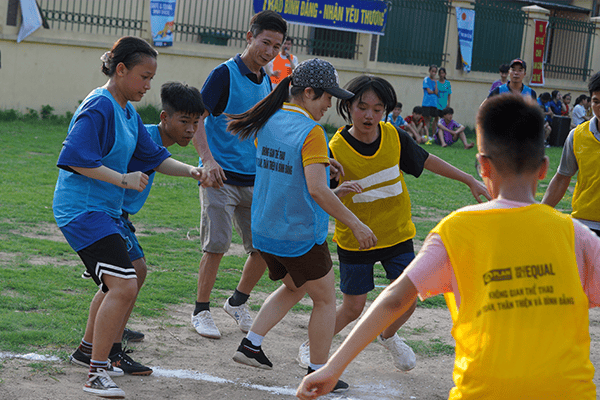
Heloilson is his daughter Thayssa’s biggest fan. He goes with her to her soccer club every Friday, run by Plan, where he cheers her on from the sidelines.

ā€œThayssa came with me from an early age when I played soccer with friends,ā€ Heloilson says. ā€œI saw that she could play quite well … That’s why I signed her up for Plan’s soccer project.ā€

In their community, many think that soccer is a gendered sport. ā€œSome children think that soccer is only for boys,ā€ Thayssa says. ā€œThey call me names and I don’t like that, because boys and girls can both play soccer. At the meetings with Plan, we learn to deal with these prejudices.ā€

ā€œMy own brother, for example, doesn’t even allow his wife to work,ā€ Heloilson says. ā€œI really can’t understand that.ā€

Heloilson and Thayssa want things to change for girls and women. And with Thayssa playing soccer, and Heloilson supporting her, they’re showing what needs to be done to change the game.

ā€œIt’s important that she sees that things can be done differently,ā€ Heloilson says.

girl-dads-blog-featured image 1
Plan International and Kotex uplift girls globally to break period stigmas

Kotex she can initiative and Plan International logos

PRESS RELEASES

Three-year partnership celebrated on Menstrual Hygiene Day 2023

WASHINGTON, D.C., May 24, 2023 — Each day, more than 300 million girls and women around the world have their periods, yet many face significant barriers to managing their periods safely and easily. That’s why three years ago, Plan International USA embarked on a partnership with Kimberly-Clark, its foundation and the company’s KotexĀ® brand to help people comfortably manage their periods.

ā€œNo girl should ever feel ashamed about being on her period,ā€ Plan International USA President & CEO Shanna Marzilli said. ā€œIt’s a healthy, normal part of everyday life. We at Plan are incredibly proud to work with young leaders around the world, including here in the U.S., who are challenging stereotypes and breaking the silence around periods. They are leading the way to a better future for us all.ā€

Through the Kimberly-Clark partnership, we have reached more than 3.5 million individuals to date as part of menstrual health management and education programs in Brazil, China, Colombia, Guatemala, India, Nigeria, Peru and Vietnam. These programs take a comprehensive approach — meeting girls’ and women’s immediate needs for supplies, ensuring they have the knowledge and skills to understand menstruation and creating a supportive environment that is free of period myths and stigmas.

ā€œMillions of women and girls are stigmatized, excluded and discriminated against simply because they menstruate. In many countries, even the term ‘period’ is cast in a negative light and associated with judgement, fear, anxiety and embarrassment,ā€ said Juanita Pelaez, Vice President of Kimberly-Clark’s global adult and feminine care brands ā€œOur Kotex brand exists to ensure that a period never stands in the way of any woman’s progress, and I am particularly passionate about our partnership with Plan International as we continue to champion and uplift women and girls by fighting period stigmas and the barriers they create.ā€

Since 2020, Plan has trained 8,466 young people in menstrual health education, in partnership with Kimberly-Clark, to act as advocates and lead trainings with their peers in the community.

ā€œBefore, boys would tease us and be awkward around the topic of menstruation,ā€ Liset, a 14-year-old Plan advocate from Peru, said. ā€œThey would make jokes about how we would stain our bedsheets while sleeping. But thanks to the program, boys understand more about menstruation. We can talk about it without fear and we’re breaking down myths. Before they were confused, but now they are more tolerant and understanding.ā€

To join us in uplifting girls on Menstrual Hygiene Day, allies can take action by:

  • Learning more about the difference between menstrual health and menstrual hygiene. Read more.
  • Following Plan on social media to hear more stories from girls like Liset on the importance of breaking down stigmas.
  • Testing your knowledge on menstruation by leveraging the KotexĀ® filter on social media.

Ā 

For more information or interviews, please contact:
Maria Holsopple
Director, Corporate Communications
Email: [email protected]

Mobile: 540.383.3628

Brenna Clairr Moore, Kimberly-Clark, [email protected]

Ā 

About Plan International USA

Powered by supporters, Plan International USA partners with adolescent girls, young women and children around the world to overcome oppression and gender inequality, providing the support and resources that are unique to their needs and the needs of their communities, ensuring they achieve their full potential with dignity, opportunity and safety. Founded in 1937, Plan is an independent development and humanitarian organization that is active in more than 80 countries.

For more information, and to learn about our commitment to safeguarding, please visit www.PlanUSA.org.

About Kimberly-Clark

Kimberly-Clark (NYSE: KMB) and its trusted brands are an indispensable part of life for people in more than 175 countries. Fueled by ingenuity, creativity, and an understanding of people’s most essential needs, we create products that help individuals experience more of what’s important to them. Our portfolio of brands, including Huggies, Kleenex, Scott, Kotex, Cottonelle, Poise, Depend, Andrex, Pull-Ups, GoodNites, Intimus, Neve, Plenitud, Sweety, Softex, Viva and WypAll, hold No. 1 or No. 2 share positions in approximately 80 countries. We use sustainable practices that support a healthy planet, build strong communities, and ensure our business thrives for decades to come. We are proud to be recognized as one of the world’s most ethical companies by Ethisphere for the fifth year in a row. To keep up with the latest news and to learn more about the company’s 150-year history of innovation, visit kimberly-clark.com.

Plan International and Kotex uplift girls globally to break period stigmas

You may sometimes hear the term ā€œmenstrual hygiene management.ā€ But, because of the existing stigma surrounding periods and myths about cleanliness, we at Plan International USA often use the term ā€œmenstrual health.ā€

Here are the two main reasons why.

1. Plan, as a girls’ rights organization, is committed to dismantling the stereotypes and stigma surrounding periods around the world — and that starts with the words we use.

Many cultures consider menstruation to be a taboo topic of conversation. That silence sends a powerful message.

ā€œGrowing up, for some reason I was always ashamed of my period,ā€ Abigail, a young woman in the U.S., says. ā€œAs young girls, we’re taught to hide it and that it is ā€˜gross’ and is that time whenever we act like complete ā€˜crazies.’ I was always embarrassed changing my pad at school and did everything to hide it.ā€

Yacira, a 16-year-old girl in Colombia, says girls in her community have similar experiences.

ā€œFor example, when we are in class and a girl has her period, she is told not to do sports,ā€ she says. ā€œOr if by accident, a girl’s clothes got stained by her period, people see it as something dirty, which disgusts them, and sometimes girls are mocked.ā€


Yacira, a 16-year-old from Colombia, reads information on menstrual health with her mother and younger sister.

Yacira, a 16-year-old from Colombia, reads information on menstrual health with her mother and younger sister.

In Malawi, 18-year-old Esnart says some girls are forced to stay home when they’re on their periods.

ā€œSome people say during menstruation, you shouldn’t talk to anybody from the opposite sex, and you shouldn’t go anywhere but stay home,ā€ she says. ā€œThey say that others may know you are menstruating and that is bad for you. But if you have a business, then you lose out on that day’s income because you have to stay home, which makes women struggle economically. It is almost as if we are dirty and need to wait until we are clean again.ā€


Esnart, an 18-year-old from Malawi, says that girls in her community are told to stay at home when they’re on their period.

Esnart, an 18-year-old from Malawi, says that girls in her community are told to stay at home when they’re on their period.


These stereotypes come out in the language we use to describe period products. Signs in supermarket aisles list ā€œfeminine hygiene products,ā€ but they’re not talking about deodorant. Menstrual pads are also known as ā€œsanitary napkins.ā€

And, this isn’t only a problem in English — other languages follow suit. In Spanish, pads are often called ā€œtoallas sanitariasā€ (sanitary towels) or ā€œcompresas higĆ©nicasā€ (hygienic compresses). One of the most common French terms is ā€œserviette hygiĆ©nique,ā€ which literally translates to ā€œhygienic napkin.ā€

When we use the words ā€œsanitaryā€ and ā€œhygiene,ā€ we reinforce the belief that periods are somehow unsanitary or unhygienic. And every time we avoid the words ā€œperiodā€ or ā€œmenstrual,ā€ we reinforce the message that this normal bodily function is shameful.

2. Our work goes beyond ā€œmenstrual hygiene.ā€

Plan’s work with girls, women and other people who menstruate involves more than just distributing period products. In addition, our staff members around the world are working to raise awareness about period health, not just among girls but also among their peers at school, teachers, and parents and caregivers. We’re also working with health care providers to make sure their services are adolescent-friendly, so that girls don’t feel ashamed to go to the doctor and talk about menstruation. Finally, our menstrual health work involves building safe bathrooms where students can manage their periods while at school. This means creating spaces that have locking doors for privacy, enough space to move around, access to clean running water, enough light to see and a spot to set down their personal items so they’re not on the floor.

For instance, Plan USA has partnered with Kimberly-Clark’s KotexĀ® brand, through its She Can Initiative, on a project spanning eight countries that supports menstrual health for girls in school and at home. From initial surveys in the program countries, it’s clear that period stigma is pervasive. Some of the findings include:

— Girls have inadequate knowledge about menstruation and menstrual health. Overall, younger girls and girls living in rural areas seem to be less knowledgeable about these topics.

— Many schools lack adequate girl-friendly bathroom facilities. These spaces are a critical component of girls’ menstrual health at school as they may be the only safe, private place where girls can change their pads or other period products.

— Overall, boys have even lower levels of menstrual education and knowledge than girls. When boys are ill-informed about menstruation, they may be more likely to tease girls or contribute to a negative social environment for menstruating girls.

— Parents have varying levels of knowledge and information about menstruation, and also have varying levels of comfort in talking to their children about this subject.

The KotexĀ® brand’s She Can Initiative helps girls to change these realities, so that periods don’t get in the way of their progress.

ā€œGlobally, we are witnessing the everyday impact felt by girls and women as they endure menstrual taboo and stigma,ā€ Plan International USA Inclusive Quality Education Advisor Kevin Nascimento said. ā€œThrough the KotexĀ® project, we are working with girls and women to overcome pervasive barriers both in and out of school to ensure their access to quality education remains uninterrupted.ā€

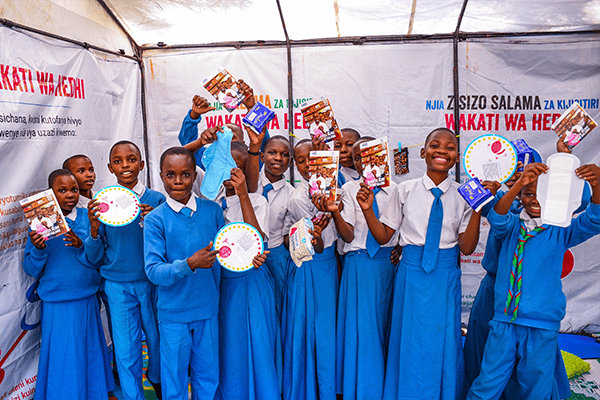
In Brazil, the project has already reached more than 400,000 individuals through a campaign called ā€œMy Cycle, My Rules.ā€ As part of the initiative, girls made bracelets with beads that represented stages in the menstrual cycle and distributed them to their communities, educating their peers and creating a movement to wear the bracelets as a symbol of breaking stigma around menstruation.

Chi, an 18-year old in Vietnam, explains how she joined a school club through the program. In it, she learned about menstruation and other important aspects of sexual and reproductive health.

ā€œI joined the project when I experienced my first menstrual period with doubts and fears,ā€ she says. ā€œBut I think with project activities at schools now, girls will be equipped with enough knowledge about reproductive health [and] the menstrual period so that they can confidently welcome puberty. With the knowledge and skills learned, I feel more confident, more mature and will bring the knowledge and skills learned to share and help other girls.ā€

Plan is also working with peer organizations throughout the sector to reframe menstrual health as a member of the Global Menstrual Collective. This group, which includes representatives from U.N. organizations, academia, government and more, published an official definition of ā€œmenstrual healthā€ in the Sexual and Reproductive Health Matters journalĀ in April 2021. This definition states that ā€œMenstrual health is a state of complete physical, mental, and social well-being and not merely the absence of disease or infirmity, in relation to the menstrual cycle.ā€

The authors add that the new definition addresses a need to go ā€œbeyond the care of menstrual bleeding to include the many social and psychological components of menstrual experience, as well as needs related to health and social inclusion.ā€


A young adolescent girl holds a sign that reads It's Normal Period advocating for menstrual health and attitudesFor these reasons, Plan USA prefers to use the term ā€œmenstrual healthā€ over ā€œmenstrual hygieneā€ when possible. Similarly, we prefer ā€œperiod padsā€ or ā€œmenstrual padsā€ instead of ā€œsanitaryā€ napkins or towels.

Changing the words we use to describe menstruation won’t eliminate menstrual health problems everywhere, but it’s a start — and an important step toward achieving gender equality for everyone.

ā€œMenstruation is normal and we must work to make everyone see it that way,ā€ 16-year-old Yacira, from Colombia, says. ā€œThe task must not stop.ā€


menstrual-health-blog image 1