Search Results

Search results for

0 result(s) found
Last year, we presented some of our most dedicated supporters with a special challenge — and an opportunity to multiply the impact of your legacy. We asked you to notify us by Dec. 31 if you had named Plan International USA in your will or made another deferred giving arrangement. And we shared some exciting news: For every planned gift notification we received, an anonymous donor would give $1,000 to Plan USA’s We Are the Girls campaign! Well, you accepted our challenge, and the results were inspiring. We couldn’t wait to share them with you, and to celebrate your tremendous impact — for girls today, and generations to come. Because of you, we not only met but exceeded our challenge goal!

You notified us of a total of 32 legacy gifts — that’s 32 investments in the futures of girls around the world. And, those 32 planned gifts resulted in an incredible $32,000 donation to Plan USA’s We Are the Girls campaign.

Your generosity truly made a significant impact, amplifying the positive change that we’re achieving together, and helping the campaign to finish strong!

A powerful ripple effect

When we launched our We Are the Girls campaign five years ago, we asked a simple question: What if girls led the way? That question led us to create a new way of doing things, called GirlEngage, where girls become the drivers of the change they need in their lives. Persistency, a participant of The Graduation Project in Zimbabwe, said it best: ā€œThe project is for us, by us.ā€ The We Are the Girls campaign transformed the way we work, triggering chain reactions across Plan’s projects. Girls are now realizing their power and using their voices to create the world they want to live in. Here are just some of the achievements made possible with the support of people like you:
  • 15.5 million people impacted.
  • $205 million raised in support of girl-led programming in 80+ countries.
  • 568 young entrepreneurs in Guatemala received seed funding to start their own businesses through Plan’s Connection to Success program.
  • 15,735 individuals in India and Nepal received information on trafficking risks and available support programs through information centers established by the PROTECT project.
  • 160 girls in Zimbabwe are living safely in two dormitories they helped to design through The Graduation Project.
  • 26,886 hygiene, dignity, food and other types of kits were distributed to girls and families in Mexico, Guatemala, Honduras and El Salvador through Protected Passage.
  • 1,098 girls and young women from the U.S. shared their opinions on and experiences with political participation in 2022, as part of a global Plan survey.

Beyond the numbers: Hear from the girls that are changing the world

ā€œThe project has changed my life. Knowing about issues of gender, violence and others have made me see the world differently, and having participated in other spaces helped me feel more secure in my abilities and skills. I have developed my inner power and it has allowed me to be a leader in my community to empower more girls.ā€ — Dayana, Champions of Change participant, El Salvador

ā€œI believe that we have been trusted with the work we continue to do in our community. I now realize that all the dots are connected to form one line.ā€ — Roshani, PROTECT project participant, Nepal

ā€œMy mom says she sees changes in my life. I tell her what I learned in the employment sessions. She tells me not to stop, to put everything into practice, and to keep growing.ā€ — Eliza, Connection to Success participant, Guatemala

ā€œI enjoy comfortable nights now, as it is my first time ever to leave the mat and sleep in a bed.ā€ — Nokuthula, The Graduation Project participant, Zimbabwe

The Legacy Match Challenge and We Are the Girls campaign have both come to an end, but Plan’s work with and for girls through GirlEngage is just getting started. We’re so glad you’re on this journey with us, because none of this would be possible without you.

Questions?

Making a planned gift is a personal decision, and I am always happy to answer any questions you may have about the process. Please don’t hesitate to call me at 401.562.8525 or email me at [email protected] to discuss your gift. Thank you for making a difference for girls and their families today, and for investing in a more equal future for us all!
Angelica Scanu Associate Director, Planned Giving

By: Coco, Youth Leadership Academy participant Coco, 17, is a participant in Plan International USA’s Youth Leadership Academy and the founder of The Shield Initiative. With Plan’s support, she’s raising awareness of young people’s mental health through art. Here, Coco shares how her activism is fostering a more equitable mental health experience for young people, in her own words. My journey of advocacy started in a data analysis project. I was asked to analyze a national dataset and bumped into the U.S. Household Pulse Survey while researching online. After a quick t-test on the difference between males’ and females’ anxiety and depression score over the past three years (2020 to 2023), I surprisingly found out that females have a much higher mental distress score in both measurements in comparison with males. The female population experienced about a 20% increase in their depression score than the male population, and the statistics are similar for anxiety. But why? What causes the gender disparity in mental illness? I ended up researching online to find out the related factors.
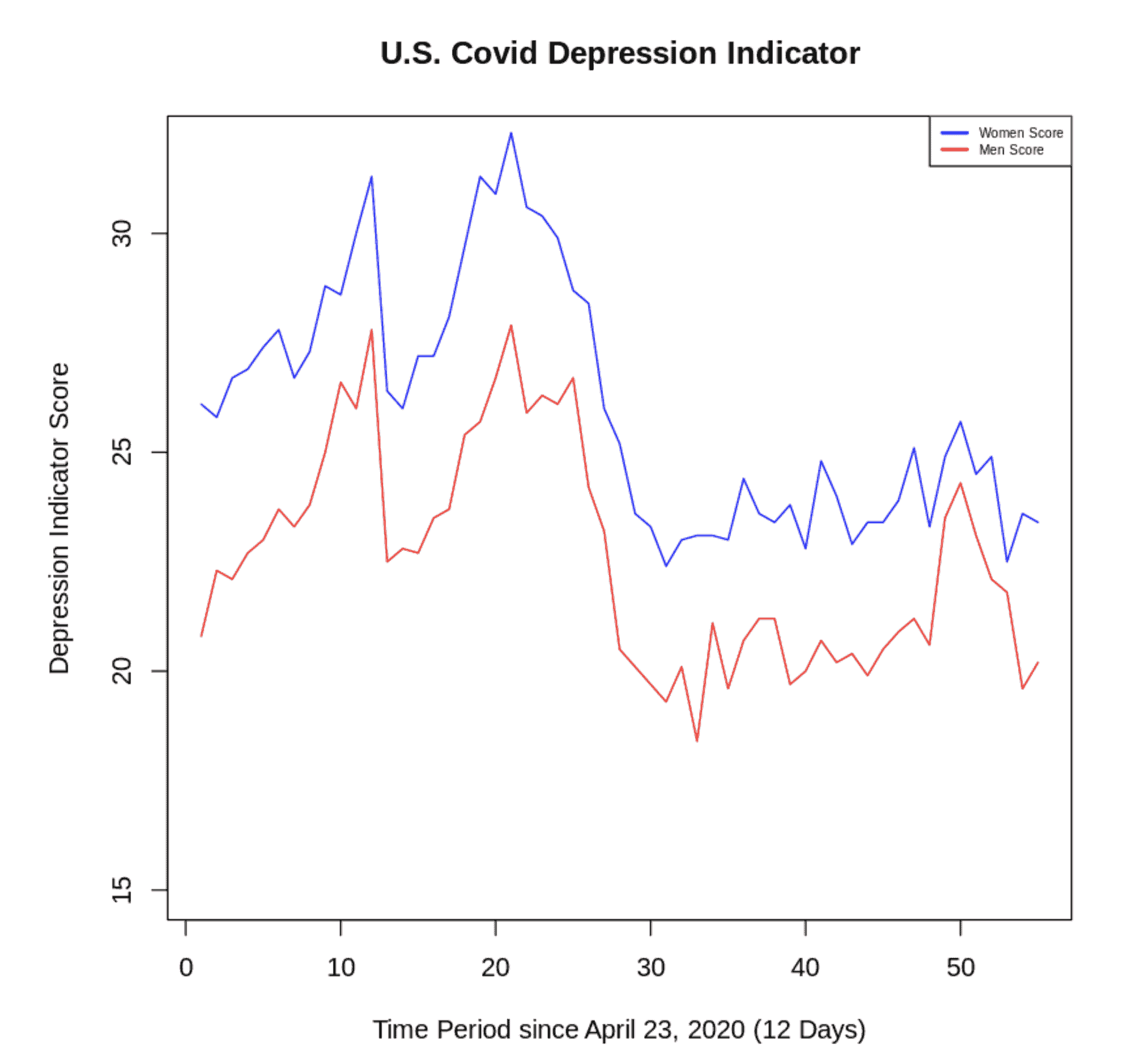
Line graph showcasing gender disparity in U.S. depression score from Coco’s research.

Line graph showcasing gender disparity in U.S. depression score from Coco’s research.


It turns out mental health disparity is not at all uncommon to women and girls all over the world. Research has shown that compared to men, women are three times more likely to encounter mental health issues, and this statistic has been growing. A study done across 73 countries discovered that this disparity is more pronounced among adolescents. Poor understanding of gender during the adolescent age of rapid physical changes causes girls to doubt their overall identity, leading to more serious mental distress. [Read more: ā€œWe’re almost never fineā€: Young people on girls’ mental healthā€]

From understanding to change-making

I was shocked by these statistics, and how many people don’t know the mental health challenges that girls are going through. As these numbers remain in academic journals, I want to bring awareness on gender disparity by delivering the statistics to the public. In order to investigate firsthand what causes this mental health disparity, I completed my own research on gender disparity in mental health during COVID-19. I analyzed the U.S. Household Pulse Survey data I found and built data models to study its correlation with COVID-19. Through the research, I found out that females are generally more impacted by the pandemic than males due to factors such as lack of decision-making power inside the household and lack of access to health care ā€œservices.ā€ This researchĀ inspired me to take actions to democratize knowledge on mental health inequity. With support and funding from Plan USA’s Youth Leadership Academy, I founded The Shield Initiative to combat mental health issues among youth with the medium of art therapy.

Why art therapy?

Art therapy emerged in the 1940s, gaining wider recognition by the 1970s. It’s a mental health profession aiding individuals to improve various aspects of their lives, using art to express emotions and address issues under professional guidance, facilitating understanding and discussion for effective problem-solving. I experienced my own journey with stress a few years ago, and came to realize that peers around me are often stuck in a mindset that stigmatizes rest-taking. Specifically, we don’t invest enough time for self-care, and, as a result, we build a work-life schedule that is prone to stress–related issues. Practicing art since kindergarten and experiencing the power of creativity made me realize that what we need is simply a lifestyle that invests time and value in healthy resting. We need to educate young people on the importance and necessity of incorporating this type of practice into our schedule. What better way to do that than bringing art into our journey with mental health?

What we’ve done with Shield

The two important missions we’ve been trying to achieve with Shield are: 1) to create awareness of the gender disparity in mental health data; and 2) to lead art therapy workshops with youth globally to alleviate mental health crises. During the summer of 2023, in my hometown, Shanghai, I curated an exhibition to highlight the mental health impact of COVID-19 through data visualization. The exhibition was called ā€œA Weaving Mess,ā€ to capture the complexity of emotions and the fact that even negative emotions cannot be neglected by our society. The exhibition has seven installation pieces consisting of data visualizations made by yarn.
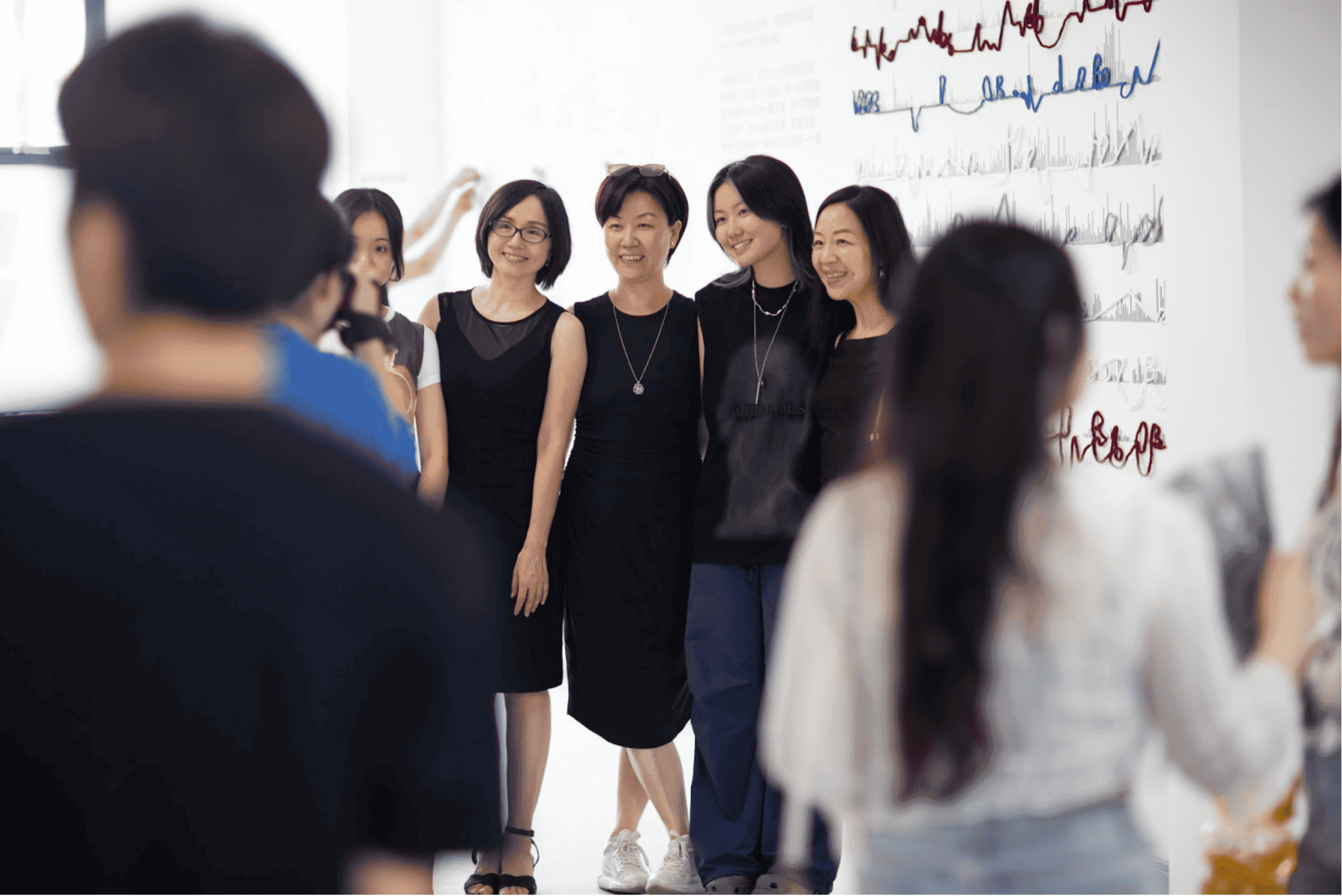
 

Coco poses for pictures with a group of people at the opening ceremony for her curated exhibition, ā€œA Weaving Mess,ā€ in Shanghai.

Line graph showcasing gender disparity in U.S. depression score from Coco’s research.


I exhibited the gender inequity dataset I found during my independent research to call attention to mental health disparity. Along with the major dataset, we included more detailed statistics on gender inequality to explain this phenomenon, such as the hours of household chores females had to complete compared to males during quarantine, or the number of girls that dropped out of school due to the pandemic. The first step of change-making is to shed light on the existing inequity. Through the exhibition, we wanted to tell a story through numbers. In addition, we collected mental health data from the Shanghai population to highlight these mental health statistics.
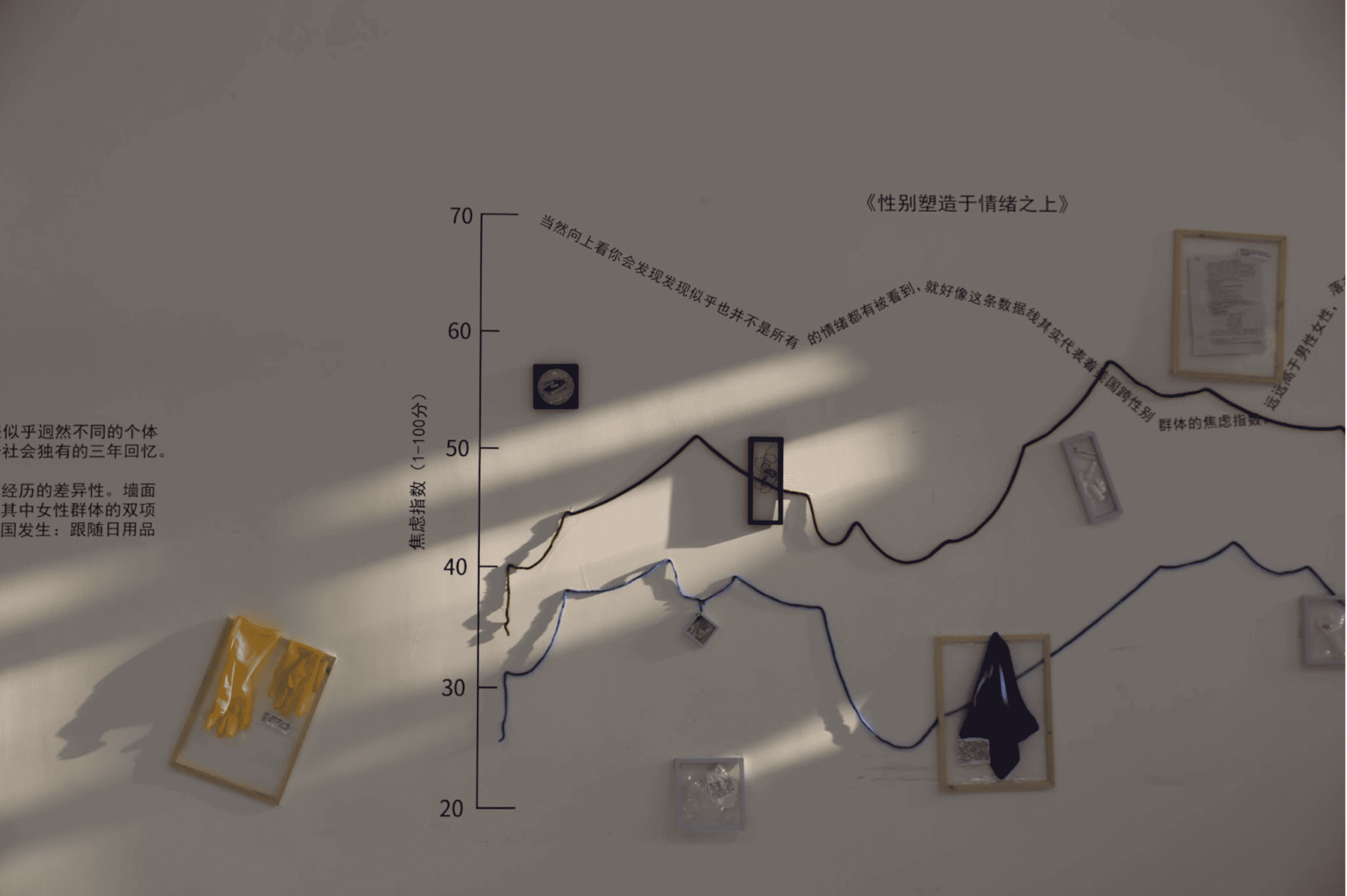
 

Coco’s curated exhibition featured an installation named ā€œGender over Emotions.ā€Coco’s curated exhibition featured an installation named ā€œGender over Emotions.ā€


“The first step of change-making is to shed light on the existing inequity.”

The Shield Initiative also advances progress toward a more equitable mental health experience by leading art therapy workshops. With a special focus on addressing gender disparity, I decided to take Shield’s first step in my current high school — an all-girl school. On Valentine’s Day, we organized a self-appreciation flower-folding workshop, where participants first filled in an appreciation worksheet to help them think about things they love about their body, spirit and energy. Then, we worked on flower–folding, and put each thing we love about ourselves on a petal of the paper flower. We voluntarily started to fold appreciation flowers for each other, and eventually gathered a pile of paper flowers by the end of the workshop. Inspired by the positive changes this workshop produced on my local campus, we decided to expand Shield’s reach to more campuses, youth communities and countries. Now, Shield works in 15 schools and organizations in seven countries. The types of workshops Shield has led include:

  • A ring-making workshop on female empowerment in Shanghai.
  • A playback theater workshop on visualizing participants’ emotions.
  • A flower-making session on self-appreciation.
  • A rock-painting workshop.
  • An outdoor painting and meditation workshop.
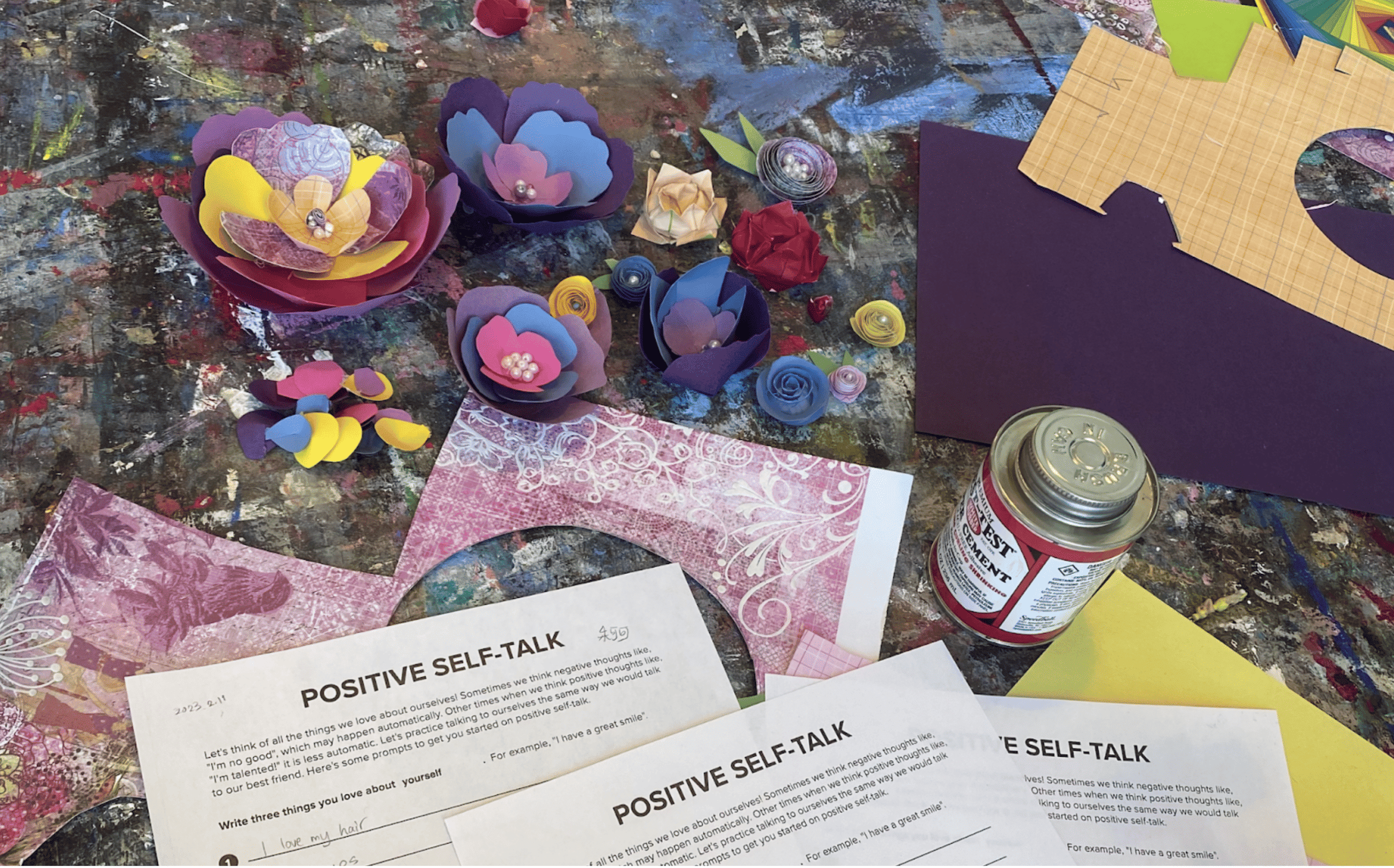
 

The Shield Initiative holds a flower-making self-appreciation workshop.The Shield Initiative holds a flower-making self-appreciation workshop.


From healing, moving forward Leading various workshops made me realize the power of seeing and being seen in the process of healing emotions, as well as the importance of having a connective community that supports one’s mental wellness. Moving forward, I encourage everyone to make art when you are struggling mentally. Here are some small art projects that can be easily done at home:

  1. Mandala drawing: Create a mandala, a circular geometric design, using paper and colored pencils, markers or paint. Start from the center and work outward, allowing the design to evolve spontaneously. Mandala-drawing promotes relaxation, mindfulness and self-expression.
  2. Painting emotions: Use colors to paint how you’re feeling. Choose colors that resonate with your emotions at the moment and let them guide the strokes and shapes on your canvas or paper.
  3. Music painting: Play a meditating soundtrack and draw how you feel during the song on a piece of paper. This is a great way to visualize emotions and to practice being conscious of your own feelings.

Try these techniques out! You can send a picture of your creation to our Instagram account to be posted on Shield. Painting not only helps us to heal and express our emotions — we can also paint for activism, so that girls’ emotions are seen through the art we make. I will continue the journey of advocating for mental health equity. With a paintbrush in hand, I am no longer afraid to make my voice heard.

Inside this issue, you’ll see how your support made a difference in 2023, and read about some of the incredible accomplishments made possible through Plan USA’s We Are the Girls campaign over the past five years. You’ll discover why we’ve joined forces with Paramount to launch 8M Infinito, a campaign that seeks to promote gender equality and make women’s and girls’ rights visible throughout the year. And you’ll hear from four young women fighting to ensure all girls are free to reach their full potential.

Cover of the report Your Impact: Winter | Spring 2024
Devex: Foreign aid ā€˜red warning lights’ to watch in the U.S. Congress in 2024

Meteorologists are predicting a strong El NiƱo weather pattern through the winter and into the spring. But what is El NiƱo, and what does it mean for girls around the world?

What is El NiƱo?

El NiƱo is a climate pattern in the Pacific Ocean that can affect weather worldwide. It represents a change in the winds that circle the Earth, called ā€œtrade winds.ā€ Normally, these winds blow west along the equator, taking warm water west from South America toward Asia. But during El NiƱo, trade winds weaken. Warm water is pushed back east, toward the west coast of the Americas. With this shift, areas in the northern U.S. and Canada are dryer and warmer than usual, while the U.S. Gulf Coast and Southeast, and northern Mexico, are wetter than usual and have increased flooding. Historically, El NiƱo-influenced weather systems bring more intense cyclones in the North-Western Pacific and more frequent cyclones in the South Pacific. Episodes of El NiƱo typically last nine to 12 months but can sometimes last for years. Events occur every two to seven years, on average, but they don’t occur on a regular schedule. Scientists aren’t exactly sure why they happen, but they can predict El NiƱo conditions several months to a year in advance, based on historical models and observation data. Basically, El NiƱo is a climate pattern that changes the Earth’s normal conditions, resulting in extreme, unpredictable weather.

You can help communities prepare for El NiƱo and recover from extreme weather events with a gift to Plan’s Humanitarian Response Fund.

When was the last strong El NiƱo, and what happened?

The last strong El NiƱo season ran from mid-2015 through early 2016 and affected approximately 60 million people globally, according to the U.N.

  • Across Africa, El NiƱo led to drought and an increase in food insecurity and malnutrition. Ethiopia experienced its worst drought in 50 years, causing an estimated 1.2 million children under age 5 and pregnant and lactating mothers to suffer from moderate acute malnutrition in 2016.
  • People in Asia and the Pacific also experienced extended dry spells or drought, along with powerful cyclones, which led to water and food shortages. While Indonesia was combating wildfires and responding to flooding, places like Fiji were hit by multiple cyclones. When the El NiƱo-fueled Cyclone Winston made landfall in February 2016, it destroyed 100% of Fiji’s crops in the country’s hardest hit areas.
  • Droughts in Latin America and the Caribbean were especially bad in Central America’s dry corridor, running through Guatemala, El Salvador, Honduras and Nicaragua. The population in this area was primarily subsistence farmers, laborers, landless farmers and female-headed households. Overall, more than 3.5 million people in Central America faced food security as a result of the crisis, in addition to 1.5 million people in Haiti.

Did you know? El NiƱo has an opposite counterpart called La NiƱa. While El NiƱo represents a warm phase, La NiƱa represents a cool phase. La NiƱa often follows El NiƱo a year later.

How does El NiƱo impact girls around the world?

Children, especially girls, are often uniquely vulnerable during crises like El NiƱo, which all too often increase risks such as child marriage, trafficking and gender-based violence. Extreme weather — whether heavy flooding or too little rain — can also disrupt education, with girls often forced to drop out due to reduced family incomes, safety concerns or greater household responsibilities. This not only has long-term consequences on their development and life opportunities, but can place girls at risk of violence, early marriage, teenage pregnancy and hunger. In times of crisis, girls, particularly in low-income regions, are also at greater risk of health issues and malnutrition. They are more likely to be forced to leave their homes, which can lead to exploitation and separation from their families. A gender-sensitive approach is vital to address these unique challenges. We’re already seeing droughts hurt girls in places like Haiti and Somalia, because girls are often responsible for collecting their families’ water. “It is very difficult to get water in this area,ā€ Sofiana, a 13-year-old girl in Haiti, told Plan. ā€œThe stream is very far away, and it can take an hour to walk there.ā€ The long walks can be dangerous, especially if girls have to walk at night. If they walk during the day, they risk missing school. In Somalia, droughts have already caused families to migrate and, in some cases, resort to child marriage. ā€œWe came here during the last drought,ā€ Qadan says from a displacement camp in Somaliland. ā€œWe don’t have jobs or any cattle. All 150 of our cows died due to the drought.ā€ With no income or food to feed their children, Qadan and her husband decided to marry off their 15- and 16-year-old daughters. ā€œWe are not happy with what we did,ā€ Qadan says. ā€œWe wanted the girls to go to school, but we couldn’t afford it and thought marriage would be beneficial for them.ā€ Now, 13-year-old Khadra fears that she may be next. ā€œI miss my married sisters,ā€ she says. ā€œThey were supposed to be here and support me. I want them to come back. The reason why they married men is because of the drought that happened to us.ā€ Ā 

How might El NiƱo impact people who are already in crisis?

Plan is already responding to a hunger crisis in Africa and Haiti caused by a deadly combination of supply chain shortages, conflict and climate change. We’ve seen that, when food is scarce in many places around the world, girls often eat less — and last.Ā 

Is El NiƱo part of global warming and/or climate change?

No — El NiƱo has been occurring for thousands of years, and will continue into the future. However, there is increasing evidence that human-driven climate change is amplifying the frequency and strength of El NiƱo events. In fact, El NiƱo is anticipated to exacerbate global warming, potentially leading to the global temperature temporarily surpassing the 1.5°C warming threshold at multiple points between 2023 and 2024. This is why it’s especially important that communities have the resources they need to prepare and respond to these events.

You can help girls and their communities prepare for El NiƱo and recover from extreme weather events with a gift to Plan’s Humanitarian Response Fund.

Read: Meet the girls engineering a more sustainable future Ā 

What do we know about this year’s El NiƱo?

Scientists first declared the presence of this season’s El NiƱo conditions in June of 2023. Since then, here’s what the U.N.’s Food and Agriculture Organization has said we can expect:

  • Eastern Africa is likely to see above-average rainfall, which could help the region recover from years of drought. However, it could also contribute to flooding and landslides, especially in eastern Ethiopia, Kenya, Somalia and southern Uganda.
  • Most of Southern Africa is expected to receive below-average rainfall, affecting agriculture-based economies. Many countries in this region lost crops last year due to cyclones. The anticipated drought conditions are likely to exacerbate food insecurity, particularly affecting children, pregnant and breastfeeding women, and older people.
  • Asia and the Pacific region often experience contrasting impacts during El NiƱo events. While some areas can expect drier conditions and more typhoon activity, others are preparing for above-average rainfall and cyclone activity. In the 2015-2016 season, both Vanuatu and the Philippines experienced cyclones followed by droughts.
  • Latin America and the Caribbean are still recovering from the 2020 hurricane season, the strongest on record for the region. This year’s El NiƱo will likely bring dry conditions with below-average rainfall. Some areas of Central America have already lost crops due to drier weather and have delayed planting new seeds. Meanwhile, the government of Colombia estimates that about 9.4 million acres of crops are under high threat of El NiƱo-induced drought, and many animals risk being affected and displaced.

How does Plan prepare for emergencies?

We work with girls and their communities to plan for possible disasters and minimize the damage. If something does happen, we’re ready with immediate support designed to meet girls’ unique needs. For example, Plan is working with young leaders in flood-prone communities in the Philippines. Aires, 19, is part of a group of young people organized by Plan who are working to keep themselves and their families safe should disaster strike. ā€œMy own family has felt the effects of the changing climate,ā€ she says. ā€œFloods are getting worse and becoming more unpredictable and our fishing practices are being impacted.ā€ Through Plan’s training, Aires helped to identify community hazards through risk mapping exercises and come up with solutions to tackle them. She created a disaster preparedness plan for her family to follow in case of an emergency and helped develop inclusive and risk-informed flood plans for the wider community. With Plan’s vast network of local leaders, this essential work is saving lives — and, it’s only possible with support from people like you.

What is Plan doing to prepare for the impact of the next El NiƱo?

Around the world, we’re stepping up early action to prepare for this year’s El NiƱo. Working hand in hand with local communities, we are supporting children and their families to prepare for and withstand disasters, saving lives while protecting livelihoods and children’s futures. Plan International is actively coordinating with U.N. agencies and expanding preparedness efforts globally, focusing on the countries where El NiƱo is expected to have the most significant impact. Our response includes addressing the critical issue of food security by working to meet the rising food aid needs and providing support in regions directly affected by El NiƱo:

  • In Asia, we are working to address funding challenges, conduct small-scale responses in Indonesia and have an Emergency Response Team ready for deployment in the Philippines, Timor-Leste and Papua New Guinea.
  • In East and Southern Africa, we are preparing for drought and flooding, securing funds for early action, sharing early warning information and providing training and resources for disaster risk management.
  • In the Central Sahel region of Africa, we are preparing a response to increased food prices caused by El NiƱo.
  • In Central and South America, our offices have developed anticipatory response plans, including protection measures, food security initiatives and health services. We are planning to provide health support, cash, basic supplies, infrastructure improvements and capacity strengthening for at-risk communities.

Ā 

How can I help Plan respond after a disaster happens?

Plan works with communities to respond to their individual needs. Because we know that girls’ unique needs are often overlooked in times of crisis, we make sure to distribute items like menstrual pads as part of our responses, along with other essentials like shelter, food and clean water. When an earthquake hit western Nepal on Nov. 3, local Plan staff acted quickly to provide 500 families with lifesaving items like blankets and tarps. We also build safe spaces where children can learn and play while their parents run errands, and connect families with mental health services. This is a unique situation — we don’t always know when a disaster will strike. Your gift today can help communities around the world prepare for the impact of El NiƱo.

Special thanks to the staff members in the Plan International Burkina Faso office who assembled this case study, including Thaddee Mukezabatware, Marie-NoĆ«l Maffon and Elise Cannuel. Read the full report.Ā  The Central Sahel countries — Burkina Faso, Mali and Niger —have been affected by an unprecedented food crisis due to protracted conflict, the global economic crisis and the effects of climate change. In response, Plan International and its partners have implemented innovative school feeding initiatives. In a crisis context, school feeding interventions help to keep children in school, giving them good learning conditions while improving their nutritional status. Moreover, school attendance protects children against various types of rights violations, especially girls, who are more exposed to gender-based violence in times of crisis. Read: Central Sahel Hunger Crisis Fact Sheet Ā  The school garden initiative was implemented from July 1, 2022 to June 30, 2023 as part of a food security and nutrition response project. The strategy included large community mobilization, with the recruitment of three local staff (including two women) to implement the school gardens’ activities. In addition, the project involved the provincial services of the Ministries of Education and Agriculture, as well as Parents and Mothers’ associations and COGES in each school. Selection criteria of the schools that participated in the project included:

  • Availability of a borehole or waterpoint and a functional canteen.
  • A schoolyard large enough to set up the garden (minimum of 0.25 hectares).
  • Previous experience in gardening activities.
  • Accessibility to ease the project’s supervision.
  • Motivation and engagement of the school actors.

Key results

  • 12 schools in Kaya, Boussouma and Kongoussi communes were reached.
  • The schools were provided with farming tools, some adapted for children (watering cans, hoes, etc.), materials for building fences, sprayers, protective equipment and agricultural inputs (improved seeds, plant protection products, manure).
  • 427 participants (students, teachers, members of parents’ and mothers’ associations) were trained in agricultural practices, harvesting techniques, post-harvest management and techniques for preserving fresh harvested products, including 212 girls/women (50 IDPs and 162 from host community) and 215 boys/men (29 IDPs and 186 from host community).
  • 5,470 students in total were reached, including 2,825 girls (1,017 IDPs and 1,808 from host community) and 2,645 boys (1,010 IDPs and 1,635 from host community).
  • 7 positive boreholes have been rehabilitated or constructed.
  • Approximate harvest quantities:
    • 3 tons of onions.
    • 1 tons of cabbage.
    • 1 ton of tomatoes.
    • 5 tons of purple eggplant.
    • 4 tons of local eggplant.
    • In smaller quantities, depending on the school: potatoes, corn, onion leaves and beans leaves.
  • 101 children have set up gardens at home, putting into practice what they have learned through the project:
    • 49 children in the Kaya commune, including 18 girls.
    • 39 children in the Boussouma commune, including 22 girls.
    • 13 children in the Kongoussi commune, including three girls.

ā€œThe children are super-interested. Both girls and boys want to give their best. But at this rate, the girls are beating the record! The garden allows teachers to give practical courses in agriculture, and that will assist the children in their lives. There are children who replicate these activities at home.ā€ — Fabienne Nikiema, agriculture animator of the project in the Centre-North region

Lessons learned

  • The schools were selected on the basis of their capacity to implement school gardens and their interest. The criteria defined at the beginning of the project were extended to include private schools.
  • Income from the sale of surplus has enabled parents’ associations and mothers’ associations to purchase condiments for the canteens.
  • The strong involvement of parents has alleviated the burden of maintaining the gardens, and has given students the time they need to do their homework.
  • Human-powered pumps can break down and can be difficult for children to use. The construction of piped water towers in each of the 12 schools would enable the children to be more independent in tending the garden and make this task less tiring.
  • It would be important to monitor the impact of the school gardens on student attendance by collecting data. Even though there was an overall increase in attendance, particularly from internally displaced children, as well as an increase in presence at school until the end of the day, particularly from children living far from the school.
  • Collecting data on the improvement of the children’s nutritional status would also be relevant.
  • Many other schools in the Centre-North have expressed an interest in setting up school gardens. This initiative needs to be scaled up in collaboration with local partners.

Challenges

  • Lack of space, the school yards often being used to build classrooms to accommodate internally displaced students.
  • Limited water resources.
  • Breakdowns of water pumps installed by the project, costly to repair.
  • Insufficient involvement of certain parents and teachers.
  • Inconsistent and inadequate food supplies deliveries by state services.

Perspective: implementation of integrated hydroponic systems in the school gardens

Integrated hydroponic systems (i.e., soil-less agriculture with poultry and fish farming methods) are an innovative technology combining gardening and poultry and fish farming that could be adapted to the Burkinabe context using locally sourced materials and integrated to the school gardens to achieve a reliable supply of fresh nutrient-dense and animal-sourced foods to feed students. An integrated hydroponic system is shaped like a pyramid with poultry cage on top, a fish basin at the base and vegetables growing on a grid all around. These systems require little space and water resources, so they could help to overcome the challenges encountered during the implementation of school gardens. To enable Plan International Burkina Faso to design this innovative pilot project, a literature review was carried out and numerous resources were used, including those collected by Plan International Canada from various Country and National Offices, but also through testing hydroponic school gardens in Zimbabwe with the support of Plan International Germany. Several field visits were carried out by the project’s team and feasibility has been studied, including hygiene and safety aspects. Partners have already been identified to provide technical support: the National Federation of Young Agricultural Professionals and the Nazi Boni University. The implementation of integrated hydroponic systems in the school gardens set up in the Centre-North could:

  • Improve the reliability and duration of growing fresh nutrient-rich foods to supply to school canteens.
  • Increase the technical empowerment of students, parents and other education actors in managing integrated hydroponic production for school canteens.
  • Support hands-on learning in nutrition education, sciences and technology, as well as the transfer of skills, among vulnerable crisis-affected boys and girls.

Read: The state of positive youth development in Ghana For more information about Plan’s programming in the Central Sahel region, please contact Plan’s Central Sahel Response Information and Communication Coordinator Elise Cannuel at [email protected].

There’s no denying that 2023 was a difficult year for gender equality. Natural disasters, war, migration, inflation and a global hunger crisis exacerbated the challenges that girls and their communities were already facing.Ā 

But it is during our most challenging times that we have the opportunity for the greatest acts of kindness. This year, we came together to let girls know that they are seen, that they will not be left behind and that hope is not lost.

And, this December, Plan USA celebrated the end of our five-year We Are the Girls campaign. Thanks to the support of donors like you, we impacted the lives of 15.5 million people and exceeded our goal to raise $200 million in support of projects designed for and with girls.Ā 

To celebrate the end of the campaign and help you feel inspired for all that you’ve accomplished — and all that we can accomplish together in the year to come — here are 13 photos illustrating a small slice of the impact you made for girls and communities in 2023 and beyond.


1. You inspired girls like Erika to dream big — and helped to make that dream a reality!

ā€œIndigenous women, for the most part, do not study,ā€ Erika says. ā€œMany think that sending a girl to school is throwing away money. Why would a girl study if she has to stay at home to clean, cook and take care of the children?ā€

Growing up in a traditional Kichwa community in the Andes Mountains, college seemed like an impossible dream for her. Then, Erika became a Plan sponsored child when she was 8 years old. Over the years, she received encouragement and support from her sponsor. As she got older, she participated in Plan leadership programs, which helped to build her confidence, and after graduating from high school, she was awarded a scholarship from Plan to attend university.

ā€œI have told my classmates at university, and in fact all the women in my community, that we must raise our voices, that we must all collaborate, so that other women can hear us and change their lives,ā€ Erika says. ā€œIf we can help one person, it will help many others.


Picture of Erika outside, smiling

Erika, 21, is a former sponsored child who received a scholarship from Plan to attend university.

2. You helped girls like Nokuthula stay safe and educated.

In a rural community in Zimbabwe, girls were walking incredibly long and unsafe distances to school, facing abuse and harassment from men along the way. Then, to be closer to school, they started sleeping in an abandoned shed behind a liquor store — and the abuse continued.

The Graduation Project made it possible for the girls to bring their dream dormitory to life. The girls worked directly with Plan staff to design two boarding houses from start to finish, requesting things like female dorm matrons, highly secured fences and a school garden. Living peacefully in the beautiful safe space they need, the girls are now able to stay in school and graduate.

ā€œMy life has since changed and everyone sees in me as a healthy girl who is at peace,ā€ Nokuthula, one of the girls living in the dorms, says. ā€œI enjoy comfortable nights now, as it is my first time ever to leave the mat and sleep in a bed. At home, my parents are the only ones who own a bed.ā€


 Nokuthula, 16, participated in The Graduation Project, supported by Plan’s We Are the Girls campaign.

Nokuthula, 16, participated in The Graduation Project, supported by Plan’s We Are the Girls campaign.

3. You amplified the voices of young activists like Roshani.

Roshani, 19, lives in a town in Nepal that borders India. Through Plan’s PROTECT project, supported by the We Are the Girls campaign, she became an active campaigner against human trafficking, spreading awareness in her community.

ā€œI believe that we have been trusted with the work we continue to do in our community,ā€ Roshani says. ā€œI now realize that all the dots are connected to form one line.ā€

More than 15,000 people in India and Nepal received information on trafficking risks and available support programs through information centers established by the PROTECT project.


Roshani, 19, is raising awareness about the dangers of trafficking in her community in Nepal.

Roshani, 19, is raising awareness about the dangers of trafficking in her community in Nepal.

4. You helped young women like Eliza kick-start their careers.

Plan’s Connection to Success project in Guatemala, supported by the We Are the Girls campaign, is improving economic opportunities for young people through activities such as entrepreneurship training, startup funding, vocational training and internships. Through the project, Eliza, 23, got a job at a hotel kitchen.

ā€œI feel happy for the space I have been given in the Connection to Success project,ā€ Eliza says. ā€œMy mom says she sees changes in my life. I tell her what I learned in the employment sessions. She tells me not to stop, to put everything into practice, and to keep growing.ā€


 Eliza, 23, participated in Plan’s Connection to Success project in Guatemala.

Eliza, 23, participated in Plan’s Connection to Success project in Guatemala.

5. You planted seeds of hope for children in Niger.

To respond to the hunger crisis affecting the Central Sahel region of Africa, Plan created school gardening clubs and school meal programs in countries like Niger and Burkina Faso. Through these projects, schools are provided with seeds and gardening tools, while teachers and students are taught how to grow and produce their own food. Plan’s school meal programs are effective both in mitigating hunger and sustaining school attendance. With school gardens, students eat a nutritious lunch, and parents are motivated to send them to school, knowing they will at least be fed there.


Students tend to their school garden in Niger.

Students tend to their school garden in Niger.

6. You supported Champions of Change like Dayana.

More than half of women in El Salvador have experienced some form of violence.

But you’re giving girls hope through your support for Champions of Change, a project supported by the campaign in El Salvador. Girls who participate in this project are learning important life skills, including how to lean on their peers for help. And, they’re sharing what they’ve learned with other young people in their communities.

ā€œKnowing about issues of gender, violence and others have made me see the world differently, and having participated in other spaces helped me feel more secure in my abilities and skills,ā€ Dayana says. ā€œI have developed my inner power and it has allowed me to be a leader in my community to empower more girls.ā€


Dayana, who participated in one of the Plan projects supported by the campaign in El Salvador

ā€œThe project has changed my life,ā€ Dayana, who participated in one of the Plan projects supported by the campaign in El Salvador, says.

7. You inspired entrepreneurship and helped women like Era launch their own businesses.

In Indonesia, women earn 23% less than men on average, and high-paying jobs are dominated by men. Young women need more, better options.

The GIRL 2.0 project, supported by Plan’s We Are the Girls campaign, focuses on providing young people, especially women, with the skills, resources and connections they need to start their own businesses. Through the project, young entrepreneurs learn technical skills like product development and financial management, while strengthening key life skills like decision-making. They work with mentors to develop business plans and, as the project progresses, pitch their ideas to panels of judges for seed capital. Local entrepreneurs are invited to network with project participants to build support and resources so young people’s businesses are successful.

Era, 23, started a business selling ornamental plants in Indonesia, with support from the project. Now, she encourages other young people to follow in her footsteps with this advice: ā€œDon’t be afraid to start a business. By becoming an entrepreneur, we can improve our family’s well-being, and ourselves as well.ā€


Era, 23, started her own business selling ornamental plants after participating in Plan’s GIRL 2.0 project in Indonesia.

Era, 23, started her own business selling ornamental plants after participating in Plan’s GIRL 2.0 project in Indonesia.

8. You helped to keep adolescent girls safe during crises like war and natural disasters.

Your gifts to Plan’s emergency response in Syria are providing girls and their families with the resources they need to rebuild and recover from the massive earthquakes that devastated the country last February.

Plan worked with local partners to rehabilitate six water networks and tanks, benefiting more than 100,000 people in Aleppo and Latakia.

To address the protection risks that adolescent girls and women face while living in shelters, Plan helped to install two gender-segregated bathrooms in a shelter in Aleppo, each equipped with four shower stalls.

“These shower facilities ensure that girls, in particular, have their privacy and protection while maintaining their dignity,ā€ Sara, who lives in a shelter with her family, says. ā€œWe no longer have to worry about disturbing each other’s space, and can clean ourselves in an environment that respects our need for privacy. … This newfound sense of protection has lifted a heavy burden from our shoulders, and we feel safer and more secure within these walls.ā€


 Sara feels safer now that Plan has installed gender-segregated bathrooms in the shelter where she’s staying with her family.

Sara feels safer now that Plan has installed gender-segregated bathrooms in the shelter where she’s staying with her family.

9. You involved boys in the fight for equality — and helped to level the playing field!

Through gender equality clubs, girls and boys around the world unite to build the confidence they need to become leaders and advocates of equality. Together, they share ideas about what change could look like in their communities and gather support. Boys reflect on their privileges and the ways they might perpetuate inequality in order to challenge machismo culture and support girls and women in their lives. Meanwhile, girls identify how being female affects their lives and how their experiences may be different from their male peers. Together, they practice what they learn through soccer games and other structured activities.


Boys and girls play soccer together and work as a team in Vietnam.

Boys and girls play soccer together and work as a team in Vietnam.

10. You protected migrating girls and families.

Plan’s Protected Passage project provided a lifeline for adolescent girls and families affected by migration in El Salvador, Guatemala, Honduras and Mexico. The project helped to fill critical service gaps, including psychosocial support and protection services.

ā€œPlan International helped me see what I want for myself,ā€ one adolescent girl living in a shelter in Mexico says. ā€œI have to take care of myself so that I don’t damage my future and can get ahead in life.ā€


Adolescent girls participate in an activity organized by Plan in the shelter where they are staying in Mexico.

Adolescent girls participate in an activity organized by Plan in the shelter where they are staying in Mexico.

11. You fought against period stigma.

For a long time, 15-year-old Theresia dreaded going to school when she had her period.

ā€œWhen I saw my female classmate being shamed when she had a leak in class, my fear grew even bigger,ā€ Theresia recalls. ā€œI promised myself I would never let anybody know when I was on my period; I would rather suffer in silence.ā€

It was only after attending a training session on menstrual health organized by Plan at her school that Theresia’s perspective started to change. She learned that menstruation was a natural process and should be discussed openly.

Plan’s mobile menstrual health lab has been visiting schools in Tanzania’s Kigoma and Geita region since it was set up in 2022. The labs have become a hub of knowledge, dispelling myths and misconceptions surrounding menstruation while fostering an environment where questions are welcomed, and discussions are encouraged.

“I used to fear going to school during my period, but now I know it’s natural,ā€ Theresia says. ā€œI won’t let it stop me, and I want every girl to feel the same way.ā€

Theresia decided to take action by organizing a series of meetings for other girls in her school. More than 150 adolescent girls attended the awareness raising sessions.

“Theresia showed us that we can talk about this openly,ā€ Dina, one of the girls who attended the meetings, shares. ā€œWe don’t have to hide anymore.ā€


Young people in Tanzania learn about menstrual health at Plan’s mobile lab.

Young people in Tanzania learn about menstrual health at Plan’s mobile lab.

12. You helped children like Thailan continue to participate in sponsorship.

People like you sponsor thousands of children in need through Plan. When youĀ become a sponsor,Ā you can help a child receive an education, have access to clean water and healthcare and be protected from violence.

Thailan, age 5, is a sponsored child with Plan who lives in Cambodia. She attends the pre-school in her community which was built by Plan.

Plan has constructed more than 400 pre-schools in Cambodia over the past 20 years. In most areas where Plan works, children under 5 now have access to early childhood care and development. More parents are sending their children to pre-school and investing in their education from an early age.


Thailan, age 5, is a Plan sponsored child in Cambodia.

Thailan, age 5, is a Plan sponsored child in Cambodia.

13. You created a ripple effect by supporting a network of young leaders here in the U.S.

Gender inequality exists everywhere, including the U.S., so Plan USA works with young people here, too, to fight against it.

One of the ways we do that is through ourĀ Youth Leadership Academy — a yearlong leadership program dedicated to training, supporting and mentoring young activists in the U.S. as they seek to create positive change in their communities.

In July, Plan gathered more than 40 young people from across the U.S. together for a four-day residential academy in Washington, D.C., with activities including a panel on youth in politics, a deep dive session focused on the sustainable development goals related to climate change and gender equality, and a model U.N. session.

One of the most important activities is participants’ leadership projects. Throughout the 2023-2024 academic year, YLA participants design, create and implement a project in their community on the social justice issue of their choice. The young leaders meet online with Plan staff and mentors from Plan’s Youth Advisory Board, attend skill-building webinars and access seed funding to launch their projects in their communities!


Four YLA participants stand in front of the White House during their stay in D.C.

Four YLA participants stand in front of the White House during their stay in D.C.


Your support gives us hope and inspires us to work harder every day. We look forward to all of the positive change we will create together with girl leaders in 2024!

Your impact in 13 photos feature image

PRESS RELEASE

WASHINGTON, DC, December 22, 2023 — Plan International is leading innovations to better ensure that young women can benefit from the economic growth opportunity that industrial parks provide — and that the same innovations are good for the region’s local businesses and community. Developed in partnership with the U.S. government and The Children’s Place, the Hawassa Industrial Park’s community-based childcare model is demonstrating positive economic outcomes for women, children and the private sector in Ethiopia.

The Government of Ethiopia has invested nearly $1 billion in 32 industrial parks, primarily focusing on textile manufacturing where 94% of the workforce are females and three fourths are ages 18-24. These investments are meant to transform the economy and reduce poverty; however, realizing the full benefit of these those goals requires non-traditional support systems.

To assist the Hawassa Industrial Park improve worker performance and productivity and reduce attrition, Plan and USAID have created a worker wellness program to ensure that potential employees understand their future roles and are connected with local services. As most employees relocate to be near the plant, they benefit from connections with fair housing, an understanding of the community they are joining and how to access essential needs. For the largely young and female workforce at Hawassa, this includes childcare services and early childhood development programs.

Partnering with The Children’s Place, childcare centeres have been created to support over 200 children each year. Workers have reported lower absenteeism from work, improved productivity and increased participation in work, leading to increases in their pay.

ā€œThe workforce at Ethiopia’s Hawassa Industrial Park, which is predominantly composed of young women, is impacted by a shortage of quality early childhood care and education in the region,ā€ Adrian Sherman, Vice President of Environment & Social Responsibility at The Children’s Place said. ā€œBy establishing a safe and dependable daycare center, we have helped to relieve that impact and, importantly, contribute to advancing gender equality and financial independence for women in the region. We take great pride in our partnership with Plan International in helping to promote worker well-being and provide families a reliable and nurturing childcare option in Hawassa.ā€

As industrial parks continue to expand across Africa, there is an opportunity to replicate this childcare service model for improved outcomes for women, children and private sector partners.

ā€œSending my child to the Plan run childcare center in Cheffe is the single most important decision I have made in my life,ā€ Debretu, a 24-year-old operator at a garment manufacturing company, said. ā€œThe Center has made it possible for me to work and at the same time, for my child to be in a safe and caring environment. As you can imagine, I can now work free of any stress and give my best to my job.ā€

By investing in the set-up of community-owned and operated childcare services targeted to the employment demographics of industrial parks, companies will see higher returns on their investments while driving sustainable ESG agendas. For young women like Debretu, the investment is one in their and their child’s future as well.

For more information or interviews, please contact:

Maria Holsopple
Director, Communications & Creative Services
Email: [email protected]

Mobile: 540.383.3628

About Plan International USA

Powered by supporters, Plan International USA partners with adolescent girls, young women and children around the world to overcome oppression and gender inequality. We provide the support and resources that are unique to their needs and the needs of their communities, ensuring they achieve their full potential with dignity, opportunity and safety. Founded in 1937, Plan is an independent development and humanitarian organization that is active in more than 80 countries.

For more information, and to learn about our commitment to safeguarding, please visit www.PlanUSA.org.

About The Children’s Place

The Children’s Place is an omni-channel children’s specialty portfolio of brands with an industry-leading digital-first model. Its global retail and wholesale network includes four digital storefronts, more than 500 stores in North America, wholesale marketplaces and distribution in 16 countries through six international franchise partners. The Children’s Place is proud to be a women-led Company, including industry-leading gender diversity in senior management and throughout all levels of its workforce, and of its commitment to sustainable business practices that benefit its customers, associates, investors, suppliers and the communities it serves. The Children’s Place designs, contracts to manufacture, and sells fashionable, high-quality apparel, accessories and footwear predominantly at value prices, primarily under its proprietary brands: “The Children’s Place”, “Gymboree”, “Sugar & Jade”, and “PJ Place”. For more information visit: www.childrensplace.com, www.gymboree.com, www.sugarandjade.com and www.pjplace.com, as well as the Company’s social media channels on Instagram, Facebook, X, formerly known as Twitter, YouTube and Pinterest.

Ethiopia’s Hawassa Industrial Park