Plan International USAās 2023 Annual Review highlights how evidence, accountability and girlsā leadership shaped our work in a complex global landscape.
Search Results
Search results for
0 result(s) found
- Blog
Every girl deserves to grow up in a world where her potential is realized, her voice is heard and her equality is not just a dream, but a reality. For International Womenās Day this year, Plan International USA is joining the U.N., other nonprofit organizations and businesses around the world to invest in women and accelerate progress toward gender equality. Weāre asking: āWhat is the future we want for girls and young women?ā And weāre investing in the women of tomorrow by supporting the girls of today. Achieving gender equality and womenās well-being in all aspects of life is more crucial than ever if we want to create prosperous economies and a healthy planet.Ā Research shows that investing in the education and well-being of adolescent girls is not only a moral imperative, but is also economically critical, and leads to positive outcomes for society at large. Today, weāre highlighting five times that investing in girls and women has paid off ā and sharing some inspiring stories from our partnerships along the way!
1. Creating a more inclusive IT industry in Indonesia and Vietnam
Gender inequality and stereotypes tell girls that certain industries, such as technology and mechanics, are off limits to women. For example, only 28% of board directors in the IT industry worldwide are female. When asked why they donāt pursue careers in science, technology, engineering or math, studies have shown that girls point to the lack of representation and female role models. In fact, 60% of girls told researchers they would feel more confident pursuing a career in STEM fields if they knew men and women were equally employed in those professions. Information technology is one of the key sectors of growth that will continue to shape this century and beyond. But while the digital economy is steadily growing in countries like Indonesia and Vietnam, the benefits are often unequal. The lack of training opportunities for young people, particularly women, means that job opportunities in the tech industry are often limited to men living in urban areas. To address this inequality, with support from Google.org, Googleās philanthropic arm, Plan worked with ASEAN Foundation to launch a vocational and job-matching program in Indonesia and Vietnam called Bridges to the Future. From 2020 to 2022, Bridges to the Future helped 10,000 young people take their first steps toward rewarding careers. Participants were equipped with technical and soft skills to prepare for employment and entrepreneurship, and accessed career fairs to connect to the job market. The program had a strong employee volunteering component, with Google employees hosting sessions on career counseling and mentoring program participants.

āIf we are in a positive environment and use our time for productive activities, we will become better individuals,ā Diana, a participant in Planās Bridges to the Future project in Indonesia, says. āThis belief has propelled me toward finding and succeeding in my current job.ā Ā© Plan International
āUpon joining the program, I was consistently encouraged by the program staff to participate in career-building initiatives and also undertake self-development growth opportunities,ā Diana, a participant in Indonesia, says. āThrough these activities, I have gained extensive knowledge of soft skills and how to apply for jobs.ā
From 2020 to 2022, Bridges to the Future helped 10,000 young people take their first steps toward rewarding careers.
In addition to Bridges to the Future, with support from Google.org, we partnered with INCO Academy in 2021 to launch an 18-month pilot program in Indonesia called Work in Tech. The project provided fully funded access to Google Career Certificates in IT, as well as tailored resources and soft-skills support to maximize professional success. Work in Tech graduates come from traditionally underrepresented backgrounds in the IT sector, including women and ethnic minorities. The program reached a total of 10,000 young learners, of which 7,868 young people attained the Career Certificate for completing the training, and 4,061 participated in job placement programs. Since completing the program, Onny now works as a web developer. āIn the next 5 to 10 years, my dream is to open a coding academy specifically for children,ā she says. āCurrently, there are none in Cirebo.ā

“I was the first person to attend university in my extended family,ā Onny, a participant in Planās Work in Tech project in Indonesia, says. āSo, I hope it can be a gateway for my cousins to enjoy higher education.ā Ā© Plan International / Ubaidillah Achmad
Weāre also working with J.P. Morgan to support young women in Indonesia, through a project called Tech Muda II. The project builds on the success of Tech Muda I, which aimed to support marginalized young people, especially young women, in their out-of-school transition to employability in the information technology sector. Through the program, Plan trained 150 young people, 80% young women, in IT-related skills, such as graphic design and web development, and helped 139 young people find internships and employment in the greater Jakarta area. The program also notably helped to improve the self-efficacy of program participants as a result of increased soft skills. Program participants reported they felt more prepared and confident to apply to job vacancies following their participation in Tech Muda. āThis program has helped me in shaping the skills in me that I didnāt know existed,ā Inces, a program participant, says. āAfter joining the boot camp, I was taught to create a CV and portfolio, which I did not know how to do before. Thanks to this boot camp, I made my CV and portfolio to obtain my current position in digital marketing.ā Based on the successes of this pilot program, we jointly embarked on a second phase, which began in 2022 and will end in August. Tech Muda II aims to provide 400 young women with training, mentorship and work-based learning to secure jobs in Indonesiaās growing IT sector. It will also provide post-completion job seeking assistance and job placement support for youth in careers such as data analysis, content development and digital marketing.
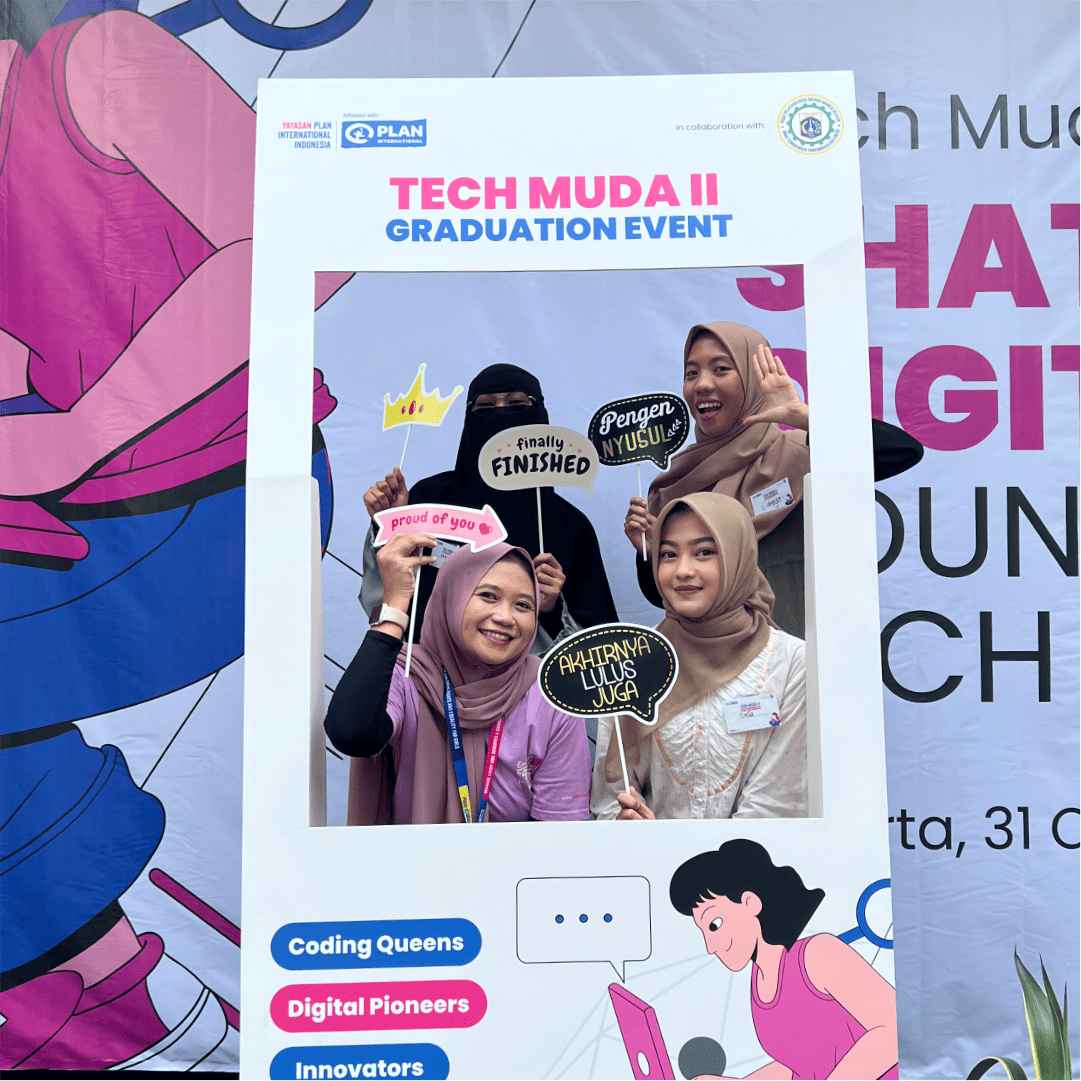
Program participants attend a graduation event for Tech Muda II in South Jakarta, Indonesia. Ā© Plan International
2. Providing quality childcare in Ethiopia
In Ethiopia, Plan is helping to ensure that young women can benefit from the economic growth opportunity that industrial parks provide ā and that the same innovations are good for the regionās local businesses and community. To help the Hawassa Industrial Park improve worker performance and productivity and reduce attrition, Plan and USAID have created a worker wellness program to connect potential employees with local services. As most employees relocate to be near the plant, they benefit from connections with fair housing, an understanding of the community they are joining and how to access essential needs. For the largely young and female workforce at Hawassa, this includes child care services and early childhood development programs. With no support or access to quality child care, many young mothers in Ethiopia are forced to either end their careers to care for their children, or to leave them unattended. Thatās why Plan partnered with The Childrenās Place to build two child care centers for employees working in the Hawassa Industrial Park. The child care centers offer safe, inclusive, age-appropriate early learning opportunities to children ages 0 to 3, reaching nearly 200 children per year.
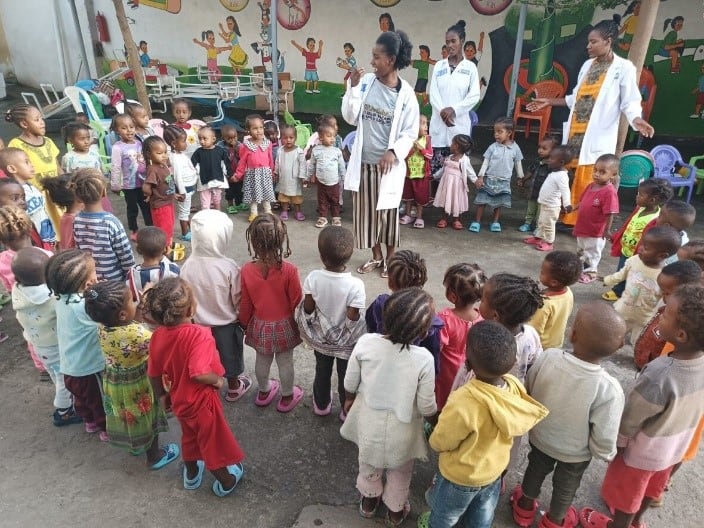
A group of children gather at one of the child care centers established by Plan and The Childrenās Place in Ethiopia. Ā© Plan International
The centers also provide nutritious meals and safe indoor and outdoor play time, with the staff closely monitoring the childrenās growth and development. Many of the workers who send their children to these child care centers have reported lower absenteeism from work, improved productivity and increased participation due to reduced stress about their children, in some cases even leading to increases in their pay. As industrial parks continue to expand across Africa, there is an opportunity to replicate this child care service model for improved outcomes for women, children and private sector partners.
āSending my child to the Plan-run childcare center in Cheffe is the single most important decision I have made in my life,ā Debretu, a 24-year-old operator at a garment manufacturing company, says. āThe center has made it possible for me to work and at the same time, for my child to be in a safe and caring environment. As you can imagine, I can now work free of any stress and give my best to my job.ā
3. Connecting young women to success in Guatemala
In Guatemala, Indigenous young women often donāt finish school, and end up working informal jobs that are both demanding and low paying. In many rural areas, it is particularly difficult for young people to find waged employment opportunities. Planās Connection to Success project is improving young womenās economic prospects, so that they have the power to take their careers into their own hands through self-employment. Young entrepreneurs learn the skills they need to spot business opportunities, develop their business ideas, set-up and manage the risks of running a business, and face challenges with flexibility and creativity. They build their resilience with financial, business, entrepreneurial, digital and life skills. Throughout the first phase of the project, which began in 2019 and ended in 2023, 2,085 young people (1,356 women and 729 men) completed virtual and face-to-face training in entrepreneurship to design their business plans. Now, the project has facilitated the creation of 455 individual and associative business units, mainly in the agricultural, livestock, trade and services sectors, which are supplying local and regional markets with competitive, high-quality products. These activities have helped to strengthen the local economy and business ecosystem. By the end of the first phase of the project, hundreds of thousands of dollars of seed capital had been dispersed, supporting 568 young entrepreneurs as they started new businesses. In addition, 140 young people who completed the employment track got reliable, good-paying jobs in sales and customer service. Young women entrepreneurs are more likely to succeed if they have trusted mentors, which is why Plan also facilitates business mentoring and links them to affordable and gender-inclusive financial services and professional networking opportunities.
āI feel happy for the space I have been given in the Connection to Success project,ā Eliza, a 23-year-old participant, says. āMy mom says she sees changes in my life. I tell her what I learned in the employment sessions. She tells me not to stop, to put everything into practice, and to keep growing.ā

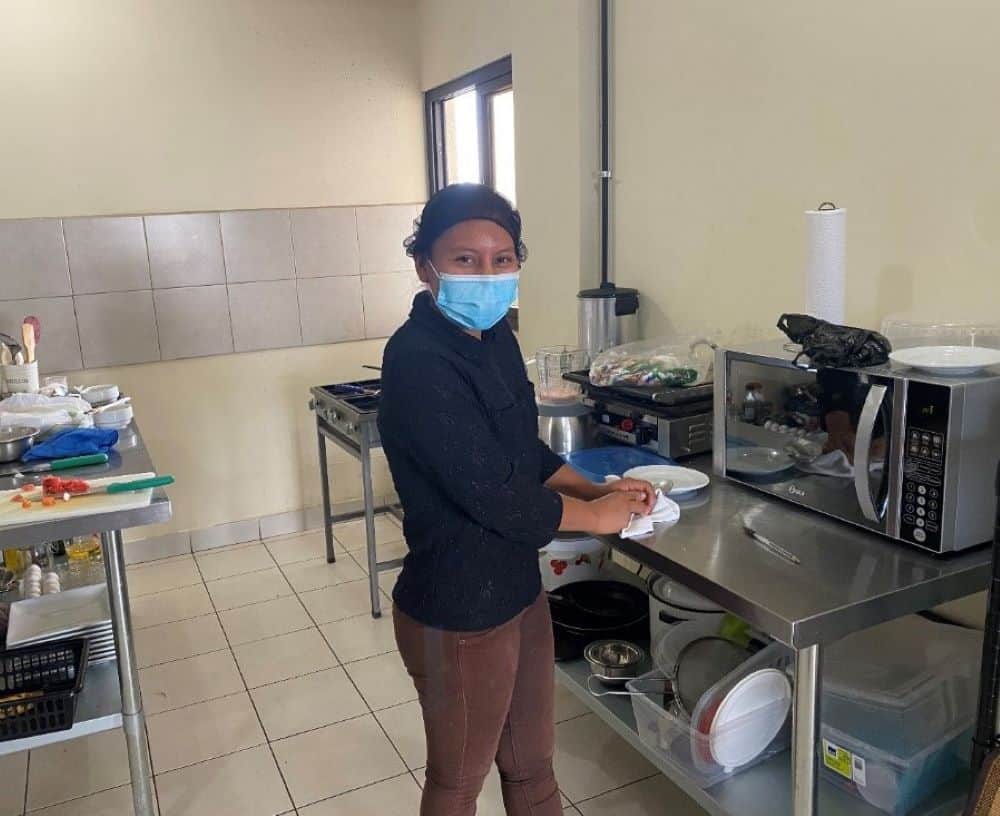
Eliza, 23, got a job in a hotel kitchen after participating in Planās Connection to Success project in Guatemala. Ā© Plan International
The final evaluation of the projectās first phase showed that the percentage of young people who have strengthened their entrepreneurial skills increased to 94%, compared to 13% at the beginning of the project. Now, weāre getting ready for a second phase of the project. When designing additional programming, Plan staff incorporated the ideas of GirlEngage by organizing a consultation workshop with young people who participated in the first phase. Their feedback is informing plans for phase two.
4. Breaking new ground in Ghana
In Tamale, the capital of northern Ghana, passersby often stop to marvel at a crew of 10 tile layers trading quips at a local construction site. Itās not something they see every day. Why? Because six of the crew members are women. This scene was made possible by Ayisha. Ayisha, now 27, was in an arranged marriage and struggling to make ends meet when she heard a radio announcement about a job training program. After being interviewed at the program office the next morning, she decided to register on the spot to learn tile laying āĀ a trade she knew nothing about.
āAt first, I thought it was for males, females cannot do it,ā Ayisha recalls. āLifting tiles from here to there seemed like a huge thing. I was a bit afraid to learn it. I had never seen a female tiler before. My mother said how? I say, to try. If you donāt try, how will you know?ā
In Ghana, young people often struggle to access education and training that aligns with job opportunities. To help young women build their own futures, Planās three-year project Pathways for Sustainable Employment for Women and Youth (PASEWAY) is reaching young people across northern Ghana with job training and business skills. Through PASEWAY, more than 4,200 young people like Ayisha have received technical and skills training in the construction and hospitality sectors. After completing the training program, Ayisha now runs her own successful construction business. She has taught six young women and three young men how to lay tiles through her company. Ayisha says that passing on her skills and employing other young women is the most rewarding part of her job.
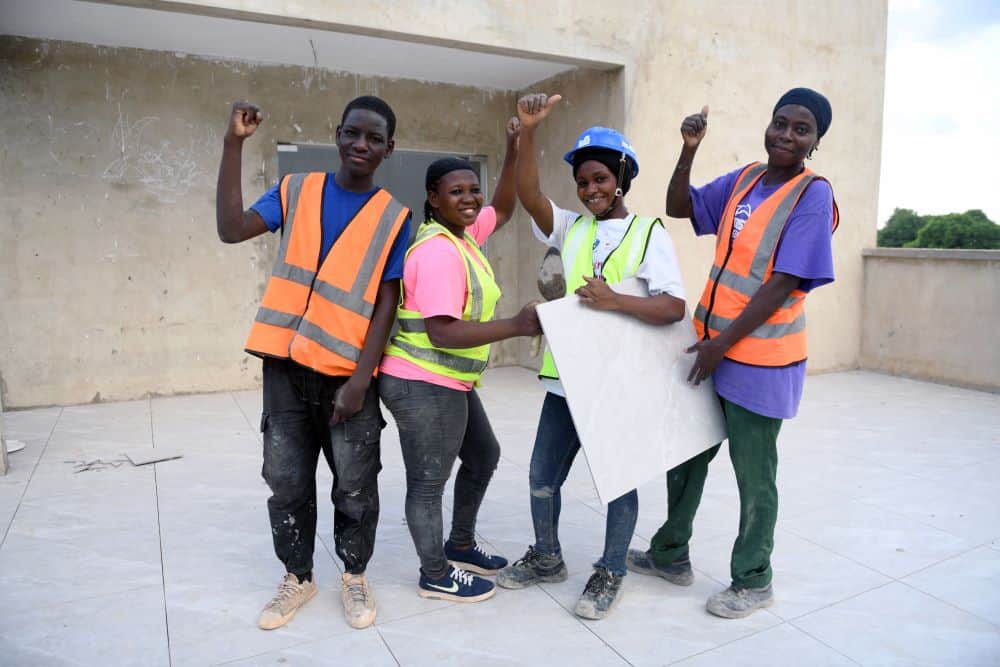
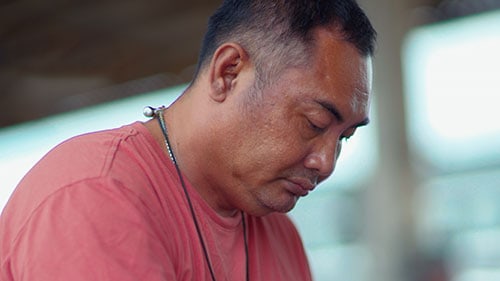
Ayisha (second from the right) with her tile-laying crew in Tamale, Ghana. Ā© Plan International/Geoffrey Buta
āI want people to know that as women, we can do something,ā Ayisha says proudly.
5. Supporting young entrepreneurs in the Philippines
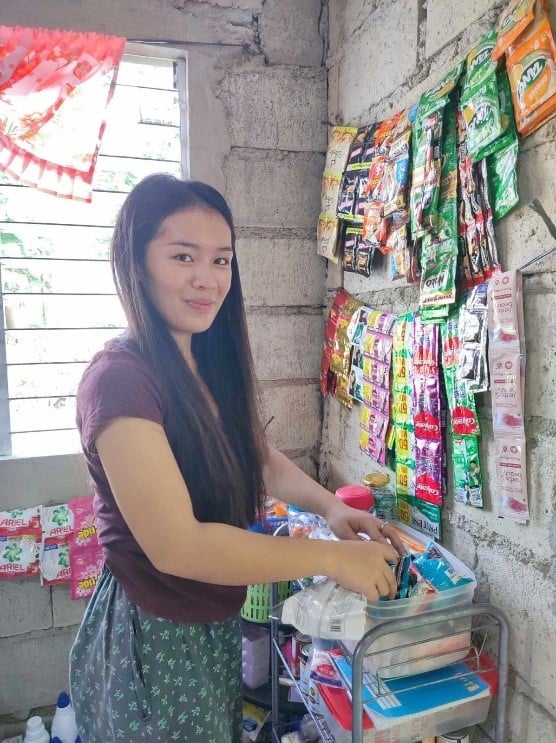
In the Philippines, Plan has partnered with the Western Union Foundation to support young women as they pursue decent work opportunities through a project called Youth Connect 2.0. The project builds on the success of Youth Connect 1.0, which reached 431 young people (233 women and 198 men) with technical and life skills trainings from 2020 to 2022. Beginning in 2023 and ending this April, the project addresses gaps in training and decreased access to economic opportunities that were exacerbated by the COVID-19 pandemic. It aligns with the Western Union Foundationās mission of creating economic opportunities for young people who migrate in pursuit of more prosperous futures. The project works in Cebu, Maguindanao and Western Samar, supporting training opportunities and providing access to community-based enterprises and employment in these areas. With training and financial support from the project, Iris, 20, opened her own neighborhood grocery store. āEver since it opened and I started earning, I was able to help my parents with our daily expenses,ā she says.

āI was lucky to be part of the Youth Connect 2.0 project of Plan International supported by the Western Union Foundation,ā Iris says. āI was given an opportunity to start my own business which truly helped me and my family.ā Ā© Plan International
Interested in partnering with Plan? Get in touch!

- Statements
STATEMENT: Conflict-induced hunger in Gaza
Feb. 15, 2024
We, the signatories of this statement, call for an immediate and permanent ceasefire and a massive increase in humanitarian assistance to avoid famine in Gaza, and as the only way to comply with the United Nations Security Council Resolution 2417. Allowing access for humanitarian aid to reach the civilian population is an obligation under International Humanitarian Law and immediate measures need to be taken to effectively address and comply with the demands of the United Nations Security Council Resolution 2417 which condemns the use of starvation of civilians as a method of warfare.
The riskĀ of famine is increasing each day in Gaza due to the continuation of hostilities, and the continued blockade of the Strip. The Integrated Food Security and Nutrition Phase Classification (IPC) analysisĀ results from the end of 2023 found the entire population are living with crisis-level hunger, andĀ one in four households ā more than half a million people ā face catastrophic conditions. This is the highest proportion of any population in food security crisis and above on the IPCās global records. Virtually all households are skipping meals each day. Some families go days and nights without eating. Before October 7th, acute malnutrition in Gaza was almost non-existent. However, the UN predicts that child wasting is likely to increase byĀ 27% in Gaza in the coming months.
The UN,Ā Human Rights WatchĀ andĀ humanitarian organizations have warned that starvation of civilians as a method of warfare is being used in Gaza. Starvation of the civilian population is illegal under International Humanitarian Law, and in direct breach of UNSC Resolution 2417.
Before the current conflict, humanitarian food assistance was supporting over two-thirds of the population. Now, needs have largely increased and worsened and humanitarian assistance has reduced due to violence, insecurity and access barriers. The siege tactics imposed by Israel on Gaza are one of the key factors impeding the delivery of aid. Under International Humanitarian Law, parties to the conflict are obliged to facilitate rapid unfettered access to aid.Ā Additional factors include the ongoing bombardments of densely populated areas,Ā including distribution sites, and Israelās denial of humanitarian aid missions to theĀ North and other areas of Gaza.
Infants, young children, and pregnant and lactating women are currently more vulnerable than before the conflict escalation. The wholly insufficient access to food, water and essential lifesaving services exposes these groups to greater chances of suffering from malnutrition and disease, heightening the risk of mortality and morbidity.
Lack of adequate water and sanitation is leading to widespread diarrhea and disease, one of the direct causes of malnutrition, along with dietary intake.Ā Only one out of the three water pipelines coming from Israel is operational, and there is no access to clean water in the northern governorates. At leastĀ twentyĀ water facilities, including reservoirs, have been damaged or destroyed. Fuel shortages are also severely impacting water infrastructure. Accumulation of solid waste in streets ā approximately 50,000 tones ā is a priority health concern.
The destruction of food production and distribution infrastructure and the restriction of commercial imports have reduced access to food.Ā OCHAĀ reportsĀ that only 15 of the 97 bakeries operating in Gaza before October 7 are still operational. Satellite imagery shows the destruction of many fishing ports, markets, greenhouses and agricultural land.
The prevention of sufficient food aid from reaching the population and targeting food production and distribution infrastructure, including farms, water systems, mills, food processing and storing sites, hubs, and means for food transportation are aĀ direct violation ofĀ United Nations Security Council Resolution 2417.Ā This resolution was unanimously approved in 2018 to condemn the use of hunger and starvation as a weapon of war.
Recent provisional measures delivered by the International Court of Justice demand that Israel must take immediate and effective measures to enable the provision of urgently needed basic services and humanitarian assistance in Gaza, such as food assistance and safe drinking water. Third States have the legal obligation to ensure that all parties are allowing for sufficient aid to enter Gaza, and removing any barriers to timely and unimpeded access.
The only way to avoid the risk of famine is to immediatelyĀ stop the deteriorationĀ of health, nutrition and food security, and increasing morbidity,Ā through the restorationĀ of health services, water and sanitation services, fisheries and agricultural lands, and markets. Avoiding famine cannot be done with ongoing hostilities.Ā An immediate and permanent ceasefire and the scale-up of access to aid across the Gaza Strip are essential.
Ā
Action Against Hunger
ActionAid
Danish Refugee Council
Humanity and Inclusion / Handicap International (HI)
Insecurity Insight
INTERSOS
Islamic Relief USA
Mercy Corps
Norwegian Refugee Council
Plan International
Project Hope
Save the Children
SolidaritƩs International
Tarjimly
War Child Alliance
* Plan International is not responsible for the content of other sites.
ENDS
About Plan International USA
Powered by supporters, Plan International USA partners with girls and their communities around the world to overcome oppression and gender inequality. We provide the support and resources that are unique to their needs and the needs of their communities, ensuring they achieve their full potential with dignity, opportunity and safety. Founded in 1937, Plan is an independent development and humanitarian organization that is active in more than 80 countries.
For more information, and to learn about our commitment to safeguarding, please visitĀ www.planusa.org.
- News & press
WASHINGTON, D.C. Feb. 6, 2024 ā Plan International USA has hired Katherine Williford as chief development officer. In this role, Williford will oversee all private giving, as well as brand and communications.
Williford is a seasoned executive with experience in scaling nonprofit organizations for transformational impact. She joins Plan following five years at Water For People, where she served most recently as Chief Growth Officer. While at Water for People, Williford grew giving by more than 100% over three years. Throughout her career, she has worked for organizations and campaigns focused on food access; literacy and education; and water and sanitation.
āI’ve seen firsthand how women and girls are disproportionately impacted by poverty, the global water crisis, climate change and lack of access to health care,ā Williford said. āAnd I also know that girls have a unique ability to build solutions that create a better world for themselves and for all of us. I’m inspired by the way Plan puts girls in the driver’s seat to achieve this change, and for the opportunity to support millions of girls in doing just that.ā
As the chief development officer, Williford will oversee individual giving teams that manage one-time gifts, emergency response, child sponsorship, major donors, planned giving and other forms of reoccurring giving. She will support the development of relationships with corporate and foundation partners through grants, staff giving and audience engagement, as well as Planās signature Takeover experiences, in which young people step into the role of an executive for a day. In addition, Williford will be responsible for setting strategic direction for brand and communications.
āI am thrilled to welcome Katherine to Plan and expand Planās expertise in private giving and fundraising,ā Plan International USAās CEO and President Shanna Marzilli said. āHer experience working with donors to support girlsā access to clean water and other essential rights will broaden our base of supporters for girlsā equity. This will allow even more girls to be safe, educated and economically successful.ā
Williford will officially join Plan on Feb. 26.
For more information or interviews, please contact:
Maria Holsopple
Director, Communications & Creative Services
Email: [email protected]
Mobile: 540.383.3628
Ā
About Plan International USA
Powered by supporters, Plan International USA partners with adolescent girls, young women and children around the world to overcome oppression and gender inequality. We provide the support and resources that are unique to their needs and the needs of their communities, ensuring they achieve their full potential with dignity, opportunity and safety. Founded in 1937, Plan is an independent development and humanitarian organization that is active in more than 80 countries.
For more information, and to learn about our commitment to safeguarding, please visit www.PlanUSA.org.
- News & press
Click here to read “A Growing Number of Women Activists Confront Technology and Gender-Based Violence” in Tech Policy.
- Blog
This article, written by Plan International USA Head of Policy Justin Fugle, was originally posted as a commentary piece on the Brookings Institutionās website.
More than a decade ago, the efforts of the Centers for Disease Control to directly fund its local implementers accelerated substantially, showing that localization could be successfully implemented within the rules and constraints of the U.S. government. Ā At the same time, the U.S. Agency for International Developmentās localization initiative failed to move the needle, with direct funding to local entities at 4.2% in 2012 and merely 4.4% in 2018. USAIDās troubles with localization were so systemic at the time that,Ā according to an article earlier this year by former senior U.S. officials, the Agency ādeclined to adoptā an approach shifting its resources to local organizations, ādespite agreeing to the policy by signing the agreementā with the State Departmentās Office of the Global AIDS Coordinator, better known as PEPFAR.
US implementers transferred leadership to local orgs in just four years
By contrast, the CDC followed its PEPFAR agreement to advance localization, transforming grants with U.S. implementers into āterminal transition awards,ā mandating that the American organizations would have just four years to transfer full responsibility for all activities to local entities āwithout any drop off in the quality or coverage of servicesā to the population. As a result, PEPFARās budget flowing directly through the CDC to local organizations and governments reached fully 67% by 2012! This was a result ofĀ CDC transitioningĀ its antiretroviral therapy programs in 13 countries from U.S.-based organizations and grantees to ministries of health and Indigenous organizations. Critically,Ā studiesĀ found that program service delivery by those local entities was comparable to that of itsĀ U.S. partners, demonstrating 11 years ago that localization could be achieved while delivering results and safeguarding taxpayer dollars. Based on this success, PEPFAR went on to set and largely achieve a goal that a whopping 70% of its funding would be awarded directly to local organizations and governments.
PEPFARās budget flowing directly through the CDC to local organizations and governments reached fully 67% by 2012.
With this in mind, it must be satisfying for USAID staff to see their own in-house localization model finally emerging with direct local funding increasing to more than 10% in FY22. Of course, this shift would need to accelerate considerably to meet or even get close to Administrator Samantha Powerās goal of 25% local funding by 2025; however, there now seems to be a path that bureaus and missions across USAID could follow to fulfill that commitment. It builds on the PEPFAR-CDC model and USAIDās ongoing procurement and staffing reforms.
USAIDās direct local funding for HIV/AIDS programs jumped 81% in just four years
Two recentĀ peer-reviewedĀ journal articles byĀ USAIDĀ document that between FY18 and FY22, USAIDās PEPFAR-funded HIV/AIDS programs expanded annual direct funding āto local partners by $345 million, or an 81% increase.ā The data shows that this major expansion was accomplished incrementally across the missions. For example, local direct funding rose from $452 million in FY18 to $600 million in FY20 to $797 million in FY22. Thus, the 81% increase was accomplished through steady, widespread, and manageable progress. It should be noted here thatĀ third-party assessments of USAID localization data have raised doubts, both in terms of methodology and the inclusion of some international organizations. Still, it seems clear that the increases were rapid and significant. This sharp jump also gains credibility from the fact that it replicated the increases achieved by the CDC in the 2010s.
The USAID authors stressed that to qualify as local, partners had to be ālocally incorporated, registered, and have a majority of local staff, including at senior levels,ā so their local partners would all qualify as local entities under USAIDās current definition. They added that based on the available program assessments, local partners again ādisplayed quality of service comparable to international partners.ā So, after struggling for years to move the needle at all, how was USAIDās HIV/AIDS team able to achieve an 81% jump in just four years? The authors cite six aspects of USAIDās emerging localization model. None of these seem to be exclusive to HIV programming, suggesting they could be widely adopted across the Global Health Bureau and the Agency.
Local direct funding rose from $452 million in FY18 to $600 million in FY20 to $797 million in FY22. Thus, the 81% increase was accomplished through steady, widespread, and manageable progress.
Six key factors made it possible
- An ambitious goal (PEPFARās 70% local funding commitment) resulting inĀ country-specific strategies that include local funding targetsĀ based on the Missionsā specific context and procurement plans.
- Strong data systemsĀ to monitor progress toward both the direct local funding target and the program performance of the local partners.
- Strengthening local partner organizational and financial capacity. Critically, theĀ capacity-strengthening efforts have short timelinesĀ and focus on preparing the local partners to become prime awardees, as in terminal transition awards. This may not completely align with USAIDās new local capacity-strengthening approach.
- Bolstering USAIDās capacity to manage local awards. As noted in aĀ blogĀ last year, this point recognizes that USAID sometimes lacks the capacity in its operating systems and organizational culture to work with local organizations, and must accept responsibility for improving. In the case of USAIDās HIV programs, 98 new positions (funded by PEPFAR) were approved across 16 missions. These included new staff in Global Health as well as Acquisition and Assistance and Financial Management. Some missions also hired a local transition or local capacity adviser. Therefore, current requests by missions and Bureaus for similar positions should be prioritized.
- Changing the way USAID does business, includingĀ expedited procurementĀ approaches and building a wider network of local partners through personal and online outreach and by conveningĀ local partner conferences.
- USAIDĀ leadershipĀ at headquarters and within country teams made transitioning to local partners a top priority.
Model is transferable to other bureausĀ
As to whether these results were replicable beyond HIV programs, then-Acting Administrator for Global Health Jennifer Adams wrote that USAID HIV had developed theĀ ālargest local partner funding footprintāĀ across any Agency program with āsignificant experience and lessons learnedā to share with their colleagues within the Global Health Bureau and through the Agency about successful direct partnerships with local organizations. Reflecting on the same results, USAIDās former chief of staffĀ testified before CongressĀ this year that the experience was widely applicable, asserting that āevery largeā cooperative agreement and contract should include āmandatory Transition Awards to local organizations/local entities for the vast majority of the substantive work by the end of the period of performance.ā Ā
Key reforms in A&A staffing and partnering
The second set of breakthroughs at the heart of USAIDās emerging localization model have been reform to its acquisition and assistance practices and staffing. This builds from recognition in Congress and the front office that USAIDās business practices are perhaps the single largest barrier to advancing locally led development. To address these issues and improve aid effectiveness,Ā USAIDās new acquisition and assistance strategy was launched six months ago. It sets out a path to achieve the 25% local funding goal, expand and equip the A&A workforce, and acquire a more diverse set of partners for locally-led development solutions.
One key personnel innovation was to recognize USAIDās local staff as an overlooked resource. The new A&A strategy explicitly recognizes that the local contracting officer corps is underutilized, with just 10% having warrants to obligate and manage funds on behalf of the U.S. government. After years of āslow walkingā the idea, USAID has again made rapid progress, moving from 19 local staff with these administrative warrants in FY22 to 40 now, exceeding its ambitious target of doubling the number in just one year. This shows that there are many well-qualified local staff as well as pent-up demand, so hopefully, USAID will continue to expand their ranks in FY24.
A key effort to expand USAIDās local partner base is a new public-facing A&A website.Ā WorkWithUSAID.org helps introduce USAID to prospective partners in civil society and has seen a good amount of traffic and engagement with more than 5,000 organizations registered, over 60% of which are considered local entities.
Another important shift in the A&A strategy is the effort to improve local partnersā ability to recover their costs of winning and implementing awards. The current āde minimusā overhead recovery rate of just 10% underfunds the core and proposal-writing expenses of local entities. When compared to the 20-40% overhead rates received by USAIDās traditional implementers through NICRA, the current 10% rate emerges as a glaring disadvantage and disincentive for local partners to accept the risk of working with USAID. Thankfully, new draft guidance from OMB has opened the door to raising the āde minimusā overhead rate to 15%. Finalization of this rule would allow USAID to more fairly compensate its local partners and break what has been called the āstarvation cycleāĀ of unrecovered overhead costs by local entities. Ā
Successful localization at CDC and USAID HIV have blazed a trail
The rapid growth of direct funding to local entities by the CDCās PEPFAR-funded programs a decade ago and by USAIDās PEPFAR-funded HIV programs more recently demonstrate that USAID can still reach or get close to the 25% direct local funding target by FY25. One key aspect would be the adoption of this internal USAID model by other technical sectors. That would be aided by the innovations of the A&A strategy, facilitating changes to USAIDās business practices while also reducing the costs for local entities to become its partners. Itās now fair to say that the localization trail has been blazed with PEPFAR, CDC and USAID HIV as its pioneers. Itās reasonable for localizationās bipartisan supporters in Congress to expect other parts of USAID to adopt similar approaches.