Search Results

Search results for

0 result(s) found

A recent Devex Newswire exclusive reveals a possible restructuring plan for USAID: the creation of a new humanitarian assistance bureau within the State Department, effectively dissolving the world’s largest bilateral aid agency. The plan, reportedly shared by USAID’s Bureau for Humanitarian Assistance chief Tim Meisburger, has triggered concern across the global development community, especially among NGOs invested in localization and development priorities beyond humanitarian response.

In the article, Justin Fugle, director of policy at Plan International USA, reflects on the current political climate and the limited role Congress has played so far. ā€œThey have not been involved very much in the foreign aid review, in the dismantling of USAID,ā€ he says. But he notes that lawmakers still have an opportunity to help define what U.S. foreign aid looks like going forward.

Read more: Devex Newswire – Exclusive details on one map for USAID’s future


Devex logo with the tagline "Do Good. Do It Well."

Plan International is proud to support girls’ education and empowerment throughĀ partnershipsĀ that help them learn, lead, decide and thrive every day of the year.Ā This story was first shared as part of a campaign for International Women’s Day, a moment we use to spotlight the year-round work that’s changing girls’ lives.

Muta’s day starts long before dawn, when it’s still dark outside.

ā€œI wake up at 4 a.m., clean the pans, wash the dishes and then walk to school,ā€ Muta shares.

Her school is nearly five miles from the remote farming village in Cambodia where she lives with her parents and two younger brothers.

After school, Muta starts the long walk back to her village, where she cares for her baby brother and collects cashew nuts and cassava for her parents to sell. Then she starts cooking the family dinner, while her parents are still working. With hardly any time for homework, it’s a challenge for Muta to keep up with her studies.
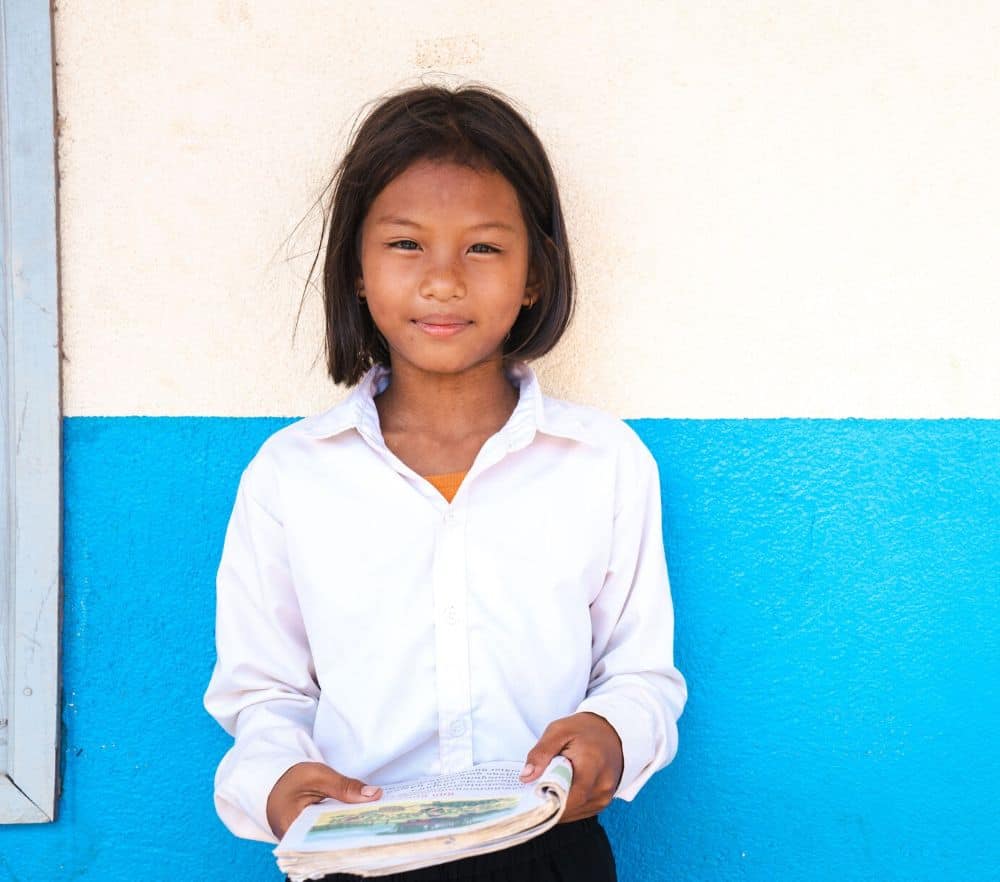
 

A girl with short black hair wearing a white blouse stands in front of a blue and white wall, holding a book and smiling.

Girls like Muta in Cambodia need your support to stay in school. | ©Plan International


Millions of girls around the world face similar daily obstacles that stand between them and the quality education they deserve. Roughly 129 million girls aren’t enrolled in school. They are held back by barriers like cost, distance, household obligations, early marriage and cultural stigmas around educating girls.

Girls like Muta shoulder hours of unpaid household work — cooking, cleaning, caring for siblings — while their male peers have time to study. This burden often forces them to choose between their education and family obligations.

But things are changing for Muta. Thanks to support from people like you, we are working with local partners in Cambodia to help girls stay in school. Our education programs provide accelerated learning classes, financial scholarships and bicycles.

Muta now rides the bike she received from Plan back and forth to school, which makes the journey much easier. And, thanks to the catch-up classes, her reading and writing have improved, and she is doing better in math class.

ā€œMy teacher is very nice,ā€ Muta says. ā€œShe spends a lot of her time teaching me. My results are getting better, and I am now 13 among 20 children in my class.ā€

For families struggling financially, educating daughters can feel like a luxury they can’t afford. When resources are scarce, boys’ education is frequently prioritized.

Plan is also supporting Muta with a scholarship and helping her family earn a stable income through livestock rearing and vegetable gardening. And we’re raising funds to build a school closer to her village.
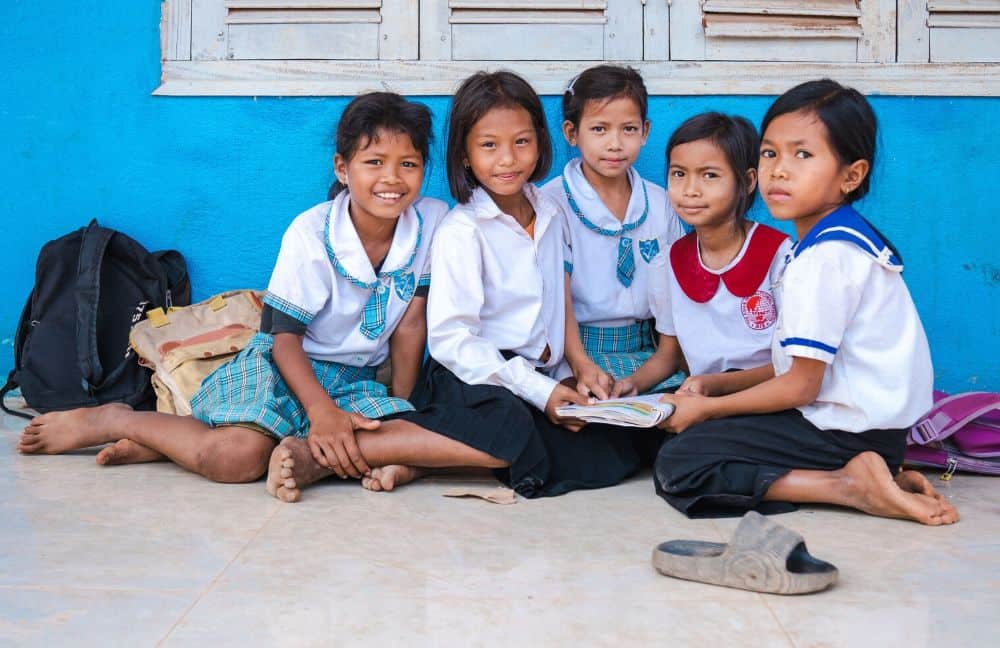
 

Five girls sit in front of their school building, holding a textbook and looking at the camera.

Muta (second from the left) with her friends at school. | ©Plan International


Every child’s fundamental right to a quality education drives our work. That’s why we recently partnered with Paramount to champion girls’ access to education.

Through this partnership, Paramount funded the distribution of backpacks filled with school supplies for children in Cambodia, Mexico, Nepal, Ukraine and Zimbabwe.

Peak, an 11-year-old girl from Cambodia, is one of 1,047 students who received a backpack.

“It motivates me to come to school even more with my friends,” Peak says. “I will continue to study hard to get a good grade.”

From Cambodia to Zimbabwe, school supplies are opening doors to education. Today, we’re going beyond the backpack with Paramount to explore five ways education can reshape girls’ futures and strengthen entire communities.
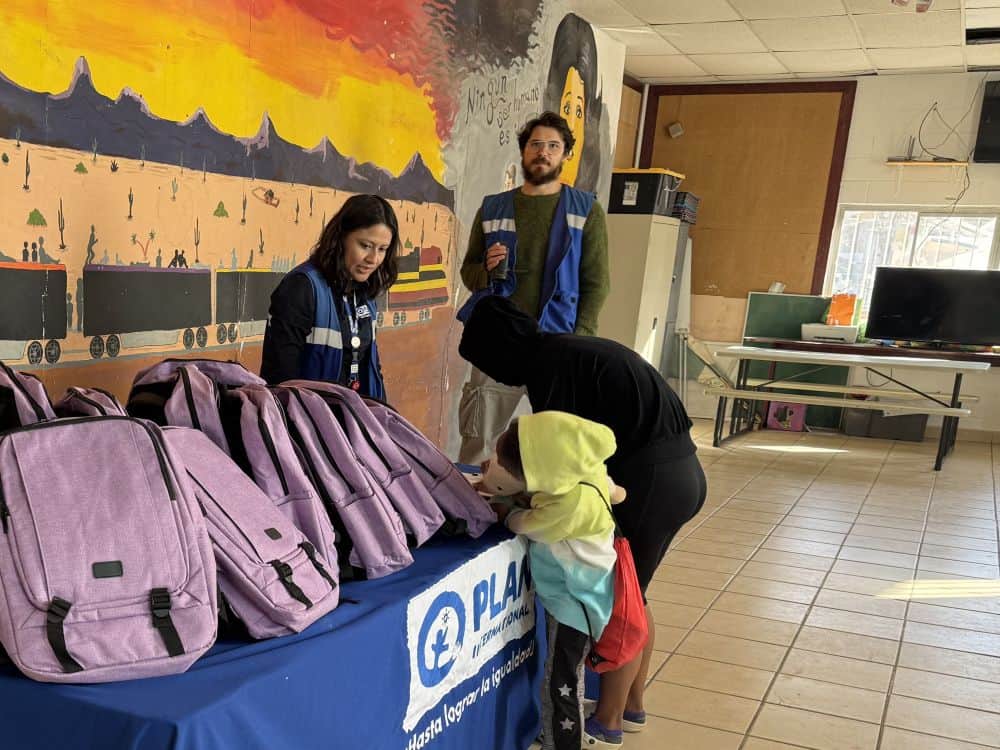
 

Purple backpacks are arranged on a blue table with a Plan banner. A parent and child sign in to receive their backpack.

Plan staff distribute backpacks and school supplies to children in Mexico. | ©Plan International

Breaking the cycle

Education gives girls the knowledge and confidence to recognize their rights and make informed choices about their futures. This means they’re less likely to experience harmful practices like early marriage or trafficking. Young women become champions of change and role models for girls in their communities.
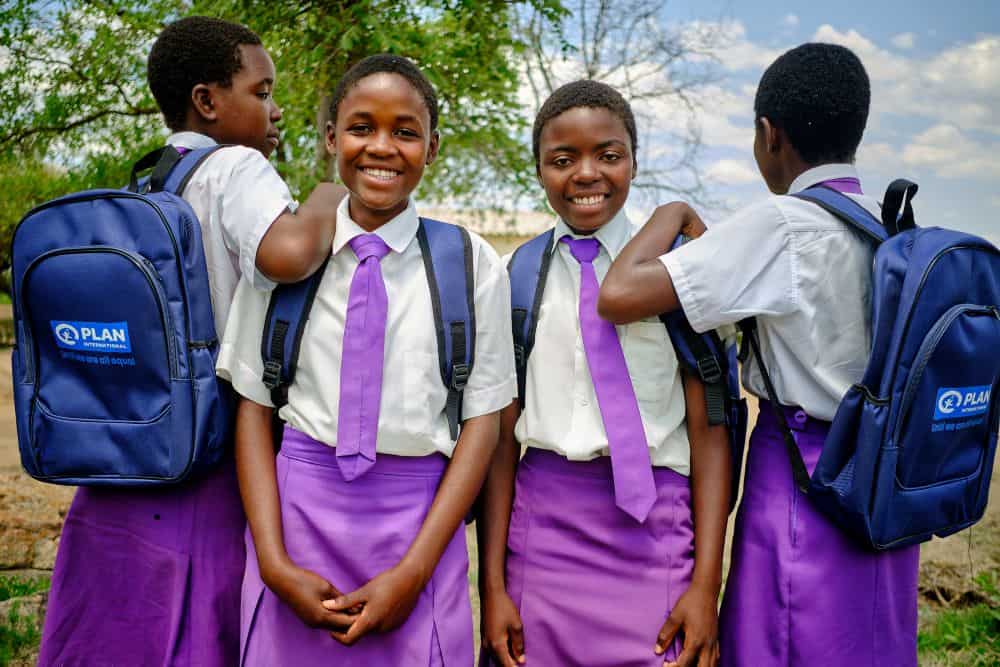
 

Four girls wearing school uniforms stand outside, with two girls facing the camera and two looking away. All of the girls are wearing blue Plan backpacks.

Girls in Zimbabwe proudly display their new backpacks. | ©Plan International

Building financial security

Education is the key that unlocks economic opportunities. Women who complete high school earn nearly 50% more than those who don’t. When educated women earn more, they invest in their families’ health, education and wellbeing.
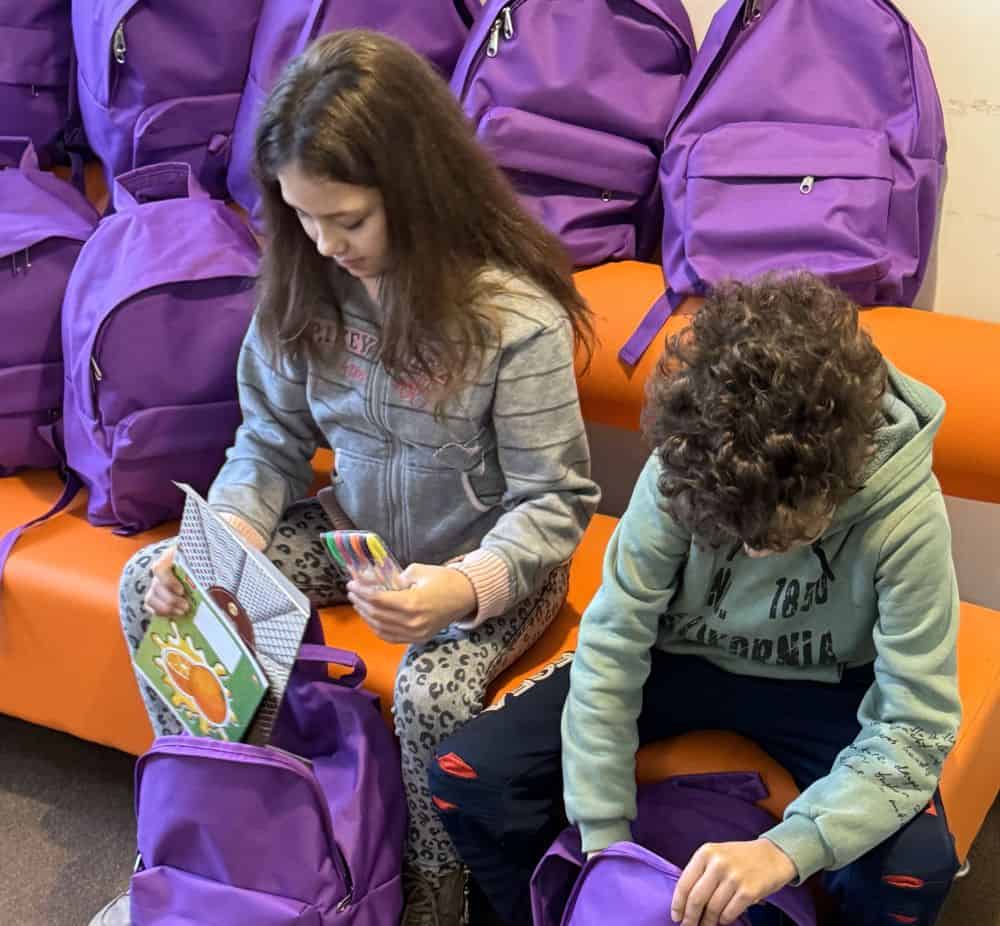
 

A girl and boy in Ukraine sit on an orange bench next to purple backpacks, holding school supplies.

Children in Ukraine receive backpacks filled with school supplies. Girls in crisis settings are nearly 2.5 times more likely to be out of school than those living in countries not in crisis. | ©Plan International

Growing the global economy

Research shows that if every girl received 12 years of quality education, women’s lifetime earnings worldwide could increase from $15 trillion to $30 trillion. This isn’t just an impressive number — it represents millions of girls reaching their full potential and building a more prosperous world for all of us.
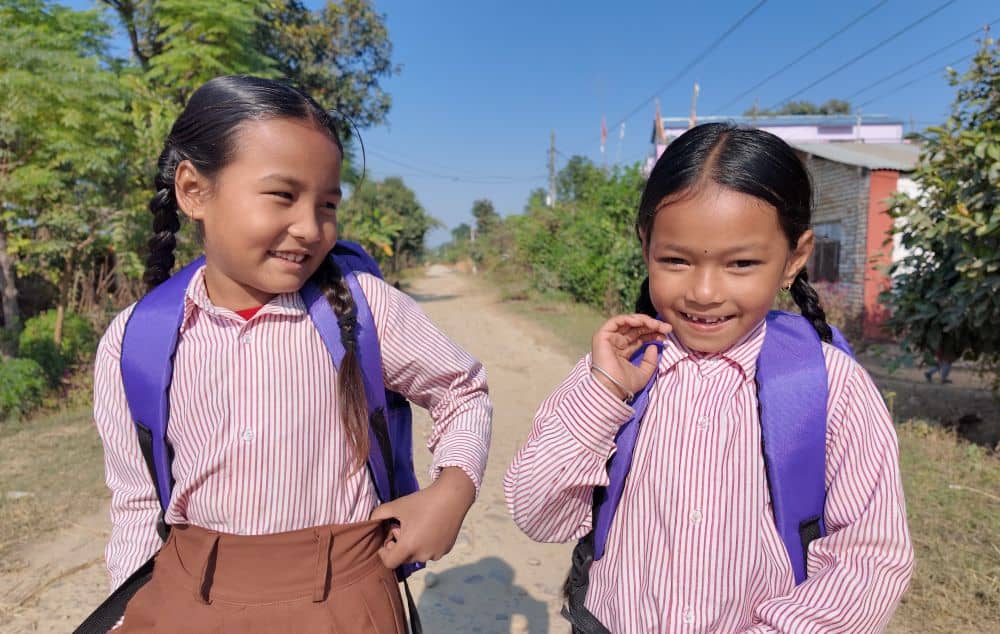
 

Two girls with dark hair stand in a dirt road and smile. They are wearing striped pink and white blouses and purple backpacks.

Two girls in Nepal are all smiles as they wear their new purple backpacks. Education gives girls the confidence and knowledge to shape their futures, protect their rights and strengthen their communities. | ©Plan International

Unlocking her potential

Educated girls become powerful advocates for positive change. In classrooms and communities, they develop critical thinking skills, confidence and leadership abilities. These girls grow into women who challenge harmful practices, advocate for equal rights and create more just societies. Most importantly, they show other girls that their dreams are achievable and their voices matter.
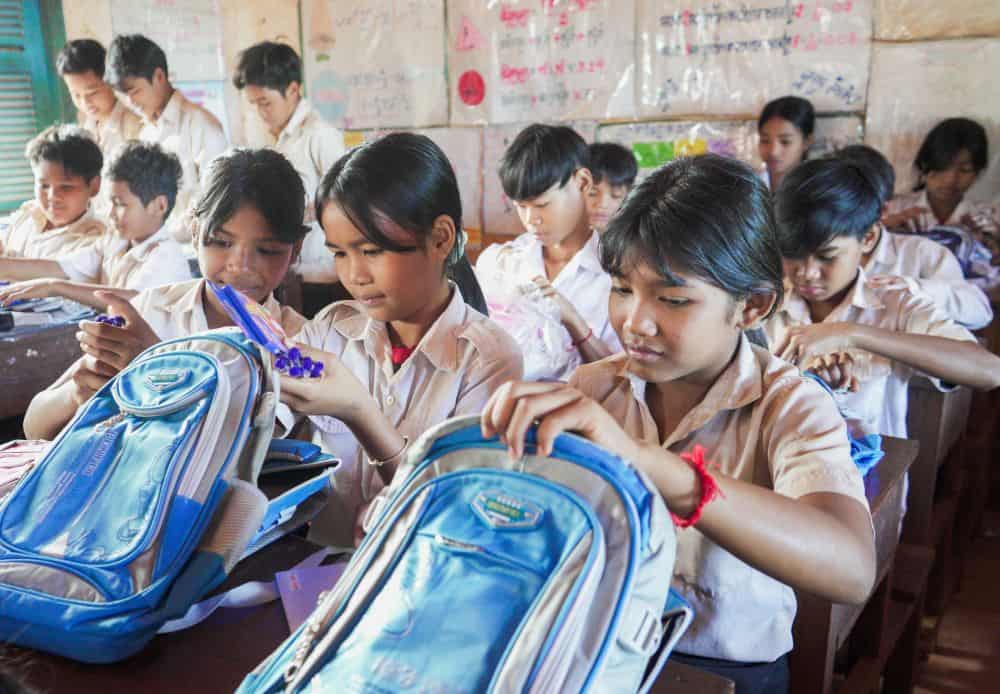
 

Students in a classroom in Cambodia sit at their desks and look at the school supplies in their new blue backpacks.

Your support helps to provide girls in Cambodia — and around the world — with the tools they need to succeed in school and beyond. | Ā©Plan International

Creating a world where we are all equal

When we ensure girls can learn, we build a world where everyone has a fair chance to succeed. Educated women demonstrate what’s possible when barriers are removed. They work to make their communities better for all by advocating for equal access to resources, opportunities and decision-making power. Through education, we create a ripple effect of positive change that benefits everyone.

This International Women’s Day, we’re teaming up with Paramount to share an important message: Empowering girls starts with giving them the right tools for success.

Explore how you can help to ensure every girl has the chance to learn, lead, decide and thrive — because her future starts now.

 

Backpacks of promise feature image

PRESS RELEASE

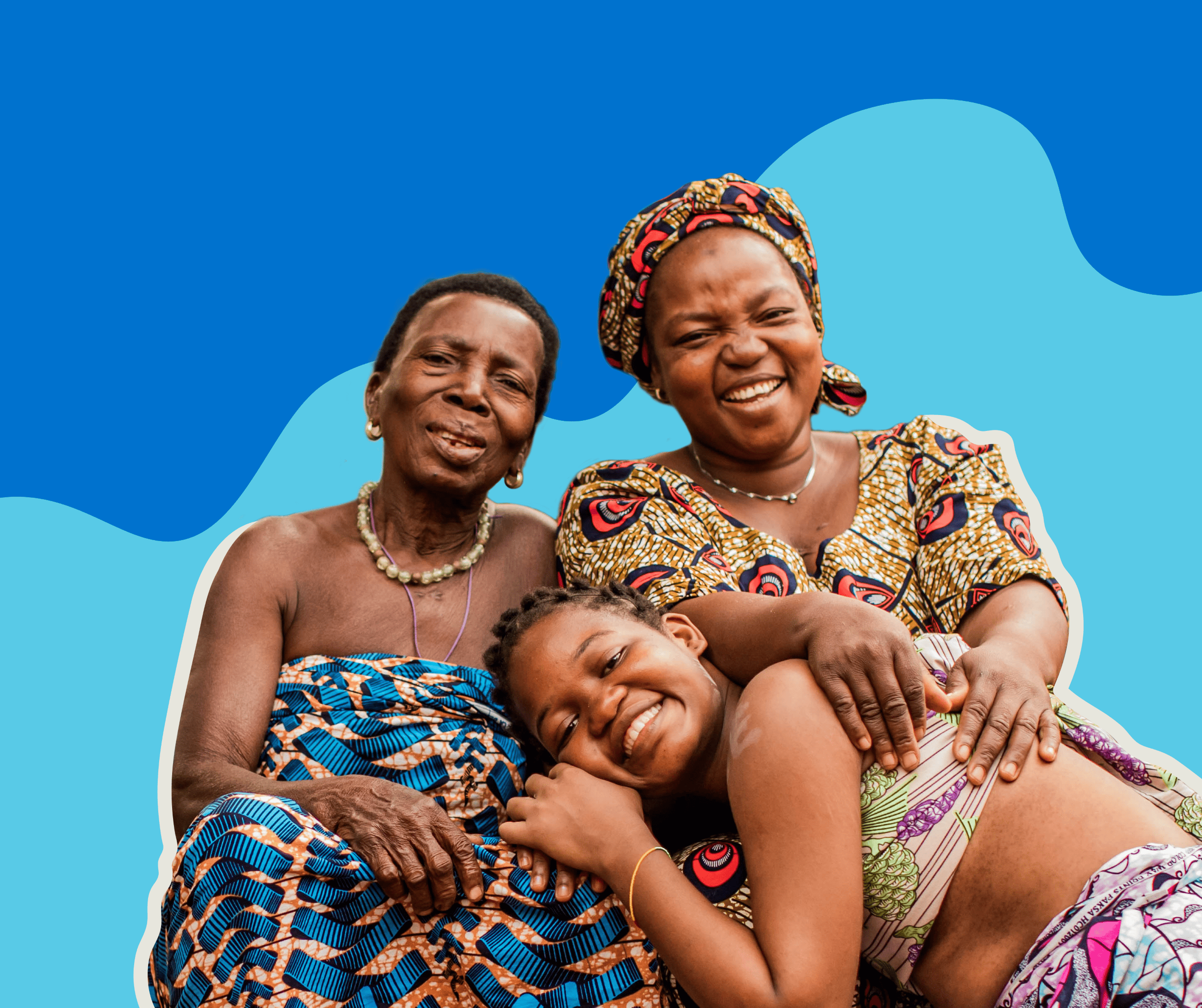
A grandmother, mother, and daughter embrace, smiling warmly. Their bond represents strength, leadership, and intergenerational support for girls’ education and empowerment. | Ā© Plan International

Global campaign drives action for girls’ education, leadership and equality with a call to action: ā€˜Her Future Starts Now.’ 

WASHINGTON, D.C. – March 6, 2025 – To celebrate International Women’s Day, Plan International has launched its ā€œEmpower Girls. Change the Futureā€ campaign in partnership with Paramount and KFC. This initiative champions education and leadership opportunities for girls worldwide, ensuring they can learn, lead, decide and thrive.Ā 

The need for action is urgent. The global gender equality gap is now projected to take 137 years to close — three years longer than in 2024, signaling a troubling reversal of progress. Without intervention, girls will continue to face barriers that limit their potential. Plan works alongside girls to remove obstacles and create pathways to leadership.Ā 

ā€œGirls need our support now more than ever. When we invest in their education and leadership, we’re not just changing their futures — we’re changing the world,ā€ said Shanna Marzilli, president and CEO of Plan International USA. ā€œThrough our partnerships, we’re giving girls the tools to overcome barriers and lead with confidence.ā€Ā 

Join the movement at www.planusa.org/international-womens-day.Ā 

Spotlight on partnerships

Paramount – Championing girls’ education and equalityĀ 

Plan and Paramount have partnered since 2015 to raise awareness about girls’ education and equal opportunities. Building on this long-term collaboration, they have once again joined forces for International Women’s Day. Nickelodeon released exclusive content featuring beloved bilingual explorer Dora, who speaks directly to grown-ups about the importance of girls’ education and equal opportunities. Ā 

This content continues the story started on International Day of the Girl 2024, when Plan and Paramount distributed backpacks filled with school supplies to young people in Cambodia, Mexico, Nepal, Ukraine and Zimbabwe. Inspired by Dora’s iconic purple backpack, these backpacks symbolize the tools needed for learning and adventure, giving girls the resources they need to stay in school and pursue their dreams. Ā 

Paramount and Plan also continue to amplify girls’ voices through the 8M Infinito campaign on MTV in 2025 across Latin America, reinforcing its commitment to gender equality.Ā 

Help girls go beyond their backpacks at www.planusa.org/doraĀ 

KFC’s Girl Takeovers – Leading with confidenceĀ 

KFC partners with Plan to create pathways to leadership, education and employment for youth, especially girls and people with disabilities. This partnership supports KFC’s commitment to promoting gender balance in leadership roles through its community impact strategy, Feeding People’s Potential. Ā 

In February 2025, KFC hosted Girls Takeover events at two KFC corporate offices: Plano, Texas and Bangkok, Thailand. During these takeovers, girls stepped into leadership roles, including Chief People and Culture Officer and Chief Development Officer, challenging stereotypes and demonstrating their potential. Ā 

These inspiring moments will be shared on social media, amplifying girls’ voices and encouraging others to support youth leadership.Ā 

Click here to learn how KFC is helping youth build skills and lead.Ā 

Campaign overviewĀ 

The ā€œEmpower Girls. Change the Futureā€ campaign showcases how education and leadership empower girls to shape their futures. Aligned with the global advocacy theme ā€œAccelerate Action,ā€ it underscores the urgency of closing the gender gap so girls can learn, lead, decide and thrive.Ā 

Through strategic partnerships, impactful blogs and inspiring Girl Takeovers, the campaign highlights what’s possible when girls have the support they need to lead. The #HerFutureStartsNow social media challenge encourages meaningful conversations about leadership and future goals, inviting people everywhere to join the movement.Ā 


About Plan International

Plan International is an international development and humanitarian nonprofit that advances children’s rights and equality for girls. Working together with children, young people, supporters and partners, we strive for a just world, tackling the root causes of challenges children face. We are there from birth until adulthood, and we support children to prepare for and respond to crises and adversity, while particularly focusing on the experiences of girls. With more than 85 years of experience, we work to transform lives in more than 80 countries. We won’t stop until we are all equal.Ā Ā 

Learn more at www.planusa.org.Ā 

Ā 

For more information or interviews, please contact:Ā 

Vannette Tolbert

Senior Manager, Communications

Email: [email protected]

Mobile: +1 240-778-9077

www.planusa.orgĀ 


The U.S. Supreme Court has ruled that a judge can force the Trump administration to release blocked foreign aid, marking a significant decision in the ongoing legal battle over the USAID funding freeze. A Washington Post report highlights its impact on humanitarian efforts, including Plan International’s work in Ethiopia. Michelle Van Akin, associate director of humanitarian programs at Plan International USA, says lifesaving aid remains delayed despite the ruling.

Click here to read the full article: Supreme Court says judge can force Trump administration to pay foreign aid.

Protesters in Washington, DC with the Capitol building in the background

How evolving donor priorities and political realities are reshaping philanthropy

This article was written by Vila-Sheree Watson, senior director of integrated fundraising at Plan International. For more information on Plan’s work, pleaseĀ contactĀ Vila-Sheree Watson atĀ [email protected].

Introduction

The landscape of private fundraising for foreign aid is undergoing a seismic shift. Political instability, economic fluctuations and evolving donor expectations are forcing international NGOs to rethink traditional fundraising models. While institutional funding has always been subject to political cycles, private philanthropy was once seen as a more stable alternative. However, today’s private donors are more discerning, impact-focused and selective in their giving. Not to mention, in this climate of frozen funding, many donor sources are becoming more competitive.Ā 

Ā In this article, we explore the data behind these trends, the key challenges facing private fundraising in the aid sector and practical strategies for adapting to this new reality.Ā 

A new era for private fundraising

Private fundraising for international aid has long been considered a stable and reliable complement to government and institutional funding. Yet, in today’s rapidly changing political and economic climate, even philanthropy is not immune to disruption. Donors at every level — whether individuals, foundations or corporate partners — are shifting their priorities, asking new questions and demanding more accountability. International NGOs that fail to recognize these changes risk falling behind.Ā 

Ā At the heart of this transformation is a growing preference for locally led development. More than ever, private donors are directing their resources toward grassroots organizations in the Global South rather than large, international institutions. AĀ recent BridgespanstudyĀ found that more than 60% of philanthropic donors are prioritizing initiatives led by local leaders. This shift reflects an increasing belief that aid should be driven by those closest to the challenges being addressed rather than imposed from the outside.Ā 

Ā At the same time, donors are looking for clear, measurable impact. The days when supporters would give indefinitely to general operating funds, trusting organizations to allocate resources as they saw fit, are fading. According to theĀ 2023Giving USAreport, nearly three-quarters of high-net-worth donors expect to see quantifiable results before committing to long-term giving. As a result, traditional fundraising models, such as child sponsorship and unrestricted donations, are losing traction. While these approaches once fueled sustained investment in international programs, today’s donors want to fund specific projects with defined outcomes — or at the very least to have the perception of specificity.Ā 

Ā Economic uncertainty is also shaping the giving landscape. Inflation and market volatility have tightened many donors’ budgets, making them more selective about where and how they give. In 2022,Ā individual charitable givingin the U.S. declined by 6.4%, with international causes often falling lower on donors’ priority lists compared to domestic concerns. Compounding these financial pressures is a growing scrutiny of overhead costs. While experienced fundraisers understand that effective programs require investment in infrastructure and capacity,Ā many donors remainĀ skepticalĀ of organizations with perceived high administrative costs. This ongoing tension forces fundraisers to strike a delicate balance — ensuring sustainability while meeting donor expectations for efficiency.Ā 

Ā The challenges do not stop there. The international development sector is also grappling with a shifting trust dynamic. In recent years, high-profile scandals and criticisms of the aid industry have led toĀ increased skepticism about large NGOs. More than ever, organizations must work to rebuild donor confidence by being transparent about where funds go, how decisions are made and what impact is truly being achieved.Ā 

Rethinking private fundraising for the future

Given these realities, it is clear that private fundraising cannot continue as it has in the past. To thrive in this new landscape, international NGOs must rethink their strategies and embrace new approaches.Ā 

Ā A more diversified fundraising model will be critical. Organizations that rely too heavily on unrestricted giving or traditional donor pipelines will struggle. Instead,Ā integrating new revenue streams — such as donor-advised funds, impact investing and innovative financing mechanisms — can provide much-needed stability. At the same time, the way organizations communicate with donors must evolve. A broad appeal for general support will no longer suffice. Today’s donors want to see exactly where their money is going and the tangible difference it is making.Ā Ā 

Ā Rather than simply asking for donations, fundraisers need to showcase specific interventions — whether it’s providing menstrual health kits for girls or training midwives in rural communities.Ā 

Ā Collaboration will also become increasingly important. Instead of positioning themselves as sole implementers, large international NGOs must strengthen partnerships with local organizations, recognizing that shared leadership builds credibility and trust. Donors who might have previously hesitated to support a large INGO may feel more confident contributing if they see that funds are being distributed equitably and thatĀ local voices are central to decision-making.Ā 

Ā Donor engagement strategies must also evolve. As the cost of acquiring new donors rises, retention and stewardship have never been more important.Ā NGOs that invest in deepening relationshipsĀ with existing supporters — through personalized updates, transparent reporting and compelling impact stories — will be better positioned to maintain long-term support. In addition, digital fundraising will continue to play a growing role. Social media-driven campaigns, peer-to-peer fundraising and influencer partnerships can help bridge the gap between traditional andĀ modern donor engagement.Ā 

A future defined by adaptation

Private fundraising in the foreign aid sector is at a turning point. The old models that have sustained organizations for decades are being challenged, but with change comes opportunity. NGOs that embrace transparency, prioritize impact and foster genuine partnerships will not only survive but thrive in this evolving landscape.Ā 

Ā The path forward requires innovation, bold thinking and a willingness to adapt. Fundraisers must recognize that donor expectations have shifted — and that meeting those expectations will require reimagining the way philanthropy works. The organizations that succeed will be those that listen, evolve and ultimately prove that their work is making a real difference in the world.

Stay updated on Plan International’s technical work byĀ signing up for ā€œFrom Plan to Action,ā€ our quarterly newsletter.Ā 

In celebration of International Women’s Day on March 8, we’re highlighting some of our partnerships that are empowering today’s girls to become tomorrow’s leaders. Together, we’re building a world where every girl can learn, lead, decide and thrive.

At Plan International, we believe every young person, no matter where they live or what their background is, deserves a fair chance to succeed. We know the path to a more equal world includes giving young people the tools they need to build good lives for themselves and contribute to their communities.

We also know that many young women don’t always get these chances. That’s why we work with supporters like you and corporate partners like KFC to change that. Together, we’re rewriting the narrative through initiatives like our “Takeovers.ā€

[Read more: Girls take over leadership in Malawi]

Takeovers provide a space for emerging young leaders to exercise their leadership skills and participate in decisions that affect them, gain real-world experience and increase their opportunities to harness their own power.

In Thailand and the U.S., emerging leaders participating in Plan’s programs took over KFC Global’s corporate offices and their restaurants to get hands-on experience in leadership positions.


A group of women at KFC Thailand stand together, smiling and posing for a picture.

Nadtanaht, Aliya, Sunisa and Jiraporn (left to right in white t-shirts) joined the KFC corporate team in Thailand to get hands-on experience at the company. | ©Plan International


Two young women stand in front of a giant sign with the face of KFC's Colonel Sanders.

Pear (left) and Shirlyn (right) took over the KFC corporate office in Plano, Texas for a day. | ©Plan International


Both groups of young women toured the corporate offices, met with employees and learned about KFC’s story of growth and plans for the future. In the U.S., Shirlyn took over as chief people & culture officer, while Pear assumed the chief development officer role.


The young women in Thailand stand in front of a presentation to introduce themselves.

At a large town hall team meeting in the Thailand office, the young women got to introduce themselves and talk about their work with Plan. | ©Plan International


KFC recognizes the power of opportunity and belonging in leadership, understanding that equal opportunity for all is good business. They successfully achieved parity among women and men across their corporate offices in 2024 and keep this balance through mentorship, leadership training and fostering environments where women can thrive at all levels.

At the U.S. office, Pear and Shirlyn spoke with executive officers about their roles and career journeys, gaining valuable insight into creating a high-performing work culture and how to plan business strategies in an ever-evolving environment.


Pear and Shirlyn pose for a selfie with KFC's events manager and a statue of Colonel Sanders.

Pear and Shirlyn with KFC’s Meetings and Event Specialist, Clarissa Angel, who coordinated the Takeover’s activities. | Ā©Plan International


In one-on-one meetings with their respective mentors, the young women had a chance to talk about their own goals for the future and receive advice on networking and taking advantage of new opportunities.

Shirlyn, a Plan Youth Leadership Academy alum, is particularly interested in a career in show business, and got to make a connection through the chief people officer she shadowed for the day.


Pear and Shirlyn sit with the Colonel Sanders statue holding a phone on a selfie stick.

Pear and Shirlyn filmed day-in-the-life videos to document their experiences at KFC. | ©Plan International  


In Thailand, Sunisa, Aliya, Nadtanaht and Jiraporn spoke with executives about similar topics, hearing from women in leadership at KFC about the challenges they’ve overcome throughout their careers.

ā€œI feel proud seeing women in these managerial positions,ā€ Aliya says. ā€œIt’s motivating because it shows me that I can do it too. They’ve done it, and I have the same potential. Maybe I haven’t had the opportunity yet, but in the future, I might. And when I do, I’ll make it happen.ā€


Aliya holds a piece of paper to present a product concept idea to a table of KFC employees.

At a team meeting, Aliya shared her idea about a new product concept at KFC. | ©Plan International


Sunisa stands in focus in front of camera equipment.

Sunisa, along with the rest of the group, created videos about their Takeovers at KFC. | ©Plan International  


ā€œI feel really proud,ā€ Sunisa says, reflecting on her experience. ā€œIn the past, I would’ve assumed only men could be leaders. But today, seeing the KFC office, I feel so proud. I saw so many women here who are managing their own work and leading their own teams.ā€


Pear and Shirlyn sit next to a Colonel Sanders statue with Plan staff on either side of them.

Pear and Shirlyn with Plan’s Senior Director of Corporate & Foundation Partnerships Laura Willis (left) and Youth Economic Empowerment Technical Advisor Colton Hubbard (right). | Ā©Plan International


ā€œWhat’s truly empowering about being here at KFC is how [the team] really saw value, and showcased that value, in giving us the opportunity to come visit today,ā€ Pear says. ā€œOpportunities and experiences like these really break down the barrier and give me the empowerment and confidence to pursue my own dreams.ā€

These Takeovers are just one example of how Plan, with the support of corporate partners like KFC, is opening doors for young people everywhere. When you support Plan, you become part of a powerful community — one where your generosity helps young women step into leadership and drive change.

Together, we’re creating a world where girls and young women have the chance to learn, lead, thrive, and build a more equal world. Every girl deserves the chance to fulfill her potential, and we’re committed to making that a reality because her future starts now.


Photo story: Plan youth take over KFC feature image

In celebration of International Women’s Day on March 8, we’re highlighting some of our partnerships that are empowering today’s girls to become tomorrow’s leaders.

To celebrate how we are empowering girls to change the future, check out these three stories that share programs, Takeovers and other initiatives that put girls in the driver’s seat of their future:

The ripple effect: Menstrual health, girls’ empowerment and a brighter future

When girls thrive, we all flourish. Providing menstrual health resources and clean water empowers girls to become agents of change and build a brighter future. Our work with the Kimberly-Clark Foundation is building a foundation for girls to lead with confidence.


A girl stands in front of a long, brown table. Four other people look at her from the other side. She is holding menstrual pads.

After participating in a Plan program teaching young people about puberty and periods in Guatemala, 17-year-old Delia became a menstrual health advocate in her community. | ©Plan International


Photo story: Young women take over KFC

Future leaders in the making! Plan International and KFC are empowering the next generation through innovative programs like Girl Takeovers, giving young people a taste of leadership and the confidence to lead the way.


Two young women in suits stand in front of a wall that has an illuminated version of the KFC logo.

Pear (left) and Shirlyn (right) took over the KFC corporate office in the U.S. for a day. | ©Plan International

Backpacks of promise: 5 ways education can change girls’ futures

Every backpack tells a story of possibility. This International Women’s Day, follow our partnership with Paramount and Nickelodeon across five countries and discover how education is reshaping girls’ futures and strengthening entire communities.


Four girls in purple skirts with purple ties stand next two each other. Two face front and two face away, wearing backpacks with Plan's logo.

Girls in Zimbabwe proudly display their new backpacks. | ©Plan International


Your support helps today’s girls and young women become the leaders their communities need tomorrow. Together, we’re building a more equal world where every girl can learn, lead, decide and thrive.

Empowering girls: Young leaders shaping tomorrow feature image

Plan International USA’s 2024 Annual Review highlights how evidence, accountability and girls’ leadership shaped our work in a complex global landscape.

2024 Annual Report Cover