Search Results

Search results for

0 result(s) found

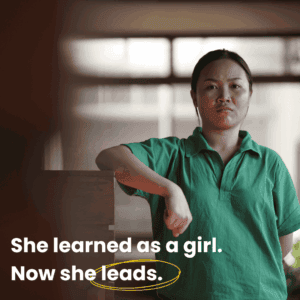
This month, we celebrate the contributions of women leaders around the world. But leadership usually starts much earlier — when girls have the chance to learn and build confidence.

Jessica, 31, is one of those leaders. Growing up in Chumbivilcas, a province in southern Peru, Jessica participated in Plan International’s sponsorship program as a child. Her sponsorship ended when she turned 18, but her connection to Plan continued into adulthood. At 24, Jessica joined the Preparing for Life project and became one of 110 young women entrepreneurs who received seed capital to launch their own businesses.

ā€œBefore, I was afraid to speak in public; I was embarrassed. But thanks to the training, I learned to express myself with confidence.ā€

Jessica, 31, Peru

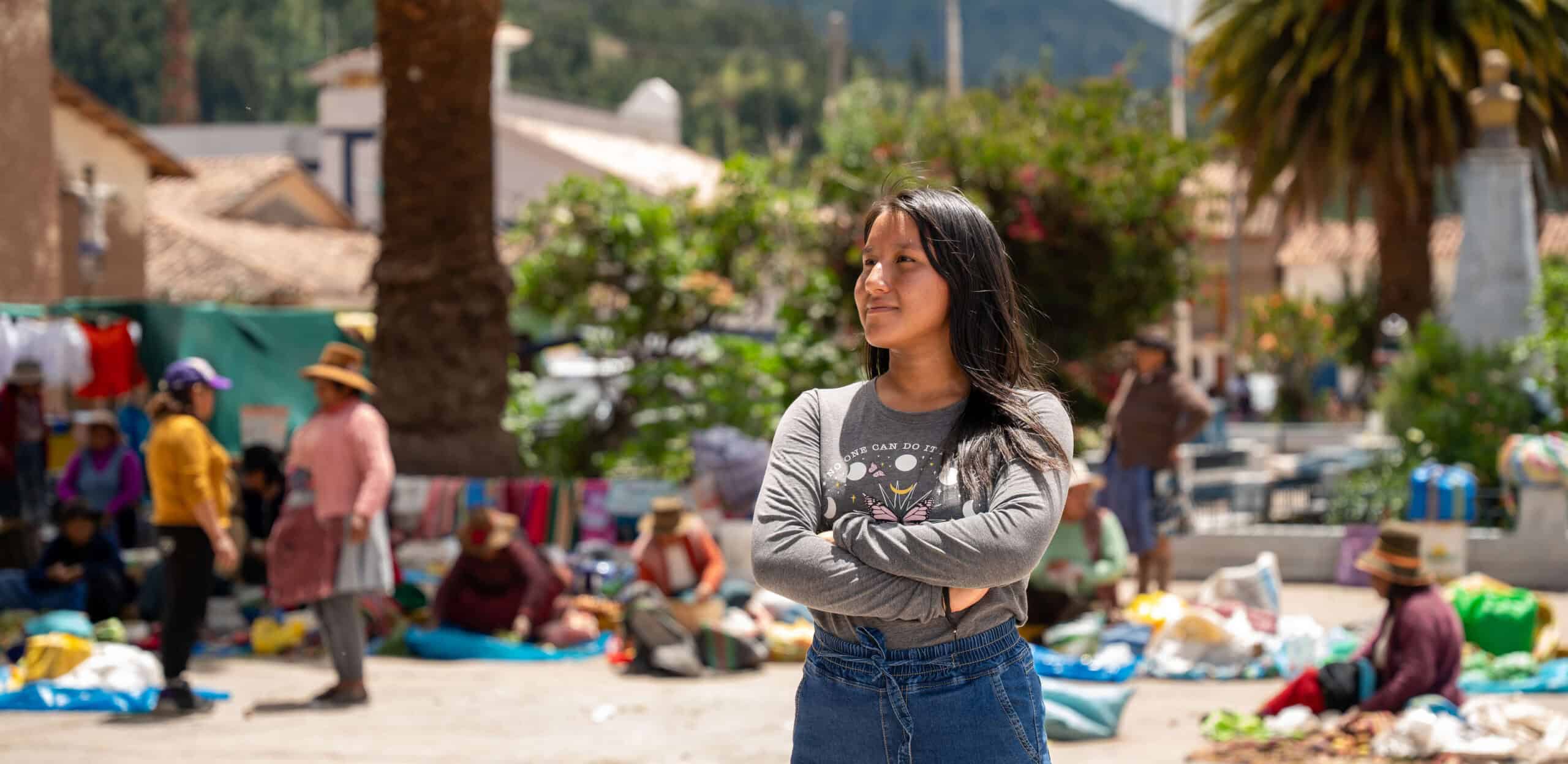
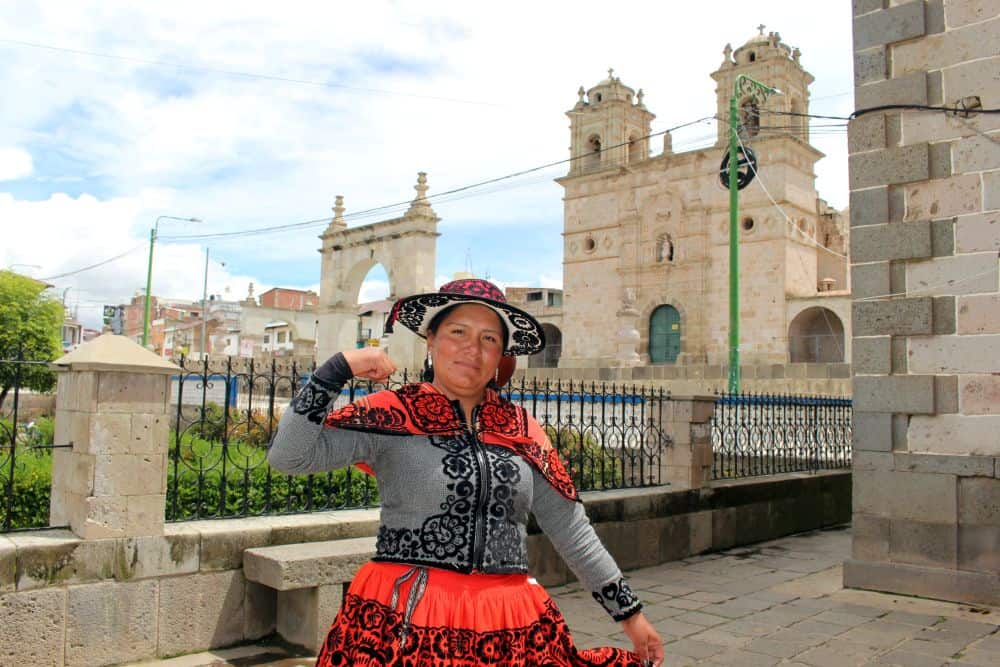
Jessica, a former sponsored child in Chumbivilcas, Peru, stands in traditional Andean clothing in front of a historic church.

The support Jessica received as a sponsored child helped set the foundation for her growth as a community leader. Ā© Plan International

As her life changed, Jessica’s commitment to her community grew. Now married with a daughter who also participates in Plan’s sponsorship program, she sees how much excitement a single letter from a sponsor can bring. She also knows that many families struggle to read letters or write their responses.

Wanting to give back, Jessica became a sponsorship volunteer. She delivers letters, alerts local authorities to cases of violence and often accompanies families when they report incidents. She has become a trusted ally in protecting children.

ā€œI know I am helping children grow up without fear, to learn to speak and defend themselves.ā€

Jessica, 31, Peru

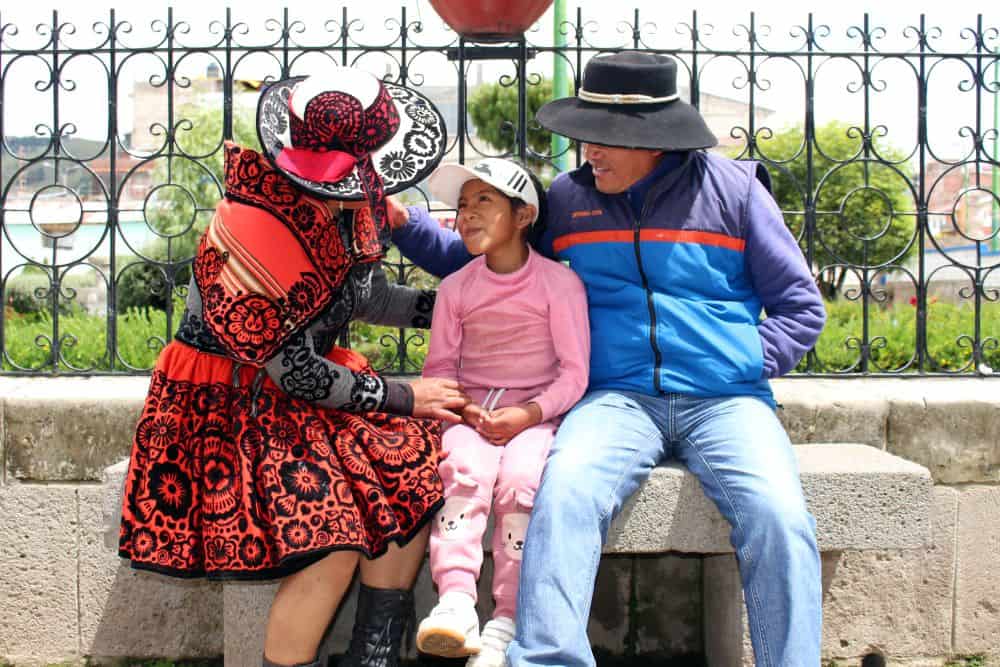
Jessica sits with her husband and daughter on a stone bench in Chumbivilcas, Peru.

Former sponsored child Jessica is now a community leader and volunteer, while her daughter participates in Plan’s sponsorship program. Ā© Plan International

Jessica’s leadership comes at an important moment for her community. After 30 years of work in Chumbivilcas, Plan is phasing out of the area — a change that reflects a milestone, not an ending. Plan’s goal is to support communities until they have the tools, confidence and systems they need to move forward independently. The transition signals that local institutions are prepared to lead the next chapter.

As her community steps into this new phase, Jessica is one of the leaders helping to guide the way. She is set to become president of her district this year, determined to make her community stronger and to support the next generation. Her journey shows how investing in girls’ education creates women who drive lasting change.


ā€œThanks to Plan International, I have learned to believe in myself, to speak up and to lead. Now it’s my turn to carry on that legacy and make sure no girl or boy has to face the world alone.ā€

Jessica, 31, Peru


Sponsor a child today


Jessica posing

2025 was a standout year for domestic youth engagement at Plan International USA. In this report, we highlight the leadership, advocacy, and impact of young people across our programs. From the Youth Advisory Board and Youth Leadership Academy to Girl Takeovers and national advocacy moments, explore how young people are shaping change in their communities and beyond.

Cover for Domestic Youth Engagement Report 2025 Wrapped

What 18 years of listening to girls taught us about progress featured image


“My hopes for tomorrow are to continue my studies, to have diplomas, to have a job and a better future.” — Catherine, age 16 (2023), Benin

Catherine is one of the girls who took part in the Real Choices, Real Lives study conducted by Plan International. As a qualitative, longitudinal study, it is the only research of its kind focused solely on the lives and experiences of girls. The study is composed of yearly interviews of the same group of girls and their caregivers from the girls’ births in 2006 until they turned 18 in 2024, documenting the social, economic, cultural and institutional factors that shape girls’ lives. The cohort of girls was selected from nine countries where Plan works: Benin, Brazil, Cambodia, Dominican Republic, El Salvador, the Philippines, Togo, Uganda and Vietnam.

This study shows that progress is not always linear, and at times the fight toward gender equality can feel like taking two steps forward and one step back. Plan has seen both victories and challenges throughout the 18 years of research. Real Choices, Real Lives puts girls’ voices at the forefront, inviting them to tell their stories in their own words.

A generation of progress, 18 years in the making

The most significant indicator of progress is the increased rate of education among the cohort of girls compared to their mothers. By the end of the study, 61% of the girls were on track to completing secondary school, 13% had graduated and 9% were enrolled in higher education. By contrast, only 28% of their mothers had secondary education, 47% had primary education and 25% had no education at all.

The barriers keeping girls out of school

The majority of the girls’ parents were supportive of their daughters’ schooling, at least in the beginning. The cohort’s level of education by the end of the study surpassed their mothers’, showing a positive trend across generations. However, several barriers still impede girls’ education from advancing:

— Financial constraints

— Household responsibilities

— Deeply rooted gender norms

— Lack of safety both in school and traveling to school

— Unplanned pregnancy and early marriage

Almost unanimously, mothers and daughters alike expressed the desire for the girls to stay in school and wait to get married. Even so, 13% of the cohort did end up getting married or entering informal unions before the age of 18, an example of a generational pattern that is difficult to break. That number is significantly lower, however, than that of their mothers at 46%.

Where progress is stalling

Girls who live in these communities stand at the intersection of poverty and gender discrimination. Regressive movements globally are being shaped by interconnected issues, such as climate change, food insecurity and conflicts. Poverty compounds these issues in a mutually enabling cycle.

Technology and the rise of gender-based violence

By age 11, 91% of the girls in the study had already experienced some form of violence. Gender-based violence is not a new threat, but the increasing prevalence of technology has presented a new avenue for violence to be perpetrated. While technology can be a useful tool to supplement education, it is also being used to expose girls to online harassment, exploitation and abuse. Deeply entrenched gender norms led many of the girls and their parents to believe that responsibility lies with girls to protect themselves.

How climate change is compounding inequality

Worsening climate change is not abstract or theoretical; it impacts the lives of girls globally and is presenting challenges more acutely than in previous generations. Six of the nine countries in the study are rated as having extremely high levels of environmental shocks and stress. Extreme weather can impede girls from getting to school, or worse, increase their risk of experiencing gender-based violence or sex trafficking. Climate disasters and extreme weather events damage and weaken infrastructure and devastate the livelihoods of agricultural and fishing families, exacerbating food insecurity.

“It should be taught in school how to adapt to the current situation. For example, during the dry season, there should be technologies that can help people know the appropriate method to not be affected by bad weather.” — Reyna, age 16 (2023), the Philippines

Many of the girls mentioned learning about climate change in school but felt abandoned beyond the classroom. Their communities lacked the resources and government support needed to adapt, leaving girls to absorb the consequences.

Adolescence: When progress is most at risk

The age when girls enter adolescence is one of the stages where progress is most at risk. Several girls in the study pushed back against unfair expectations as children, refusing to accept that their opportunities should be smaller than boys’. But as they grew older, many gradually came to accept those same expectations as simply the way things are. One of the clearest signs of this shift is housework. Girls are expected to contribute a disproportionate share of domestic labor compared to their brothers, and most families depend on it.

Ninety-five percent of the cohort girls reported doing unpaid care work as part of their daily routine, spending an average of five hours and 15 minutes per day on it. Families that lack resources depend on girls’ unpaid care work, leaving them less time and energy to focus on schoolwork. This dynamic makes it more difficult for girls to succeed in school, which reinforces the preexisting belief that a girl’s education is not worth the investment compared to a boy’s. Lack of belief in a girl’s future becomes a self-fulfilling prophecy.

While many of the girls’ parents wanted their daughters to get an education and avoid early marriage and pregnancy, these goals proved difficult to achieve due to external pressures. In the face of economic crisis, a long-term investment in a girl’s education can seem like a luxury, and an offer of early marriage promises immediate financial relief. In cases of early or unplanned pregnancy, lack of childcare, school policies and social stigma make it difficult or impossible for a girl to stay in school.

The few cohort girls who dropped out of school due to marriage or pregnancy expressed a desire to complete their studies, but their circumstances pose an almost insurmountable barrier. Girls who are married or in a union and have children carry nearly 14 and a half hours of unpaid care work per day, nearly one and a half times the burden of single mothers.

Investing in girls: What the evidence tells us

The Real Choices, Real Lives study makes one thing clear: progress is possible, but it is not guaranteed. Increased rates of education and decreased rates of child marriage and early pregnancy among the cohort girls compared to their mothers’ generation are promising.

But there is still a lot of work to be done.

Adequately funded education is essential, but the cohort girls are proof that access alone is not enough. It is impossible for a girl to thrive when her family is struggling to survive; community support, access to medical care and food security are fundamental.

Investing in resources to ensure a family’s basic needs are met lowers the risk of girls dropping out of school or being forced into early marriage. At the government level, girls are calling for concrete action:

— Funding for safe school infrastructure and transport

— Financial grants to help families cover the cost of keeping girls in school

— Clear pathways for girls to return to education after leaving due to pregnancy, caregiving or stigma

— Stronger climate change curricula

— More comprehensive education on sexual and reproductive health and rights

But reduced funding for and diminishing political interest in development and girls’ rights present significant challenges to girls achieving their dreams.

Plan is committed to safeguarding the progress already made and continuing to work toward sustainable solutions alongside girls and their communities. To learn more about the Real Choices, Real Lives study and Plan’s work advancing girls’ rights, read the full report.

The girls in this study have spent 18 years telling us exactly what they need to thrive. The least we can do is listen.

“Girls have to live their lives the way they want to, not because someone wants them to live a certain way.” — Gabriela, age 18 (2024), Brazil


This blog was written by Hanako Gregory, Philanthropy Coordinator at Plan International USA. To learn more, get in touch at [email protected].

Stay updated on Plan’s technical work by signing up for From Plan to Action, our quarterly newsletter.

What 18 years of listening to girls taught us about progress featured image
Foster parents Yuri and Nadia seated on couches with their foster children in their home in rural Ukraine.

Yuri, 54, and Nadia, 49, with their foster children. | Ā© Plan International / Mirja Vogel

In a small, rural village 50km outside the central Ukrainian city of Kropyvnytsky, a five-bedroom house in the middle of a quiet street has become a sanctuary for some of Ukraine’s most vulnerable children. As war raged through the country, foster parents Yuri, 54, and Nadia, 49, moved into a large house in the countryside to fulfill what they now see as their shared purpose: “To protect as many children as possible and give them the tools for a happy future.” That mission has seen nine children who needed a safe home — ranging from just 7 months to 16 years old — welcomed into their care, with support from Plan International and its partner organization, Slavic Heart, to ensure the new family has the psychological, logistical and financial support they need.


What does life look like for children displaced by war in Ukraine?

Inside their living room, young children bounce between playing with toy trains, reading fairytales and building Lego houses.

“There’s always noise here, but that means there’s always joy.”

Veronika, 16

Veronika has lived with the family for almost five years. But creating a happy environment insulated from the pain and loss of the war around them has become harder than ever. Recent months have brought freezing temperatures to the region. Russian drone and missile attacks have targeted the energy infrastructure, cutting power to the home on a daily basis. Despite this, the children have found ways to stay resilient. “We light candles and put more clothes on,” Veronika jokes, lifting her two-year-old sister up onto her lap. “We try to move around as much as possible and play games to stop it feeling so cold.”

Veronika, 16, sits with her younger sister on her lap inside the family's home in rural Ukraine.

Veronika, 16, plays with her younger sister. Even amid daily power outages, she finds ways to keep the younger children warm and entertained. | Ā© Plan International / Mirja Vogel


How do children heal from the trauma of war and abandonment?

Understanding how to treat their psychological wounds from war and their memories of abandonment has been a challenge that Yuri and Nadia have navigated together.

“Some of our children have lost parents and relatives to war, others have no idea who their biological parents are. The emotional support delivered through regular therapy and training by social workers has helped my children get through the darkest days.”

Yuri, foster father

Fifteen-year-old Vitali is one of the family’s oldest foster children. He enjoys the responsibility of looking after his younger siblings — but his path to feeling at home has been long. After losing his biological family and moving between different care arrangements throughout his childhood, he arrived distrustful of adults, irritable and prone to long bouts of inconsolable silence. Therapy sessions focused on building emotional regulation and conflict resolution skills helped Vitali feel safer and more secure. Slowly, with the support of his parents, he became more social and more motivated to learn — both in school and at home.

Foster mother Nadia hugs her foster son Max, 5, inside their home in rural Ukraine.

Nadia with Max, 5, one of her foster children. Therapy and consistent care have helped the children in the home build trust and emotional stability. | Ā© Plan International / Mirja Vogel


Can a family home offer safety when war is all around?

Most of the children in the foster home are old enough to understand the perils of war. They have seen drones buzzing overhead. They have heard missiles exploding and the increasingly frequent wail of air raid sirens. But inside their house on their quiet street, they have also learned something else: that emotional and physical care from a loving family can make them feel safe and secure even in the most uncertain of times. For Yuri, Nadia and the nine children they have welcomed into their home, that is not a small thing. It is everything.


Foster parents Yuri and Nadia sit on a couch surrounded by their nine foster children of varying ages in their home in rural Ukraine.

A drone attack hit a school in Shukeiri village on Wednesday, killing 17 people — mostly schoolgirls. Other civilian infrastructure, including a health centre, has come under fire in recent days.

In response to the recent attacks in Shukeiri, Mohamed Kamal, Plan International Sudan’s country director, said:

ā€œSchools must never be targets. Whether in Sudan, Ukraine or Iran, children are dying in classrooms worldwide while seeking education — a fundamental right that warring parties are bound to protect. These violations must end.

We are witnessing a dangerous shift: the lines between military targets and civilian life have blurred.

The attack on the village of Shukeiri highlights the urgent protection crisis facing children in Sudan. Children are being killed in their communities, deprived of their most fundamental right – the right to life. They are not safe in their villages, in their schools, or even in the places where they go for medical treatment. This must end.

These attacks confirm that girls and boys are living in a state of fear and near-total isolation. If children are not safe in their villages, if they cannot go to school without fear of drone strikes, and if healthcare is disrupted because healthcare workers are targeted, then an entire generation is being systematically robbed of its future.

The children of Shukeiri village had the right to learn and live in safety. No more children need to die.

Plan International is calling for the immediate protection of civilians, in accordance with international humanitarian law. All parties to the conflict must distinguish between military targets and civilian facilities, including homes, schools and health facilities.

We call for safe access to education and healthcare, with immediate guarantees that students, teachers, and medical personnel can carry out their essential roles without fear of attack.

We are also calling for unhindered humanitarian access to reach affected communities in White Nile State with life-saving assistance, including medical care, protection services, and psychosocial support for children who have survived unthinkable violence.

Strengthened survivor-centered services for children and families affected by the attack, including confidential psychosocial care, medical treatment, and support for those who have lost loved ones.ā€


For further information or interview requests, please contact:

Nahid Ali

Communications Manager, Plan International Sudan

Email: [email protected]


Evelyn Wambui

Regional Strategic CommunicationsĀ and Media Relations Specialist

Email: [email protected]

Ā 


About Plan International

Plan International is an international development and humanitarian nonprofit that advances children’s rights and equality for girls. Working together with children, young people, supporters and partners, we strive for a just world, tackling the root causes of challenges children face.

We are there from birth until adulthood, and we support children to prepare for and respond to crises and adversity, while particularly focusing on the experiences of girls. With more than 85 years of experience, we work to transform lives in more than 80 countries.

We won’t stop until we are all equal.

Sudan conflict
Primary school girls in Kilifi County, Kenya, seated outdoors eating a meal of rice, lentils and dried vegetables provided through Plan International's school feeding program.
Girls share a meal of rice, lentils and dried vegetables at school in Kilifi County, Kenya. For many, it is the only meal they will have that day. | Ā© Plan International / Nzisa Kimilu

“Sometimes we don’t have any food at home. I am very happy to go to my school because we get food.”

Those are the words of a primary school student in Kilifi County, Kenya, and they carry the full weight of a crisis. Across the region, a prolonged drought has pushed families to eat just once a day. Food is scarce. Water is hard to find. And the effects are showing up in classrooms, in children too tired to concentrate, too hungry to make the long walk to school or too needed at home to stay.

Plan International launched a school feeding program as part of its drought response to keep children connected to their education during one of the hardest periods their communities have ever faced.

Why are children in Kilifi missing school?

The drought gripping coastal Kenya has stretched families to a breaking point. With little or no food at home, children face an impossible daily reality: walking to school in intense heat, sitting through lessons on an empty stomach and then making the same long walk back to find nothing waiting for them.

For many, staying in school was simply not possible.

"Before the school meal program, some students slept in class or lacked the energy to attend school. Others would rather stay at school for lunch than walk home to an empty house with no food."

Alice, primary school teacher, Kilifi County

Hunger and education are deeply connected. When children cannot meet their most basic need, learning becomes almost impossible, and dropping out becomes the only option that makes sense.

What does a school feeding program actually do?

The program provides six schools in Kilifi County with nutritious food packs that are easy to prepare and contain rice, lentils and dried vegetables. Every enrolled student receives at least one meal a day.

The goal is not only to feed children. It is to keep them in school long enough to learn.

For parents, the program has also eased an impossible burden.

"Many households have little or no food. Knowing their children will eat at school gives parents the confidence to leave them in class instead of walking home at lunchtime to find nothing."

Salma, chair of the Parents’ Association

Does school feeding actually get kids back in class?

The results were nearly immediate.

At one primary school, attendance jumped from 350 pupils on the first day of the feeding program to 459 by midweek. More than 100 children who had previously dropped out returned after learning that meals were available.

School meals Kilifi
Primary school children line up for their meal in Kilifi County, Kenya. Attendance at one school jumped from 350 to 459 pupils within days of the feeding program launching. | Ā© Plan International

Children now look forward to Mondays. Teachers report renewed energy and enthusiasm in class. And parents, many of whom are going hungry themselves, have one less impossible choice to make each day.

Can a meal do more than ease hunger?

For children in Kilifi, the answer is yes. What began as an emergency response to drought has grown into something deeper: an anchor that keeps children connected to their education during one of the hardest periods their families have ever faced.

"Now, many look forward to going to school on Mondays because they know they will get a meal."

Alice, primary school teacher, Kilifi County
A daily meal is restoring hope, improving concentration and helping to safeguard children’s right to learn, even in times of crisis. That anticipation, a child counting down to Monday, is not a small thing. It is what keeping education alive looks like in a drought.
A teacher serves primary school children in Kilifi County, Kenya, as they queue to receive a meal of rice, lentils and dried vegetables through Plan International's school feeding program.

Aprille was 13 when a super typhoon changed her life. At 24, she is helping her community prepare for the next one.

International Women’s Day celebrates women who lead. But leadership does not always begin in adulthood.

For Aprille, it started when she was a girl learning about her world.

Aprille is 24 now. She grew up in Salcedo, Eastern Samar, Philippines, a coastal town regularly hit by typhoons. One of eight siblings, with a mother who stayed home and a father who drove a bus, she grew up knowing storms were part of life.

As a child, she joined youth workshops supported by Plan International. She learned how to protect the environment, prepare for disasters and understand her rights. She listened. She asked questions. She paid attention.

She did not yet know how important those lessons would become.


The night everything changed

In November 2013, when Aprille was 13, Typhoon Yolanda, known internationally as Haiyan, struck her community.

ā€œThey said it was going to be a super typhoon. But we didn’t take it seriously. We were still playing around.ā€

— Aprille

By midnight, the winds were roaring. Windows broke. Floodwaters rushed in. Her family took shelter in a local day care center. Aprille held her younger brother tightly as the storm shook the building.

When morning came, their home was gone.

For three months, her family shared a crowded classroom with two other families. There was little privacy. It was uncomfortable and unsanitary. Recovery was slow.

For many girls, disasters like this change the direction of their lives. School becomes harder to afford. Girls take on more chores. Some never return to class.

Aprille went back.

But she went back with a new understanding.

ā€œWhen Yolanda struck, we realized that what we had learned during training was true. It’s not a joke.ā€

— Aprille

The lessons she had learned as a girl helped her understand what was happening. She knew the storm was part of a larger climate crisis. She knew young people could do something about it.

That knowledge stayed with her as she grew up.

Aprille, 24, a teacher and climate advocate from Eastern Samar in the Philippines.

Aprille, 24, is a teacher and climate advocate from Eastern Samar in the Philippines. As a girl, she attended youth trainings on climate change before surviving Typhoon Yolanda at 13. Today, she helps her community prepare for the next storm. | Ā© Plan International / Antevasin Digital Philippines


From student to leader

After the typhoon, Aprille and five other young survivors started a group called Caridad Active Movers for Progress, or CAMP. It is a youth-led group focused on climate awareness and helping their community prepare for disasters.

With support from Plan International’s Small Grant Initiative on Disaster Risk Reduction, they began organizing activities. They led coastal cleanups. They taught other young people about waste management. They worked with local officials. They turned youth events into chances to talk about climate change and safety.

Aprille, who once described herself as shy in primary school, began leading seminars.

ā€œMy exposure to different societal issues from a young age, and learning how we can participate in and help our community, ignited my passion.ā€

— Aprille

Today, she is a teacher. She includes lessons about climate change and youth rights in her classroom. She speaks up about how climate disasters affect children and coastal communities. She calls on leaders and companies to take the climate crisis seriously.

ā€œI want the rest of the world to take this seriously. It’s very serious for us.ā€

— Aprille


What education makes possible

Aprille’s story reflects what long-term research shows.

An 18-year global study from Plan International followed the same group of girls from birth to adulthood across nine countries. By age 18, nearly two-thirds were completing or had completed secondary school. Fewer were marrying before 18 than in their mothers’ generation. Many were setting goals for college and careers.

Education builds knowledge. It builds confidence. It helps girls see what is possible.

When girls stay in school, they are more likely to get jobs, earn an income and take part in decisions that affect their communities.

That matters.

Communities are stronger when women and young people help shape the future. Families are more secure. Local economies grow. Decisions reflect more voices.

Aprille’s leadership grew out of the education she received as a girl.

Because she learned, she leads.

Because she leads, her community is better prepared for the next storm.


Why International Women’s Day begins with girls

International Women’s Day often highlights women in positions of power.

But her leadership did not begin in adulthood.

It begins in childhood.

It begins in classrooms that stay open after disasters.

It begins in workshops where girls learn about their rights.

It begins when young people are encouraged to speak and take action.

Aprille once sat in a training session as a girl learning about climate change.

Today, she teaches it.

Justice is not only written into laws or debated in conference rooms. Justice is a girl being able to stay in school and have her voice heard. Justice is her growing up with the chance to lead.

This International Women’s Day, we are calling for sustained support for girls’ education so more girls can grow into women who lead.

When girls learn, women lead.

When women lead, communities move forward.

Learn more about Plan International USA’s International Women’s Day initiatives.

We won’t stop until we are all equal.

International Women’s Day: Why women’s leadership begins with girls