Charlotte Yvette P. Chishava, SAGE Program Manager, wrote this article. To learn more about Plan’s work, get in touch: [email protected]
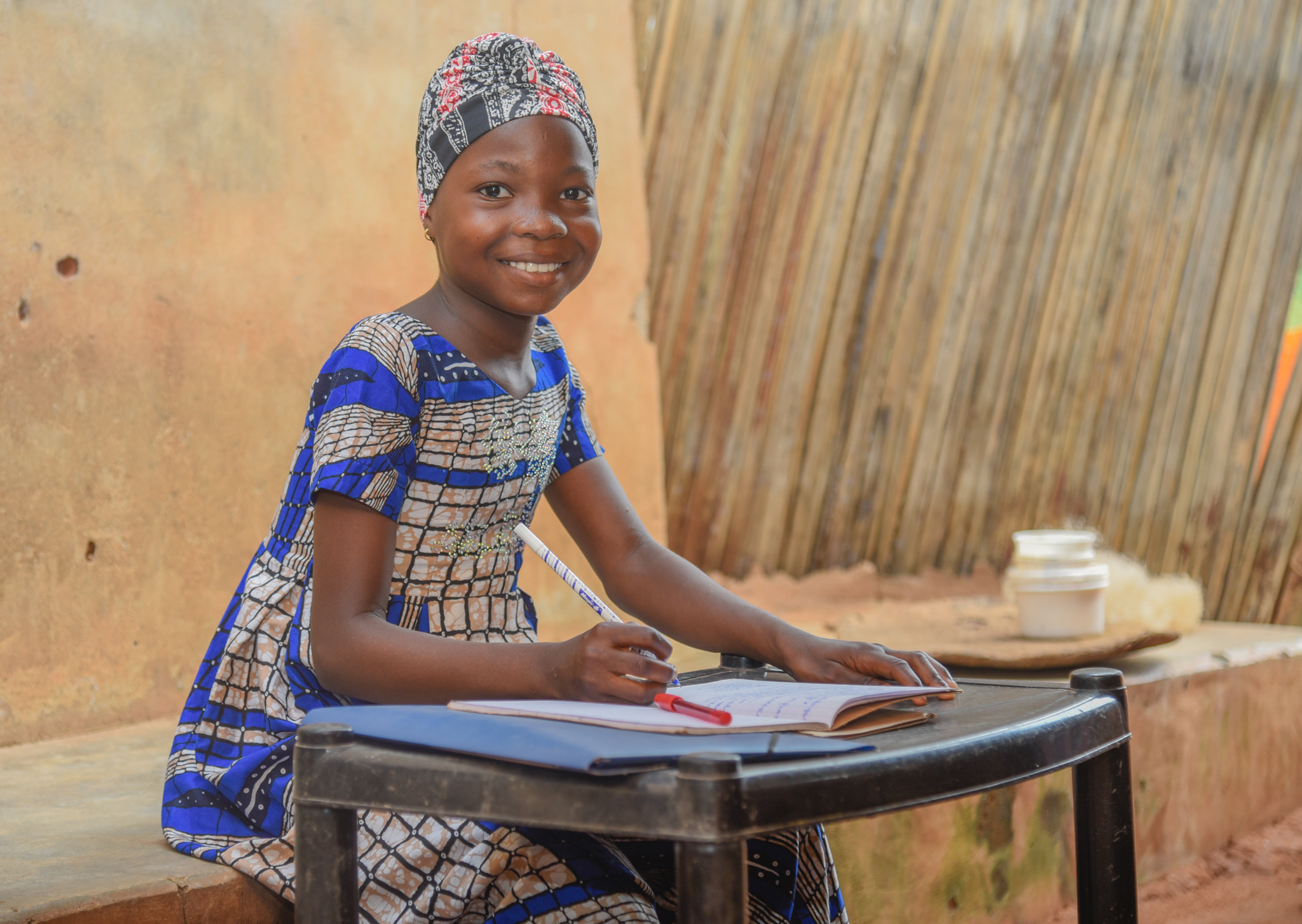
In global education, girls who aren’t able to access education isn’t a hypothetical. They’re the 14-year-old new mother. The sibling-caregiver. The child with a disability. The girl displaced in a village where no one speaks her language. These are the real out-of-school girls, and they are systematically being overlooked.
Too often, education programs assume that inclusion means offering the same solution to everyone. In many programs, girls aren’t just underrepresented, they’re structurally excluded. And when they are included, it’s often through a single pathway: formal school re-entry. But what if traditional school isn’t where she needs to go? Or what if the system itself — rigid, age-bound or language-exclusive — is part of what pushed her out?
A different approach: Meeting girls where they are
The Supporting Adolescent Girls’ Education program, known as SAGE, in Zimbabwe was designed around a different question: What does success look like for her, today?
Rather than treat ‘marginalized girls’ as a fixed label, SAGE treats it as a lived condition shaped by age, gender, disability, motherhood, religion, labor and language. Sometimes these identities overlapped. And when they did, the barriers to participation multiplied.
To respond, SAGE created four flexible, girl-led transition pathways:
- Re-entry into formal education for girls who the right choice is returning to school.
- Informal or community-based learning for those who needed different environments or timing.
- Skills training for self-employment through the Improved Skills for Out-of-School Girls Program and technical vocational education training, combining it with life skills and grants access through banking institutions.
- Fairly paid employment for girls needing immediate income.
This approach didn’t prescribe a single solution. It created multiple, flexible entry points.
“What sets SAGE apart is that it doesn’t treat marginalization as a concept, It treats it as a lived reality, something that requires multiple entry points, not one path.
Tsungai Mahumucha: Technical Expert at SAGE
The impact: what happened when girls had real options
According to the program’s independent endline evaluation:
- More than 70% of learners demonstrated at least Grade 5 levels in literacy and numeracy.
- The average learner improved by three to four grade levels during the program.
- Girls who began with the lowest scores showed the greatest gains.
- 67% of participants, or 12,839 of 19,102, transitioned into education, skills training or income-generating opportunities.
- 86% of girls found vocational training the most valuable part.
- 55% reported increased income after completing the vocational pathway.
- 8% or 1,528 have returned to traditional school settings.
- 5% of followed girls are now employed.
- 8% of followed girls had started own small businesses.
These outcomes weren’t limited to academics. They reflected new agency, new options and new confidence, especially for girls who had never seen themselves as students in the first place.
“Before SAGE, I thought it was too late. I had a child, I had no education. Now, I am running my own tailoring business. I teach my younger sister what I’ve learned.”
SAGE Program Participant
Lessons for the wider sector
SAGE offers insights that go beyond Zimbabwe, especially as global learning poverty rises and humanitarian crises displace more girls from education systems.
- Programs must design for multiple success pathways, not just one.
- We must measure progress beyond test scores, including income, agency and social participation.
- Wraparound support matters, from norm-shifting dialogues to mental health services.
- Most importantly, we must co-create programs with girls, not for them, and treat their lived experience as a form of technical expertise.
Too often, education programs are built around what’s scalable or a single solution instead of what’s equitable. But for the most out of school girls, real change doesn’t come from scaling up. It comes from showing up differently.
To truly reach them, we must start with where they are, not where we wish they were.
Beyond buzzwords
Let’s stop designing for the “typical girl” and start designing for the girl who’s been made invisible.
She’s still out there, navigating the margins, waiting for a pathway that fits her reality. Programs like SAGE show it’s not too late. We just have to ask better questions and build pathways that reflect real lives.
Who are the girls your programs might be missing, and what would it take to truly reach them?
Note: Quotes and findings are drawn from Plan International’s independent endline evaluation of the SAGE Zimbabwe program.