A new article from Chronicle of Philanthropy explores how the 100 top-grossing nonprofits in the U.S. are adapting their fundraising strategies in a time of economic uncertainty and shifting donor behavior. Plan International USA, ranked No. 14 on the 2025 list of America’s Favorite Charities, is featured for its evolving approach to fundraising amid the decline of traditional child sponsorships and the loss of government funding.
Chief development officer Katherine Williford shares how Plan USA is expanding its focus on major gifts and unrestricted support, while still recognizing the value of its long-standing sponsorship model. “We’re meeting donors where they are,” she says, underscoring the organization’s pivot toward more flexible and sustainable funding models. The article illustrates how staying true to mission — while innovating behind the scenes — is essential for long-term resilience.
A recent Chronicle of Philanthropy article highlights how legacy giving is becoming a key strategy for nonprofit sustainability, especially with an estimated $18 trillion wealth transfer expected in the coming years. The article explores how leading organizations are building long-term donor relationships through planned giving to support mission-driven work well into the future.
Plan International USA’s chief development officer, Katherine Williford, is featured for her insights on starting legacy conversations early. She points to Make a Will Month as an ideal moment to engage donors and encourages blended gifts that offer both immediate and future impact. Williford notes that while legacy programs take time to mature, they’re critical to sustaining programs that advance girls’ rights and opportunities.
Exclusive: Report reveals hidden reality of child marriage. Three girls share the impact on their lives
CNN’s As Equals series amplifies the findings of Plan International’s 2025 State of the World’s Girls report, which exposes the devastating global impact of child, early, and forced marriage. Drawing from testimonies of 251 girls across 15 countries, the feature illustrates how marriage before 18 drastically limits access to education, employment, and personal agency. The article weaves data with personal stories to show how this harmful practice still affects girls worldwide — from South Asia to Sub-Saharan Africa and even within the United States.
The feature underscores the urgency of systemic change, highlighting how poverty, cultural norms, and weak legal protections perpetuate child marriage. Through Plan International’s evidence-based advocacy and CNN’s global platform, the issue reaches new audiences, calling for increased investment in girls’ education and stronger legal safeguards to ensure every girl can learn, lead, decide and thrive.
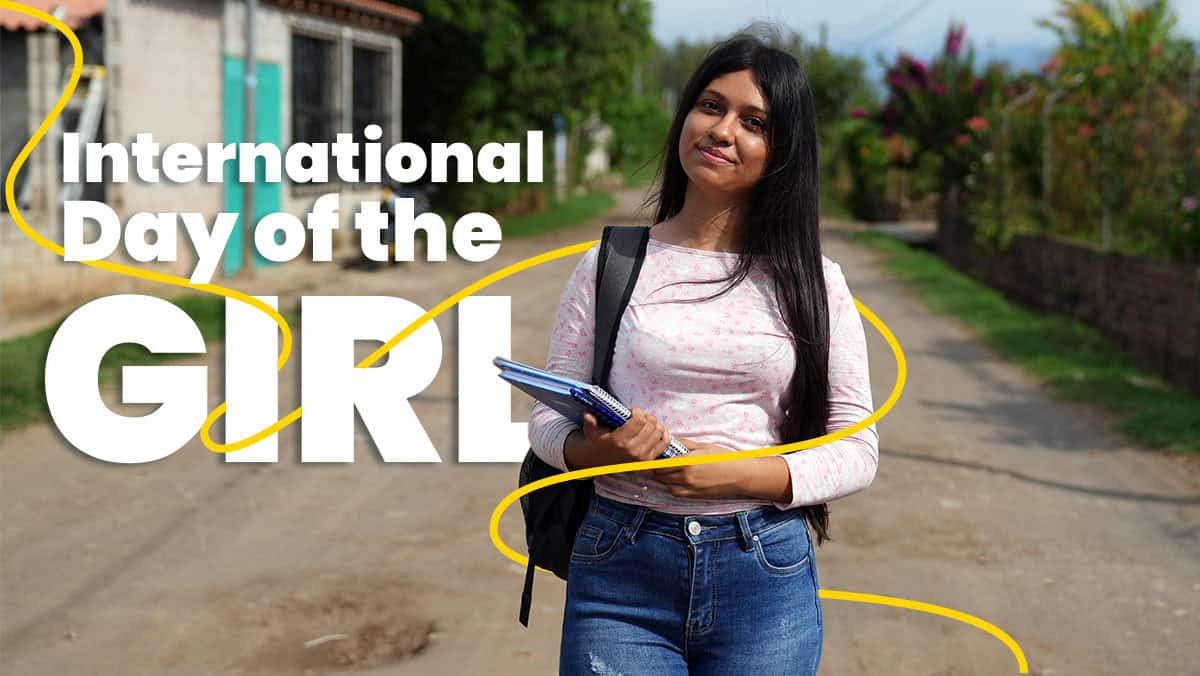
International Day of the Girl: Plan International report spotlights barriers keeping girls out of school
Backpack campaign expands opportunities for girls to learn and lead
WASHINGTON, Oct. 1, 2025 — Plan International is spotlighting education as one of the most powerful pathways to a brighter future. It opens doors to opportunity, safety and leadership, and lays the foundation for a world where every girl can learn, lead, decide and thrive. Yet for millions of girls, that future remains out of reach. To confront the barriers that disrupt girls’ learning, Plan released its 2025 State of the World’s Girls report and launched a matching gift campaign to help more children stay in school and continue their education without interruption.
Report highlights how child marriage cuts education short
Plan’s 2025 State of the World’s Girls report, “Let Me Be a Child, Not a Wife: Girls’ Experiences of Living Through Child Marriage,” reveals how child, early and forced marriage remains one of the biggest barriers to girls’ education. Across 15 countries, 251 girls who married before age 18 shared their stories:
— 63% were no longer in school, training or work after marriage.
— Over one in three dropped out of school directly because of marriage.
— Only a small minority were able to continue their education after marriage, and most said they regretted the opportunities they lost.
These stories show how child marriage often robs girls of the chance to learn, to build skills and to shape their own future. While often seen as a global issue, child marriage remains a concern in the United States. Children can still be married in 34 states — and between 2000 and 2018, nearly 300,000 minors were legally married.
The findings are already sparking global conversations, with an in-depth CNN As Equals feature bringing the issue to a wider audience.
“Every girl is worthy of an education, yet across the world, too many girls are kept from school by poverty, safety concerns, accessibility and cultural norms like early marriage,” said Shanna Marzilli, president and CEO of Plan International USA. “We know that when girls have the support they need to learn and lead, entire communities rise.”
That’s why this International Day of the Girl, Plan invites supporters to join the journey to break down those barriers so every girl can go to school, stay in school and decide the future she wants.
Don’t just give back, give backpacks
It starts with a backpack. A backpack is more than just school supplies. It’s a step to staying in school, lighting a movement for a world where every girl can choose her own future. Since the start of its backpack campaign, Plan has delivered backpacks filled with essential school supplies to children in five countries, helping them show up prepared, proud and ready to learn.
To mark International Day of the Girl, every backpack purchased in October will be matched, doubling your impact and providing the equivalent of 500 backpacks for young learners around the world.
Give a girl a backpack and this October, your $25 gift will be doubled at www.planusa.org/give-backpacks.
These simple tools help to clear the path to uninterrupted education and greater opportunity. Learn more at www.planusa.org.
For more information or interviews, please contact:
Plan International is an international development and humanitarian nonprofit that advances children’s rights and equality for girls. Working together with children, young people, supporters and partners, we strive for a just world, tackling the root causes of challenges children face. We are there from birth until adulthood, and we support children to prepare for and respond to crises and adversity, while particularly focusing on the experiences of girls. With more than 85 years of experience, we work to transform lives in more than 80 countries. We won’t stop until we are all equal.
This year Plan International’s annual State of the World’s Girls report is focused on girls’ experience of child marriage: a practice that despite large scale policy action and legislative reform, remains widespread.
The Youth Advisory Board is a group of young people from the U.S. who vocalize youth priorities by serving as ambassadors to Plan International. Each year, they organize their largest deliverable — the Youth Leadership Academy.
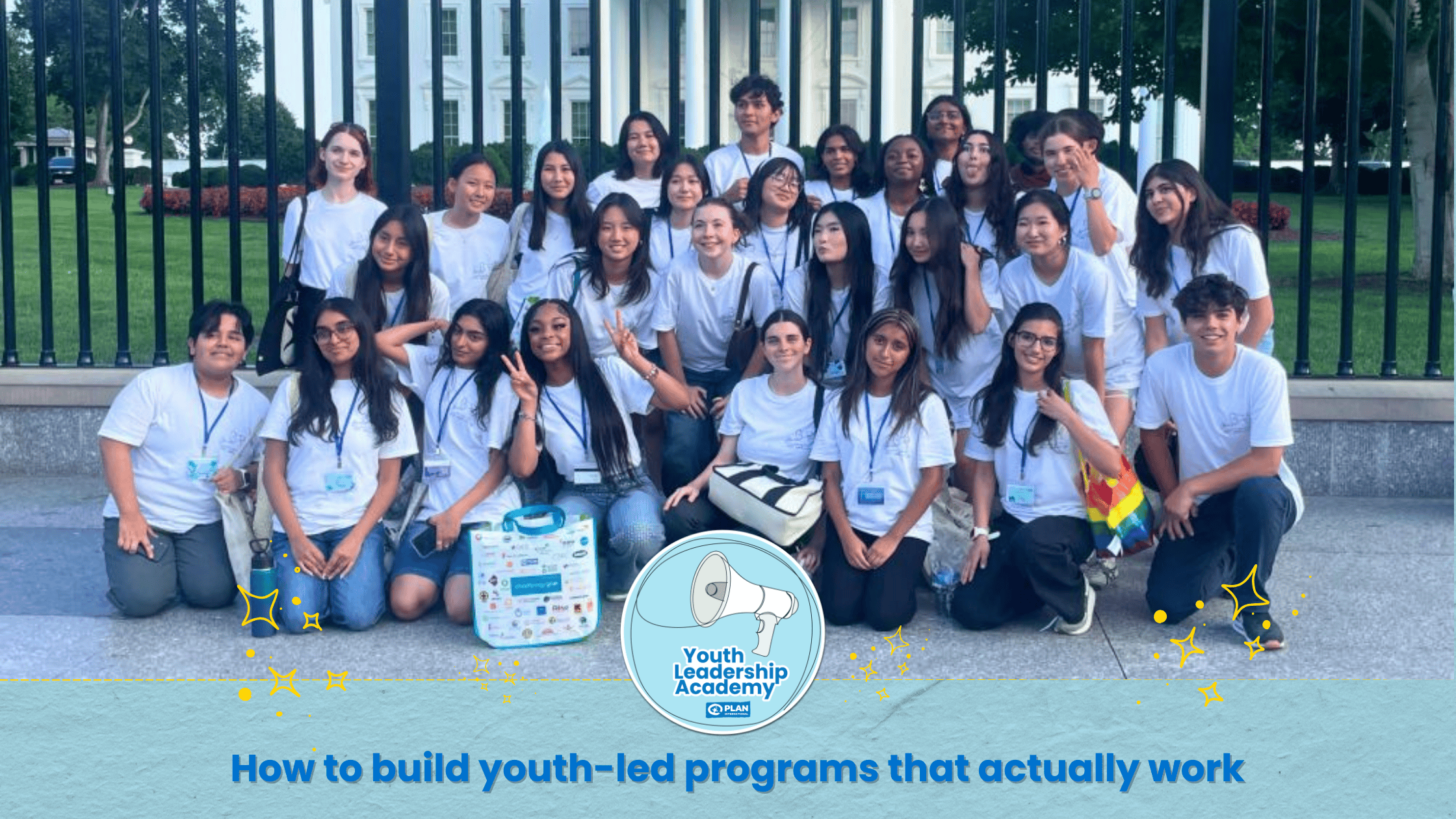
The Youth Leadership Academy (YLA) is a yearlong program focused on providing leadership and advocacy tools to young activists through training and mentorship to create change locally and globally. Designed by and for youth, the program brings together participants from across the U.S. to meet and learn from inspiring activists, influencers and experts.
The five-day residential academy in Washington, D.C., held each July, kicks off a year of project-based leadership. During the weeklong intensive, participants learn about networking, fundraising, advocacy, and leadership. They explore how their talents can drive change in their communities. Afterward, they’re paired with a mentor from Plan’s Youth Advisory Board to support their leadership journey.
So, how do you build a program that’s truly youth-led — not just youth-involved? Here’s how Plan centered choice, safety, information, and voice to make the YLA a model for meaningful youth engagement.
Youth Leadership Academy participants meet with congressional staff during D.C. Day to share their perspectives.
Empowering youth through choice
Youth Advisory Board members chose how they wanted to contribute — whether through curriculum design, recruitment, coordination or creative storytelling.
Participation in the YLA was based on an application process, putting “choice” at the center. Youth chose to attend — and before each session during the in-person academy, facilitators shared what would be discussed and gave participants space to opt out if needed. Choice remained embedded throughout the experience.
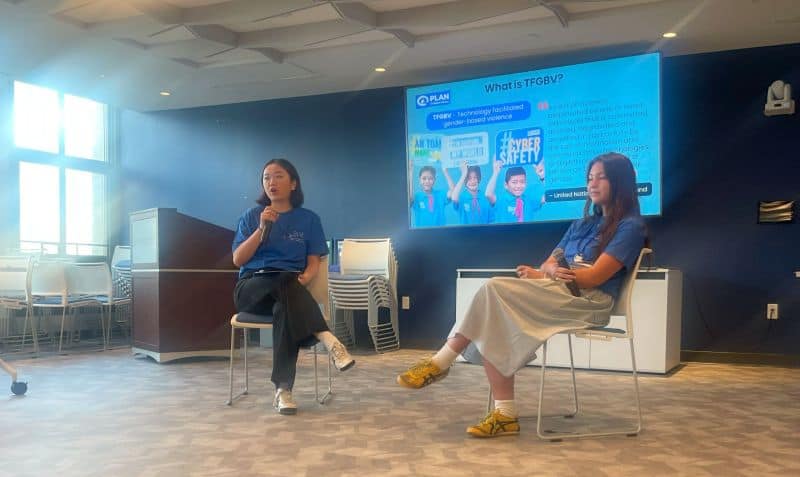
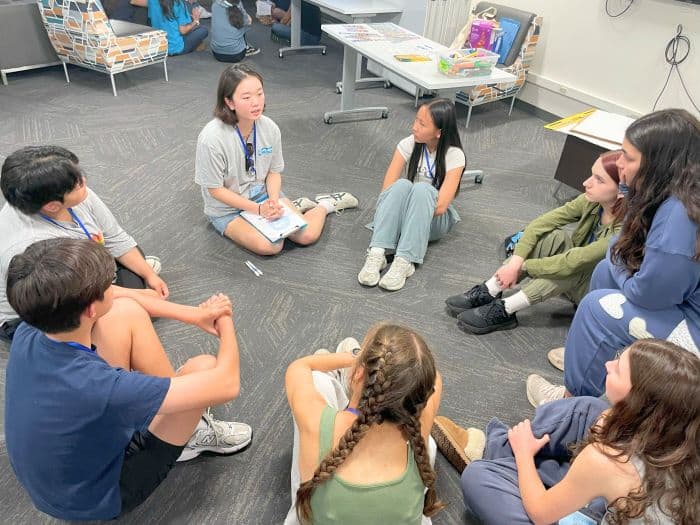
Youth Advisory Board members led sessions on leadership, advocacy and storytelling.
Creating safe spaces
Planning for the YLA began with risk assessments for both virtual and in-person settings. These weren’t one-time tasks — they were ongoing tools, used throughout planning and implementation.
Key steps included:
— Identifying the types of potential risks and who they might impact
— Evaluating likelihood and impact
— Implementing mitigation strategies
— Assigning clear responsibilities
This was a cross-team effort, shared with youth creators, facilitators and chaperones. Everyone involved needed to understand the risks and how to manage them. A safe environment is essential for youth to thrive.
Creating safe and supportive spaces is central to Plan USA’s youth-led model.
Keeping youth informed
Plan ensured that YAB members had access to all the information they needed to lead effectively. This included reviewing agendas, outcomes and feedback from previous academies to guide 2025 planning.
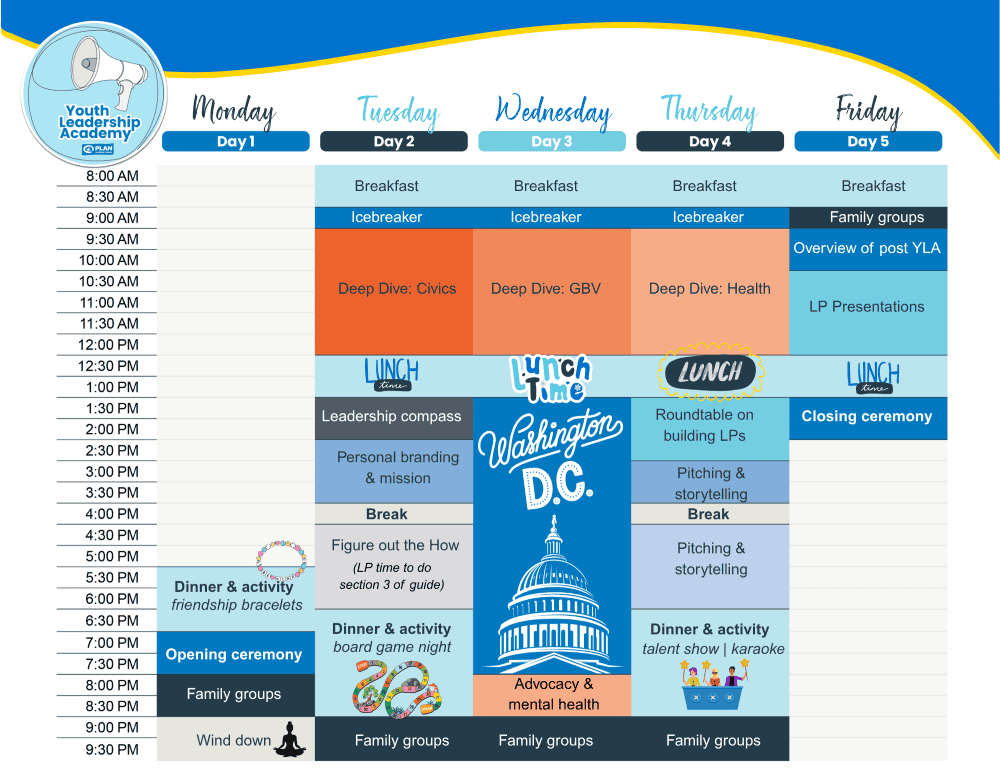
YLA participants also received youth-friendly materials and program details. Plan transformed Excel-based schedules into fun, easy-to-read graphics, and held youth-only pre-YLA webinars with engaging presentations to build excitement and set expectations.
Even digital platforms were tailored to youth preferences — for example, switching from Slack to GroupMe for more accessibility.
Centering youth voices
Plan prioritized collective youth power by creating space for the YAB to set the agenda, design the curriculum, and build out materials from start to finish.
Staff deferred to youth decision-making throughout. When staff decisions were needed, they ensured YAB members understood why and how their input shaped the final outcome.
A sample schedule from the 2025 Youth Leadership Academy shows the mix of deep-dive sessions, leadership training and group activities.
When youth lead, everyone wins
Plan was intentional about making the 2025 Youth Leadership Academy a truly youth-led initiative — one that honored the skills, perspectives and leadership of young people to create something that belonged to them.
We invite you to support youth-led efforts and amplify young voices — because when youth lead, everyone benefits.
“Where I come from, things can get really competitive. I feel like oftentimes I get in the headspace where I don’t feel comfortable being myself. I love it here because I get to be myself. I get to be vulnerable with people. People can feel safe around me. I just love talking to people about what they’re passionate about, like their leadership projects. Hearing everyone’s ideas and what everyone has to say, it’s so inspiring. This environment is so amazing, and I’m having the best time ever. I’m so honored to be here.”
— Tanya, YLA participant
Amanda Newlove and Ashley Weber co-authored this article.
Amanda Newlove is the senior manager of safeguarding, risk and internal compliance at Plan International USA.
Ashley Weber is a senior program coordinator working with Plan’s Youth Advisory Board on youth leadership initiatives.
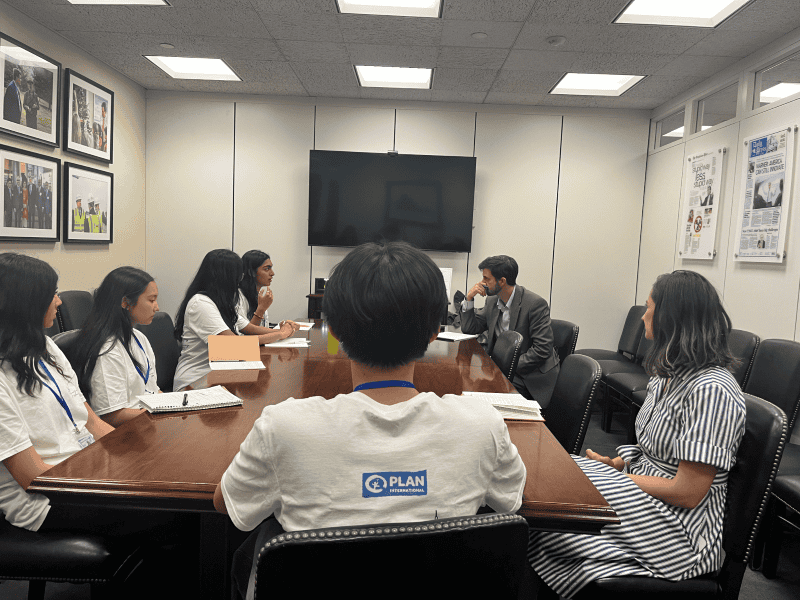
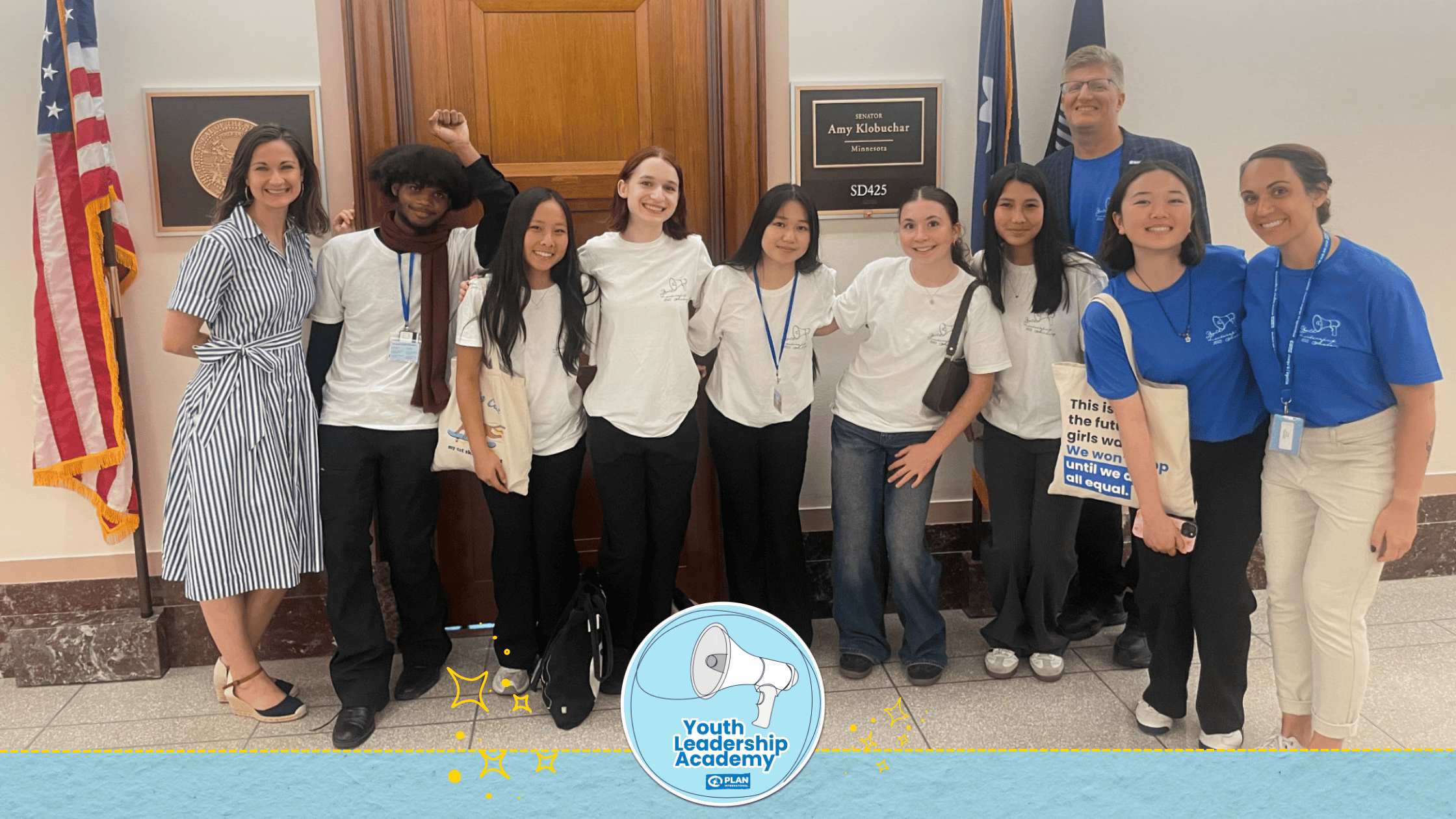
Youth Leadership Academy participants outside the office of Sen. Amy Klobuchar after a meeting on the TAKE IT DOWN Act
In July, Plan International USA kicked off its annual Youth Leadership Academy in Washington, D.C. The YLA was created to engage emerging activists in a year‑long program, equipping them with essential advocacy and leadership skills for their upcoming leadership projects.
This five‑day intensive at American University advanced their knowledge on youth civic and political participation, protection from violence and health equity through workshops and discussions, while meeting influential staffers in Senate offices and learning from powerful guest speakers. Made possible thanks to Plan staff and the Youth Advisory Board, the YLA was not only successful in bringing their leadership projects to life, but ensured that youth advocacy is here to stay.
D.C. Day
One of the highlights of the Academy for many participants was “D.C. Day,” held on the third day of the program. The day kicked off with a session led by the Youth Advisory Board on gender‑based violence featuring guest speaker Cailin Crockett, a strategy consultant and advisor for online safety and responsible tech policy, former senior advisor at the White House Gender Policy Council, and long‑time expert in violence protection.
Ms. Crockett discussed her own professional journey and positions she has held across three presidential administrations in roles targeting violence against women. She also offered lessons learned from advocating in many different spaces and explored cultural and policy shifts for greater online safety and protection from gender‑based violence.
Ms. Crockett also shared her expertise to prepare participants for meetings with Senate staffers from five different offices later that day to discuss the TAKE IT DOWN Act and future provisions for successful implementation. In addition to providing an overview of the TAKE IT DOWN Act provisions, YAB counselors and Ms. Crockett also provided guiding principles for productive and forward‑looking conversation. Plan’s Head of Policy, Justin Fugle, also briefed the YLA participants and supported their Senate meetings.
Youth voices in action
At the meetings, the YLA participants met with the Senate offices of Sen. Jacky Rosen, D‑Nev.; Sen. Mark Warner, D‑Va.; Sen. Ted Cruz, R‑Texas; Sen. Richard Blumenthal, D‑Conn.; and Sen. Amy Klobuchar, D‑Minn., to thank them for their involvement in passing the TAKE IT DOWN Act and to request measures for how the law should look in practice.
The staffers asked the YLA participants questions about their experiences online and the best way to implement the new law. Additionally, the staffers extended the meetings to keep talking with YLA participants, an unusual move on the Hill.
Reflections from participants
YLA participant Mia appreciated how Ms. Crockett shared “valuable tips on how to project confidence and speak effectively in a room full of influential people,” prompting her to feel more engaged and “showing me the importance of using my voice to create positive change.”
Katelynn shared her thoughts, too:
“Having Cailin as a speaker was both inspiring and eye‑opening. It was fascinating to hear from someone who has worked on gender‑based advocacy across different administrations and to learn what that work looks like in practice. She reminded us that the fight doesn’t end with passing the TAKE IT DOWN Act, inspiring us to use our voices not only to thank staffers for their work but also to urge them to relay broader priorities to the Senator.”
Reflecting on Ms. Crockett’s presentation, YLA participant Sriya shared:
“Not only did she provide us with valuable insight for our Senate Office meetings, but she also provided us with something even more powerful: hope. Cailin’s journey into advocacy isn’t far from many of our beginnings.”
Nuri, who visited Sen. Blumenthal’s office, shared:
“Being with the Senate staffers felt amazing. We were all passionate about the work they were doing, which made it easy to connect with them and exercise our youth voice. The atmosphere was very friendly and welcoming, and we could all tell that they wanted us there. I also got to briefly speak with Sen. Blumenthal (whom I met in one of the Senate office hallways), which was an amazing experience, since he is one of my Senate idols.”
Mia, who was in Nuri’s group and also spoke with Sen. Blumenthal’s office, added:
“During our conversation, I also learned more about why Mr. Anderson [Sen. Blumenthal’s tech advisor] is so passionate about digital safety and the strategies he believes are important for creating a safer online environment in the future. It was fascinating to hear about the legislative process from someone with firsthand experience, and I gained a deeper understanding of how policies are developed, debated and implemented.”
Shrayanthi’s experience encapsulates a common theme:
“I typically find the kindness and compassion from both Ms. Crockett and Sen. Warner’s staffer to be rare when speaking with adults in positions of authority as a teenager, so coming out of the Senate meeting and YLA intensive I felt incredibly validated in my experiences and honestly, it made me more hopeful that there are adults who are willing to not only listen to youth voices, but follow through and take action.”
Tanya reflected:
“It gave me a renewed sense of confidence in the value of youth perspectives and reminded me how important it is that we continue to claim space in these conversations. In that moment, I truly felt that I was able to exercise my youth voice in a way that mattered. It deepened my belief that advocacy is not about waiting until we are older or more ‘qualified,’ but about speaking up now and continuing to claim space in the decision‑making process.”
Why youth advocacy matters
Reading through these reflections, one thing becomes evident: when young people are given the support and space to lead, they do not just speak up; they are empowered to drive change in their communities.
The 2025 YLA participants made it clear that their voices and experiences belong in the rooms where decisions are made, particularly when the choices affect their futures.
Through the YLA, Plan aims to provide the tools — mentorship, workshops and opportunities — necessary for youth to grow as advocates, fostering the change they believe in. Whether that is in online safety, health care or civic participation, young people will continue to be a powerhouse of change, and Plan will continue to stand alongside them every step of the way.
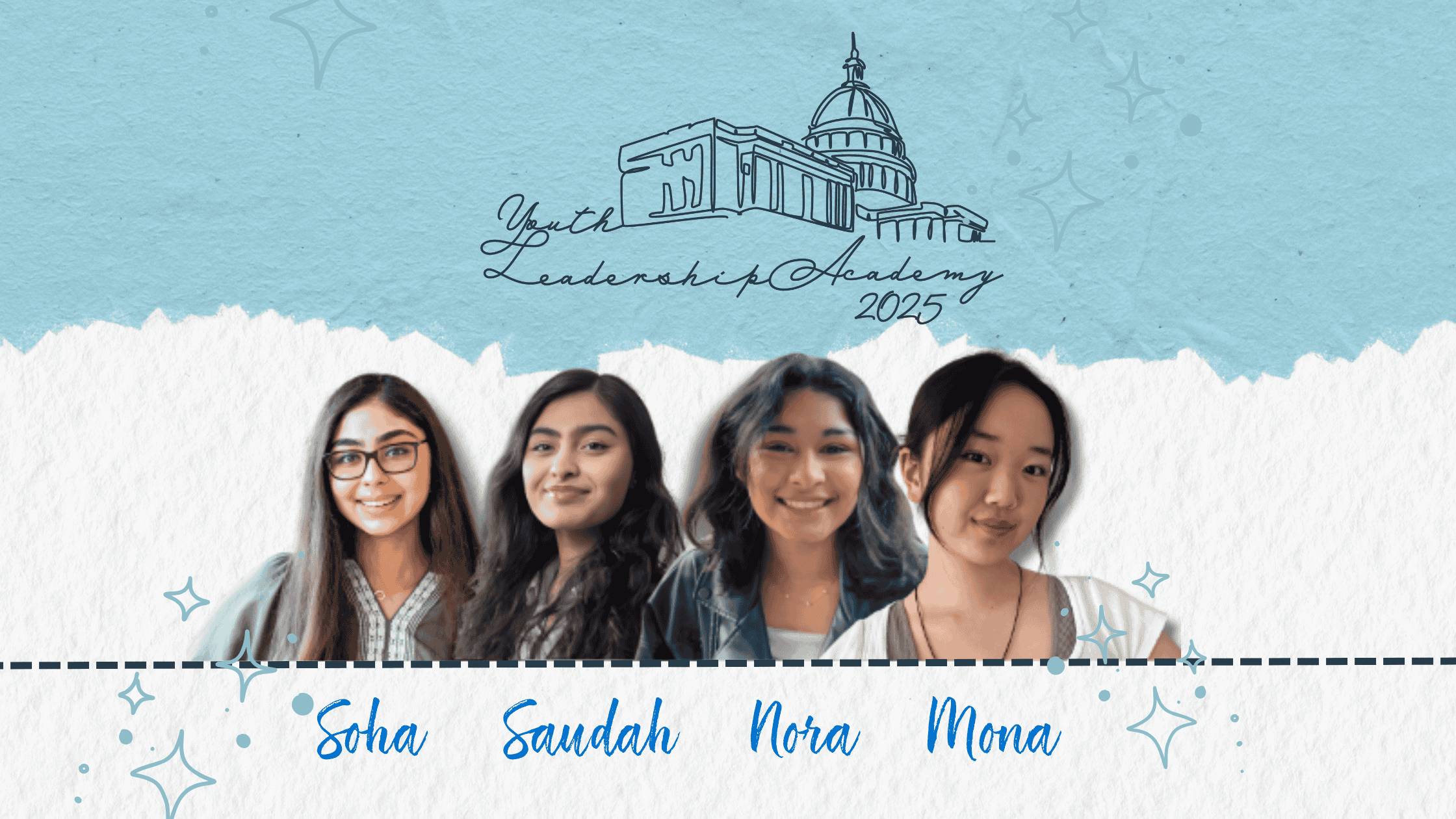
This blog was co-written by Mona, Nora, Saudah and Soha, members of Plan International USA’s Youth Advisory Board.
Nora is a Plan International USA Youth Advisory Board Member and a 2023 Youth Leadership Academy alumna. She is deeply passionate about advocating for refugee rights and climate activism. She has helped co-create resources for youth activism, supporting initiatives that engage young leaders in activism across 30 countries.
Mona is a Plan International USA Youth Advisory Board Member, a 2023 Youth Leadership Academy alumna, and served as a counselor at the 2025 Youth Leadership Academy. As a Plan Youth Leadership Academy member, she created a youth-led nonprofit organization called Digital Online Safety and Empowerment Initiative, where she leads a group of 19 young women to raise awareness about technology-facilitated gender-based violence in their communities.
Saudah is a Plan International USA Youth Advisory Board Member. She served as vice-president of her educational inequality nonprofit Scholars for Society UK, where she hosted conferences and workshops to bridge the gap of political education and involvement for state school teens.
Soha is a Plan International USA Youth Advisory Board Member and a 2021 Youth Leadership Academy alumna. Through her YLA participation she initiated Green Allies and Environmental Advocacy, a youth-led space for climate conversations. Through her work with Plan International she was involved in Innovations Hub with The Body Shop for their youth equality campaign in 2021 and an International Day of the Girl Takeover at AstraZeneca in 2022.
Education Under Attack in West and Central Africa: 2025 Update
In 2025, conflict and insecurity have led to the closure of 14,829 schools in West and Central Africa — affecting more than 3 million children. The crisis continues to deepen, especially in Nigeria, the Democratic Republic of Congo, and the Central Sahel region. Children are not only being denied education but also exposed to violence, recruitment by armed groups, child labor, and sexual exploitation.
Girls are hit hardest — often abducted, married early, or forced to stay home permanently after an attack. Even when schools reopen, years of missed education can leave lasting scars. Education is under attack, and the consequences ripple far beyond classrooms.
Plan International contributed to the 2025 regional update through the Education in Emergencies Working Group. Together with partners, the report urges immediate action: implement the Safe Schools Declaration, increase flexible education funding,= and deliver innovative learning solutions like radio-based education and accelerated learning programs.
Without urgent global support, the education dreams of an entire generation could vanish.