Search Results

Search results for

0 result(s) found


When disasters strike, the children most at risk are often the first overlooked. Among them are children with disabilities — an estimated 240 million worldwide, many in countries already vulnerable to crisis. In emergencies, inaccessible shelters, schools and services cut them off from safety, learning and care.

In Sudan, where ongoing conflict has displaced more than 10 million people, these barriers are magnified. Thousands of schools have been damaged or destroyed, and children with disabilities face even greater challenges accessing education and protection. Many have lost assistive devices during displacement — items like wheelchairs, crutches, hearing aids, white canes, Braille kits and adaptive learning tools that enable them to move, communicate and learn independently. Others are excluded simply because data systems don’t capture disability, leaving their needs invisible in emergency planning.

Plan International’s teams in Sudan are working to change that. Across our education in emergencies response, inclusion begins at the earliest stage — from identifying children with disabilities to ensuring that learning spaces, teaching materials and protection services are accessible for everyone.
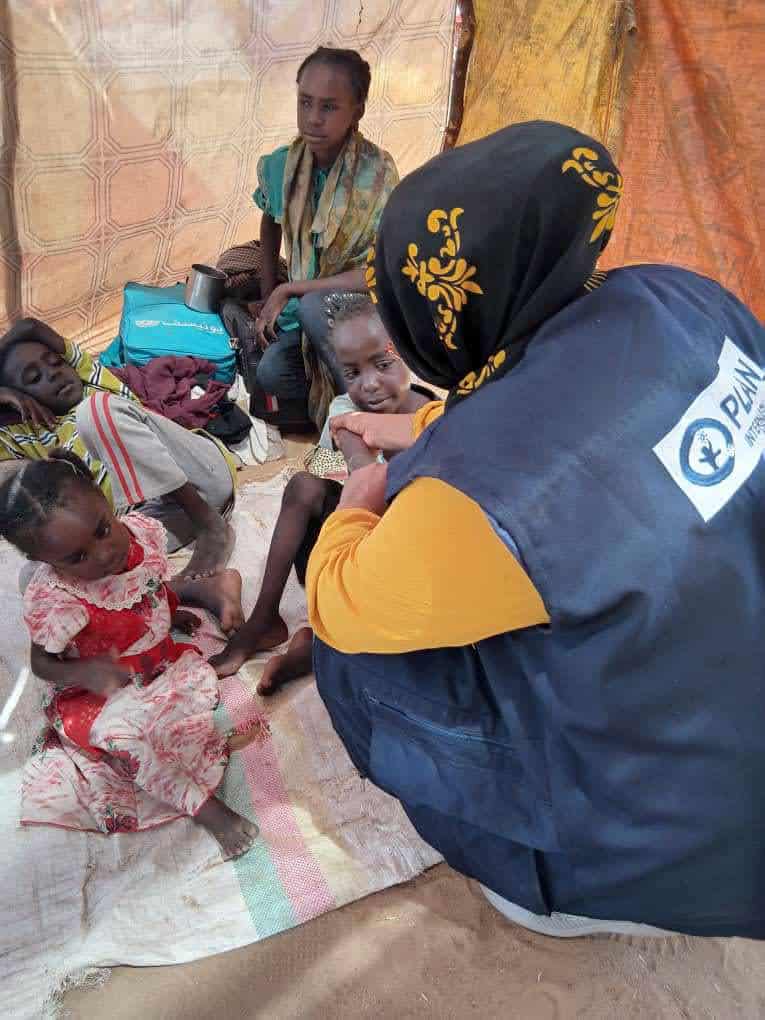
Plan International staff with displaced children in Tawila

A Plan International staff member meets with displaced children and families in Tawila, North Darfur. | Ā© Plan International

The challenge: Hidden exclusion

These barriers play out across education, water, sanitation and hygiene, and protection systems — and they become even more visible in crises like Sudan.

1. Education: Globally, 251 million children and youth are out of school. Children with disabilities are among those most affected, facing even greater barriers to learning — especially in times of conflict. In Sudan, damaged school buildings, overcrowded classrooms and the loss of assistive devices mean many children simply cannot return to learning.

2. Water, sanitation and hygiene: Only 31% of schools worldwide have trash cans for period products in girls’ toilets. For girls with disabilities, inadequate facilities multiply barriers. In displacement camps, basic WASH services are rarely accessible — latrines are too narrow for wheelchairs, and water points are far from reach.

3. Protection: In emergencies, children with disabilities face heightened risks of violence, neglect and exploitation, yet few protection systems are designed with their needs in mind. Without accessible facilities or trained caregivers, some are left alone in shelters, miss distributions of food or relief items or face abuse because they can’t communicate what’s happening. Families often lack information or support, leaving children isolated and unaccounted for.
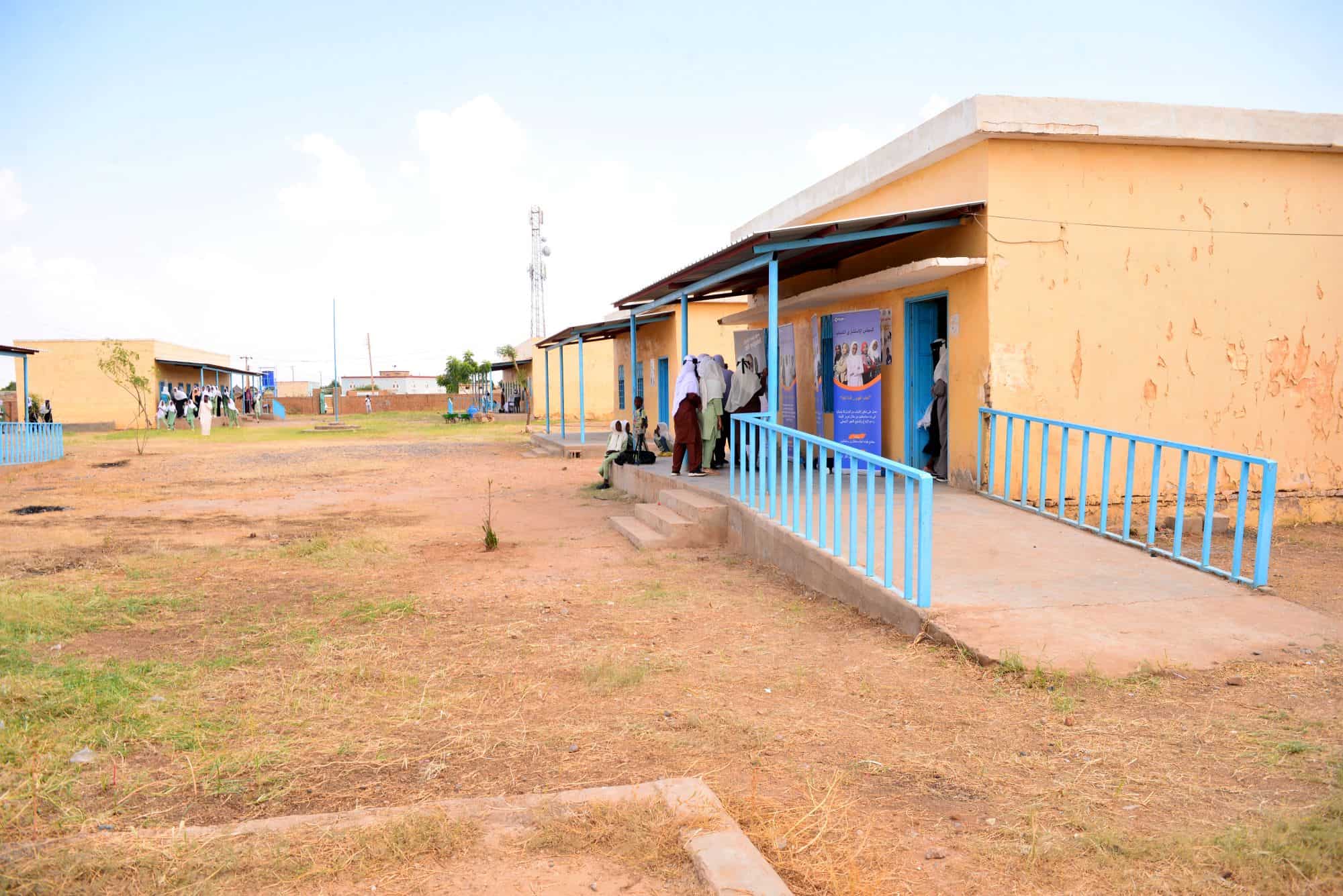
 

Ramp access at school in Sudan

A ramp at a primary school in Sudan improves access for children using mobility aids. | Ā© Plan International / Abdelazim Yousif

Sudan has made important policy commitments to disability inclusion. The National Strategy for Persons with Disabilities was introduced in 2005, followed by the Persons with Disabilities Rights Act in 2017 — a significant step aligned with the UN Convention on the Rights of Persons with Disabilities, which Sudan ratified in 2009. Yet, like many well-intentioned frameworks, it remains chronically underfunded and unevenly implemented, leaving children with disabilities still struggling to access basic services during crises.

Exclusion in emergencies is not only a rights issue. It undermines the effectiveness of the entire response. When systems aren’t designed for every child, they fail to protect those who need them most.

ā€œA lot are arriving in the camps injured, with gunshot wounds and exhausted from carrying their loved ones for days. It’s been hardest for women, children and people with disabilities.ā€ — Plan International staff member in Sudan.

What inclusion looks like in practice

1. Adapted learning: Plan trains teachers to identify and support children with different learning needs, and provides assistive devices and alternative materials — such as large-print books, Braille kits and visual learning aids — so children with disabilities can continue their education. In some camps, community volunteers help escort children to learning centers — a small act that makes a big difference in attendance.

2. Accessible safe spaces: Working with partners, Plan redesigned temporary learning and play spaces to ensure children with disabilities can participate safely. Ramps, wider doorways and low desks allowed children who use mobility aids — such as wheelchairs, crutches or walkers — to join their peers rather than watch from the sidelines.

3. Inclusive WASH: Emergency WASH facilities are adapted with handrails, accessible toilets and nearby water points so children with mobility challenges can use them with dignity. Feedback from families helps to refine these designs over time.
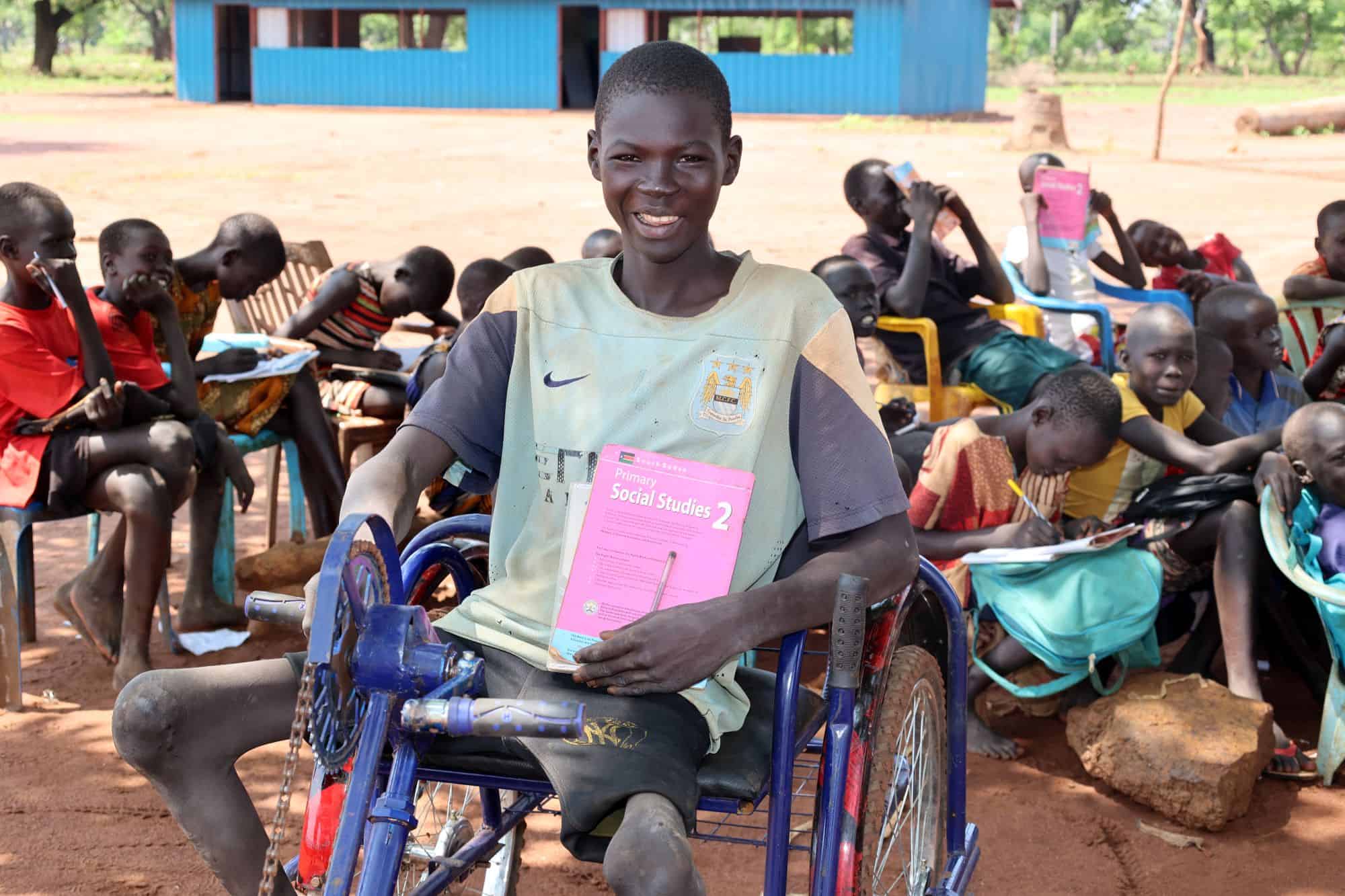
Teenage boy in wheelchair at school

In South Sudan, 17-year-old Mamer uses a tricycle provided through Plan’s education program to attend school for the first time. | Ā© Plan International

Listening to children with disabilities

Designing for inclusion is only part of the work. Listening to children with disabilities — and acting on what they share — makes programs truly effective. Plan’s Guidelines for Consulting with Children and Young People with Disabilities outline practical steps for meaningful participation:

  • — Check accessibility: Ensure venues, materials and communications are usable (Braille, large print and sign language).
  • — Adapt tools: Replace written surveys with drawing, role play, picture cards or visual scales.
  • — Prioritize safety: Use age-appropriate consent processes, involve caregivers and avoid retraumatizing.
  • — Close the loop: Share results back in accessible formats so children see their input reflected.


In Sudan, Plan’s education teams work with child clubs that include members with disabilities to review temporary learning spaces and flag accessibility issues. Their feedback shapes improvements like lowering whiteboards, rearranging seating and adjusting the layout of toilets for easier use.

These consultations often reveal issues practitioners miss. A child with cerebral palsy flagged that an ā€œaccessibleā€ toilet door was too heavy to open. A child with hearing loss explained that emergency announcements were only oral. Listening directly to children makes systems stronger.
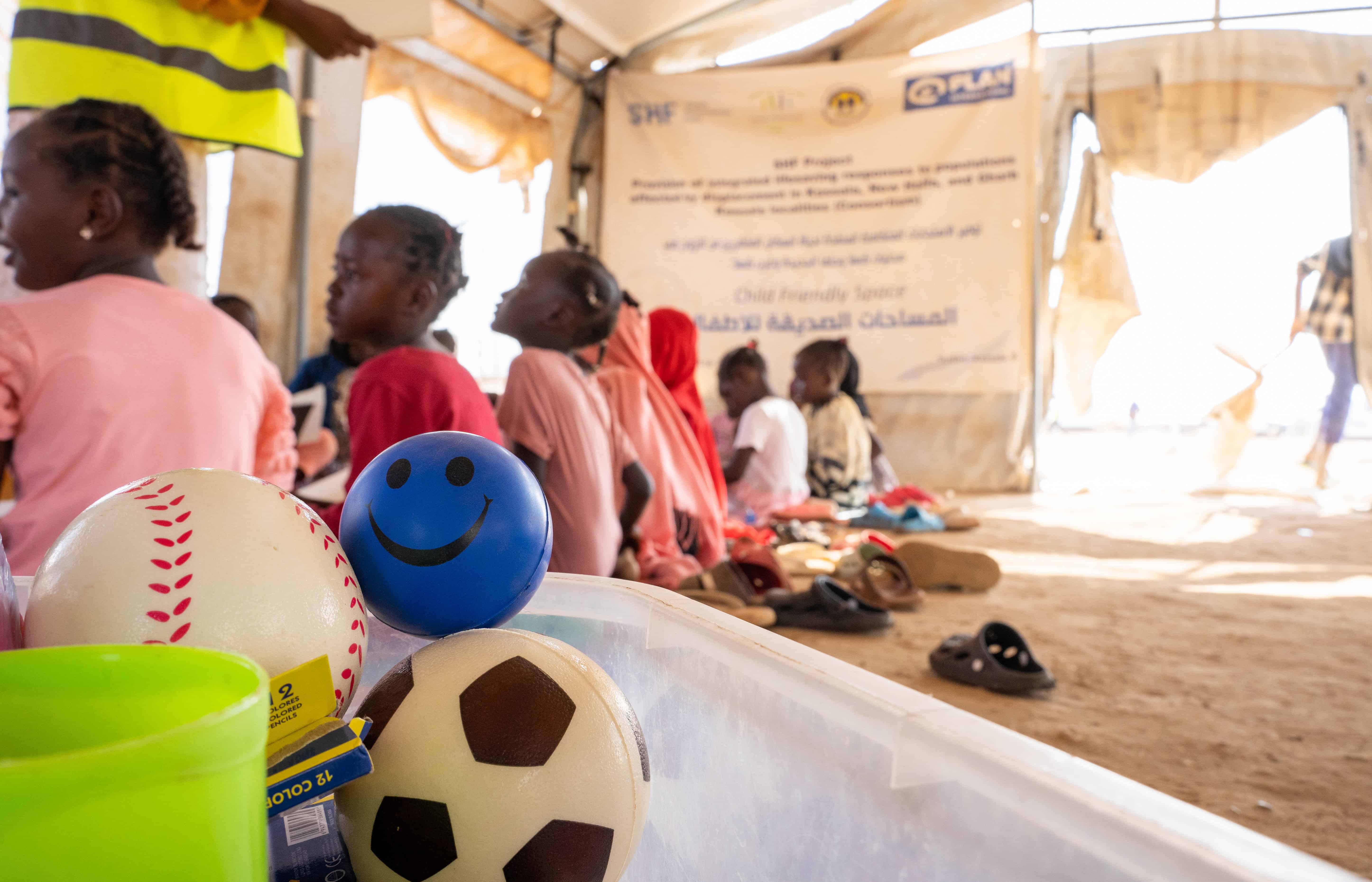
Child-friendly space with soft play balls

In Kassala State, Plan’s child-friendly spaces provide displaced children with safe places to learn, play and receive psychosocial support. | Ā© Plan International / Abdalrhman Justen

Further resources for practitioners

Closing thought

Disability inclusion in emergencies may not be a standalone portfolio for every organization, but it’s a test of whether we’re serious about leaving no one behind. For every child excluded from a classroom, unsafe in a shelter or silenced in consultation, the cost is not only personal — it’s systemic.

The experience of Plan’s teams in Sudan shows that inclusion is not a luxury or an afterthought. It’s the foundation of effective, equitable humanitarian action.

Emergencies cannot be inclusive after the fact. Disability inclusion must be built in from day one.

Which examples of disability inclusion in emergencies have inspired your work, and what lessons can we learn from them?


Hayder Hamadnalla wrote this article. Hayder is the project manager for female genital mutilation and child, early and forced marriage (FGM/CEFM) and head of the Gedarif sub-office at Plan International Sudan. For more information on Plan’s work in Sudan, please contact Hayder at [email protected].


Stay updated on Plan’s technical work by signing up for From Plan to Action, our quarterly newsletter.

Leaving no child behind: 3 ways to strengthen disability inclusion in emergency response

The government of Rwanda, with support from the LEGO Foundation and the Education Outcomes Fund (EOF), has launched a $13 million outcomes-based early childhood care and education program to improve school readiness and development outcomes for children ages 3 to 5. The four-year initiative will reach more than 25,000 children across 390 community-based facilities, with a focus on reducing disparities between formal and informal education systems.

Plan International is proud to serve as one of three lead implementation partners, working in consortium with Caritas and Bridges Outcomes Partnerships. As part of our commitment to advancing inclusive, quality education, especially in the early years, this initiative will provide children—many with disabilities—a stronger start in life.

Learn more about this milestone program via Philanthropy News Digest: EOF and LEGO fund $13 million childhood education program in Rwanda

Philanthropy News Digest

International Forum on Global Citizenship Education Shapes the Future of Learning Beyond 2030

With just five years remaining in the Sustainable Development Goals, leaders, educators, youth and civil society came together in Salzburg for the International Forum on Global Citizenship Education. Hosted by the Republic of Korea’s Foreign Ministry, the Ban Ki-moon Centre for Global Citizens and Salzburg Global, the forum explored education’s evolving role in addressing climate change, inequality, conflict and other 21st-century risks. The convening emphasized the need to embed global citizenship into the post-2030 education agenda and prepare learners to meet global challenges with empathy, inclusion and resilience.

As part of the Forum, Plan International supported the launch of ā€œThe Case for Green Jobs,ā€ a new policy paper that calls for investment in green skills and job opportunities for young people. Developed through the BKMC’s ā€œYour Future in Green Jobsā€ program and backed by Plan and Dubai Cares, the paper outlines how youth employment and climate action must go hand-in-hand. It highlights the urgency of aligning education, policy and private sector opportunity to ensure every job becomes a green job. This work builds on Plan’s commitment to youth economic empowerment and education systems that help young people learn, lead and thrive in a rapidly changing world.

Read the press release here: DC News Now: International Forum on Global Citizenship Education Shapes the Future of Learning Beyond 2030

DC News Now logo

Inspired by the UN Secretary-General’s ā€œClarion Call for Gender Equalityā€ issued at the Opening of the 69th Session of the Commission on the Status of Women, we, as International Gender Champions, reaffirm our commitment to break down gender barriers and promote gender equality and diversity at this critical time.

This is a year of milestones marking international commitments for gender equality: the 30th anniversary of the Beijing Declaration and Platform for Action, the 25th anniversary of UN Security Council Resolution 1325 on Women, Peace, and Security, and 10 years of Sustainable Development Goal 5.Ā It is also the IGC’s own 10-year anniversary, where we recognise and celebrate over 800 leaders who have made personal and collective commitments to drive change within their spheres of influence and make human dignity and equal opportunity for all not just an aspiration, but a reality.

Anniversaries serve as powerful reminders of the progress we have made, but they also encourage us to reflect on the urgent work ahead and the courageous and creative leadership needed to prevent regress and ensure a peaceful, inclusive, sustainable and prosperous future.Ā Going forward, we seek to unite our diverse expertise, resources, and perspectives, and strengthen collaboration amongst our over 330 active Champions – as well as welcoming new Champions, particularly from the private sector.Ā Now is the moment to leverage social and technical innovations to push past incremental gains and drive much-needed progress. Guided by our core IGC values – trust, respect, fairness, and understanding – we continue to build safer, more equitable workplaces and communities.

SIGNATORIES

    • Cary Adams,Ā Chief Executive Officer, Union for International Cancer Control (UICC)
    • H.E. AmbassadorĀ Hugh Adsett,Ā Ambassador of Canada to the Netherlands and Permanent Representative to the OPCW, Embassy of Canada to the Netherlands
    • H.E. AmbassadorĀ Ian Biggs,Ā Ambassador, Australian Embassy to Austria, Bosnia & Herzegovina, Hungary, Slovakia & Slovenia and Permanent Mission to the IAEA, UNODC, CTBTO, UNOOSA & OSCE
    • H.E. AmbassadorĀ Sylvie Bollini,Ā Ambassador, Permanent Observer, Permanent Delegation of the Council of Europe to the United Nations Office and other international organizations in Geneva
    • Sameer Chauhan,Ā Director, United Nations International Computing Centre
    • Nathalie Chuard,Ā Director, Geneva Centre for Security Sector Governance (DCAF)
    • Martin Chungong,Ā Secretary General, Inter-Parliamentary Union and Chair of the IGC Global Board
    • H.E. AmbassadorĀ Ferran Costa,Ā Ambassador, Permanent Representative, Permanent Mission of the Principality of Andorra to the United Nations Office and other international organizations in Geneva
    • Esther Dingemans,Ā Executive Director, Global Survivors Fund and Founding Director, Dr. Denis Mukwege Foundation
    • Ambassador Nikola Gillhoff,Ā FormerĀ ChargĆ©e dā€˜affaires, Permanent Mission of the Federal Republic of Germany to the United Nations and other international organizations in Geneva
    • Phil Lynch,Ā Executive Director, International Service for Human Rights
    • Tijmen Rooseboom,Ā Executive Director, Netherlands Institute for Multiparty Democracy
    • Volker Türk,Ā UN High Commissioner for Human Rights, United Nations Office of the High Commissioner for Human Rights
    • Alix Vuillemin,Ā Executive Director, Women’s Initiatives for Gender Justice
    • H.E. Ambassador Matthew Wilson,Ā Ambassador, Permanent Representative, Permanent Mission of Barbados to the United Nations Office and other international organizations in Geneva
  • Roger Yates,Ā Former Regional Director, East and Southern Africa and the Middle East, Plan International

Read the statement here: IGC Statement: A Milestone Year for Gender Equality – Renewed Commitment, Expanded Horizons

International Gender Champions logo

Urgent action needed to prevent a humanitarian catastrophe in North Darfur.

In response to disturbing reports of mass civilian casualties and targeting of humanitarian responders in El Fasher, Plan International’s CEO Reena Ghelani said:

ā€œWe are horrified by the numerous reports of systematic targeting and killings of hundreds of civilians and humanitarian responders in El Fasher. The brutality of the siege that has led to starvation, the denial of access to humanitarian aid and the deliberate targeting of civilians and humanitarian workers, and other violations is just too much. All warring parties should immediately commit to a ceasefire as the only way to save lives.

Around 260,000 peopleĀ stillĀ remain trapped in El Fasher with reports on the ground suggesting most of the civilians in the city are choosing to stay put in the city for fear of death while fleeing the violence.

All armed actors need to uphold their obligations under International Humanitarian Law to ensure safe passage for civilians seeking safety from the fighting in El Fasher and to ensure the protection of civilians and humanitarian responders. There must be accountability for the denial of access to aid and the use of sexual violence as a weapon of war.

Over the past few days, the massive displacement of civilians from El Fasher to Tawila due to the escalation of fighting has overwhelmed the capability of humanitarian responders to meet the growing humanitarian needs.

Testimonies from Tawila speak of thousands of civilians arriving on foot from El Fasher, severely exhausted from the long journey by foot, showing signs of malnourishment to the extent that their physical appearance makes them unrecognizable to their relatives and many bearing injuries.

Many of the children arriving are in distress, having been separated from their families and in urgent need of protection and psychosocial support.

Plan International is scaling up its response in Tawila to provide lifesaving food, dignity kits for girls and protection services to unaccompanied children as well as support for survivors of gender-based violence. We are also establishing child-friendly spaces to accommodate the influx of children and especially those unaccompanied.

However, with thousands of arrivals expected in the coming days, humanitarian needs are surpassing the ability of humanitarian actors to provide timely and quality services. We urgently need more funding to continue to help those affected.”

For further information or interview requests, please contact:

Vannette Tolbert, Senior Manager, Communications, Plan International

Tel: +1 240.778.9077, Email: [email protected]

About Plan International

Plan International is an international development and humanitarian nonprofit that advances children’s rights and equality for girls. Working together with children, young people, supporters and partners, we strive for a just world, tackling the root causes of challenges children face. We are there from birth until adulthood, and we support children to prepare for and respond to crises and adversity, while particularly focusing on the experiences of girls. With more than 85 years of experience, we work to transform lives in more than 80 countries. We won’t stop until we are all equal.

For more information, please visit www.PlanUSA.org.

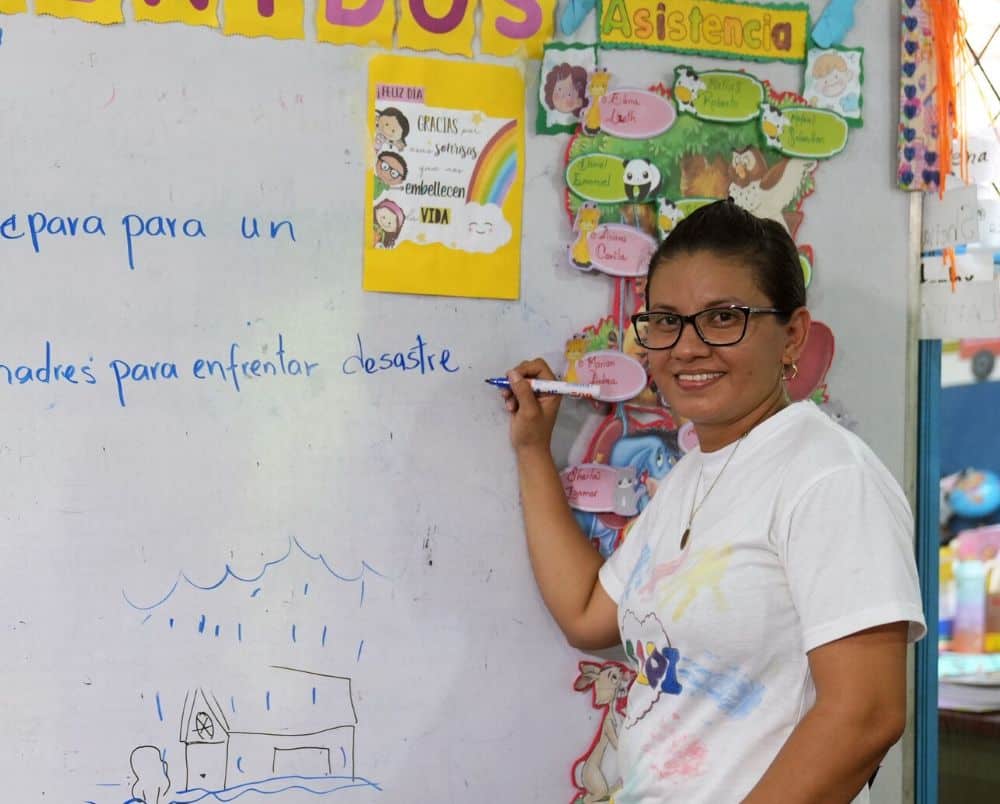
In a bright classroom in northern El Salvador, Nancy watches proudly as her young students discover the joy of learning. She sees herself reflected in their eager faces, recalling the same spark of possibility that ignited her own educational journey years ago.

Nancy knows from experience how a child can transform when they feel supported and valued. She fondly remembers the small gifts she received from her sponsor, like notebooks and pens for school. Most of all, she remembers how their support made her feel like she was not alone and gave her the confidence to pursue her dreams.

That sense of belonging and support stayed with Nancy through college graduation and led her back home. Now, she is using her education and experience to open doors for children in the same community where her own dreams took flight.

Watch Nancy’s story here.

Today, Nancy teaches at an early childhood development center for children ages 0-7 and their families. The center is part of an education initiative supported by Plan International in the Chalatenango region.


A woman wearing a white t-shirt and glasses smiles as she writes on a whiteboard with a marker.

Former sponsored child Nancy is now an educator at a Plan-supported early childhood development center in El Salvador. | ©Plan International


“Perhaps life placed this project of caring for young children in my hands to give back what I received in my childhood,” Nancy reflects.


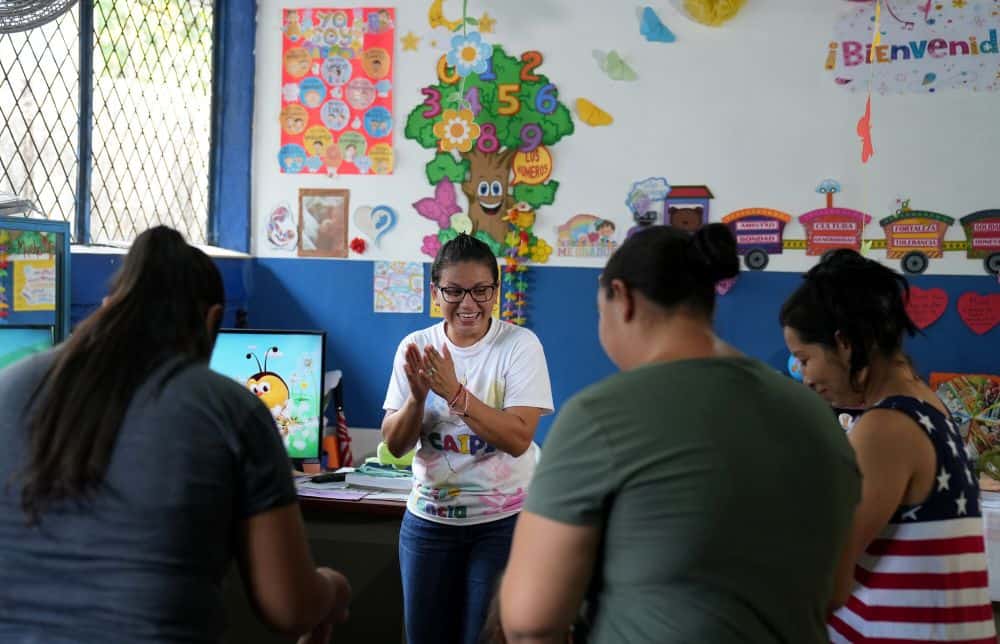
A group of women stand in a circle in Nancy's classroom.

Nancy enjoys working with her students’ parents too. ā€œIt’s a family-oriented program,ā€ Nancy explains. ā€œParents don’t just drop their children off; they have to be involved too. It’s so nice to hear from parents that this program has helped them to change their traditional parenting methods.ā€ | Ā©Plan International


In her classroom, Nancy supports each child with the conviction that a loving learning environment can change the course of a young life. She creates the nurturing environment she once experienced as a sponsored child.


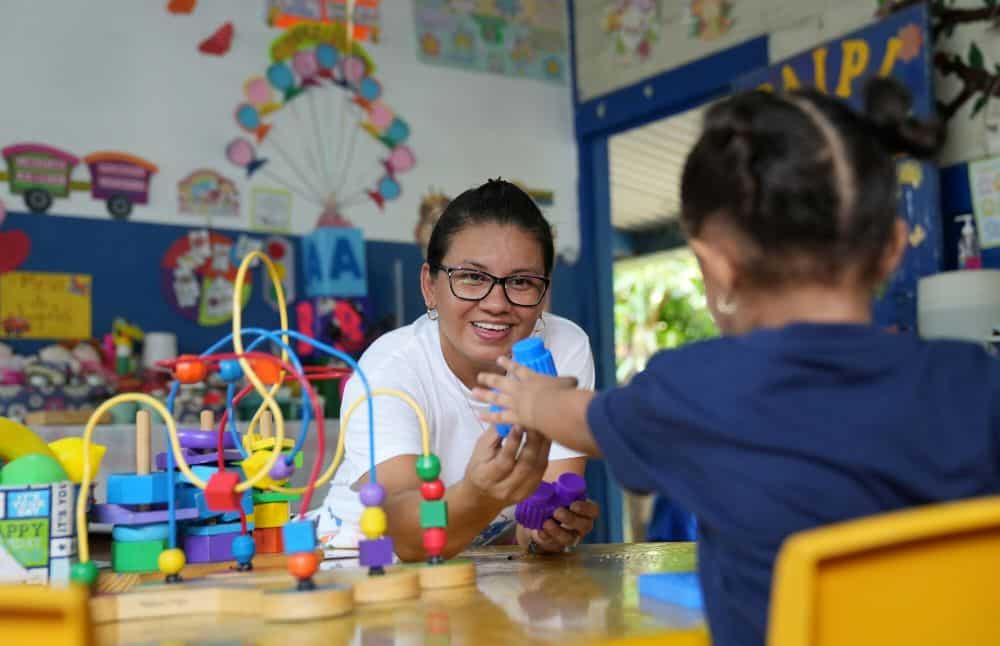
Nancy smiles as she plays blocks with a student in her classroom.

As an educator, Nancy feels she can give back the support she received as a child. | ©Plan International


ā€œWhat I like most is that the children are so lovely and pure, and they have this joy that they transmit to you,ā€ Nancy shares. ā€œHearing them is beautiful; it fills me with joy. I feel super rewarded by the children I am caring for.ā€

Nancy smiles as she plays blocks with a student in her classroom.

In honor of International Day of the Girl, a new article by Missions Box highlights the enduring global barriers that prevent girls from accessing education — from early marriage and economic hardship to harmful social norms. It features insights from TeachBeyond’s president, David Durance, and emphasizes the urgency of investing in quality education as a pathway out of poverty for girls around the world. The story underscores the critical role local educators and community support play in transforming the future of girls in crisis-affected areas.

Plan International’s 2025 State of the World’s Girls report is cited to show just how devastating the consequences of child marriage can be, with 63% of married girls no longer in school, work or training. As a leading organization working to advance girls’ rights globally, Plan continues to push for gender-transformative education that breaks the cycle of inequality.

Read the full story via Missions Box: Education After International Day of the Girl

Tackling Barriers to Girls’ Education After International Day of The Girl

Every three seconds, a girl is married. Her education often ends that very day.

The impact of child marriage on girls’ education is immediate and long-lasting. It’s especially severe in regions like Sub-Saharan Africa, South Asia and Latin America, where the practice remains common and deeply rooted in tradition and poverty.

Plan International’s 2025 State of the World’s Girls report, Let Me Be a Child, Not a Wife, offers one of the most comprehensive global examinations of how marriage before age 18 disrupts learning, limits opportunity and reinforces cycles of inequality.

The report draws on interviews with over 250 girls who were married as children across 15 countries. It also includes a survey of 244 youth activists and an analysis of national legal systems. This creates a rare and powerful look at what happens when child marriage shuts the door on education — and how policy and programs can open those doors back up.

What happens to girls’ education after marriage?

The numbers are staggering: 251 million children and youth are out of school worldwide, and nearly half are girls. In countries like Bangladesh, Nepal, Ethiopia, Nigeria, Guatemala and Togo, the link between child marriage and school dropout is not only clear — it’s urgent.

Findings from the report, echoed in CNN’s As Equals series, confirm what youth advocates have long warned: child marriage is one of the primary reasons girls leave school prematurely.

These effects aren’t limited to formal marriages. Informal unions can carry the same educational and social consequences, including early pregnancy, stigma and pressure to drop out of school — even though they’re rarely documented in official statistics.

Consider this:

  1. 1. 63% of married girls are not in school, working or enrolled in skills training.
  2. 2. 35% dropped out of school specifically because of marriage.
  3. 3. Fewer than 1 in 5 married girls remained in school. Many of them faced stigma or pressure from family members to stay at home.

ā€œMost community members don’t support married girls to attend school. They think if girls are getting married, they have to stay home, give birth and care for their husband and children.ā€

— Guedi, 24, Ethiopia

The consequences go far beyond academics. Without education, girls lose access to meaningful jobs, leadership roles and decision-making power. Over time, entire families and communities bear the cost of that loss.

Three systemic reasons married girls drop out of school

While each story is unique, three recurring structural issues explain why child marriage so often cuts education short:

1. Loopholes in the law

In nearly two-thirds of the countries studied, the law sets 18 as the minimum age for marriage. Yet exceptions — based on parental or judicial consent — create legal grey areas that enable the practice to continue. These loopholes undermine enforcement and weaken the systems meant to protect girls.

2. Poverty as pressure

For many families, the decision is financial. Informal unions — where girls live with a partner without legal recognition — can carry the same educational and social consequences, including early pregnancy, stigma and pressure to drop out of school.

Nearly half of the girls interviewed said poverty played a central role in their marriage. Without scholarships, stipends or financial incentives to keep girls in school, marriage may seem like the only path to survival.

3. Social norms that erase futures

Cultural expectations also play a role. Once a girl is married, education is often seen as irrelevant — or worse, inappropriate. One youth activist put it plainly:

ā€œOnce a girl is married, her future is seen as closed, even if she still wants to learn.ā€

— Youth Activist

These social pressures are often magnified by the school environment. Only 39% of schools provide menstrual health education. Just 31% offer safe, private sanitation facilities. For adolescent girls — especially those who are married or parenting — these missing services make staying in school even harder.

And even where laws are strong, families bypass them through informal unions — non-legally recognized partnerships where girls live with a spouse-like partner. These arrangements offer no legal protection, are harder to monitor and are becoming more common in regions where marriage laws have tightened.

Girls speak out: What they lose and what they demand

The voices in the report are sobering — and galvanizing.

ā€œGetting married before the age of 18 is not right. It disrupts education. Within a year or two of marriage, a child is born. At that time, I am still a child myself. How can I, being a child, raise another child?ā€

— Farhana, 21, Bangladesh

ā€œI wasn’t allowed to study or progress in life. I was deprived of everything. But I won’t let that happen to my daughter.ā€

— Juna, 24, Nepal

ā€œIf you are married, you can no longer continue school unless your husband tells you to continue. And you have to wake up and do the housework before going to school.ā€

— Dagan, 17, Togo

These girls are not just recounting personal hardship. They’re also advocating for systems to change. They remind us why education isn’t just a right — it’s a lever for reclaiming futures that others tried to close off.

Beyond the classroom: What child marriage costs us all

The loss of education due to child marriage is not just a personal tragedy. It’s a development crisis.

Plan’s research confirms what economists have long known: girls see education as a route to income, independence and security. Global studies suggest that each additional year of schooling can boost future earnings by around 10%.

If all girls completed secondary school, global child marriage rates could drop by two-thirds.

The economic cost of lost education runs into the billions. The social cost — lost leadership, weaker development and deepened inequality — is just as profound.

What works: Lessons for program and policy design

Access to education must be built into child marriage prevention strategies

Stopping child marriage is not enough. Programs must help married girls return to school — with flexible schedules, accelerated learning, and tailored support for parenting girls.

Reach the most vulnerable first

Girls in rural, low-income or displaced communities face the highest risks. Interventions must include child care, safe transport, mobile schools and community-based education centers.

Legal change must come with investment

Changing the law is only part of the solution. Without real investment in schools and systems, girls will not have true choices.

Five ways technical peers can act now

Here’s how professionals across sectors can contribute to change:

  1. 1. Build re-entry programs with flexible schedules, child care and mental health support.
  2. 2. Offer financial incentives like stipends, school meals and transportation.
  3. 3. Train educators to support married and parenting girls with care, not judgment.
  4. 4. Track not just enrollment, but also attendance, progression and re-entry.
  5. 5. Fund and elevate girl-led organizations working to shift harmful norms.

Protect education, protect futures

The message from the 2025 report is clear and urgent: Every three seconds, a girl is married. Each time it happens, her chance to learn, earn and lead may be lost.

But this isn’t inevitable.

For practitioners in education, gender equity or youth development, this is a rallying cry — not only to prevent child marriage, but to rebuild opportunity for girls who’ve already been impacted.

Education is the strongest defense against child marriage and the most powerful tool for reclaiming a future.

Frequently asked questions

Why is child marriage linked to school dropout?

Child marriage often results in girls being pulled out of school due to family expectations, pregnancy and societal norms that discourage married girls from continuing education.

Can married girls return to school?

Yes, but they face many barriers including stigma, lack of child care, inflexible school systems and unsupportive environments.

What legal gaps enable child marriage to continue?

Many countries set 18 as the minimum marriage age but allow exceptions with parental or judicial consent, undermining the law’s effectiveness.

What are informal unions, and how do they affect girls’ education?

Informal unions are relationships where girls live with a partner without legal marriage. They typically result in similar outcomes as child marriage — including school dropout, limited legal protection and reduced opportunities.

What role does poverty play in early marriage?

Poverty is a major factor. Families may see marriage as a way to reduce costs or gain security.

How does child marriage affect economic development?

It reduces girls’ education and future earnings, weakening overall productivity and reinforcing poverty cycles.

What can policymakers do to reduce child marriage?

Close legal loopholes, fund education re-entry programs, support families financially, and promote gender equity in schools.

What happens when school ends at 13? New data on child marriage’s toll on girls’ education