Every girl deserves to grow up in a world where her potential is realized, her voice is heard and her equality is not just a dream, but a reality. For International Women’s Day this year, Plan International USA is joining the U.N., other nonprofit organizations and businesses around the world to invest in women and accelerate progress toward gender equality. We’re asking: “What is the future we want for girls and young women?” And we’re investing in the women of tomorrow by supporting the girls of today. Achieving gender equality and women’s well-being in all aspects of life is more crucial than ever if we want to create prosperous economies and a healthy planet. Research shows that investing in the education and well-being of adolescent girls is not only a moral imperative, but is also economically critical, and leads to positive outcomes for society at large. Today, we’re highlighting five times that investing in girls and women has paid off — and sharing some inspiring stories from our partnerships along the way!
1. Creating a more inclusive IT industry in Indonesia and Vietnam
Gender inequality and stereotypes tell girls that certain industries, such as technology and mechanics, are off limits to women. For example, only 28% of board directors in the IT industry worldwide are female. When asked why they don’t pursue careers in science, technology, engineering or math, studies have shown that girls point to the lack of representation and female role models. In fact, 60% of girls told researchers they would feel more confident pursuing a career in STEM fields if they knew men and women were equally employed in those professions. Information technology is one of the key sectors of growth that will continue to shape this century and beyond. But while the digital economy is steadily growing in countries like Indonesia and Vietnam, the benefits are often unequal. The lack of training opportunities for young people, particularly women, means that job opportunities in the tech industry are often limited to men living in urban areas. To address this inequality, with support from Google.org, Google’s philanthropic arm, Plan worked with ASEAN Foundation to launch a vocational and job-matching program in Indonesia and Vietnam called Bridges to the Future. From 2020 to 2022, Bridges to the Future helped 10,000 young people take their first steps toward rewarding careers. Participants were equipped with technical and soft skills to prepare for employment and entrepreneurship, and accessed career fairs to connect to the job market. The program had a strong employee volunteering component, with Google employees hosting sessions on career counseling and mentoring program participants.

“If we are in a positive environment and use our time for productive activities, we will become better individuals,” Diana, a participant in Plan’s Bridges to the Future project in Indonesia, says. “This belief has propelled me toward finding and succeeding in my current job.” © Plan International
“Upon joining the program, I was consistently encouraged by the program staff to participate in career-building initiatives and also undertake self-development growth opportunities,” Diana, a participant in Indonesia, says. “Through these activities, I have gained extensive knowledge of soft skills and how to apply for jobs.”
From 2020 to 2022, Bridges to the Future helped 10,000 young people take their first steps toward rewarding careers.
In addition to Bridges to the Future, with support from Google.org, we partnered with INCO Academy in 2021 to launch an 18-month pilot program in Indonesia called Work in Tech. The project provided fully funded access to Google Career Certificates in IT, as well as tailored resources and soft-skills support to maximize professional success. Work in Tech graduates come from traditionally underrepresented backgrounds in the IT sector, including women and ethnic minorities. The program reached a total of 10,000 young learners, of which 7,868 young people attained the Career Certificate for completing the training, and 4,061 participated in job placement programs. Since completing the program, Onny now works as a web developer. “In the next 5 to 10 years, my dream is to open a coding academy specifically for children,” she says. “Currently, there are none in Cirebo.”
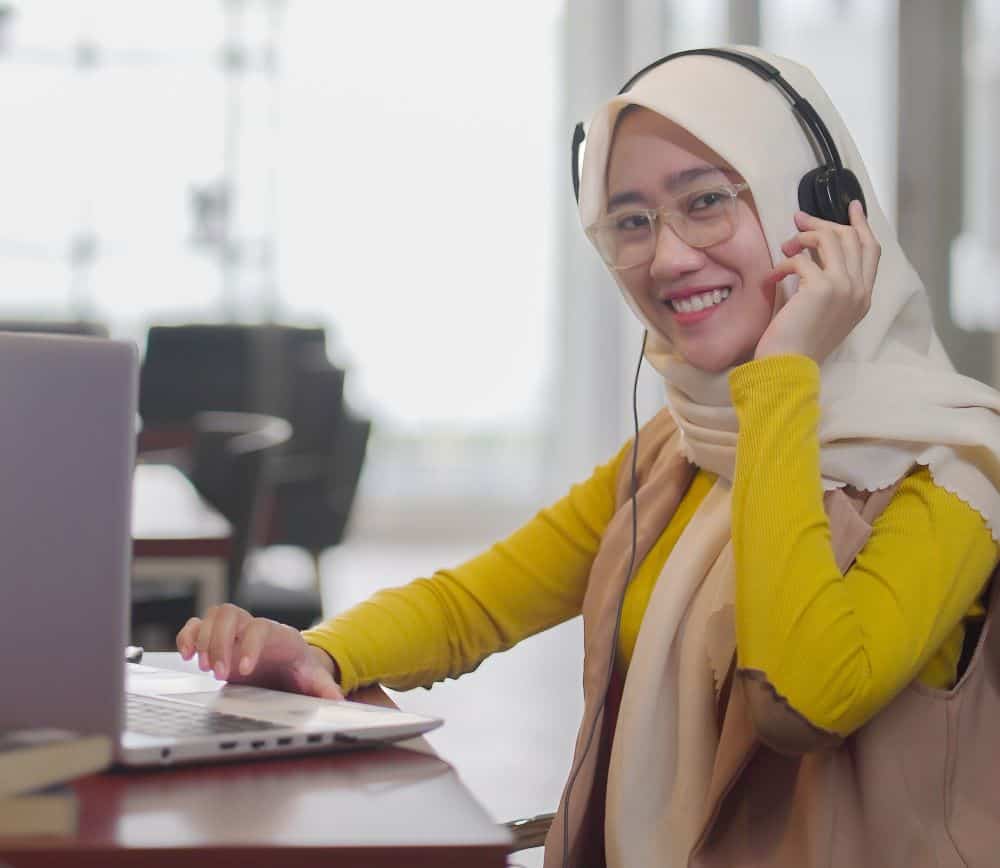
“I was the first person to attend university in my extended family,” Onny, a participant in Plan’s Work in Tech project in Indonesia, says. “So, I hope it can be a gateway for my cousins to enjoy higher education.” © Plan International / Ubaidillah Achmad
We’re also working with J.P. Morgan to support young women in Indonesia, through a project called Tech Muda II. The project builds on the success of Tech Muda I, which aimed to support marginalized young people, especially young women, in their out-of-school transition to employability in the information technology sector. Through the program, Plan trained 150 young people, 80% young women, in IT-related skills, such as graphic design and web development, and helped 139 young people find internships and employment in the greater Jakarta area. The program also notably helped to improve the self-efficacy of program participants as a result of increased soft skills. Program participants reported they felt more prepared and confident to apply to job vacancies following their participation in Tech Muda. “This program has helped me in shaping the skills in me that I didn’t know existed,” Inces, a program participant, says. “After joining the boot camp, I was taught to create a CV and portfolio, which I did not know how to do before. Thanks to this boot camp, I made my CV and portfolio to obtain my current position in digital marketing.” Based on the successes of this pilot program, we jointly embarked on a second phase, which began in 2022 and will end in August. Tech Muda II aims to provide 400 young women with training, mentorship and work-based learning to secure jobs in Indonesia’s growing IT sector. It will also provide post-completion job seeking assistance and job placement support for youth in careers such as data analysis, content development and digital marketing.
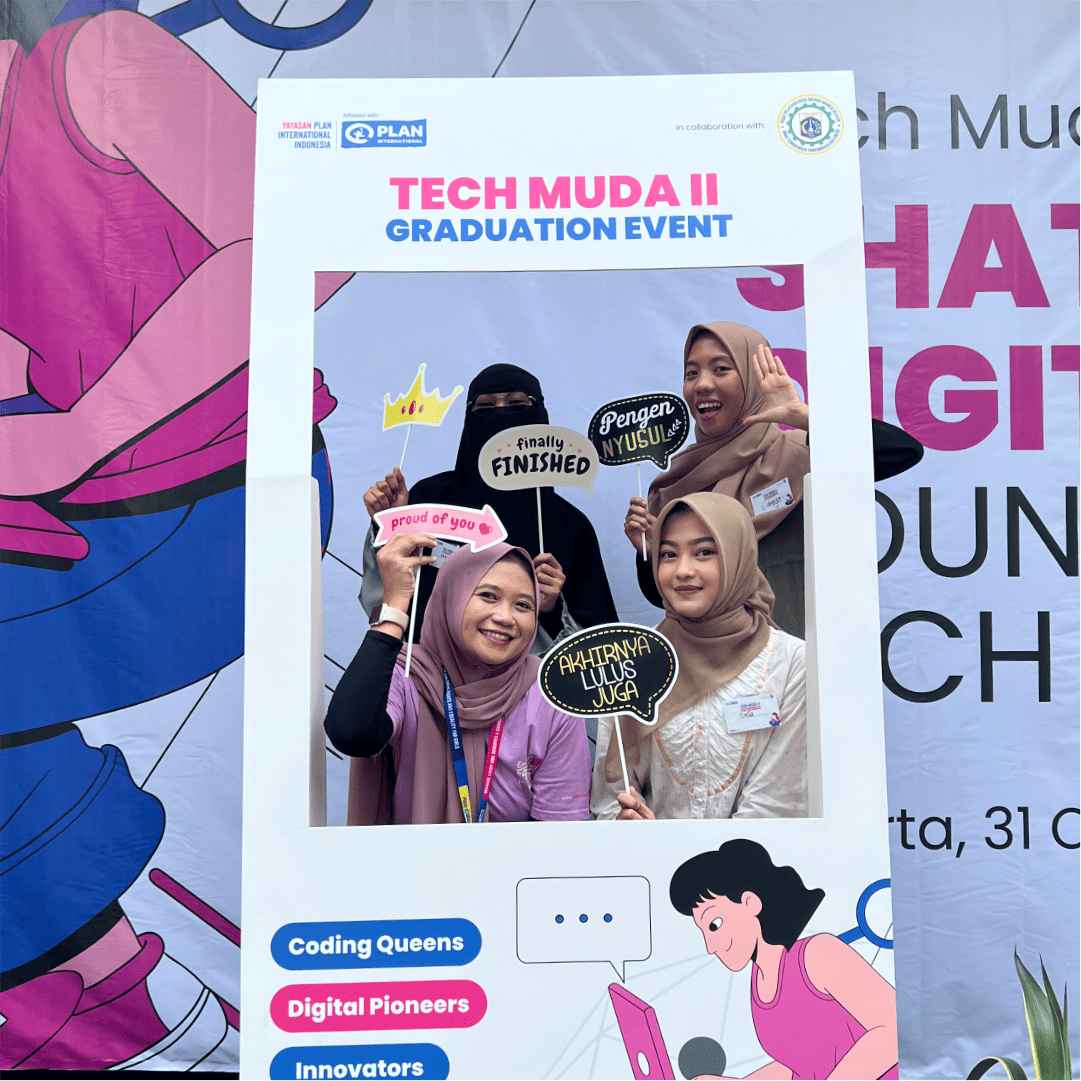
Program participants attend a graduation event for Tech Muda II in South Jakarta, Indonesia. © Plan International
2. Providing quality childcare in Ethiopia
In Ethiopia, Plan is helping to ensure that young women can benefit from the economic growth opportunity that industrial parks provide — and that the same innovations are good for the region’s local businesses and community. To help the Hawassa Industrial Park improve worker performance and productivity and reduce attrition, Plan and USAID have created a worker wellness program to connect potential employees with local services. As most employees relocate to be near the plant, they benefit from connections with fair housing, an understanding of the community they are joining and how to access essential needs. For the largely young and female workforce at Hawassa, this includes child care services and early childhood development programs. With no support or access to quality child care, many young mothers in Ethiopia are forced to either end their careers to care for their children, or to leave them unattended. That’s why Plan partnered with The Children’s Place to build two child care centers for employees working in the Hawassa Industrial Park. The child care centers offer safe, inclusive, age-appropriate early learning opportunities to children ages 0 to 3, reaching nearly 200 children per year.
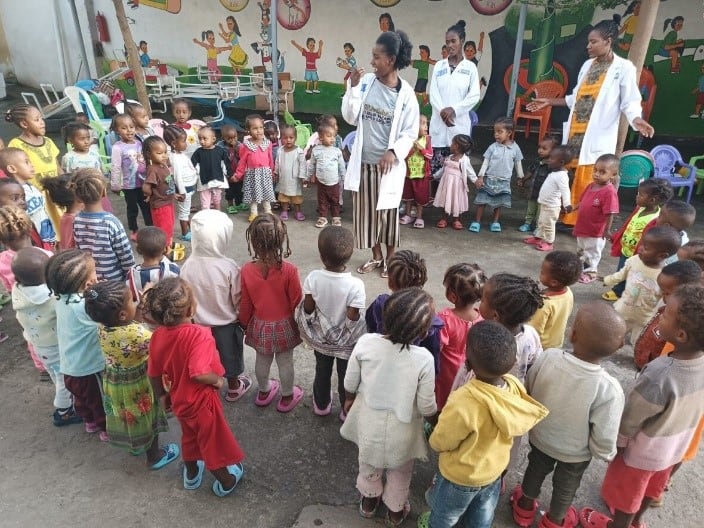
A group of children gather at one of the child care centers established by Plan and The Children’s Place in Ethiopia. © Plan International
The centers also provide nutritious meals and safe indoor and outdoor play time, with the staff closely monitoring the children’s growth and development. Many of the workers who send their children to these child care centers have reported lower absenteeism from work, improved productivity and increased participation due to reduced stress about their children, in some cases even leading to increases in their pay. As industrial parks continue to expand across Africa, there is an opportunity to replicate this child care service model for improved outcomes for women, children and private sector partners.
“Sending my child to the Plan-run childcare center in Cheffe is the single most important decision I have made in my life,” Debretu, a 24-year-old operator at a garment manufacturing company, says. “The center has made it possible for me to work and at the same time, for my child to be in a safe and caring environment. As you can imagine, I can now work free of any stress and give my best to my job.”
3. Connecting young women to success in Guatemala
In Guatemala, Indigenous young women often don’t finish school, and end up working informal jobs that are both demanding and low paying. In many rural areas, it is particularly difficult for young people to find waged employment opportunities. Plan’s Connection to Success project is improving young women’s economic prospects, so that they have the power to take their careers into their own hands through self-employment. Young entrepreneurs learn the skills they need to spot business opportunities, develop their business ideas, set-up and manage the risks of running a business, and face challenges with flexibility and creativity. They build their resilience with financial, business, entrepreneurial, digital and life skills. Throughout the first phase of the project, which began in 2019 and ended in 2023, 2,085 young people (1,356 women and 729 men) completed virtual and face-to-face training in entrepreneurship to design their business plans. Now, the project has facilitated the creation of 455 individual and associative business units, mainly in the agricultural, livestock, trade and services sectors, which are supplying local and regional markets with competitive, high-quality products. These activities have helped to strengthen the local economy and business ecosystem. By the end of the first phase of the project, hundreds of thousands of dollars of seed capital had been dispersed, supporting 568 young entrepreneurs as they started new businesses. In addition, 140 young people who completed the employment track got reliable, good-paying jobs in sales and customer service. Young women entrepreneurs are more likely to succeed if they have trusted mentors, which is why Plan also facilitates business mentoring and links them to affordable and gender-inclusive financial services and professional networking opportunities.
“I feel happy for the space I have been given in the Connection to Success project,” Eliza, a 23-year-old participant, says. “My mom says she sees changes in my life. I tell her what I learned in the employment sessions. She tells me not to stop, to put everything into practice, and to keep growing.”
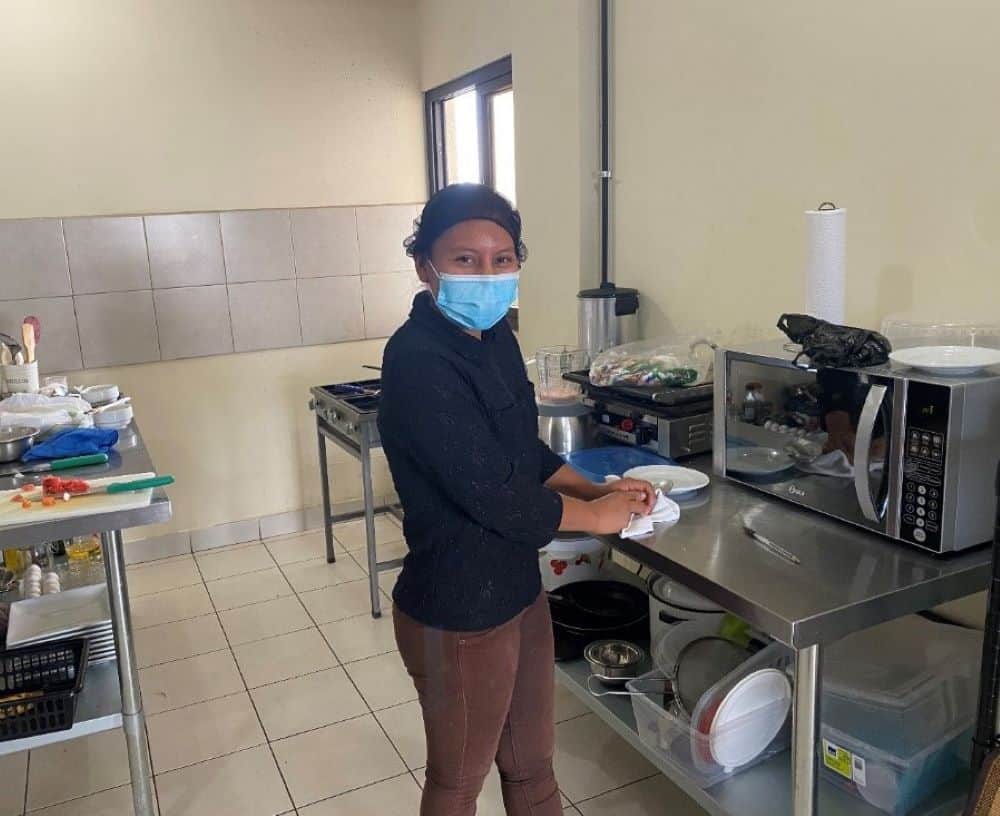
Eliza, 23, got a job in a hotel kitchen after participating in Plan’s Connection to Success project in Guatemala. © Plan International
The final evaluation of the project’s first phase showed that the percentage of young people who have strengthened their entrepreneurial skills increased to 94%, compared to 13% at the beginning of the project. Now, we’re getting ready for a second phase of the project. When designing additional programming, Plan staff incorporated the ideas of GirlEngage by organizing a consultation workshop with young people who participated in the first phase. Their feedback is informing plans for phase two.
4. Breaking new ground in Ghana
In Tamale, the capital of northern Ghana, passersby often stop to marvel at a crew of 10 tile layers trading quips at a local construction site. It’s not something they see every day. Why? Because six of the crew members are women. This scene was made possible by Ayisha. Ayisha, now 27, was in an arranged marriage and struggling to make ends meet when she heard a radio announcement about a job training program. After being interviewed at the program office the next morning, she decided to register on the spot to learn tile laying — a trade she knew nothing about.
“At first, I thought it was for males, females cannot do it,” Ayisha recalls. “Lifting tiles from here to there seemed like a huge thing. I was a bit afraid to learn it. I had never seen a female tiler before. My mother said how? I say, to try. If you don’t try, how will you know?”
In Ghana, young people often struggle to access education and training that aligns with job opportunities. To help young women build their own futures, Plan’s three-year project Pathways for Sustainable Employment for Women and Youth (PASEWAY) is reaching young people across northern Ghana with job training and business skills. Through PASEWAY, more than 4,200 young people like Ayisha have received technical and skills training in the construction and hospitality sectors. After completing the training program, Ayisha now runs her own successful construction business. She has taught six young women and three young men how to lay tiles through her company. Ayisha says that passing on her skills and employing other young women is the most rewarding part of her job.
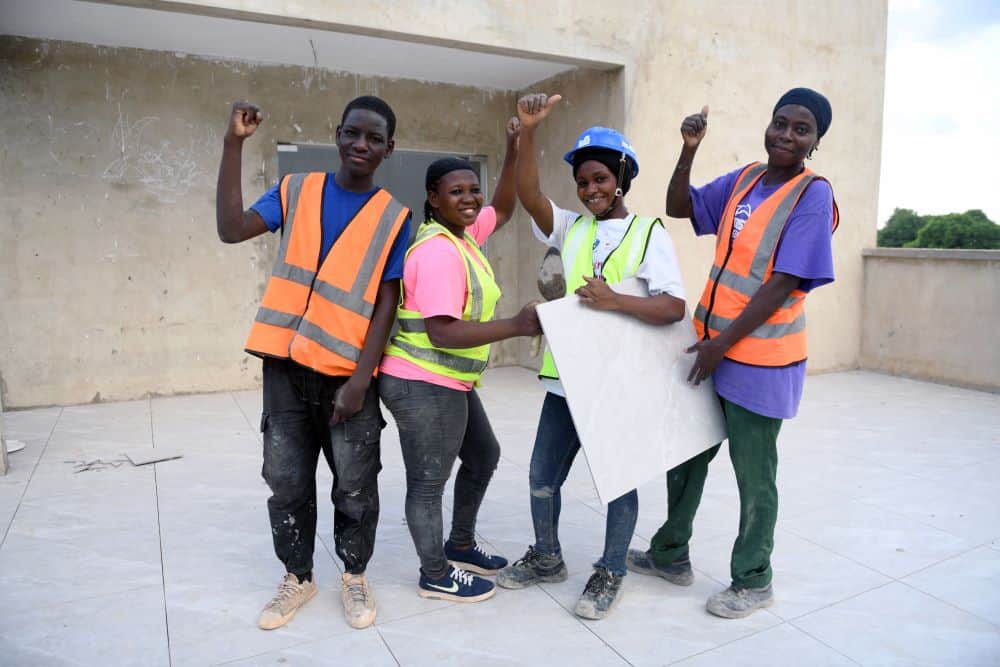
Ayisha (second from the right) with her tile-laying crew in Tamale, Ghana. © Plan International/Geoffrey Buta
“I want people to know that as women, we can do something,” Ayisha says proudly.
5. Supporting young entrepreneurs in the Philippines
In the Philippines, Plan has partnered with the Western Union Foundation to support young women as they pursue decent work opportunities through a project called Youth Connect 2.0. The project builds on the success of Youth Connect 1.0, which reached 431 young people (233 women and 198 men) with technical and life skills trainings from 2020 to 2022. Beginning in 2023 and ending this April, the project addresses gaps in training and decreased access to economic opportunities that were exacerbated by the COVID-19 pandemic. It aligns with the Western Union Foundation’s mission of creating economic opportunities for young people who migrate in pursuit of more prosperous futures. The project works in Cebu, Maguindanao and Western Samar, supporting training opportunities and providing access to community-based enterprises and employment in these areas. With training and financial support from the project, Iris, 20, opened her own neighborhood grocery store. “Ever since it opened and I started earning, I was able to help my parents with our daily expenses,” she says.
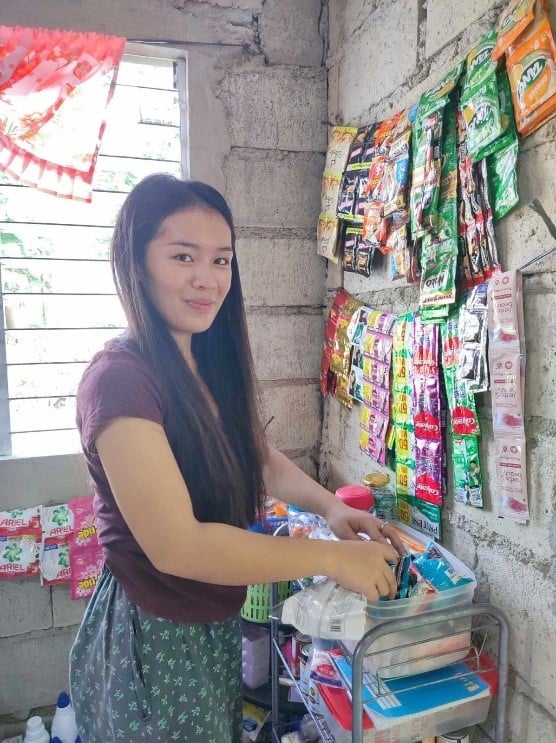
“I was lucky to be part of the Youth Connect 2.0 project of Plan International supported by the Western Union Foundation,” Iris says. “I was given an opportunity to start my own business which truly helped me and my family.” © Plan International
Interested in partnering with Plan? Get in touch!