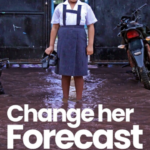
Girls globally face greater risks of child marriage, unintended early pregnancy and violence because of climate-fueled disasters, new research from Plan International finds. āChange Her Forecastā spotlights these risks ā driven by events such as floods, droughts and cyclones ā and the threats they pose to girlsā health, safety, education and futures. Our flagship State of the World’s Girls report 2026 combines analysis of health and climate data from 50+ countries over three decades with a survey of 5,000 girls, in-depth interviews and focus group discussions with 139 girls, across Bangladesh, Kenya, Peru, Senegal and Zimbabwe. It finds nine in 10 girls say climate events are badly straining their householdās survival, health and stability.
Search Results
Search results for
- Blog
PROVIDENCE ā āA lot of times, girls just feel like no oneās going to do anything, and no one is listeningā when young people report sexual harassment or assault, one teenage girl told us. āAnd if no one does anything, thereās not even a reason to report it. Iāve seen that happen a lot.ā
āIt creates a sense where itās normal,ā said another, also interviewed for a new study by Plan International USA, āListening to U.S. adolescents on gender & equality.ā āWhen things do happen, [girls have] people around them and society telling them itās not a big deal, or that their voice wonāt be heard.ā
As a result, a third girl said, āTheir self-worth is lowered. Theyāre like, āOh, I guess Iām just not that importantā ā but thatās not true.ā
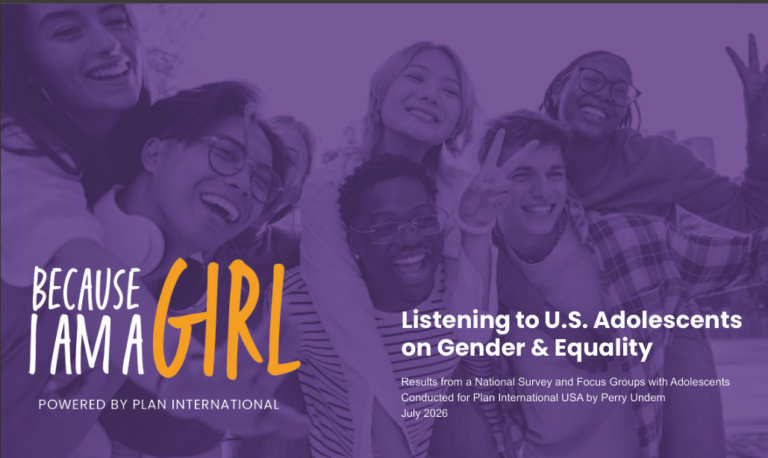
These teenagers were part of a nationwide survey of 1,037 adolescents aged 10 to 19. Plan International USA, which I lead, commissioned the study to assess young peopleās attitudes and experiences, including how they feel about gender equality, since our last U.S. survey eight eventful years ago.
Their comments arenāt outliers. They fit into a broader picture about what itās like to grow up in America right now. Their words and their worries beg the question: When these young people are so candid about whatās making them feel unsafe, why arenāt we doing more to support them?
Multiple stressors, and some hope
Young people today are coming of age in the grip of social media, AI-generated content, surging political violence and deep anxiety about how technology and global trends might decisively alter how they will live, study, vote and work, including whether they will be able to find work at all.
What we heard is both encouraging and deeply unsettling.
Young people still have hope. They want equality. Many see themselves as leaders. But theyāre telling us that the world adults have built is making it harder for them to feel safe, speak freely and imagine their place in the future.
They struggle to fit in and look perfect on the outside while worrying about their mental health on the inside. Theyāre less interested in running for office and more focused on earning money than their elders.
Many feel stressed, anxious and vulnerable and believe they must shoulder responsibility for their own safety online. The burdens on girls are especially heavy, including pressure to keep their opinions to themselves for fear of a cruel backlash.
Among our findings, an overwhelming 94% believe women and men should be treated equally. But when asked whether that goal had been achieved, most said no. Other findings underscore the disconnect:
- Some 42% of older girls rated their mental health poorly, compared with 25% of older boys. Thirty-six percent of older girls on social media had experienced online sexual harassment.
- While eight in 10 adolescents say being their authentic selves is important, half of girls and more than one-third of boys reported choosing not to share their opinions online because they feared negative comments.
- Most teens distrust social media companies (62%) and government (73%) to take sexual harassment and assault seriously.
Taken together, those findings describe more than adolescent anxiety. They describe young people learning, remarkably early, that speaking up can impose a cost and that the institutions around them canāt or wonāt ā and overwhelmingly donāt ā protect them when they need it.
This isnāt a story of despair. The young people we surveyed are still hopeful. They care deeply about equality and living authentically. What they want and need is a safe environment in which they can be themselves and flourish.
So what can we do?
Young people, we have learned, face pressures and have experiences online that differ sharply from those of adults. Parents and caregivers should listen to them and hear what theyāre thinking and feeling every day. Honest conversations with them can be challenging, but they are necessary.
Overwhelmingly, young people tell us they trust their parents and guardians ā so it’s especially important to remain open to hearing things that make us uncomfortable, involve rule-breaking or challenge family norms: Listening calmly can help contain and prevent problems from growing bigger than kids can solve. And make sure they know how to report harmful behavior and where to turn for help.
Policymakers and technology companies should make young peopleās safety a starting point in policy and product design, not an afterthought. Teachers, coaches and other trusted adults should create and sustain environments where young people know they will be seen, heard and taken seriously when they speak up. Donāt dismiss their concerns with phrases like āboys will be boysā or tell young people that what happens online doesnāt matter at school or at sports practice.
Future stakes
Ensuring the well-being of young people is vital in itself. Whether we achieve it will also decisively impact the society the next generation will soon inherit and ultimately lead.
Democracies thrive when citizens feel empowered to use their voices and votes. Economies thrive when talent and innovation, wherever theyāre found, can flourish, and when opportunities are accessible to all. Communities are strong and resilient when their members feel included, supported and safe.
The challenges we face are simply too many and too big to solve without drawing on all the talent, productive energy and innovation that all young people have to offer.
For its part, Plan International USA is working in the United States and around the world to support and engage young people and ensure girls have equal opportunities to participate, lead and thrive. This month, we relaunched Because I Am a Girl, a global movement rooted in the belief that when girls are able to learn, lead, decide and thrive, everyone benefits.
The young people in our study were clear about what theyāre experiencing, what worries them and what they want their futures to look like. Now itās our turn to listen and act. When they feel safe, heard and valued, they wonāt just imagine a better future ā theyāll build it.
Shanna Marzilli is President and CEO of Plan International USA, a global humanitarian and development organization that advances childrenās rights and equality for girls.
- News & press
Article Source: CNET | Date of Publication: October 20, 2026 | Author: Omar Gallaga
NPR reports that TikTok staff raised the alarm on youth bypassing age restrictions as well as being sexually exploited on the platform.
A report on court documents involved in a TikTok child-safety trial show the company had knowledge of major platform problems that put minors at risk.
Court documents on some of the inner workings of TikTok paint a picture of a tech company repeatedly warned by its own staff about the dangers its platform posed to minors ā and then ignoring many of those warnings.
According to an investigation from NPR, unsubmitted depositions from an ongoing multistate trial against TikTok, Meta, Google and Snap reveal that TikTok executives knew that underage users were circumventing its age restrictions. Internal documents also reportedly show that some minors were engaging in sexually exploitative acts using TikTokās own platform features, including its Live video streaming tool.
The NPR report cites the deposition ofĀ Reagan Maher, who worked in safety at the company in the early 2020s, addressing the fallout from a damning 2022 Forbes story about child exploitation on the platform. Maher said she informed senior leaders at the company that kids aged 13 to 15 were accessing features meant for adults, such as monetized live video.
A spokesperson for TikTok told CNET in an email that the information in the NPR report was āclearly cherry-picked at the behest of trial lawyers and used to inaccurately rewrite our history and mislead the public about our commitment to youth safety and how our platform works.ā
TikTok also said that NPR ignored ānumerous documents and resourcesā that would demonstrate how the storyās claims mischaracterize the platformās features. The spokesperson stated that the company has spent significant amounts of money on safety and introduced over 50 default protections for young users, including Family Pairing tools for parents, and that it was steadfast in its ācommitment to the well-being of our community.ā
Child-safety reckoning on tech platforms
TikTok is one of a growing group of major tech platforms that have faced lawsuits, scrutiny from parents and financial penalties over how they regulate the safety of younger users. Others include the gaming platform Roblox, AI companies such as OpenAI, streaming video services like Google-owned YouTube and social media companies such as Meta.
Online dangers like predators, cyberbullying and inappropriate content arenāt the only risks for kids. Tech companies are also facing lawsuits for making their platforms addictive and harmful to young users. In August, Meta agreed to an $18 billion settlement over those issues in a landmark lawsuit brought on by multiple US states.
TikTok and its parent company, ByteDance ā which still holds a stake in the company despite some government-mandated divestment to the US for its American operations ā were sued in 2024 by the Department of Justice over violations of child privacy laws, resulting in a $400 million settlement. Last month, TikTok settled a $100 million lawsuit in Alabama and agreed to limit daily child usage in the state.
The NPR report shows not only that TikTok was made aware of these problems by its own staff. It also reveals that the company ā among other alleged violations of the law ā may have directly profited from the sexual exploitation of minors. Youth were reportedly rewarded with gifts online that could be converted to cash, with TikTok earning a cut of those profits.
Devastating, but predictable
Child-safety advocates told CNET that the NPR report exposes safety gaps in the way platforms such as TikTok were designed.
āThese court documents are nothing short of devastating, but for those of us fighting child exploitation every day, they are tragically predictable,ā said Michael Medoro, chief operating officer of child-abuse prevention organization Childhelp.
Medoro said that active monitoring, the elimination of safety loopholes and stronger age verification will require cooperation between tech leaders, advocates and law enforcement.
According to Shanna Marzilli, CEO of Plan USA, an advocacy group for girls that is part of Plan International, the TikTok documents confirm what young people, especially girls, have been saying for many years. āOnline spaces are not safe for them,ā she said.
Marzilli said that young people are clued into the idea that tech companies canāt protect them. In a research study conducted among US young people aged 10 to 19, only 14% of them trust social media companies to take sexual harassment and assault seriously.
āVoluntarily implemented parental controls and self-reported age limits are demonstrably ineffective when platforms leave these structural loopholes open,ā
Shanna Marzilli: President & CEO, Plan International USA
Original article posted on CNET.com on 10/20/2026; can be viewed at this link: Investigation Reveals How TikTok Executives Ignored Internal Child-Safety Warnings – CNET
- News & press
Read the full article “Plan International USA finds U.S. youths overwhelmingly support gender equality, but hostile digital environments hold them back” on PR Newswire.
Toxic online spaces, body image pressure and fear of being judged are harming young people across the United States, particularly girls, a new study by Plan International USA finds. An overwhelming 94% of young people surveyed also said they support gender equality, though most don’t see it yet.
In a 2026 survey of more than 1,000 youths aged 10-19, 42% of older girls rated their mental health poorly, compared with 25% of older boys. Thirty-six percent of older girls on social media said they had experienced online sexual harassment, according to the study, titled “Listening to U.S. Adolescents on Gender & Equality”Ā and conducted by the nonpartisan research firm PerryUndem.
Young people from every U.S. region ranked their top priorities as living authentically (73%) and feeling at peace (73%). Marriage (34%) and parenthood (30%) ranked much lower.
While nearly eight in 10 adolescents say being their authentic selves is important, half the girls and more than one-third of boys reported choosing not to share their opinions online because they feared negative comments or backlash. Most teens distrust social media companies (62%) and government (73%) to take sexual harassment and assault seriously.Ā
The percentage of young people who said they had considered running for elected office notably fell by 12%, from around 33% in 2018 to 21% in 2026, the survey found.
Girls who participate in team sports were more likely to view themselves as leaders, consider political leadership and report better mental health than girls who didn’t participate. Yet participation declines with age, with only 41% of girls 14 to 19 reporting involvement in team sports, compared with 50% of boys.Ā
“Across demographics, young people share profound concerns about their safety, their ability to be themselves, their mental well-being and their future,” Shanna Marzilli, President and CEO of Plan International USA, said. “When girls are afraid to speak their minds and interest in public life is on the decline, it is a threat not just to youth today but also to the future of our democracy. We cannot expect young people to lead in the future if we fail to create safe environments for them now.”Ā
“We need all young people to feel protected, heard, engaged and able to influence the future ā and the research shows this is especially challenging for girls. The problems we face are too big and too many to solve without unleashing the talents of the entire generation that will inherit them ā boys and girls,” Marzilli said. “This study is a wake-up call, and it’s telling us we must do better.”
To address these negative pressures on young people and emerging crisis in youth mental health and civic engagement, Plan International USA aims to mobilize action through Because I Am a Girl,Ā a global movement dedicated to supporting girls’ safety, education and ability to shape their own lives.
From 2012-2018, Because I Am a Girl touched the lives of millions of girls, helped change laws and policies affecting girls and young women in 17 countries, raised hundreds of millions of dollars and contributed to landmark UN resolutions on child marriage. On International Day of the Girl 2026, Plan International USA relaunched Because I Am a Girl with the aim of locking in hard-fought gains for girls that multiple overlapping crises ā from the COVID-19 pandemic to surging conflict globally ā have put at risk.
Plan International USA commissioned this study to gauge how young people are internalizing inequality, experiencing online environments and shaping their ambitions. Its margin of error is ± 3.5 percentage points, and it builds on Plan International USA’s 2018 survey, “The State of Gender Equality for U.S. Adolescents,”Ā also conducted by PerryUndem.
“Listening to U.S. Adolescents on Gender & Equality” aims to provide a resource for policymakers, media, parents and educators to understand how young people internalize inequality, experience social pressures and shape their ambitions.
Plan InternationalĀ works alongside girls and their communities so that every girl can learn, lead, decide and thrive. Its work is expressed publicly through Because I Am a Girl, a movement of people who believe girls’ rights are non-negotiable. For more than 85 years, Plan International has partnered with communities in more than 80 countries, with programs designed and led locally.
- Report & Resource
Toxic online spaces, body image pressure and fear of being judged are harming young people across the United States, particularly girls, this nationwide study for Plan International USA finds. Polling and focus groups with more than 1,000 youths aged 10-19 from every U.S. region found an overwhelming 94% support gender equality, though most donāt see it yet. Most teens also said they distrust social media companies and government to ensure their online safety, while the percentage of young people who had considered running for elected office fell 12%, from around 33% in 2018 to 21% in 2026. This survey aims to gauge the lives and views of young people after eight years of momentous social and technological change, building on our 2018 study,Ā “The State of Gender Equality for U.S. Adolescents.ā
- Page
Stocks, securities, mutual funds
A tax-smart way to turn stock gains into impact
A gift of appreciated stocks, securities or mutual funds to Plan International USA helps children around the world get the support they need, while letting you avoid capital gains tax on the appreciation youād owe if you sold the assets yourself. You can also name Plan as a beneficiary of these assets as part of your estate plan.
Benefits
- Avoid capital gains tax on long-term appreciated securities.
- Deduct the full fair market value of your gift, if you itemize.
- Transfer directly from your brokerage account, with no cash out of pocket.
How it works
Review our Stock Gift Information Guide for instructions on transferring appreciated securities directly to Plan International USA.
Notify [email protected] before you transfer your gift, so we can identify and acknowledge it.
Receive a tax receipt confirming your gift.
Securities are sold and the funds are put directly to use for greatest impact.
Questions? Contact:Ā
Kimberly Urish, CFRE
Senior Manager of Leadership Giving
Phone: 401-562-8530
Email:Ā [email protected]
- Page
Beneficiary designations
A simple way to plan a future gift
Naming Plan International USA as a beneficiary of all or a portion of your assets is an easy way to be sure that you are leaving a legacy of impact, as you intended: supporting children, families and communities around the world.
Benefits
Complete it in minutes with your plan provider, no attorney or cost required.
Update your designation any time your plans change.
Avoid income taxes your heirs might otherwise owe on inherited retirement assets.
How it works
Contact your plan administrator or financial institution.
Request a beneficiary designation form.
Name Plan International USA as a full or partial beneficiary.
Share your plans with us, so we can thank you and ensure we understand your intentions.
Questions? Contact:
Kelly Honecker
Director Principal Gifts
Phone:Ā 401-552-5353
Email:Ā [email protected]
Planned Giving Intention Form
Every donor's situation is unique. Whether you're exploring options or already have plans in place, we're happy to answer your questions, without obligation.
Plan International USA Inc. is a 501(c)(3) public charity. EIN: 13-5661832.
- Page
Wills and trusts
A powerful way to leave a legacy
A gift to Plan International USA in your will or trust is one of the simplest and most meaningful ways to leave a legacy ā one that changes children’s lives and strengthens communities around the world for generations to come. When you include Plan in your estate plan, you become part of a story that will outlive any one person. And should your circumstances or priorities ever change, so can your plans.Ā
How it works
Decide what type of gift you’d like to leave.
Include Plan International USA in your will or trust by consulting your attorney or estate planner.
Share your plans with us, so we can thank you and ensure we understand your intentions.
Questions? Contact:
Kimberly Urish, CFRE
Senior Manager of Leadership Giving
Phone: 401-562-8530
Email:Ā [email protected]
Planned Giving Intention Form
Every donor's situation is unique. Whether you're exploring options or already have plans in place, we're happy to answer your questions, without obligation.
Plan International USA Inc. is a 501(c)(3) public charity. EIN: 13-5661832.