Plan International marks five years of trust-based philanthropy with $1 million distributed to youth-led groups through its Equality Accelerator
The platform provides fast, flexible and accessible funding to youth- and girl-led organizations driving community-level change.
WASHINGTON (Dec. 2, 2025) — Plan International is marking a milestone for the Equality Accelerator, its youth-centered funding platform that provides flexible support to grassroots youth- and girl-led organizations. In its first five years, the Equality Accelerator has distributed the equivalent of more than $1 million to young leaders driving solutions in their own communities.
The Equality Accelerator was created to solve a clear challenge: traditional funding often does not reach the young people closest to the issues. The platform addresses that gap by offering fast, flexible and accessible grants that let youth-led groups design and lead change on their own terms.
“Too often, young people are expected to fix problems without having access to the resources they need,” said Shanna Marzilli, president and CEO of Plan International USA. “The Equality Accelerator flips that script. It trusts young leaders, funds their vision and proves that when they lead, communities thrive.”
The Equality Accelerator is a global community of young activists working for a better world. Through the platform, youth-led groups can access funding opportunities, connect with other changemakers and find tools for activism, advocacy and self-organization. The platform is low-data friendly, accessible in six languages and designed so youth can participate even in low-connectivity environments.
One Equality Accelerator grantee, Pratisandhi Foundation in India, used its Education Shifts Power grant to strengthen confidence and well-being among adolescents. Through interactive peer sessions and supportive classroom environments, Pratisandhi created spaces where young people could talk openly about safety, relationships and challenges they navigate in their daily lives.
“The grant process is so accessible. Other funding frameworks are complex, with several rounds of application and reporting… The Equality Accelerator application is much more straightforward and streamlined,” said Niyati, founder of Pratisandhi Foundation. “The EA gave us the credibility we needed to secure a $150,000 Ford Foundation grant.”
Across Africa, Asia, Latin America and the Caribbean, Equality Accelerator grantees have:
— Launched programs that respond directly to challenges identified by girls and young people
— Strengthened community safety and inclusion through locally driven efforts
— Built peer support networks that help adolescents problem-solve together
— Expanded youth-led outreach through digital and in-person activities
— Engaged community leaders to elevate youth priorities and local solutions
— Improved their internal leadership, planning and governance systems
— Used Equality Accelerator support to build the credibility needed to secure additional funding
Beyond program-level results, the Equality Accelerator has helped youth-led groups increase their visibility, build long-term sustainability and deepen their influence within donor and policy networks.
As the Equality Accelerator enters its next phase, Plan International is inviting partners and funders who want to move resources closer to the point of impact.
“The Equality Accelerator is a proven model,” Marzilli added. “We’ve seen the outcomes when young leaders are trusted to lead change. With greater investment, this impact can scale globally.”
Plan International is an international development and humanitarian nonprofit that advances children’s rights and equality for girls. Working together with children, young people, supporters and partners, we strive for a just world, tackling the root causes of challenges children face. We are there from birth until adulthood, and we support children to prepare for and respond to crises and adversity, while particularly focusing on the experiences of girls. With more than 85 years of experience, we work to transform lives in more than 80 countries. We won’t stop until we are all equal.
For further information or interview requests, please contact:
Every year during the 16 Days of Activism, we dust off the same conversations about gender-based violence. We get the same statements, the same stats, the same hashtags. But somehow, the internet — where a huge part of girls’ lives actually happens — barely enters the chat.
Meanwhile, online abuse is rising fast — faster than the protections meant to prevent it. And while better design is part of the solution, policy matters too — laws and protections that make sure young people aren’t navigating digital spaces without guardrails. And unlike the offline world, there’s no teacher, neighbor or even a half-attentive adult to step in. A digital ecosystem — from platform design to policy — is trying to keep up with harms that move faster than the systems meant to prevent them.
Girls have been saying it for years: digital spaces don’t feel safe. They’re told to “be careful,” “watch what they post” and navigate a digital landscape full of risks they didn’t create. And if something goes wrong? Accountability is often nowhere to be found.
Online gender-based violence isn’t a glitch or a “tech issue.” It’s violence. Full stop. And it’s undermining girls’ mental health, confidence, education and leadership — in ways we still don’t talk about enough.
So, let’s talk. Here are five ways it’s showing up, and what needs to change.
1. Sextortion and grooming are exploding — and girls are being targeted younger than ever
Sextortion happens when predators coerce girls into sharing intimate images — then threaten to expose them unless they comply with more demands. More pressure. More fear. More harm.
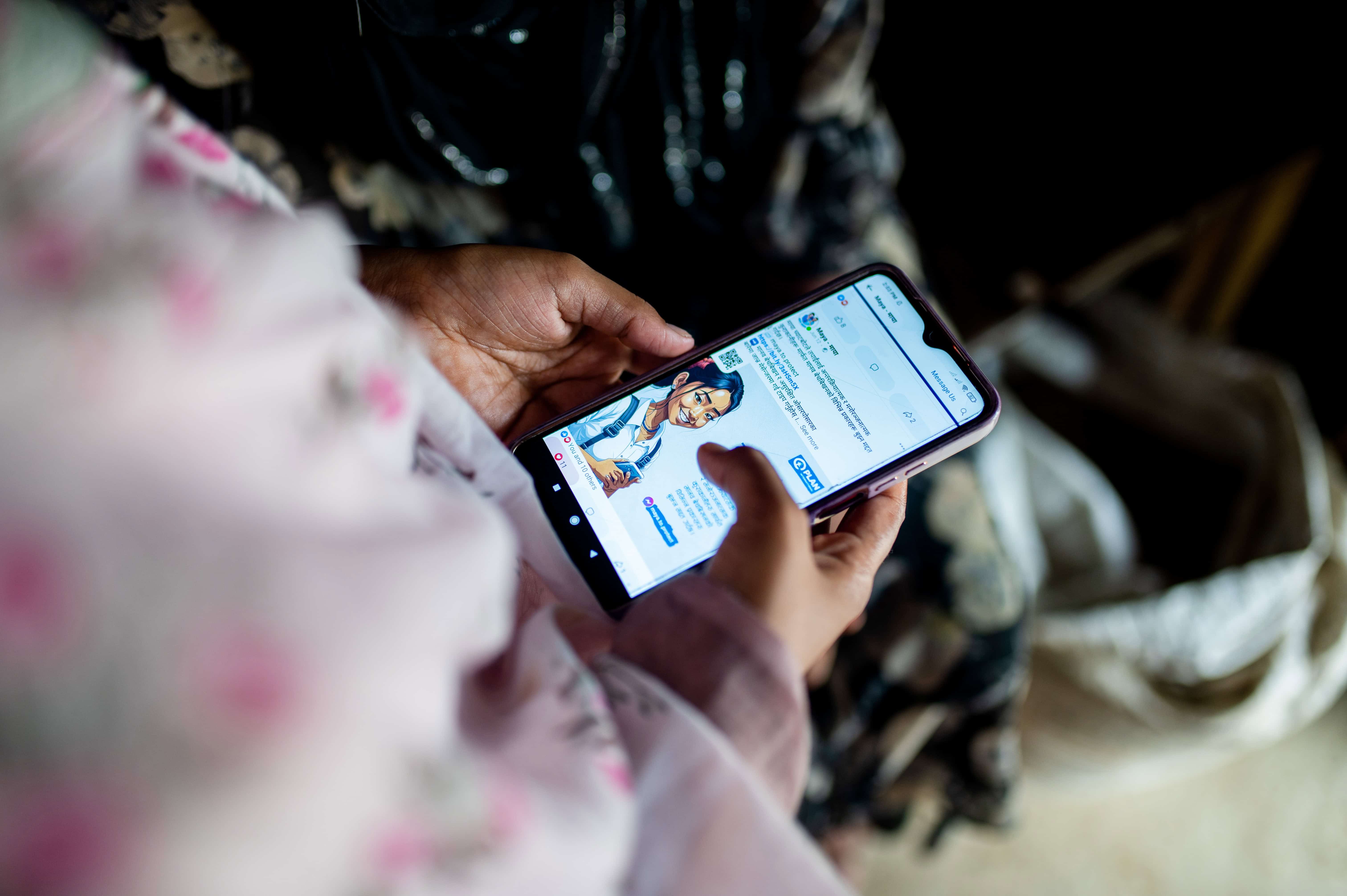
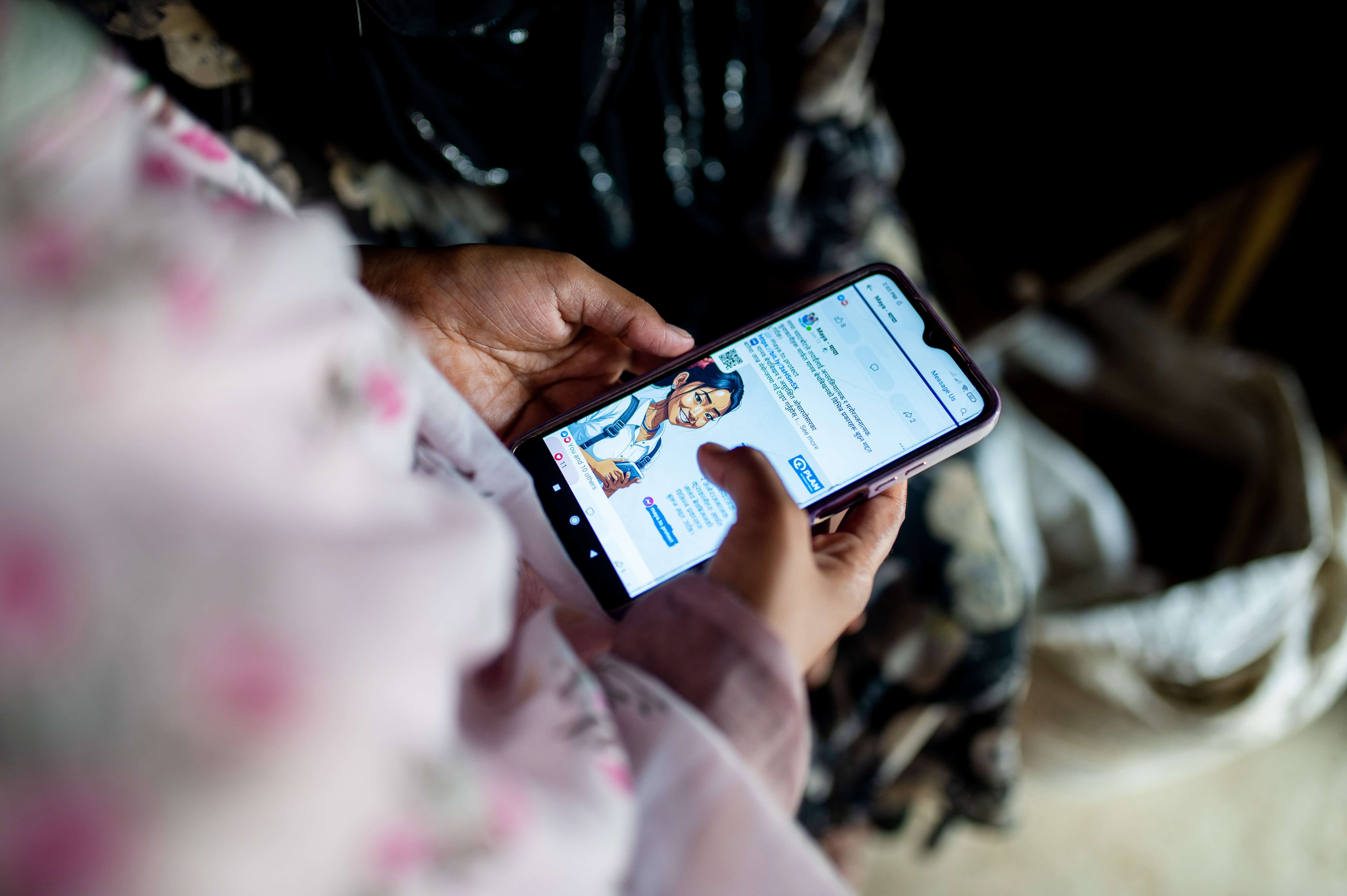
In Nepal, girls use tools like the Maya Chatbot to access information about trafficking, online risks and how to stay safe. But without broader systemic protections, they remain vulnerable to digital harms. | Plan International, Naresh Newar
And it’s not happening on obscure corners of the internet. It’s happening on widely used apps and platforms, where disappearing messages, anonymity and limited safeguards create the perfect environment for abuse.
What needs to change
Maybe — just maybe — this is the moment to strengthen the systems that prevent harm before it happens, not after. Girls need early-warning tools, trauma-informed reporting and design that prevents grooming pathways. These recommendations echo what girls shared directly in our Building Digital Resilience research conducted in partnership with CNN As Equals — the same gaps young people continue raising in policy spaces as they call for protections that keep up with evolving online harms.
2. Image-based abuse is becoming normal — and AI is making it worse
Nonconsensual sharing has been around for years. But now, girls don’t even need to send a photo for a fake one to appear. Thanks to AI, digitally manipulated sexual images can be created in minutes and spread rapidly. No consent. No awareness. No control.
And here’s the reality: many platforms are still playing catch-up.
We need enforceable protections that prevent platforms from hosting manipulated sexual content of minors — whether AI-generated or not.
3. Cyberbullying and harassment are pushing girls out of the conversation
Girls want to show up online the same way boys do — to share ideas, lead movements, be funny, exist. But when harassment becomes routine — the comments, the DMs, the pile-ons — a lot of girls just log off. And honestly, it’s not hard to understand why.
This isn’t just annoying. It’s strategic — and deeply harmful.
This mirrors what girls shared in our 2025 State of the World’s Girls report: online harassment chips away at girls’ confidence, voice and leadership long before adulthood. And as we explored in our blog on why girls’ safety is the missing link in economic empowerment, that loss of safety — online or offline — has ripple effects on their education, opportunities and long-term economic futures.
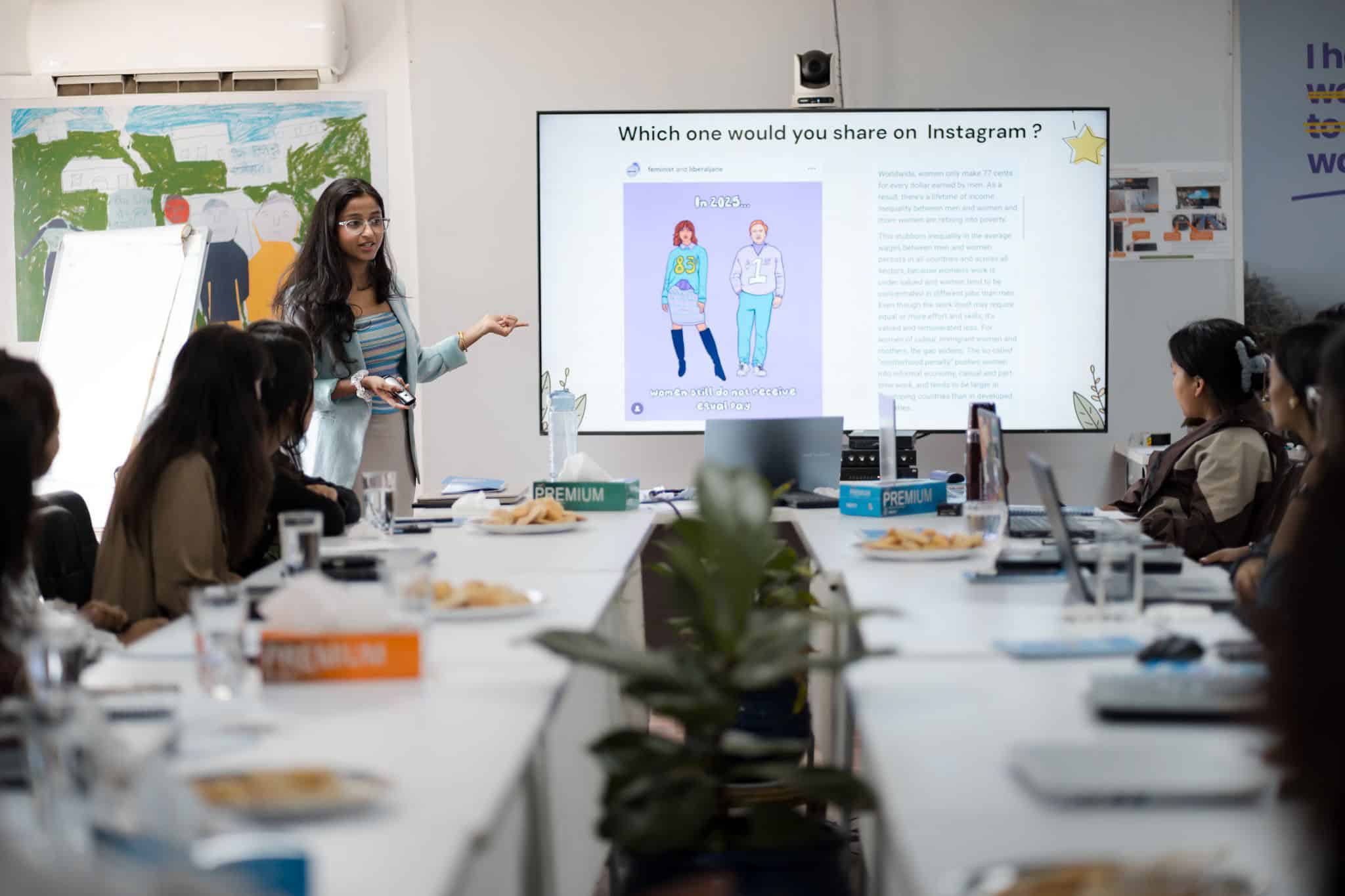
In Nepal, Plan International brought together girls and women leaders in technology for a digital literacy workshop — helping young women build the skills and confidence they need to navigate online spaces safely. | Plan International
What needs to change
Better moderation, clearer consequences and platform rules that protect young users — not silence them.
4. Digital stalking and coercive control are hiding in plain sight
Coercive control doesn’t always look like yelling or threats. It looks like:
— “Send me your password.”
— “Turn on your location.”
— “Show me who you’re talking to.”
Especially in early relationships, it often shows up as concern or “protectiveness.” In reality, it’s surveillance and manipulation. Digital coercion is emotional abuse — and it escalates.
Plan’s work on online exploitation shows how everyday digital features can be misused in ways that put girls at risk. Our team breaks this down in blogs like this one on recognizing trafficker tactics online, which shows how traffickers and exploiters use social platforms to target young people.
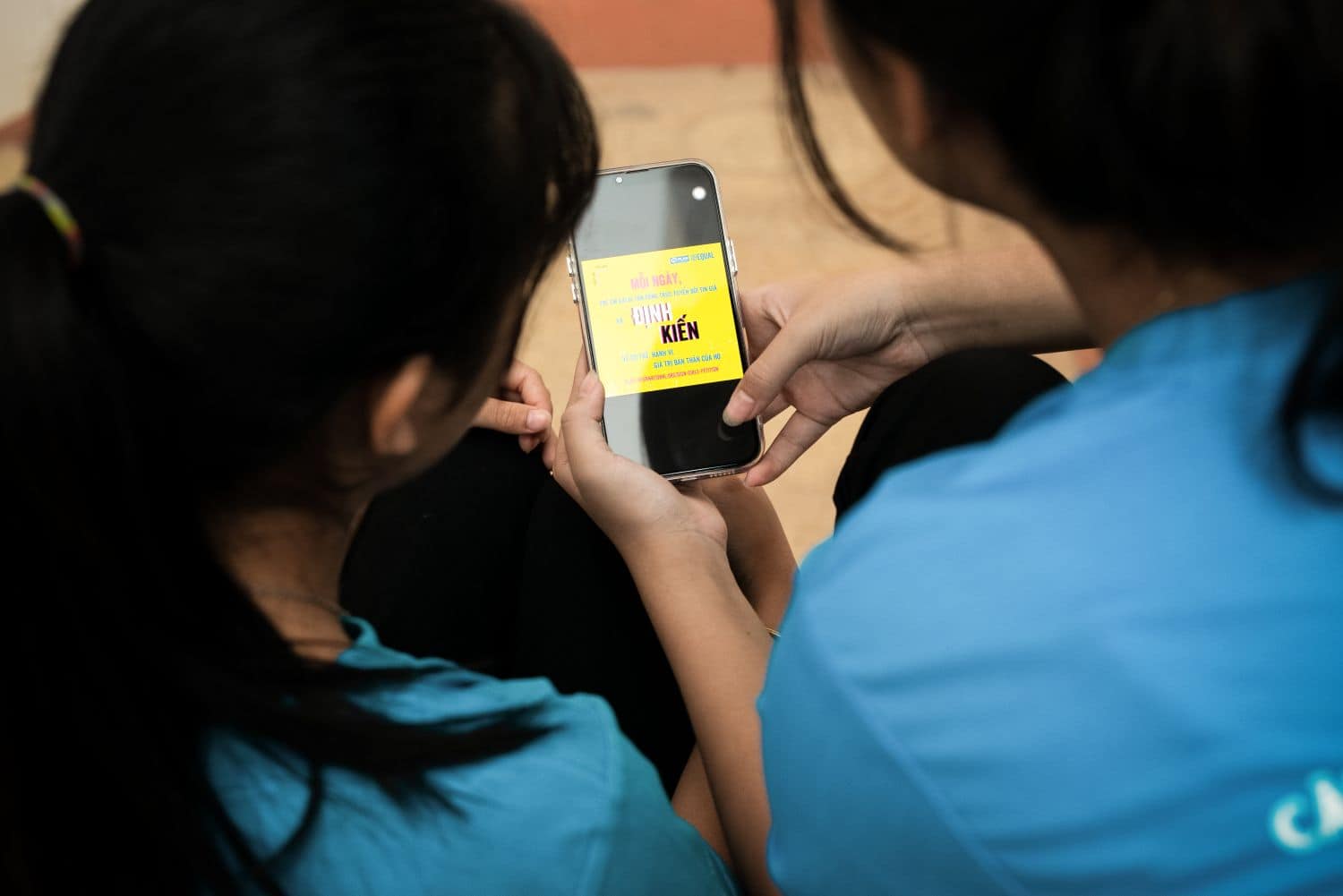
In Vietnam, Plan International teaches girls and young people how to navigate online spaces safely — from spotting cyberbullying to protecting themselves from gender-based online violence. | Plan International
What needs to change
Digital literacy needs to reflect girls’ lived realities, and platforms must build safeguards that prevent these features from being misused.
5. Platforms weren’t built for girls — and it shows
The internet wasn’t designed with girls in mind. In fact, most platforms weren’t designed with young people in mind at all.
The result:
— Algorithms that amplify harmful content
— Public-by-default settings
— Hard-to-find safety tools
— Reporting systems that don’t meet young people’s needs
Girls have been clear about what they want: privacy by default, real control over their content, fast reporting systems and transparency.
What needs to change
Safety-by-design shouldn’t be optional. It should be the baseline.
Policy matters too: Take It Down + KOSA
Let’s be honest: none of this works without policy. Platform design can only go so far if the rules themselves don’t protect young people. And finally, we’re seeing real movement.
The Take It Down Act is now law — a major victory that gives young people a pathway to remove sexual images of themselves from the internet. Now the real work begins: ensuring the law is enforced and implemented in ways that genuinely protect minors.
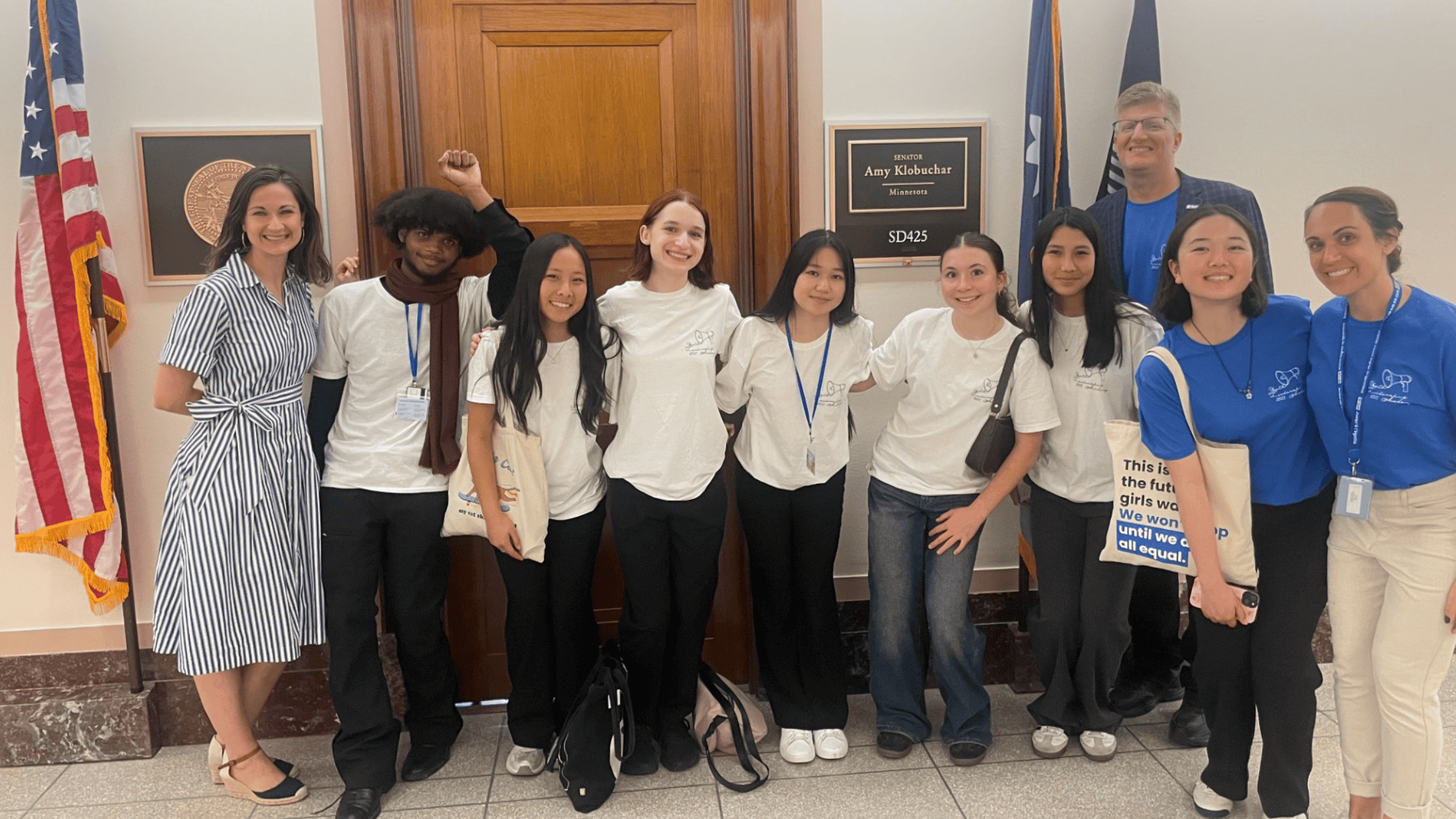
Plan International USA’s Youth Leadership Academy participants meet with Sen. Amy Klobuchar to advocate for the TAKE IT DOWN Act — a law that gives young people a pathway to remove sexual images of themselves from the internet. | Plan International
And in the U.S., Plan’s youth advocates continue to support efforts like the Kids Online Safety Act, or KOSA, legislation that would require platforms to reduce the risks their systems pose to young users.
Girls deserve online spaces where safety isn’t an afterthought — it’s the design principle.
The good news? Girls are leading the fight
Despite everything, young people aren’t waiting for someone else to fix this. They’re building tools, launching campaigns and pushing policymakers.
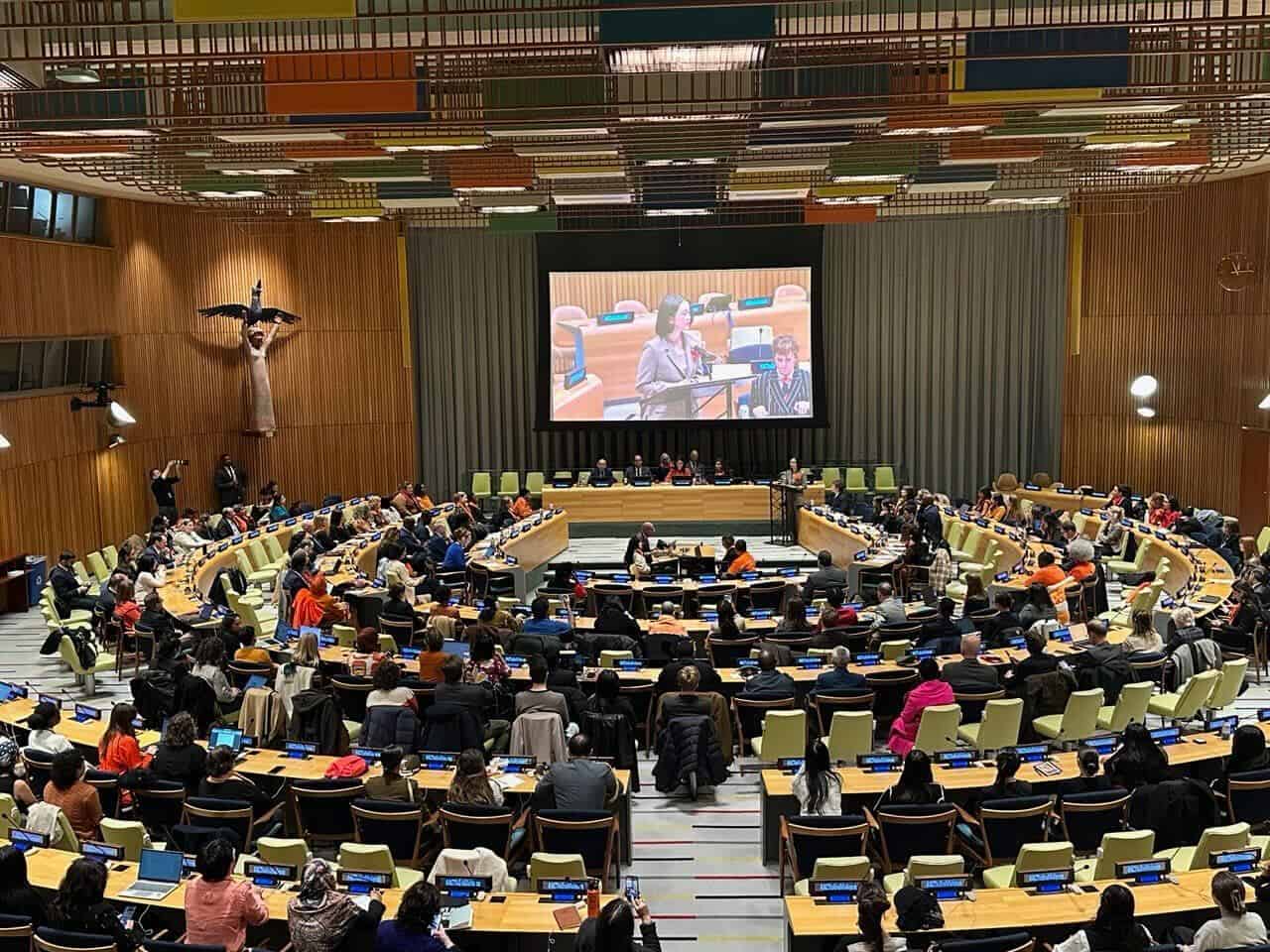
Mona delivers opening remarks at the United Nations’ Global Commemoration for the International Day for the Elimination of Violence Against Women — sharing her experience as a survivor of online abuse and calling for action to end digital violence.
According to news reports, 303 students and 12 teachers have been abducted by armed actors from a school in Nigeria’s Niger State in the early hours of Friday, 21 November 2025.
While 50 students managed to escape and return to their families on Sunday, 23 November, more than 250 remain captive.
Speaking on the abduction, Plan International Nigeria’s Country Director, Dr Charles Usie, said:
“This incident comes less than one week after the abduction of schoolgirls in Kebbi State, signalling a disturbing pattern of repeated attacks on Nigeria’s learning environments and the growing risk faced by schoolchildren. We cannot, as a nation, continue to watch children being taken from classrooms with no guarantee of protection. A child’s quest for education should never become a risk to their life. Schools must be places of learning, not places of fear.”
“Every child deserves an education in an environment that protects their safety, dignity and future – yet currently, armed non-state actors can abduct pupils and educators with impunity. If the safety of our children is not guaranteed, then the future of this country is in jeopardy. Nigeria must demonstrate stronger political will to uphold the right to education, because in failing to protect children, we are failing our nation.”
“This latest abduction, coming so soon after the Kebbi incident, shows once again that current measures to keep children safe in and around schools are not sufficient. Learning environments remain exposed to serious threats, and the systems that should prevent or respond to attacks are still far too weak. These recurring attacks continue to erode parents’ confidence in the education system and in the ability of authorities to protect their children.”
“We call on Nigeria’s Federal Government to treat these cases as a matter of national priority and demonstrate its commitment to safeguarding children. Security and intelligence agencies must act swiftly to locate and safely rescue the abducted students and staff. We also urge both national and state authorities to strengthen community-based protection systems, improve early warning and rapid response mechanisms, and increase investment in school safety across the country.”
“In addition to national action, we call on the international community to reinforce efforts to protect schools in crisis-affected regions and to uphold commitments under the Safe Schools Declaration so that learning spaces everywhere are protected from attack.”
“We reaffirm our commitment to standing with children, especially girls, across Nigeria, advocating for their safety, education, and future. We cannot afford to normalize the abduction of children who simply want to learn. Schools must be safe spaces, not zones of fear.”
“Where you start in life doesn’t define where you can go.”
El speaks these words from deep personal experience.
Her journey spans thousands of miles, from a small mountain village in the Philippines to her current home in California. But even though an ocean separates them now, the community that shaped El is never far from her heart.
El grew up in a loving home with parents who wanted their children to have every opportunity in life. That’s why, at age 3, they enrolled El in Plan International’s sponsorship program.
As a sponsored child, El and her family participated in various Plan projects in her community. Some of the benefits they received brought immediate relief, like materials to build their first proper bathroom. Others created lasting change, as El’s parents gained skills that would support their family for years to come.
“They trained my dad in carpentry and gave him jobs building houses and furniture, while my mom received training in handcraft skills,” El recalls. Her sister received a scholarship to continue her education.
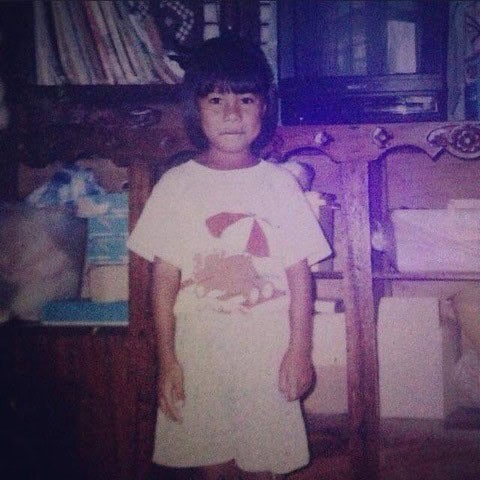
El became a sponsored child with Plan International when she was 3 years old.
The family also participated in community events organized by Plan. “Every year, there was a ‘Family Day’ event in our community where all the sponsored families gathered, shared home-cooked food, played games with prizes and had the sponsored kids sing or dance in front of all the families,” El shares. “It strengthened the bond of the entire community and gave us a sense of camaraderie.”
A bold move
El’s experience as a sponsored child gave her opportunities, confidence and a vision for a different future.
“I believe that sponsorship and community programs don’t just help in the moment, they create ripples that last for generations. When you give a child or a family an opportunity and an experience of a lifetime, you’re not just improving their living conditions, you’re also shaping how they see themselves and what they believe is possible.”
She carried this belief and determination with her into adulthood, choosing to invest in herself and to make bold moves to realize her dreams — including one that brought her all the way across the ocean.
“My move to the U.S. came with challenges, tons of unknowns, even regrets, especially leaving everything and everyone behind,” El recalls.
Still, El persevered, and her hard work paid off. “I now work as the Senior Manager for Compliance at a renewable energy company in the U.S., where I intentionally show up every day to achieve our goals with empathy, teamwork and a purpose-driven mindset.”
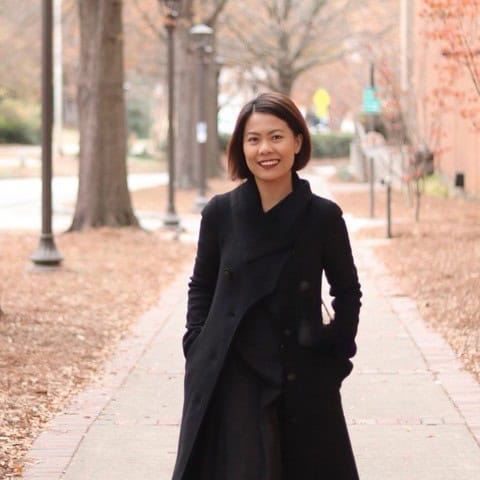
El now lives in California, where she works as a Senior Compliance Manager for a renewable energy company.
The impact of childhood support extends far beyond the early years. For El, it inspired a commitment to continue the cycle of giving.
“Someone’s decision to give, help and support families they don’t even know personally can change the entire course of a child’s life. I can’t stress this enough, truly, there is power in giving back and paying it forward.”
After a decade of charitable work and volunteering, El decided in 2023 that it was time to do more for the children in her hometown.
“I thought it’s time to pay it forward and give back to the community where I grew up – where I started to build my own dreams,” El says. “Thus, I took a step further and founded Pay It Forward in the Philippines, through the help of my siblings, friends and cousins. We built a nonprofit cause fueled by volunteers and supported through personal contributions.”
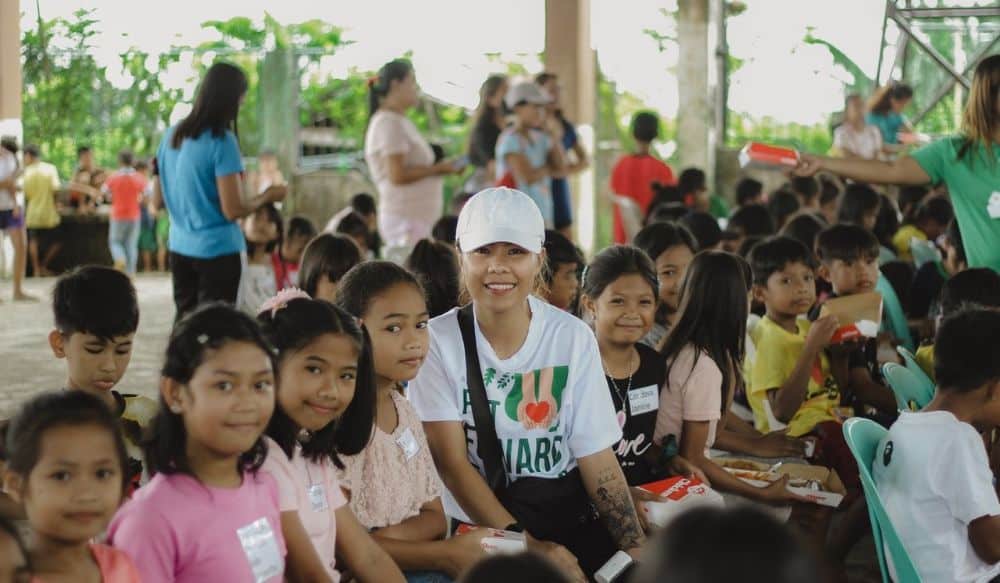
El smiles with children from her hometown at her first Pay It Forward event in 2023.
Paying it forward
El’s charity provides the tools and encouragement children need to chase their dreams.
“It’s not just about supplies or toys or food that we give away, it’s about planting seeds of hope and possibility today and for their future. Because in the end, I strongly believe that if I can do it, so can these children.”
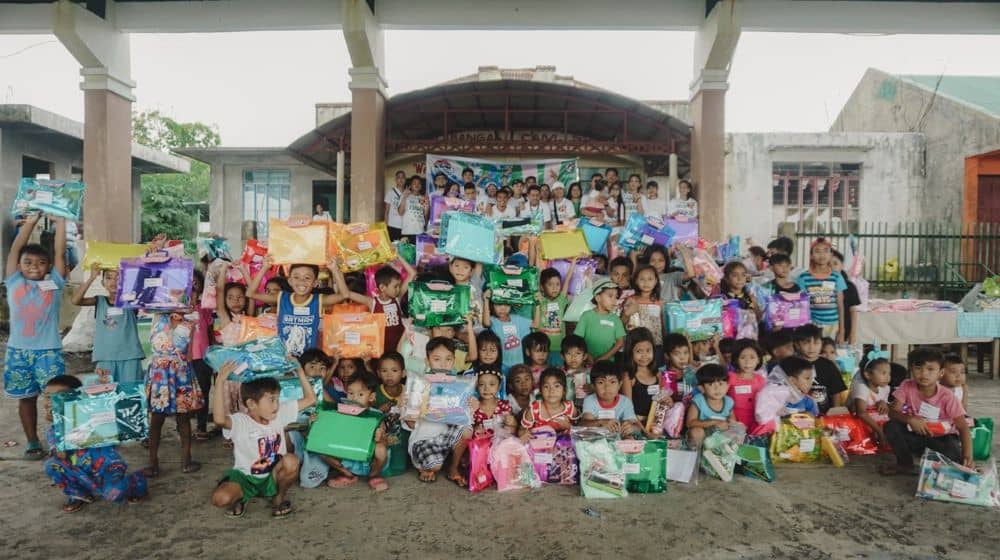
In May 2023, El’s charity, Pay It Forward, hosted their first event, which provided school supplies, hygiene kits, toys, clothes and meals for hundreds of children in the Philippines.
This year, the charity’s third annual event will be held in December, with a goal of reaching between 150 to 200 children in the Camarines Sur province.
Creating ripples of change
El’s story illustrates how support creates change that extends far beyond one child or family. And she has an important message for anyone who is thinking about sponsoring a child:
“Please know your kindness will go further than you can ever imagine. You might be planting seeds you’ll never see bloom, but those seeds will grow, bear fruit, change lives for the better and one day they will pay it forward too. How powerful is that?”
Around the world, girls are challenging gender norms in creative, courageous and often overlooked ways – but the risks are high.
A new global study from Plan International and Cardiff University, titled Girls’ Everyday Resistance, reveals that 63% of girls are resisting gender norms in secret – from earning money without their caregivers’ knowledge to forming hidden friendships or relationships – as public resistance carries serious threats to their safety. Despite these risks, nearly half (47%) of the girls were openly disobeying gender norms in some way.
Drawing on 18 years of qualitative data from Plan International’s Real Choices, Real Lives study, which followed 142 girls in nine countries – Benin, Togo, Uganda, Brazil, the Dominican Republic, El Salvador, Cambodia, the Philippines and Vietnam – from birth through age 18, the report uncovers how girls engage politically in everyday life, often without identifying as activists.
The research shows that girls’ resistance takes many forms: playing sports traditionally associated with boys, questioning why they are expected to do more chores or have fewer freedoms, calling for better access to sex education, or advocating for the ability to make decisions about their own lives. These everyday acts are brave expressions of political engagement as they seek to undo traditional gender norms – though they often go unnoticed.
“Gender equality cannot be achieved in the shadows,” said Dr Keya Khandaker, research manager at Plan International. “These findings are a wake-up call. Girls are already driving change and are telling us that what they need is supportive adults, safe environments, and the freedom to be heard without fear of harm.
“Girls are asking adults to share the responsibility for achieving gender equality,” she added. “They don’t want to be heroes, they want to be listened to.”
While public attention often focuses on famous girl activists like Greta Thunberg, the report reveals that most girls engage politically in quieter but equally transformative ways – and that they need greater support from adults to do so safely.
“Girls everywhere are finding creative and often subtle ways to push back against gender inequalities in their communities,” said Dr Rosie Walters, senior lecturer in international relations at Cardiff University.
“But for many, speaking out or openly disobeying gender rules can be dangerous. The message to those who want to support girls’ activism is to help make it safe for them to express their views, question norms and influence decisions.”
The findings show that overtly challenging gender rules can carry a risk of backlash. Among the girls who resisted, 83% said they had experienced physical punishment during childhood for doing so. As a result, fewer than half felt able to challenge traditional gender norms openly, and most hid their resistance to stay safe.
The report also broadens the definition of activism, showing that acts often regarded as small or personal can drive lasting change.
In Brazil, Juliana grew up loving football, despite her grandparents’ belief that “it is not normal for girls to play.” Ignoring warnings to stay off the pitch, she kept returning to the field.
Juliana’s friends teased her for being “a tomboy,” but undeterred Juliana pushed back:
“That’s sexist – a girl can play ball just like a boy.” Her persistence eventually helped shift her grandmother’s views, who began to support her passion, saying it was “something I won’t take away from her.”
Juliana’s story shows that when adults listen and prioritize girls’ well-being over gender expectations, they help create the space for girls to thrive – and open the door to wider social transformation.
The report calls on governments, educators, and communities to create an environment where girls can lead the change they want to see.
Governments should strengthen laws that promote equality and ban corporal punishment and fund education and community initiatives that and support girls’ leadership.
NGOs and civil society must work with caregivers to challenge restrictive gender norms and help girls build skills, networks, and confidence.
Schools should create safe spaces for girls to speak freely, lead activities, and receive comprehensive sex education.
Caregivers and community leaders must listen to girls, make them feel safe to share their opinions, and be role models for equality in their households.
The research shows that girls’ ability to resist depends not only on their courage but also on adults’ willingness to create safer and fairer communities where girls can thrive. When girls’ everyday resistance is met with consideration and support, it becomes the foundation of lasting equality.
About Plan International
Plan International is an international development and humanitarian nonprofit that advances children’s rights and equality for girls. Working together with children, young people, supporters and partners, we strive for a just world, tackling the root causes of challenges children face. We are there from birth until adulthood, and we support children to prepare for and respond to crises and adversity, while particularly focusing on the experiences of girls. With more than 85 years of experience, we work to transform lives in more than 80 countries. We won’t stop until we are all equal.
For further information or interview requests, please contact:
Across Benin to Vietnam, young girls are pushing back against gender expectations. Through Plan International’s 18-year study, we uncover powerful stories of resilience, defiance and change driven by girls navigating and reshaping their worlds.
Devex has released its 2025 ranking of the 50 largest U.S.-based international NGOs, and Plan International USA is listed at No. 13. The report analyzes how INGOs are navigating one of the most significant funding disruptions in recent memory, driven by widespread U.S. government cuts and shifts in donor priorities.
Using revenue data from the latest available IRS Form 990 filings, the report highlights which organizations are most exposed to government funding changes and how they are adapting. Plan’s position reflects the scale of our global work across health, education, protection, and youth economic empowerment, as well as our continued shift toward stronger private and philanthropic partnerships.
Amid a rapidly changing landscape, this ranking underscores the resilience of our mission and the trust placed in our work by donors, partners, and the communities we serve. As the report notes, INGOs that invest in diversified funding models and evidence-based, community-driven programming are best positioned to weather sector-wide change.