Search Results

Search results for

0 result(s) found
A boy runs barefoot beside a rolling bike tire, guiding it with a stick in a game called ā€œSticks and Wheels.ā€ A girl skips rope with a laundry line. Children tie string to rusted cans, dragging them behind like clattering parade floats. Another fashions a toy car from a plastic bottle, tugging it proudly across the dirt with a piece of twine. In the heat, they gather beneath mango trees to clap, chant and laugh through hand games. And when the rains come, they stomp and splash barefooted under the torrential downpour — soaked, singing and smiling, completely unbothered. In Liberia, where I raised my daughter during her first three years, I saw children invent joy from nothing every day.

Even when playgrounds existed, they were often rusted and broken down — the kind that came with splinters, sharp edges and a side of tetanus. I was privileged to be able to send my daughter to a school that prioritized learning through play. I could create safe spaces for her at home. But for many children around us, safe places to play simply didn’t exist. There were no reliable playgrounds. No protection. No peace of mind.

Play isn’t a luxury. It’s a necessity. It’s how children recover from trauma, build resilience, develop critical skills and connect with the world around them. It’s how they stay kids, even when the world feels anything but safe.

This International Day of Play, we’re spotlighting the children and communities who remind us that play is never just play. From war zones to drought zones and from early childhood centers to football fields, here’s how Plan International is making space for joy — through programs designed to protect childhood and promote learning, healing and equality.

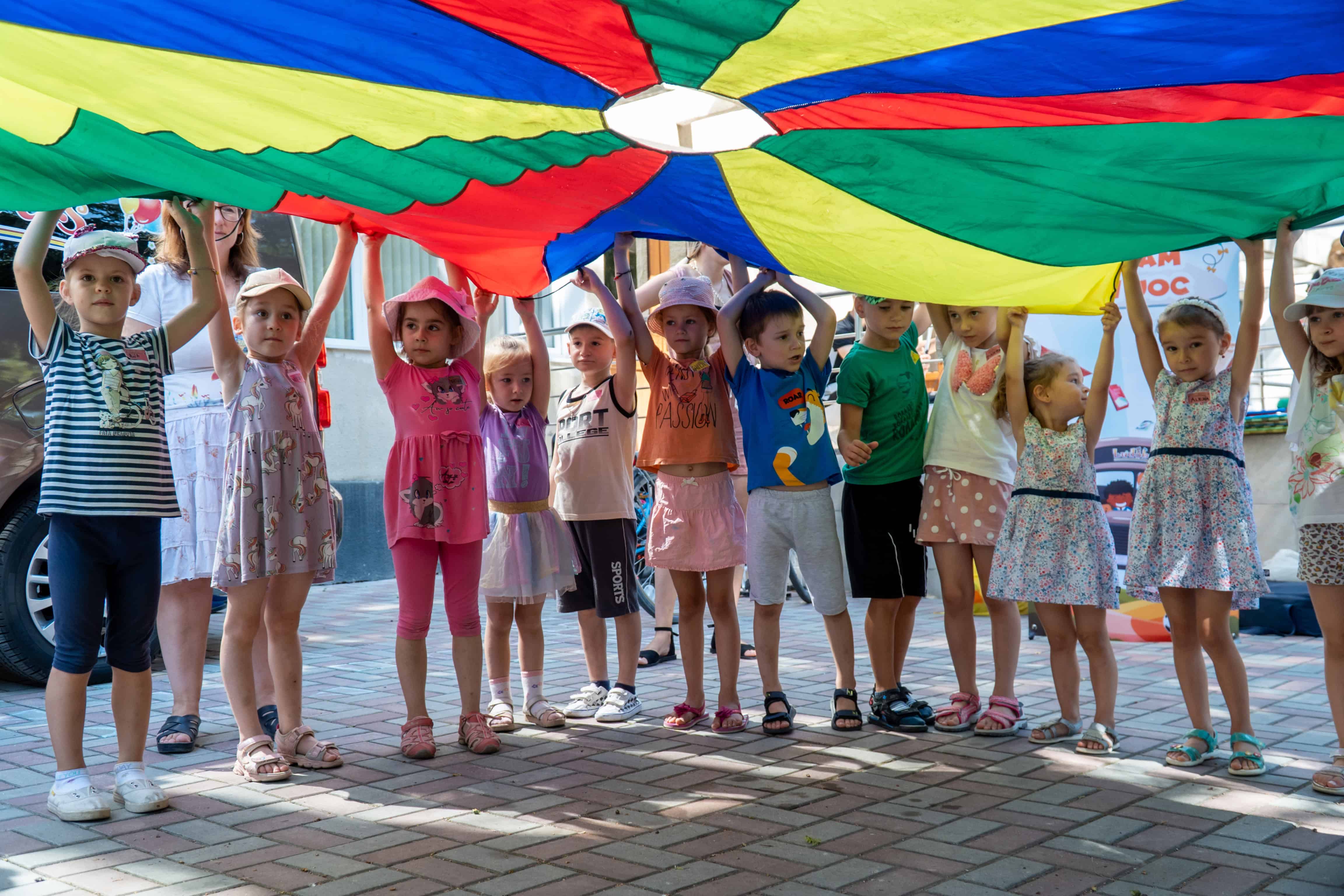
Children in Moldova stand in a circle holding up a colorful parachute during a visit from the Ludobus, Plan’s mobile play bus that offers games, books and psychosocial support for refugee and host community families.
Children in Moldova lift a colorful parachute during a Ludobus visit — a mobile play bus run by Plan that brings educational games and psychosocial support to refugee and host communities affected by the conflict in Ukraine. | Ā© Plan International

Moldova: The play bus brings joy and relief

The Ludobus — short for ā€œplay busā€ — is a traveling toy library filled with educational games, books and puzzles. It visits villages and refugee centers across Moldova, creating joyful spaces for children and relief for mothers affected by the conflict in Ukraine. As children engage in play, mothers can rest or meet privately with psychologists to discuss their needs in a safe, supported environment.
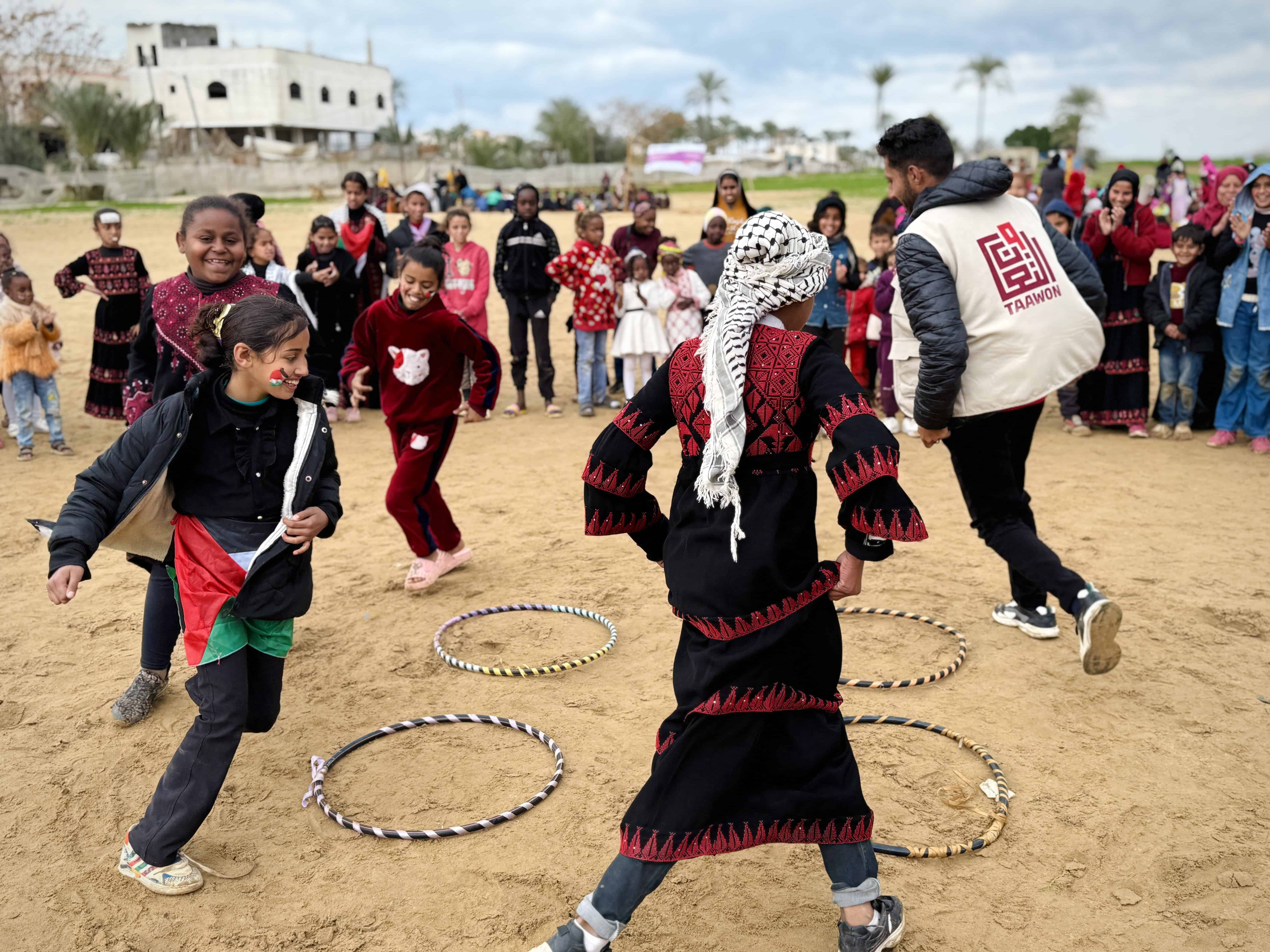
Children in Gaza smile and play a hula hoop game during a recreational session organized by Plan and partners to support displaced families and provide psychosocial relief through play.
Children in Gaza take part in recreational activities supported by Plan’s emergency relief project, implemented in partnership with local organizations ACHA and Taawon. These safe spaces help children cope with trauma through joyful, healing play. | Ahmed Salama, Ā© Plan International

Gaza: Reclaiming joy in a time of crisis

In Deir al-Balah, Gaza, where thousands of displaced families have sought shelter, Plan and its local partners are creating moments of joy amid unimaginable hardship.

Through an emergency relief project with the Abdel-Safi Community Health Association and Taawon, we support recreational activities for children affected by conflict. In these safe spaces, girls and boys dance, laugh and take part in interactive games designed to ease trauma and rebuild a sense of safety. These sessions do more than entertain — they offer psychological support and a path to healing.

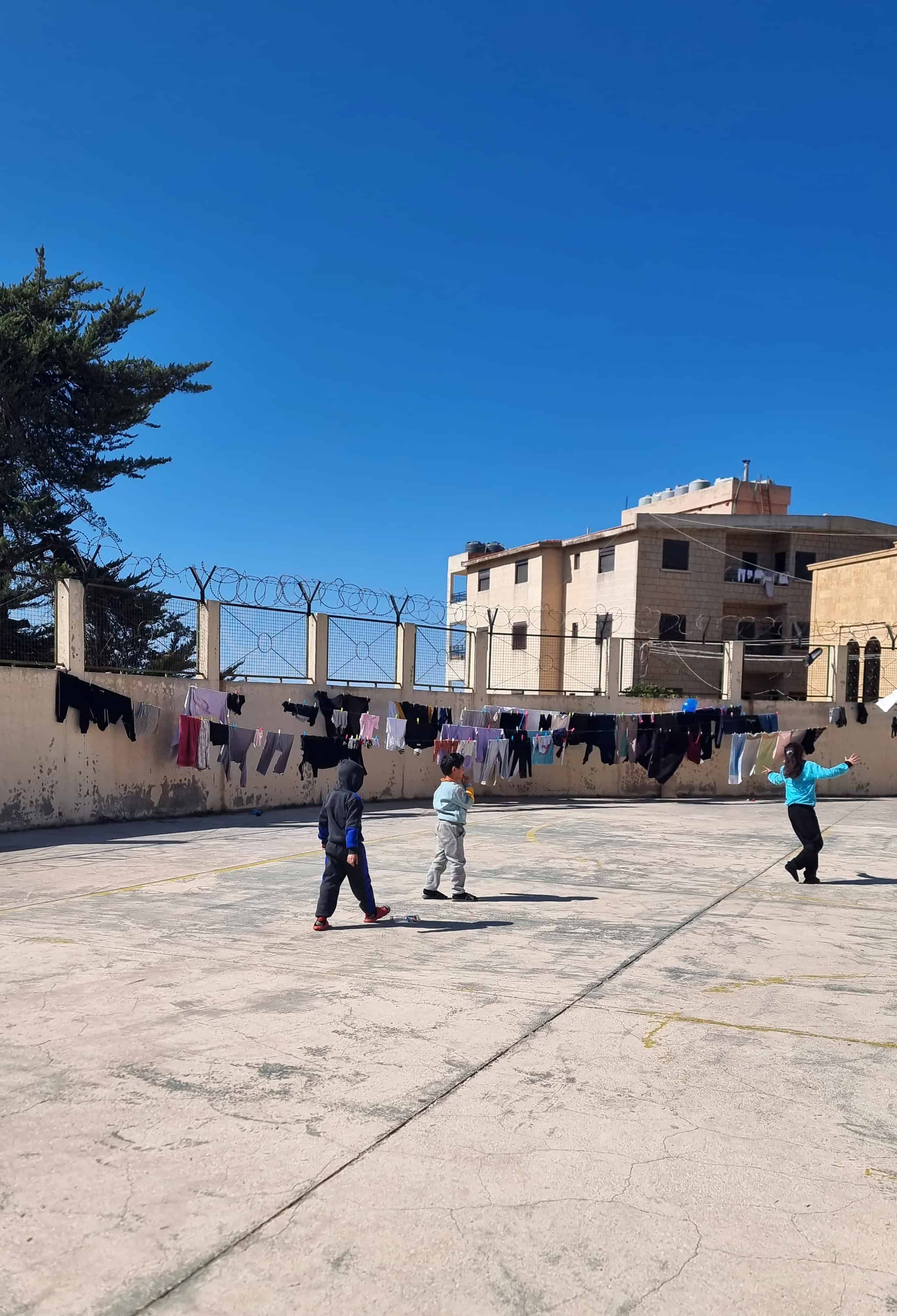
Children play in a concrete courtyard surrounded by barbed wire in Lebanon, where public schools are closed and many serve as shelters due to ongoing conflict and displacement.
Children play in a courtyard repurposed as a shelter in Lebanon, where ongoing conflict has forced over a million children out of school. Plan continues to support safe spaces for children amid the crisis. | Rachel Chalita, Ā© Plan International

Lebanon: Playing between the lines of conflict

In a dusty courtyard surrounded by barbed wire, children play as war unfolds just miles away. With more than 1 million children out of school due to conflict, Plan-supported play activities have become one of the few constants in their lives.

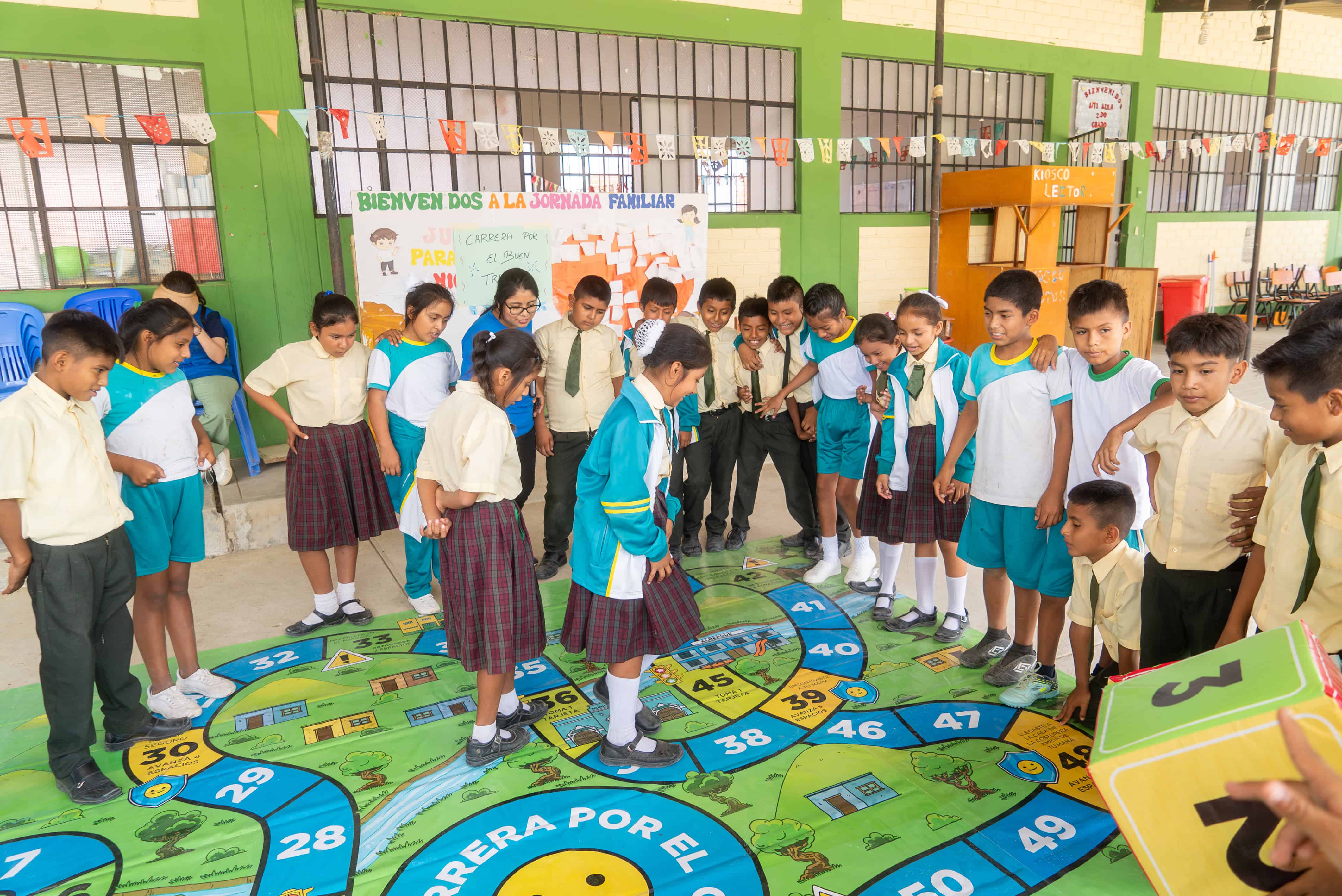
Children in school uniforms play a large floor board game during a Plan ā€œPlan of Joyā€ session in Piura, Peru, designed to support emotional recovery and resilience after flooding.
Children in Piura, Peru, play a giant board game during a Plan of Joy session — part of Plan’s response to El NiƱo floods. The sessions teach children about resilience, safety, and emotional well-being through play. | Ā© Plan International

Peru: The healing power of play after El NiƱo

After floods devastated her village, 9-year-old GĆ©nesis found solace at a ā€œPlan of Joyā€ play session. ā€œWhen we started playing, I didn’t think about the rain anymore,ā€ she says. Games helped her manage fear, build confidence and feel less alone.
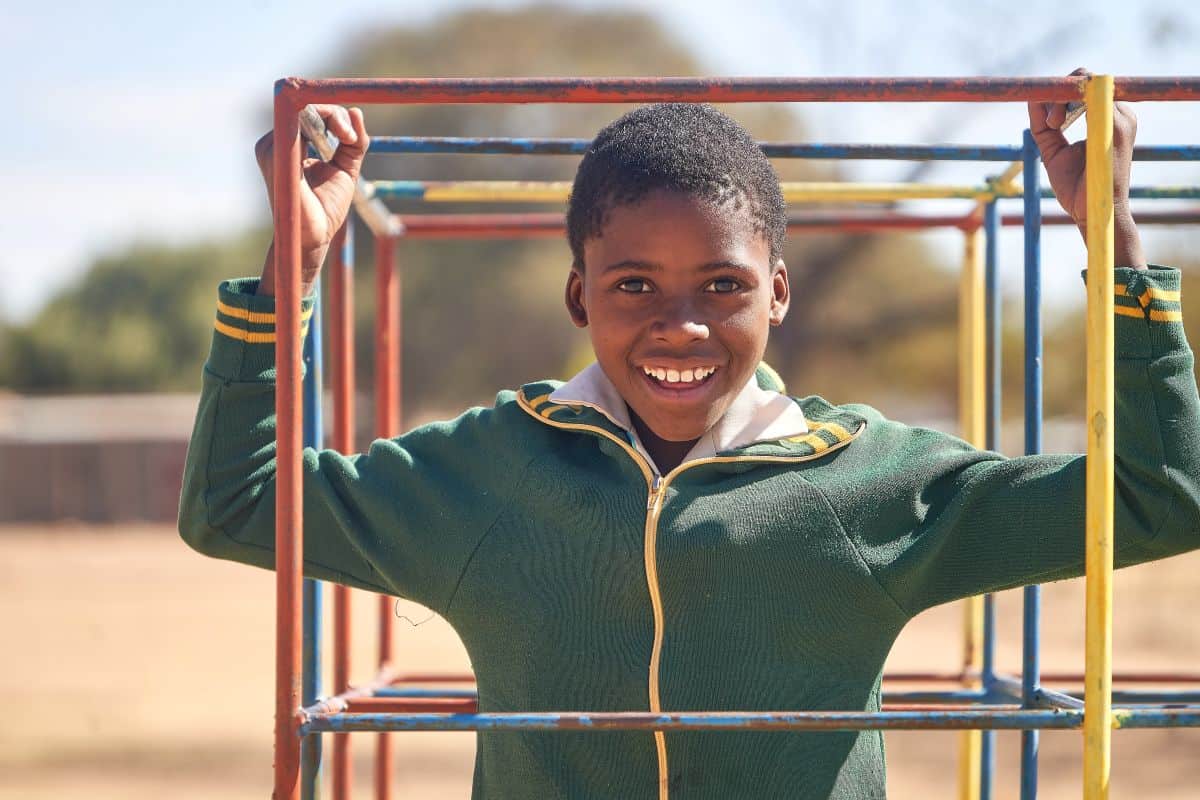
An 11-year-old girl in a green school uniform smiles while standing inside a colorful playground structure at her school in Zimbabwe, supported by Plan International.
Kimberly, 11, smiles on the playground at her school in Zimbabwe. With support from Plan International, the school has new classrooms and a safe play space — a rare and cherished place for children in her drought-affected community. | Tendai Marima, Ā© Plan International

Zimbabwe: A playground becomes a reason to stay in school

In drought-affected Tsholotsho, Kimberly, 11, finds joy in a rare safe space: the school playground built with support from Plan International.

ā€œAt home I only have my cat to play with,ā€ she says. ā€œI love the playground — it’s a safe place for us to be children.ā€

As water becomes harder to find and more children drop out of school, Kimberly holds on to her dream: to stay in school and one day become a nurse.

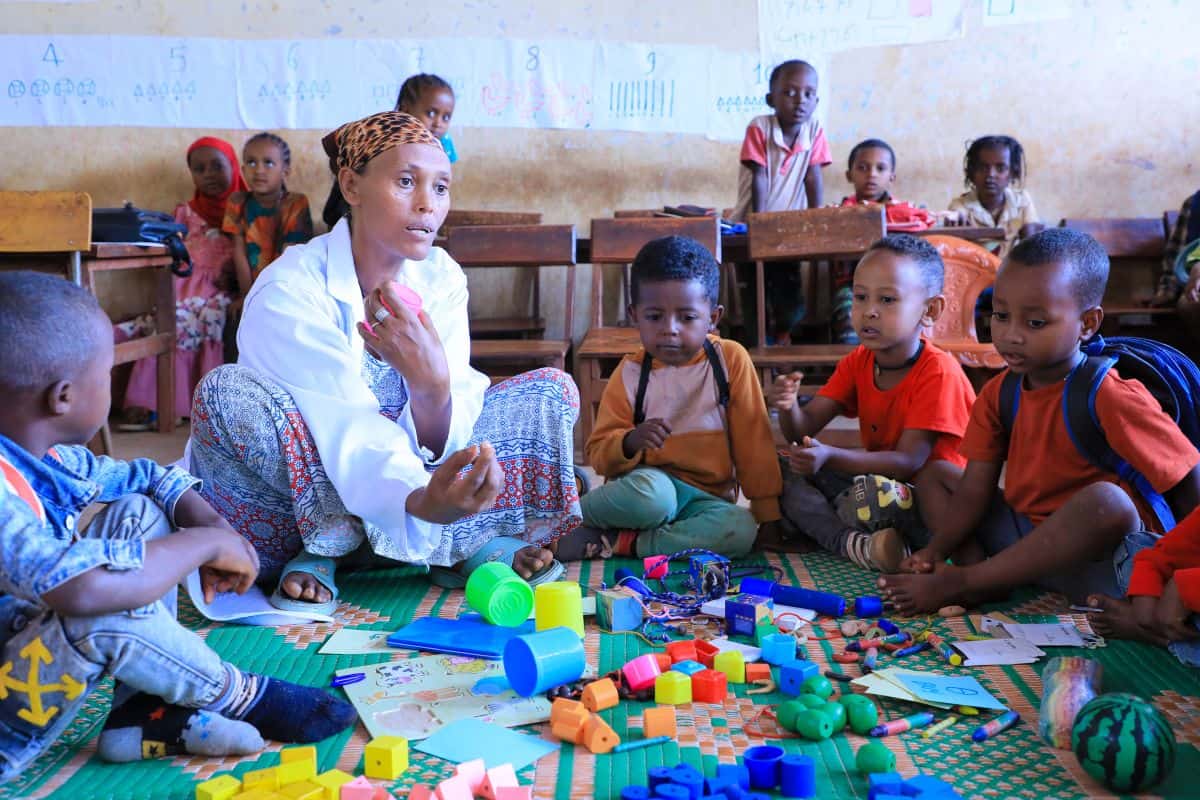
A teacher in Ethiopia leads a group of young children through hands-on play activities as part of Plan’s PlayMatters project, which supports learning and emotional development in refugee and host communities.
A teacher leads a Learning through Play session with young children in Benishangul-Gumuz, Ethiopia. Through Plan’s PlayMatters project, refugee and host community children build skills and resilience in safe, engaging environments. | Natnael Tesfaye, Ā© Plan International

Ethiopia: Learning through play in a region affected by crisis

In Benishangul-Gumuz, a region in northwestern Ethiopia affected by conflict and displacement, Plan’s PlayMatters project is helping children recover and grow. The program equips teachers and facilitators with tools to integrate learning through play into classrooms. Through guided, hands-on activities, children ages 3 to 12 in both refugee and host communities strengthen cognitive, emotional and creative skills — building resilience in safe, inclusive spaces.

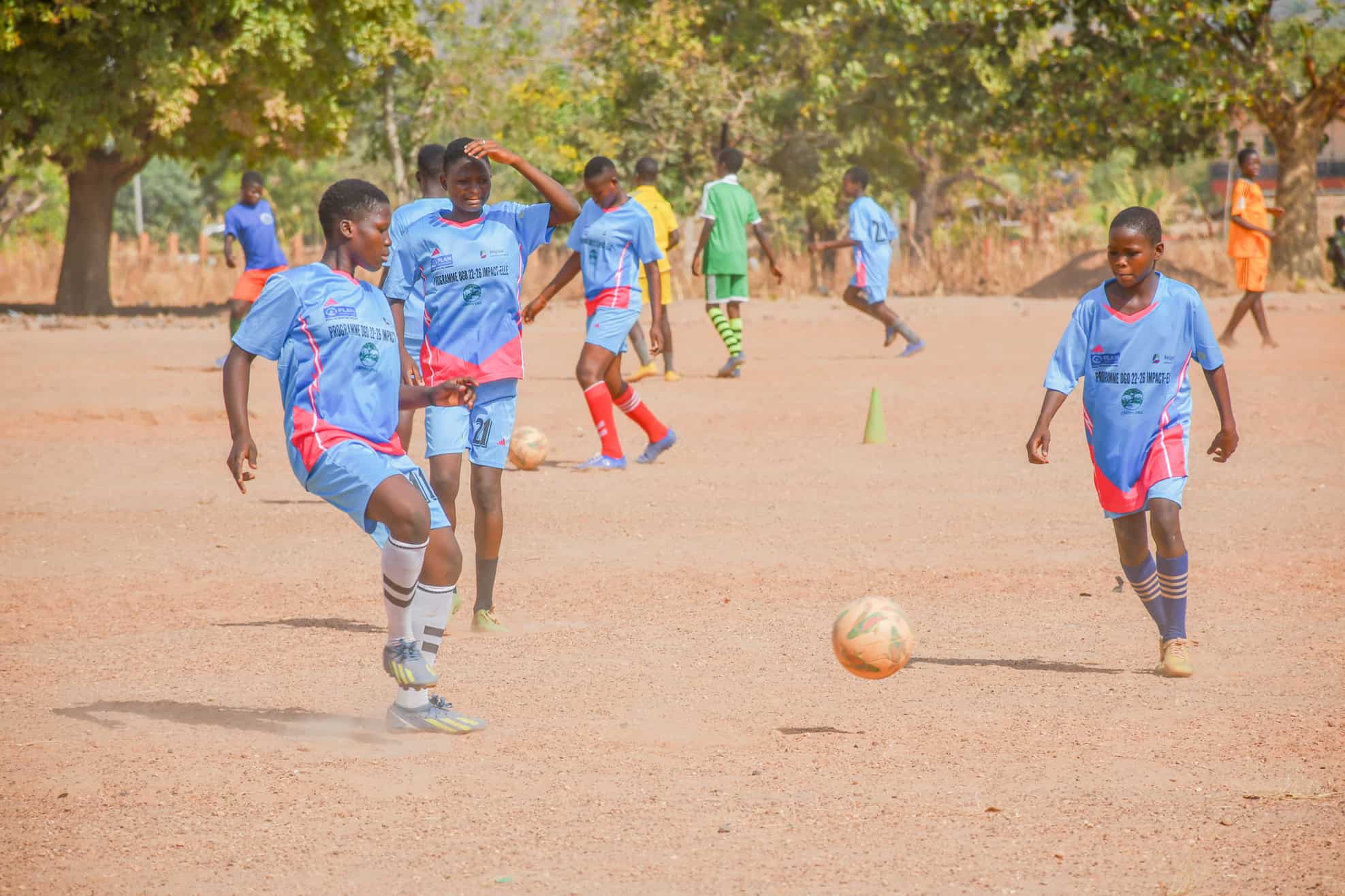
Girls in Atacora, Benin, play football in matching uniforms on a dirt field as part of Plan International’s Impact-Elle project, which uses sport to promote gender equality and leadership.
Girls play football in Atacora, Benin, as part of Plan’s Impact-Elle project. The program promotes girls’ leadership and gender equality through sport, while also reducing financial barriers with equipment and school supplies. | Isabelle Lemou, Ā© Plan International

Benin: Girls take the field — and their power

Through the Impact-Elle project, Plan supports 16 girls’ football teams in Atacora, creating safe spaces where girls can play, lead and be seen.

What begins on the field ripples out: the program challenges gender norms, fosters leadership and encourages parents to support their daughters’ participation — helping change the story for the next generation.

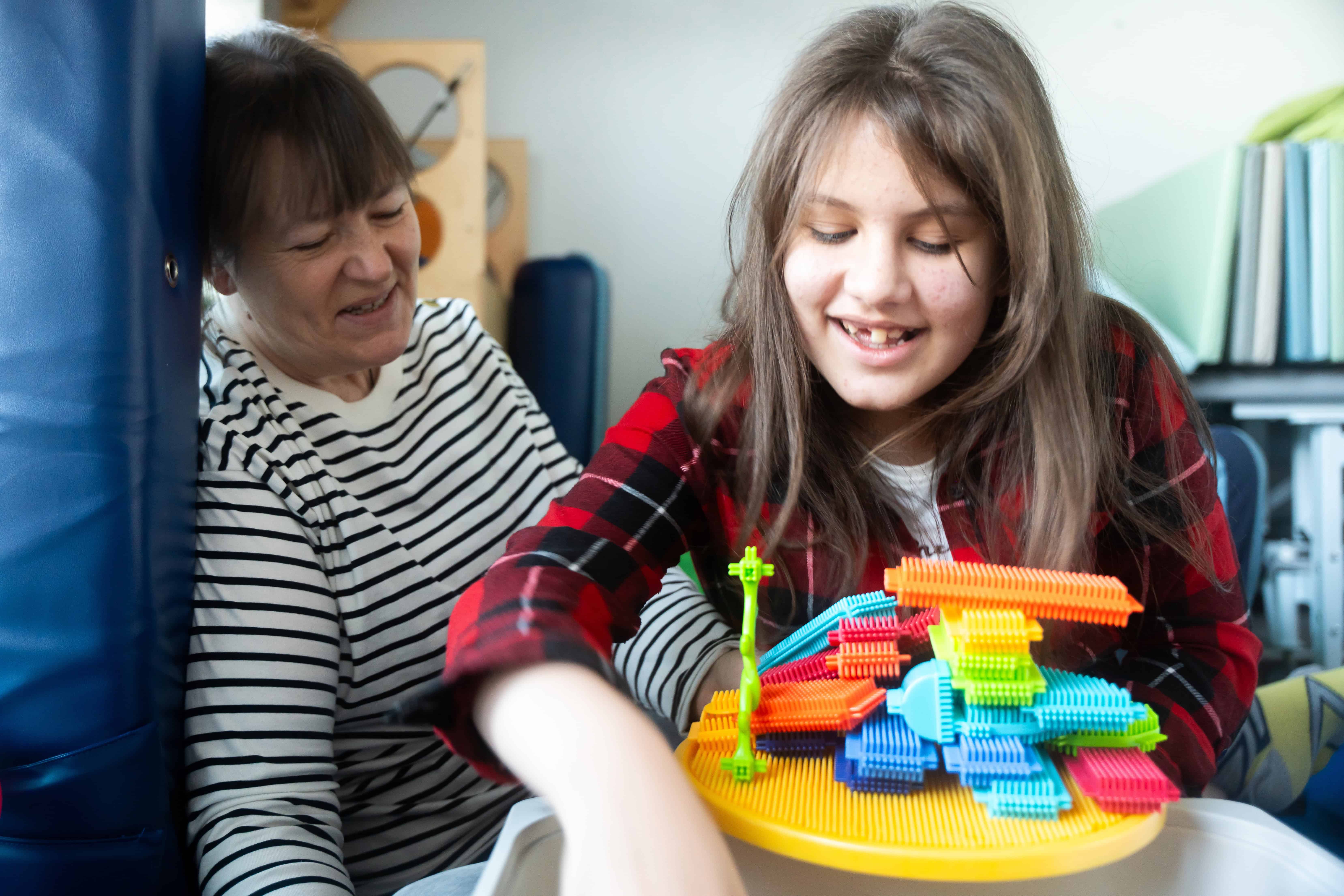
A smiling girl in Poland with long brown hair plays with colorful therapy blocks during a support session, part of a refugee assistance program run by Patchwork and Plan.
Alesia plays during a therapy session in Poland, supported by the Patchwork Association in partnership with Plan. The organization helps refugee children with disabilities access education and psychosocial services. | Weronika Jurkiewicz, Ā© Plan International

Poland: For children with disabilities, play is therapy

After fleeing Ukraine, Nataliia found support for her daughter Alesia, a child with special needs, through Plan-supported therapeutic play sessions. There, Alesia began to thrive again. For this family, play is more than fun — it’s foundational.

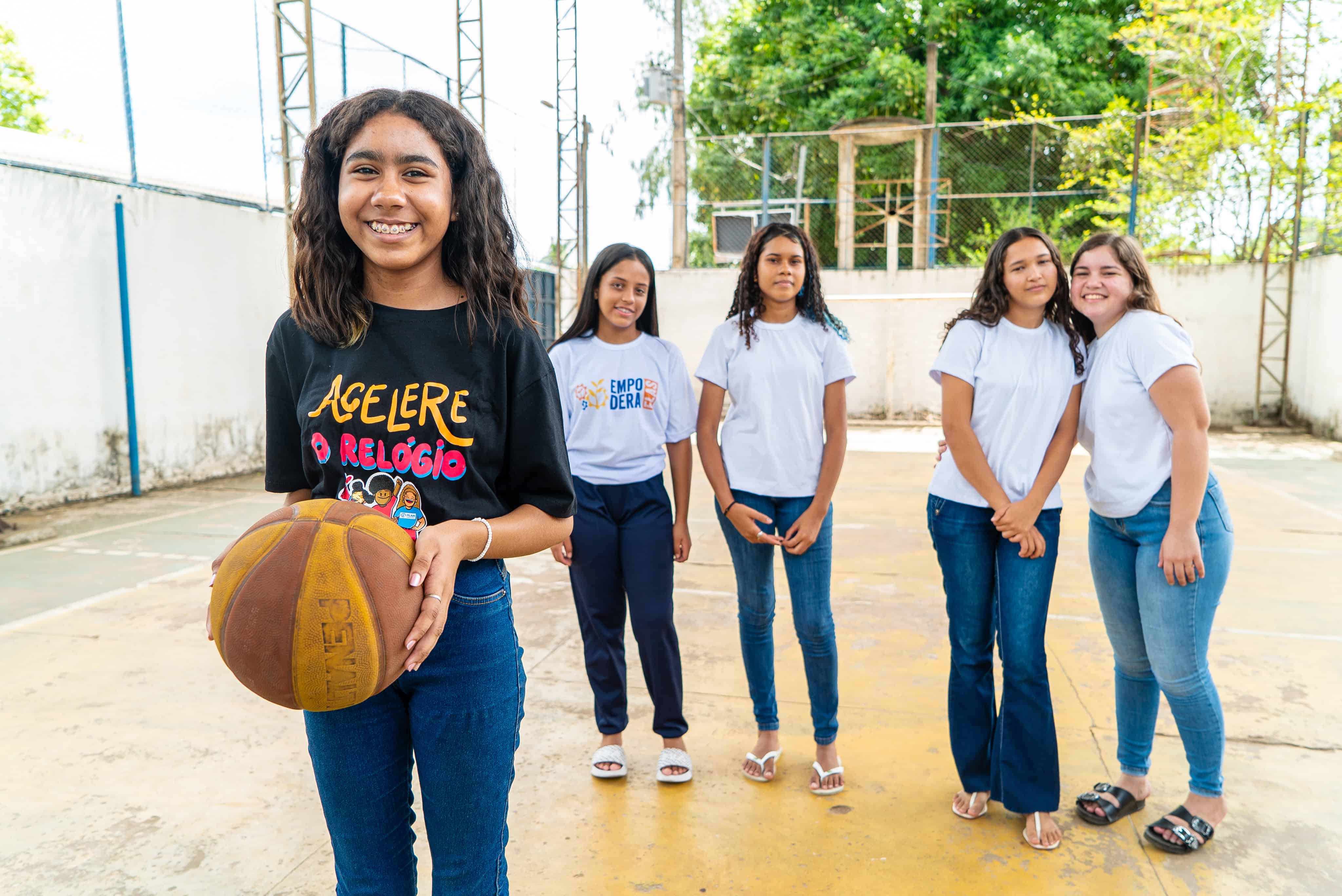
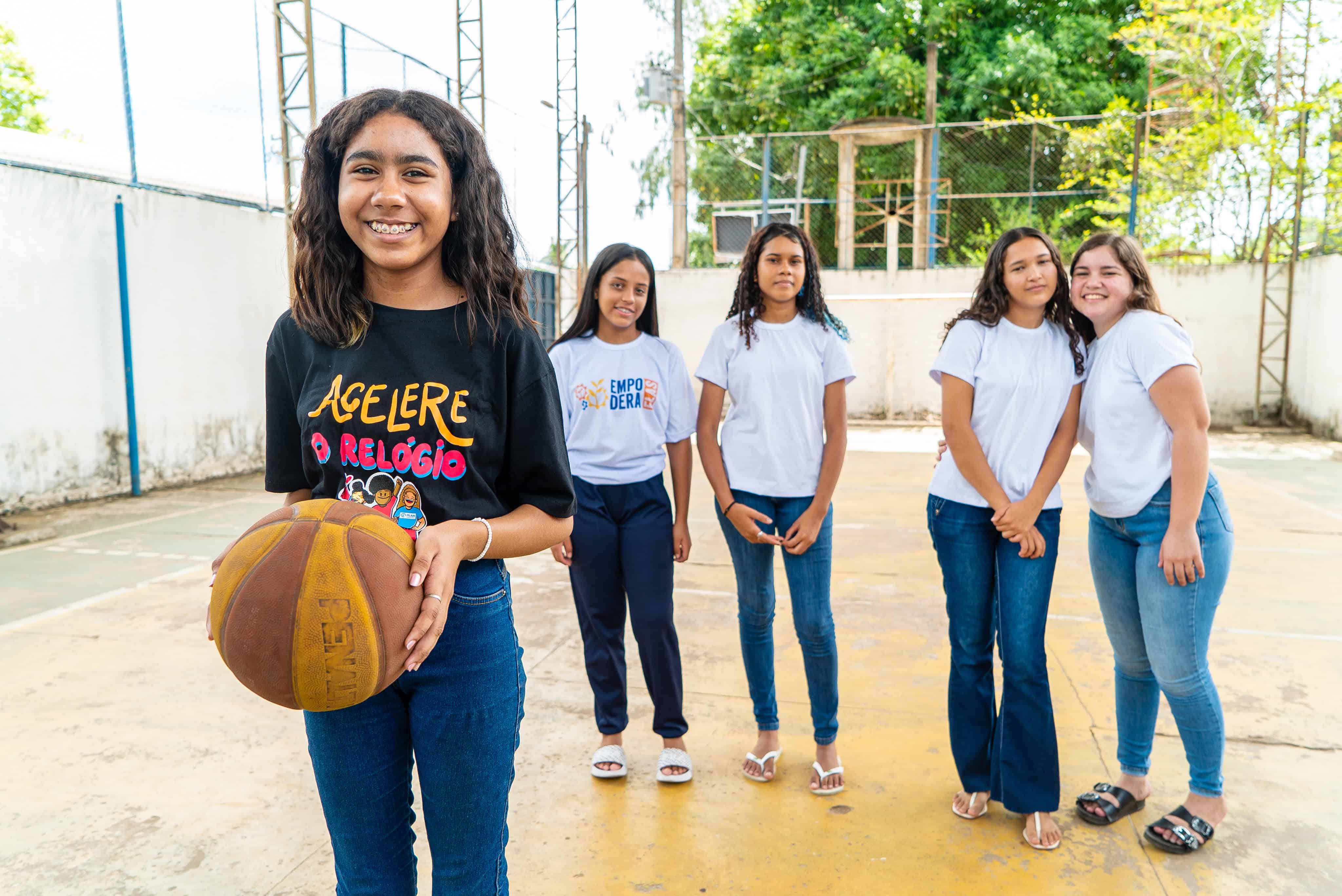
A group of teenage girls in Brazil, part of Plan’s Leadership School for Girls, stand smiling on a basketball court after a team-building activity that supports leadership and advocacy.
Participants in Plan’s Leadership School for Girls gather on a basketball court in Brazil. The program uses games and team-building activities to help girls develop leadership skills and advocate for their rights. | Rafael Gardini, Ā© Plan International

Brazil: Where play becomes power

Girls in Brazil are learning to lead through Plan’s Leadership School. It starts with teamwork and games, then grows into advocacy, public speaking and organizing. It’s play with purpose — and the girls are ready.

Children in Timor-Leste sit around a mobile library van, exploring books and participating in storytelling activities supported by Plan to spark imagination and learning through play.
Children gather around Plan’s mobile library in Timor-Leste, where storytelling and interactive learning promote early childhood development and a love for reading. | Rogerio Mendes Lopes, Ā© Plan International

Timor-Leste: Imagination on wheels

In the rural hills of Timor-Leste, a mobile library van rolls into view — and children run to meet it. For many, it’s their first chance to hold a book, hear a story or experience a structured learning activity.

Plan supports this mobile library to bring storytelling, games and early learning tools to children in remote communities. These sessions nurture imagination and build the cognitive, emotional and social skills that children need to thrive. In places where access to quality education is limited, the joy of reading becomes a powerful form of play — and a stepping stone to a brighter future.

Let them play

Every story here is different, but the theme is the same. Play builds stronger kids, safer communities and more just futures. That’s why Plan creates spaces like these — in classrooms, on dirt fields and even through mobile buses.

Across continents and crises, these moments of joy reveal something deeper: play isn’t just a distraction — it’s a defense. A lifeline. And a declaration that childhood matters, even in the hardest places.

This International Day of Play, join us in protecting and celebrating childhood.

Donate to Plan International today and help give every child a reason to play.

Participants in Plan’s Leadership School for Girls gather on a basketball court in Brazil

This article was written by members of theĀ Youth Advisory BoardĀ at Plan International USA. To get in touch with the YAB, contactĀ [email protected].

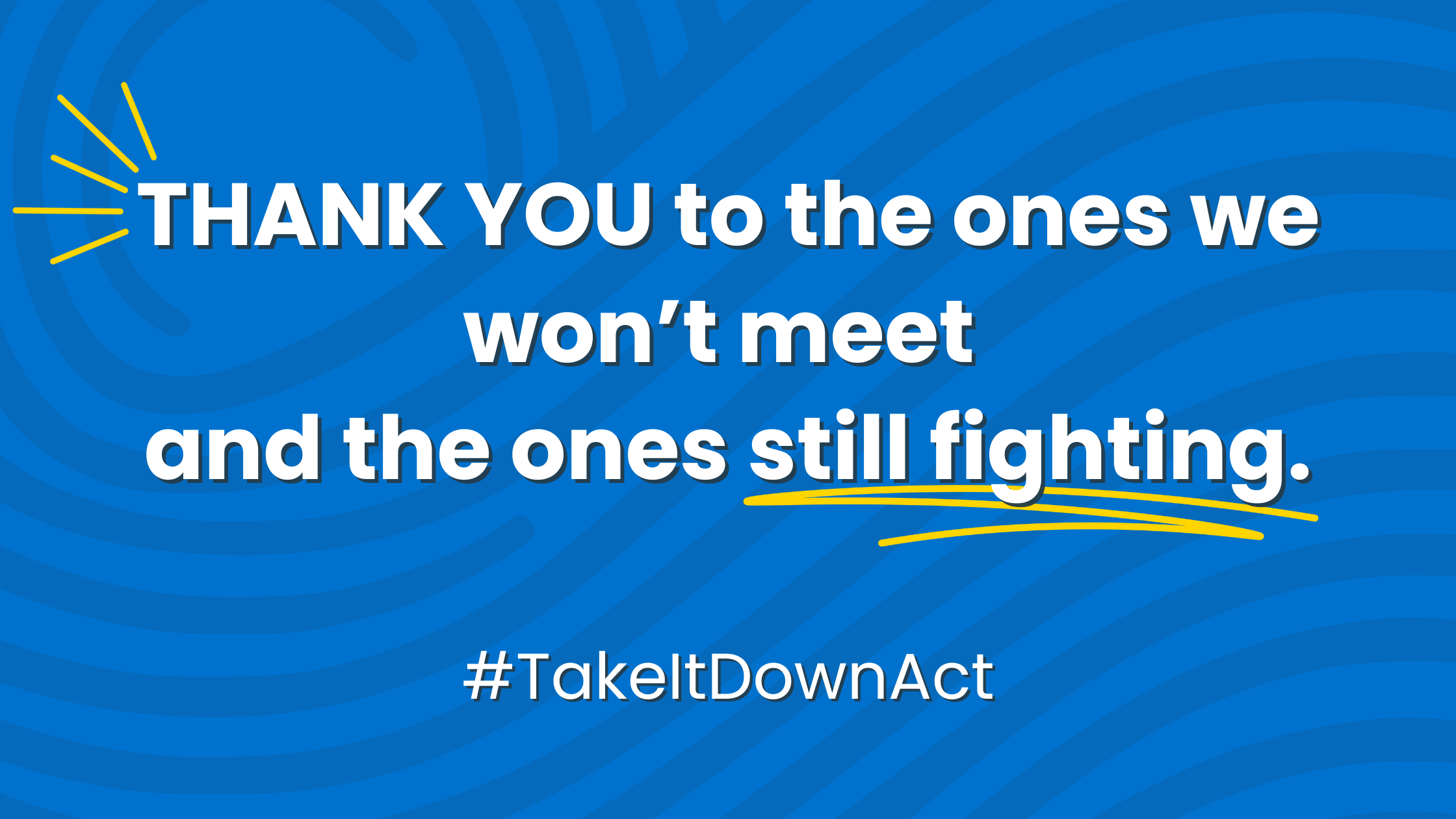
Blue graphic with bold white text reading ā€œTHANK YOU to the ones we won’t meet and the ones still fighting.ā€ The words ā€œstill fightingā€ are underlined in yellow. Above ā€œTHANK YOUā€ is a yellow doodle of radiating lines. At the bottom is the hashtag #TakeItDownAct.

Thanks to the bravery of survivors and your help, the Take it Down Act was signed into law on May 19, 2025. But we are still fighting.

Over the years, dozens of survivors of online violence have testified before Congress, sharing personal and harrowing experiences they have lived through, like deep-fakes and revenge porn. Their continued courage to speak up played an immense role in the recent landmark passing of the Take it Down Act, signed into law on May 19, 2025. Take it Down combats the publication and sharing of non-consensual intimate images, both by criminalizing the distribution of such images and requiring platforms to remove the content within 48 hours of being reported.

We wanted to take a moment to extend our heartfelt gratitude to all survivors of such online abuse for their role in this success. Whether through public testimony or personal resilience, your strength has been instrumental in bringing this legislation to fruition. You have paved the way for a safer world online for countless women, girls and young people. Thank you.

What the Take It Down Act does for survivors

With your help, this federal law now criminalizes sharing or threatening to share non-consensual intimate images, including AI-generated content of real people. As we wrote in our last blog post, it requires platforms to remove reported NCII within 48 hours and includes protections for medical/law enforcement use while targeting only images of real individuals.

What WE can do to make sure this will further protect us

Ā  Ā  Ā  Ā 1. Long-term support for victims of NCII abuse — Support should be directed toward mental health resources that are accessible through multilingual services.Ā 

Ā  Ā  Ā  Ā 2. More transparency from tech companies — We need stronger regulations requiring social media companies to publish clear reports about the amount of NCII content and their removal times.

Ā  Ā  Ā  Ā 3. Stronger enforcement — Strengthen enforcement through theĀ  Federal Communications Commission and Department of Justice. The act’s effectiveness depends on proper enforcement. The FCC and DOJ must have designated resources and staff to oversee platform compliance, especially with the 48-hour removal rule.

Ā  Ā  Ā  Ā 4. Culture change — Combating NCII also means shifting cultural understanding. We need investment in public awareness to challenge the stigma around victimhood in order to educate youth about digital boundaries and reporting mechanisms.

Ā  Ā  Ā  Ā 5. Careful oversight of ā€œgood-faithā€ protections — Increased measures and monitoring to ensure content made in ā€œgood faithā€ is not censored on platforms, and guarantee more accurate reporting of NCII.

Why we’re also pushing for the Kids Online Safety Act

While the Take it Down Act will now champion child online safety, there is still more to do, and you can help us. The Kids Online Safety and Privacy Act is a bipartisan bill that ensures internet platforms undertake a ā€œduty of careā€ to protect minors from the negative privacy and mental health impacts by preventing unwanted strangers viewing their personal data online.Ā 

With harassment and abuse rife online, KOSA will further reaffirm the Take it Down Act’s commitment to children’s online safety and protection from harmful content, such as online bullying and eating disorders. Though this bill had gained significant progress previously, we still need your help advocating to pass this bill and fully combat technology-facilitated gender-based violence.Ā 

All in all, in moments of celebration for the passage of Take it Down, we at Plan International hold gratitude for survivors of TFGBV. This legislation is the result of your tenacious efforts and bravery speaking up about your experiences and the need for change. As we continue to advocate for a safer, more inclusive online world, we will continue to honor your strength and commitment. And we won’t stop until we are all equal.

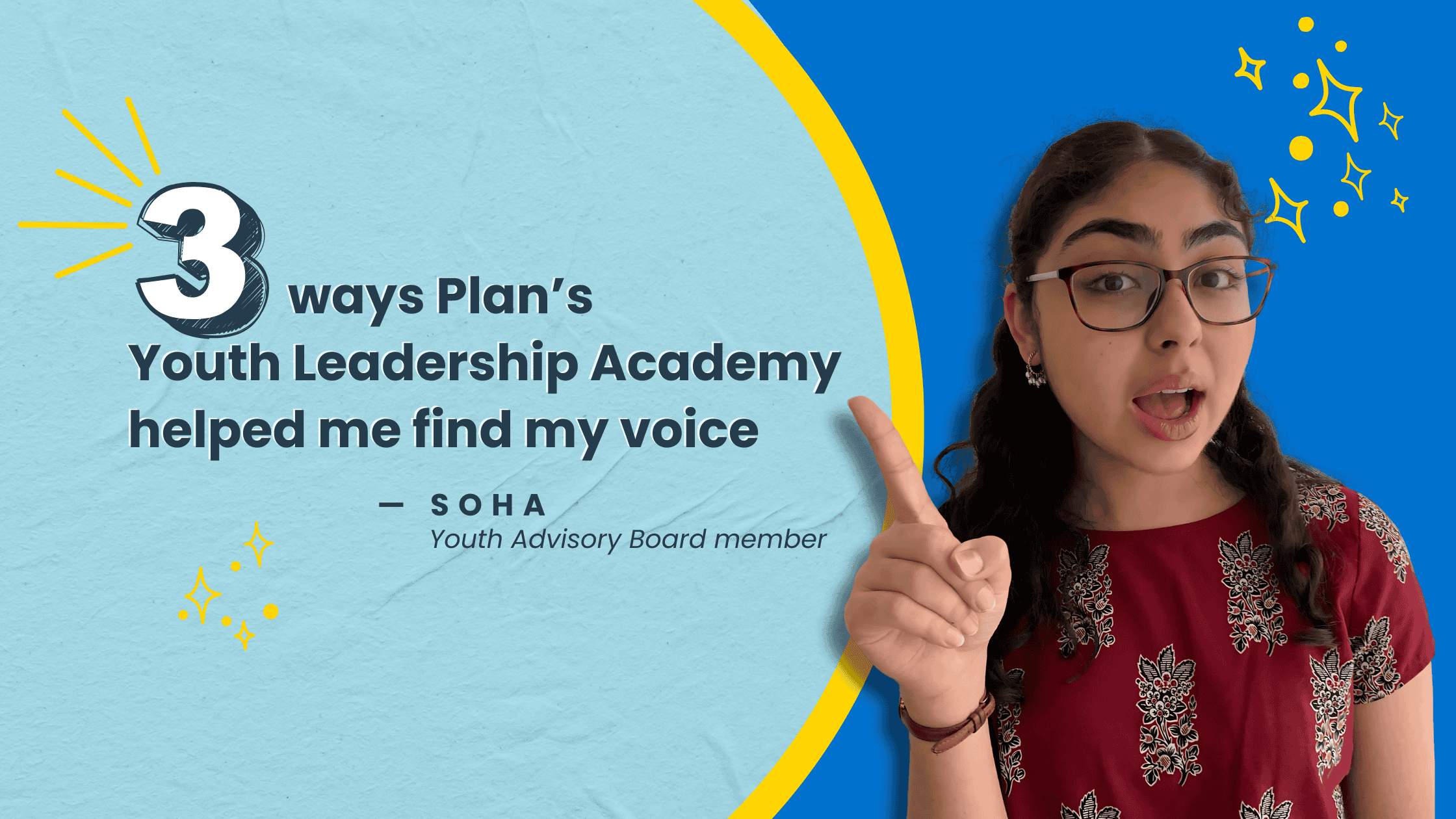
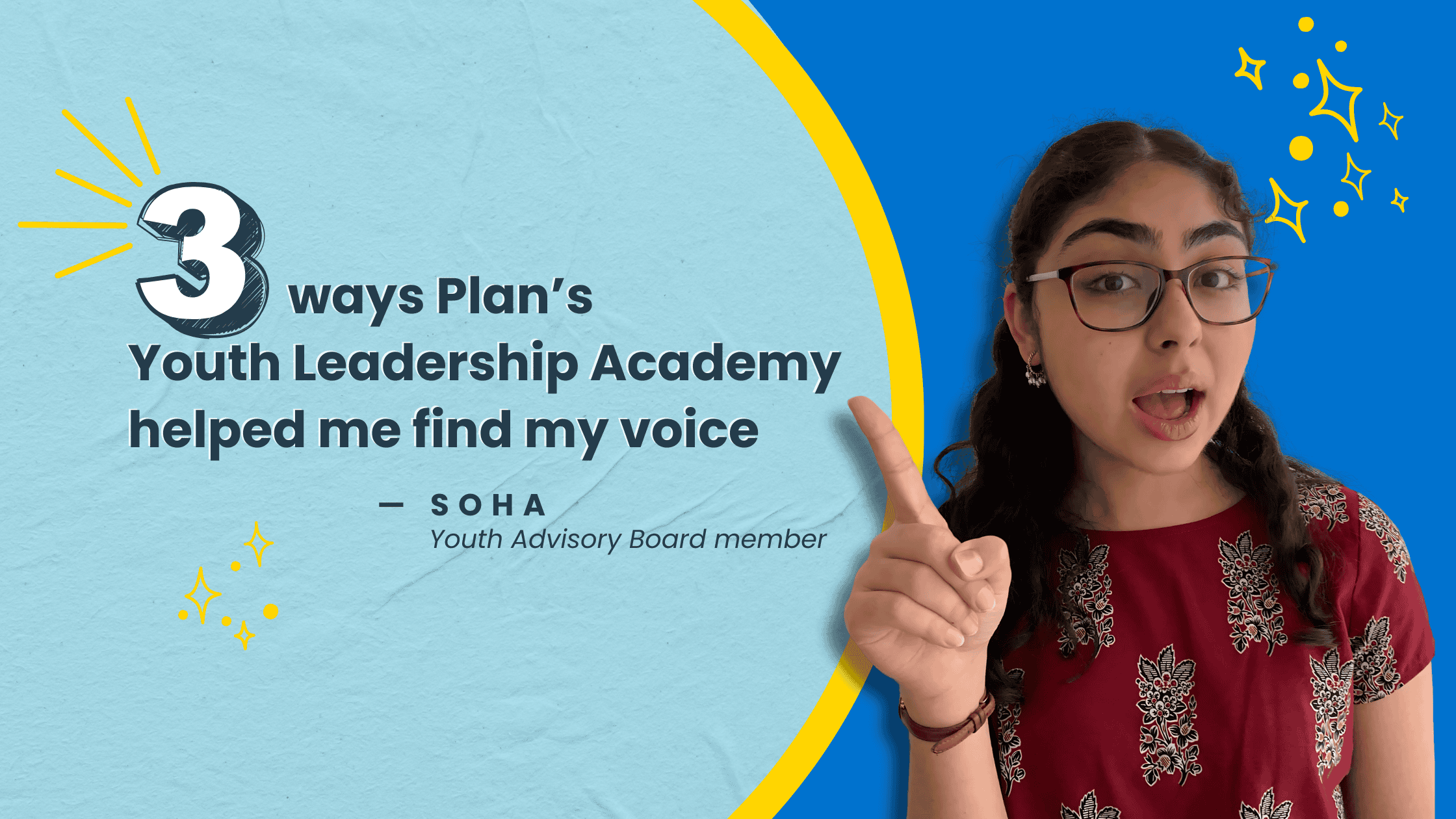
Soha, a Youth Advisory Board member, points upward next to large text that reads ā€œ3 ways Plan’s Youth Leadership Academy helped me find my voice.ā€ The background is blue and yellow with playful spark illustrations.

If you are a young person eager to take action against gender inequity, Plan’s Youth Leadership Academy is the perfect program for you, and we are now accepting applications. I had the opportunity to participate a few years ago and wanted to share a little with you about my life-changing experience.

As a sophomore in high school in 2021, I was becoming more attuned to the state of our world’s climate, following more frequent extreme weather events and dire warnings from the international scientific community that 1.5ā„ƒ of warming was inevitable. I felt compelled to preserve a healthy and sustainable world for my own and future generations.

Eager to act, I sought programs that could help me translate that energy into change and soon discovered Plan International’s Youth Leadership Academy. I was drawn to the chance to build my advocacy toolkit and implement a Leadership Project in my own community.

My Youth Leadership Academy experience was transformative. During the four-day in-person retreat in Washington, D.C., I learned more about the UN Sustainable Development Goals and the fight to achieve freedom for girls online, met with inspiring youth activists, learned strategies for organizing and engaging with stakeholders, and fleshed out the vision for my Leadership Project.

One of my most memorable experiences was listening to climate activist Wawa Gatheru as she introduced our group to the concept of intersectional environmentalism. She spoke about how climate injustice is a social injustice that disproportionately affects marginalized communities and how the movement should center these frontline voices in pursuit of a better world. Recognizing the connection between global issues — like how climate disasters result in mass displacement and disrupt girls’ education — made me a better, more considerate advocate. Knowledge is powerful, and having access to a rich landscape of nuanced conversation felt emboldening.

Building off the momentum from the in-person intensive, I launched my own Leadership Project called G.A.E.A., or Green Allies and Environmental Advocacy. For me, the opportunity to lead a project like this is what truly sets the Youth Leadership Academy apart from other programs. Throughout the following nine months, I was mentored by one of Plan’s Youth Advisory Board members and attended recurring workshops to learn critical skills like fundraising, building a network and using social media to amplify my message.

These sessions, along with implementing my project, were immensely beneficial for my professional development, especially in learning to take up space.

For example, as a part of my Leadership Project, I was set to interview an executive from an oil and gas company and was uncertain of how to approach the conversation in a productive way. My mentor worked closely with me to write out questions I wanted to ask. She provided advice on open conversation without compromising on my values and remaining firm in my call for more rapid change as a young person with relevant lived experience in our warming world.

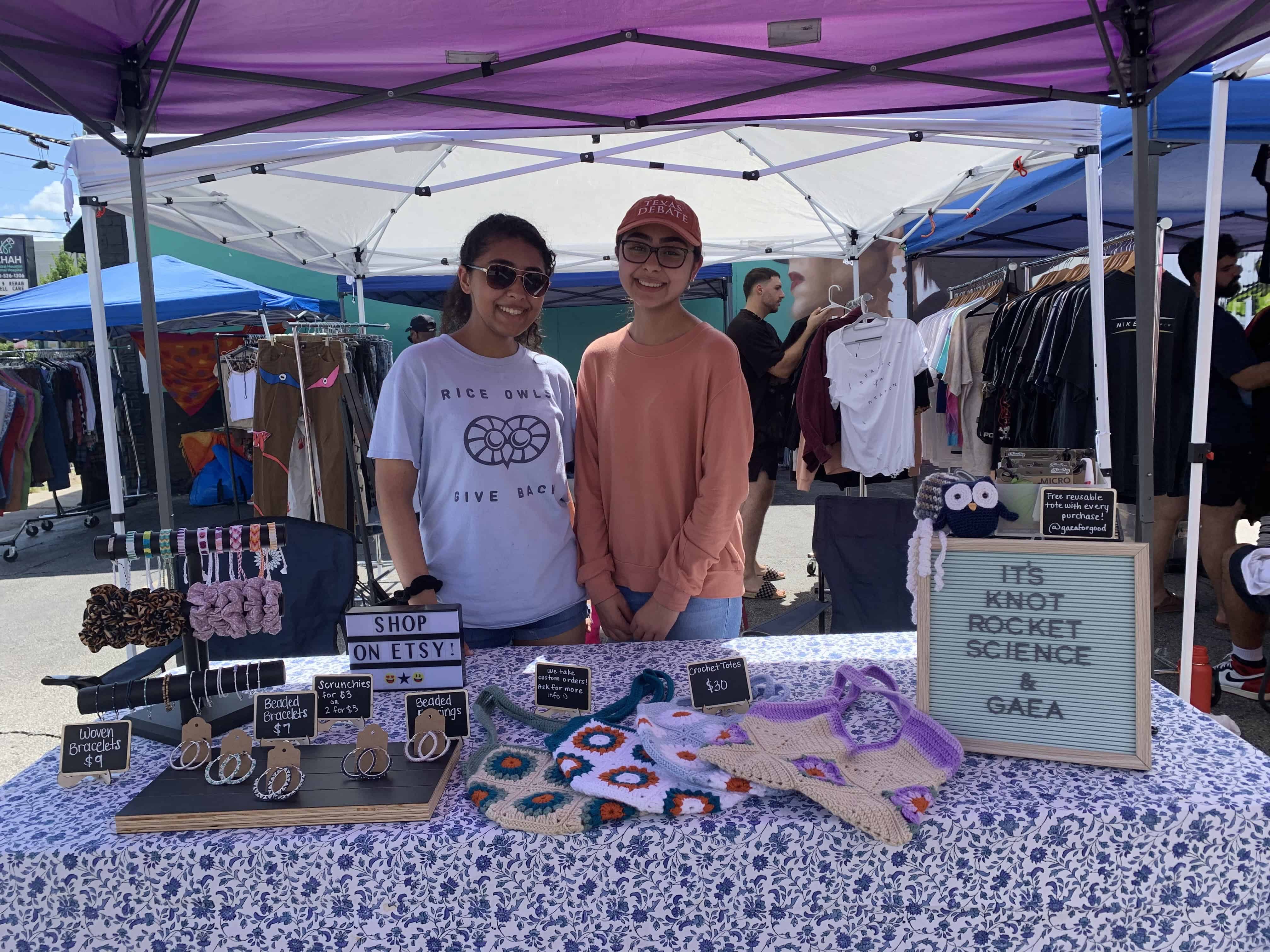
Soha stands beside a friend behind a craft booth at a local outdoor market. The table displays handmade items like scrunchies, beaded bracelets, and crocheted bags under a purple canopy. A sign on the table reads ā€œIt’s Knot Rocket Science – G.A.E.A.,ā€ promoting her Leadership Project on environmental advocacy.
As part of my Leadership Project, I partnered with a local handmade craft shop to host a booth at a community market. It was a great way to raise awareness about sustainable practices, connect with my neighbors and talk about environmental advocacy in an approachable, creative way.

I have continued to carry with me invaluable skills, like how to strike this balance, in my advocacy since attending the YLA. Finding my niche and translating a large-scale issue into grassroots efforts remains critical to my advocacy as I promote clean energy in a new state with different decision-makers — having moved to Georgia for university and now combating fossil fuel expansion at the Georgia Public Service Commission. It was inspiring to hear this same sentiment echoed by like-minded peers, including my mentor. I have developed lifelong relationships and found a space where I can grow as a person and a leader.

Since the YLA, I have remained within Plan’s network. Plan’s mission resonates deeply with my own vision for a more equitable world — one that integrates children, especially girls, into the forefront of change. In 2021 and 2022, I was able to further my advocacy with Plan by participating in an International Day of the Girl Takeover with AstraZeneca and an Innovation Hub with The Body Shop, where I met with leaders to advise on meaningful youth engagement and provide feedback on their activism. In 2023, I joined Plan’s Youth Advisory Board with two other YLA alumni — and now mentor new participants in creating community change.

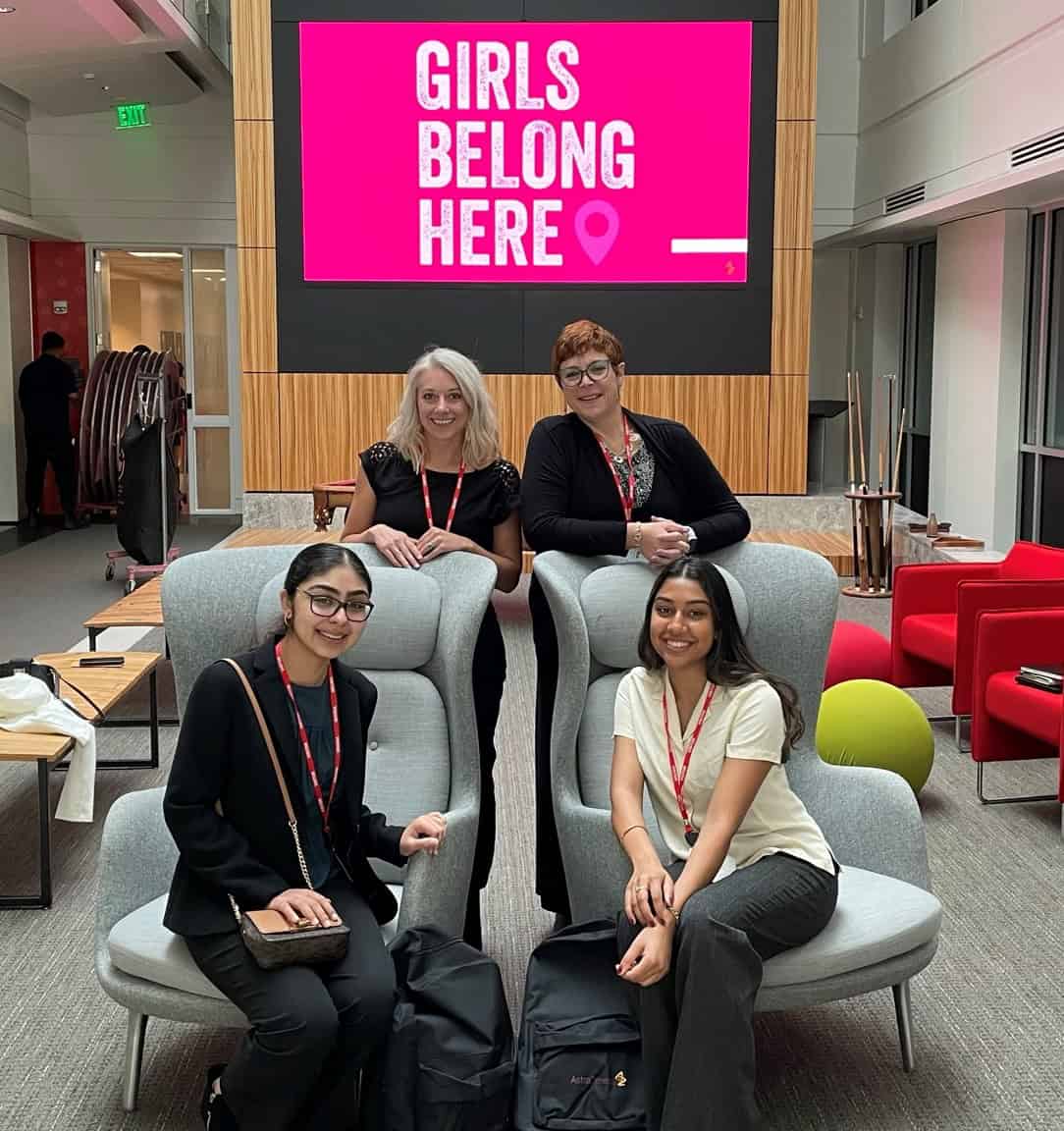
Soha and another Youth Advisory Board member sit with two AstraZeneca employees during Plan’s Girls Belong Here Takeover. A pink screen behind them reads ā€œGirls Belong Here.ā€ All four women are smiling in a modern office space.
During one of Plan’s Girl Takeovers at AstraZeneca’s Maryland office, I joined another Youth Advisory Board member to speak with company leaders about engaging youth in STEM, toured the labs and shared our perspectives.

If you are a U.S.-based student in grades 8–11 (or you know someone who is), don’t miss out on applying for the Youth Leadership Academy!

This year, the program will focus on three key issues: gender and health equity, youth civic and political engagement, and protection from gender-based violence.

You’ll kick off the program at the five-day retreat in Washington, D.C., from July 21–25 at American University, followed by a year of mentorship and support for your Leadership Project. Learn more about the program on the YLA page and apply today!

Sohas-YLA-blog-banner-2

In celebration of Menstrual Health Day on May 28, we’re highlighting some of our partnerships that are empowering today’s girls to become tomorrow’s leaders. Together, we’re building a world where every girl can learn, lead, decide and thrive.

When girls don’t have critical resources like pads and clean water to manage their periods, it causes a ripple effect. They get sick more often, miss school and miss out on opportunities to become leaders of change in their communities.

But we can turn the tide.

Through Plan’s partnership with Kimberly-Clark and their KotexĀ® and ScottĀ® brands, we’re helping girls get the essentials they need to thrive. This partnership focuses on initiatives for menstrual health and clean water – all crucial for girls’ well-being and their ability to become the next generation of leaders.

Since beginning our work with the Kimberly-Clark Foundation in 2020, we’ve reached millions of people across 10 countries, including Brazil, China, Colombia, El Salvador, Ecuador, Guatemala, India, Nigeria, Peru and Vietnam.


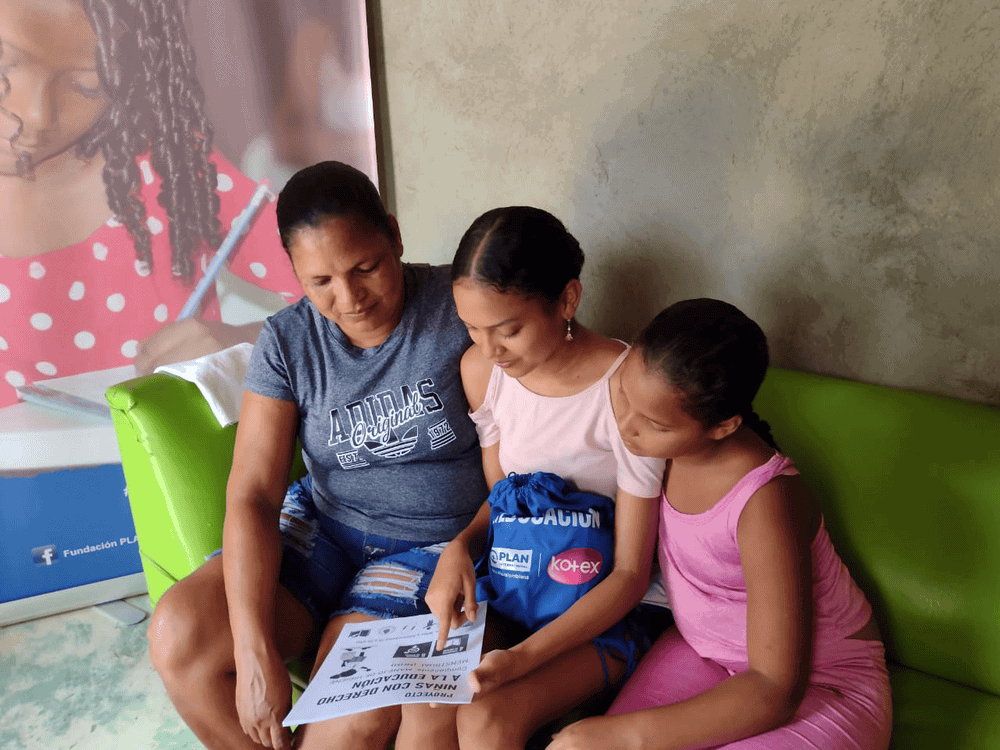
Teen girls sits on a couch between her mom and sister to talk about menstrual health.

Sixteen-year-old Yacira sits with her mother and sister to share menstrual health information she learned through a program supported by Kimberly-Clark’s KotexĀ® brand in Colombia. | Ā©Plan International


In 2024, we implemented seven programs across six Latin American countries together, reaching more than 4.5 million people:

— We increased access to sanitation solutions by providing 13,127 hygiene and menstrual care materials to 176,381 children, adolescents and their families through kit deliveries.

— We increased knowledge in six countries by training 4,210 young people as peer educators who can lead menstrual health trainings and advocate for people in their communities.

— We improved menstrual health, sanitation and hygiene awareness by reaching over 4 million individuals through campaigns on topics like periods and handwashing techniques.

When girls have access to menstrual products and information about their own bodies, their lives change. They can go to school without worrying, participate in their communities and build the confidence to lead. Clean water and safe toilets are just as important, keeping them healthy and safe to manage their periods with dignity. Giving girls these basics isn’t just about helping them survive; it’s about helping them unlock their potential to change the world.

For 17-year-old Delia in Guatemala, who joined Plan and Kimberly-Clark’s program to support menstrual health education, she has become more confident in speaking with her family and friends about periods. Now, she teaches her community about menstrual health and disease prevention.


Delia stands opposite her parents and sisters at a large wooden table holding a menstrual pad.

Delia now aims to continue her education and become a nurse so that she can provide professional care and teach more people about menstrual health. | ©Plan International


ā€œMenstruation is not dirty, and we should not feel impure,ā€ Delia says. ā€œIt is time to break down the barriers. Both men and women should be informed about the topic of menstruation.ā€

Through our partnership with the Kimberly-Clark Foundation, we’ve reached more than 590,000 people in Guatemala in 2024 with menstrual health resources and education.

We’re proud to partner with organizations like the Kimberly-Clark Foundation to do this important work. Together, we focus on providing menstrual health kits and education, improving access to clean water and toilets, and supporting education and empowerment programs. These programs support the unique needs of girls, giving them the tools they need to become the next generation of leaders.

With support from corporate partners like the Kimberly-Clark Foundation and individuals like you, we’re creating a powerful community where your generosity helps girls become the leaders their communities need.

Together, we’re building a world where every girl has the chance to thrive, and we’re committed to making that a reality because her future starts now.


The ripple effect feature image

Older generations of women had very different experiences of managing their periods from teenagers today — but modern girls are still calling for better, cheaper access to sanitary products and continue to face widespread stigma and prejudice surrounding periods.

Here, we delve into conversations between grandmothers, mothers and daughters about menstruation through the ages.

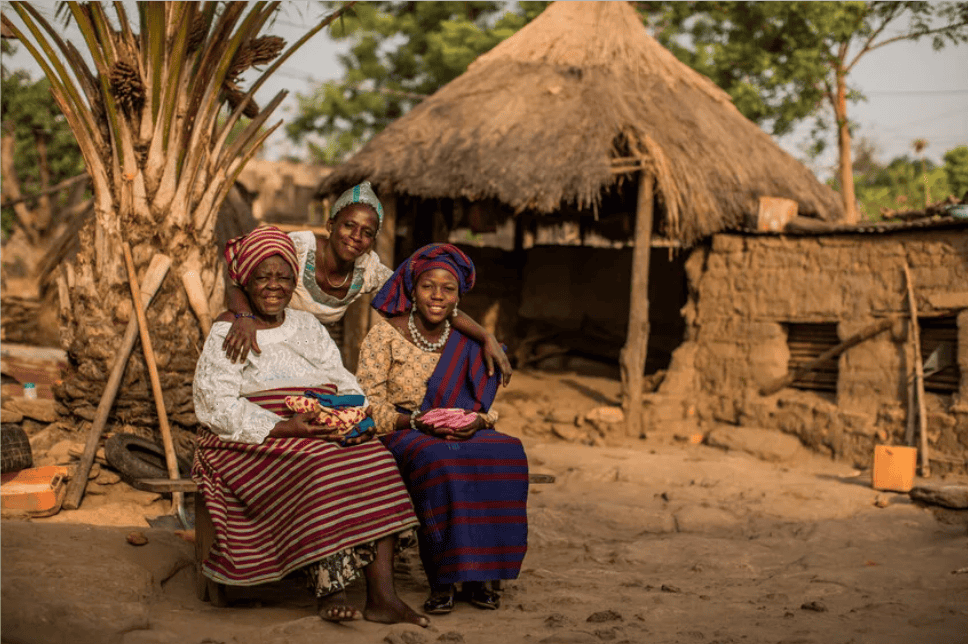
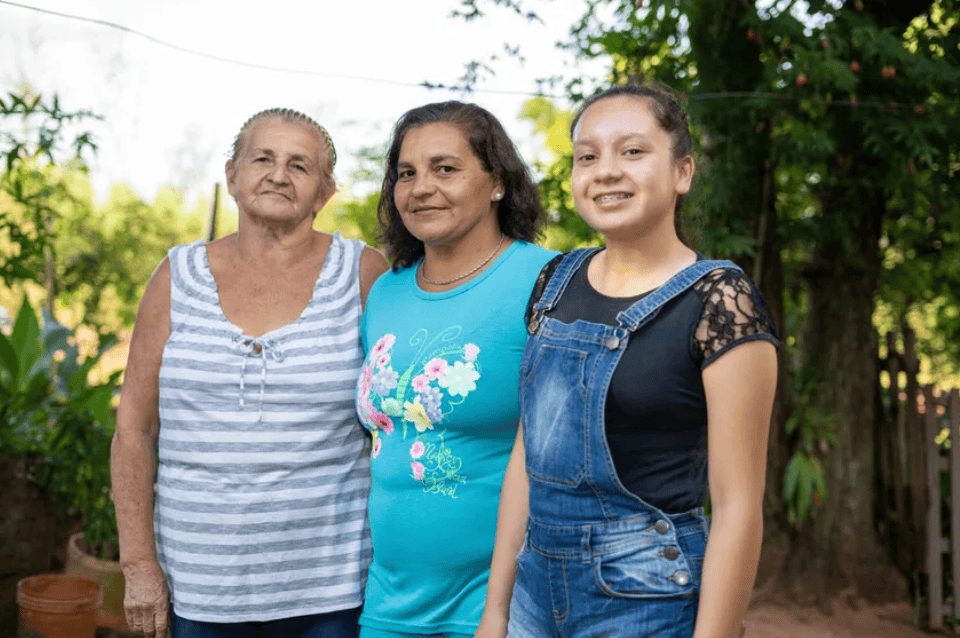
Grandmother, mother and granddaughter in traditional dress sit together in front of a thatched home in Togo.
Three generations of women from Togo — grandmother Inna, 72; her daughter Esther, 36; and her granddaughter Denise, 16. Photo by Izla Bethdavid, Ā© Plan International

In central Togo, West Africa, teenager Denise, 16, is giving her 72-year-old grandmother, Inna — whom she affectionately calls Dada — a hug.

ā€œTo my fellow girls all over the world, including those living in remote communities, I encourage you to stop being ashamed about menstruation. It’s a matter of rights!ā€

Denise, 16, Togo

Inna has just been telling Denise how girls dealt with periods when she was young.

ā€œOn the first day of our period, we had to hide and call our mother or one of our sisters to help in secret. It was forbidden to enter the house. The family had to find a room on the roadside where the menstruating girl had to spend her entire period. Then, the family alerted the whole village. For four days, from morning to night, the village brought food to the girl out of goodwill. In the evenings, girls and boys would visit her and pass the time talking, eating, singing and having fun with her. Some of them spent the night there.ā€

Such experiences are far from unusual. Also in Togo, grandmother Akoyiki, 80, tells her daughter and granddaughter:

ā€œDuring her period, the girl could bathe two or three times a day, with the permission of her mother. Like their mothers, girls who were on their periods were not allowed to prepare or serve food to their fathers.ā€

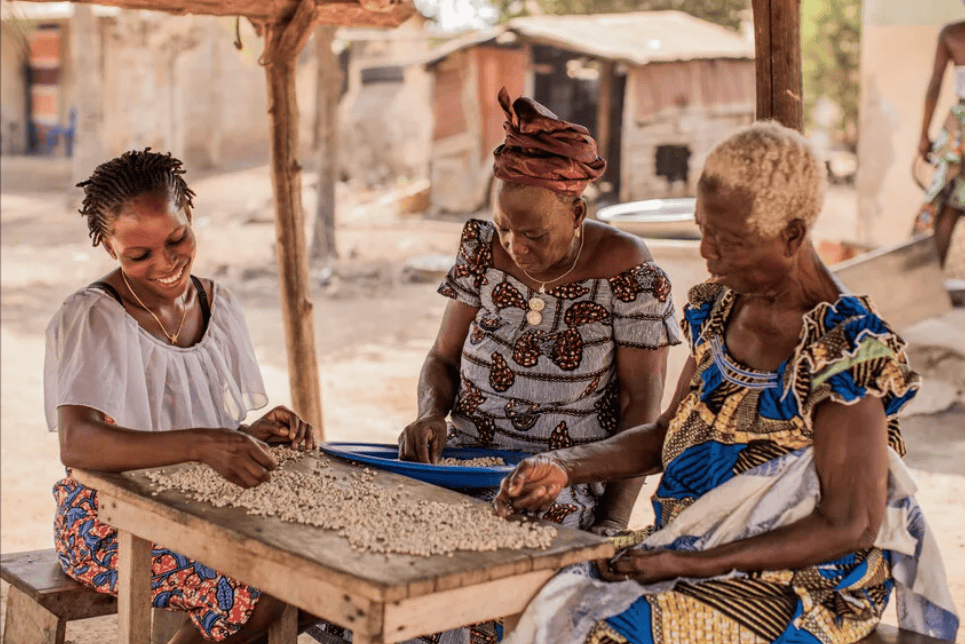
Three women from Togo — across three generations — sit at a table outdoors, shelling beans together.
Assana, Gnoussiado and Akoyiki shelling black-eyed peas. Photo by Izla Bethdavid, Ā© Plan International

ā€œIn our time, a girl on her period could not be seen by or interact with men, except her husband. She was not allowed to go to groups as she pleased,ā€ says her daughter, Gnoussiado, 60.

Granddaughter Assana, 24, gives some hope: ā€œNowadays, things have changed. We wear pants and bras. Even during our periods, we’re able to do any kind of activities without worrying too much.ā€

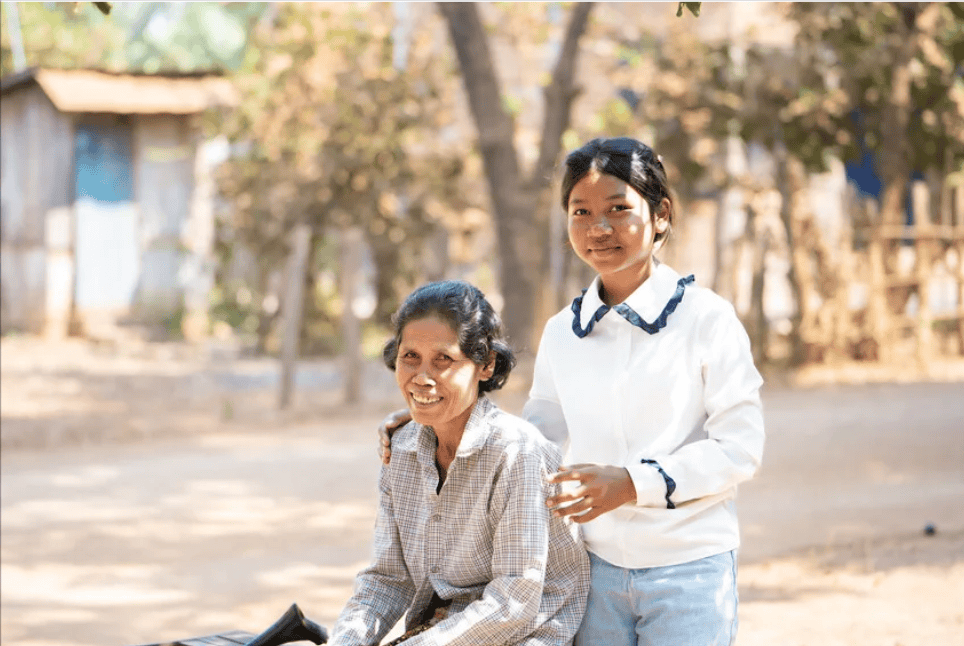
In Cambodia, a grandmother and her granddaughter smile together in an outdoor village setting.
Grandmother Bui Non, 57, and her teenage granddaughter Seila, 13, Cambodia. Photo by Bunchhai Chhun, Ā© Plan International

In Cambodia, grandmother Bui Non, 57, tells her granddaughter Seila: ā€œIn my generation, we didn’t have sanitary pads, so I cut fabric from a sarong into pieces. I washed them to reuse for only a week. After a week, I buried or burned those fabrics — unlike now, where you can easily buy and use sanitary pads.

When my daughter had her period, I kept telling her to clean herself and use the fabric as a pad. If she felt sick, I would help do skin coining once per period — for this, we rub balm into the chest, back and shoulders until red is seen. This could relieve the pain.ā€

Grandmother, mother and teenage girl from Paraguay stand together outside, smiling in a rural garden setting.
Grandmother Maria, 73; her daughter Ester, 51; and her granddaughter Alma, 16, Paraguay. Photo by Anselmo Garcete, Ā© Plan International

In Paraguay, ā€œwe didn’t used to talk about it,ā€ says grandmother Maria, 73. ā€œMy mum didn’t say anything. We, in secret, had to deal with it, and there were no sanitary pads or anything. You had to use cloths, wash and iron them.ā€

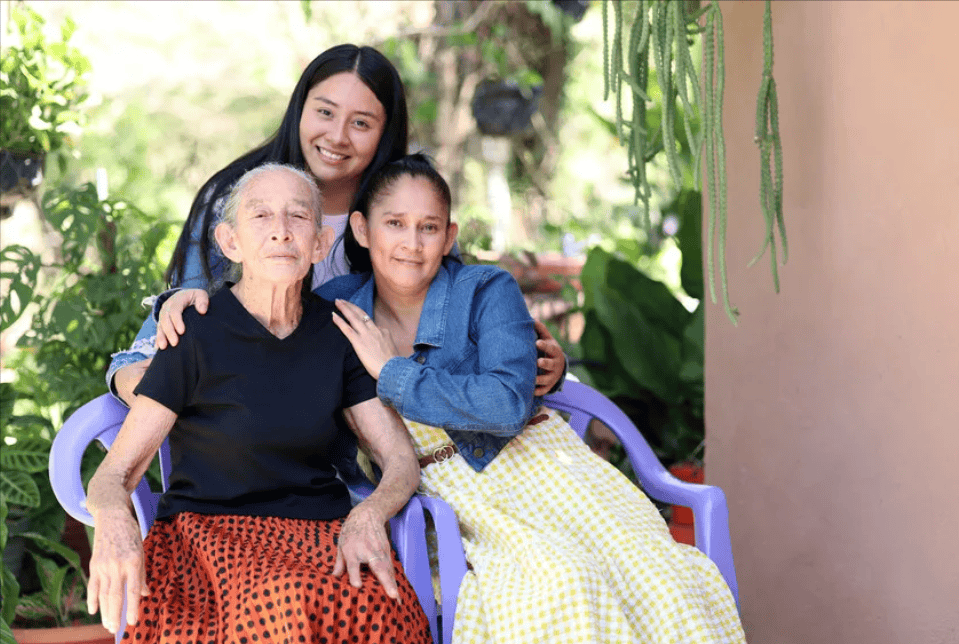
Three generations of women from El Salvador pose together outside, smiling warmly.
Grandmother Paz, 80; her daughter Ana, 47; and teenage granddaughter Hazel, 18. Photo by Esteban Martinez, Ā© Plan International

In El Salvador, grandmother Paz, 80, says, ā€œMy mum used to tell me that when I was like this, I couldn’t go to the river, because the water would enter through the pores, and that was bad. So what you used to do was to use old clothes, cut them into strips, and fold them. After being used, they were burned.ā€

ā€œBefore, mothers didn’t talk to us about it because they didn’t receive adequate information in their time. We were left with the little we heard at school,ā€ says Ana, chatting with her teenage daughter, Hazel. ā€œHere in the community, there are many girls who don’t have the courage to buy sanitary pads because their mothers don’t talk to them about it, so they’re afraid. They’re ashamed.ā€

Teenager Hazel takes part in a community project called The Power of Red Butterflies, which aims to break taboos around menstruation. As a result, she has even discussed the topic with her grandfather.

ā€œTalking to my grandfather one day, he told me that in the old days you couldn’t talk about menstruation; it was a taboo topic,ā€ says Hazel. ā€œThe Power of Red Butterflies project was very impactful on my life. I was taught about my body, my menstrual cycle, and how to be prepared for that moment.ā€

ā€œWe were a little group of girls, and it was very special — the trusting and the sharing of ideas. How we had our first period. It was quite nice.ā€

Hazel, 18, El Salvador

Nowadays, millions of teenage girls still have to deal with their periods in difficult conditions. On any given day, around 300 million women and girls are having their periods. At the same time, one in four lack access to menstrual health products or clean toilets reserved for girls.

Some are forced to use materials like old newspapers, rags, earth, sand, ash, grass or leaves. Many are excluded from school and other opportunities while on their period.

Where girls are able to manage and talk about their periods, it’s often thanks to long-standing community health projects working with girls and boys, women and men to distribute sanitary products, encourage intergenerational dialogue, and break down taboos.

Plan International has worked for years in many parts of the world to raise awareness about menstrual health, tackle stigma, and provide practical support — from access to products and facilities, to advocating for menstrual health to be part of the school curriculum. Because periods should never be a barrier to opportunity.

Click here to learn more about menstrual health and how you can help stop the stigma.


Carousel-Hazel-Ana-Paz-00 image

Fatima Hassouna was a hugely talented Palestinian photographer and a youth advocate for Plan International who endured 18 months of living through the conflict destroying Gaza. On April 16, 2025, the 24-year-old was killed by an Israeli airstrike, along with 10 members of her family.

For the last year and a half, Fatima shared the story of Palestinians. She wanted the world to know what they were living through in Gaza, determined that people would listen and care. Her work was published in media around the world, and Fatima used her talent to advocate for an end to the conflict. In January she celebrated the ceasefire and allowed herself to dream of a brighter future.

“I am looking forward to my life after the war and I am confident that beautiful things will come.” — Fatima Hassouna

In the weeks before her death, she created a photo diary — allowing us an insight into her world and sharing with us her thoughts and emotions.

We had originally intended to publish this photo diary anonymously, protecting her identity in a futile attempt to keep her safe. With permission from her surviving family, we proudly name and credit Fatima Hassouna for her work — her resilience and courage in the pursuit of being sure the people of Gaza are not forgotten. Fatima will not be forgotten.


A street in ruins
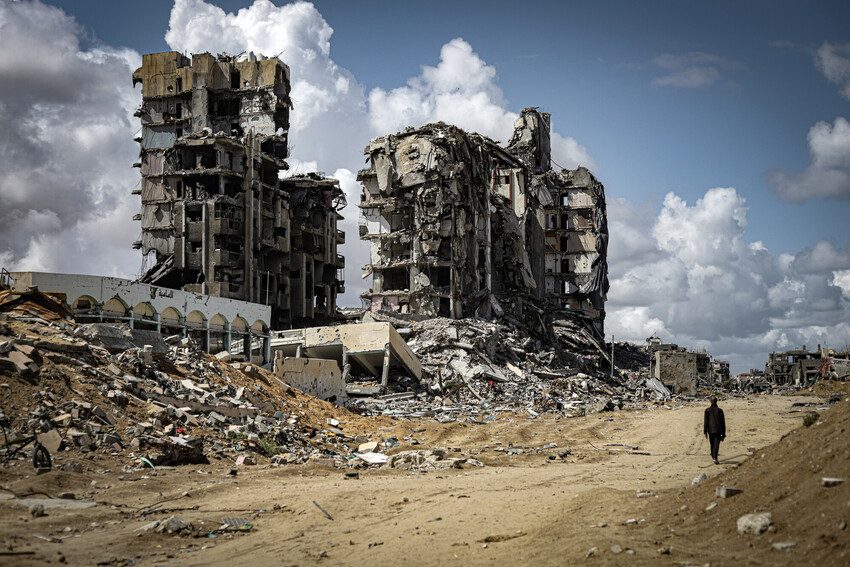
Ruins of Al-Mukhabarat Street in the northern Gaza Strip, showing demolished buildings, rubble and sandy streets after 18 months of conflict.

Image credit: Fatima Hassouna

“This is my city, and what it looks like today after 18 months of brutal conflict: sandy streets, demolished homes, nonexistent facilities. Every place we loved has turned into a vast emptiness, and this city has become a city of ghosts.

“This is Al-Mukhabarat Street in the northern Gaza Strip — it used to be one of the most vibrant streets, as it led you to the beautiful sea, past the Al-Mathaf Hotel, and other places people enjoyed visiting here. But today I can see the scars of destruction, after fire belts that ravaged this once busy street — it has now transformed into something else. It took me a while to even recognize it when I got here.

“They have taken from us all the things we loved!” — Fatima Hassouna

“Every landmark in this city has changed. They have taken from us all the things we loved!”


A stadium of families
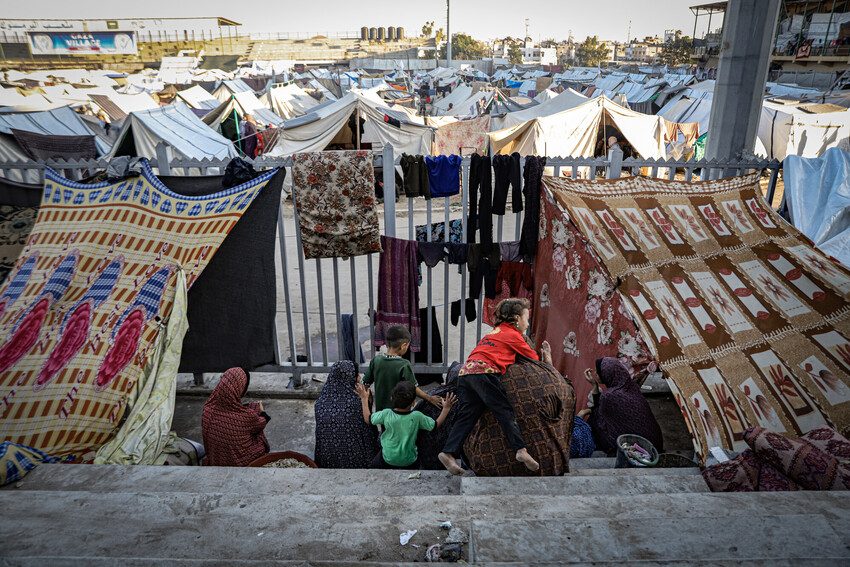
Displaced women and families sitting in the stands of the Yarmouk Stadium in Gaza, which has been converted into a camp for people who have fled their homes.

Image credit: Fatima Hassouna

“This is the Yarmouk Stadium — in days gone by it was a place filled with the cheers of crowds as they enjoyed watching football matches here.

“Now it has been turned into a camp for the displaced, for families forced to flee their homes as they have been destroyed, or risk being targeted. Women who have lost their homes sit on these stands — some have lost their husbands, children or other family members, each carrying her own story.

“These women sit on the stands where they now literally live. These stands, no wider than a square meter, are where entire families must sleep. Every now and then, they sit in this small space, staring out into the distance. I imagine that they are staring at what feels like the towering piles of their worries before them.”


Color in the dust: the toy stall
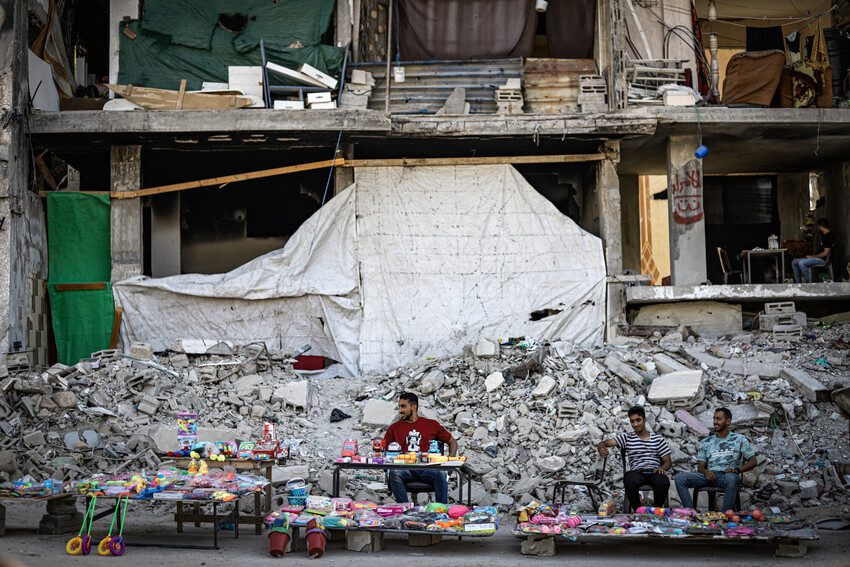
A street stall filled with colorful children's toys standing amid the rubble and gray devastation of Gaza.

Image credit: Fatima Hassouna

“My Gaza is one of the most contradictory places in this world. Amid brutal destruction and devastation, you stumble across this stall filled with colorful children’s toys, standing in stark contrast to the dull colors of devastation and death — a bold defiance of oppression. There will still be hope for a better future.

“I took this photo because it tells me that even if they kill all the children, other children will be born, carrying these toys in their hands and living their childhood as it should be, one day.

“The daily life of this city never ceases to amaze me — the resilience of its people, the life on the streets just days after it was bombed to the ground. Individuals whom the daily risk of death cannot deter from going out and living. To me, this is the equation of ‘the pink against the gray.'”


My stolen sanctuary
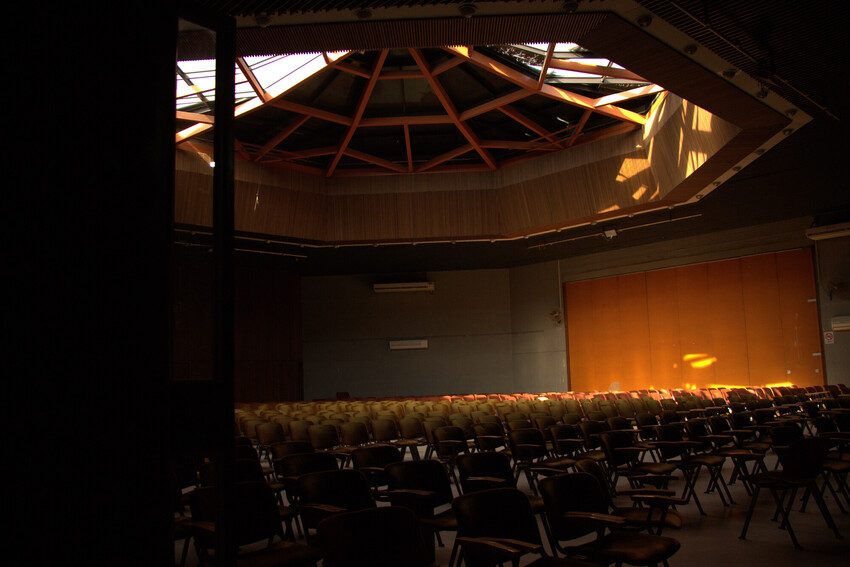
The main event hall of the Rashad Al-Shawa Cultural Center in Gaza before the conflict, showing a large intact interior space used for poetry, theater and community events.

The Rashad Al-Shawa Cultural Center, before. | Image credit: Fatima Hassouna
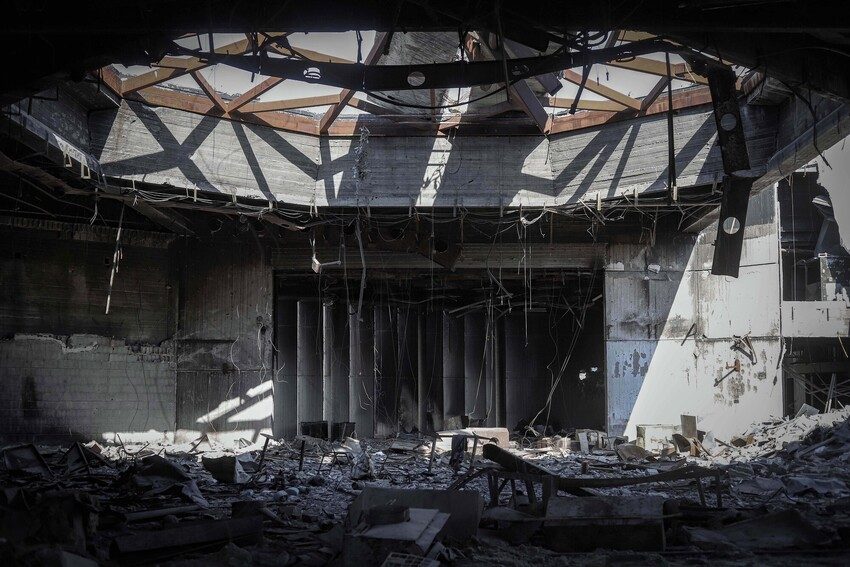
The Rashad Al-Shawa Cultural Center in Gaza after being destroyed by bombing, showing a gutted and collapsed interior.

The Rashad Al-Shawa Cultural Center, after. | Image credit: Fatima Hassouna

“This place is the Rashad Al-Shawa Cultural Center, one of the most important cultural centers in Gaza and one of the places most deeply etched in my memory.

“In these photos, you can see the main event hall where poetry evenings, celebrations and plays were always held. Sometimes, it would even turn into a cinema, as there are no cinemas in Gaza. It fulfilled the dreams of everyone who enjoyed the arts.

“The first moment I entered the place after the bombing, I felt like crying because they took something from me that they had no right to take.

“This place is part of my identity — steadfast, no matter how circumstances change.” — Fatima Hassouna

“But I know deep down they cannot really take it away from me, because this place is part of my identity — steadfast, no matter how circumstances change.”


A suffering generation
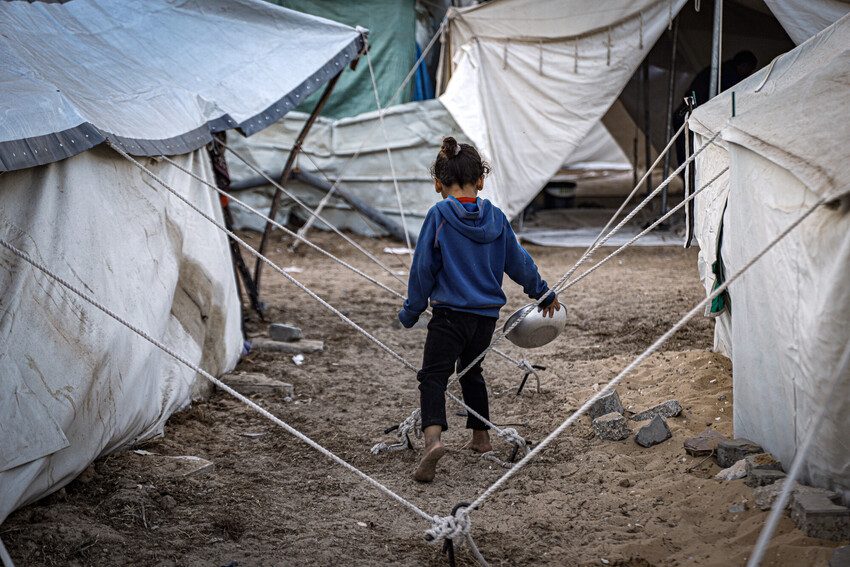
A young child standing among tents in a displacement camp in Gaza, bare feet on the ground, holding a small plate.

Image credit: Fatima Hassouna

“Nothing here is sadder to see than the state of the children in this city.

“Many children are carrying burdens heavier than their years. At a time when they should be in schools or playgrounds, they are instead living in their schools and facing war with a small plate in hand and bare feet.

“I am not always happy when I take such photos. On the contrary, these scenes deeply sadden me and eat away at my heart. The little ones of this city cannot bear all this exhaustion. But my only consolation is the hope that this generation will one day stand against injustice and that the schools and playgrounds will be as they once were.”


The unforgotten artist, Mahasen
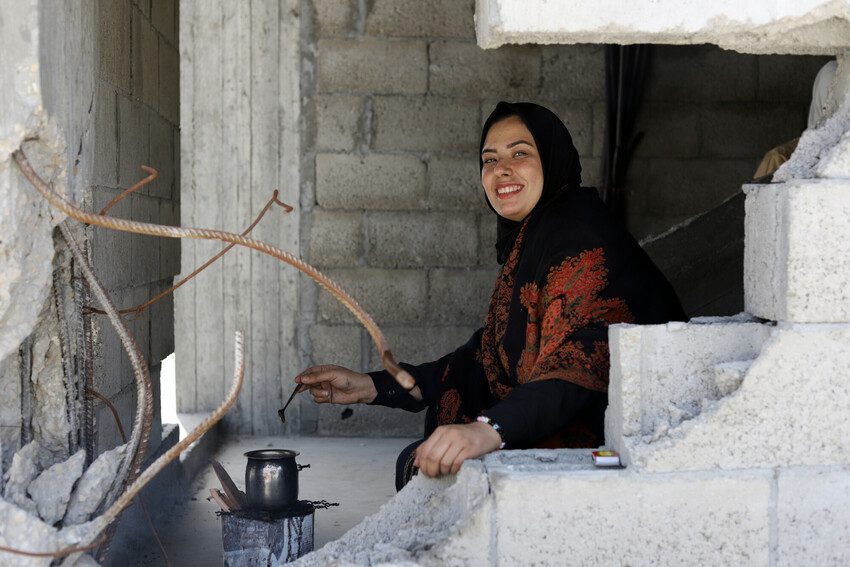
A portrait of Mahasen Al-Khatib, a Palestinian artist killed in the conflict in Gaza, photographed by her friend Fatima Hassouna.

Image credit: Fatima Hassouna

“This is the talented artist, and my good friend, Mahasen Al-Khatib, who was killed in the airstrikes. Mahasen was a role model for me and for many others. She did not let this war stop her work — she kept going. She used to sit in the attic of her house, pictured here destroyed after an attack, and draw beautiful pictures, using them as her voice, the voice of the Palestinians — speaking to the world.

“The place where this photo was taken no longer exists. The house is gone, the attic is gone, and Mahasen and her dreams are gone. But her wish came true, her art lives on, and many around the world now know that Mahasen was killed as she pursued her dream.”


A history of female courage
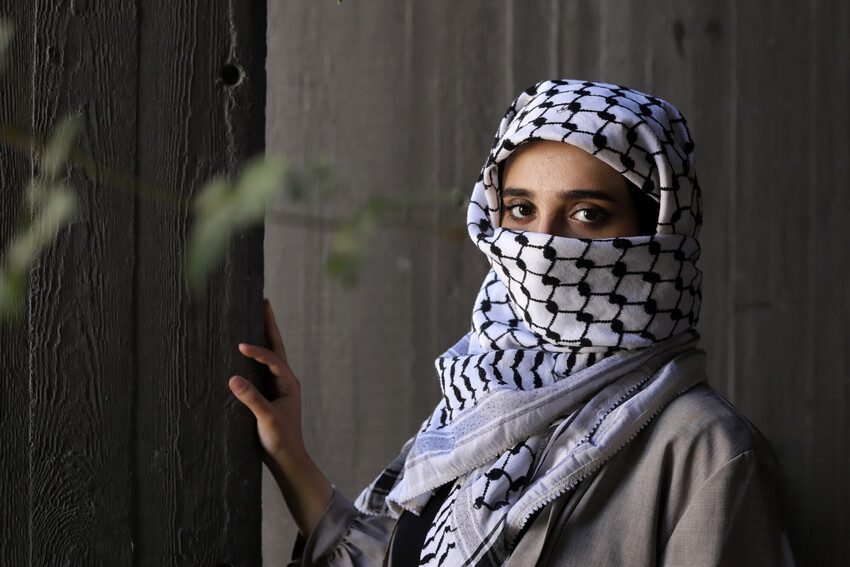
A Palestinian woman wearing a keffiyeh, photographed in Gaza by Fatima Hassouna.

Image credit: Fatima Hassouna

“For entire generations, women have been the primary nurturers, the legends of the struggle, and the seeds from which a tree of strength and resilience has grown.

“For ages, women have raised their children, instilling in them a steadfast belief and the idea that liberation begins with small actions — perhaps a keffiyeh.

“We must believe in a better future for ourselves — that resistance is a continuous and worthwhile endeavor.” — Fatima Hassouna

“In the same vein, I have always seen the keffiyeh as the symbol of Palestine, the lady, and we are her children, guided by the belief that we must believe in a better future for ourselves — that resistance is a continuous and worthwhile endeavor.”


The sea of strength
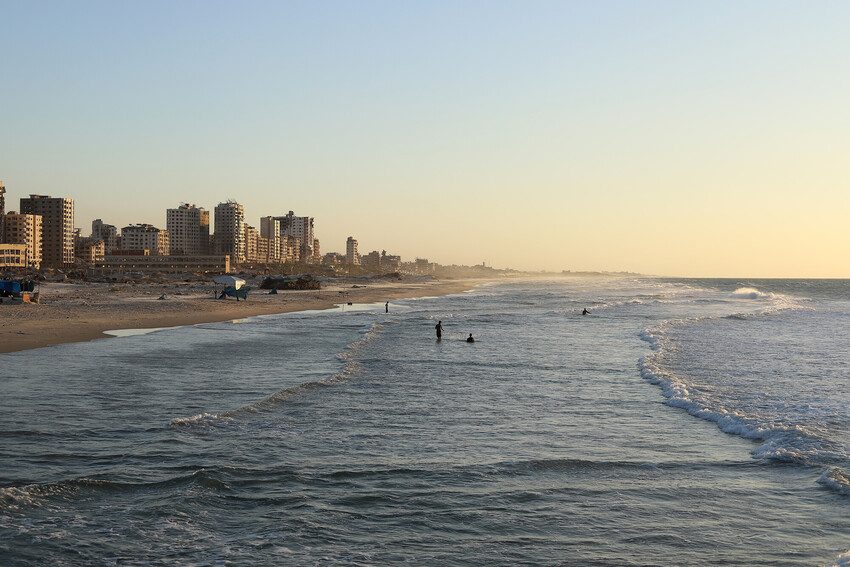
The sea off the coast of Gaza, photographed by Fatima Hassouna, with Gazans gathered at the water's edge.

Image credit: Fatima Hassouna

“The more I try to explain our relationship as Gazans with the sea, the less meaning my words seem to carry.

“The sea has been our only escape throughout our lives. And though they tried to keep us away from the sea, they could not. Nothing can come between us and it. Everyone here, whenever they need to breathe, heads to the sea. Just seeing this vast expanse makes you feel like you can breathe again, like you can carry on with your life, at least with a little more sense of peace than you arrived with.”


Returning home
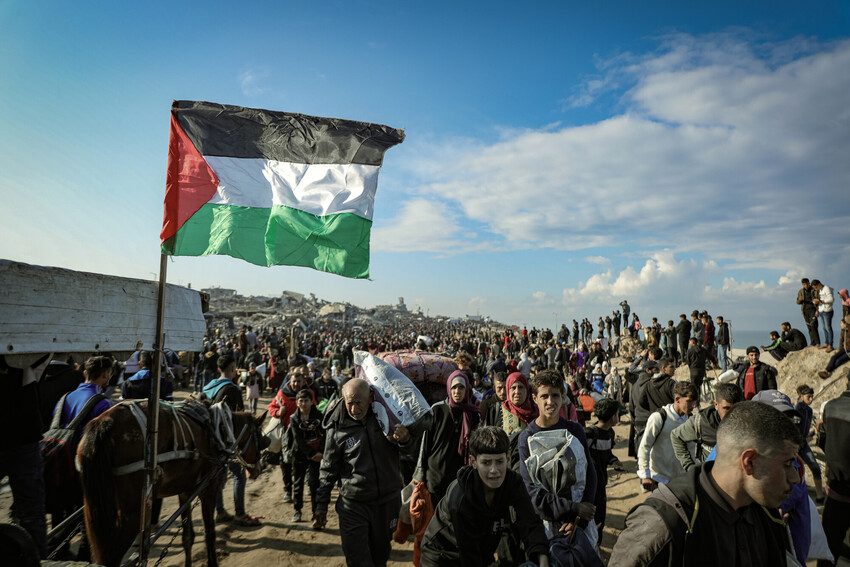
Palestinians traveling along a road in Gaza, returning home after displacement, photographed by Fatima Hassouna.

Image credit: Fatima Hassouna

“Nothing is more beautiful than returning home, despite the hardship of the journey, the difficulty of reaching it, and the long wait to get there — it is always worth it. The moment you breathe in the air of your homeland and your home is a moment more precious than any other.

“The moment you breathe in the air of your homeland and your home is a moment more precious than any other.” — Fatima Hassouna

“This awe-inspiring scene will stay in my memory until I die. This image will remain an eternal memento for an entire generation after me, allowing them to inhale the meaning of returning home, the meaning of ‘home,’ and the sweetness of arrival after a long, arduous wait.”


The day before she died, Fatima approved her photo diary to be shared publicly. Following her death, Plan International received consent from her family to publish her work, fully crediting her.

To support Plan International’s work in Gaza, visit our Gaza-Middle East crisis appeal.

Image of Fatima Hassouna

PRESS RELEASE

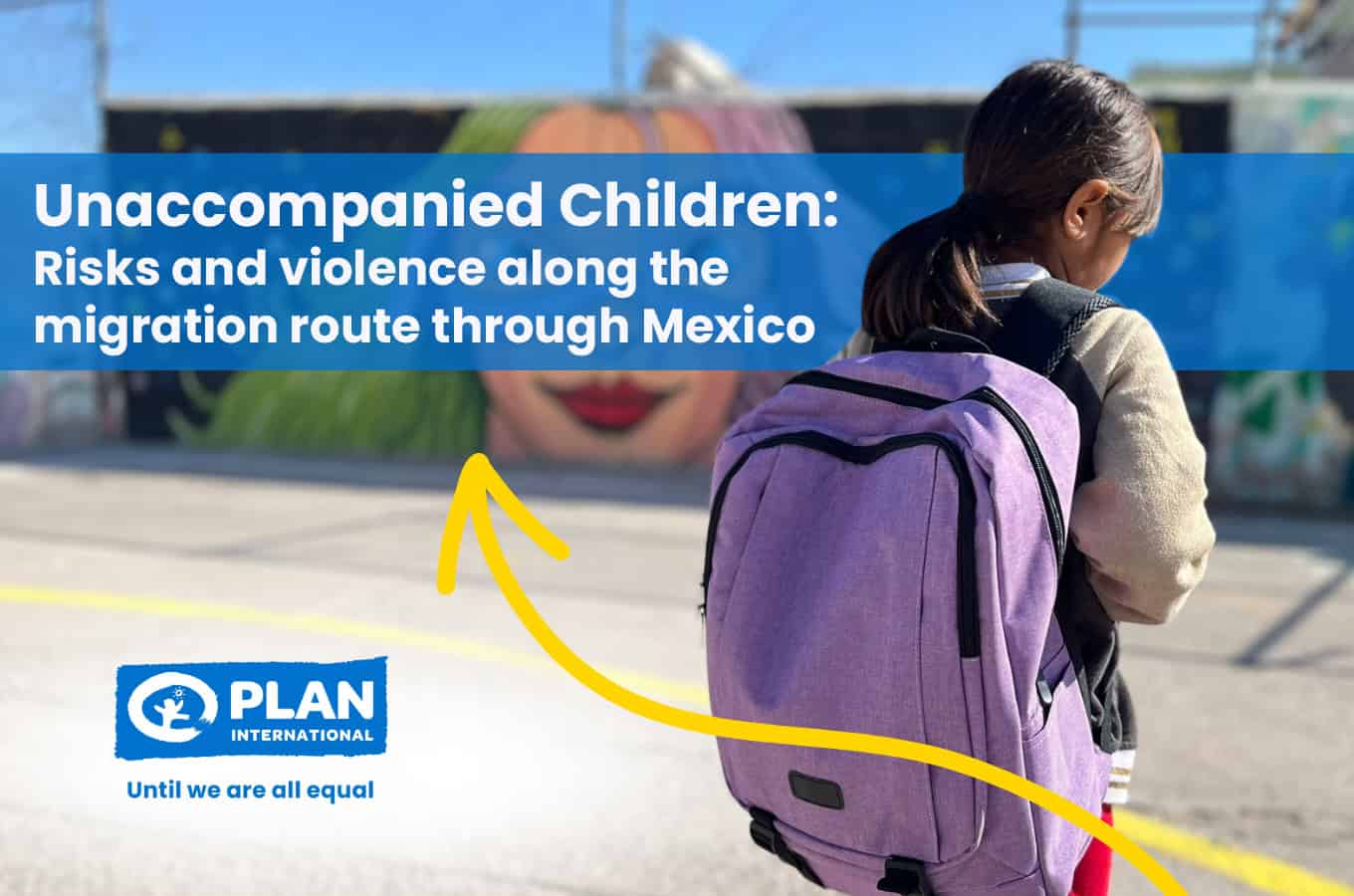
Young girl with a purple backpack walks alone near a mural in Mexico, highlighting the dangers faced by unaccompanied children on the migration route.

Children migrating through Mexico in search of safety are being met with alarming levels of violence, family separation and uncertainty at the country’s northern border, according to a new study by Plan International and Save the Children in Mexico.

The research is based on 155 interviews with migrant children and their caregivers across three of Mexico’s major border cities — Ciudad JuĆ”rez, Reynosa and Tijuana — and reveals that after fleeing violence, many children found themselves in overcrowded shelters, out of school and in unsafe neighborhoods alone, where they faced further dangers and continued to be denied their rights.

While many of the children surveyed initially travelled with family or a loved one, the journey often resulted in painful separation. In Ciudad JuƔrez, nearly two in three children (63.5%) left home with a parent or guardian, but only about a third arrived in Mexico with someone by their side.

This separation leaves children — especially girls — more vulnerable to gender-based violence, exploitation, trafficking and forced recruitment by armed groups as they travel alone in search of safety.

Children on the move increasing

ā€œOrganized crime has many ways of finding and grabbing you. There are many areas where it’s hard to run away if you’re trying to escape,ā€ said JosĆ©*, a 16-year-old unaccompanied boy interviewed in Ciudad JuĆ”rez.

The number of unaccompanied children making the journey to Mexico has surged in recent years, jumping from nearly 69,500 in 2019 to more than 137,000 in 2023, driven by escalating violence, poverty and climate-related displacement.

For many of these children, their journey does not end in safety once they reach Mexico’s northern border, but in further hardship. Interviews with the children reveal that they are often forced to live in unsafe conditions for months at a time.

In Reynosa, for example, one in three girls interviewed had been living in displacement shelters for over six months, often confined in high-risk areas, where even basic freedoms — like stepping outside — are restricted by fear of kidnapping.

In Ciudad JuƔrez, children interviewed also described being forced to leave their homes to escape violence, only to encounter new forms of danger in overcrowded shelters and unsafe neighborhoods.

ā€œWhen someone was watching us or making us uncomfortable, we’d say we were going to get water or to the bathroom — just so we could step away or find a way not to come back,ā€ said Estrella*, an 8-year-old girl from central Mexico, describing how she and other girls learned to protect themselves during their journey.

Children’s education suffering

The education among migrant children at Mexico’s northern border has also been severely disrupted. Nearly three-quarters (70.3%) of children interviewed previously attended school, but over half (58.1%) are no longer learning inside a classroom.

Barriers such as administrative hurdles, security risks and a lack of formal education in shelters are major factors.

Additionally, discrimination and xenophobia in schools is worsening the situation, according to testimonies collected, because ā€œthe mothers, fathers and caregivers of the Mexican population do not want their children to live with children on the move.ā€

The research also found that the emotional toll on migrant children in these cities is immense, especially among those separated from their parents feeling abandoned.

Children lack mental health support

Many struggle to understand why their parents are no longer with them or why they’ve been living in shelters for extended periods with little to no contact. Despite this and the distressing conditions many face, access to mental health support for migrant children in these three cities was reported to be almost non-existent.

“This study has found that migrant children are not finding safety when they cross the border into Mexico — they’re finding more fear, more waiting and more lost time.

No child should find themselves in this situation, especially after enduring such a perilous journey to find safety. They need support now – including protection, access to safe shelter, education and mental health care. We are seeing families so desperate that children are being forced to consider returning to the very places they fled from. That should never be their only option.” – Reena Ghelani, Chief Executive Officer of Plan International.

Collective commitment of society

ā€œMigrant and internally displaced girls face severe risks and are systematically denied their fundamental rights — including access to education and protection. Our joint study sheds light on the challenges these girls endure and presents actionable solutions to address the ongoing humanitarian crisis affecting migrant children in Mexico.

In times like these, the collective commitment of society is more important than ever. Together, we must ensure that every girl has the opportunity to thrive — no matter where she comes from or where she’s going.ā€ – FĆ”tima Andraca, Programs and Humanitarian Director, Save the Children Mexico.

In light of these findings, Plan International and Save the Children in Mexico are calling for an immediate and coordinated response. This includes strengthening child protection systems in border cities across Mexico, ensuring all children and adolescents — especially girls — have safe access to education and mental health care and providing dignified shelter arrangements that prioritize their specific needs as they flee violence and instability.

The report, titled ā€œUnaccompanied Children: Risks and violence along the migration route through Mexicoā€, was developed by the Human Rights Programme at Universidad Iberoamericana CDMX.


*Name changed to protect identity.

For further information or interview requests, please contact:

Raquel Oviedo, External Communications Assistant, Plan International Mexico

Tel: +52 55 7152 2917

Email: [email protected]

Rilian Agunos, Global Media Manager, Plan International Global Hub

Tel: +1 519 835 5105

Email: [email protected]

About Plan International

Plan International is an international development and humanitarian nonprofit that advances children’s rights and equality for girls. Working together with children, young people, supporters and partners, we strive for a just world, tackling the root causes of challenges children face. We are there from birth until adulthood, and we support children to prepare for and respond to crises and adversity, while particularly focusing on the experiences of girls. With more than 85 years of experience, we work to transform lives in more than 80 countries. We won’t stop until we are all equal.

Learn more at planusa.org.

What if education started in the soil? Across the world, school gardens are more than just a source of food — they are a source of opportunity. These gardens provide hands-on learning, leadership skills and nutrition, ensuring that students — especially girls — can stay in school, build confidence and prepare for the future.

For Earth Day, we’re highlighting three inspiring stories of students using school gardens to improve their lives, families and communities.


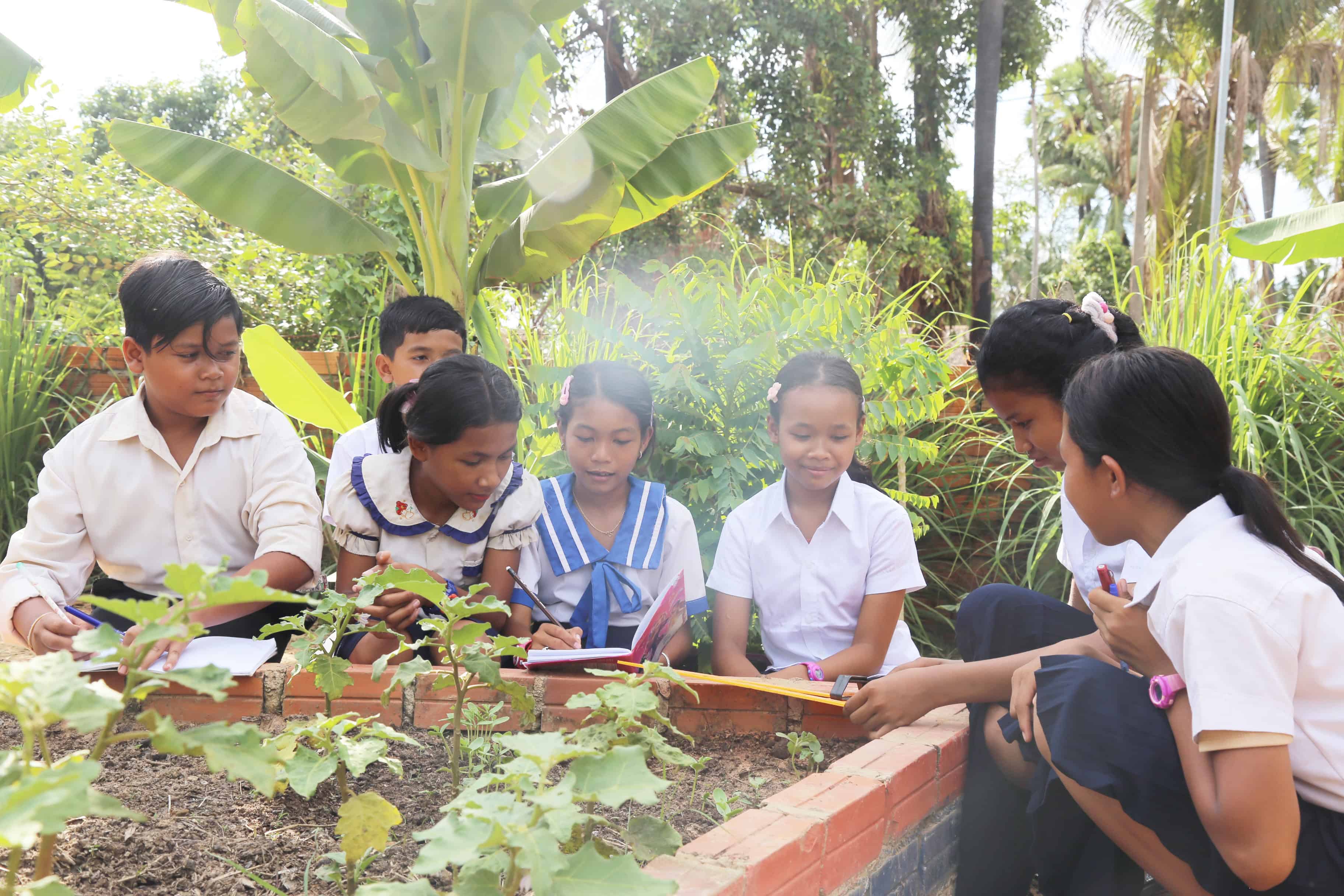
A group of primary school students in Cambodia sits around a raised garden bed, using a protractor to measure angles while taking notes. The school’s learning garden provides hands-on lessons in math, science and agriculture.

Students in Cambodia’s Siem Reap province use a protractor to measure angles in their school’s learning garden. The garden, established through a Plan project, serves as an outdoor classroom where students engage in hands-on learning. | Ā©Plan International

Bangladesh: A rooftop garden bringing health and happiness

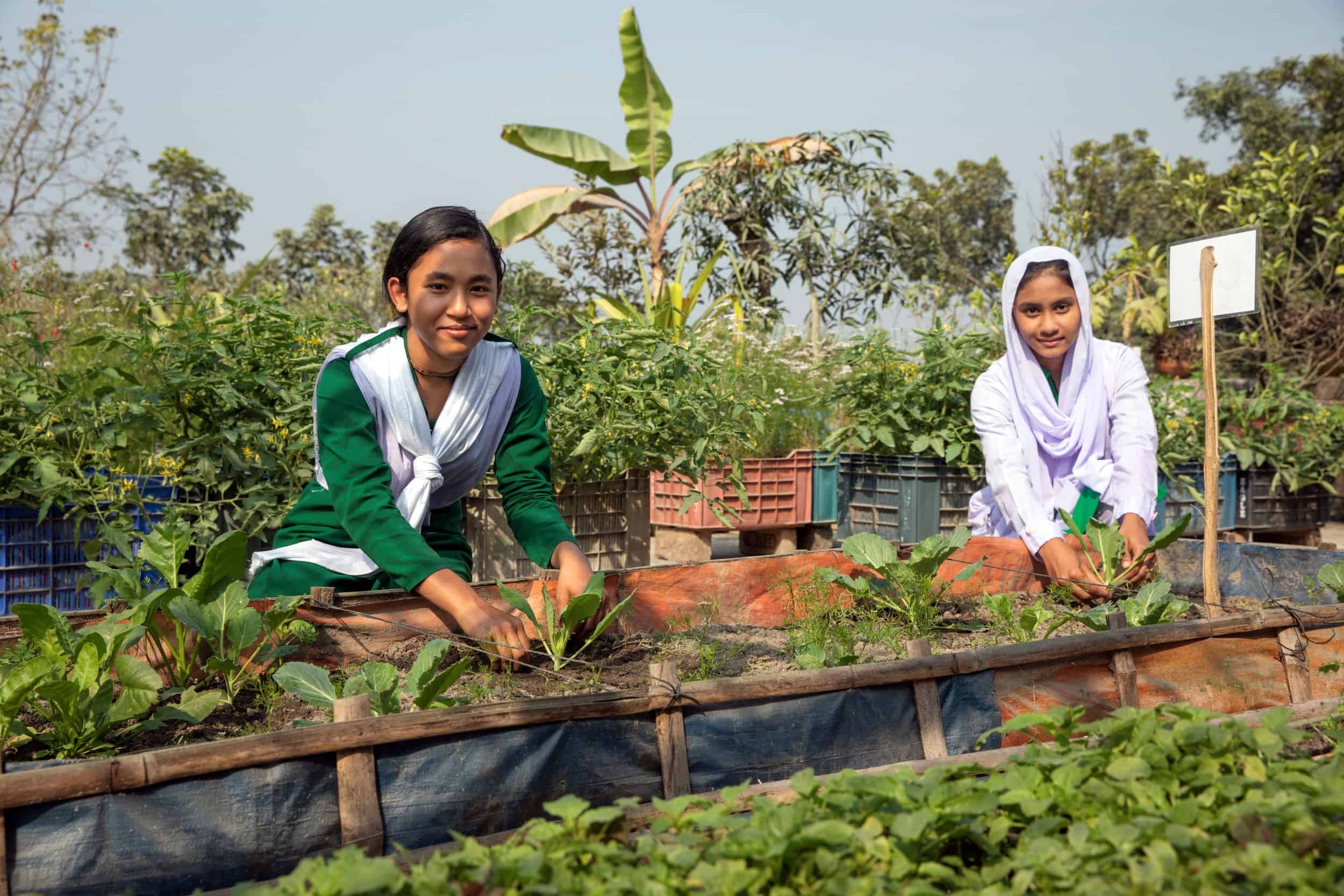
For 14-year-old Pallabi and 13-year-old Razia in Bangladesh, their school’s rooftop garden is more than just a green space — it’s a classroom, a kitchen and a source of inspiration.

With the support of Plan International’s Joint Action for Nutrition Outcome project, their school created a thriving urban garden where students learn to grow fruits and vegetables.

“The garden helps us understand how food grows and why nutrition is important,” Pallabi says.

But the impact doesn’t stop at school. The girls teach their families and neighbors how to create home gardens, so they can grow their own fruits and vegetables.

“My parents were inspired to grow vegetables at home,” Razia shares. “Now, we don’t have to buy as much from the market, and we eat healthier meals.”

Even in urban spaces, this garden is proving that students can grow more than food — they can grow knowledge, health and change.


Two girls, Pallabi and Razia, work in their rooftop school garden in Rangpur, Bangladesh, surrounded by green plants and vegetable beds. The garden is part of a Plan International project promoting nutrition and climate-smart agriculture.

Pallabi, 14, and Razia, 13, tend to their rooftop school garden in Rangpur, Bangladesh. Through Plan’s Joint Action for Nutrition Outcome project, they have learned how to grow seasonal vegetables, use organic fertilizers and improve their nutrition. | Ziaul Haque, Ā©Plan International

Rwanda: A student-led nutrition club fighting malnutrition

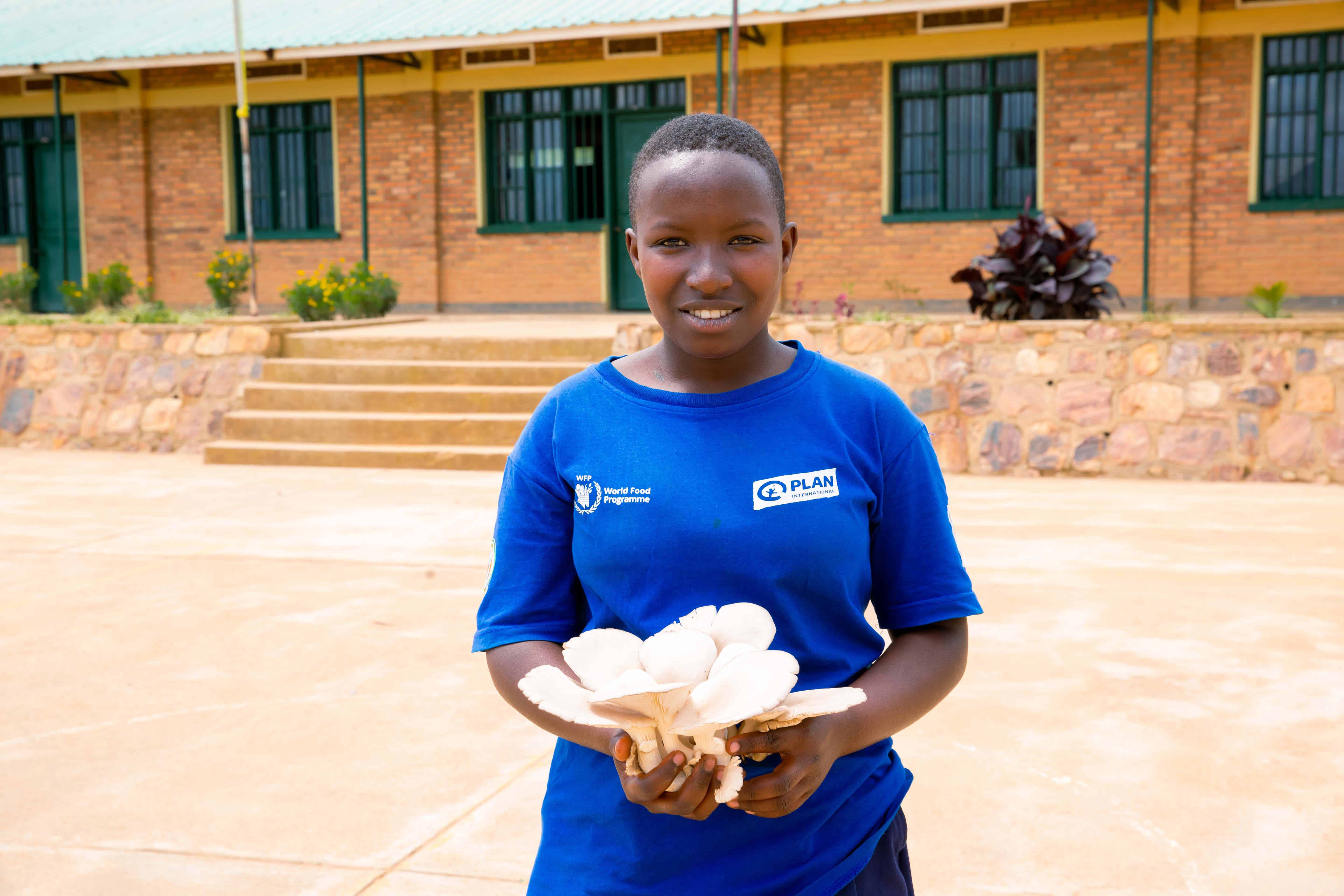
For 16-year-old Alice in Rwanda, school gardens are not just about food — they’re about saving lives.

As a leader of her school’s nutrition club, Alice helps train parents and students on gardening, nutrition and health. The club has already helped create more than 90 kitchen gardens at homes near the school, ensuring that families — including those who have relocated seeking safety and opportunity — have access to fresh, healthy food.

“We teach families how to grow their own food so that children don’t suffer from malnutrition,” Alice explains.

Thanks to their efforts, more children are eating a mix of healthy foods, helping them focus better in school.

Alice’s leadership proves that when young people are given the tools to make a difference, they create lasting change in their communities.


A 16-year-old girl named Alice, wearing a blue Plan International shirt, stands outside her school in Rwanda, smiling while holding a handful of freshly harvested mushrooms. She leads a student nutrition club that grows food to combat malnutrition in local communities.

Alice, 16, leads a 30-member nutrition club at her secondary school near a refugee camp in Rwanda. She and her peers grow mushrooms and kitchen gardens to tackle malnutrition and teach their community how to do the same. | Solange Iradukunda, ©Plan International

Kenya: Growing food and leadership through 4K Clubs

In Kilifi County, Kenya, sixth grader Elizabeth is determined to make a difference through her school’s 4K Club, an agricultural program where students learn to grow food, care for the environment and support their families.

With her region suffering from severe drought, Elizabeth and her classmates know that food shortages aren’t just a school issue — they’re a survival issue.

“Kenya has been experiencing a prolonged drought, fewer trees and less fresh air circulation,” Elizabeth explains. “This means we don’t have enough to eat at home or at school. That’s why I joined the 4K Club — to be part of the people who are helping Kenya.”

Through Plan’s partnership with Kenya’s Ministry of Agriculture, students in 4K Clubs grow crops like watermelons, yams and eggplants — not only providing food for their schools but also learning valuable agricultural skills that will help them in the future.

Elizabeth’s story shows that young leaders are already finding ways to ensure their communities have enough food — one garden at a time.


Two girls, Elizabeth and her friend, harvest eggplants from a lush school garden in Kenya. As part of a 4K Club, they learn farming methods that protect the land for the future while caring for the environment.

Elizabeth and her friend pick ripe eggplants from their school garden in Kenya. As members of a 4K Club, they learn sustainable farming techniques and environmental conservation through Plan’s Conservation and Sustainable Management of Coastal and Marine Ecosystems project. | Armstrong Too, Ā©Plan International

How school gardens transform learning and lives

— Teach hands-on skills: Students learn farming techniques, teamwork and responsibility.

— Improve nutrition: Gardens provide fresh, healthy food for students and their families.

— Encourage leadership: Girls take charge of planting, growing and maintaining gardens, building confidence and problem-solving skills.

How you can help

Through our Gifts of Hope catalog, you can support programs that provide school gardens, farming tools and nutrition programs to students worldwide.

Help students create sustainable gardens that provide food and learning opportunities.


Two girls, Elizabeth and her friend, harvest eggplants from a lush school garden in Kenya. As part of a 4K Club, they learn farming methods that protect the land for the future while caring for the environment.