Search Results

Search results for

0 result(s) found

STATEMENT:As mass starvation spreads across Gaza, our colleagues and those we serve are wasting away

A joint statement from more than 100 organizations, sounding the alarm to allow life-saving aid into Gaza. Ā  As the Israeli government’s siege starves the people of Gaza, aid workers are now joining the same food lines, risking being shot just to feed their families. With supplies now totally depleted, humanitarian organisations are witnessing their own colleagues and partners waste away before their eyes. Exactly 2 months since the Israeli government-controlled scheme, the Gaza Humanitarian Foundation, began operating, more than 100 organisations are sounding the alarm, urging governments to act: open all land crossings; restore the full flow of food, clean water, medical supplies, shelter items, and fuel through a principled, UN-led mechanism; end the siege, and agree to a ceasefire now. Ā 

ā€œEach morning, the same question echoes across Gaza: will I eat today?ā€ said one agency representative.

Ā  Massacres at food distribution sites in Gaza are occurring near-daily. As of 13 July, the UNĀ confirmedĀ 875 Palestinians were killed while seeking food, 201 on aid routes and the rest at distribution points. Thousands more have been injured. Meanwhile, Israeli forces have forcibly displaced nearly 2 million exhausted Palestinians, with the most recent massĀ displacement order issued on JulyĀ 20, confining Palestinians to less than 12% of Gaza.Ā WFPĀ warns that current conditions make operations untenable. The starvation of civilians as a method of warfare is a war crime.

Devastating impact on children

Just outside Gaza, in warehouses — and even within Gaza itself — tons of food, clean water, medical supplies, shelter items and fuel sit untouched, with humanitarian organizations blocked from accessing or delivering them. The Government of Israel’s restrictions, delays, and fragmentation under its total siege have created chaos, starvation, and death. An aid worker providing psychosocial support spoke of the devastating impact on children: ā€œChildren tell their parents they want to go to heaven, because at least heaven has food.ā€ DoctorsĀ reportĀ record rates ofĀ acute malnutrition, especially among children and older people. Illnesses like acute watery diarrhea are spreading, markets are empty, waste is piling up, and adults are collapsing on the streets from hunger and dehydration. Distributions in Gaza average just 28 trucks a day, far from enough for over 2 million people, many of whom have gone weeks without assistance. The UN-led humanitarian system has not failed; it has been prevented from functioning. Humanitarian agencies have the capacity and supplies to respond at scale. But, with access denied, we are blocked from reaching those in need, including our own exhausted and starved teams. On 10 July, the EU and IsraelĀ announcedĀ steps to scale up aid. But these promises of ā€˜progress’ ring hollow when there is no real change on the ground. Every day without a sustained flow means more people dying of preventable illnesses. Children starve while waiting for promises that never arrive. Palestinians are trapped in a cycle of hope and heartbreak, waiting for assistance and ceasefires, only to wake up to worsening conditions. It is not just physical torment, but psychological. Survival is dangled like a mirage. The humanitarian system cannot run on false promises. Humanitarians cannot operate on shifting timelines or wait for political commitments that fail to deliver access. Ā 

Time for decisive action

Governments must stop waiting for permission to act. We cannot continue to hope that current arrangements will work. It is time to take decisive action: demand an immediate and permanent ceasefire; lift all bureaucratic and administrative restrictions; open all land crossings; ensure access to everyone in all of Gaza; reject military-controlled distribution models; restore a principled, UN-led humanitarian response and continue to fund principled and impartial humanitarian organizations. States must pursue concrete measures to end the siege, such as halting the transfer of weapons and ammunition. Piecemeal arrangements and symbolic gestures, like airdrops or flawed aid deals, serve as a smokescreen for inaction. They cannot replace states’ legal and moral obligations to protect Palestinian civilians and ensure meaningful access at scale. States can and must save lives before there are none left to save.

Signatories:

  1. American Friends Service Committee (AFSC)
  2. A.M. Qattan Foundation
  3. A New Policy
  4. ACT Alliance
  5. Action Against Hunger (ACF)
  6. Action for Humanity
  7. ActionAid International
  8. American Baptist Churches Palestine Justice Network
  9. Amnesty International
  10. Asamblea de Cooperación por la Paz
  11. Associazione Cooperazione e SolidarietĆ  (ACS)
  12. Bystanders No More
  13. Campain
  14. CARE
  15. Caritas Germany
  16. Caritas Internationalis
  17. Caritas Jerusalem
  18. Catholic Agency for Overseas Development (CAFOD)
  19. Center for Mind-Body Medicine (CMBM)
  20. CESVI Fondazione
  21. Children Not Numbers
  22. Christian Aid
  23. Churches for Middle East Peace (CMEP)
  24. CIDSE- International Family of Catholic Social Justice Organisations
  25. Cooperazione Internazionale Sud Sud (CISS)
  26. Council for Arab‑British Understanding (CAABU)
  27. DanChurchAid (DCA)
  28. Danish Refugee Council (DRC)
  29. Doctors against Genocide
  30. Episcopal Peace Fellowship
  31. EuroMed Rights
  32. Friends Committee on National Legislation (FCNL)
  33. Forum Ziviler Friedensdienst e.V.
  34. Gender Action for Peace and Security
  35. Global Legal Action Network (GLAN)
  36. Global Witness
  37. Health Workers 4 Palestine
  38. HelpAge International
  39. Humanity & Inclusion (HI)
  40. Humanity First UK
  41. Indiana Center for Middle East Peace
  42. Insecurity Insight
  43. International Media Support
  44. International NGO Safety Organisation
  45. Islamic Relief
  46. Jahalin Solidarity
  47. Japan International Volunteer Center (JVC)
  48. Kenya Association of Muslim Medical Professionals (KAMMP)
  49. Kvinna till Kvinna Foundation
  50. MedGlobal
  51. Medico International
  52. Medico International Switzerland (medico international schweiz)
  53. Medical Aid for Palestinians (MAP)
  54. Mennonite Central Committee (MCC)
  55. Médecins Sans Frontières (MSF)
  56. MƩdecins du Monde France
  57. MƩdecins du Monde Spain
  58. MƩdecins du Monde Switzerland
  59. Mercy Corps
  60. Middle East Children’s Alliance (MECA)
  61. Movement for Peace (MPDL)
  62. Muslim Aid
  63. National Justice and Peace Network in England and Wales
  64. Nonviolence International
  65. Norwegian Aid Committee (NORWAC)
  66. Norwegian Church Aid (NCA)
  67. Norwegian People’s Aid (NPA)
  68. Norwegian Refugee Council (NRC)
  69. Oxfam International
  70. Pax Christi England and Wales
  71. Pax Christi International
  72. Welthungerhilfe (WHH)
  73. Pax Christi Merseyside
  74. Pax Christi USA
  75. Pal Law Commission
  76. Palestinian American Medical Association
  77. Palestinian Children’s Relief Fund (PCRF)
  78. Palestinian Medical Relief Society (PMRS)
  79. Peace Direct
  80. Peace Winds
  81. Pediatricians for Palestine
  82. People in Need
  83. Plan International
  84. PremiĆØre Urgence Internationale (PUI)
  85. Progettomondo
  86. Project HOPE
  87. Quaker Palestine Israel Network
  88. Rebuilding Alliance
  89. Refugees International
  90. Saferworld
  91. Sabeel‑Kairos UK
  92. Save the Children (SCI)
  93. Scottish Catholic International Aid Fund
  94. SolidaritƩs International
  95. Støtteforeningen Det Danske Hus i Palæstina
  96. Swiss Church Aid (HEKS/EPER)
  97. Terre des Hommes Italia
  98. Terre des Hommes Lausanne
  99. Terre des Hommes Nederland
  100. The Borgen Project
  101. The Center for Mind-Body Medicine (CMBM)
  102. The Glia Project
  103. The Global Centre for the Responsibility to Protect (GCR2P)
  104. The International Development and Relief Foundation
  105. The Institute for the Understanding of Anti‑Palestinian Racism
  106. Un Ponte Per (UPP)
  107. United Against Inhumanity (UAI)
  108. War Child Alliance
  109. War Child UK
  110. War on Want
  111. Weltfriedensdienst e.V.


About Plan International Plan International is an international development and humanitarian nonprofit that advances children’s rights and equality for girls. Working together with children, young people, supporters and partners, we strive for a just world, tackling the root causes of challenges children face. We are there from birth until adulthood, and we support children to prepare for and respond to crises and adversity, while particularly focusing on the experiences of girls. With more than 85 years of experience, we work to transform lives in more than 80 countries. We won’t stop until we are all equal. For more information, please visitĀ www.PlanUSA.org.

Plan International logo

PRESS RELEASE


More than half of teenage girls believe that male violence is natural and it is their responsibility to protect themselves, a new study by girls’ rights organization Plan International reveals.

The findings come from a unique research project that has followed 142 girls across nine countries – Benin, Brazil, Cambodia, Dominican Republic, El Salvador, the Philippines, Togo, Uganda and Vietnam— from birth until they turned 18, interviewing them and their families annually about their attitudes to violence and gender roles.

What emerges is a picture of girls growing up in a world that blames them for the aggression and violence they face, restricts their freedoms, and teaches them to carry a burden that should be society’s responsibility.

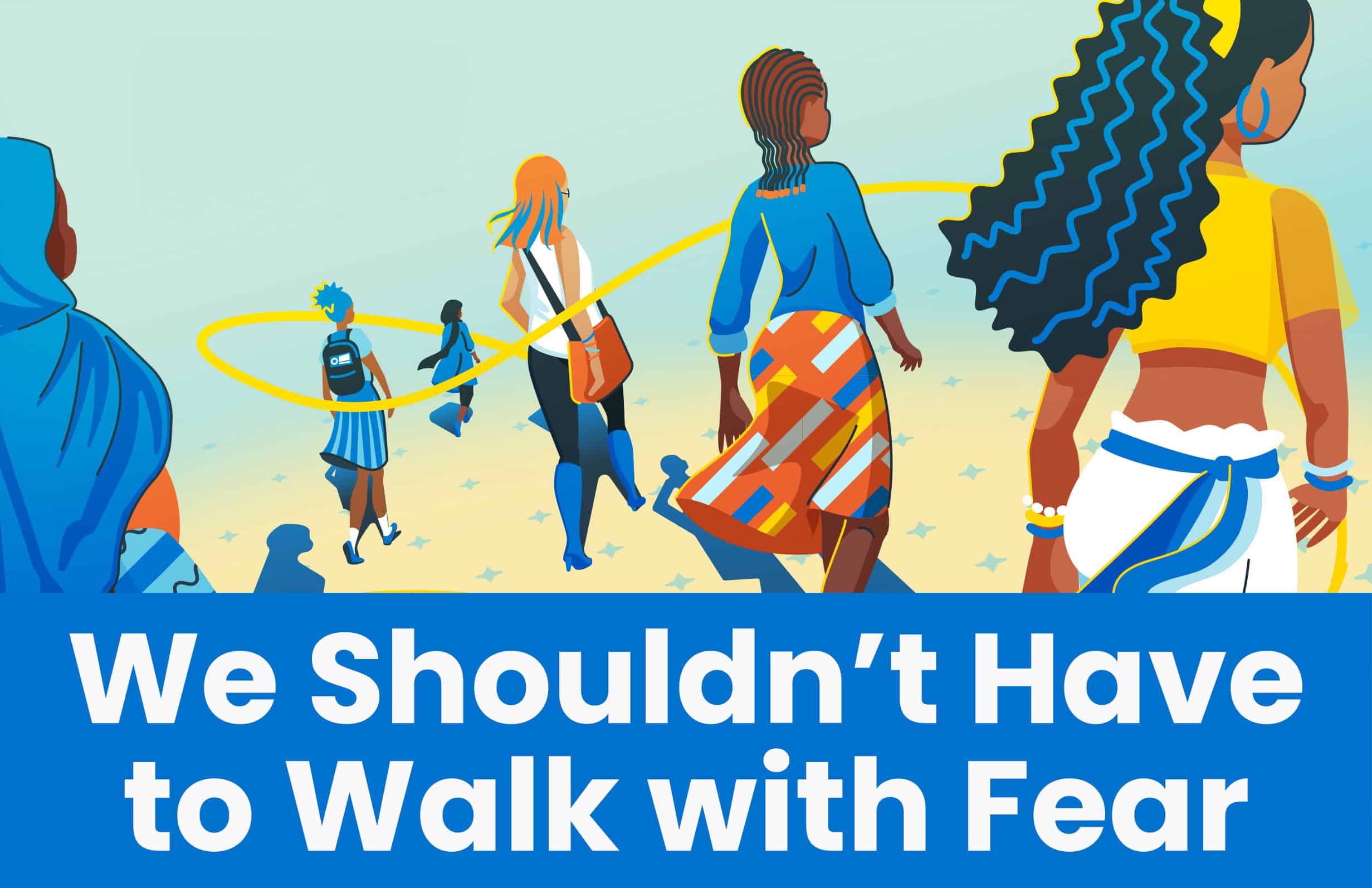
The report, We Shouldn’t Have to Walk with Fear, exposes how deeply ingrained gender norms shape girls’ perceptions of violence, putting them at greater risk of experiencing abuse and limiting their freedom.

By the time they reach adolescence, many girls feel that male violence is ā€˜normal’ — or ā€™ā€˜just the way things are.’ When interviewed between the ages of 14 and 15, 68% of girls felt that male aggression was an inevitable part of life.

Worryingly, the belief that girls are responsible for their own safety deepens as they grow up. While 57% of 14- to 15-year-old girls said it was up to them to protect themselves from abuse, this number rose to 67% by the time they reached the ages of 17 to 18.

Violence against girls is widespread and far-reaching — more than one billion girls and women have experienced physical, sexual, or psychological abuse globally, according to the United Nations.

Within the study group, an alarming 91% of girls reported experiencing violence, starting for some from as young as 11 years old.

At the age of 15, study participant, Katerin* said, ā€œOf course she’s the one who has to protect herself, because if she doesn’t protect herself, nobody else will.ā€

ā€œAdolescence is a time when girls should be thinking about friends, school, and their future — not about how to walk down the street to stay safe from aggression,ā€ said Plan International’s CEO, Reena Ghelani.

ā€œBut for too many girls around the globe, this is a daily reality. They grow up policing the way they walk, talk, or dress, knowing that if they’re harassed, bullied, or attacked, they risk being told it was their fault — that they ā€˜asked for it.’ This violence is neither inevitable nor acceptable. This research confirms that adolescence is a critical time for action.ā€

Previous studies have shown that girls and women who accept ideas reinforcing male dominance and gender inequality, such as the belief that ā€˜a man should be the head of the family’ or that ā€˜a man should be allowed to beat his wife’ — are more likely to experience domestic violence later in life.

Internalized gender norms also restrict girls’ freedom, leading them to limit where they go, how they dress, and who they spend time with.

The research also shines a light on how girls and families often blame survivors when abuse occurs, especially if a girl acts or dresses in ways that deviate from traditional expectations. This stigma silences girls, discourages reporting, and allows abuse to continue unchecked.

ā€œThey say that when you wear very short clothes, it provokes the boys,ā€ explains Saidy*, aged 15, from the Dominican Republic.

Adolescence is a pivotal moment for reshaping these ideas and breaking the cycle of violence. The report additionally found that girls did believe that behavior can be influenced or learned. As they entered adulthood, 89% of young women firmly believed that parents could teach boys not to be violent or aggressive.

ā€œ[Boys] can be taught to stop being aggressive; it’s the duty of parents to educate their boys and put them on the right trackā€, said Catherine*, 17, from Benin.

By the ages of 17-18, girls are challenging these harmful ideas, calling for their right to equal freedoms — at home, in school and on the streets.

Ly*, a young woman from Vietnam, stated that ā€œ[freedom] is for both girls and boys. Everyone has that right.ā€

Plan International is calling on leaders, donors, and civil society to urgently invest in programs that challenge harmful gender norms, prevent gender-based violence and prioritize the empowerment of adolescent girls.

ā€œTo create a world where girls can live free from fear, we must start early — working with families, schools, and communities to challenge ideas that justify violence and limit girls’ freedoms,ā€ Ghelani continued.

ā€œWe must educate boys and men to respect girls and build healthy, equal relationships. We must invest in services that protect and support girls and survivors, making sure help is safe, accessible, and tailored to their needs. By challenging gender norms at this pivotal age, we can break these harmful cycles.ā€


*The names of research participants have been changed.

Read the full report here.

For more information or to organize media interviews, please contact:

MƩlina Froidure, Global Media Officer, Plan International

[email protected]

Ā 

NOTES TO EDITORS

Achieving gender equality and ending gender-based violence is vital for realizing the Sustainable Development Goals — especially Goal 5, which aims to achieve gender equality and empower all women and girls.

Ā 

About the research

This research draws on evidence from Plan International’s qualitative, longitudinal study, Real Choices, Real Lives, to understand adolescent girls’ beliefs and attitudes about violence and protection, and to explore the implications of internalized social norms on their lives.


Real Choices, Real Lives has followed 142 girls across nine countries from birth in 2006 to their 18th year in 2024. Through annual data collection with both the girls and their caregivers, the study offers unique insights into their lived experiences throughout childhood and adolescence.

The study is committed to uncovering the root causes of gender inequality by exploring questions about beliefs, values, and expectations. In doing so, it reveals how gendered social norms and behaviors are created, sustained, or reshaped over time. Its approach provides rare access to girls’ daily realities, capturing their aspirations and perspectives in their own words, ensuring that their voices are heard and their demands for change and gender equality are amplified.

The research draws on interviews conducted between 2017 and 2024, when the girls were between 11 and 18 years old, and explores topics and themes related to girls’ and caregivers’ experiences of and attitudes towards violence, protection, and girls’ freedom.

About Plan International

Plan International is an international development and humanitarian nonprofit that advances children’s rights and equality for girls. Working together with children, young people, supporters and partners, we strive for a just world, tackling the root causes of challenges children face. We are there from birth until adulthood, and we support children to prepare for and respond to crises and adversity, while particularly focusing on the experiences of girls. With more than 85 years of experience, we work to transform lives in more than 80 countries. We won’t stop until we are all equal.

Learn more at planusa.org.

After years of exchanging letters and photographs, Plan International sponsor Wendy finally met her sponsored child Obed face-to-face during a recent trip to Rwanda. The visit, coordinated through Plan, turned out to be a day she will never forget. Here’s what Wendy had to say about the transformative experience.

What inspired you to sponsor a child with Plan?

Sponsoring a child was an easy decision for me. I used to live and study in Ghana, West Africa, in college so I have a personal connection to needs in that region. It was a no brainer since I have always known about the very real issues in Africa.

What do you enjoy most about being a sponsor?

I think it is a very special thing to help people in this way. The issues for children in that region in Rwanda are serious, and I know how much of an impact it makes to be a sponsor, whether it’s a donation or the monthly sponsorship of a child. I think in our everyday lives, it is easy to disconnect from the reality of life in other parts of the world, and I knew that even a little goes a long way. Obed was also very young when I first saw his picture. He seemed so little and we were excited to get to see him grow up.

How did it feel to meet your sponsored child in person?

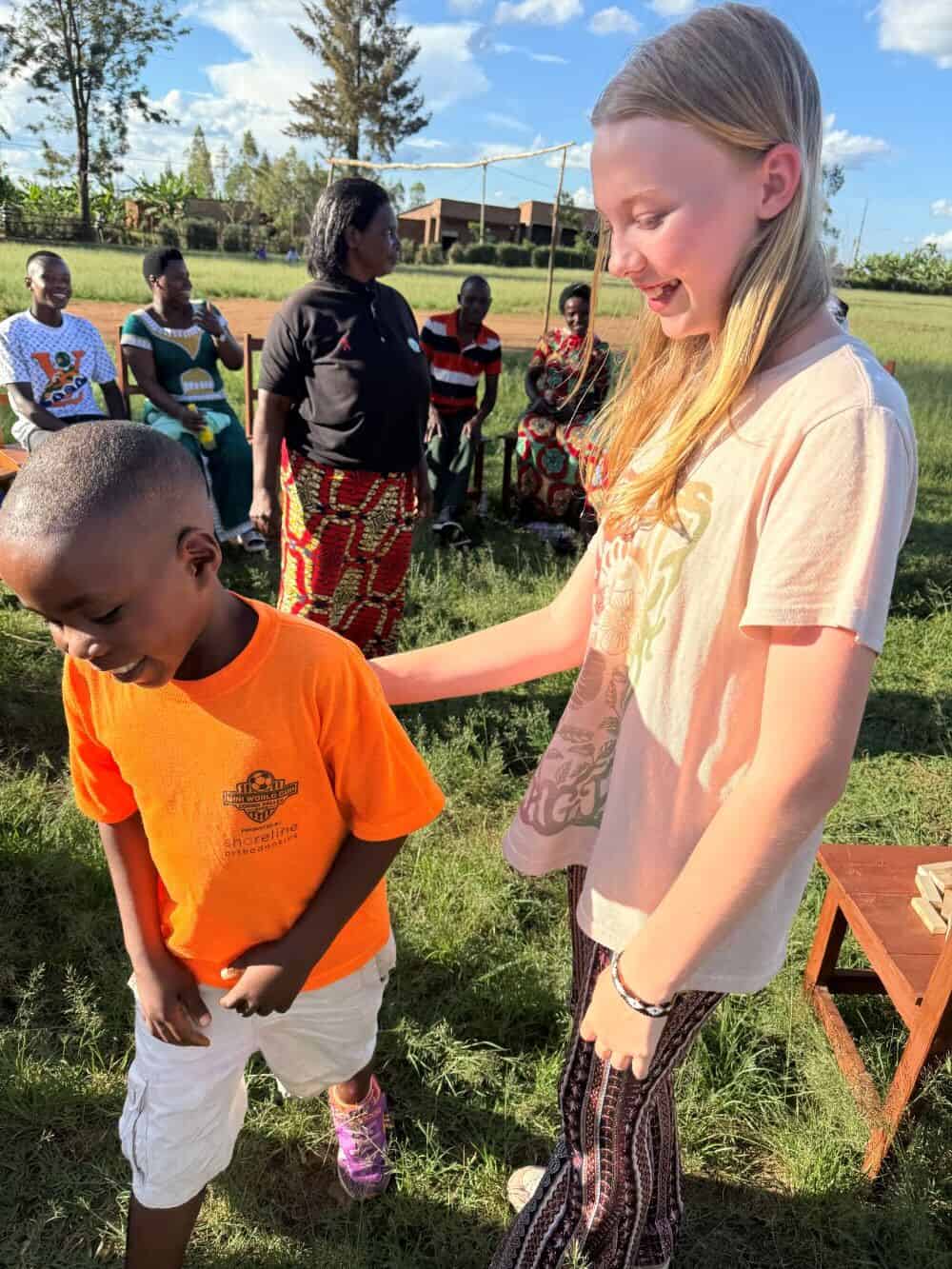
It was incredible! And surreal! I mean, we had only seen our sponsored child in pictures, so to meet in real life was really quite something. My daughter, who is 12, was so excited to meet him, and I think she was surprised that all of the other kids in the village came out to see what was going on. We also met Obed’s parents, family members, teachers and school principal. Everyone was so gracious and kind. I felt a huge sense of community and togetherness and that we were really doing something rare and special, bridging a gap across oceans. I think we became real for them just as much as they became real for us.


Obed, wearing an orange shirt and shorts, and Avery, wearing a pink shirt and patterned pants, smile together outside.

Wendy’s daughter, Avery, was excited to finally meet Obed.


What was the best part of the day?

To be honest, the whole day really was one of the more incredible experiences of my lifetime. Everyone was so kind and welcoming and truly happy to meet us. It was truly a privilege to be welcomed by the family to their village.

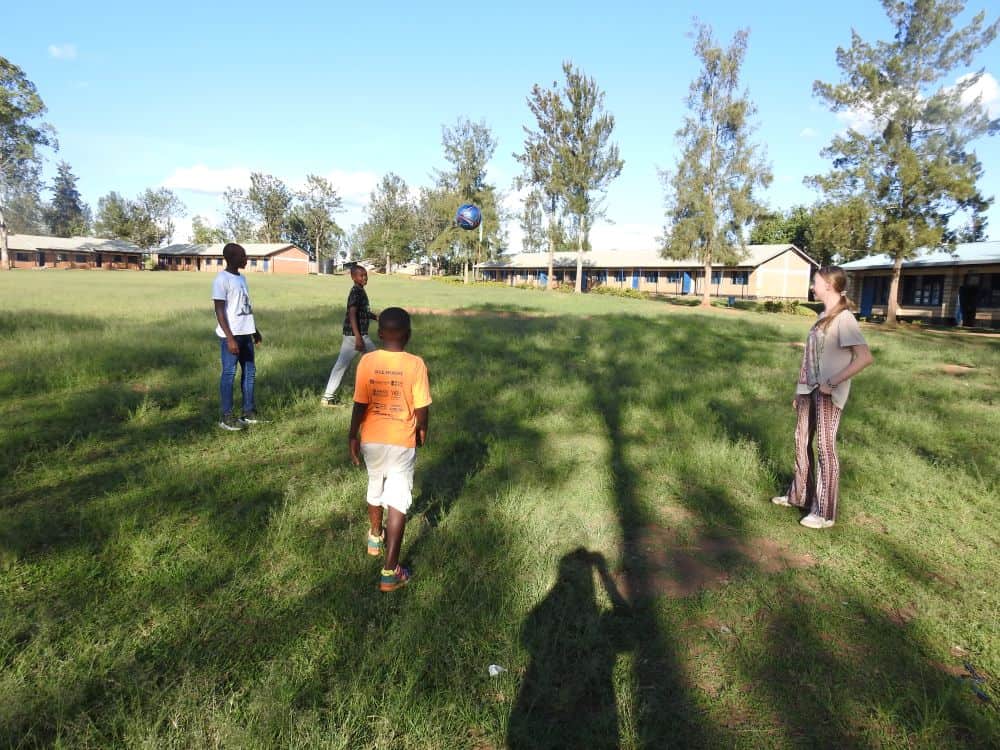
My daughter Avery wanted to give Obed a soccer ball as a gift. This was a big success and he really loved it. The kids formed a circle and got to pass the ball. She loves soccer, and these kids did too, so it was an amazing thing to see them getting along and playing in this way. It was the moment when Avery realized how much she had in common with all the kids.

The Plan staff were also so helpful at showing us around. I was personally most surprised to meet the person who translates the letters to the sponsors and the staff member who takes the pictures of the kids that you see in the mailers. Meeting the people behind the scenes firsthand brought everything to life!


A small group of children play soccer outdoors in a large, grassy area.

Wendy’s daughter Avery had a great time playing soccer with Obed and children from his community. | Vanessa, Ā©Plan International


How did you see Plan’s work making a difference in the area?

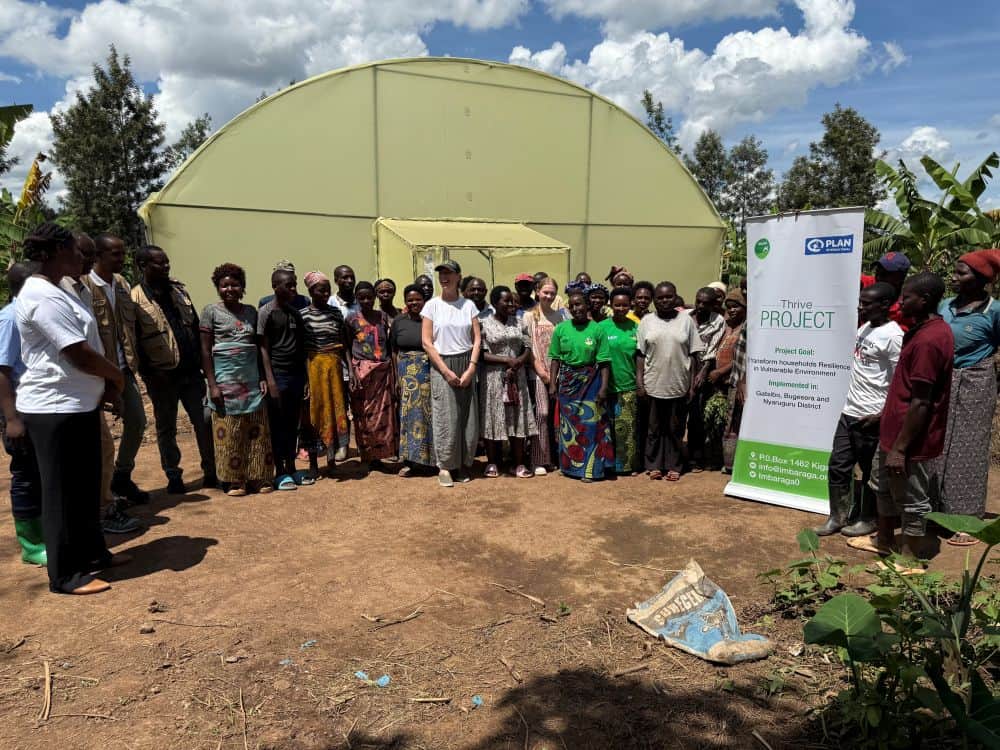
We started our day by visiting one of the farming projects aimed at improving nutrition in the community and for the children. We were greeted by the whole farming co-op of around 50 people and got to tour the new greenhouse. The community took so much pride in their project. They had done such work and we felt so honored that everyone took the time out of their day to show us what they had done. It was then that I realized what amazing and diverse work Plan is doing to improve the overall health and wellness of the communities. We were also able to visit one of the schools that Plan helped to construct. It was beautiful. We learned that the school allowed more children to go to school and also eliminated the long distance they used to walk. Some of the kids had been walking more than an hour to school before the school was built!


A group of people stand outside a tan structure with a sign next to it that says Thrive Project.

Wendy and Avery visit Plan International’s Thrive project and tour the new greenhouse.

Ā 

What would you tell other sponsors thinking about visiting their sponsored child?

If it is a possibility to go, you absolutely must go see the work Plan is doing in the region where you are sponsoring. It will be a life-changing experience and you will see how incredible this organization really is. A visit like this connects you to the world in ways you never expected. It makes you realize how big your monthly contribution is and how much it means to those receiving it. Visiting also makes you realize how lucky you are to have what you have. We came back with so much gratitude, feeling reinvigorated to help.


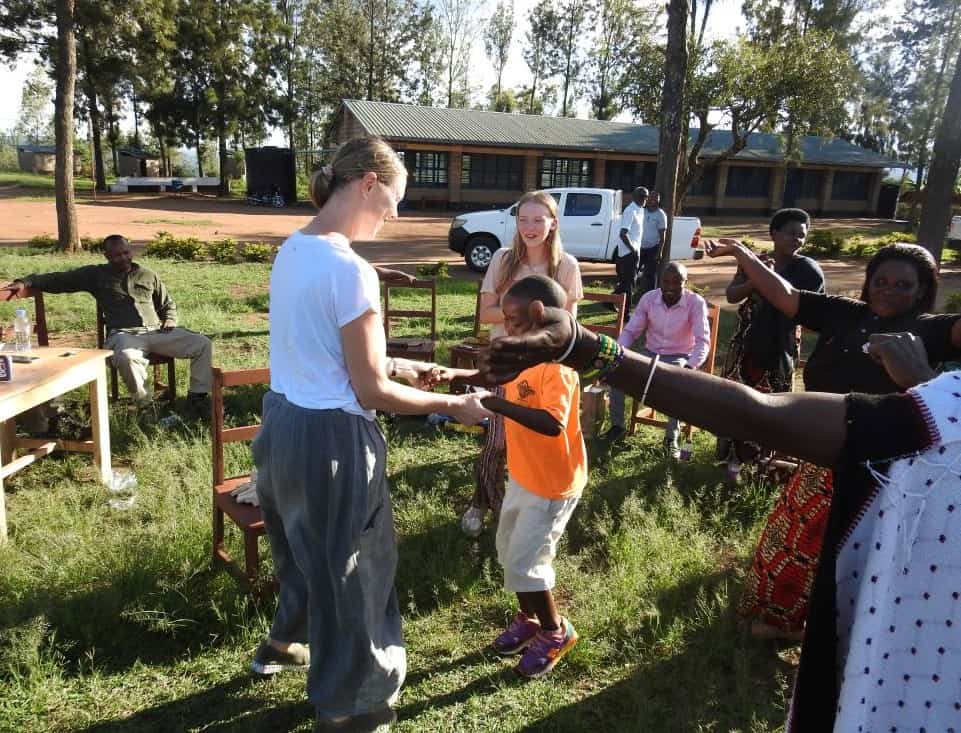
A woman wearing a white t-shirt holds hands with a boy wearing an orange t-shirt, surrounded by people celebrating outside.

Wendy’s visit with Obed was a community celebration — and a day she’ll never forget. | Vanessa, Ā©Plan International

Ā 

If you could share one message with someone considering child sponsorship, what would it be?

Don’t hesitate. It is the easiest and best decision you can make. And you will live with knowing you are making a big difference in the world.Ā  Your help is needed.


If you are interested in visiting your sponsored child, we would be thrilled to help organize that for you! All sponsor visits must be coordinated through Plan. Learn more here or call 800.556.7918 to speak with a friendly donor loyalty representative.

Sp-visit-dance image


InterAction, the largest alliance of U.S.-based international NGOs, has announced three new appointments to its board of directors — including Plan International USA president and CEO, Shanna Marzilli. Shanna joins leaders from Habitat for Humanity International and the Alliance for Peacebuilding, bringing decades of experience in nonprofit leadership, global development and strategic communications.

This role positions Shanna to help guide the broader development and humanitarian sector at a pivotal time. As Plan continues to advocate for children’s rights and equality for girls, her appointment reflects growing recognition of the organization’s leadership and expertise.

Read the full article here: InterAction welcomes three new board members

InterAction logo


In an interview with NBC Washington, Katherine Williford, chief development officer at Plan International USA, shared what it feels like to see decades of progress unravel in real time. ā€œHonestly, it’s heartbreaking,ā€ she says. ā€œI think all of us in the sector are walking around feeling nauseous.ā€ Plan USA has lost $38 million in funding from USAID and has already been forced to cancel key projects focused on protecting girls’ rights.

Williford explains that the programs being cut are not theoretical — they’re the difference between a girl staying in school or being forced into early marriage. ā€œWe know that when girls in developing nations get access to education, their communities thrive, their economies thrive,ā€ she says. The organization is now scrambling to fill the gap through private donations in order to continue supporting girls when they need it most.

Read the full article here: USAID cuts could lead to millions of deaths, researchers warn

Channel 4 Washington logo

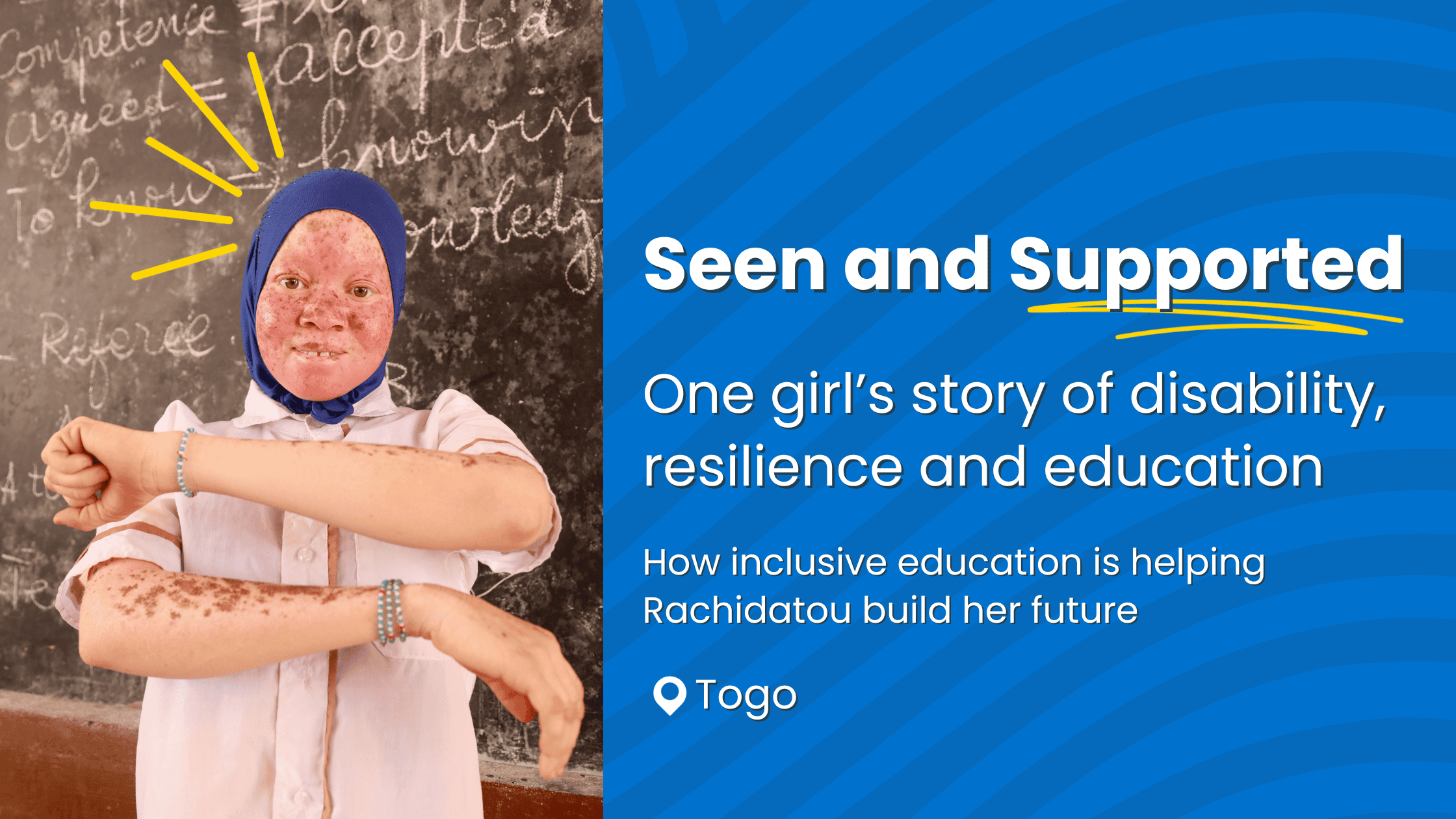
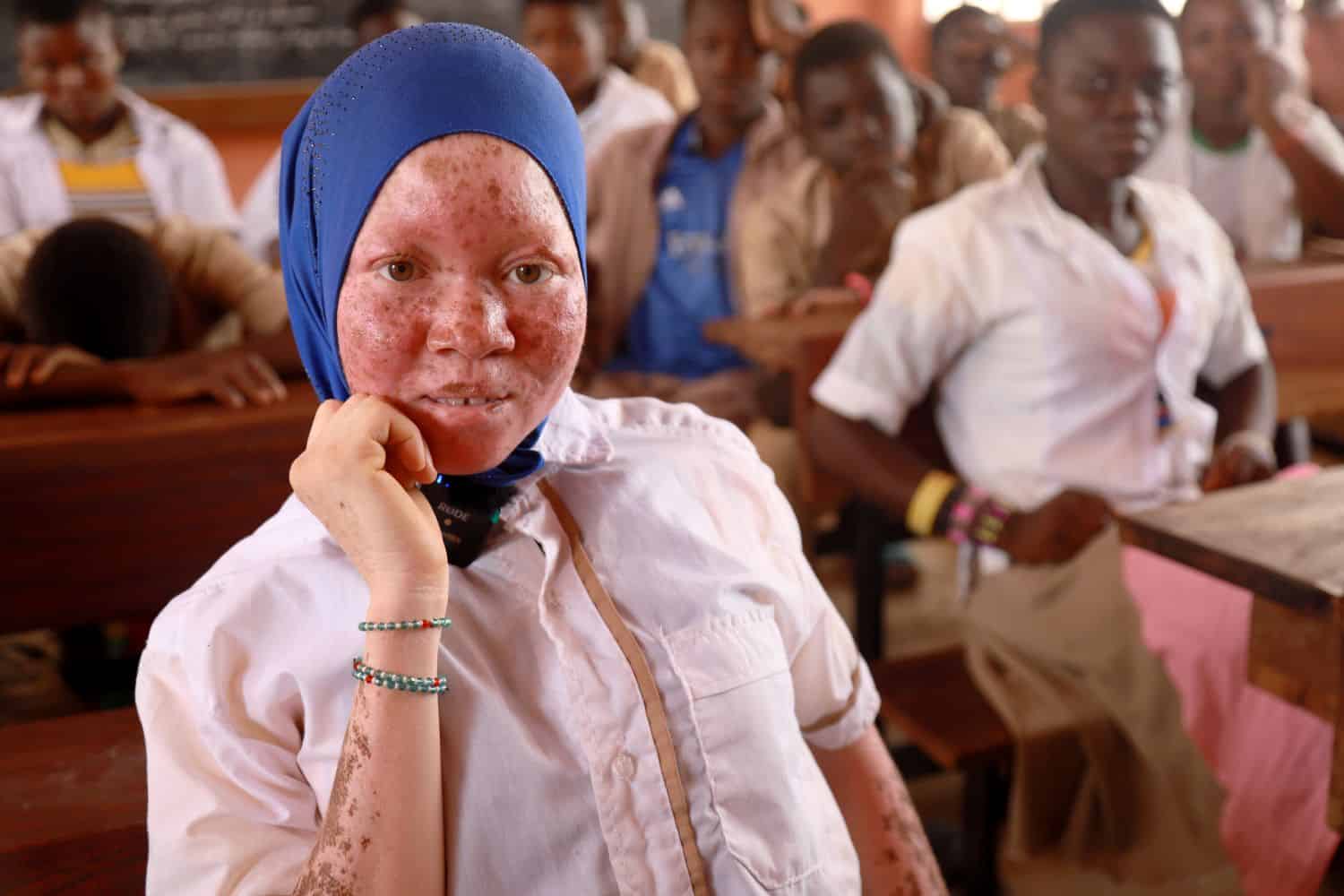
Rachidatou stands confidently in class. Text reads: ā€œSeen and Supported — a story of disability, resilience and education.ā€

In the Savanes region of northern Togo, 18-year-old Rachidatou sits at a wooden desk with her notebook open, waiting for the end of class. She can’t see what the teacher writes on the blackboard — not clearly. So she borrows her friend’s notes and copies them down, line by line.

ā€œIn class, when teachers write on the board, I struggle to see clearly because of my eye condition,ā€ she says. ā€œSo I wait until the end of the class to borrow my friend’s notebooks and copy the lessons.ā€

Rachidatou lives with albinism, a genetic condition that affects her eyesight and makes her skin sensitive to the sun. She also lives with determination, driven by a clear goal: to become a doctor.

This Disability Pride Month, we’re honoring young people like Rachidatou who are often overlooked or excluded but continue to lead, speak out and show us what’s possible when education is inclusive and accessible to all.

From fear to belonging

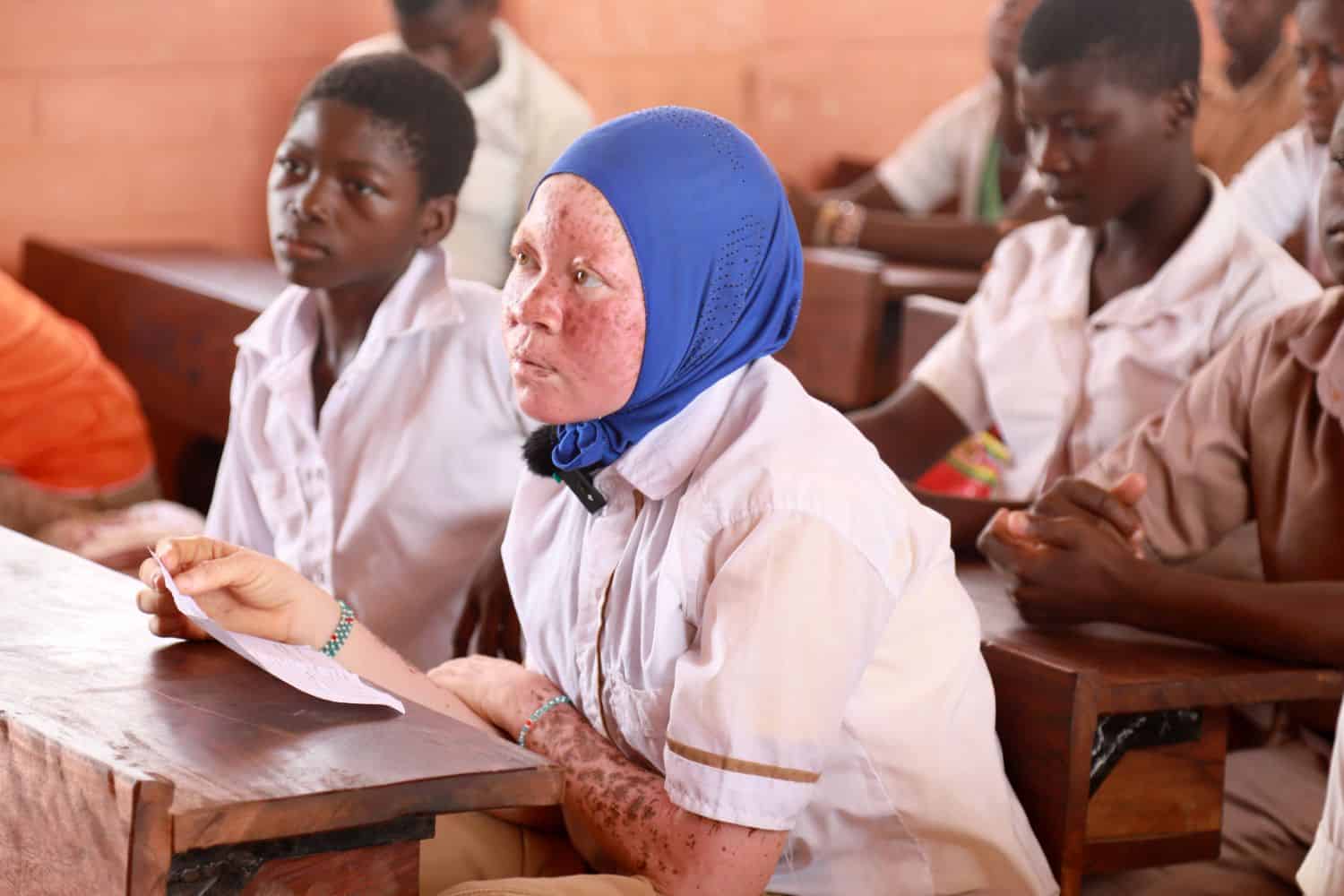
Rachidatou, a student with albinism, listens attentively in class in northern Togo while holding a piece of paper.
Rachidatou listens closely during class. Although she has trouble seeing the board due to albinism, she stays engaged by borrowing notes and using her voice. | Abdul-Manaph Ouro-Djeri, Ā© Plan International

In 2023, Rachidatou and her mother fled Burkina Faso because of attacks by armed groups. They crossed the border into Togo's Savanes region, seeking safety and a chance to rebuild their lives.

ā€œWhen I arrived, my classmates treated me with kindness. At first, I was scared. It was my first time going to school in Togo,ā€ she says. ā€œI didn’t know how the school system worked here compared to my country. Thanks to the support of my friends, I adapted quickly. Now I am proud to be a student here in Togo.ā€

She had lost contact with her friends in Burkina Faso — a quiet heartbreak. But in her new school, kindness replaced fear. Community replaced isolation.

ā€œHere, I made new friends who treat me just like the ones back home did,ā€ she says.

Her words reflect something powerful: not just resilience but belonging.

What inclusion really looks like

Today, Rachidatou is in her third year of secondary school. She’s one of thousands of students benefiting from PAREC II, a national education initiative supported by Plan and Action Education, and funded by the Agence FranƧaise de DĆ©veloppement.

The program focuses on increasing access to quality secondary education in underserved regions like Savanes, with special attention to girls and children with disabilities.

PAREC II supports:

  • Inclusive teaching practices that adapt to students’ diverse learning needs.
  • Improved infrastructure so schools are accessible for students with disabilities.
  • Community awareness campaigns that encourage gender equity and student retention.
  • Safe learning environments that promote social cohesion between refugees and host communities.

ā€œInclusive education isn’t just about getting students through the door,ā€ said Meghan Mattern, inclusive quality education advisor at Plan International USA. ā€œIt’s about creating classrooms where every learner feels safe, valued and supported to thrive — including girls and students with disabilities.ā€

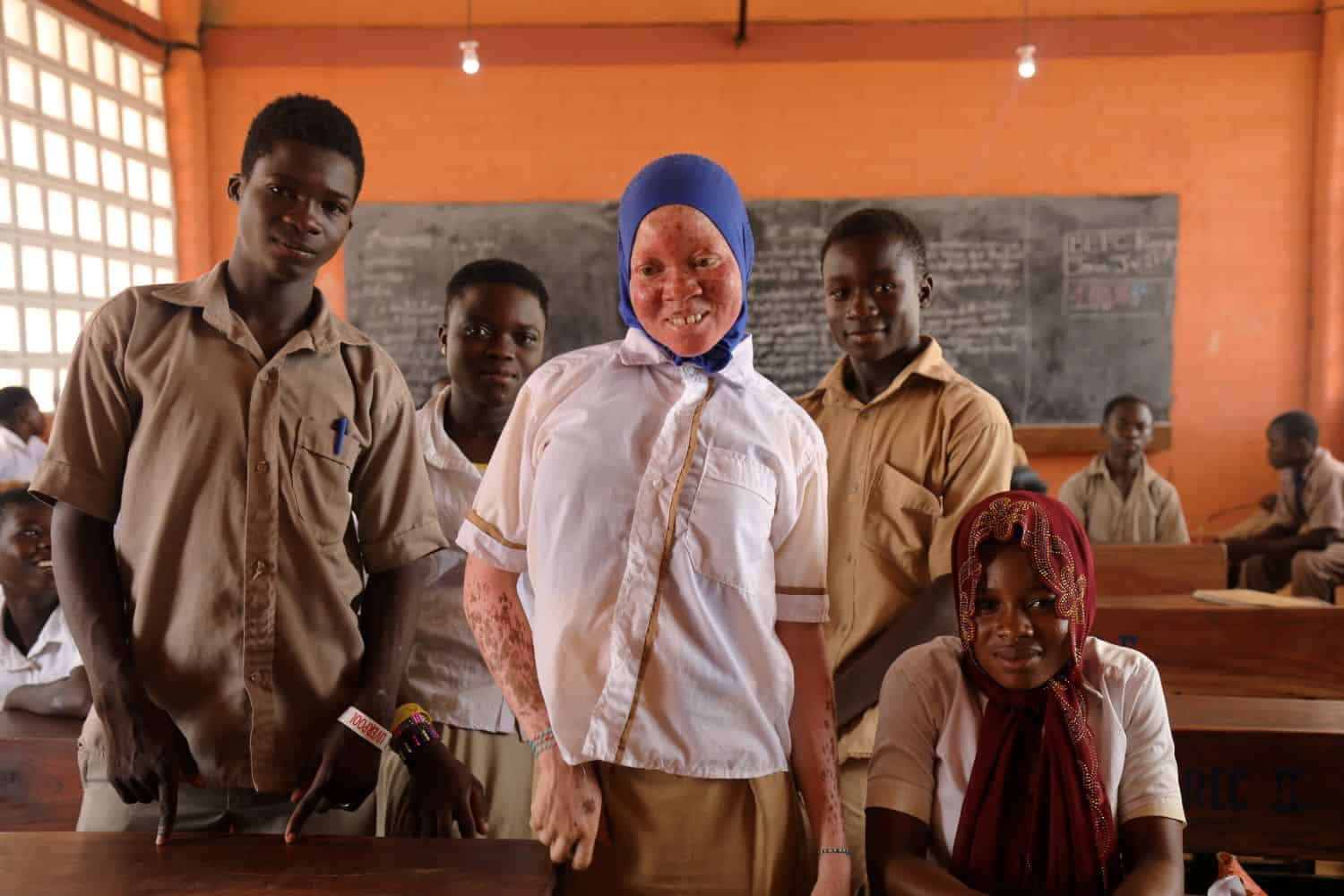
Rachidatou stands in a classroom with a group of fellow students, all smiling.
Rachidatou found a sense of belonging in her new school, where classmates welcomed her with kindness after she fled conflict in Burkina Faso. | Abdul-Manaph Ouro-Djeri, Ā© Plan International

Globally, children with disabilities are 10 times less likely to attend school than their peers without disabilities. Girls with disabilities face even more barriers due to gender norms, caregiving roles and higher risk of discrimination or violence. But when they are included, they thrive.

Rachidatou’s experience shows us that inclusion isn’t an abstract goal. It’s a student who can’t see the board, but is seen by her peers. It’s a classroom that doesn’t push her out but pulls her in.

A future filled with hope

Even after all she’s faced, Rachidatou speaks with calm certainty about what will come next.

ā€œMy dream is to become a doctor, so I can help my family and others in need,ā€ she says.

ā€œMy message to other refugees is to be strong. This situation won’t last forever. When I came to Togo, I found peace. And one day, peace will return to Burkina Faso too.ā€

Rachidatou sits in class in northern Togo, smiling and looking directly at the camera.
In northern Togo, Rachidatou is thriving in school and looking ahead with determination. Her dream? To become a doctor and help others. | Abdul-Manaph Ouro-Djeri, Ā© Plan International


Her words carry more than hope. They carry direction, for herself and for others like her.


At Plan, we believe that every child deserves the chance to learn, no matter who they are or what barriers they face. Through inclusive education, we’re supporting girls like Rachidatou to lead, heal and shape the world they want to live in.


We won’t stop until we are all equal.

Blog-Banner-Disability-Pride-Month-Rwanda-Albinism image

When we think of displacement, we often focus on the destination — the border crossed, the asylum granted. But what about the children who never make it across — or those left waiting indefinitely in unfamiliar cities, without protection or support?

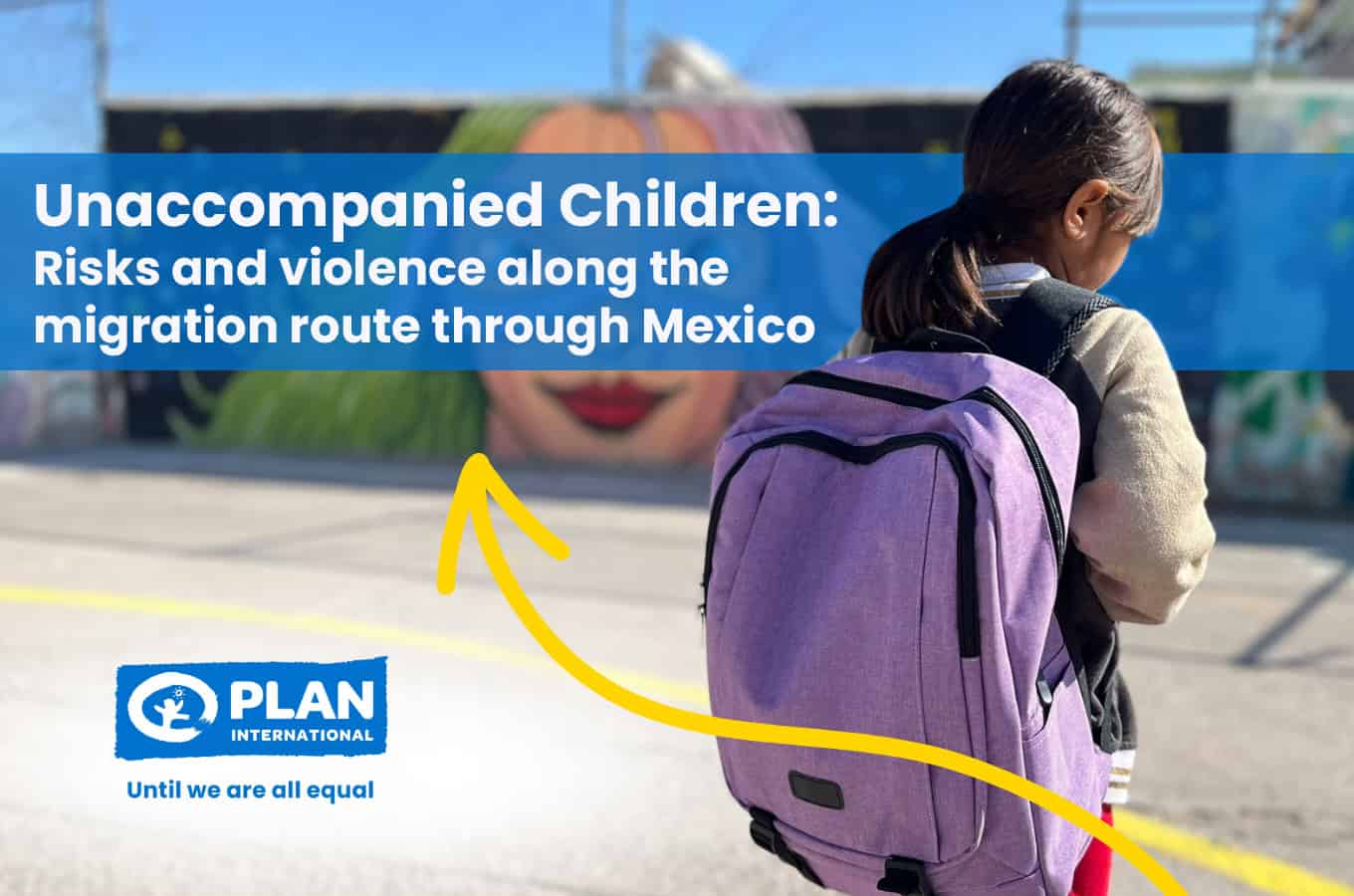
Young girl with a purple backpack walks alone near a mural in Mexico, highlighting the dangers faced by unaccompanied children on the migration route.

This World Refugee Day, Plan International is spotlighting the children left in limbo at Mexico’s northern border. A new report by Plan and Save the Children — Unaccompanied Children: Risks and Violence Along the Migration Route Through Mexico — shares the stories of 155 children and caregivers navigating three of the country’s most high-risk border cities: Ciudad JuĆ”rez, Reynosa and Tijuana.

The data highlight significant gaps in the protection and support available to migrant children. These children are exposed to multiple forms of violence and often lack access to the assistance they need. Mental health services and education systems are struggling to meet their needs, leaving many without critical support. This report underscores the need to strengthen care for migrant children — not only at border crossings, but also within the systems intended to ensure their well-being.

A journey defined by risk

For most children, migrating through Mexico isn’t something they choose — it’s something they’re forced into. Forced internal displacement and the transit of foreign populations through high-risk zones have become defining features of this corridor. The majority of children interviewed — ages 7 to 16 — came from Colombia, Guatemala, Haiti, Honduras, Mexico, Venezuela and even Afghanistan.

In Ciudad JuĆ”rez, nearly two-thirds of children began their journey accompanied by a parent or guardian. But by the time they reached Mexico’s northern border, only one-third remained with them. This separation significantly increases children’s risk of gender-based violence, trafficking and recruitment by organized groups — a pattern echoed across multiple case narratives in the report.

ā€œThe testimonials from our research reveal a heartbreaking reality: children are being separated from their families during their journey through Mexico, leaving them vulnerable to trafficking, violence and recruitment by organized crime groups. These children endure months of delays that keep them apart from their families, face discrimination in education and experience isolation within a system that fails to uphold their fundamental rights. This protection crisis demands immediate and coordinated action from all parties involved.ā€

— Carmen Elena AlemĆ”n, Plan International Americas Regional Director

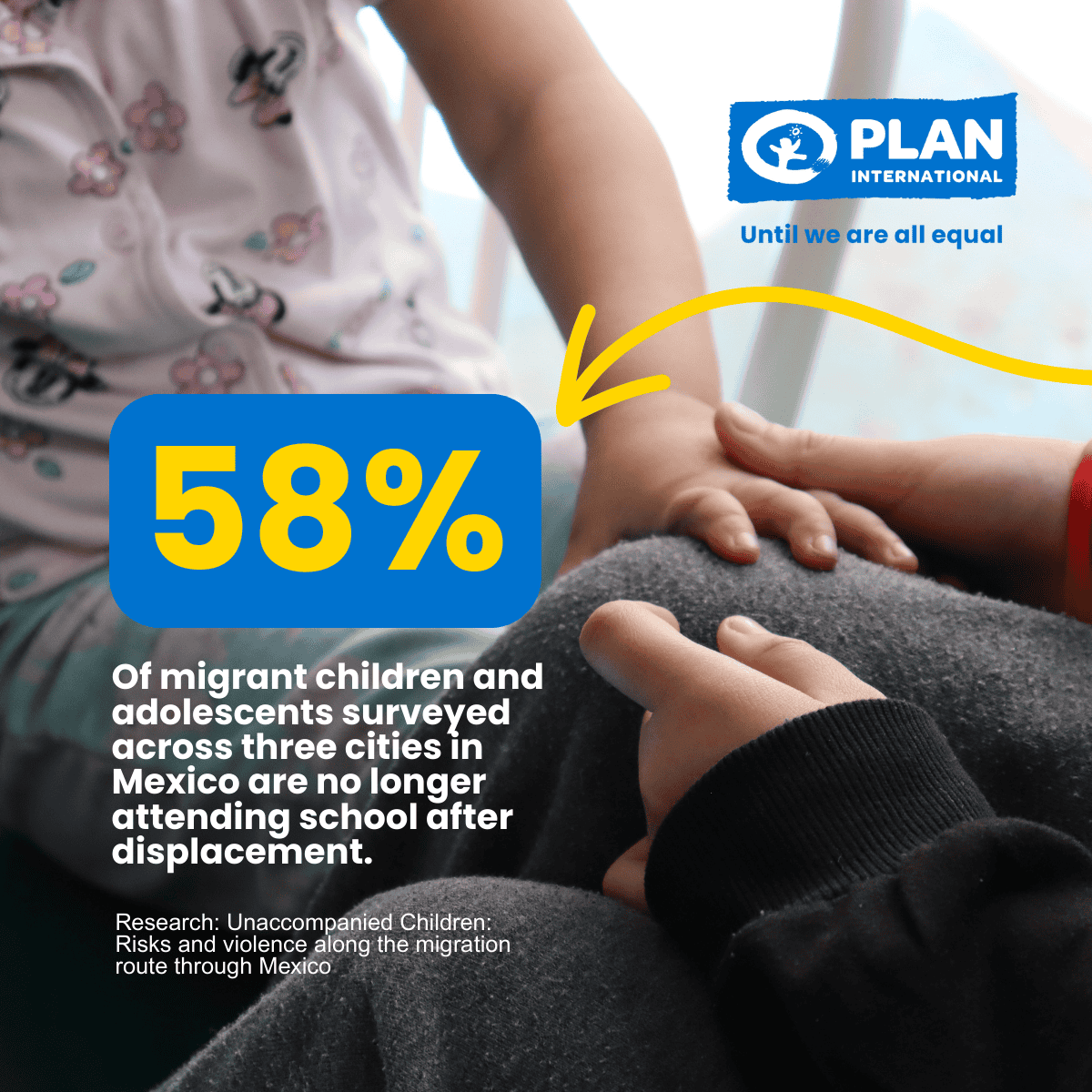
Close-up of two children’s hands. Text: '58% of migrant children and adolescents surveyed across three cities in Mexico are no longer attending school after displacement.'

When protection systems fail

The threats don’t end at the border. In Reynosa, one in three interviewed girls had lived in displacement shelters for over six months — often in overcrowded, high-risk areas where going outside means risking kidnapping or extortion.

Education, a critical anchor in children’s lives, is often one of the first things to be lost. In the three cities analyzed, while more than 70% of children surveyed had been enrolled in school before migrating, 58% were no longer attending classes at the time of the interview. Children are often kept out of school by a mix of bureaucracy, missing documents, overcrowded classrooms and xenophobia from host communities. Inconsistent shelter policies and social discrimination only deepen the barriers to learning.

ā€œThe mothers, fathers and caregivers of the Mexican population do not want their children to live with children on the move,ā€ one interviewee said, reflecting widespread social discrimination.

The silent burden: mental health

The emotional weight of displacement is often the hardest to see — and the easiest to overlook. Many children struggle to understand why they were separated from caregivers or why they remain in prolonged uncertainty. Some describe learning how to spot predators or protect younger siblings in situations no child should face alone.

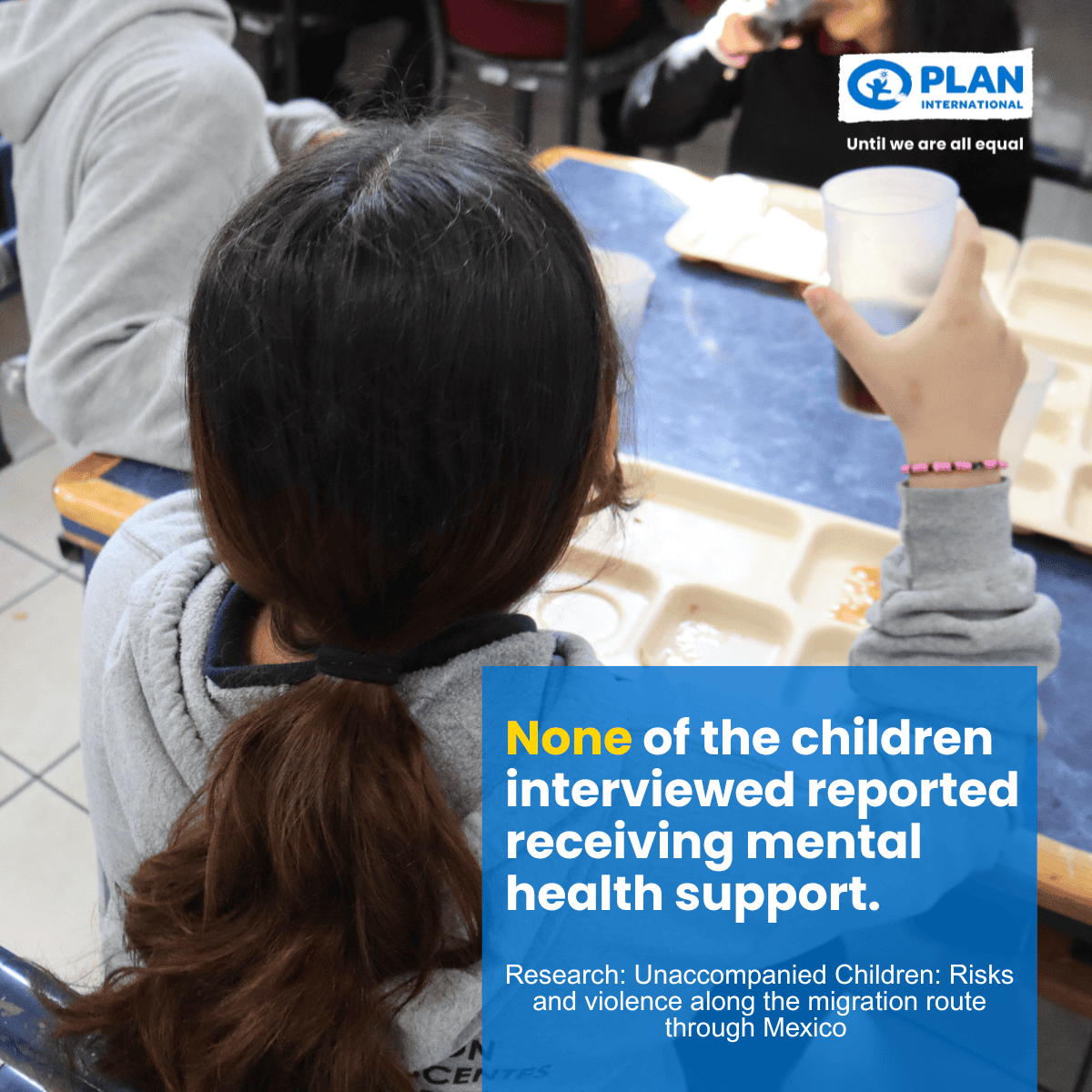
Despite the evident trauma, access to formal mental health support is nearly nonexistent. Cuts to international funding have forced the withdrawal of psychosocial programs, leaving children without even a basic outlet for care.

Child with a drink sitting at a lunch table. Text: 'None of the children interviewed reported receiving mental health support.'

ā€œWhat we’re witnessing is a mental health crisis that requires urgent attention. Children in our programs describe living with constant fear and uncertainty — some tell our staff to ā€˜be careful who you talk to’ even in safe spaces. We’re seeing parents focused on immediate survival needs, often saying ā€˜when we reach our destination, then I’ll focus on my child’s emotional needs,’ but these children need support now. We’re working with our partners to address these gaps, but the need far exceeds current capacity.ā€

— Arturo Estrada, Interim Country Director of Plan International Mexico

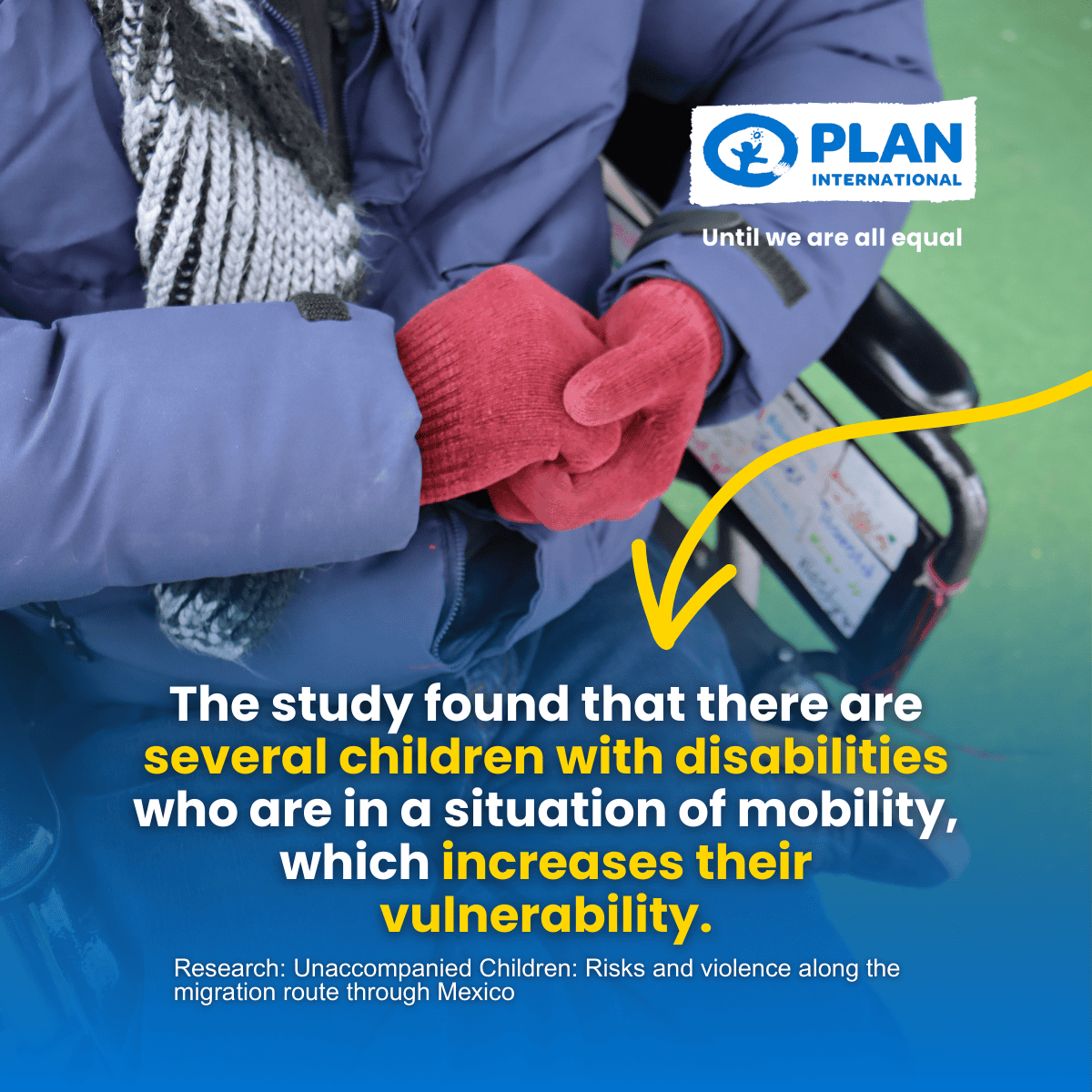
Child in a wheelchair with red gloves. Text: 'The study found that there are several children with disabilities who are in a situation of mobility, which increases their vulnerability.'

What the research is calling for

The findings from this report reinforce a critical truth: migrant children are not being adequately seen, heard or protected. The evidence points to an urgent need for coordinated, multi-sectoral action that responds to the rights, needs and lived realities of children on the move.

Based on the research, the report calls for:

— Immediate, trauma-informed mental health support — services must be accessible, culturally sensitive and designed specifically for children and adolescents, especially those who are unaccompanied.

— Protection systems that respond to the gendered risks girls and young women face — including the prevention of gender-based violence, trafficking and exploitation in shelters and transit zones.

— Uninterrupted access to education — flexible enrollment policies, language support and safer school pathways are urgently needed, even within temporary displacement.

— Safe, dignified shelter options — facilities must prioritize children’s well-being, offer safe recreational and learning spaces, and include family tracing and reunification services.

— Institutional strengthening and interagency coordination — especially at the municipal level, where high staff turnover and fragmented systems continue to impede continuity and accountability.

At Plan, we implement humanitarian emergency response actions in Mexico along both the southern and northern borders, where we support shelters by providing care services, mental health support and school reintegration programs.

In 2024, the organization served more than 54,000 people, including 21,000 girls and young women who received humanitarian assistance through the creation of safe spaces, access to education, emotional wellbeing support and other services. We have also worked hand-in-hand with various state institutions and local organizations to prioritize differentiated care for children.

Toward a more protective future

Children on the move are not just crossing borders. They are navigating broken systems that often render them invisible. But their vulnerability is not inevitable. With the right investments, policies and political will, migration can be met with protection — not peril.

As we mark World Refugee Day, this report stands as a timely reminder: The right to protection goes beyond survival. It means acknowledging children as rights-holders, as participants and as leaders in shaping their futures.

The report offers timely insights for programming, particularly in light of ongoing displacement trends. These findings call for action that child protection actors, governments and donors can adapt across borders.


Read the full report


Stay updated on Plan International’s technical work by

signing up for ā€œFrom Plan to Action,ā€

our quarterly newsletter.

As the U.S. government shutters USAID and absorbs its responsibilities into the State Department, Plan International’s director of policy, Justin Fugle, spoke to UPI about the devastating consequences for international aid programs. In the interview, he describes how life-saving work — including girls’ education efforts reaching hundreds of thousands of students — has ground to a halt without clear direction or support.

Fugle shares a candid assessment of what’s being lost: not just funding, but deep technical expertise and momentum built over decades. ā€œThe staff who knew how to do these things have to move on with their lives,ā€ he says. ā€œYou won’t be able to bring the capability back.ā€ With millions of lives on the line, he calls for an immediate extension of existing programs and long-term clarity on the future of U.S. foreign assistance.

Read the full article here: Aid organizations left in dark months after USAID cuts begin

UPI logo