Search Results

Search results for

0 result(s) found

Rida, age 18, is a member of Plan International’s Youth For Education in Emergencies panel, also known as Youth4EiE. Young leaders like her from around the world are working together to put education in emergencies on the global agenda.

From Plan’s 85+ years of experience, we know that the right to education is most at-risk during emergencies, but it is also the exact time when girls need it most. So, panel leaders like Rida combine their skills, networks and expertise to help raise awareness of the challenges children face in accessing education in emergencies.

Here, in honor of International Day of Education, Rida reflects on the panel’s accomplishments last year, in her own words.

This story is part of Plan’s blog series called ā€œIn her own words,ā€ where you’ll read incredibly powerful stories directly from
the experts with whom we work: the girls and women themselves.


Hi! I’m Rida, and I’m a part of Plan International’s Youth for Education in Emergencies panel, alongside different young people from all around the world. We work together and separately in our individual countries to advance advocacy and support for education in emergencies, and different topics that come underneath this issue, such as girls’ education.

I first got involved with Plan International through Plan USA’s Youth Leadership Academy, where I learned more about global issues and how young people can step in to help their communities. This panel really helped me put into practice what I learned at the YLA, and helped all of us establish a worldwide community to advance work around education and similar issues.

Let’s look back on a year of Y4EiE, recapping our year as one global youth panel working on education in emergencies …


January 2022

The Y4EiE Global Youth Panel Project formed, and our website launched! We are organized by Plan International U.K. and funded by Education Cannot Wait, which is funded by the United Nations. Check out our profiles here!

February-March 2022

Victoria, another YLA alum, and I went to the office of the U.K. Mission to the United Nations in New York to introduce our panel, as well as our goals and top-level global advocacy messaging, to Helen Grant and Yasmine Sherif, two world leaders in education in emergencies. It was cool to talk directly and express our ideas with leaders themselves!


Rida New image

Rida (second from left) and Victoria (second from right) pose with Yasmine Sherif (CEO of Education Cannot Wait) and Helen Grant (the U.K. Prime Minister’s Special Envoy for Girls’ Education).


April-May 2022Ā 

An event organized by the panel was held in Malawi to raise awareness for issues that children and young people are facing in the Dzaleka refugee camp and the surrounding villages. This meeting involved the government, UNHCR and other implementing partners. Damien, a panel member from Malawi, presented on issues in education. And Angela, another panel member from Malawi, was the emcee for the event.

After being selected as Indonesia’s representatives in the Youth4EiE, Yoris and Indy were facilitated by Plan Indonesia to organize a number of advocacy activities at the national and global levels. Yoris and Indy developed their EiE national advocacy strategy — the output of this whole process — and disseminated it through the “Sharing Achievements and Challenges of Education in Emergencies in Indonesia” webinar, on Instagram live with Plan Indonesia and also presented to Youth4EiE.


Yoris and Indy organized a webinar to share the achievements and challenges of education in emergencies in Indonesia.

Yoris and Indy organized a webinar to share the achievements and challenges of education in emergencies in Indonesia.


June 2022Ā 

Damien and Angela developed their national advocacy strategy plan to support education in emergencies in Malawi by visiting four districts (Nsanje, Chikhwawa, Mulanje and Phalombe) that are affected by weather crises and education challenges each year.


Damien and Angela, panel members in Malawi, visit a school in need of support for children’s education in crisis.

Damien and Angela, panel members in Malawi, visit a school in need of support for children’s education in crisis.


Wenddy, panel member from Ecuador, was selected to attend a pre-meeting for the Transforming Education Summit held in Paris at the UNESCO headquarters, to help build support and structure around the key goals to be discussed in September 2022 in New York at the summit with world leaders.


Wenddy (middle), a panel member from Ecuador, stands with other attendees at the Pre-Transforming Education Summit in Paris.

Wenddy (middle), a panel member from Ecuador, stands with other attendees at the Pre-Transforming Education Summit in Paris, including Yasmin Yasmine Sherif (right), CEO of Education Cannot Wait.


August 2022

Wenddy and another panel member from Ecuador, Nataly, presented their ideas for a campaign on education in emergencies on Plan’s social media. This was important for Wenddy and Nataly because they were able to demonstrate, in a larger way, the challenges that young people face when trying to access education in crisis situations.

Damien and Angela also attended the fourth Southern Africa Regional Students and Youth Consortium on sexual reproductive health, which was held in Lilongwe. This was a regional conference that brought together young people to discuss issues that affect their lives, and commitments they wanted leaders to address.

Yoris took part in the Southeast Asia Regional Youth Consultation for the Transforming Education Summit. In addition, he spoke at an event called the ā€œInternational Youth Talk: Promoting Youth Voices on the G20.ā€ And, together with Indy, he organized a webinar called ā€œThe Spirit of Independence: Realizes Gender Responsive Education in Emergency Situations” to celebrate International Humanitarian Day.

September 2022

September marks our most monumental month as a team! Most of the panel (members from the U.S., U.K., Lebanon, Indonesia, Ecuador and Zimbabwe) traveled to New York City for the United Nations General Assembly Transforming Education Summit!

Tabeth and Michelle, panel members from Zimbabwe, attended a pre-consultation meeting to talk about how education in emergencies affects young people.


Tabeth and Michelle, panel members from Zimbabwe, stand next to a peace promotion poster at the pre-consultation meeting.

Tabeth and Michelle, panel members from Zimbabwe, were consulted about protecting girls and young people’s right to education in crisis settings.


Michelle spoke at the ā€œUnlock the Future of Learningā€ event and gave her pitch on digitalization in marginalized areas.


Michelle speaking at the ā€œUnlock the Future of Learningā€ event, using her voice to promote community-led development!

Michelle speaking at the ā€œUnlock the Future of Learningā€ event, using her voice to promote community-led development!


Nataly from Ecuador also presented at the ā€œUnlock the Future of Learningā€ event to discuss the barriers girls and women face in emergencies, especially comprehensive sexuality education in countries like Ecuador.


Nataly (right) sits on stage at the Unlock the Future event and prepares to present.

Nataly (right) sits on stage at the Unlock the Future event and prepares to present.


Tia, a panel member from Lebanon, attended an international development event in Canada, where she met the honorable Harjit Sajjan, Canada’s minister of international development. They talked about their shared belief that all children deserve quality access to education.


Tia and Harjit Sajjan, the Minister of International Development of Canada.

Tia and Harjit Sajjan, the Minister of International Development of Canada.


Panel members also spent a day on Capitol Hill in Washington, D.C., speaking to different key people and events to show youth support for the Keeping Girls in School Act. This revolutionary bill would direct foreign aid money to preventing and addressing the challenges and barriers girls face when trying to access school and more around the world.

Tia and Victoria Ā spoke at an event where they discussed their experiences with education, and why the Keeping Girls in School Act is important.

Meanwhile, Nataly and I spent our time on Capitol Hill talking to specific legislative directors about the Keeping Girls in School Act and how important it is that funding goes toward protecting girls and their ability to attend school. I talked about our panel’s work and our specific advocacy goals as an international group, as well as how these goals tie into the Keeping Girls in School Act, while Nataly talked about her specific experiences in Ecuador and her work with the panel and other organizations.


Rida and Nataly stand next to a poster that promotes the Keeping Girls in School Act.

Nataly and I on Capitol Hill, supporting the Keeping Girls in School Act.


Yoris attended the Global Feminist Coalition for Gender Transformative Education event, organized by United Nations Girls’ Education Initiative. He and his team presented research results and, together with the coalition, discussed important aspects of gender- transformative education to be conveyed to world leaders and education stakeholders.

October 2022Ā 

Nataly and Wenddy participated in International Day of the Girl (Oct. 11) activities in Ecuador with other young people to celebrate the importance of girls and girls’ education. Nataly and Wenddy led an Ambassadors for Education project in Ecuador, and they presented a manifesto for quality education to their community leader, who signed a commitment to support workshops on emergency education for schools in that area.


Nataly and Wenddy working with local leaders and other young people to support education programs on International Day of the Girl.

Nataly and Wenddy working with local leaders and other young people to support education programs on International Day of the Girl.


November 2022

Wenddy presented the manifesto that she and Nataly worked on for quality education in the provincial government of ManabĆ­ in Ecuador. This manifesto contains stories of young people and education in Ecuador, and has a direct connection with the central government of Ecuador.


Wenddy presenting her manifesto at the provincial government of Manabi in Ecuador.

Wenddy presenting her manifesto at the provincial government of Manabi in Ecuador.


Damien spoke at the International Youth Day Commemoration event in the Dzaleka refugee settlement. The theme of this event was ā€œIntergenerational solidarity: Creating a world of ages.ā€ He talked about young people fleeing their homelands during crises and the lack of attention paid to the quality of education that young people receive during these crises.


Damien speaking at the Dzaleka refugee settlement in Malawi.

Damien speaking at the Dzaleka refugee settlement in Malawi.


In the U.K., Yoris and Sarah spoke to the Board of Trustees at the Plan International U.K.’s office about the work of the Y4EiE panel.

And in Indonesia, Yoris together with Plan Indonesia PIA Lembata facilitated media advocacy training for young people in five villages and two districts.


Yoris poses with young people who participated in an advocacy training.

Yoris poses with young people who participated in an advocacy training.


December 2022

An event called ā€œ16 Days of Activismā€ was hosted by the Youth Advisory Panel in Malawi to raise awareness on gender-based violence. This event included a panel discussion, where young people discussed ways they are trying to end gender-based violence in their respective areas. The village chief who attended this event also talked about the laws in the region that are helping to end gender-based violence.

Yoris took part in a number of capacity-building activities, including joining Lembata Youth to take part in resilient school training organized by Plan Indonesia, and joining the Indonesia Education in Emergencies Youth Ambassador initiated by Plan Indonesia, UNICEF Indonesia and partners.


Yoris draws a blueprint at a capacity building activity in Indonesia.

Yoris draws a blueprint at a capacity building activity in Indonesia.


And that’s a wrap! The Y4EiE panel has accomplished so much more as well, from publications to youth organizing and more! We’re also preparing to support those traveling to Geneva, Switzerland in February 2023 for the Education Cannot Wait Financing Conference. We hope to continue our work supporting education in emergencies so that no young person is left behind.

Rida New image

PRESS RELEASE

WASHINGTON, DC, January 20, 2023 — Plan International, through a sub-agreement with Mercy Corps, will partner with the U.S. Agency for International Development’s Promoting the Voice and Leadership of Women activity in Jordan.

The project will elevate Jordanian voices and support progress in economic, social and political spaces for women. By using USAID’s Gender and Social Inclusion Framework and Plan’s gender transformative approach, the project will generate momentum to advance gender equality, strengthen civil society organizations and support activities that promote women’s rights, leadership, and participation in political and public life.

ā€œBy listening to women in Jordan and supporting the efforts they are already making to increase their agency, the Promoting the Voice and Leadership of Women activity will customize trainings that are unique to their needs,ā€ said Mustafa Kudrati, CEO and president of Plan International USA. ā€œWe will be building on the success of the Jordan National Commission on Women to advance gender equality.ā€

Plan will be responsible for supporting civil society organizations to advocate for and support women’s rights and changing social norms by facilitating development and on-going adaptation of social and behavior change strategies. In addition, they will support women, youth and marginalized groups to lead community and household initiatives to practice norm changes around gender.

ā€œThrough an in-depth gender analysis and action plan, we will be able to customize our global expertise in gender to advance the position of women in Jordan,ā€ said Hamida Jahamah, country director, Plan International Jordan. ā€œBy identifying gender champions and community projects to support these efforts, the impact of this project will be felt for years to come.ā€

Mercy Corps will be leading a coalition consisting of Plan, Al Jidara, Solidarity in Global Institution and Arab Renaissance for Democracy and Development to execute Promoting the Voice and Leadership of Women activity. The USAID project will last for five years, ending in 2027.

For more information or interviews, please contact:

Maria Holsopple
Director, Corporate Communications
Email: [email protected]

Mobile: 540.383.3628

About Plan International USA

Powered by supporters, Plan International USA partners with adolescent girls, young women and children around the world to overcome oppression and gender inequality, providing the support and resources that are unique to their needs and the needs of their communities, ensuring they achieve their full potential with dignity, opportunity and safety. Founded in 1937, Plan is an independent development and humanitarian organization that is active in more than 80 countries.

For more information, and to learn about our commitment to safeguarding, please visit www.PlanUSA.org.

Promoting women’s leadership in Jordan

Because of the global hunger crisis, 45 countries are on the brink of famine, and Somalia’s situation is especially severe. We spoke with Plan International Somalia’s Head of Mission, Sadia Allin, to understand the realities for girls and their families.

Cover-Sadia-Allin_Button image

Vidya, age 19, is the director of education atĀ Encode Justice: a coalition of youth activists and change-makers fighting for human rights, accountability and justice under artificial intelligence. On International Day of the Girl, she led a discussion at a Plan-led virtual forum calledĀ Girls vs. the Machine: The Algorithms are Sexist, which explored how the internet’s algorithms and artificial intelligence are perpetuating cultural gendered stereotypes and misrepresenting girls in society.

Here, Vidya dives into her work with Encode Justice, her experience with Plan onĀ International Day of the GirlĀ and why youth activism in the tech space is so vital for our future.Ā 

This story is part of a blog series called ā€œIn her own words,ā€ where you’ll read incredibly powerful stories directly fromĀ the experts with whom we work: the girls and women themselves.Ā 

Q: Thank you for taking the time to chat with us about your work! To start, can you please share a bit about who you are and how you got interested in youth activism around technology?

A:Ā My name is Vidya. I’m a freshman at the University of Illinois Urbana-Champaign. I’m studying computer science here. Throughout high school, I was pretty interested in technology. I knew I always wanted to be involved in the tech space … both my parents are software engineers, so I was pretty exposed to it growing up. But I think it was really my junior year when I heard more about the ethical side of this space, which is when Encode Justice had slowly started … The founder, Sneha Revanur, reached out to me because I do a lot of work with equity and diversity in tech.

Q: What do you do as part of Encode Justice?

A:Ā I sort of cultivated a whole education sector [at Encode Justice], where we created a workshop curriculum for high school students. We used to go around to different high schools in the country, educating students about the implications of artificial intelligence, talking about what AI is, how it has a potential bias and how it’s impacting each of us in our everyday lives.

Especially during the pandemic, we saw technology in basically every field. So, having students talk to other students definitely made it help them understand it a lot better, and they valued the information that we talked about.

I learned a lot in this process of creating this curriculum and talking to other students … we’re not really exposed to the biases [in AI] and how we can be impacted by this … they talked about facial recognition technology — a lot of them had been profiled themselves. And so, listening to their stories and talking about how they’ve felt discriminated against or see that their social media algorithms are acting a certain way, and actually hearing their testimonials was really impactful.

All of our workshop curriculums center around different topics. I try to focus on AI and its intersections, such as healthcare and policy … if we’re talking about policy, I usually focus on facial recognition technology. So then I would talk about how in criminal court cases or in our criminal history, there’s a lot of bias within how people have been targeted in the past.

Q: Can you give an example of how technology can discriminate based on human bias?

A:Ā Minority groups, people of color and women have been discriminated against in our criminal data. And so, when we put that into facial recognition technologies and it’s trying to profile people for criminal activity, it’s obviously more biased because of like that … the topic becomes a lot more serious and more relevant when we put it in that context.

Q: How did you get involved with Plan?

A:Ā Plan reached out to Encode Justice right before International Day of the Girl. I was really interested because I actually runĀ GirlCon, an international conference focused on tech and women’s empowerment … this machine algorithm bias and diversification of the tech field was something I’m really interested in. So, I thought it would be cool to work with Plan to for their event.

Vidya speaks at GirlCon
Vidya speaks at GirlCon, a conference that strives to fix the lack of diversity in STEM.

I really liked the tone of the whole [Plan virtual forum] and sort of the message that we brought out at the end. This topic can be really serious and really scary … I thought that was really interesting on how we felt empowered after that to take charge and make a change.

We can’t stop artificial intelligence, or we can’t stop the development of it. We always talk about how it can sound like we’re trying to stop the development of technology — we’re really not … We just want people to be more conscious of what they’re doing. You know, if it’s harming people, then there’s no use in that. So that’s sort of what I wanted to take away from that panel is [for people to know] it’s up to us to be conscious of that.

Q: Have you experienced gender inequality in your own life? How?Ā 

A:Ā Especially as a [computer science] student right now, I can see that throughout my progression of high school and now in college there is that gender gap … I definitely feel outnumbered and I think there’s an unspoken double standard. Like, I go into a meeting or I go into any of these tech clubs and you feel like there’s something to prove or something to show as a girl — you feel like you have to prove something extra. And I think forums like [Plan’s International Day of the Girl event] are definitely helpful in talking about that, and helping girls know that they’re not the only one that’s facing that kind of thing.

Q:Ā  Why do you think it’s important for young people to get involved with activism and technology?

A:Ā We are the people that will eventually take over these companies and will eventually start running these things. So, I think it’s really, really important that initiatives like this exist. I think for us, we feel like we’re qualified [to take the lead] because we are facing these problems every day — we’re surrounded by the algorithms we grew up with it, which makes our voice really important to listen to.

Vidya speaks at GirlCon

By Kate Ezzes, John Lundine and Nono Sumarsono


The fishing industry in Southeast Asia is an important sector in local and national economies, and as a source of employment for workers, particularly those with low levels of formal education. Nowhere is this more the case than in the archipelago nations of Indonesia and the Philippines. The fishing industry in the Philippines represents an estimated 1.2% of GDP, a figure which may underestimate its actual contribution as smaller-scale, domestic fishing operations are typically in the informal economy. Fishing employs hundreds of thousands of people in each country and supports millions.

The fishing industries in both countries are diverse, including vessels that fish in domestic and international waters. While not limited to these two countries, this diversity allows for labor abuses to often go undetected, includes forced labor and trafficking in persons. Fishers, almost exclusively men, regularly suffer abuse and debt enslavement when working on vessels, often perpetuated by employers. This has significant impacts for the well-being of fishers, their families and their communities.

The fishing industry’s impact on women

Plan International’s research under the U.S. Department of Labor’s Safeguarding Against and Addressing Fishers Exploitation at Sea (SAFE Seas) project has demonstrated the prevalence of abusive labor practices and dependence on debt. A total of 25% of women respondents in a SAFE Seas gender study in two fishing communities in Indonesia indicated that their husbands/partners had suffered labor abuses. This study also showed that fishers and their wives/partners did not understand their rights, and that local systems and structures did not systemically or comprehensively support fishers.

Fisher families also report a heavy dependency on loans and indebtedness of households, with half of Indonesian women respondents reporting challenges in repaying debts. These debts are commonly used for households’ basic needs and managed by women whose husbands/partners are at sea. Most of these women continue to rely on community or family support in cases of exploitation as they lack awareness on how to report grievances or seek compensation. SAFE Seas research shows similar patterns in the Philippines, including worker abuse and situations of debt enslavement. Continuous dependence on debt, oftentimes from employers, is twice as common among Filipino families who have been victims of FL/TIP.

Despite these egregious and evident labor rights violations, there has traditionally been a strong reluctance on behalf of fishers and their wives/partners to report violations. This is in large part due to their economic dependence on working as laborers on fishing vessels, a lack of well-functioning grievance reporting mechanisms and their sense of powerlessness. Together, these factors have a significant economic and emotional toll on fisher families and communities.

A young woman works in the fishing industry.A young woman works in the fishing industry.


The role women play in ending FL/TIP

The SAFE Seas project has been addressing labor issues for the past five years in Indonesia and the Philippines. SAFE Seas’ approach includes actions at the national and local levels to improve enforcement by authorities to combat and reduce FL/TIP and to raise awareness of fishers’ rights and their access to grievance mechanisms. SAFE Seas has been one of the first efforts to systematically address FL/TIP issues and has increasingly empowered women as key actors to reduce FL/TIP in the fishing industry.

SAFE Seas specifically works to increase awareness of labor rights among fishers, wives/partners and other key stakeholders, and to improve access to reporting and remediation and community-based services. Approaches include collaborating with local governments to establish and support fisher centers in Indonesia, and working with Barangays and community protection mechanisms in the Philippines in coordination with the Inter-Agency Council Against Trafficking, which is a national-level entity. These centers and mechanisms serve both fishers and wives/partners.

One specific way in which women increasingly participate is in reporting abuse through formal mechanisms. These allow for receiving and referring labor complaints in-person or through text and phone hotlines. Hundreds of workers and women have obtained information through the fisher centers and many have logged complaints. To date, 81 formal reports of grievances have been made involving 212 fishers. All are either under investigation by the Indonesian Government or have closed after action was taken. Women have made approximately 25% of these formal complaints.

SAFE Seas also engages women in labor rights as cadres. By late 2022, more women than men were participating in this role. The main activities include understanding the Seafarer’s Employment Agreements, which regulate fishers’ work on vessels; coordinating with local-level governments in both countries; and developing action plans to reduce risks of exploitation of fishers at sea. In addition, women are working with other wives/partners of fishers, particularly those with less formal education and fewer resources, to disseminate information about fishers’ rights and available services. Women cadres have also been instrumental in supporting the establishment and functioning of two local-level early detection systems, which work in ports with a high prevalence of FL/TIP.

ā€œBefore I got to know the Fishing Vessel Crew Protection Cadres, I didn’t understand what it was like to work at sea [or] what rights my husband had working on a boat,ā€ says Min Muhenkelambung, a fisher’s wife from North Sulawesi, Indonesia. ā€œBut after getting to know the cadres, I know better what rights my husband has and what work should be done as a fishing worker.ā€

Next steps

Engaging women in the fight against FL/TIP can accelerate progress in meaningful and important ways. However, there is more to do. While SAFE Seas has made progress in disseminating information about labor rights and FL/TIP, there is a need to increase awareness of the grievance mechanisms and to strengthen them, particularly in the Philippines. Future work in this area should continue to support women’s agency and participation more broadly, and support diversifying fisher household livelihoods to reduce reliance on debt from employers. In addition, social welfare programs should be expanded and specifically target the most vulnerable fisher families.

As the development community doubles down on a journey to shift power away from colonialist systems and into the hands of marginalized communities, it’s important that young people are also involved in defining what new systems, structures and ways of working look like.

At Plan International, our five-year strategy seeks to ensure everything we do is youth-centered and youth-led. We are committing to leading the way by co-creating our programming and influencing work with young people. The goal is that young people, their organizations and young staff will have greater power in meaningful decision-making across the organization.

However, to shift power effectively, we need to hear what is working well and what is not from young people. That’s why we invested in an impact study to evaluate 15 years of our domestic youth leadership programming, to find out how well it has served young people and if it’s had a positive impact on helping them affect change in their communities.

Young people told us loud and clear what’s working well with Plan’s youth engagement and leadership approaches, and what else they need in order to take up the space they deserve in systems and communities that are aspiring to evolve, albeit slowly. Here are the top five findings from our review:

1. Young people need space to practice their leadership skills in environments where they are valued, trusted and viewed as essential stakeholders. Young people told us that Plan excels at building critical skills such as how to synthesize information, effectively communicate, speak publicly and facilitate groups. What they said was most effective was not just learning the skills, but practicing them over and over again in a safe space where they felt supported and believed in, as well as where their voice and opinions matter.

Tip: Youth leadership programs should offer young people the opportunity to practice their leadership skills over the course of several months with the support of a peer network and dedicated staff.

"My leadership skills were developed through Plan. I also learned how to facilitate groups of people with differing opinions to come to a common consensus. I use these skills almost daily."

Youth participant

Young people at Plan’s Youth Leadership Academy work on a brainstorming exercise together.

2. Build empowerment by treating young people like equals. Recognize that young people have valuable lived experiences, and create space for them to bring their ideas and solutions to the table. This validates their contributions and builds their self-confidence to speak out, share their ideas and influence decision-makers in adult-led spaces that are often intimidating and exclusive.

Tip: Create space for young people to lead and show them how you’re incorporating their ideas into your work through feedback loops. Then, give seats in decision-making spaces to young people in your network.

"I feel that [Plan] really treated us like equals and just having this community of adults treat this big community of youth like that really empowered us to feel that yes, we’re just as smart as adults and we can do all the stuff they’re doing.ā€

Youth participant

3. Cover a variety of topics impacting young people globally. Young people noted that their increased global awareness was of the most notable elements of Plan’s program. They want to learn more about complex global issues, inequalities and injustices, and feel this content filled a gap in their U.S.-centric high school curricula. Young people shared that increasing global awareness and interaction with youth from all over the world had a profound impact on their ability to empathize and taught them greater patience, curiosity, empathy and compassion.

Tip: Work to ensure your curriculum is not solely looking at global issues from a U.S. perspective. Bring in youth voices from around the world and create opportunities for young people to learn from, and collaborate with, young people from other countries.

4. Mentorship needs thematic alignment. Small group mentorship with the guidance of an experienced mentor proved to be helpful and motivating; however, matching needs to be intentional. Young people found their mentors and peer groups to be most effective when they were interested in similar social justice issues and themes.

Tip: Engage mentors that can help open doors for young people and bring them into spaces where youth voices and perspectives are lacking.

5. Create a structure for supporting non-dominant groups of young people to excel outside the safe space of the program. One of the most important pieces of learning from our impact study was that young people of color felt they needed more robust support from Plan when leaving the safety of our program and going out into their communities to influence and effect change.

Tip: Develop a process, plan and budget, in collaboration with young people of color, to offer additional support as they work to influence and implement change in their communities.

"I think there is a little bit of a dangerous idea of, ā€˜Okay, you’ve done these amazing things within the support system. Now go into the world by yourself and do something amazing.’ It’s a really high expectation [as a BIPOC woman]. Plan ended up being this safe space for me."

Youth participant

Power shifting is a slow process. Our efforts to influence this change need to focus both on carving out space for young people in decision-making spaces and, at the same time, delivering programs that offer supportive, safe environments, where young people can practice, lead and influence with a community of allies that truly believes in their ability to take on power. As we all keep learning and adapting our youth development approaches, we’d love to know what you’re hearing from young people on how to better support their engagement in decision-making spaces

Young people at Plan’s Youth Leadership Academy work on a brainstorming exercise together.

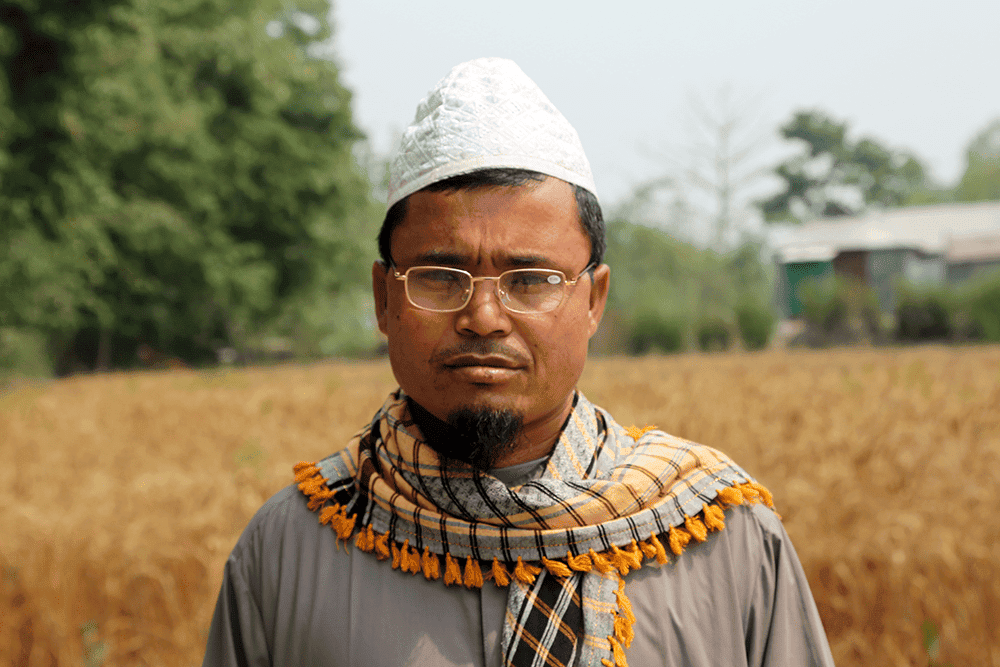
Heads turn to watch as 16-year-old Antora rides her motorbike through the neighborhoods of a rural village in Bangladesh. They’re confused — even shocked — to see a girl driving such a vehicle on her own. In Bangladesh, gender roles and expectations have been restrictive for generations, and traditionally, only men ride motorbikes.


Antora ridding her bike

After initial resistance from her parents, Antora now rides her bike everywhere, knowing her family is proud of the change she’s inspiring.


Antora is not just defying those expectations; she’s changing them for the better.Ā 

When Antora joined Plan’s sponsorship program, she attended training sessions where she learned about her rights and how to inform others in her community about the harms of child marriage. Now, she goes door to door and advocates with and for other girls to achieve the same freedoms she has.

ā€œMy life has changed ever since I got involved with Plan International,ā€ Antora says. ā€œNow, I don’t only think about myself, but also about society, my community and my country.ā€

The change Antora is leading in her community is also popping up in other areas of Bangladesh, and it’s not just girls taking on this responsibility.

Ending child marriage through literature

Abdus is a renowned Bengali teacher, social worker and author in Bangladesh. After joining an education project led by Plan, he started leading support groups for girls at the school where he works.

ā€œOver the course of my teaching profession, I have seen many girls with lots of potential leaving their studies behind to become wives and mothers at an early age,ā€ Abdus says.

Wanting to do something to raise awareness among his students and their parents of the negative consequences of child marriage, Abdus decided to use his writing skills to create a poetry book on the subject of early marriage.


Abdus encourages all of his students to read the poetry book at school and their homes to warn against the dangers of child marriage.

Abdus encourages all of his students to read the poetry book at school and their homes to warn against the dangers of child marriage.


When the book was published in February 2022, his students immediately took copies home to read to their parents. Now, Abdus says that the girls he teaches have become more confident in advocating against child marriage for themselves and each other.

ā€œA girl stopped me on the way to school and told me that she had stopped her own marriage by reading out one of the poems to her parents,ā€ Abdus says.

Abdus has seen firsthand how, with more knowledge, child marriage is preventable. That’s a lesson Shamsur, another man in Bangladesh, has learned, too.

Changing the world starts with changing ourselves

Shamsur has been an imam (someone who leads prayers at a mosque) for more than 20 years and has participated in more than 100 marriage ceremonies, some of them child marriages. When Plan spoke to him in 2018, he told us that he too was married to his wife when she was still a teenager and had no knowledge of how harmful the practice is.


Shamsur has four daughters, one of whom was married at 17. Now, he’s making sure the other three can grow up free from child marriage.

Shamsur has four daughters, one of whom was married at 17. Now, he’s making sure the other three can grow up free from child marriage.


ā€œI would sympathize with a father about his economic condition and would say yes to getting his daughter married at an early age for that reason,ā€ Shamsur says.

When a Plan program to spread awareness about child marriage came to his community, Shamsur was recruited to complete the trainings. He learned about the health and safety risks girls face when they’re married as children, as well as the fact that it’s illegal in Bangladesh. He was also introduced to a phone app that he could use to verify people’s ages when they seek a marriage at his mosque.

ā€œSo far, since the training, I have been able to stop two child marriages,ā€ he says. ā€œRight after the training, we formed a committee which consists of 42 imams from our area. We try to talk to people in our community and tell them about the negative effects of child marriage. I also try to include these kinds of talks among people during prayer times at the mosque.ā€

Using power for good

Other religious leaders in Bangladesh are using their authority to raise awareness of this issue, like Maulana Md. Abdur in a neighboring community. His title, Maulana Md., refers to the high regard he has as a religious leader in his community.

For several years, Abdur has been campaigning against child marriage in his community with the support of one of Plan’s programs.

Along with dissuading the men in his mosque from marrying off their own daughters, he has been facilitating awareness-raising sessions in his community and counseling people against the practice of child marriage.

When Abdur told us about an intervention with one of his relatives who tried to marry his daughter off, he said economic hardship was at the center.

ā€œI went and told him that the government is giving everything for free for girls’ education,ā€ Abdur says. ā€œYou only need to send her to school. Don’t marry her off. I stopped that marriage.ā€

The work Abdur has done alongside other men and women has been so successful that his community is now free of child marriage!

The example these men are setting shows that when people know better, they can do better, and that girls like Antora don’t have to do the work to change the world alone.

Image 1

The current drought and hunger situation in the Horn of Africa is considered the worst in the last 40 years. Pre-existing unequal gender norms are more often compounded during crises, including hunger due to drought. Beyond general health, girls are impacted by drought through more limited access to education, increased gender-based violence, and a reduction in sexual and reproductive health and rights.

Cover for A gendered impact of the hunger and drought crisis in the horn of Africa