Search results for
Your gift TRIPLES for Menstrual Health Day!
Menstrual Health Day falls on May 28 each year to raise awareness and fight the stigma. The goal is to create a world where everyone who menstruates has access to products, safe spaces and the support they need to manage their periods without shame.
When you support Plan International in honor of Menstrual Health Day, you’re helping girls all over the world to access safe products and gain the confidence they need to pursue school and follow their dreams.
Until midnight on Menstrual Health Day, May 28, your gift will be matched 3X up to $28,000. Your support TRIPLES to help even more girls stay healthy, safe and educated.
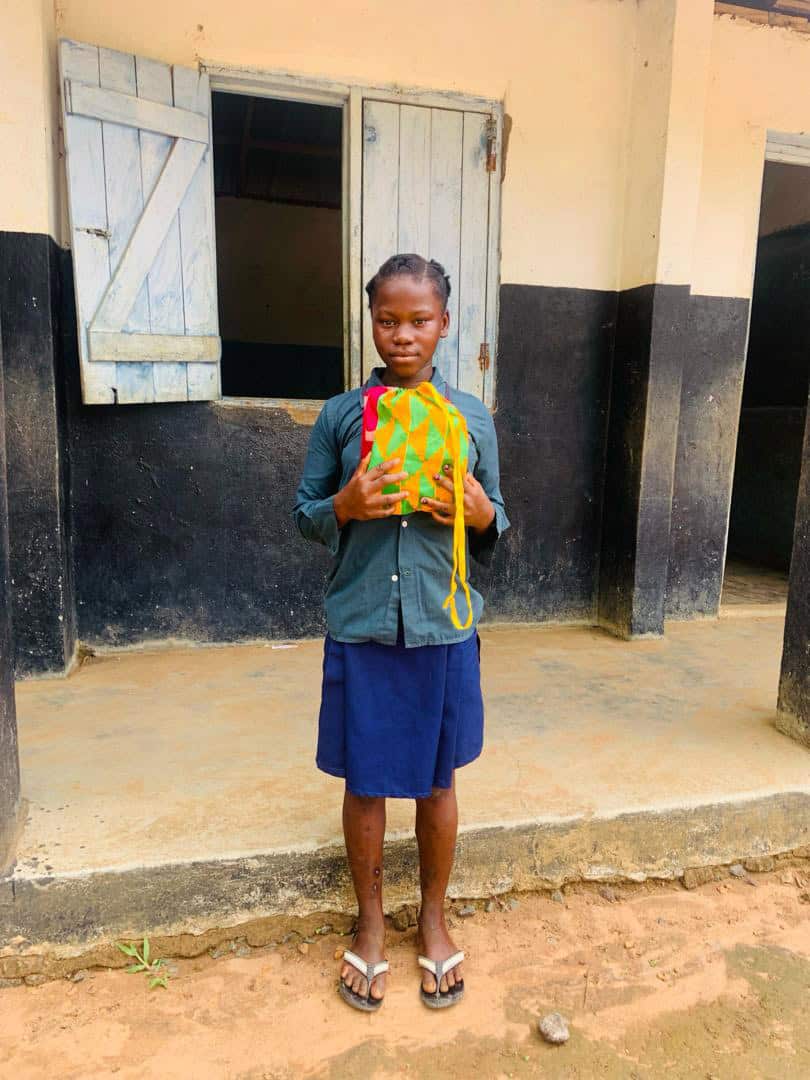
Isatu left home one morning, not realizing that her life was about to change. Later that day, she got her period for the first time while she was at school. With no real education about what was going on with her body, she felt ashamed, nervous and unsure of what to do. In her community in Sierra Leone, talking about periods wasn’t welcomed.
In many places, menstruation still carries a heavy stigma — even though it’s natural and a healthy part of life.
People don’t like to talk about it. Some pretend it doesn’t happen.
Does reading that make you feel a little uncomfortable? That’s exactly why we need to talk about it — so girls like Isatu don’t have to suffer in silence.
Lack of access to menstrual products leads to shame, infections and missed school.
When Isatu got her period, she felt desperate and embarrassed, with no products to use or knowledge about how to get them. Like many girls her age living in Sierra Leone, she resorted to using a lappa — an African cloth wrapped around her waist — to keep her uniform clean that day at school.
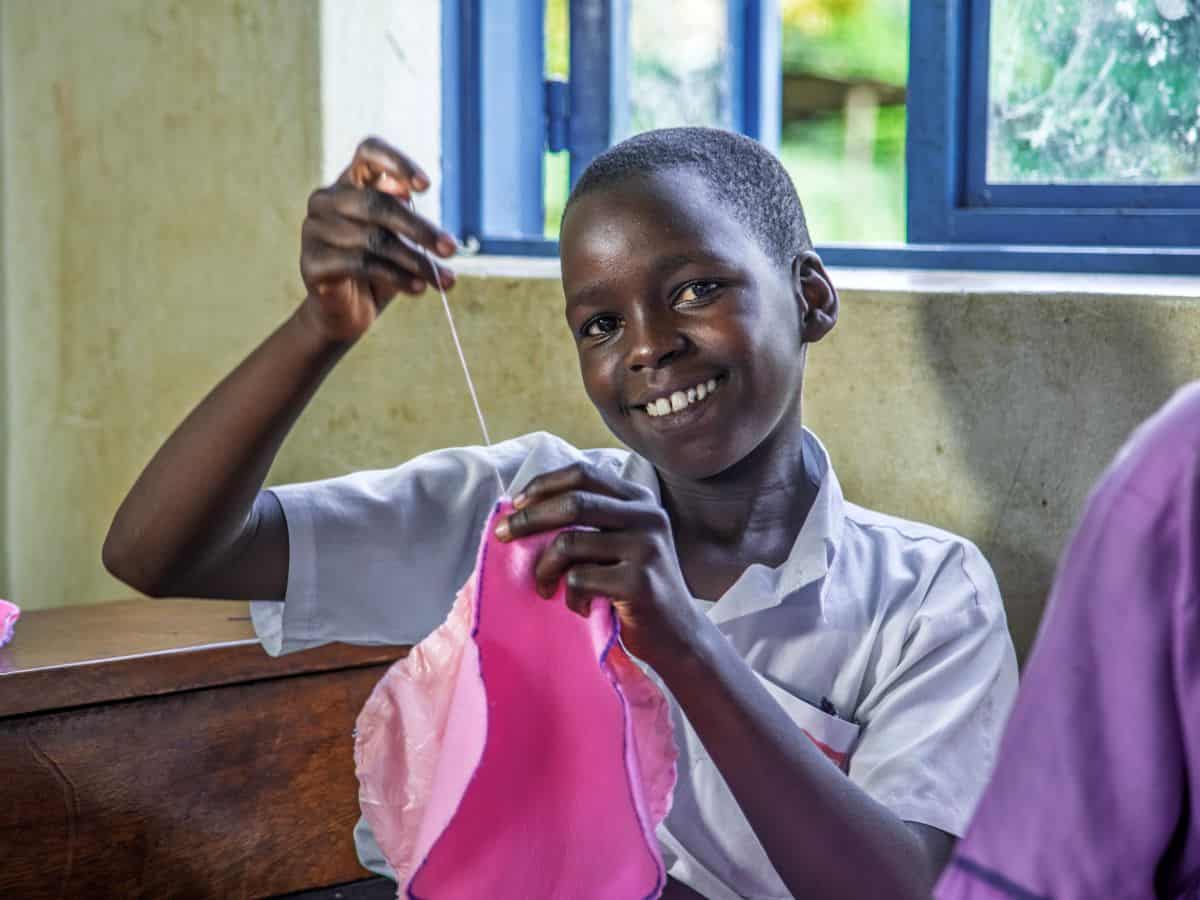
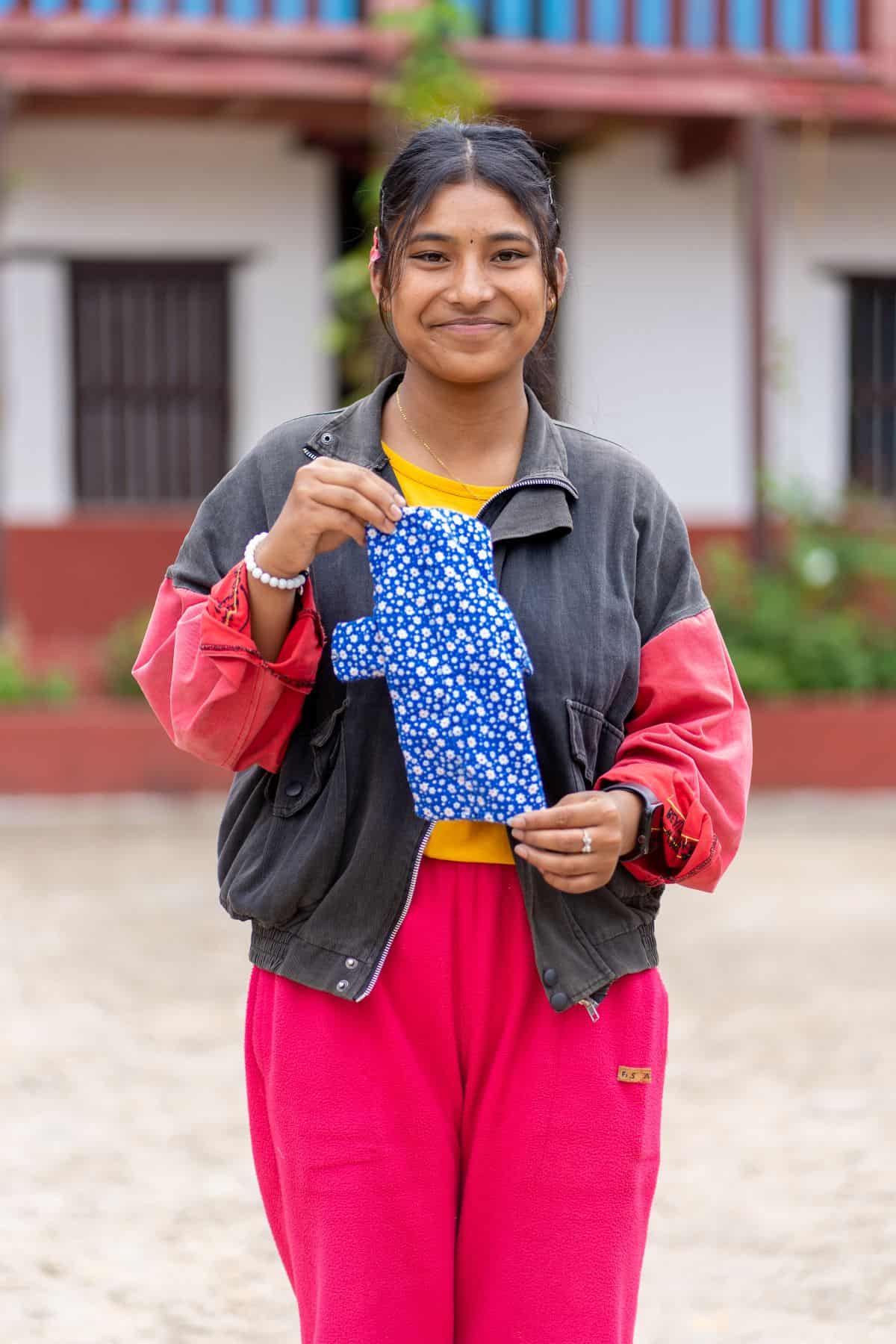
Your heartfelt gift today can give girls like Isatu safe, clean reusable pads made of washable fabric that are affordable and sustainable.
In many rural areas, disposable pads are either unavailable or too expensive. That’s why we provide reusable pads that can be washed and used again.
When girls have access to clean, hygienic products to better manage their periods, they reduce their risk of infection — and they’re more likely to stay in school and thrive. The My Health, My Rights project, which your gifts help support, teaches girls how to manage their periods safely and brings entire communities into the conversation.
Now, people are more willing to have conversations about menstrual health. Living in a community that wants to see you shine instead of shrink in shame makes all the difference!
Girls like Isatu are the experts how stigma and inequality affect their lives. We are the experts in facilitating the change they need. YOU are the support we all need to fuel those efforts and complete this powerful team. And together, we won’t stop until we are all equal.

Gender-based violence is driving adolescent girls from Guatemala, Honduras, El Salvador and Mexico to embark on journeys along one of the world’s most dangerous migration routes, according to Plan International’s report “Adolescent Girls in Crisis: Experiences of Migration in Central America and Mexico.” Plan International’s study, produced with the support of the European Union’s Directorate General for Humanitarian Aid and Civil Protection (ECHO) and other partners, shines a light on the lives of migrant girls in these four countries, many of whom have made the dangerous journey northwards in search of better life opportunities.

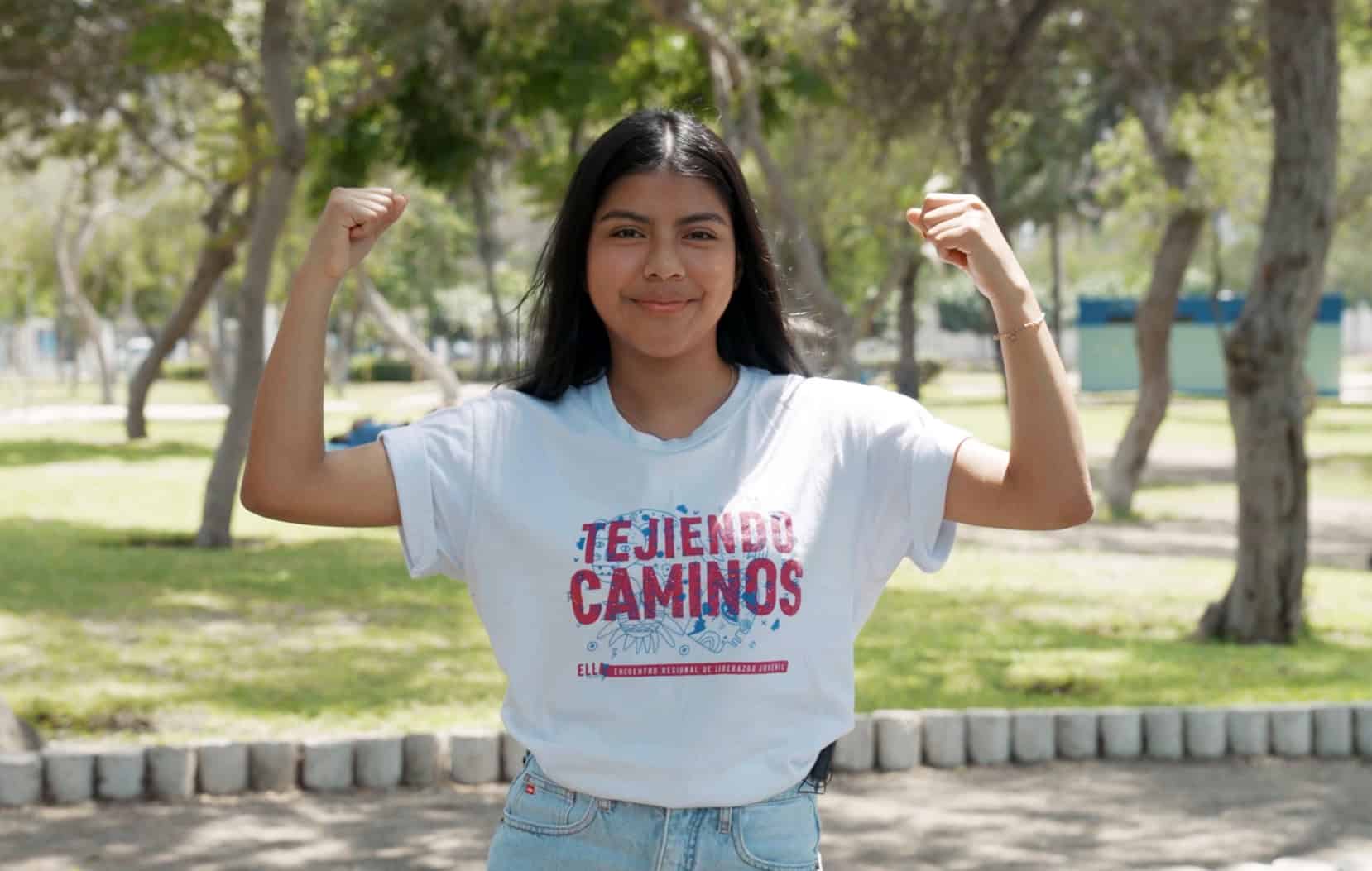
“I learned I could say no.”
For seventeen-year-old Fernanda, that realization changed everything.
She’s from Lima, Peru, and wants to become a doctor. But for a long time, her world felt smaller than that.
In her family, becoming a young mother was common. Her mom, aunts and cousins all had children as teenagers, and many had to leave school.
Fernanda saw that pattern clearly — and wanted something different.
When she joined a Plan International workshop where girls met regularly to talk and learn together, she encountered topics she had never had space to discuss before.
“I barely knew anything about sexual relations or menstruation,” she says. “When I joined, I learned so much more than that; I learned about my rights and my right to say no.”
For many girls in Lima, menstrual health is one of those topics — managed privately, rarely discussed and almost never connected to questions of rights or bodily decision-making.
Growing up, Fernanda often dealt with harassment in the street and comments that made her feel uncomfortable and unsure of herself.
Through the sessions, she began to see those experiences differently.
“Plan helped me not to feel intimidated because it’s really not my fault that there are people who make those comments,” she says.
In one activity, the girls practiced saying “no” when something didn’t feel right. It sounds simple — but for Fernanda, it changed everything.
She began to understand that she had the right to set boundaries, to make decisions about her own body and to speak up. That confidence showed up in the room with her.
The workshop brought together girls from across Lima, including many Venezuelan girls and young women who had recently moved to the city.
At first, Fernanda carried assumptions she hadn’t fully questioned. But through shared conversations and time together, those quickly fell away.
They talked, learned and supported each other, and Fernanda began to see past the stereotypes and recognize how much they had in common.
At the same time, she saw the challenges some of her friends faced. Teachers sometimes made assumptions about Venezuelan students before getting to know them. Scholarships and long-term study opportunities often went to Peruvian students first, and some of her friends eventually had to leave Peru to find work or continue their education elsewhere.
Seeing how much a lack of access costs — whether it’s access to information, to opportunity or to being treated fairly — made her more certain about what she wanted to speak up for.
Today, Fernanda speaks openly about the importance of having access to information and spaces where girls can learn without shame or stigma.
“The lack of these talks might have affected me in some situations,” she says.
Now, she encourages other young people to seek out those conversations — and for adults to make space for them.
“We all deserve a future with opportunities,” she says.
“I see myself finishing my degree, working in a job I like, doing what I’m passionate about, and feeling fulfilled by everything I’ve achieved so far,” she says. “It’s all part of the journey.”
Every girl deserves access to the information and support she needs to make decisions about her own life.
This Menstrual Health Month, learn how your support makes this work possible.

“I thought, ‘How can a woman do a man’s job?’” Melany says. “Even more so with solar panels. But I decided to motivate myself and do it.”
Melany is one of 32 young women who completed the first phase of Solar Girls, a training program in the Dominican Republic that prepares girls for careers in renewable energy. She installed solar panels, completed an internship and started planning for a degree in electrical engineering.
Her story is one of millions playing out as the world races to close a clean energy gap — and as girls increasingly refuse to be left out of it.
The clean energy sector is one of the fastest-growing industries in the world. It also has one of the most persistent gender gaps.
Around the world, technical fields like electricity and solar installation have long been defined as male space — by culture, by training systems and by who gets hired. Girls grow up without role models in these sectors. They are rarely recruited into training programs. And when they do show up, they are often told, as Melany was, that the work isn’t for them.
This exclusion isn’t just unfair. It’s costly. The energy sector needs skilled workers to meet the demands of a sustainable future. When half the population is sidelined, that future becomes harder to build.
Solar Girls is a collaboration between Plan International, Fundación Abriendo Camino and Nature Power Foundation. It is part of the Green Future initiative, which works to connect young people with training and employment in environmental sectors.
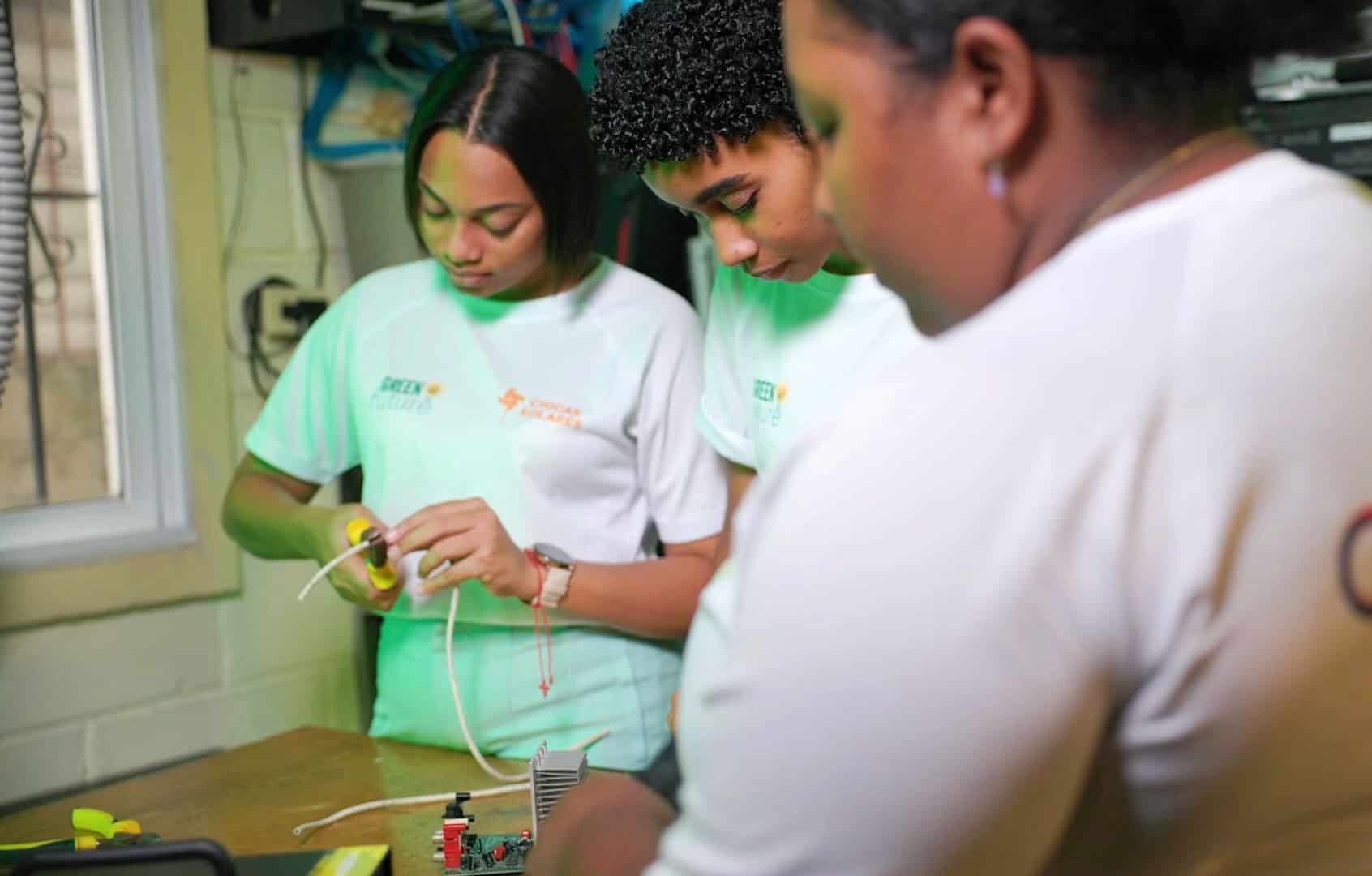
Participants learn to install and maintain solar panels, work through theory and practical classes, and complete internships with companies in the energy sector. But the program doesn’t stop at technical skills.
Melissa Fermín, Technical Training Coordinator at Fundación Abriendo Camino, describes what sets Solar Girls apart: “Solar Girls is a unique project because of its comprehensive nature. It not only covers technical training, but also personal development and soft skills, and it integrates a social aspect, too.”
In phase one, 32 young women completed the training. Fourteen went on to internships with energy sector companies.

For Nicole, joining Solar Girls was a turning point she didn’t anticipate. “My experience was unique,” she says. “I had never considered putting so many solar panels together or giving them torque maintenance. I really enjoyed my internship and would do it again several times over.”
She faced challenges. But she kept going. “I never felt discouraged because I knew what I wanted and was determined to keep pushing forward.”
The experience changed her sense of self, not just her skill set. “This experience has changed me a lot,” she says.
Nicole, Solar Girls participant
Lizmery came into the program with her own doubts — not about her ability, but about whether this world would accept her. “It’s a project that was apparently only done by men,” she says. “Seeing that women can get involved is very satisfying because it empowers us.”
The program gave her more than technical knowledge. “I used to be inconsistent and didn’t finish what I started, but now I’m more passionate and eager to improve myself every day. The skills I have developed mean that I can contribute to environmental care.”
Lizmery, Solar Girls participant
For Melany, the shift was in how she sees herself — and how she sees her future. Solar panel installation led her to the leadership and life skills workshops, which changed how she moves through the world. “They have taught me to be empathetic and to develop my leadership skills,” she says.
Now she has a plan. “The change I want to make is to enroll on an electricity course or go to university to study electrical engineering, because I am quite impressed by the solar industry.”
Melany, Solar Girls participant
It is the combination of hands-on skills alongside personal development and a network of institutions that back each participant through the process.
Fermín describes the power of that model: “The synergy created between the institutions involved in this project, including Plan International, has been invaluable in making the first stage possible. Our work as an alliance is highly valued because it provides not only financial support but also the strength we can draw from each institution to continue guiding each girl in the project.”

The results of phase one point toward what’s possible. But for Fermín, the work is just beginning. “I would like us to continue implementing Solar Girls and growing the network of young people that emerged through the first project,” she says. “This is a space for them to grow. We are open, and we hope many more will be motivated to participate in projects like this.”
As communities around the world mark Earth Day 2026 by reckoning with what a just and sustainable future requires, programs like Solar Girls offer a clear answer to one part of that question. The clean energy transition will not be complete until it includes everyone — especially the girls who have been told, for too long, that the work isn’t for them.
Melany knows better now. “A man can do it, and so can a woman,” she says. “And that’s what makes it impressive and different.”
Programs like Solar Girls show what’s possible when girls have access to real skills, real mentors and real opportunities. You can help make that possible by becoming a Her Defender and giving a monthly gift that supports programs like Solar Girls, helping to ensure the future of work includes girls.
Soha Sewani is a third-year Robert W. Woodruff merit scholar at Emory University studying human health and economics with a minor in AI. She’s passionate about gender equity, dignity and human rights in humanitarian contexts, and climate action for a more sustainable future.
On campus, she’s an active member of the Emory Climate Coalition and serves as vice president of outreach for the Pakistani Students’ Association. She also advocates for greater clean energy targets at the Georgia Public Service Commission, which regulates utilities across the state.
Her genetics research with Texas Children’s Hospital has been published in the American Journal of Medical Genetics, and she received a grant to study new therapeutic targets for neuroblastoma.
Soha joined Plan in 2023 as a member of the Youth Advisory Board after attending the Youth Leadership Academy in 2021, participating in an International Day of the Girl takeover at AstraZeneca in 2022 and advising at The Body Shop Innovation Hub that same year. Over the past year, she has co-coordinated both the board and the Youth Leadership Academy.
In her free time, Soha enjoys bhangra dancing, learning American Sign Language, becoming overly competitive at Scrabble, listening to family stories and perfecting her chai recipe.
Quote: “Being a part of Plan has been one of the most meaningful learning experiences for me — I have never found such a wonderful space where I can learn from diverse, unique minds while feeling so aligned in value and passion.”

Saudah is a junior and Morehead-Cain Scholar at the University of North Carolina at Chapel Hill, where she studies political science and global studies with a focus on the Middle East and North Africa.
She’s passionate about addressing migrant and economic inequality, having worked with the Hanan Foundation in Istanbul as an English teacher for refugee children. She’s also collaborated with Grameen Bank in Bangladesh and the Jordan River Foundation in Jordan to research microfinance and economic empowerment for host communities.
Originally from Gloucestershire, United Kingdom, Saudah co-founded Scholars for Society UK, a nonprofit that hosts conferences and workshops to increase political engagement among state school teens. She also served as an ambassador for the youth advocacy group I Have a Voice CIC, representing the group at the UK Parliament and as part of the European Youth Parliament.
A first-generation college student, Saudah continues to mentor others through the Sutton Trust U.S. Programme and Fulbright U.S.-U.K. Commission.
Quote: “The YAB not only represents us, but all the girls around the world and the impactful change we create with them. Plan has achieved so much, and I’m grateful to join the fight for equality for all children and girls.”

Nora is a high school junior from Southern California and a passionate advocate for refugee rights and climate action. She’s worked directly in refugee resettlement and actively raises awareness about the humanitarian crisis in her native country, Myanmar.
Growing up connected to the Burmese American community, she’s supported immigrant integration and helped lead community workshops, including one recognized by Congresswoman Judy Chu. Through this work, she joined Plan International’s Global Young Influencers Group, where she contributed to international campaigns promoting peace and social justice.
Nora played a key role in the Unite for Peace campaign, which advocates for international collaboration to address crises in conflict zones while advancing gender equality. She later spoke at the United Nations Human Rights Council, calling for an end to the recruitment and use of children in armed conflict. Together with her team, she’s helped reach young leaders in 25 countries.
A devoted climate activist, Nora regularly volunteers at local cleanup events. Her project, the Coral Symphony Project, earned her an award from the Global Environmental Education Partnership, led by the National Oceanic and Atmospheric Administration and the Taiwan Ocean Affairs Council.
In the future, Nora hopes to continue her advocacy at the intersection of policy, people and the planet. In her free time, she enjoys water sports and is a major film fan, always searching for the next great movie.
Quote: “I’m so grateful to be a part of this board of such amazing, inspiring young women. We, as the YAB, get to work on projects that address issues we care about, and I can’t wait to see what the future holds for us.”

Mia is a high school junior from Southern California and a participant in Plan International USA’s 2025 Youth Leadership Academy. The YLA showed her the power of youth voices in driving meaningful change.
During her time with the academy, she founded Project Unlaced, a youth-led initiative that empowers young women to build a healthy, confident relationship with their bodies. Through Project Unlaced, Mia leads peer-driven workshops, coordinates a team of volunteers and facilitates research-informed conversations that promote gender equality, empowerment and mental health. This work was inspired by Mia’s own struggle with an eating disorder.
In the future, Mia hopes to continue her advocacy and research in public health policy. In her free time, she enjoys running and finding new books to read.
Quote: “I’m excited to serve on the YAB alongside such inspiring young leaders as we work to elevate youth voices and advance gender equality.”