Search Results

Search results for

0 result(s) found
Plan International Hero

We are Plan International

We work with children, especially girls, in over 80 countries to help create a world where we are all equal.
children reached
0 M+
countries where we work
0 +
local partnerships
0 K+

Our impact

Every day, children — especially girls — face barriers that hold them back from reaching their full potential. But these challenges have solutions. With your help, Plan is creating opportunities for girls to learn, lead, decide and thrive in communities around the world.

How you can help

Our stories

How you can help

Your donation helps girls stay in school, stay safe, and build the futures they choose. With your support, Plan can respond to urgent needs and invest in long-term change for children and communities.

Search Results for: sanitation

Girls are leading change. Girls know what their lives need. Our role is to listen, support and work alongside them to remove the barriers standing in their way. Across every program and partnership, girls are not just participants in our work. They help shape it.

Why girls?

Girls face some of the most persistent and intersecting barriers to equality. From being pushed out of school to facing violence, early marriage or limited economic opportunity, their rights are too often denied simply because of who they are.

When girls have the support they need to learn, lead and make decisions about their own lives, the impact reaches far beyond the individual. Families are stronger. Communities are healthier. Systems begin to change.

That’s why girls are at the center of everything we do.

Our GirlEngage approach

GirlEngage is our approach to working with girls as partners and leaders. Girls help design, lead and evaluate programs that affect their lives, ensuring solutions reflect their real experiences and priorities.

OurWork-WithGirls_Fullwidth

What GirlEngage looks like in practice

Through GirlEngage, girls are involved at every stage of our work. They identify challenges, shape solutions and measure success. We work within the full ecosystem around girls, including families, schools, communities and institutions, to shift power and create lasting change.

This approach recognizes the whole girl. Her identity, experiences and aspirations matter. And the best experts on what girls need are girls themselves.

Beyond program

Our work with girls goes beyond individual projects. We advocate for policy change, support youth-led movements and mobilize global moments like International Day of the Girl to shift attitudes and systems that hold girls back.

We believe progress happens when girls are trusted as leaders and decision-makers, not just for one moment, but for the long-term.

Girls leading change

Search Results for: sanitation

Every girl deserves to grow up healthy — but for millions, that basic expectation remains out of reach. We work to change that, making sure girls and young women can access the health services, nutrition and basic support they need to survive, develop and thrive at every stage of their lives.

In 2025…

people screened for malnutrition
0 K
people accessed improved WASH
0 K
children accessed health services
0 K

The challenges

For too many girls, the barriers to good health start early and compound over time. Mothers and babies often lack access to basic care before, during and after birth. Young people — especially girls — struggle to access mental health support, even as the pressures they face continue to grow. Malnutrition affects millions of children, limiting not just their physical health but their ability to learn and develop. And in too many communities, the simple basics of clean water and safe toilets remain unavailable — a problem that has an outsized impact on girls and women, particularly during menstruation and pregnancy.

Our work

We work to make existing health systems better and more accessible for girls and young women. That means supporting mothers to access antenatal, delivery, and postnatal care. We also prioritize mental health and psychosocial support for young people, particularly in crisis settings. We’re working to improve nutrition through education, support for pregnant and breastfeeding mothers and sustainable agriculture practices that improve food security.

Increasing access to clean water and safe sanitation is also essential. We work to make sure that schools, health facilities and communities have the WASH — water, sanitation and hygiene — infrastructure girls need — because a girl without clean water at home or a safe toilet at school faces barriers that go far beyond hygiene — it impacts whether she stays in school, stays healthy and feels safe.

Putting girls and young people at the center

Across our health work, we make sure girls and young people have a say in improving the services and systems that affect them, because young people know what they need better than anyone else. And as climate change increasingly threatens health systems and food security, we build resilience into everything we do — so that communities are better prepared for the challenges ahead.

How you can help

Give to Plan

Our global programs are made possible by donors who believe in building a world where we are all equal. Explore ways to join our mission as a donor.

Work with us

We work with partners around the world, from local community groups to global organizations. If you share our belief that every girl deserves the chance to fulfill her potential — we’d love to hear from you.

Read more

Search Results for: sanitation

When disaster or conflict strikes, the most vulnerable people pay the highest price; and among them, girls and young women face the greatest risks. They are more likely to be pulled out of school, more vulnerable to violence and exploitation and less likely to receive the support they need. We work to change that, responding to crises around the world with girls at the center of everything we do.

In 2025...

people received humanitarian assistance
0 M
children received school meals
0 K
children accessed alternative learning
0 K

The challenges

Humanitarian crises including conflict, displacement or natural disaster don’t just cause immediate harm. They disrupt education, destroy livelihoods, overwhelm health systems and strip communities of the safety nets that protect the most vulnerable. For girls, the consequences can be devastating and long-lasting: increased risk of gender-based violence, early marriage, unwanted pregnancy and permanent school dropout. And as climate change drives more frequent and severe disasters, these risks are growing, disproportionately affecting communities that are already the least equipped to cope.

What we do

We respond where the need is greatest, delivering life-saving support across five core areas. We work to keep children learning in the middle of a crisis through emergency education programs and early childhood support. We create safe spaces for children and provide mental health and psychosocial support to help them process trauma and rebuild resilience. We deliver maternal and child health services, tackle malnutrition and ensure communities have access to clean water and safe sanitation. When families lose everything, we provide emergency food assistance and help communities rebuild their livelihoods through cash support, skills training and enterprise recovery. And because the best response to a disaster is to be prepared before it strikes, we also invest in disaster preparedness; working with communities, schools and local partners to build the knowledge and systems that reduce risk and save lives.

Putting girls and young people at the center

We recognize that humanitarian crises affect girls and young people in distinct ways, therefore we deliver principled, needs-based responses while ensuring an inclusive approach that leaves no one behind. In every humanitarian response, girls are not just recipients of support — they are leaders, advocates and decision-makers. From designing programs to leading community preparedness efforts, we actively engage girls, young women and other vulnerable groups as agents of change in their own communities. Because truly effective humanitarian response doesn’t just meet immediate needs — it builds the resilience, skills and confidence that helps girls and communities recover, adapt and thrive long after the crisis has passed.

How you can help

Give to Plan

Our global programs are made possible by donors who believe in building a world where we are all equal. Explore ways to join our mission as a donor.

Work with us

We work with partners around the world, from local community groups to global organizations. If you share our belief that every girl deserves the chance to fulfill her potential — we’d love to hear from you.

Read more

In celebration of Menstrual Health Day on May 28, we’re highlighting some of our partnerships that are empowering today’s girls to become tomorrow’s leaders. Together, we’re building a world where every girl can learn, lead, decide and thrive.

When girls don’t have critical resources like pads and clean water to manage their periods, it causes a ripple effect. They get sick more often, miss school and miss out on opportunities to become leaders of change in their communities.

But we can turn the tide.

Through Plan’s partnership with Kimberly-Clark and their KotexĀ® and ScottĀ® brands, we’re helping girls get the essentials they need to thrive. This partnership focuses on initiatives for menstrual health and clean water – all crucial for girls’ well-being and their ability to become the next generation of leaders.

Since beginning our work with the Kimberly-Clark Foundation in 2020, we’ve reached millions of people across 10 countries, including Brazil, China, Colombia, El Salvador, Ecuador, Guatemala, India, Nigeria, Peru and Vietnam.


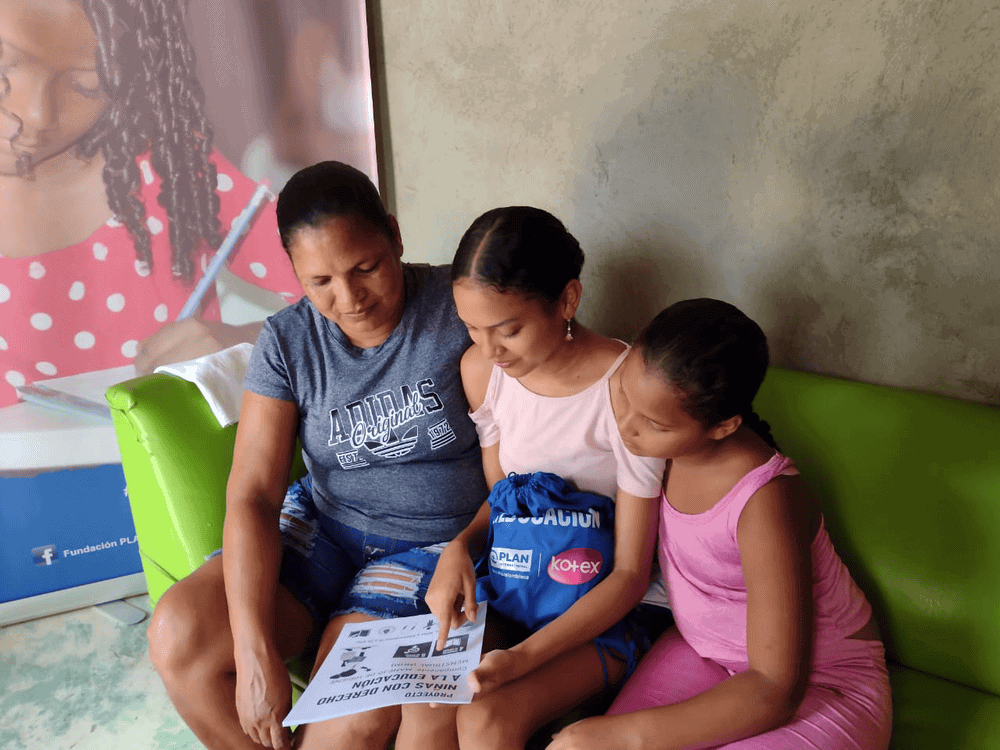
Teen girls sits on a couch between her mom and sister to talk about menstrual health.

Sixteen-year-old Yacira sits with her mother and sister to share menstrual health information she learned through a program supported by Kimberly-Clark’s KotexĀ® brand in Colombia. | Ā©Plan International


In 2024, we implemented seven programs across six Latin American countries together, reaching more than 4.5 million people:

— We increased access to sanitation solutions by providing 13,127 hygiene and menstrual care materials to 176,381 children, adolescents and their families through kit deliveries.

— We increased knowledge in six countries by training 4,210 young people as peer educators who can lead menstrual health trainings and advocate for people in their communities.

— We improved menstrual health, sanitation and hygiene awareness by reaching over 4 million individuals through campaigns on topics like periods and handwashing techniques.

When girls have access to menstrual products and information about their own bodies, their lives change. They can go to school without worrying, participate in their communities and build the confidence to lead. Clean water and safe toilets are just as important, keeping them healthy and safe to manage their periods with dignity. Giving girls these basics isn’t just about helping them survive; it’s about helping them unlock their potential to change the world.

For 17-year-old Delia in Guatemala, who joined Plan and Kimberly-Clark’s program to support menstrual health education, she has become more confident in speaking with her family and friends about periods. Now, she teaches her community about menstrual health and disease prevention.


Delia stands opposite her parents and sisters at a large wooden table holding a menstrual pad.

Delia now aims to continue her education and become a nurse so that she can provide professional care and teach more people about menstrual health. | ©Plan International


ā€œMenstruation is not dirty, and we should not feel impure,ā€ Delia says. ā€œIt is time to break down the barriers. Both men and women should be informed about the topic of menstruation.ā€

Through our partnership with the Kimberly-Clark Foundation, we’ve reached more than 590,000 people in Guatemala in 2024 with menstrual health resources and education.

We’re proud to partner with organizations like the Kimberly-Clark Foundation to do this important work. Together, we focus on providing menstrual health kits and education, improving access to clean water and toilets, and supporting education and empowerment programs. These programs support the unique needs of girls, giving them the tools they need to become the next generation of leaders.

With support from corporate partners like the Kimberly-Clark Foundation and individuals like you, we’re creating a powerful community where your generosity helps girls become the leaders their communities need.

Together, we’re building a world where every girl has the chance to thrive, and we’re committed to making that a reality because her future starts now.


The ripple effect feature image

Plan International welcomes reports of the ceasefire agreement in Gaza. We urge all parties to commit to taking all necessary measures to ensure that this ceasefire is permanent, sustainable and leads to lasting peace.

While today’s agreement offers a moment of hope for children who have been suffering unimaginable loss for over 15 months, we must remember that the situation for children in Gaza remains bleak. At least 17,580 children and 12,050 women have been killed1 in just 15 months in Gaza and over 21,000 children in Gaza have sustained conflict-related injuries – with 5,230 children (25%) requiring significant rehabilitation with a high likelihood of disability.

Over 46,707 people have been killed in Gaza since October 7 2023 with the actual number of deaths believed to be much higher, as thousands of people remain buried in the rubble of decimated homes, hospitals, and schools. Food, water, safe shelter, healthcare and other essentials are in desperately short supply after the targeting of civilian infrastructure. Action must go beyond the immediate end of violence. Immediate and unhindered humanitarian access to all areas of Gaza is critical to address these vital needs.

Children face devastating challenges

The scale of the crisis in Gaza has left children and their families facing devastating challenges. The destruction of homes, infrastructure, hospitals, schools, and essential services by the Israeli military has left Gaza in an unlivable condition. The few remaining hospitals are only partially operational, significantly understaffed, overwhelmed with critical patients, and medical supplies are dangerously low, putting children at risk of untreated injuries, preventable diseases, long-term mental health and psychosocial impacts and disability.

The international community must prioritise the immediate humanitarian needs of Palestinian children and their families.

In addition to the medical crisis, the destruction of schools and the displacement of civilians means that countless children are separated from their families, caregivers and friends and are left without access to education or safe spaces to play, heal and learn. Rebuilding educational infrastructure must be a key focus, as it provides not just learning, but a pathway to cope and heal during this traumatic time.

The complete destruction of civilian infrastructure in Gaza has a catastrophic impact on Palestinians, in particular the destruction of water and sanitation systems has left children exceptionally vulnerable to life threatening waterborne diseases, such as diarrhoea and cholera. Restoring clean water access and sanitation must be a top priority to avoid further health emergencies and preventable deaths of thousands of children.

Urgent mental health support

Equally important is the need for immediate and wide-scale mental health support. Many children in Gaza, including thousands of orphaned or separated children, have experienced or witnessed extreme violence for over 15 months. Psychosocial services must be expanded immediately to help children begin to recover from the psychological scars of horrendous hostilities. Children who have sustained blast injuries and disabilities arising from shrapnel, burns and fallen buildings with no surviving family members require special attention.

The international community must ensure that children’s rights to health, education, and safety are prioritised. These efforts must be part of a broader commitment to peace, justice, and lasting stability.

The international community must prioritise the immediate humanitarian needs of Palestinian children and their families. Although the ceasefire is a crucial first step, the needs of Gaza’s children will not disappear once the hostilities stop. The international community must come together to support Gaza, ensuring that children’s rights to health, education, and safety are prioritised. These efforts must be part of a broader commitment to peace, justice, and lasting stability.

Prioritise the needs of Gaza’s children

All civilian hostages in Gaza must be released immediately. We also renew our call for the immediate release of all children who have been abducted or detained by Israeli forces, and for a full and impartial investigation into the conditions they have faced in detention camps.

Plan International urges all governments, international organisations, and humanitarian agencies to prioritise the needs of Gaza’s children. We continue to call for all governments to cease the transfer of weapons, parts and ammunition while there is a risk they will be used to violate international humanitarian or human rights law.

The survival and future of Palestinian children in Gaza depends on our prompt collective action and meeting their humanitarian needs and is an essential step towards building a lasting and just peace in the region.

About Plan International

Plan International is an international development and humanitarian nonprofit that advances children’s rights and equality for girls. Working together with children, young people, supporters and partners, we strive for a just world, tackling the root causes of challenges children face. We are there from birth until adulthood, and we support children to prepare for and respond to crises and adversity, while particularly focusing on the experiences of girls. With more than 85 years of experience, we work to transform lives in more than 80 countries. We won’t stop until we are all equal.

For more information, please visit www.PlanUSA.org.

Ā 

The future girls want is one where they can learn,Ā leadĀ and live without limits. But right now, too many obstacles stand in their way. In our ā€œFuture girls wantā€ blog series,Ā we’reĀ shining a light on how education is the key to unlocking the future girls want for themselves, and how itĀ impactsĀ every area of their lives — from health to safety to civic participation.Ā 

Today, we’re talking about how education impacts a girl’s menstrual health — and vice versa.

It’s no secret…

Norma was 9 years old when she got her first period.

When she saw that she was bleeding, she was scared and thought something was wrong.

Like many girls in Guatemala — and around the world — Norma hadn’t learned about her period, so she had no idea what was happening to her.

Menstrual health is an important part of girls’ and women’s overall well-being. But it’s a topic that isn’t talked about enough. In many cultures, menstruation is considered taboo — and girls are paying the price for the silence that surrounds it.

The stigma around menstruation reinforces negative gender stereotypes, keeping girls and women from confidently navigating school and work environments. It allows myths to persist, such as the belief that menstruation makes girls unclean. This can isolate girls, making it difficult for them to feel comfortable during their periods.

The futures girls image
ā€œI was 9 years old when I got my period — I was so surprised,ā€ Norma, 17, shared. She hadn’t learned about menstrual health and didn’t know what was happening to her. | Ā©ļøPlan International Guatemala

Without open conversations, girls may not receive accurate information about their bodies, leading to confusion and fear. This can result in unhealthy practices or misunderstandings about reproductive health.

Studies show period poverty — the lack of access to menstrual products, adequate sanitation and education about menstruation — not only affects girls’ health and well-being but also significantly limits their educational potential.Ā Forced to miss days of school each month, girls fall further and further behind, and in some cases, they drop out altogether.

For those who do attend school, discomfort and embarrassment can prevent them from fully participating. This affects their confidence and ability to concentrate, leading to reduced engagement. When girls fall behind, it affects their career prospects, economic opportunities and personal development. This, in turn, perpetuates cycles of poverty and gender inequality.

For Norma, her struggles with menstrual health didn’t end with her first period.

ā€œOnce, I stained my clothes at school and they teased me,ā€ Norma said. ā€œBoys would start pointing me out. I was afraid to go to school in case I stained myself again. I had a lot of fear and embarrassment, I didn’t want to go to school.ā€

Education is key

So, how do we break the cycle? Well, the first step is to talk about it.

Education is one of the most powerful tools in breaking down the menstrual health barriers that girls face. With accurate information and support, girls can manage their period with dignity and confidence. Without it, the consequences can be dire.

That’s why Plan International embarked on aĀ partnership with Kimberly-Clark, its foundation and the company’s KotexĀ® and Scott brands in 2020, with a goal to shape a future where no girl is held back from reaching her full potential.Ā Together, we have implemented 12 menstrual health and water, sanitation and hygiene projects in 10 countries in South America, Asia and Africa.

We know from experience that the reach and impact of menstrual health programs is significantly increased when there is a strong educational component. So, our projects take a comprehensive approach to menstrual health, meeting girls’ immediate needs for supplies, ensuring they have the knowledge and skills to understand menstruation and creating a supportive environment that is free of period myths and stigmas.

"I learned about what happens in the evolution of our body and the different changes, as well as the freedom and security to express ourselves in public, breaking those taboos that perhaps at some point made us women feel afraid or insecure about issues related to our menstruation.ā€ – Program participant in Colombia

Gender-inclusive menstrual health education fosters empathy, breaks down harmful stereotypes and promotes community-wide support. We engage with entire communities — girls, boys, parents, teachers and leaders —to change harmful beliefs, debunk myths and encourage open discussions, creating platforms of learning with and from youth and families, students and teachers, and children and community leaders alike.

92% of young people surveyed in Colombia now have a moderate understanding of menstrual health, compared to 18% when the project started.

Image 2
Plan Peru celebrated International Menstrual Health Day with an awareness-raising campaign that reached over 200,000 people. As part of the campaign, more than 100,000 menstrual health products and thermal bags for menstrual cramps were delivered to 24 schools, as well as educational materials to debunk menstruation-related myths and notes on talking about menstruation in schools. | Ā©ļøPlan International Peru

Since 2021, 1.5 million people in 10 countries have been reached through awareness-raising campaigns.

We also work with health care providers to make sure their services are adolescent-friendly, so that girls don’t feel ashamed to go to the doctor and talk about their period.

ā€œBefore the project, menstruation was a very secretive and sensitive topic, and no one ever dared to mention or discuss it. We would be very embarrassed if someone found out we’re menstruating.ā€ — Program participant in Vietnam

Young people taking the lead

An essential component of our menstrual health programs is youth leadership. The active involvement of girls in every step of the process ensures that programs align with their needs and priorities, promoting local ownership and sustainability.

Plan, in partnership with Kimberly-Clark, trains young people in menstrual health education to act as advocates and lead trainings with their peers in the community. This peer education model empowers adolescents to be leaders of change, instilling values of confidence and agency, while creating a ripple effect of knowledge dissemination within and across communities.

10,481 young people trained as advocates to lead educational trainings with other youth and community members.

Image 3
Girls participate in a peer educator training session in Vietnam. | Ā©ļøPlan International Vietnam

In Brazil, 475 girls graduated from the Leadership School for Girls course, which required participation in 20 classes on knowing your rights, menstruation, dignity and respect, equality, leadership and empowerment. The girls created a campaign called ā€œMy Cycle, My Rules,ā€ making and distributing bracelets with beads that represented the stages in the menstrual cycle. They reached more than 400,000 people, educating their peers and creating a movement to wear the bracelets as a symbol of breaking the stigma around menstruation.

ā€œThe project awakened my potential in me, you know? The best I can be, because we are often told that we can’t do anything, that our place is only at home, but that’s not it, we can be where we want and we can fight for it.ā€ Maria LuĆ­za, program participant in the Leadership School for Girls course in Brazil. | Ā©ļøPlan International Brazil

"The project has given us the opportunity to feel recognized and that we are heard. It has allowed us to have more confidence that we can talk about menstruation among women, but also with our classmates and with our family." — Alina, a program participant in Peru

Image 5
ā€œI have been empowered by acquiring skills to express myself effectively and communicate in an impactful way,ā€ Luna, a program participant in Colombia shares. ā€œExploring the various communication tools, especially social media, has given me unparalleled creativity and motivates me to continue to raise my voice on behalf of all the girls in my community.ā€ | Ā©ļøPlan International Colombia

79% of program participants surveyed in Peru can identify harmful period myths and stigmas, compared to only 35% when the project started.

Setting girls up for success

Making period products available for free or at low cost in schools, communities and workplaces is essential in the fight against period poverty, and this is a key component of our menstrual health programs.

In partnership with Kimberly-Clark, we’ve distributed 41,972 menstrual health and hygiene kits in 10 countries since 2021.

"Introduction of the pad bank has helped to keep us in school whenever we are menstruating," a program participant named Aisha said. "We are also given uniforms to change into by the school.ā€ | Ā©ļøPlan International Nigeria

But girls need more than pads or tampons to manage their periods — they also need access to clean water and private bathrooms.

Unfortunately, many schools lack adequate girl-friendly bathroom facilities.

15% of adolescent girls surveyed in Nigeria now skip school due to their period, compared to 49% when the project started.

Our menstrual health work involves building bathrooms where students can safely manage their periods while at school. This means creating spaces that have locking doors for privacy, enough space to move around, access to clean running water, enough light to see and a spot to set down their personal items so they’re not on the floor.

Programs that integrate menstrual health with water, sanitation and hygiene initiatives are more effective in holistically responding to the needs of adolescent girls and young women. This multisectoral approach proves to be the most powerful and impactful.

Girls wash their hands in the new bathroom at their school in Brazil. | Ā©ļøPlan International Brazil

"Now going to the bathroom is different, it is clean, well-cared for and everything is working; in addition to that there is security at the doors. Before I didn’t like going to the bathroom because they were useless, and it was unsafe.ā€ — Gladys, program participant in Ecuador

Girls want a future where they have the information, resources and support to manage their period with confidence and dignity, so they can pursue their dreams without interruption. Together, we can break the cycle of inequality, one school day at a time.

The futures girls image

Missing a few days of school here and there might not seem like a big deal to most students, but for millions of girls and young women around the world, it’s a monthly occurrence with dire consequences. Without the necessities to manage their periods at school, girls stay home, falling behind on nearly two months’ worth of lessons every year.

The lack of access to menstrual products, education and sanitation facilities (at home and in public spaces) is commonly referred to as period poverty. It disproportionately affects marginalized communities, including those living in poverty, rural areas and conflict zones.

Period poverty is a global crisis that forces countless individuals to make impossible choices between their education, health and dignity — and often leads to suffering in silence. It’s a major problem in the U.S., too. According to Harvard Public Health, one in four teens in the country miss class because they don’t have products to manage their periods effectively.

[Read more: It’s time to talk: Menstrual health in the U.S.]

Beyond the immediate physical discomfort, period poverty has far-reaching consequences. It can lead to health problems, educational disruptions and limited economic opportunities.

As a global humanitarian organization dedicated to advancing children’s rights and equality for girls, Plan believes that recognizing and addressing menstrual health needs as part of girls’ overall well-being is vital to realizing a more equal world. We’ve implemented programs around the world to address period poverty.

Menstrual health in Sierra Leone

In Sierra Leone, poor access to sanitary products means that thousands of girls are forced to miss school and stay home during their periods. When 15-year-old Isatu first started her period, she didn’t have menstrual pads, so she resorted to using a waist scarf to keep her school uniform clean.

“I used to struggle with feeling uncomfortable,” she says. “I often got infections and had to miss a lot of school during my periods. I even had to repeat a year because of it. Some of my friends dropped out of school because they had similar problems.ā€

Through a menstrual health project that Plan implemented in Isatu’s community, she received menstrual health education, as well as reusable pads. Isatu told us that it has become much easier to talk openly about periods, too, and she even feels comfortable bringing the subject up with her grandmother and father.
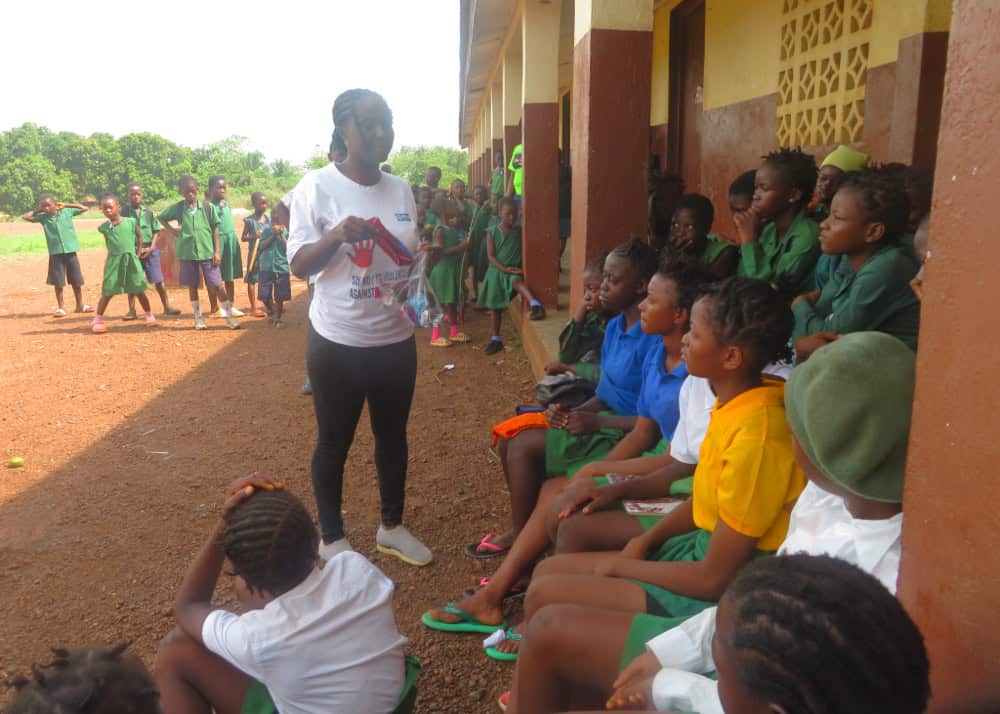
 

A woman in a white t-shirt stands in front of a group of girls sitting along a wall as more children in green stand in the background.

In addition to providing reusable menstrual pads, project staff also taught girls in the project how to wear and wash them. | ©Plan International Sierra Leone


“I hope that more girls who can’t afford pads will be supported and that pads will be distributed regularly,ā€ Isatu says. ā€œIt’s important to educate everyone about periods so that there is less stigma. Pads help girls like me go to school and feel better about ourselves.ā€

Menstrual health in Brazil

Plan International has implemented a comprehensive menstrual health program in Brazil to address the challenges girls and women face in accessing essential products and education.

The program aims to break down stigma, provide menstrual products and promote positive attitudes toward menstruation. By partnering with local communities and organizations, we’re able to reach thousands of girls and women in need.

Through educational workshops and awareness campaigns (that also include boys and young men), the program has challenged cultural taboos and promoted a better understanding of menstrual health. Additionally, the program has provided access to menstrual products, enabling girls and women to stay in school and participate fully in their communities.

Menstrual health in South Sudan

For girls living in South Sudan, managing their periods is not easy. The lack of access to menstrual pads has grown due to conflict that has disrupted the local economy. Young women, like 19-year-old Awil, were using unsafe materials to try and manage their periods.
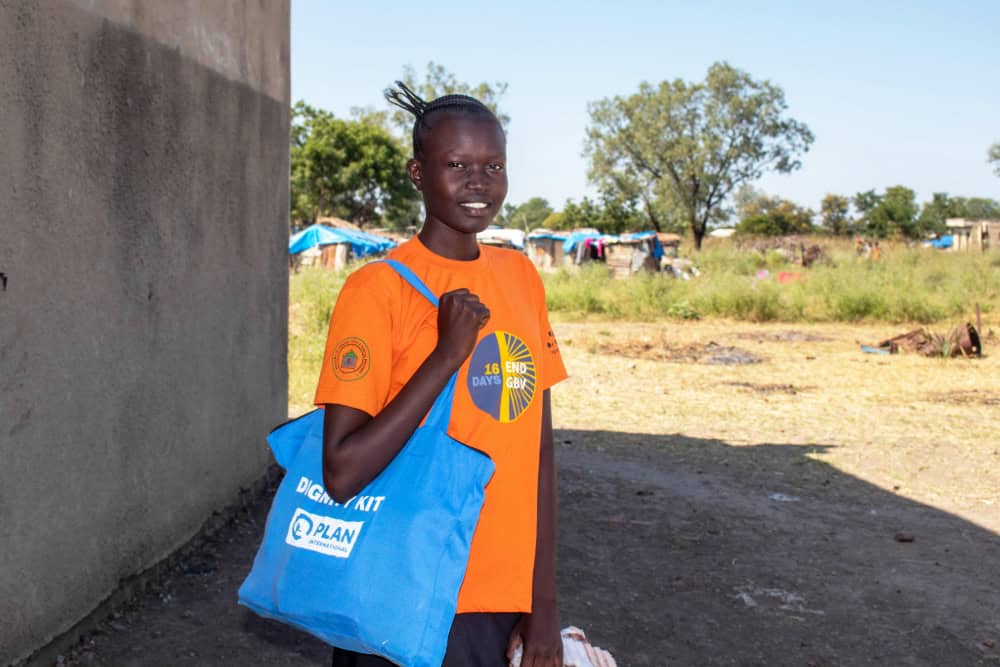
 

Young woman in South Sudan wearing a bright orange t-shirt holds a blue tote bag with the Plan International logo and smiles.

Awil says that her parents have always struggled to afford menstrual pads for her and her five sisters, but conflict in the region has made their financial situation worse. | Steven Kamponda, ©Plan International South Sudan


ā€œBesides not being able to pay our school fees, my sisters and I have skipped classes because we did not have sanitary pads during our periods,ā€ Awil says.

Part of Plan’s emergency response project in the country addressed this issue by providing these supplies. We distributed cash vouchers and health kits to Awil’s community that included items like pads, soap and underwear.

ā€œThis will relieve some of the pressure off my parents, who have always had to work extra hard to provide for the needs of us children,ā€ Awil says.

Girls in conflict and other emergency settings like Awil face especially chaotic conditions that prevent them from accessing the menstrual products they need.

Youth leaders fighting period poverty

Young people are at the forefront of the movement to end period poverty, especially during emergencies. Through community events, peer-to-peer fundraisers and educational campaigns, they are inspiring others to take action and challenge societal norms.

ā€œYoung leaders should have the ability to lead, solve and change things,ā€ Byronie, a Youth Advisory Board member and campaign leader, says. ā€œThese skills can’t be developed without the space and opportunity to be involved.ā€

Plan’s Youth Advisory Board is leading It’s Bloody Normal, a period campaign that’s destigmatizing menstruation and helping provide menstrual health products to girls in emergencies — like Awil. Backed by the organization and its network of supporters, these young leaders are raising awareness and funds for Plan’s programs, turning the tide on period poverty.Ā 

Young people led a webinar to discuss Plan’s menstrual health programming and periods in emergencies. Watch it here!Ā 

The fight against period poverty requires a collective effort from individuals, communities and organizations worldwide. Plan and its supporters are a part of the collective action that helps dismantle barriers children, especially girls, face to their futures.

ā€œThese are our problems, moreover our community,ā€ Byronie says. ā€œThe sense of shared community creates strength and a sense of motivation that is so inspirational and unique. In my experience, the most powerful movements are formed with the collaboration of young people — the more of this there are, the more good gets done.ā€

By making a matching gift, you amplify the work of young leaders like Byronie and create a lasting impact. Your donation will help reach even more girls and young women around the world with menstrual products, education and support to communities struggling with period poverty.

Join us in empowering young people to drive change and end period poverty.Ā