Plan International partnered with Georgetown University and JSI Research & Training Institute, Inc. to implement the REAL Fathers Initiative (Responsible, Engaged, and Loving Fathers) in Rwanda under USAID’s Gender-Transformative Programming for Advancing Care for Children in Adversity project. The program engages young fathers as positive role models to reduce intimate partner violence and violent discipline against children — helping men build safer, more nurturing families. Through community mentorship and peer learning, REAL Fathers encourages fathers to redefine masculinity, share decision-making, and model empathy and respect at home.
This newly published baseline study, featured in Children and Youth Services Review, presents data collected before program implementation. Conducted by Plan International and its research partners, the study found that 56% of fathers reported using violent discipline with children and 39% of mothers experienced intimate partner violence, underscoring the urgent need for interventions that address harmful gender and parenting norms. The findings highlight Plan’s leadership in advancing gender-transformative, evidence-based approaches to parenting and violence prevention.
From rising development and humanitarian needs to shrinking aid budgets, the development sector is under pressure. For organizations working at the intersection of education, protection, economic stability and gender equality, the stakes couldn’t be higher.
At Plan International, we’ve been asking ourselves tough questions: How do we adapt to a volatile funding landscape without compromising quality or equity? How do we stay accountable to communities while transforming how we deliver?
This blog shares what we’re learning from Latin America and the Caribbean and how our teams are applying those lessons in real time.
The development landscape is changing
Foreign assistance continues to decline. Foundation funding is harder to access. At the same time, the needs of children — especially girls — are growing more complex and urgent. Climate shocks, economic instability, displacement and violence continue to disrupt education, compromise community safety, strain families and increase risks for youth.
We’ve had to face a hard truth: Yesterday’s tools don’t meet today’s challenges. So we’re evolving — not just to survive, but to stay resilient and focused on what matters most.
How Plan International is adapting development models
Smarter, more efficient delivery
We’re investing in community-led approaches, reshaping partnerships and designing delivery models that reduce costs while expanding reach. This includes combining services across sectors, simplifying internal structures and collaborating more effectively with local actors. By using unrestricted resources alongside co-investments from new partners, we’re reducing duplication and staying agile in complex environments.
Decisions grounded in evidence
We use real-time insights from program implementation to refine our approaches and respond to evolving local contexts. Learning from what works — and where we need to improve — helps us adjust strategies without compromising outcomes.
Co-creating with local and regional partners
We build solutions with youth- and women-led organizations, government institutions and the private sector. In many cases, this means aligning program design with market realities, so that our work supports sustainable systems and long-term impact.
“I believe that both governmental and non-governmental organizations are striving to adapt to the evolving landscape of international cooperation by taking more proactive rather than reactive approaches.
This shift requires greater collaboration among organizations, with an emphasis on joint actions and, above all, a commitment to community-based organizations. These local actors not only operate with lower overhead costs but also achieve high impact in their interventions.
At the same time, many organizations have diversified their financing sources. This has enabled them to update their operational models and organizational structures, making them more resilient and better equipped to respond to current challenges.”
— Luis Fernando Morataya, employment and entrepreneurship advisor, Plan International Guatemala
From strategy to impact: What adaptation looks like in practice
These shifts are shaping real outcomes across Latin America and the Caribbean. Our teams are applying new approaches to:
— Invest in locally led solutions
— Align programs with real labor market needs
— Partner across sectors to strengthen systems
— Use evidence to adjust programs in real time
Real-world case studies: Community-led development in action
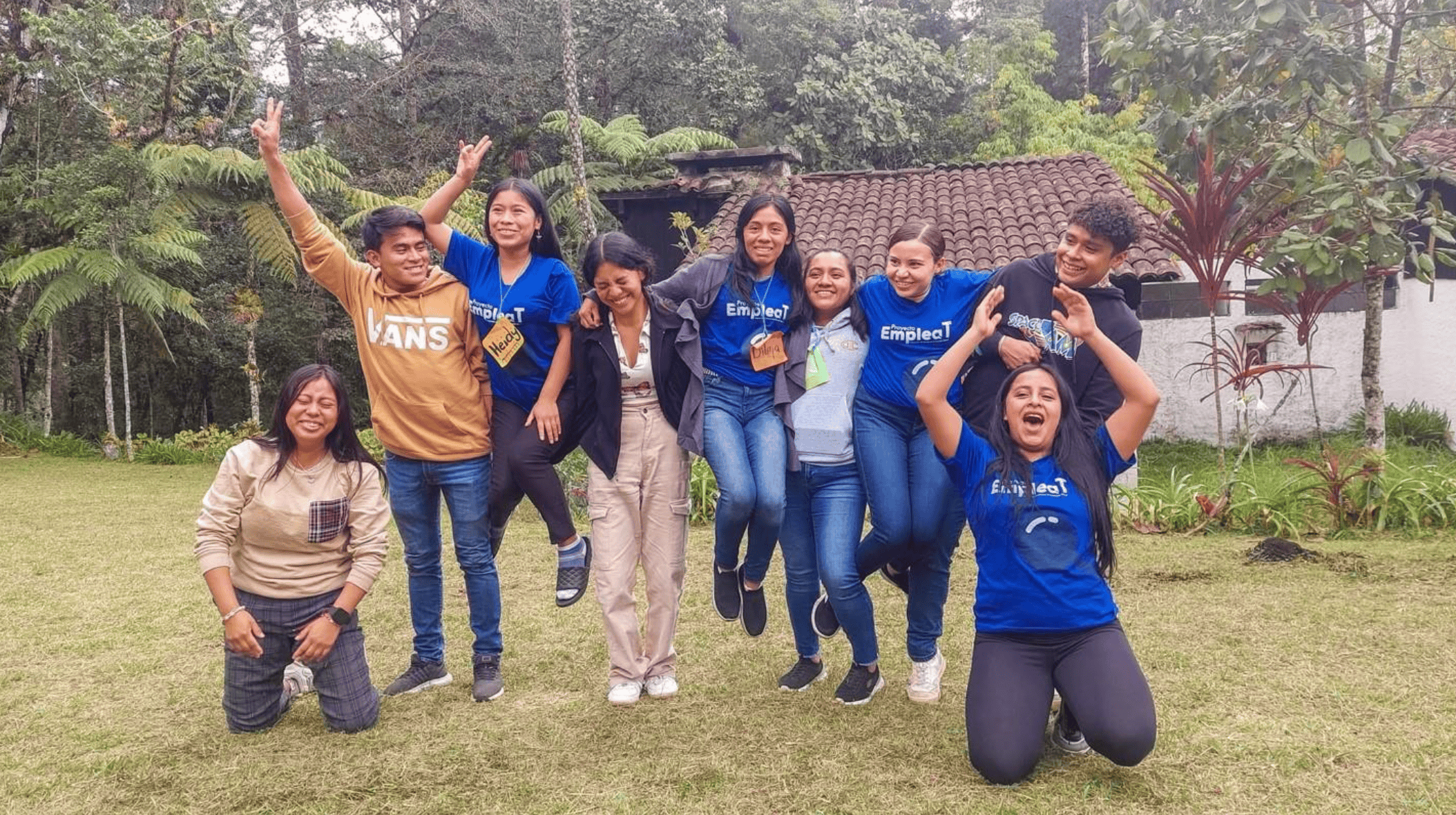
Guatemala: Income growth through EMPLEA-T
Objective: Integrate youth into the labor market by strengthening their technical skills for innovative, sustainable enterprises.
What we achieved: Participating youth increased their net monthly income by over 200% after job readiness training.
Objective: Equip vulnerable youth, especially young women, with market-relevant skills.
What we achieved: In partnership with the American Chamber of Commerce in El Salvador, we co-designed job training and mentorship aligned with real job demand.
Bolivia: Rapid response to 2024 floods
Objective: Provide emergency food, water and sanitation aid to flood-affected communities.
What we achieved: Over 4,300 families received aid through a coordinated response with national and local actors.
Peru: Expanding access to preventive health
Objective: Reduce disease risk from climate emergencies in Loreto, Peru.
What we achieved: Reached 20,000+ people in vulnerable areas by strengthening local health systems.
Key lessons from adapting development programs
“Lo que coseches mañana será fruto de lo que siembres hoy.” — Spanish proverb
This proverb reflects the long-term, community-rooted approach that drives our work. We’re learning that:
— Innovation thrives in deeper collaboration with local actors.
— Adaptive programs deliver greater impact.
— Impact grows when communities co-own the solution.
This moment calls for bold collaboration and shared accountability to navigate the growing complexity of development work.
Joining forces for sustainable development impact
We invite peer organizations, funders and partners to join us in reimagining how we deliver impact — not just with new tools, but with new mindsets.
When — or if — the guns fall silent, Gaza’s children will hear something that they have lost: the sound of silence. If the wishes of Gaza’s children have found their echo in a peace deal being negotiated in Sharm El-Sheikh, this could truly be a new beginning.
For the first time, many will fall asleep without the deafening roar of missiles, the echo of explosions, the relentless buzz of drones or the constant screams of children. The screams and nightmares that once filled anxious nights may fade, replaced — perhaps — by the unfamiliar quiet of safety and sleep.
There are no winners in wars. I have seen this truth in the faces of children and mothers in war zones – in Gaza, Iraq, Afghanistan, Ukraine and beyond. No words can truly capture what brutal wars leave behind. Lives and landscapes changes for ever.
Approximately 20,000 children are amongst the 67,000 Palestinians killed in Gaza since Oct 2023. 1,200 Israelis were also killed in Israel. Children never start wars, yet they suffer the most. Many are buried under the rubble of what used to be homes, schools and hospitals. Thousands more are wounded, orphaned or deeply traumatized. Peace must flow in one direction — toward every child.
Silence, in Gaza, would not be emptiness; it would be the sound of survival, of life daring to return. It may mark the beginning of a new hope for children — to start dreaming of a day they could get a new school bag, a football, a playground and fly a kite in a sky free of the roar of fighter jets.
Fear may give way to real lullabies — sung by mothers who no longer have to whisper and cry in the dark. Many of them have watched their children being killed or amputated. For these children and their mothers, peace is a new moment, a new beginning. They carry the painful memories of the past as they move forward.
Peace is the freedom to wake up and find their homes or schools, or whatever is left where homes and schools stood, still on their imagination. It is the joy of hearing laughter instead of sirens and speeding ambulances.
No child should be part of war — never. And true peace is not only the silencing of weapons. It is a starting point for healing wounds that bullets and bombs leave behind. It is rebuilding classrooms where laughter can replace the sound of falling rubble. It is helping children unlearn fear — and to think of celebrations, not death.
Families might rebuild their mornings with the simple act of making tea and breathing freely without fear — small moments that carry immense meaning when peace has been absent for so long.
Peace is not defined only by the absence of wars and is not a pause between two wars. In Gaza, a whole generation of children have lived through wars or conflict six times – in 2006, 2008, 2012, 2014, 2021 and another one since October 2023. There is only so much that young minds can take.
I have seen first-hand the inexplicable brutality of war, and the impact of weapons and blast injuries and burn injuries on children in Gaza and other war zones during my humanitarian missions. I have also witnessed the determination of children in Gaza to beat despair.
That is why peace must travel in one direction — towards every child, every family, every shattered classroom and bombed playground. Negotiations may start in closed rooms. In true sense, peace is what must be lived in homes, schools, hospitals, libraries, market cafes and streets.
Peace is often the sound of crayons scratching on paper instead of warning sirens. It is a girl walking safely to school or a child kicking a football without fear or flying a kite. Peace becomes a reality when children start talking in future tense and when a family dares to plan for tomorrow.
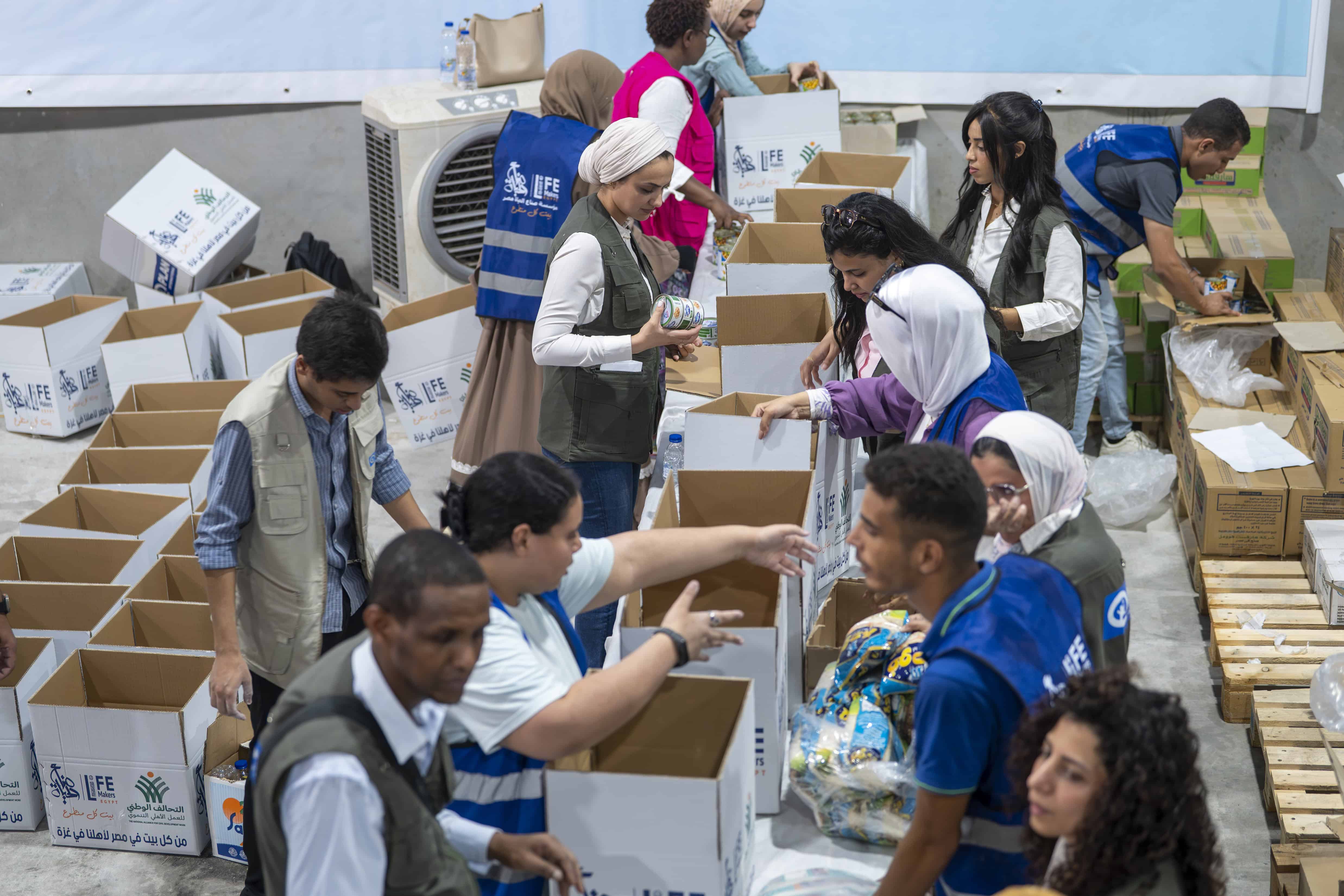
Yesterday, I visited a humanitarian warehouse in Cairo. Young volunteers – some still in college – stood shoulder to shoulder with my colleagues from Plan International Egypt, packing food and loading trucks headed for Gaza. There was a quiet rhythm to their work, a shared purpose that spoke louder than words.
Hope was everywhere — in their hands, in their eyes, in the way they moved faster as another anxious, yet more optimistic day, progressed. Each box carried more than food; it carried care, compassion, and the belief that Gaza’s children deserve a tomorrow filled with peace.
When peace finally comes — and we must all believe it will even when every peace negotiations look shaky and “is one step forward and two steps backwards” as peace negotiators often describe the moment — it will not be hollow. It will be sacred. It will be the soft echo of a people reclaiming their humanity, one heartbeat, one child, one dawn at a time.
For Gaza’s children, peace is the right to grow up with dignity, to laugh without flinching, to rebuild memories not of war, but of wonder. Silence, in that sense, is not emptiness; it has the potential to be music of healing.
I remember 2009 vividly — another brutal war, another mission. Amid the dust and debris in Gaza, I met 12-year-old Omsiyat. She asked me a question that has stayed with me since: “Why are children made to suffer in wars?”
Omsiyat and her young friends were picking up burnt books and crayon peace posters out of the rubble of their partly charred school. A smile (I would call a ‘one and a half smile’) broke on the face of another girl when she spotted a colourful poster she had drawn. She told me that she is happy she got it back, sad the bombs burned a part of it, trying, even then, to find light amid the ashes.
When peace travels in one direction, it is about hope and life. Mahmoud Darwish, Palestinian national poet, wrote “There is so much in this land worth living for”, something Gaza’s children deserve.
Last year on International Day of the Girl (Oct. 11), Plan International announced a new partnership with Paramount to launch a new global campaign to champion girls’ education.
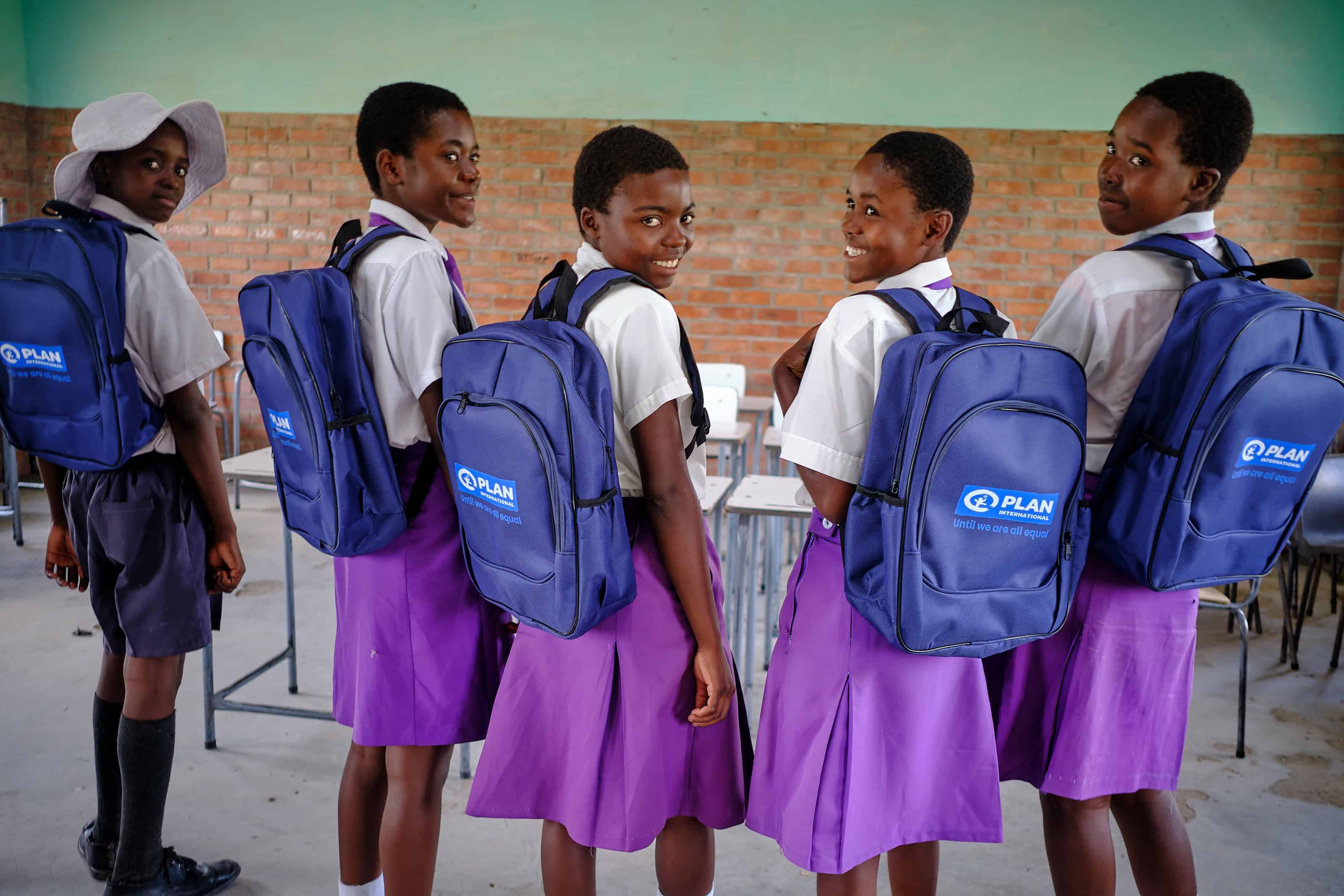
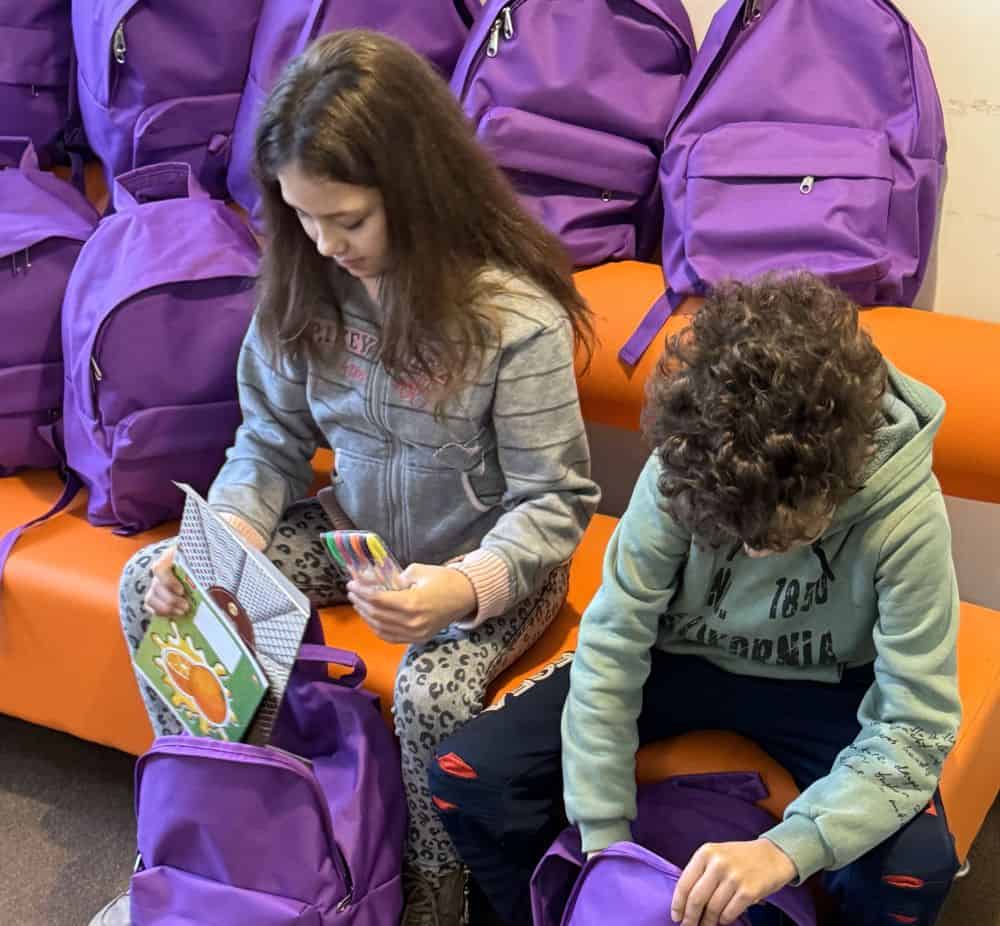
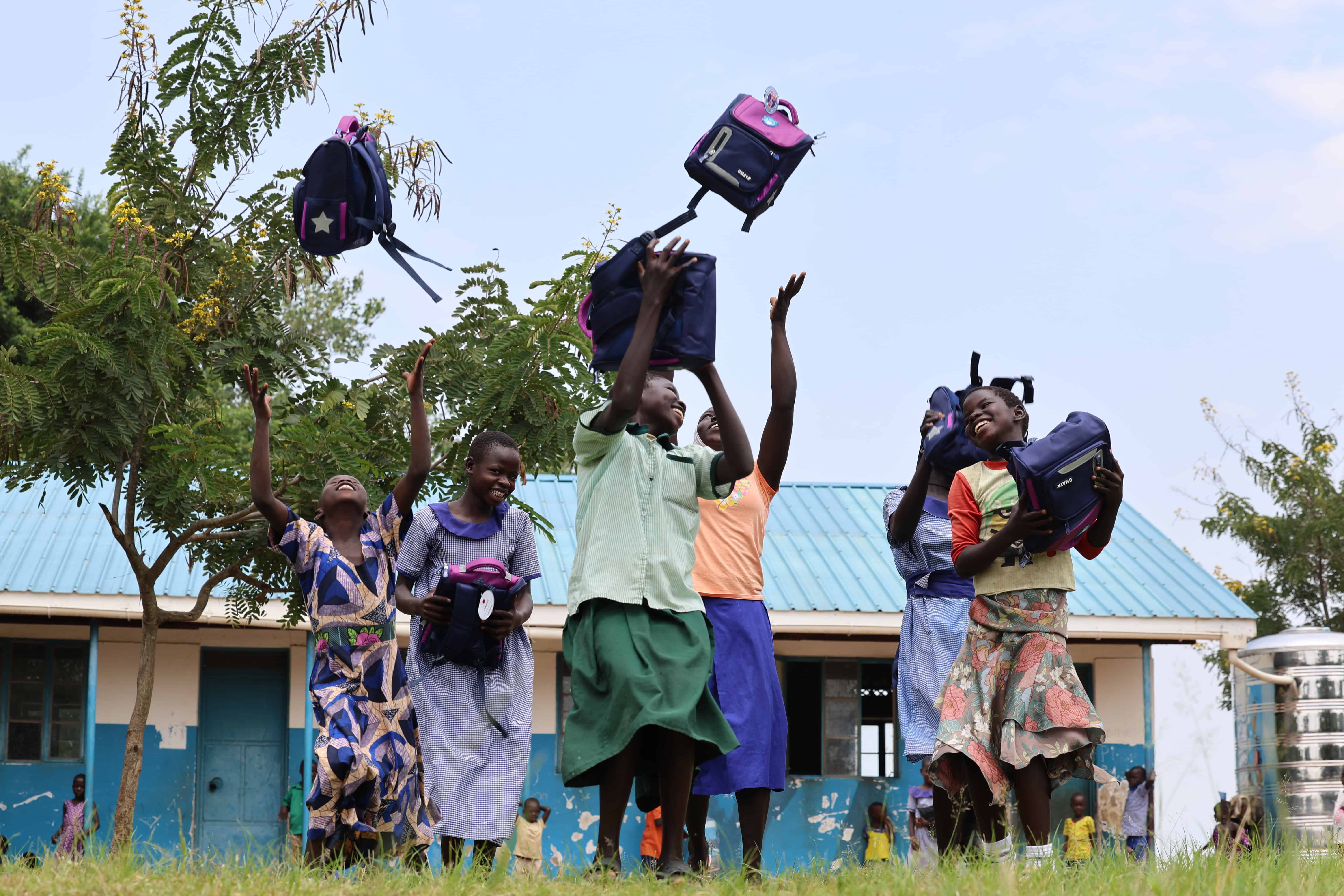
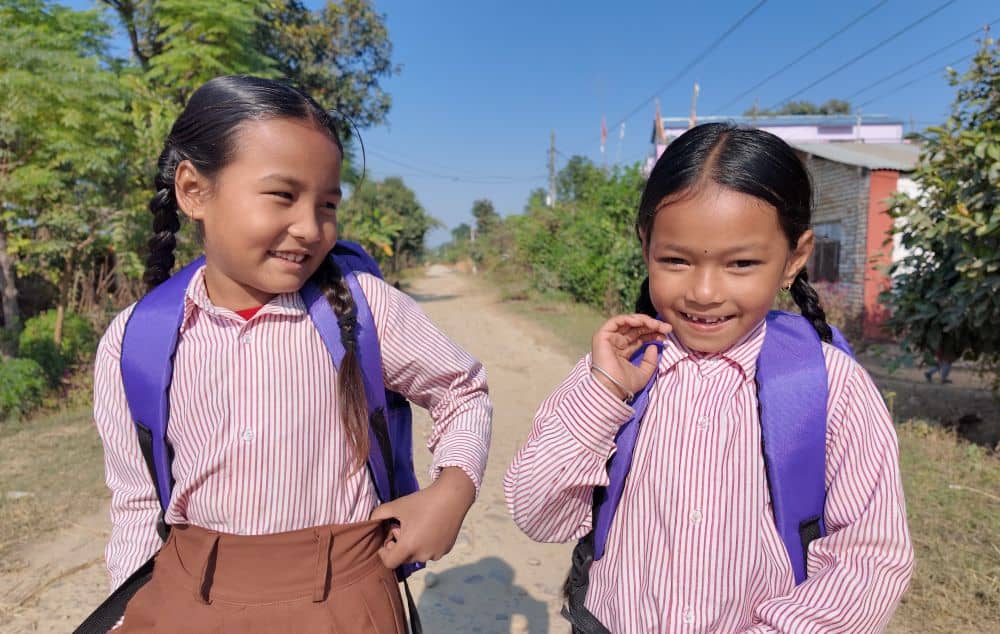
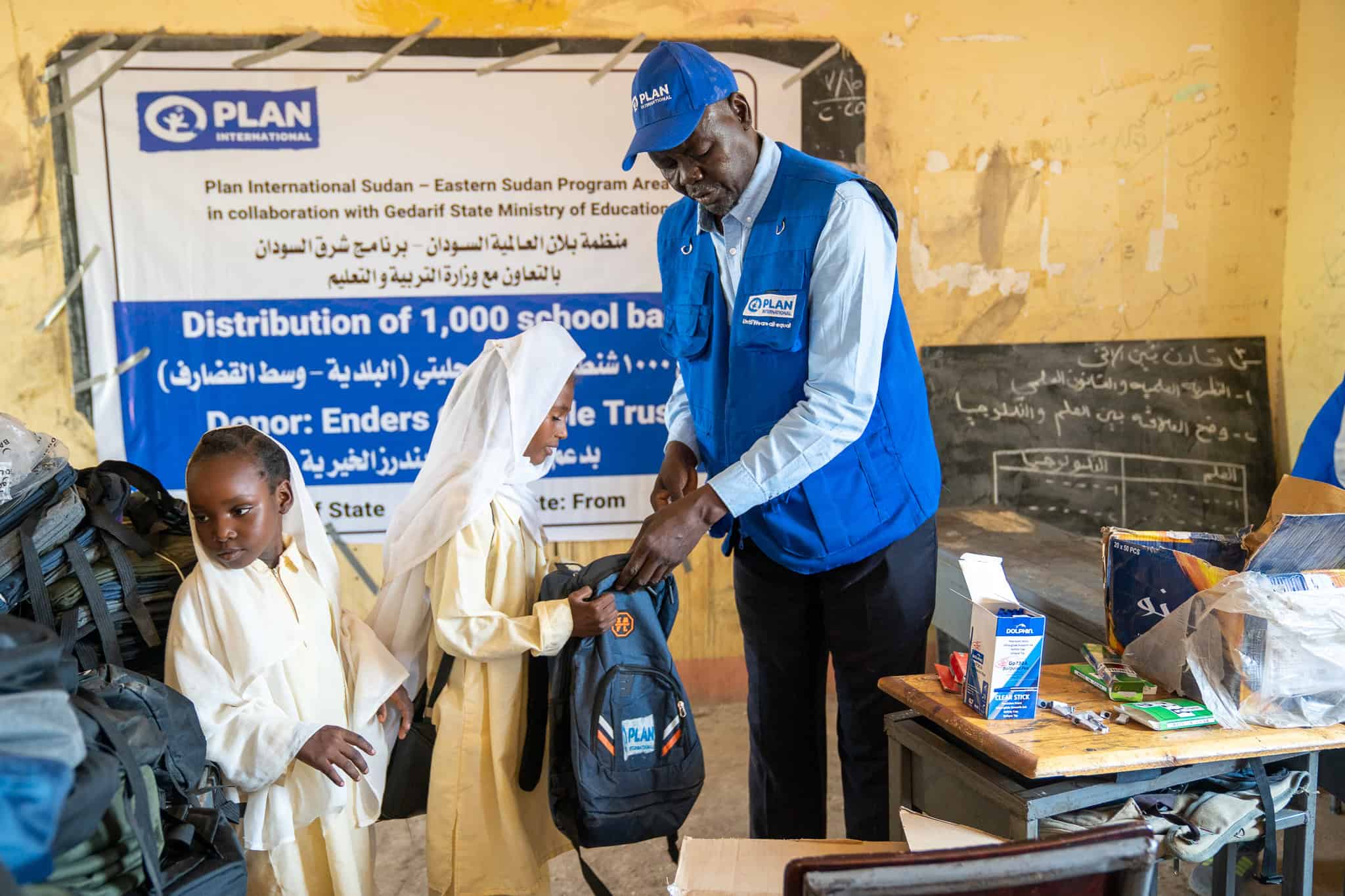
This year, Plan International and Paramount, in partnership with Nickelodeon, launched the next chapter of that campaign with beloved explorer Dora. As classrooms fill for a new school year, purple backpacks filled with essential school supplies are being distributed in Mexico, Indonesia, Lebanon, Uganda and Peru.
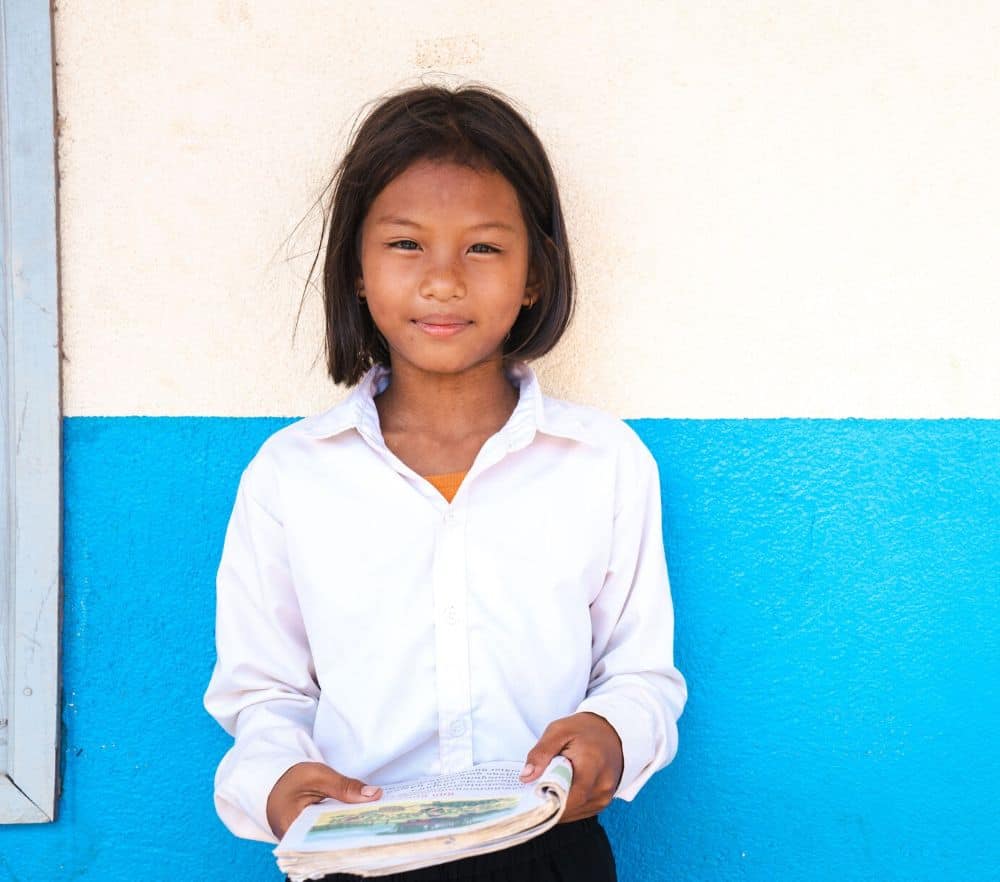
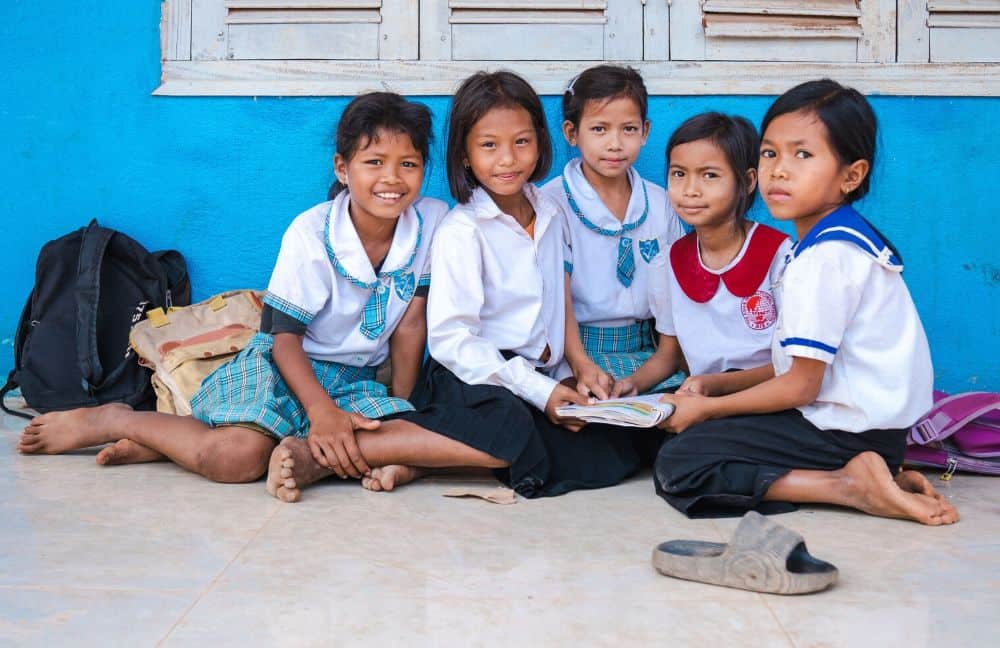
For some girls, back to school means fresh supplies, a safe classroom and time to focus on their studies. For others, like 14-year-old Muta in Cambodia, getting an education takes determination that begins long before the school bell rings.
Muta’s day starts at 4 a.m., when she washes dishes, fetches water and prepares breakfast before walking nearly five miles to class. After school, she cares for her baby brother, helps with the family’s cashew and cassava harvest and cooks dinner. There’s little time left for homework — but she’s determined to keep learning.
For many girls like Muta, the barriers to education are steep: household chores, long distances to school, family finances and cultural beliefs about the value of educating girls. Globally, 129 million girls are out of school.
Plan is working with local partners in Cambodia to help girls stay in school by providing bicycles to make the journey easier, scholarships to cover costs and catch-up classes to help them keep pace. Thanks to her bike and catch-up classes, Muta’s reading, writing and math skills have improved.
“My teacher is very nice,” Muta says. “She spends a lot of her time teaching me. My results are getting better, and I am now 13 among 20 children in my class.”
Muta’s story is just one example of how access to school can change the trajectory of a girl’s life. When girls have the tools and opportunities to learn, lead, decide and thrive, the impact reaches far beyond the classroom — strengthening entire communities.
From the first day of school to graduation, here are five ways education transforms girls’ futures — and strengthens entire communities:
1. Girls break the cycle
Education gives girls the knowledge and confidence to recognize their rights and make informed choices, reducing the likelihood of child marriage or trafficking. Educated girls often become role models and leaders in their communities.
Completing high school boosts women’s earning power by nearly 50%. When women earn more, they reinvest in their families’ health, education and wellbeing.
If every girl received 12 years of quality education, women’s lifetime earnings could increase by as much as $15 trillion globally — driving prosperity for everyone.
School builds critical thinking, confidence and leadership skills. Educated girls grow into women who challenge harmful practices, advocate for equality and inspire the next generation.
When girls learn, they open doors for everyone. Educated women work to make their communities better for all by championing access to resources, opportunities and decision-making power.
Kimberly‑Clark Launches Enhanced Global Partnerships to Advance Essential Care for 24 Million Women and Girls
DALLAS, Oct. 9, 2025 — Kimberly‑Clark Corporation (NASDAQ: KMB) is deepening its commitment to advancing essential care for women and girls through four enhanced strategic, charitable partnerships. Through new programs with Baby2Baby, Plan International, Project HOPE, and UNICEF, Kimberly‑Clark aims to expand access to life-changing care in Brazil, Peru, China, India, Indonesia, Vietnam, and the United States. Taken together, these partnerships will work to improve the lives of an estimated 24 million women and girls over the next three years.
Experience the full interactive Multichannel News Release here:
This announcement is a direct result of the Kimberly‑Clark Foundation‘s recent sharpening of its strategic focus: to advance essential care for women and girls on their journeys through puberty and motherhood. The foundation will fund this three-year, $28.7 million commitment, which focuses on menstrual care and maternal & infant care.
Women’s Health Remains an Urgent Issue around the World
Every seven seconds, a woman or infant dies during or shortly after childbirth, according to the World Health Organization. Furthermore, approximately 500 million women and girls lack access to resources to manage menstruation, as reported by the World Bank. Despite the difficult landscape, opportunities to uplift women and in turn — entire communities — abound: according to the World Economic Forum, “Investment in women’s [health] is unrivaled in its return on the investment for the health of all of society.”
“We envision a world where women and girls everywhere can receive equal access to the fundamental care they need to thrive,” said Mike Hsu, Chairman and Chief Executive Officer of Kimberly‑Clark and President of the Kimberly‑Clark Foundation. “Kimberly‑Clark invented the feminine care category in 1921, and we’ve remained committed to advancing care for women and girls ever since. From developing innovations that meet our consumers’ unmet needs to deploying strategic social impact programming, we take great pride in our responsibility to work to improve the lives of the communities we serve. Now, we’re aiming to accelerate our impact because we know Better Can’t Wait.”
The programs funded will focus on supporting underserved communities. Key initiatives will include menstrual hygiene and stigma-breaking educational programs for adolescents; programs to expand access to safe sanitation solutions; comprehensive perinatal and newborn care services; maternal mental health supports; and programs aimed at strengthening health systems to improve outcomes for the most vulnerable.
Transformational Partnerships to Deliver Better Care for a Better World
Kimberly‑Clark’s alliance with Baby2Baby to provide essential baby items for families living in poverty began in 2011 as the nonprofit organization’s first corporate partner. In 2024, the company’s Huggies® brand deepened this commitment by supporting Baby2Baby’s initiative to address rising maternal mortality rates in the U.S., in partnership with the U.S. Department of Health & Human Services. Through the distribution of Maternal Health & Newborn Supply Kits, the program addresses the critical intersection of diaper need, newborn health and maternal mental health.
“We are deeply thankful to our longtime partners at Kimberly‑Clark and their Huggies brand for their unwavering support. Thanks to their extraordinary donation and three-year commitment, we will make a greater impact in the fight against maternal mortality,” said Baby2Baby Co-CEOs Norah Weinstein and Kelly Sawyer Patricof. “With their help, we are expanding our efforts to deliver supplies to new mothers across 15 states, ensuring they have the basic essentials they need for themselves and their babies, especially during the often overwhelming postpartum period.”
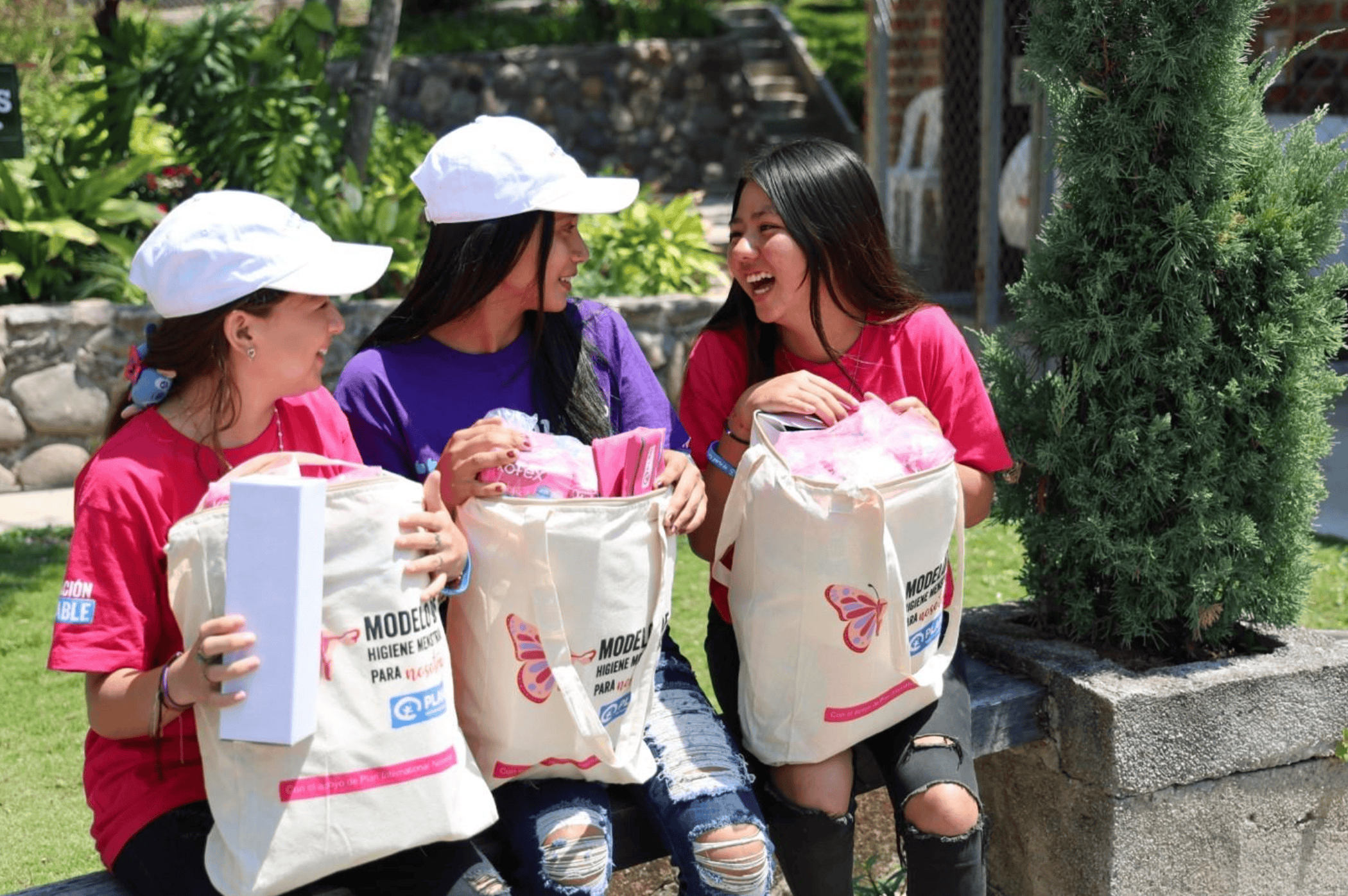
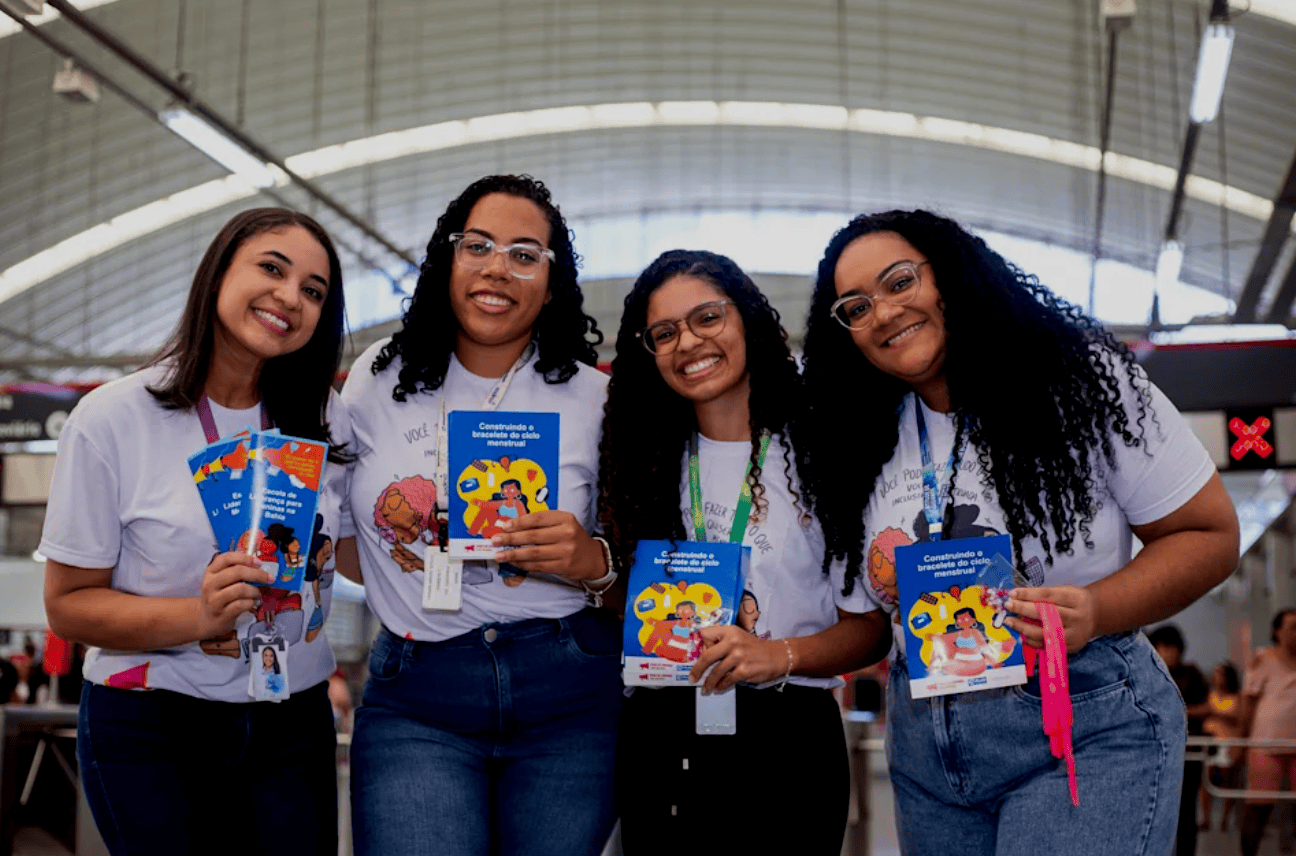
Since 2020, Plan International and Kimberly‑Clark, alongside its Kotex® brand, have reached an estimated 11 million people through programs that support girls’ menstrual health. This evolved partnership serving the U.S., Brazil, China and Peru will create period-friendly community and school environments by ensuring access to supplies, bathroom facilities, and education that empowers girls to manage their periods with confidence and dignity.
Plan International has worked with Kimberly-Clark in Brazil since 2020, reaching more than 1 million individuals. Credit: Plan International
“With over 80 years of experience championing opportunity for girls, Plan International knows that menstrual health is key to unlocking girls’ potential,” said Kate Ezzes, Vice President of Program Development at Plan International USA. “We also know lasting change happens when boys are engaged as allies. Our partnership with Kimberly‑Clark helps dismantle harmful taboos and ensures every child can learn, lead, decide and thrive.”
Kimberly‑Clark’s partnership with Project HOPE will expand access to menstrual and maternal health for women and girls in China and Indonesia. The initiative focuses on menstrual hygiene education, respectful maternity care, and mental health support. Through a life-cycle approach, the program empowers individuals from adolescence through pregnancy and early motherhood with education, digital tools, and compassionate care.
“Kimberly‑Clark and Project HOPE share a deep commitment to a world where women and girls have access to the care, dignity, and opportunities they deserve,” said Dr. Uche Ralph‑Opara, Chief Health Officer at Project HOPE. “Kimberly‑Clark has long been part of our journey, supporting our work through product donations and core mission support that have helped expand access to essential health services for women and girls across the globe. This next phase of our partnership takes that impact even further through a holistic approach that supports women and girls at every stage — from a girl’s first period, to pregnancy, childbirth, and beyond. Together, we’re investing in education, mental health, capacity-building, and advocacy to drive sustainable, systemic change.”
Over the course of an almost 25-year relationship, Kimberly‑Clark and UNICEF have worked together to improve the health and well-being of babies, girls, and women in 26 countries. Now, that legacy continues through a new multi-region initiative focused on menstrual hygiene education and access for girls and maternal health for young mothers across Brazil, India, Indonesia, Peru, and Vietnam.
“Since 2001, our partnership with Kimberly‑Clark has empowered close to 14 million children and adults through the provision of neonatal healthcare, early childhood development, clean water, sanitation and hygiene, and lifesaving services during emergencies,” said Kitty van der Heijden, UNICEF Deputy Executive Director, Partnerships. “We are grateful that this transformative partnership for girls and women is now deepening to save even more lives, deliver services that promote dignity and create lasting impact for future generations.”
While some of these charitable partners are long-standing collaborators with Kimberly‑Clark, this marks a new chapter in how these organizations work with the foundation. By aligning around two critical impact areas — menstrual care and maternal & infant care — as part of the foundation’s new strategic focus, these partnerships address interconnected challenges that are often treated in isolation.
This integrated approach reflects the full continuum of care, recognizing the deep links between menstrual health, maternal wellbeing, and infant development. As a company whose brands already serve these populations with essential products like diapers and feminine hygiene solutions in each of these regions, Kimberly‑Clark is strategically positioned to make a meaningful impact, at scale, through these partnerships.
“We seek to lead with care in everything we do,” said Russ Torres, President and Chief Operating Officer of Kimberly‑Clark. “‘We Care’ is, in fact, one of our three core values. Whether it’s caring for our people, our customers, our consumers, or the communities in which we live and operate, care is at the heart of Kimberly‑Clark. These strategic partnerships enable us to extend this value even further as we work to ensure women and girls around the world receive the essential support they deserve.”
The Kimberly‑Clark Foundation’s enhanced focus on caring for women and girls is one of the many ways the company works to live its purpose of Better Care for a Better World. It is also aligned to the company’s Powering Care business strategy and will directly contribute to delivering on Kimberly‑Clark’s global ambition to positively impact 1 billion lives by 2030. To learn more about Kimberly‑Clark’s 2030 ambition and the work of the Kimberly‑Clark Foundation, visit https://www.kimberly-clark.com/en-us/sustainability/2030-ambition.
About Kimberly‑Clark
Kimberly‑Clark (NASDAQ: KMB) and its trusted brands are an indispensable part of life for people in more than 175 countries and territories. Our portfolio of brands, including Huggies, Kleenex, Scott, Kotex, Cottonelle, Poise, Depend, Andrex, Pull-Ups, Goodnites, Intimus, Plenitud, Sweety, Softex, Viva and WypAll, hold No. 1 or No. 2 share positions in approximately 70 countries. Our company’s purpose is to deliver Better Care for a Better World. We are committed to using sustainable practices designed to support a healthy planet, build strong communities, and enable our business to thrive for decades to come. To keep up with the latest news and learn more about the company’s more than 150-year history of innovation, visit the Kimberly-Clark website.
About the Kimberly‑Clark Foundation
Established in 1952, the Kimberly‑Clark Foundation is the charitable arm of Kimberly‑Clark Corporation and is dedicated to supporting global causes that create lasting social change. Funded by the corporation, the foundation’s primary focus is on social impact investments that help advance essential care for women and girls on their journeys through puberty and motherhood.
About Plan International
Plan International is a global nonprofit that advances children’s rights and equality for girls. Working together with children, young people, supporters and partners, we strive for a just world, tackling the root causes of challenges children face. We are there from birth until adulthood, and we support children to prepare for and respond to crises and adversity, focusing especially on girls’ experiences in more than 80 countries.
A long-overdue moment of hope for children in Gaza
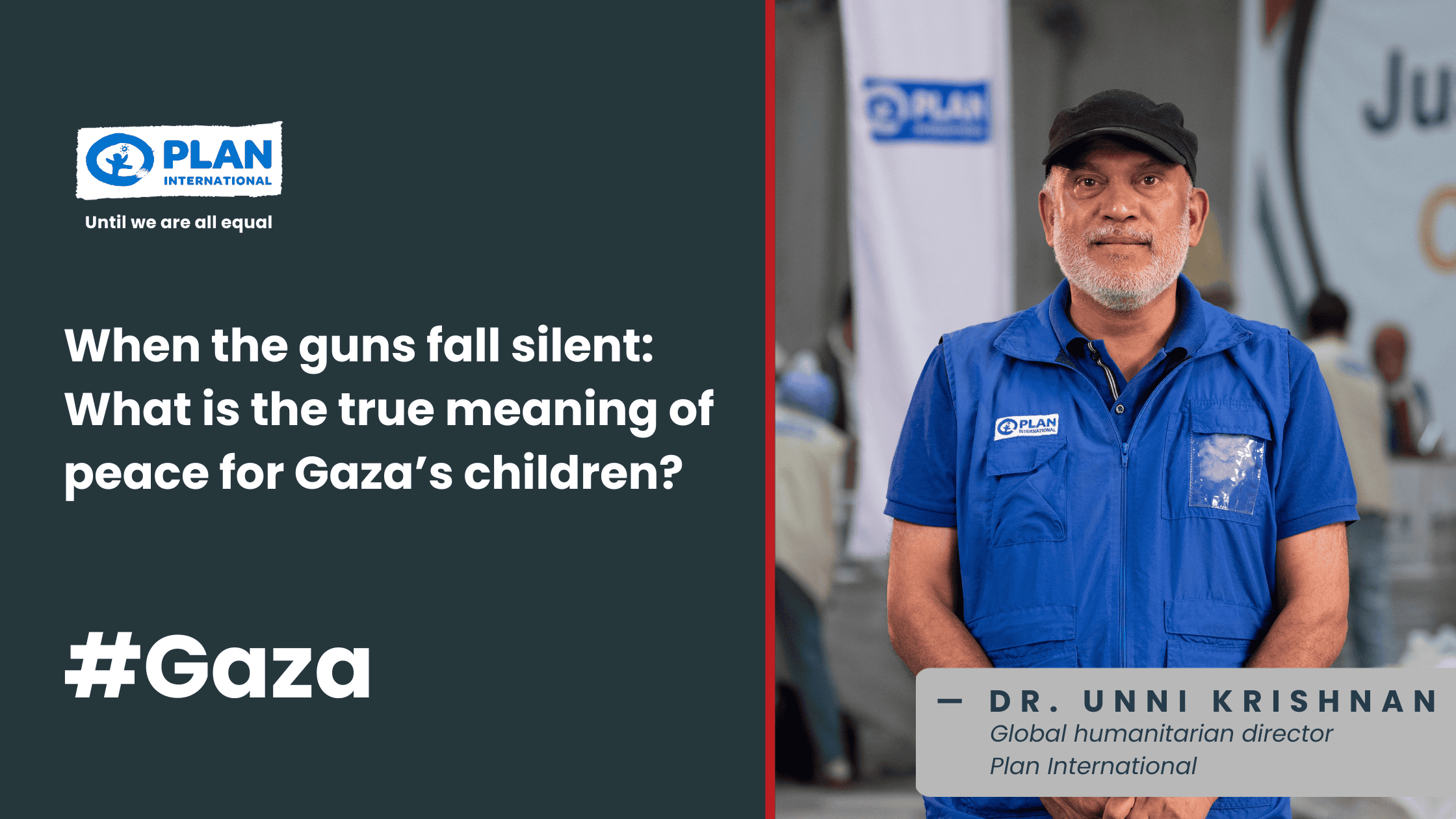
Following the announcement of a ceasefire agreement in Gaza, Dr. Unni Krishnan, Global Humanitarian Director at Plan International, said:
“This is a long-overdue moment of hope for children in Gaza. For two years, the people of Gaza have endured relentless suffering. More than 67,000 people have been killed, including 20,000 children, with many more injured, missing, or detained.
“Plan International welcomes this step. We hope it will be followed by a permanent and sustainable ceasefire that allows Gaza’s children to live, heal, and dream again — and offers the Palestinian people their full rights, in line with UN General Assembly and Security Council resolutions.
“A ceasefire will stop the bombs and missiles, but the humanitarian need in Gaza today is immense. Without urgent, lifesaving aid and access, people will continue to die from hunger, dehydration, and a lack of medical care. Saving lives means more than silence on the battlefield — it means immediately scaling up humanitarian relief.
“It is vital that the UN and trusted humanitarian agencies are granted immediate and unconditional access to deliver critical supplies to Gaza at scale. Border crossings must open without delay or restrictions — the current trickle of trucks is nowhere near enough to meet the scale of this emergency.
“Children in Gaza have heard too many broken promises. The collapse of past ceasefires has only deepened their fear and eroded trust. World leaders must not fail them again. Only a permanent ceasefire can protect this generation and pave the way for lasting peace.
“Plan International and our partners are ready to expand our humanitarian operations — but we need full, unhindered access for both humanitarian workers and supplies. We hope this ceasefire marks the beginning of sustained support and justice for the people of Gaza.”
For further information or interview requests, please contact:
Vannette Tolbert, Senior Manager, Communications, Plan International Tel: +1 240.778.9077, Email: [email protected]
About Plan International
Plan International is an international development and humanitarian nonprofit that advances children’s rights and equality for girls. Working together with children, young people, supporters and partners, we strive for a just world, tackling the root causes of challenges children face. We are there from birth until adulthood, and we support children to prepare for and respond to crises and adversity, while particularly focusing on the experiences of girls. With more than 85 years of experience, we work to transform lives in more than 80 countries. We won’t stop until we are all equal.
For more information, please visit www.PlanUSA.org.
A recent profile in The Chronicle of Philanthropy showcases how Plan International is promoting access to education during crisis — highlighting our work in Somalia, where we’ve partnered locally to help children stay in school despite severe drought. The article, part of the publication’s “Face of Philanthropy” series, underscores how our mission to advance children’s rights and equality for girls remains vital in the face of overlapping humanitarian challenges.
The Chronicle also recognizes Plan International USA as one of America’s top fundraising organizations — ranking No. 14 on its 2025 list of America’s Favorite Charities. The piece positions Plan as a powerful example of how nonprofits can deliver both impact and donor trust in today’s philanthropic landscape.
The Chronicle of Philanthropy has released its 2025 ranking of the 100 nonprofits that raised the most private support in the United States. Plan International USA ranks No. 14 on the list, with more than $673 million in annual giving from individuals, foundations, and corporate partners between 2021 and 2023.
The list, compiled with data from Cause IQ, highlights major fundraising trends and performance shifts across the sector. Each organization was evaluated based on three-year averages to account for fluctuations caused by one-time mega-gifts. The data confirms Plan’s position as a trusted global charity that continues to draw strong support for its work advancing children’s rights and equality for girls.