The International Day of Peace celebrates peace as a vital precondition for people to flourish. But what does peace mean for the more than 20 million children who live every day in the shadow of war?
In 2024, a record 20 million children — more than one in five worldwide — lived within 30 miles of violent conflict, more than double the number in the 1990s, according to the Peace Research Institute Oslo (PRIO).
The next year was one of the most violent since the Cold War, with 65 active conflicts across 35 countries, in which 255,000 people were killed. The same year recorded 75 non-state conflicts that killed 14,500 people, while some 756 million women — about one in five — lived near deadly conflict, triple the number in 1990.
For more and more children and young people globally, every day is another 24 hours simply to endure, while learning, playing and growing take a backseat. These are children who try to sleep through blasts of gunfire, live without enough food or water and stand by or hide as loved ones are kidnapped, killed or wounded. They’re often forced to flee with only what they can carry.
In 2024, Plan International asked nearly 10,000 young people living amid conflict what war was doing to their lives and what they hoped their futures might hold. The report that research produced, Still We Dream: Girls and young people living through conflict, drew from those surveys across 10 countries and included more than 100 in-depth interviews with young people in Ethiopia, Cameroon, Colombia, and the Philippines.
More than half the respondents said they had missed school because of conflict and lived in constant worry. Nearly half reported limited access to food and water. More than a quarter said sexual and gender-based violence was a daily risk. Nearly one in five had been asked to join or support an armed group.
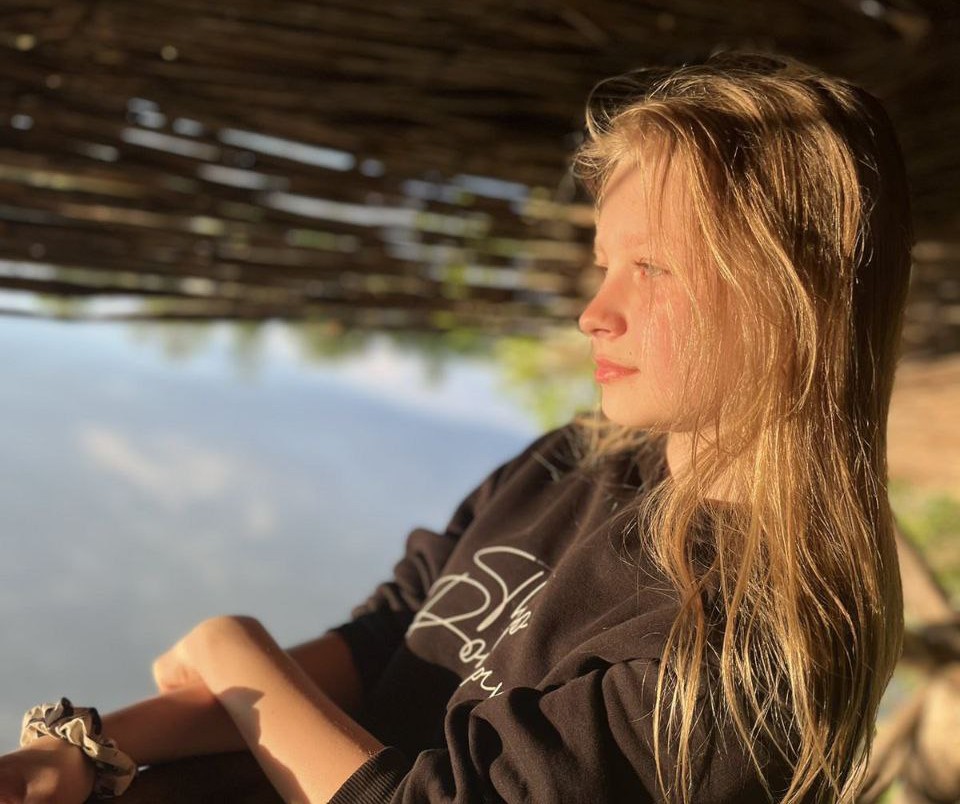
Polina, 12, lives near the front lines of fighting in Ukraine’s war with Russia, near the northeastern city of Kharkiv. Air raids and missile strikes forced her school to move classes online, where power cuts and blackouts often mean no classes at all.
“I miss the regular, in-person lessons,” Polina says. “Of course, when you study online, you can be less stressed, you can get up later, but I like going to school better. I even miss going to the blackboard. I miss meeting my friends there.”
With many schools closed and the public after-school center destroyed, extracurricular activities are also suspended, sharply curbing the time students can spend together.
This is the reality of growing up in war for hundreds of millions of children globally.
The rest of the story
But those numbers tell only part of the story.
These children and young people yearn for peace and security, but they also dream of growing up, making their families proud and pursuing lives and careers they love. They imagine a future in which they’re teachers, doctors, photographers, peacebuilders and agents of change.
With support, they can be the children they still are.
In Ukraine, with Plan International’s support, Polina now attends a safe learning space, which provides educational and psychosocial support to children. There, children can receive speech therapy, take catch-up classes and join sessions aimed at helping children cope with the trauma of war.
“Every day I go there to play games with my friends, draw and take catch-up math lessons that really help me learn better,” she says. Polina finds the program helpful and hopes for a career in photography, which she believes would allow her to see the world from different points of view. She dreams all her loved ones are safe.
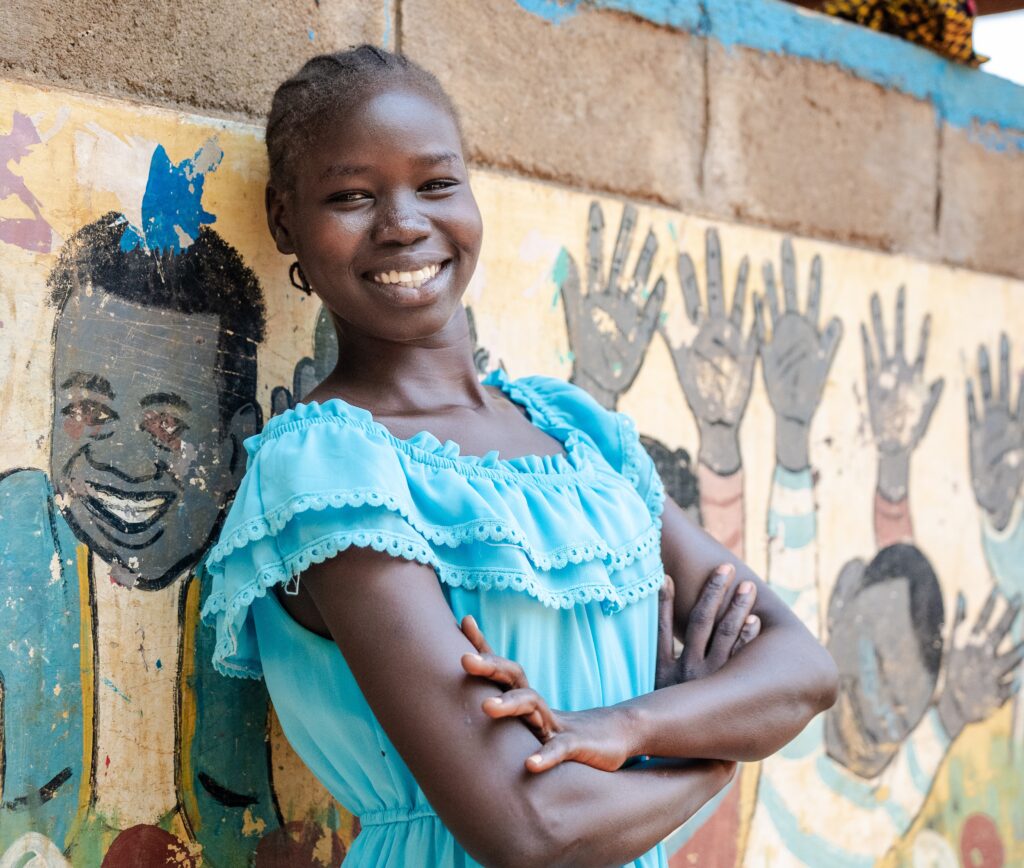
Nyabhan, a refugee from South Sudan, arrived in Ethiopia at age nine. At 19, she served as an adolescent adviser in Plan International’s humanitarian work, helping other young people participate in decisions that affect their lives.
“When I first arrived in 2015, I didn’t think I could make a difference,” she says. “But now I believe I can help others do the same… I want to be a leader in the future.”
In Haiti, Lovelie recalls how she and her family fled their home as armed groups spread through their community. From that moment, their secure and comfortable family life became a succession of temporary shelters. “Armed men started arriving, and we ran,” she says.
Lovelie survived gender-based violence during their escape, which impacted her deeply. But she remains focused on her future. “My first dream is to make my mother proud of me. For my second dream, I want to learn to trade. And third, I want to live well.”
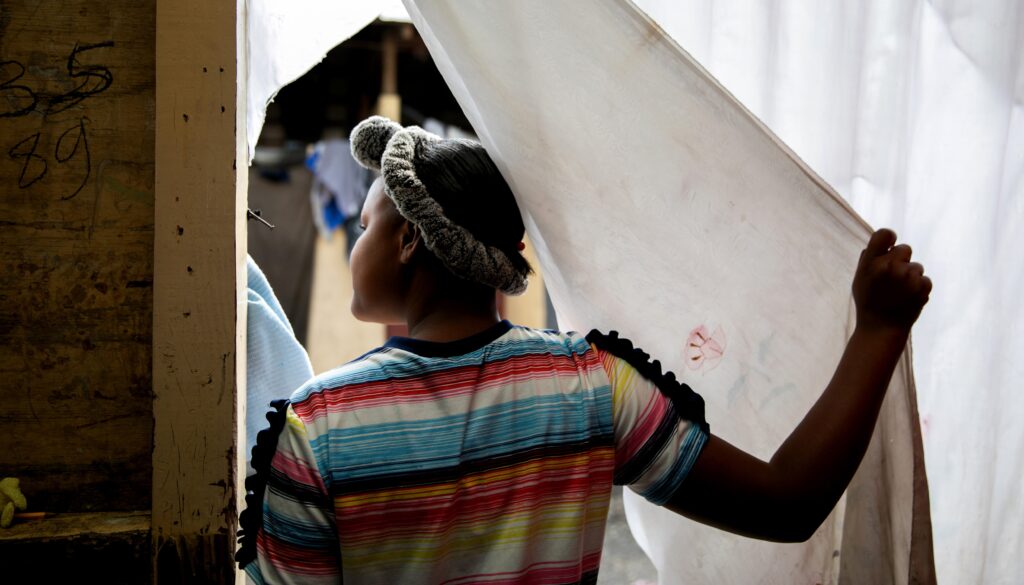
In a country with more than 1 million displaced people, including 550,000 children, Plan International has established child-friendly spaces for traumatized children. These spaces provide more than just physical safety: They provide psychosocial support, recreational activities and education.
“Peace is the greatest thing in the world,” Addi, a young man from Ethiopia, told Plan International researchers who interviewed him for our 2024 report. “Let us preserve it together.”
On this International Day of Peace, we can’t imagine a better wish.