Search Results

Search results for

0 result(s) found

In a study of more than 14,000 girls in 31 countries, Plan International found that 58% of surveyed girls have experienced harassment online. Even further, it found that girl activists face increased online harassment, particularly when speaking about feminism or gender equality, with 47% of respondents reporting being harassed for their opinions.

As a young queer woman, I’m no stranger to receiving hateful comments, unwanted lewd photos and cyberstalking. Domestic and foreign political actors are beginning to take note of this rapidly growing online violence and creating laws and programs to combat it. So, what is the U.S. Congress waiting for?

Given that internet access exists in most places around the world, violence can originate globally and cross borders at an unprecedented rate. With many major digital services companies based in the U.S., addressing online harassment is even more urgent. We have a responsibility to ensure these providers improve their safety measures; otherwise we model that it’s acceptable for other countries to ignore technology-facilitated gender-based violence, too.

With young people becoming increasingly active online and technology becoming ever prevalent in daily life, the U.S. should pass a federal law that makes violence online illegal, too. The growing laws and programming by domestic and foreign political actors to protect girls online demonstrate that this is an increasingly important frontier in politics, international development and grassroots activism alike. And it’s here to stay.

What is TFGBV?

The International Center for Research on Women defines technology-facilitated gender-based violence — TFGBV — as ā€œviolence that is motivated by the sexual or gender identity of the target or by underlying gender normsā€ carried out through a form of technology. This can include stalking, bullying, sexual harassment, defamation, hate speech, exploitation and gender trolling, among other forms of violence. Girls who identify as an ethnic minority, LGBTQIA+ or having a disability may also face increased online harassment because of these intersecting identities.

Who is doing it right?

Thankfully, various political actors are starting to act to protect girls online, and their efforts shouldn’t go unnoticed. For example, the U.S. Department of State recently launched the Global Partnership for Action on Gender-Based Online Harassment and Abuse, which will bring together countries, international organizations, civil society and the private sector to better prioritize, understand, prevent and address TFGBV. The coalition recognizes that online violence transcends borders and screen time. To truly make online spaces safer, we all need to act.

Similarly, President Biden signed a Presidential Memorandum just weeks ago to create the White House Task Force to Address Online Harassment and Abuse. With a focus on women, girls and LGBTQ+ individuals, the task force will ā€œproduce recommendations for the Federal government, state governments, technology platforms, schools and other public and private entities to prevent and address technology-facilitated gender-based violence, including a focus on the nexus between online misogyny and radicalization to violence.ā€

It is also anticipated that there will be a heightened focused on TFGBV and its impacts on girls’ political participation in the updated U.S. Interagency Global Strategy on Gender-Based Violence, which is expected to be release within the next two months. This inclusion would increase U.S. diplomatic efforts around this topic and would also signal future funding and programming on TFGBV in agencies like USAID.

U.S. state governments and select members of Congress also are taking action to curb illegal activity online. For example, Virginia and Texas recently adopted a law which permits individuals to sue someone who sent them lewd content without their consent up to $500 per instance. Senator Michael F. Bennet also introduced a federal bill proposing to create a five-person expert commission responsible for protecting digital consumers, particularly around foreign disinformation, child safety and antitrust laws.

With such focus on TFGBV around the U.S., why hasn’t the U.S. Congress brought this issue to the floor? The U.S. government wouldn’t even need to reinvent the wheel … it can look to the European Commission’s Digital Services Act.

What will the DSA do?

At its core, the DSA will transform how digital service providers, like Meta, Google, Amazon and Microsoft, function throughout the European Union. And, with proper enforcement, the DSA would also improve girls’ physical and mental safety, civic and political participation, and privacy of personal information online. Above all, it’s expected to set the global standard for the future of digital services, impacting each of us.

It moves us away from the idea that online violence exists separate from the ā€œreal world.ā€ It will take measures to counter the spread of disinformation, reduce surveillance and ads targeting minors, and eliminate illegal goods, services and content. In the case of serious repeated breaches, the European Commission can fine companies up to 6% of their total global revenue.

European Commission President Ursula von der Leyen explains that the DSA ā€œwill ensure that the online environment remains a safe space, safeguarding freedom of expression and opportunities for digital businesses. It gives practical effect to the principle that what is illegal offline, should be illegal online.ā€

At an INGO level, Claudia Prettner, legal and policy advisor at Amnesty International Tech, describes that ā€œthe DSA moves us towards an online world that better respects our human rights by effectively putting the brakes on Big Tech’s unchecked power.ā€

For one, the DSA works to make girls safer from harassment and hate speech by increasing content moderation, requiring disclosure of algorithms to auditors and cracking down on the sale of illegal goods, services and content. This includes criminalizing the sale of child sexual abuse images that may be used as harassment or blackmail. These provisions will not only keep girls physically and mentally safer but will also enable their continued social and political participation in online spaces that can often be hindered by harassment.

In addition, the DSA will limit surveillance and ban ads targeted toward minors. This change is crucial because Plan International’s study found that 41% of interviewed girls and young women believe that the unauthorized sharing of content and/or demonstrating knowledge of girls’ personal information is an issue.

What should the U.S. government learn from the DSA?

The DSA challenges exploitative aspects of big tech’s business model to ensure that technology remains human-centered. It shows the world that users can have control over their online experiences when governments choose to empower them. If the U.S. cares about protecting girls and young women like me online, creating a federal law that provides continuity of protections is key.

Overall, the DSA is doing it right. Violence online won’t stop unless we choose to combat it. For young people, receiving an unsolicited lewd image carries the same trauma as being illegally flashed on the street, and it’s far more likely. When we speak about gender-based violence, whether in politics, international development or activism, it must include TFGBV.

Technology develops rapidly and touches each of our lives in many ways. The U.S. Congress must develop federal policies just as quickly to keep the internet and girls, in all their diversity, safe.

PRESS RELEASES

Together, UNIQLO and Plan are highlighting why gender equality is essential to achieving Peace for All

WASHINGTON, DC, December 13, 2022 — Plan International USA, a global nonprofit organization partnering with adolescent girls, young women and children around the world to overcome oppression and gender inequality, is partnering with UNIQLO this holiday season. Plan has been selected as a nonprofit partner for UNIQLO’s Peace for All initiative during the holiday season, which includes matching customer donations up to $25,000 from Dec. 13 through Dec. 27, 2022.

ā€œBy partnering with UNIQLO, Plan is able to work toward a more peaceful world where everyone is able to choose the life they want to live,ā€ said Jen Trainor, chief marketing officer at Plan International USA. ā€œWhen girls are free of discrimination and gender norms, they can change the world.ā€

From now until Dec. 26, customers at UNIQLO will be able to donate to Plan at checkout in all of their U.S. stores. This comes on the heels of online customers being given the opportunity to donate at checkout in honor of Giving Tuesday, where donations were matched dollar-for-dollar, up to $15,000. UNIQLO, a Japanese casual fashion clothing manufacturer and retailer, supports organizations who work with those affected by violence, discrimination, armed conflict and poverty through its Peace for All project.

ā€œWe are very pleased to be partnering with Plan International USA in our combined goals of working toward a more peaceful and equal world,ā€ said Jean Shein, UNIQLO global director of sustainability. ā€œAt UNIQLO, our purpose is to make everyday life better, not only through clothes, but through our contributions to society. We are proud to support Plan and have enjoyed sharing its work with our customers, who have been able to play a part in positively impacting the lives of girls around the world.ā€

The partnership supports Plan’s We Are the Girls campaign, which focuses on fighting gender inequality with girls in more than 75 countries around the world. Launched on International Day of the Girl 2022, We Are the Girls is an innovative, world-changing initiative that will raise $200 million by 2024 to amplify the voices of girls in the U.S. and around the world and fight the root causes of gender inequality. To promote the effort, Plan will be taking over UNIQLO’s social media accounts on Dec. 13 to spread the word on how UNIQLO’s followers can join Plan and help support girls.

This holiday season, shoppers can make their dollars go further with this matching opportunity. You can learn more about Plan at a pop-up installation at UNIQLO’s New York City Fifth Avenue store on Dec. 17-18 or by visiting www.planusa.org/we-are-the-girls/.

Ā 

For more information or interviews, please contact:

Maria Holsopple

Director, Corporate Communications

Email: [email protected]

Mobile: 401.829.2796

About Plan International USA

Powered by supporters, Plan International USA partners with adolescent girls, young women and children around the world to overcome oppression and gender inequality. We provide the support and resources that are unique to their needs and the needs of their communities, ensuring they achieve their full potential with dignity, opportunity and safety. Founded in 1937, Plan is an independent development and humanitarian organization that is active in more than 80 countries.

For more information, and to learn about our commitment to safeguarding, please visit www.planusa.org.

Uniqlo logo

There are two mechanics regarded by their customers as some of the best car technicians in Guinea. The pair are N’Mahawa, age 25, and TeninkĆ©, age 28. Both are women.


Female mechanics at work


Being a girl in a lower-income country like Guinea can mean a lesser chance of completing your education, and a higher chance of becoming a child bride. For girls who are able to finish school, the opportunities in the job market are slim. And for those young women who do land a job, they end up getting paid less than their male counterparts. None of that has stopped TeninkĆ© and N’Mahawa in pursuing their career goals. N’Mahawa’s choice to enter the male-dominated field of mechanics was made after her father tried to force her to become a bride. ā€œAfter taking my school exams twice without success, my father decided to give me in marriage,ā€ she says. ā€œI told him that marriage was not a solution to my problem. I decided to leave home and join my uncle in Conakry.ā€

N’Mahawa, female mechanic


While in Conakry, N’Mahawa saw a training center for mechanics, supported by Plan International, operating to help uplift young people economically — especially women. She approached the building, and that’s when she saw TeninkĆ©. N’Mahawa was taken with Teninké’s passion for both the study of mechanics, and her fervent belief in gender equality. Their friendship blossomed into a business partnership. ā€œTo say that it is impossible for a woman to compare herself to a man is a complete fallacy,ā€ TeninkĆ© says. ā€œMy dream is to surpass men and I think I am in this dynamic.ā€

TeninkƩ, female mechanic


TeninkĆ© and N’Mahawa’s skills learned at the vocational center have made them stand out from other male-run businesses. The two are not only showing young girls that they can follow their dreams, but also changing the minds of men in their community. ā€œThrough them, I have come to understand that women, if given the opportunity, can do better than men,ā€ says Mohamed, one of TeninkĆ© and N’Mahawa’s male customers. ā€œI am even convinced that giving women the right to choose their life in complete autonomy, everywhere in the world, is one of the keys to meeting the challenges of this century.ā€

TeninkĆ© and N’Mahawa


Plan continues to work in Guinea to reduce inequalities within workplaces, households and society. But this requires action on several fronts, including help from people like you. Many of Plan’s vocational training participants are sponsored children; you can help make it possible for a girl to access opportunities like TeninkĆ© and N’Mahawa’s by becoming a child sponsor today. ā€œI invite my female colleagues to have confidence in herself — to become autonomous — because a dependent woman is an enslaved woman subjected to the dictates of men,ā€ TeninkĆ© says. ā€œWe should not accept that. We should not have to wait another 10 years for gender equality. Let’s act now.ā€


Two female mechanics working on a car

Plan International USA’s 2021 Annual Review highlights how evidence, accountability and girls’ leadership shaped our work in a complex global landscape.

2021 Annual Report Cover

Please note this story contains references to sexual violence and abuse which some may find upsetting.


ā€œYou can only have this job if you sleep with me.ā€

That’s what many women in Uganda hear during interviews.

When Jazeo had to drop out of school because her mother couldn’t afford to keep her enrolled, she was desperate to find employment.

ā€œSomeone called my mother and said they had found a job for me,ā€ Jazeo explained. ā€œI was very happy because I had no source of income. I had no options. My sister needed tuition, so I decided to take it.ā€

The job was at a restaurant in Kampala, the capital. The owner knew all about the financial desperation of young women, especially those with relatives to support. And he used this to his advantage. He not only forced Jazeo to have sex with him in order to get the job, but told her, if she wanted to get a raise, she’d have to live with him.

ā€œIt was the only way for me to survive,ā€ she said.

ā€œIt was the only way for me to survive,ā€ Jazeo said.

In Uganda, sexual abuse and exploitation often happens in the workplace — especially in the restaurant industry, where many women work. There, sexual exploitation meets economic exploitation. The pay is low and unreliable, and employees are expected to work long days with no breaks or food.

Another woman, Namusanza, started working at a bar in Kampala after her mother died and her father refused to pay for school fees. She was just 17 years old, and cried when her new boss propositioned her in the interview. He told her, ā€œIt is the role of waitresses in the bar to entice and to please the customers.ā€ In order to keep her job, Namusanza had to have sex with customers.

Joy also faced sexual exploitation at work.

Joy was in a similar situation. ā€œThe owner wanted me to put on attractive clothing and short miniskirts,ā€ she said. ā€œHe wanted me to sit with the customers, to keep them company and allow them to touch my body and kiss me. The boss would beat me if I didn’t allow that.ā€

Uganda image 1

Many young women in Uganda are conditioned to keep quiet about abuse and accept it as just part of their role. If they are brave enough to speak up, they’re often not taken seriously or able to seek justice.

But Jazeo, Namusanza and Joy have had enough. They’re breaking barriers by speaking out against sexual exploitation.

ā€œGirls working at bars are suffering,ā€ Namusanza said. ā€œWe cannot be at the bars because we are treated as animals, as non-human beings. I want the future generation of girls to live a better life. Their rights should be respected.ā€

Joy and Jazeo are both pursuing different career paths — Joy is earning money as a hair stylist and Jazeo saved up to study fashion design.

But what they still have in common is the determination to use their stories to create change.

ā€œThere are many girls who have lost parents, who are orphans, who go to these places to work and are exploited,ā€ Joy said. ā€œIf people hear my voice, they will know that it really exists, and I think action will be done if people hear what I’m saying.ā€

Like anyone else, young women deserve to find fair and safe employment opportunities that are free from exploitation. In some places, that’s harder for women to fight for on their own — that’s when Plan International steps in. As part of our programming in Skills & Work, Plan works with employers and governments to promote gender-inclusive workplaces and make sure there are avenues for reporting rights violations.

Joy is right — raising awareness on this issue is the first big step toward addressing it. Thanks to her, Jazeo and Namusanza, that’s more likely to happen in Uganda. We’re listening. And we hope their bosses are, too — because equality is coming.


The names in this story have been changed to protect the speakers’ identities.

Uganda image 1

Social media can be a dark place for girls, as Plan International’s recent global survey on digital harassment revealed. But something many people don’t realize is that social media can also be a playground for traffickers to target girls. And to sell them.

Traffickers use social media to deceive victims and maintain control over them. These platforms have been a game-changer for traffickers — with this kind of technology at their fingertips, they can reach more people faster and often don’t even ever have to meet their victims in person.

With our lives moving even more online because of COVID-19, we have to be more vigilant than ever. We have to be on the lookout. Because traffickers already are.

Here are 3 facts you should know about how traffickers use social media so you can help protect yourself and others.

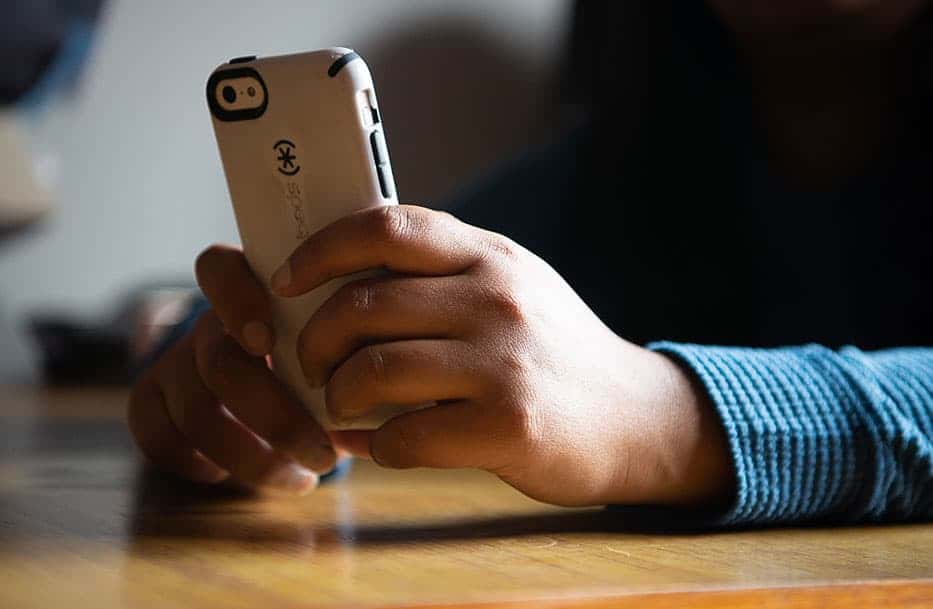
Zoom in on a child's hands holding a mobile phone

1. Traffickers don’t find their victims on social media by accident. They know what they’re doing. They target young people who they believe are vulnerable and could easily be groomed and victimized. How do they make that assessment? Traffickers look for posts that indicate low self-esteem, loneliness or unstable home situations. Then they make their move, empathizing and building trust. Look out for people on social media who seem to know a lot about you or know just the right things to say.

2. They’re professional frauds. These predators sometimes create fake social media accounts so they can portray themselves as friendly and trustworthy. Organized groups even set up fake accounts to pose as employment agencies so they can post bogus job opportunities. And traffickers are out there in the online dating world too — they pretend to be looking for a date in order to start a conversation with new potential victims. Be aware if someone’s profile looks suspicious or if what they’re offering seems too good to be true.

3. It’s all about control. Social media is a unique way that traffickers can control their victims. They might monitor or restrict their use of the platforms to disconnect them from their friends and family — anyone who they might ask for help — leaving them isolated. They sometimes impersonate their victims online, so they can start rumors or share intimate pictures to ruin their reputations. It’s all a means of control, because the more isolated someone is, the more vulnerable they are. Keep an eye out if someone seems to be behaving differently on social media.

When we know how traffickers tick, we’re better able to fight back. And there’s no time to waste — with the pandemic causing a global spike in trafficking and gender-based violence, we need to work together to protect girls now more than ever.

Zoom in on a child's hands holding a mobile phone

Do you want a gender just world? A world where girls and young women in all their diversity, are seen, heard and valued? A world where they can claim power over their bodies, lives and choices? A world where they are able be powerful leaders and shape the world around them?

If yes, this toolkit is for you — young activists, human rights defenders and change makers all over the world. Use this toolkit to design and implement your own campaigns for girls’ leadership and power in your own context.

Cover for Youth Toolkit for Girls Equality

Investing in teenage girls can strengthen the economy, according to a report from Plan International and Citi Global Insights. It causes a snowball effect — when adolescent girls have access to a quality education, the formal labor sector expands, and women’s participation in the market as consumers increases. The return on investment for creating interventions that target women’s education and economic empowerment are too large to ignore. Plan and Citi’s research reveals that if the completion rate for girls’ secondary education were to reach 100% by 2030, the GDP of countries with emerging economies would be lifted by an average of 10%.

Ā 

The economic return of a girl’s education

Graph visualizing the economic return of a girl’s education

What would it cost for low-income countries to reach a full completion rate of secondary education for girls? The answer is $1.53 per girl per day. The report’s analysis determines the low cost for the interventions needed to increase access to education, and address other barriers like child, early, and forced marriages and unions (CEFMU), as well as gender-based violence (GBV). The cost of these intervention scenarios differs by country — the report looks at beginning these investments in 2018, finding that El Salvador would only have needed to spend $1 billion to cover the expenses of girls’ high school education by 2030, while India would have spent nearly $270 billion by 2030 because of its much larger population. If all Indian girls were to finish their secondary education and begin participating in formal employment, though, the country would gain $800 billion annually by 2030 — far surpassing the investments India would need to eliminate barriers to girls’ education.

Barriers to unlocking girls’ potential

Education

The World Bank’s 2016 report found that, in low-income countries, only one in three girls completes their lower secondary education. The same report found that each additional year that a girl stays in secondary school ā€œreduces the likelihood of marrying as a child on average by 6.1 percentage points.ā€ When adolescent girls do not have access to a safe and quality education, they often have little economic agency and participate in precarious, informal work. Barriers to girls’ education leads to early marriages, increased births, a lack of financial literacy and little economic independence from their families.

CEFMU

CEFMU is a direct contributor to the low number of adolescent girls who complete their secondary education. The World Bank estimates that in some countries, CEFMU may account for anywhere from 10-20% of dropouts for girls at the secondary level. A study from UNESCO estimates that if 100% of girls completed their secondary education in low-income countries, CEFMU rates would drop 64%, and 59% fewer girls would become pregnant. The report found that the economic responses to these drops in CEFMU and early births are enormous.

  • In Niger, reducing early childbirth could produce an additional $1.7 billion annually by 2030.
  • In Nigeria, the gain from ending child marriage could reach $7.6 billion annually, while in Bangladesh it could produce up to $4.8 billion annually.
  • For every dollar spent on holistic interventions that protect adolescent girls and increase their access to secondary education in lower- to middle-income countries, a $2.80 return could be seen.

These numbers account for the money countries lose annually when women do not take an active role in the formal workforce and there is a correspondingly high population growth rate. When eliminating CEFMU and early childbirth, as well as ensuring adolescent girls are provided with a quality, secondary education, more women can enter the workforce and population growth can be reduced.

Violence and access to resources

Various forms of violence and abuse, such as intimate partner violence and trafficking, can also seriously harm adolescent girls’ likelihood of completing their secondary education and participating in the formal labor force. Plan International recently interviewed 7,000 adolescent girls and boys from 11 countries about issues they faced, and one-third of adolescent boys and girls said they agreed that girls never or seldom feel safe on their way to or from school. With other barriers to girls receiving education already deeply entrenched within societies globally, this particular effect of violence is detrimental.

Support for keeping girls in school

Low-income countries have much to gain from investing in girls, even if it takes more time to see greater returns. Uganda and Mali, which both have high rates of CEFMU driven by poverty and gender inequality, would need a decade’s worth of interventions before their GDPs finally saw resulting growth, but the projected increase could be 18-20%. When achieving high school education for girls by 2030 has the potential to lift national GDP levels by such large numbers, how can we not respond to the call to keep girls in school?

Along with many in the international development sector, Plan has been at the forefront of the fight to ensure adolescent girls complete their education by rallying behind important pieces of legislation like the Keeping Girls in School Act. Recently reintroduced in Congress with bipartisan support, the bill commits to ensuring girls’ education is a priority internationally, and that a U.S. strategy is in place to eliminate barriers that prevent girls from attending school. The bill requires the U.S. to join grant programs that address the barriers to girls’ education, listing 15 roadblocks that girls and women face throughout their lifetime. Among these roadblocks, the bill lists CEFMU, early pregnancy, cost of secondary school and lack of safety when going to and at school — all of which the Citi/Plan report included in its cost analysis.

Recommendations

  1. USAID must update its education and gender strategy to recognize the enormous economic benefits of girls finishing secondary school.
  2. Bills that protect adolescent girls, like the Keeping Girls in School Act, must gain enough momentum in Congress to become law.
  3. Girls’ education should be central to the U.S. government’s global COVID-19 strategy and to the work of the new White House Gender Policy Council.

Armed with the new analysis this report provides — when girls graduate from secondary school, GDP will rise by an average of 10% — global gender equality champions have new data to strengthen their advocacy with the most senior U.S. government decisionmakers.

For more articles of this nature, sign up for Insights, a quarterly newsletter that highlights the technical work of Plan International USA.

Group of girls holding a sign that reads "Break the barriers to girls' education"