Search Results

Search results for

0 result(s) found

In the fight for gender equality, the terms equality and equity are sometimes used interchangeably, leaving people to think they mean the same thing. While they are two sides of the same coin, they actually refer to different things.

Equality is the principle that everyone should be treated the same way, regardless of their gender, race, sex, religion and other characteristics. So, gender equality is the idea that people of all genders should have the same rights, access to resources and opportunities for success.

Equity, however, refers to providing each person with what they need to achieve success and equality to others. The idea is that people have different needs and experiences, and those differences need to be considered to achieve fairness. In the context of fighting for gender equality, equity looks like addressing the specific and unique challenges girls and young women face, like gender-based violence and child marriage. It also considers intersectional identities, like race and class, and how they impact girls’ individual experiences.

At Plan, our work for gender equality around the world includes using equity measures to address the unique challenges girls are facing. And we believe the best people to lead in addressing those challenges are girls themselves. That’s why we’ve developed an entire program approach, GirlEngage, to make sure girls have direct input in developing the solutions that will change their lives for the better.
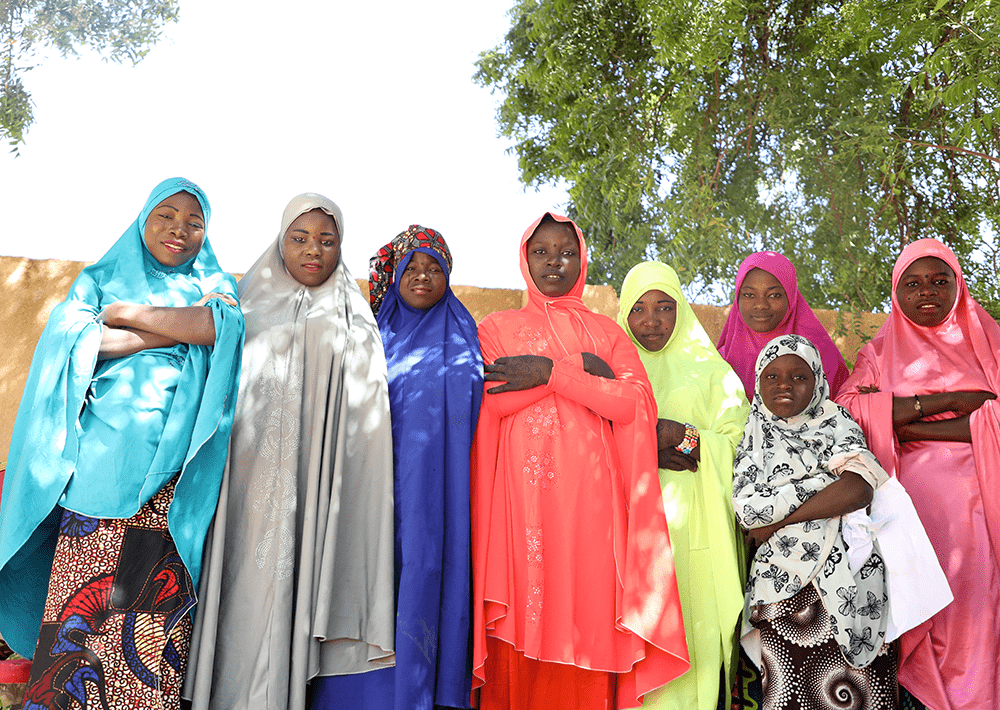
 

Eight girls from Niger wearing colorful shawls and headscarves stand together with their arms crossed.

Girls in a Plan project in Niger formed a steering committee to oversee activities that support an end to child marriage in their communities.

Let’s consider how achieving equality in education involves gender equity. While poverty affects all children’s ability to go to school — and the goal of gender equality is to ensure every child can do so — girls face particular barriers that make education even more difficult to access.

[Read more: ā€œI am sure that I will finish high schoolā€: How sponsorship makes a difference]

Girls are more likely to be pulled out of school and forced into marriage. They’re expected to become homemakers instead of pursuing a career. Without access to resources like clean water and period products, they can’t manage their periods at school and instead have to stay home. Extended absences from school often lead to girls dropping out altogether because they don’t have support to catch up if they fall behind. And stereotypes about girls’ abilities discourage them from pursuing academic achievement.Ā Ā 

These are just a few things that keep girls from a quality education.

In many communities in Bangladesh, talking about menstrual health, sexual and reproductive health and rights, and adolescent health is taboo. Girls grow up without the information they need to make informed decisions about their bodies, and they don’t have the resources necessary to care for their bodies, either.

There are no laws explicitly prohibiting girls from going to school in Bangladesh, which means technically there is legal equality. But using an equity lens means acknowledging that there are still factors separate from the law that specifically hinder girls’ access to school. Addressing these issues is necessary to achieving equality in all spheres of life.

ā€œThe girls need to know about the basics of [menstrual health management], so that they can adopt them into their lives and stay safe,ā€ Abdul, a teacher in Bangladesh, says. ā€œOtherwise, they will be at risk of facing serious health issues and may drop out of school.ā€


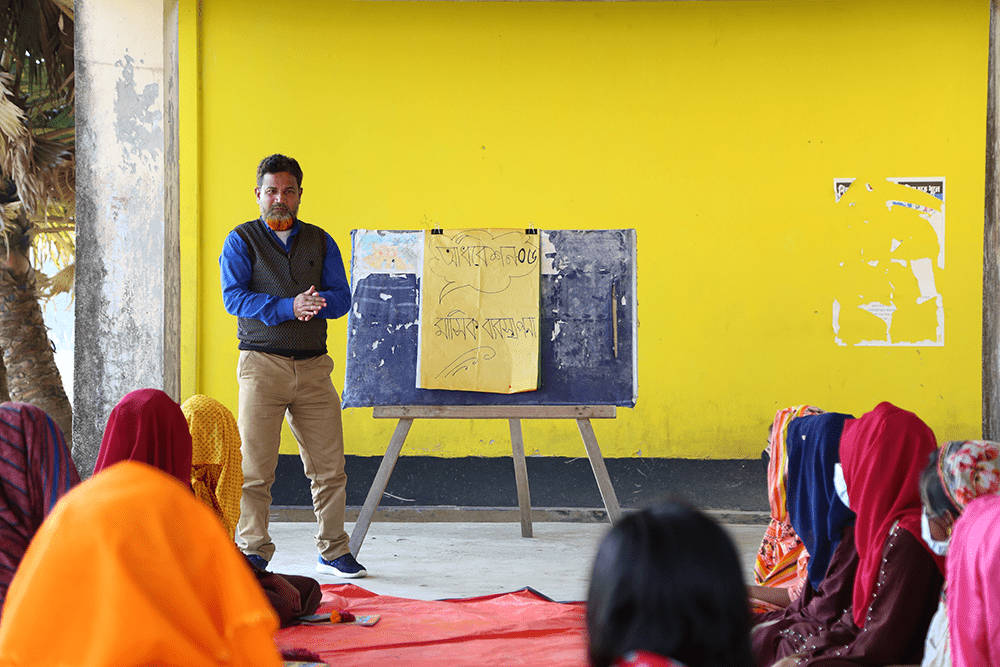
Abdul gives a lecture to girls in his class in front of a small, rectangular chalkboard perched on an easel with a large piece of paper clipped to it.

Even before getting involved with Plan, Abdul noticed inequities that hinder girls’ ability to thrive at school. ā€œThis is a coastal region,ā€ he says. ā€œMost of the girls come from lower-income families. They do not even have the ability to buy [menstrual] pads.ā€

Abdul attended a training organized by Plan on a gender equity education model, where he learned about gender, sexual and reproductive health and rights, and adolescent and menstrual health management.

Now, he teaches all of his students about these topics in a sensitive and inclusive way so that everyone has the knowledge they need to take care of their own health. And, with the support of other teachers and the school management committee, there are now pads available for girls to use when they get their periods.


Four girls from Bangladesh stand together and hold peace signs up to their faces.

Girls from Abdul’s school now have period products available to them while they’re in class, meaning they don’t have to stay home when they get their periods.

Addressing menstrual and reproductive health so adolescent girls can safely and confidently manage their periods at school (and at home) eliminates a barrier that keeps girls from their education. For girls in communities like Abdul’s, in order to achieve equality in education, equity must also play a part.

Girls from Abdul’s school now have period products available to them while they’re in class, meaning they don’t have to stay home when they get their periods.

PRESS RELEASE

Plan International USA partners with brands and policymakers to reaffirm girls’ rights

WASHINGTON, DC, March 7, 2023 — As a girls’ rights organization, Plan International USA believes when girls lead the way, they can change the world. In honor of International Women’s Day on March 8, Plan is partnering with brands and government stakeholders so that girls can take over positions of leadership, ensuring the voices of these young women and girls are heard in the critical conversations on gender equality.

ā€œGirls and young women are leaders today,ā€ Plan International USA’s President & CEO Shanna Marzilli said. ā€œGiving girls, in all their diversity, not just a seat at the table, but a respected and heard position is necessary to building a world where women can thrive in all aspects of leadership.ā€

In celebration of International Women’s Day, Plan partnered with Bank of Montreal, UNIQLO and Vertex to host Takeovers, where our youth leaders, ranging from ages 16-22, step into executive positions for a day. Plan Youth Advisory Board member Rose became chief administrative officer and general counsel of Fast Retailing USA, Inc, the parent company to UNIQLO. During her Takeover experience, Rose leveraged her experiences leading diversity and inclusion recruitment for Plan’s youth programs to provide recommendations for UNIQLO’s women’s networking group. The Takeover was an extension of UNIQLO’s global partnership with Plan International as part of the brand’s PEACE FOR ALL project.

ā€œWe loved welcoming Rose to UNIQLO for International Women’s Day, sharing an inside look to our stores and headquarters, and the many talented women leading the way here,ā€ Chief Administrative Officer and General Counsel of Fast Retailing USA Serena Peck said. ā€œRose’s insights as a youth advocate provided an incredibly valuable perspective that will help us continue to grow and elevate women’s voices. We’re happy to have deepened our work with Plan International USA in our shared vision for a better world for all.ā€

At Bank of Montreal, Plan youth advocate Ava stepped into the role of Chief Communications and Social Impact Officer Kimberly Goode. Along other BMO executives, Ava took the stage at a culmination event for Black History Month where she shared her experiences.

ā€œBMO is a long-term sponsor of Plan International in the U.S. and Canada, partnering to create opportunities to build confidence in young women and provide exposure to those actively working to create zero barriers to inclusion,ā€ Chief Communications and Social Impact Officer at BMO Kimberley Goode said. ā€œWatching Ava step into my seat gave me such confidence in the impact the next generation will have. They are ready to live their purpose and boldly grow the good in business and life as future leaders.ā€

In addition to Takeovers, Luna Silvana AbadĆ­a, a Youth Advisory Board member at Plan, will be a U.S. delegate for the U.N.’s Commission on the Status of Women. CSW67 will examine the role technology plays in achieving gender equality. Silvana AbadĆ­a will represent the views of girls all over the world through the results of Plan’s State of the World’s Girls report, which highlights the effects of online gender-based violence.

ā€œAs an activist and young person, I use social media every day,ā€ Silvana AbadĆ­a said. ā€œWe desperately need policies that address long-term harassment like the kind I faced for two years. I will use my position at CSW67 to encourage leaders to work with young people to understand their experiences and set greater corporate accountability and human rights standards.ā€

Silvana AbadĆ­a will join Cailin Crockett, senior advisor for the White House Gender Council, Varina Winder, senior advisor for the Secretary of State Office of Global Women’s Issues, and Jamille Bigio, senior coordinator for gender equality and women’s empowerment at USAID, on a virtual panel discussing the U.S. government’s commitment to ending online gender-based violence on March 24. The event, hosted by Plan, is titled ā€˜Will the White House, State and USAID combat online gender-based violence?’

Join Plan as we celebrate girls and women this March 8 and every other day of the year. Learn more and register for the March 24 panel event by visiting: www.planusa.org/iwd.

For more information or interviews, please contact:

Maria Holsopple
Director, Corporate Communications
Email: [email protected]

Mobile: 540.383.3628

About Plan International USA

Powered by supporters, Plan International USA partners with adolescent girls, young women and children around the world to overcome oppression and gender inequality, providing the support and resources that are unique to their needs and the needs of their communities, ensuring they achieve their full potential with dignity, opportunity and safety. Founded in 1937, Plan is an independent development and humanitarian organization that is active in more than 80 countries.

For more information, and to learn about our commitment to safeguarding, please visit www.PlanUSA.org.

Bank of Montreal

This post is written by Dr. Unni Krishnan, Plan International’s global humanitarian director, who has spent more than 20 years responding to various global crises.Ā Ā 

The earthquakes and aftershocks that hit Syria and Türkiye have resulted in more than 50,000 deaths. Life will never be the same for survivors. 

I have worked on the front lines, often during the initial hours following monster earthquakes, in India, Nepal, Japan, China, Türkiye and Haiti, amongst other places. While standing shoulder to shoulder with local relief workers in crisis settings, I have picked up tips from local communities, government officials and often children.  

Here are my learnings on how to respond after an earthquake:Ā 

1. Listen to local knowledge. 

Local volunteers are always the first responders, sometimes the only responders. They are the true heroes in every earthquake. The role of local communities, especially children and young people,Ā in saving lives during the first few hours and days in an earthquake zone are critical. Local people are often quicker to know which bridges have collapsed and which roads are blocked after natural disasters, rather than satellites and navigation systems.Ā 

Siria image 2
A resident in Aleppo tries to make one of the city’s fallen buildings safer by removing excess rubble.

2. Children need priority attention. 

Children are often the most vulnerable in earthquake settings. Children who have lost their parents, who are separated from family and friends and displaced from their homes, girls,Ā and LGBTQIA+ children are more vulnerable to bullying,Ā abuse and exploitation. Relief efforts must place children, and those who are most vulnerable, like displaced girls, first.

Debris in Syria
A child’s photo amid the rubble of destruction in Aleppo, Syria was found by Plan’s local partner.

3. Don’t ignore aftershocks.

They can bring down buildings that have been compromised and can cause many more deaths.Ā Ā 

On Monday, Feb. 20 — just two weeks since the first earthquakes hit — another 6.3 magnitude aftershock struck southern Türkiye near the Syrian border. Families were only beginning to recover and are now in a complete state of shock and panic. Girls need your support now.

4. ā€œInvisibleā€ needs must be addressed. 

Search and rescue efforts must be the top priority, along with life–saving medical assistance, food, clean water and sanitation, and blankets to beat freezing weather conditions in the initial hours and days. However, some requirements are less visible – like mental health needs. Left unattended, psychological issues can leave lasting scars on young minds. It is critical to address the mental health needs of young survivors from day one.Ā Ā 

In addition, earthquakes can cause fractures of the spine, hips, bones and legs. They can result in permanent disabilities. Offering physiotherapy services at the community level can change the life stories of earthquake survivors.Ā 

5. Correct information saves lives. 

The correct information at the appropriate time aids relief efforts. While working in Sendai in Japan (following the monster undersea earthquake and tsunami in 2011), I witnessed a group of students running an information kiosk. Their bulletin board provided information such as where to get heaters and blankets. A lifeline to many.

 6. Quick decisions and good leadership can make or break recovery efforts. 

Every moment is a litmus test on leadership in crisis settings. Every moment is also a new beginning to change the course of relief efforts. Speed is a characteristic of quality in crisis response. Governments must listen to survivors when designing relief and recovery plans.

7. Treat people with dignity. 

An earthquake zone is not the address to send old clothes and medicines past their expiration date. A principled humanitarian approach is about responding to the actual unmet needs of survivors, not about supplying what you have in surplus.

Cash and voucher assistance has emerged as a preferred and more effective mode of relief assistance in most aid settings. Sometimes survivors have simple needs — such as getting replacement eyeglasses when they’ve been destroyed.

Siria image 3
A young woman who is staying in a shelter supported by Plan receives a hygiene kit, thanks to your donations, which includes soap, shampoo, toothpaste, menstrual pads, reusable face masks and hand sanitizer.

8. Earthquake preparedness is vital to saving lives.

A dollar invested in disaster risk reduction and preparedness is priceless when disaster strikes. Governments and donors need to dig deeper into their pockets and invest to build resilient communities. It’s vital to make schools and hospitals in risk areas stronger and safer.

Disadvantaged communities are hit worst by crisis and poverty multiplies suffering. Long –term investments that target the root causes of poverty are key to building resilient communities.

9. Aid workers are human beings first and relief workers second. 

They are often a group that gets the least attention in the midst of impossible deadlines and competing priorities. Providing care and support, safe access and transportation, and ensuring the well-being of caregivers are vital.

10. Recovery will be a marathon, not a sprint

Recovery will take time. Thousands of lives have been lost and thousands more are changed irrevocably.

Plan International is joining with our local partners in Syria to address and respond to the unmet needs of children (especially girls), young women and their families as the true scale of this disaster is revealed.

Debris in Syria

Authors: John Lundine with input from Larry Agpalo, youth advisor for MRP; Jane Deita, MERL manager for MRP; Marlon Libot, Chief of Party of MRP

Globally, there are more refugees and internally displaced people, IDPs, than at any point in history. Most are desperate families fleeing conflict, violence or consequences of climate change. In many cases, they cannot easily return to their place of origin and spend years or decades in their new locations. Women and children especially face acute risks.

The 2017 Marawi siege in the Philippines is an example of a conflict that caused long-term displacement. From May-October 2017, Filipino government forces launched a military offensive against extremist groups in Marawi City, Lanao del Sur province, Maranao Island of the Philippines. The conflict caused an estimated 360,000 people to flee the city of Marawi, and about 80% went into ā€œhome-basedā€ displacements across the province or went back to their home villages or to rural areas where they had family roots.

Displaced young people brainstorm ideas together with host communities on civic engagement activities
Displaced young people brainstorm ideas together with host communities on civic engagement activities.

Plan International, through the USAID-funded Marawi Response Program, set out to address the needs of Marawi IDPs and host communities. In designing MRP, we first set out to ā€œdo no harmā€ and then bridge the initial humanitarian response with longer-term development approaches to promote durable solutions for IDPs and host communities. Our strategies addressed social cohesion, built trust, encouraged participation, promoted physical safety, worked toward economic well-being and supported access to basic services. We paid special attention to traditionally marginalized groups including women and youth.

As MRP ends, we have compiled the following learnings so similar projects can promote durable solutions:

  1. Use participatory and inclusive approaches in design and implementation. All MRP activities were designed in consultation with IDPs and host community members, and implemented through groups consisting of both IDP and host community members. Individuals interested in participating collaborated to design activities, form community solidarity groups — known as CSGs — and then implement projects. MRP distributed a total of 1,000 small grants in support of these economic development and social cohesion projects. MRP also consistently communicated all of its activities with local governments, partner NGOs and other stakeholders to promote transparency and leverage local assets in support of implementation.
  2. Build on cultural and social assets. It is important to understand cultural and social dynamics surrounding acceptance of IDPs and leverage them for project design and implementation. In this case, strong Maranao cultural aspects and traditions contributed to high levels of acceptance of the IDPs. They include membership in an ā€œagama,ā€ which puts an emphasis on kinship and common residence. ā€œKapamagawidaā€ emphasizes community solidarity, cooperation and providing support to those in need. And the concept of ā€œmaratabatā€ emphasizes protecting the self-esteem and standing of members of kin.
  3. Build trust and reduce polarization. By utilizing cultural and social assets and implementing all activities with the integrated groups of IDPs and host community members, MRP was able to successfully increase trust and public participation. Trust, as measured by six indicators, increased during the project among community members and IDPs, and toward institutions. CSGs led to increased public participation, particularly among IDPs — hundreds of these groups have continued after MRP and are now federated and linked to local government units.
  4. Address key issues but remain focused. Life can be chaotic and complex for IDPs as they face many urgent and long-term needs. This was the case with the Marawi displacement, and MRP focused on addressing two basic issues — economic development and community solidarity. This focus prevented mission creep in attempting to address other urgent needs outside our scope.
  5. Encourage and foment participation among traditionally excluded groups. By intentionally prioritizing women and youth, CSGs have closed gender gaps and promoted youth participation and leadership. The project monitoring system identified that 43% of CSGs have all women participants and 59% are led by women. In addition, a total of 72 CSGs are youth-led with a total participation of 1,720 youth (58% female). These groups have led to youth leadership opportunities in policy advocacy and economic development. The focus on empowering women contributed to closing gender gaps among project participants from the baseline to endline as measured by self-reliance, polarization and public representation.

ā€œBefore MRP, only my husband had a source of income,ā€ a female CSG member from Buadiposo Buntong, Lanao del Sur said. ā€œIt was hard. With the livelihood support I got from MRP, I am earning Php 300.00-500.00. I use it for medicine and food. This seems not that much, but it has helped a lot.ā€

MRP’s approach has led to high acceptance rates of IDPs and improvements in public participation and economic well-being. In July 2021, MRP conducted a survey with 282 host community members and 197 IDP project participants. This found that 96% of host community respondents had a positive reaction to the IDPs in their communities, with 82% agreeing with their indefinite incorporation. Among IDPs, 97% felt accepted as members of their new communities and 74% of those surveyed reported wanting to stay indefinitely in their new communities. In addition, the survey found that 94% of IDPs reported participating in community (ā€œbangarayā€) activities always or sometimes. Finally, the external final evaluation also identified program participants as more likely to report sufficient income and savings compared to non-participants.

While MRP achievements have been positive, despite challenges including COVID-19, there are lessons that can be learned as well. IDPs need intensive and longer-term support on livelihoods to attain self-reliance and overcome poverty. Relatedly, the time horizon for resilient durable solutions should not be underestimated, as this process needs to continue longer than typical USAID-supported project cycles. In addition, special attention should be paid to the needs of the most vulnerable groups, including women and youth, from the start of any project.

Displaced young people brainstorm ideas together with host communities on civic engagement activities

Written by Luna Silvana AbadĆ­a, Plan International USA Youth Advisory Board and U.S. Public Delegate to CSW67

Sometimes it feels like I live, breathe and dream through technology. Technology is inextricably linked with my social, academic, economic and personal lives, especially as a young person. Growing up with the dominance of social media platforms is like a roller coaster of unpredictability. One moment, it can be exhilarating or comforting — and the next, isolating and harmful.

As a young girl, I stepped blindly into the world of social media and technology. This came with challenging experiences, including being harassed by a male schoolmate for two years because of my gender. These challenges never cease. In ways big and small, my generation deals with online harassment, hyper-sexualization, doxing, misinformation and more. For LGBTQI+ and nonbinary youth especially, online gender-based violence, or GBV, is a harmful but normalized reality.

Girls in Haiti engage in online activities to learn more about careers in STEM for Information and Communications Technology, ICT, Day.

Social media has facilitated youth activism, fueling virtual meetings, global networks, systemic outreach and passionate communication. During COVID-19, I attended Plan International USA’s Youth Leadership Academy virtually, an experience that would not have been possible without online platforms. Social media allowed me to recruit a global team for a climate organization I created, and to organize livestreams after advocating at the COP26 climate conference, sharing my learnings with a broader audience of youth.

However, experiencing harassment online directly impacts my mental health, interpersonal relations and agency, as well as that of other youth activists. Online GBV threatens to silence our voices.

Plan USA’s research found that 58% of young women experience online harassment and abuse. Technology platforms allow harassment towards women and girls to be relentless. It permeates our safest of places — our homes, our alone time. The plethora of apps available allow perpetrators to message from many platforms at once, compounding a cacophony of harassment.

Platform algorithms are built to elicit reactions and interactions, which means online behavior follows the ā€œpower lawā€ — users who spend more time, such as dedicated activists, consequently receive more attention, both good and bad. Young people learn to respond to these challenges by shaping how we present ourselves online. Yet this leads to self-censoring, or even complete disengagement from social media, as 12% of online GBV victims reported doing when surveyed by Plan.

Technology companies are like the public utilities of today, being essential to our lives. Yet, they are subjected to little oversight through law and regulations. Criticism of platform regulation in the U.S. tends to fall back on the dangers of infringing on first amendment rights; yet it is clear that inaction on online GBV can further limit free speech and the capacity for personal expression.

Given the importance of these issues, Plan’s youth advocates are closely engaged in and following the developments of the Agreed Conclusions at this year’s Commission on the Status of Women, or CSW67. I echo and stand in solidarity with the demands made by the Plan’s SheLeads Youth Advocacy Cohort, which deserve thorough reading and implementation. Particularly, demands 2, 7, 8, 9 and 11 regarding online GBV must be addressed:

2. We demand member states to institutionalize and ensure meaningful and safe participation of girls and young women in all of their diversity in policymaking processes concerning innovation, technology and online safety, as well as other decisions shaping their digital experiences and interactions and affecting their lives.

7. We particularly call upon member states to treat digital education as a tool for realizing the right to education for all, not an end goal by itself; ensure digitalization of education is accompanied by adequate safeguards to mitigate risks, including equitable access, privacy, data protection and safety, that can be detrimental to the rights of girls and young women.

8. We urge member states to identify and address gaps in laws and policy frameworks that do not adequately recognize and address new technology-facilitated forms of gender-based violence, such as online harassment, abuse, cyber bullying, cyber stalking, unsolicited sending of obscene images and doxing; bring legal clarity to the definitions and handling of all forms of online violence and clarify the responsibilities of internet intermediaries, platforms, regulatory authorities and law enforcement in addressing it, ensuring effective enforcement mechanisms and access to justice for victims.

9. We demand member states to provide children, young people and parents with gender transformative educational programs on digital citizenship, digital safety and security, digital literacy, and other relevant subjects to support children and young people to learn about their rights in the digital environment (including privacy and security); understand the wide range of online risks (including abuse, harassment, scams, false information and identity theft, among others) to avoid them turning into harms, and navigate safely, critically and responsibly in digital spaces.

11. We urge member states to strengthen legal and regulatory frameworks to ensure that technology companies and other corporations respect human rights, including the rights of girls and women, in the design and deployment of ICT-based technologies, digital products and services; undertake age and gender-responsive human rights due diligence, in compliance with the United Nations Guiding Principles on Business and Human Rights; and identify and prevent rights impacts for girls and women that may arise from their products, services and business activities.

We want to ensure anyone — especially girls and marginalized groups — is able to make informed and intentional choices about their engagement with technology, and feels safe to use their voices in online spaces.

We know the tools exist to develop and implement better practices. What is lacking is incentive. Now is the time to enact policies that ensure appropriate accountability is placed on companies and institutions, and that proactive efforts are taken to expand research and regulation on online gender-based violence.

Girls in Haiti engage in online activities to learn more about careers in STEM for Information and Communications Technology, ICT, Day.

Plan International USA’s 2022 Annual Review highlights how evidence, accountability and girls’ leadership shaped our work in a complex global landscape.

2022 Annual Report Cover

More than 339 million people will need humanitarian assistance this year, more than the population of the United States. It’s also 65 million more people than 2022, a 24% increase.

Climate shocks, economic turmoil, armed conflict and the long-term effects of the pandemic are ruining lives, especially those of girls and young women.

We're working with girls to change the story

More than 85 years ago, Plan International was born during the turbulence of Spain’s civil war when our humanitarian founders stepped into the mass violence to protect children.

Today, we’re still fighting on the front lines responding to the unique needs of girls in crisis — because in the chaos of emergencies, we know that girls are put in even more vulnerable positions, and their experiences are too often overlooked.

Here, you’ll get a look at some of the top crises threatening our world in 2023 through the eyes of girls and women. And, you’ll find your opportunities for humanitarian action with Plan.

The Ukraine conflict

  • Nearly 8 million people have become refugees.
  • More than 6.5 million people have fled their homes to other areas of Ukraine.
  • An estimated 17.7 million people need humanitarian assistance.
  • 7,000 people have died, and 972 children have been killed or injured.
  • An average four preschools a day have been damaged or destroyed.

A 7-year-old refugee girl named Anna was a singer in the children’s choir at the Odessa Ukraine opera house. But after witnessing death and explosions while fleeing from her home, she has stopped using her voice altogether. ā€œShe only talks in her sleep,ā€ her mother says.

One year after the start of the conflict in Ukraine, girls and their families are still facing a humanitarian crisis each day. Almost 14 million people have been forced to flee their homes, making this Europe’s largest refugee wave since WWII.

Attacks on energy infrastructure have left over six million people without electricity — temperatures are currently dropping to as low as -20 degrees Celsius in parts of the country, and families are unprotected from harsh winter conditions. And with global inflation and lack of employment opportunities, refugee families are struggling to make ends meet.

Many refugee families are now single female-headed households. Many husbands and fathers stayed behind in Ukraine to fight. Now, mothers are facing difficulty adjusting and managing the emotional well-being of their children — let alone themselves.

And, periods don’t stop during an emergency. Menstrual health products for refugees are difficult to access, putting girls’ and women’s physical and mental health at even greater risk.

Children and their families are living through unimaginable hardships, struggling to access critical health and education services. And the risk of violence against girls and women doesn’t end once they flee — away from their home and their support networks, they’re at high risk of exploitation.

Watchlist image 2
Valeria, 27, fled Ukraine with her 2-year-old daughter Diana in December 2022 after the power outages in her city increased became so frequent that she couldn’t keep her toddler warm. Her husband has stayed behind in Ukraine.
Plan is working in Moldova to provide young children like Timur (right) with warm clothing, blankets and food during the harsh winter months.

What you can do

Girls from Ukraine need continued humanitarian aid to support their mental well-being and education. With your support, we’re focused on working alongside local partners in Moldova, Poland and Romania first, as well as working inside Ukraine with local partners, to provide protection from violence, abuse and neglect; uninterrupted, safe, inclusive and quality education; and psychosocial support, like art therapy. And, we are among the few organizations supporting girls’ menstrual health, providing thousands with period products and health kits.

Global hunger

  • 828 million people around the world need immediate food aid.

  • 70% of the world’s hungry are girls and women.

  • People across 79 countries are experiencing hunger.

  • One person is estimated to be dying of hunger every four seconds.

  • Every minute, a child is being pushed into deadly malnutrition.

The world is in the grip of the worst hunger crisis in modern history. Globally, conflict is the biggest driver of hunger — it’s responsible for 65% of people facing food insecurity. Violence is destroying livelihoods and forcing families to flee their homes, and children are facing serious hunger as they seek refuge.

Inflation and economic shocks have impacted access to food for millions of people. Steep rises in food prices are creating immense strain on household budgets, with the poorest families hardest hit, and left to make devastating decisions for their daughters.

Plan staff visited a community in Kenya, where they met a 14-year-old girl. ā€œShe’s the newest bride in the village,ā€ her mother says. ā€œShe’s just been married two months ago. Most of our livestock have died with the drought. Her father decided to marry her off in exchange for camels to sustain the rest of the family.ā€

Watchlist image 4
On the 14-year-old girl’s left arm are four silver bracelets. The first one identifies her as a married girl, and the other three signify the number of children she’s expected to have, based on the number of children in her husband’s family.

Countries across Africa are especially affected by hunger because of the conflict in Ukraine. Russia and Ukraine supply around 40% of Africa’s wheat, but the war has halted exports, leaving countries like Kenya at risk of famine.

And climate change is increasing the frequency and intensity of natural disasters, like drought, hurricanes, cyclones and floods, which are destroying countries’ crops and livestock. Right now in East Africa, the worst drought in 40 years is leaving parents without the resources (like livestock) they need to feed their families, and millions of children are facing severe malnutrition.

After four failed rainy seasons over the last four years, Somalia is bracing for famine — the most severe level of hunger — in 2023. We spoke with Plan International Somalia’s Head of Mission, Sadia Allin, to understand what this means for girls and their families.

ā€œI put my children to bed and boil water in the night so that they will fall asleep thinking there will be food. But today, I don’t have enough water to boil. We did not eat last night. We did not eat today. And I don’t think we will have anything to eat tomorrow.ā€

A mother of nine in Somalia tells Sadia

In Somali culture, whenever there is a food shortage, girls are the last members of the family to eat and often miss meals to feed others. ā€œI cook, eat last and if there is not enough food, I don’t eat,ā€ 13-year-old Faisa from Somalia tells us. ā€œI have to wait until the next meal if I am lucky.ā€

What you can do

Your gift of just $33 can feed four children in Kenya with a month’s worth of food. By donating, you’ll support Plan’s response to the hunger crisis in Burkina Faso, Ethiopia, Haiti, Kenya, Mali, Niger, Somalia and South Sudan.

With your help, we’re providing lifesaving relief to girls and their families, including food and water kits, school meals and treatment for malnutrition. And, we’re working to keep girls protected from increased risk of child marriage, gender-based violence and exploitation.

Violence and insecurity in Haiti

  • Half of the population needs some form of humanitarian aid, and the number is expected to grow this year.

  • 111,582 people have been forced to flee their homes, mostly driven by urban violence.

  • Hunger has reached catastrophic levels for the first time ever in Haiti, according to the U.N.

  • Food prices inflated by 30% throughout 2022.

  • A cholera outbreak is worsening every day, with children ages 1-4 most affected.

Since the assassination of Haiti’s President Jovenel MoĆÆse in 2021, political instability has led to gangs taking control of most of the capital, Port-au-Prince. Violence in surrounding neighborhoods has made it nearly impossible for children and families to leave their homes to get food and water, or to make it safely to school or work. Armed groups have also seized the main fuel import terminal, blocking flows of diesel, the economy’s lifeline. And, gangs are using sexual violence to terrorize girls and women, and intimidate local communities.

ā€œOur main concern is focused on women and girls. Not only are we challenged with getting enough funds to provide food and other crucial elements, with the current crisis in the country it is almost impossible to move around. The fuel shortages and daily violence are affecting how and where we can work, and urgent supplies are not getting where they should be. In the end it is the women and girls who pay the price.ā€

Anaƫlle Canez, Plan Haiti program specialist

Nearly 5 million Haitians are now facing starvation. Basic food items such as rice, flour, sugar and vegetable oil increased in price by more than 63% in September 2022 and 88% in October 2022, due to import inflations. It’s expected increases will continue in 2023.

Meanwhile, Haiti is facing its first cholera outbreak in more than three years. Communities are still grappling with the damage from the 2021 earthquake, which destroyed critical clean water and sanitation infrastructure, making these types of disease outbreaks more likely to spread. Children who are malnourished from a lack of food are much more likely to catch cholera, and are three times more likely to die if they contract it.

The country’s healthcare system has also been badly impacted, with some hospitals forced to close or cut the number of patients they can admit due to the lack of electricity or fuel to power generators. Healthcare workers can’t get to work, and hospitals are struggling to procure drugs and medical supplies for sick children.

ā€œChildren are dying of diseases that are preventable. Our local hospital is not functioning well. The other day, a friend had to go there and there was not even light. An orphaned child was walking down the corridors without having been treated by the doctors.ā€

Stephanie, a young woman in Haiti

Watchlist image 5
ā€œWe are living in widespread misery — this affects us all,ā€ 20-year-old Stephanie says, standing with some of the children in her community.

What you can do

Plan International launched an emergency response to the hunger crisis in Haiti in July 2022 in the country’s southeastern region. Cash transfers were distributed to more than 2,400 families, helping them buy food and other necessities — but there’s so much more to do.

During 2023, we are continuing to support families in need with the delivery of cash to 719 families in the northeast region of the country as well. And, we’re holding workshops on protection, nutrition and hygiene in response to the recent cholera outbreak.

Other crises to watch closely this year …

  • Unrest in Afghanistan: Decades-long conflict and economic collapse have put more than 28 million people in need of humanitarian response. Almost the entire population is living in poverty. And, the Taliban government banned education for girls — currently, grade six is the highest level of education achievable for girls.
  • Displacement in Venezuela: More than 7 million people have fled Venezuela since 2015, because of conflict and lack of access to basics like food and water. Of those who remain in the country, 90% live in poverty. Children who have migrated need support, and more children and families migrating are expected in 2023.
  • Civil war in South Sudan: The country has been hit hard by drought and hunger, and the civil war that ended five years ago is still causing widespread conflict and violence. More people in South Sudan will face hunger this year than ever before, and since violence against humanitarian workers is among the highest in the world, it’s difficult to reach girls and their families in need.
  • Climate shocks around the world: Climate-related disasters like floods and hurricanes are beyond human control. But as the earth warms each year, we know how to prepare for what could come in 2023, so that we can be there for girls even before disaster strikes.
Humanitarian from Plain International helping a family

Clement has noticed an unsettling trend when he takes attendance at the primary school where he works in South Sudan.

ā€œI’ve found some gaps,ā€ he explains. ā€œGirls especially are not turning up to school. I call their names out, asking ā€˜Where is this or that girl?’ But they’re not in the classroom.ā€

He visited one of his students’ homes to investigate — a girl who had stopped showing up entirely.

ā€œWhen I arrived at their home, I found the girl alone,ā€ he says. ā€œHer parents were not there, and when I talked to her she said to me, ā€˜My parents told me to stay at home to look after the children, fetch water and to look for some food for the children while they are out looking for food.ā€™ā€

It’s the result of an ongoing food security crisis in South Sudan, caused by a perfect storm of conflict, climate change and rising food prices due to the war in Ukraine.


Clement, a tall man wearing yellow patterned shirt, stands a head above in a crowd of his students wearing purple uniforms outside the school where he teaches, as they all stare at the camera.

Clement teaches science, math and English at a primary school in the Lakes State of South Sudan.


“Girls will be more at risk”

ā€œLast year, people were in a community crisis,ā€ Clement says. ā€œThere was a lot of fighting that prevented the people from farming. Then, the rain not coming this year was a big problem because we survive on rainfall. When there is rain, we plant our seeds.ā€

The complicated situation has a pretty simple outcome: People are starving.


ā€œAlthough it is clear that both boys and girls are affected by this situation, girls will be more at risk,ā€ Clement explains. ā€œOur parents here think that it should be the girl who stays at home and takes care of the children for hours or even a few days. This is so that the mother can go far distances looking for food.ā€

Plan staff has seen this dynamic play out across a variety of different countries and cultures over more than 85 years in communities like Clement’s. In crises like this, girls end up bearing the brunt of the problem, because of cultural beliefs about who should do what. Many families often see the value in sending their boys to school, but prefer to keep girls at home to do housework or help to find food. Maybe it’s not their first choice, but desperate times force parents to make desperate decisions.


Clement, wearing yellow patterned shirt, holds a walking stick as he poses for a picture standing in front of the low green building where he teaches.

Clement challenges himself and his students to reach for the stars. ā€œI always tell myself, ā€˜Clement, there is nothing you can’t do,ā€™ā€ he says. ā€œThat is what I teach to the children, although lately my aim is to keep the children in school during the food crisis.ā€


ā€œNow, there is no lunch at home and no lunch at schoolā€

Clement and his students were protected from the hunger crisis at first, thanks to a program that provided school lunches to both students and staff. But as the crisis stretched on, funding for the program ran out.

ā€œGirls being absent from school isn’t something that happens normally in our community,ā€ he says. ā€œIt is only because this year there’s no food, no school feeding program, and less food distributions to the vulnerable community.ā€

Usually, students at Clement’s school stay until 3 p.m. But because of the lack of food, classes this term finished at 12 p.m. sharp so that the children could return home for lunch.

ā€œIn the mind of a child is that they know that they’ll be in school for a time and then they’ll have something to eat,ā€ Clement says. ā€œAnd, in the mind of the parents is that their children will have their lunch at school, so they get busy looking for what to eat in the evening. But this year, the afternoon lessons were not carried out because there were no school meals.ā€

Now, the school hasn’t provided lunch since April 2022.


ā€œThe thing that we most feared has happened,ā€ Clement says. ā€œNow there is no lunch at home and no lunch at school.ā€


Before, when Clement noticed one of his female students wasn’t coming to class, he would call the parents to school and tell them about the importance of girls’ education. Now, he’s turned his sights to getting the school lunch program back.

ā€œThat’s why I call myself an education activist and why I think that school lunch is important,ā€ he says. ā€œIt contributed to maintaining the school enrollment, it controlled the drop-out rate of children, lessons could be taught according to the timetable, and girls in our community were able to attend school.ā€

Clement teaches science, math and English at a primary school in the Lakes State of South Sudan.