Plan International USAās 2024 Annual Review highlights how evidence, accountability and girlsā leadership shaped our work in a complex global landscape.
Search Results
Search results for
0 result(s) found
- Blog
You may have heard that the future of U.S. foreign aid is now in question as a new administration transitions into power.
And, because you are someone who cares deeply about the future of children worldwide, youāre likely wondering what this means for our work here at Plan.
If foreign aid is paused, it will inevitably affect some of our programs, but it will not stop all of our work.
Because we have YOU.
Your generous gifts support our continuous efforts to provide nourishing meals, safe shelter, quality education and so much more to lift children up all over the globe.
āThe demise of USAID would have [a] critical impact on the lives of vulnerable people around the world. It provides millions of people with basic, life saving medication, food, clean water [and] education. USAID accounts for a third of the resources that we mobilize to deliver these programs, some of which are life saving and many of which work on helping girls in particular be safe and secure and have access to economic opportunity.ā – Shanna Marzilli, President & CEO, Plan International USA
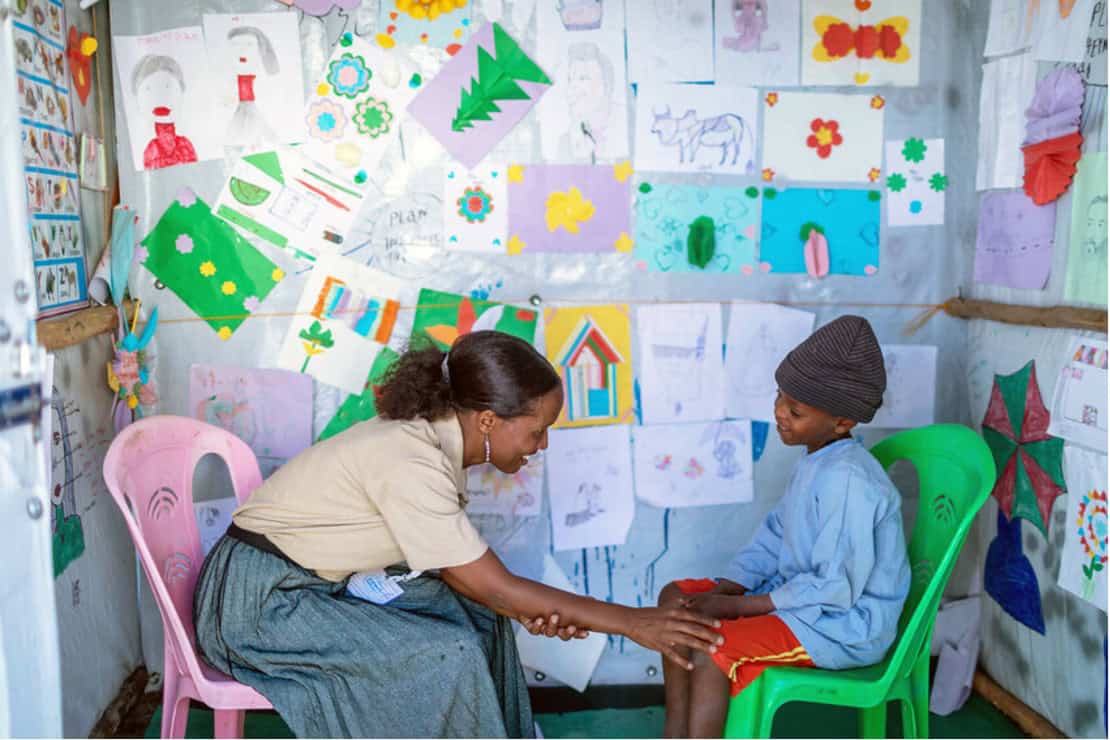
Thanks to past USAID funding, we were able to work alongside our colleagues and partners in Tigray, Ethiopia, to help children who are under severe psychological stress after being forced to flee violence in their homes and settle in temporary housing camps.
Plan International case workers, like Nechi, offer support for children who have been left traumatized by conflict or have social, behavioral or cognitive development issues.
āWhen children first arrive, they often have a variety of issues, both psychological and social, and the majority of them have experienced some kind of trauma,ā Nechi shares. āHowever, things improve when they start to engage in the activities available to them. To begin with, we usually ask the child to draw something. They often draw people with guns, but after a few months, they are drawing things that show optimism and hope.ā

USAID provides the financial support that allows Nechi to counsel a young boy at a child-friendly space within an internally displaced persons camp in Ethiopia. | ©Plan International
Through further evaluation, case workers use a variety of tools to determine how severe a childās psychological condition is and then evaluate the proper treatment plan and care team.
āIām always delighted to see the improvement of the children we are working with,ā Nechi says. āChildren who were once under stress now feel relief and hope.ā
This program in Ethiopia is only one example of the many different types of programs and services we are able to offer to thousands of the worldās most vulnerable children thanks to the financial support of foreign aid.
The challenges children face ā violence, homelessness, hunger and inequality ā unfortunately, have not paused ⦠and neither will we.
Right now, we need to continue providing lifesaving care to children who still deserve a fair chance at a good life. Please give today to ensure our efforts can continue, no matter the circumstances.
We see ourselves as one global community. In more than 80 countries around the world, including in the U.S., we work with children, communities, governments and partners to give girls and boys the resources and support they need to overcome the most difficult challenges and build brighter futures. We must rally together to continue to support our children all over the world who still need us ⦠now more than ever.
Thank you for standing beside children ā and Plan ā until we are all equal.
This story is made possible by the support of the American people through the United States Agency for International Development (USAID). The contents are the sole responsibility of Plan International and do not necessarily reflect the views of USAID or the United States Government.
- Blog
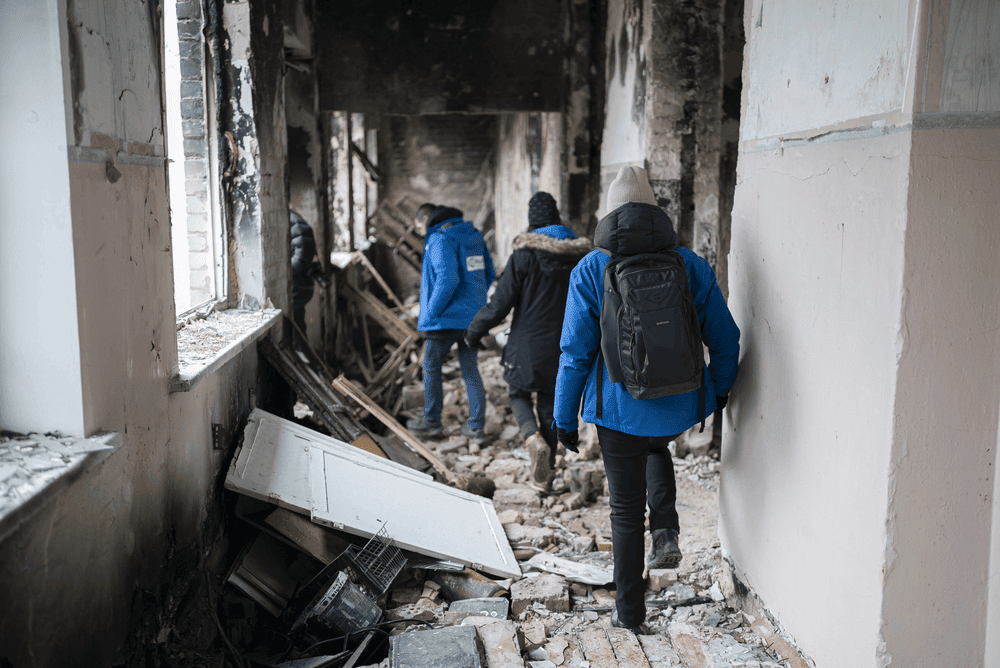
Three years have passed since the escalation of the war in Ukraine ā a conflict that has shattered lives and displaced millions. While the damage to buildings is visible, there are also hidden wounds in childrenās minds.

Plan staff walk through the hallways of a school in Ukraine to assess the damage from an explosion. | Albina Vinar, ©Plan International
Since 2022, almost 3 million children from Ukraine have needed humanitarian assistance, with many forced to flee their homes. The impact has been devastating, with many children taking on adult responsibilities, dropping out of school and facing social isolation.
āDisruptions to education mean children are not only missing out on learning ā they are losing vital opportunities to socialize, express themselves and process the trauma they are enduring,ā Sven Coppens, Plan Internationalās director of the East and Central Europe Ukraine Humanitarian Crisis Response, says. āThis is an emergency for their mental health and future prospects.ā
Play isn’t just fun and games; in times of trouble, play can be a powerful way for kids to heal.
āPlay is how children make sense of their world,ā Penny Wilson, author of The Playwork Primer, says. āPlay is how children process their experiences.ā
It gives them a safe way to deal with negative emotions and start to feel better. For kids in conflict, play can help them feel a semblance of normalcy. Plan understands this and is creating opportunities for play in Ukraine and the surrounding countries where we work.

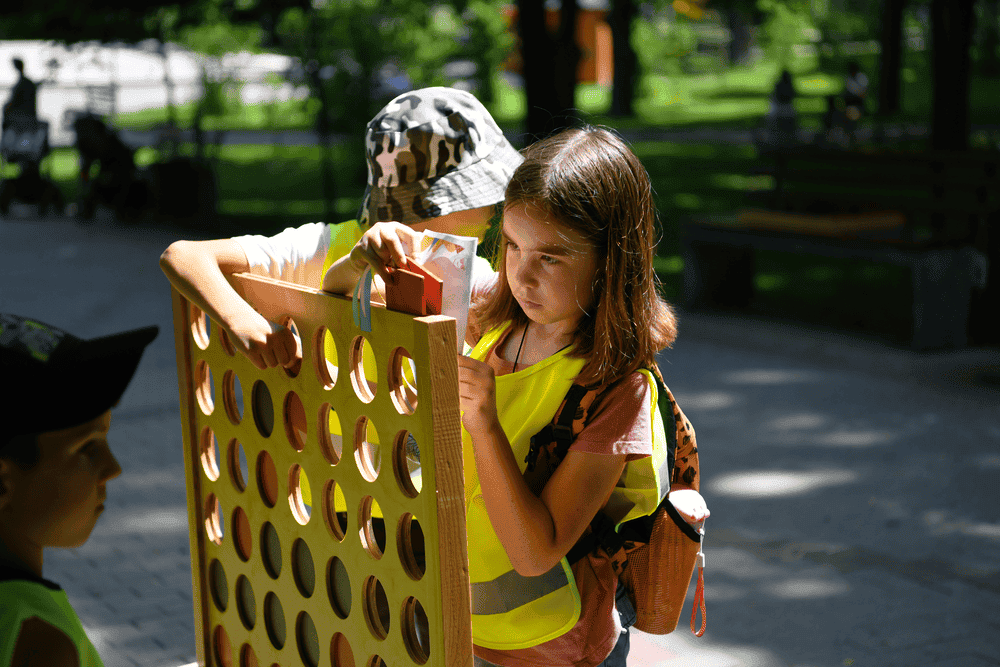
A girl in Moldova plays games at a child-friendly space hosted by Plan and a local partner to mark the first Internatioanl Day of Play in 2024. | ©Plan International
āAs a refugee girl, I always struggled to connect with my peers, especially when I was in a different country,ā 11-year-old Alina says. āWhen we play, we can learn different things from each other, and most importantly, we can share what worries or excites us.ā
Since 2022, Plan has teamed up with local groups to run different play programs in Ukraine, Moldova, Romania and Poland. One example is the Ludobus, which is run by a local Plan partner organization in Moldova. These mobile play buses bring fun and learning to refugee children.

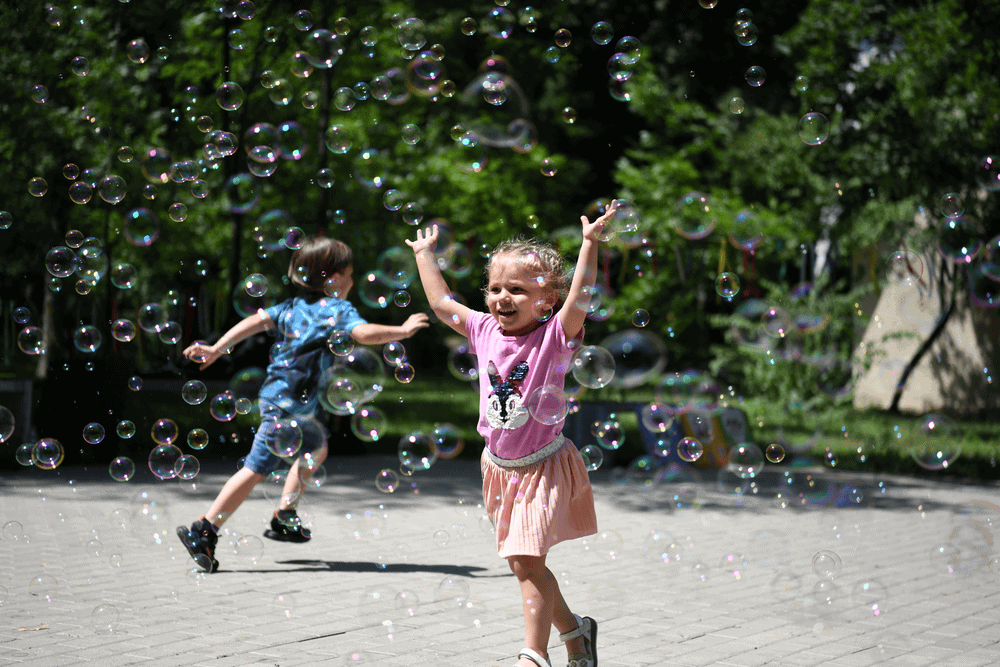
The Ludobus activities brought out more than 200 children and their families to play games, blow bubbles and connect with their community. | ©Plan International
āI come here [to the Ludobus activity] because I feel happy here,ā 7-year-old Danya, a refugee boy from southern Ukraine, says. āI dance, I sing and there is music. We play football, but my favorite activity is drawing.ā
Like Danya, other children feel like the Ludobus is a place where they can leave their worries behind.
āWhen I play, I feel brave, I feel I can do anything,ā 9-year-old Boris, who has lived in Moldova for over two years, says. āI love it when the Ludobus comes to visit us. We can all get together with other children and get to know each other.ā
As the war continues and more kids are forced to leave their homes, Plan is creating special play places in refugee centers and community spaces. These places are designed to help kids learn and heal through play. They help children become more resilient and support their emotional and social development.

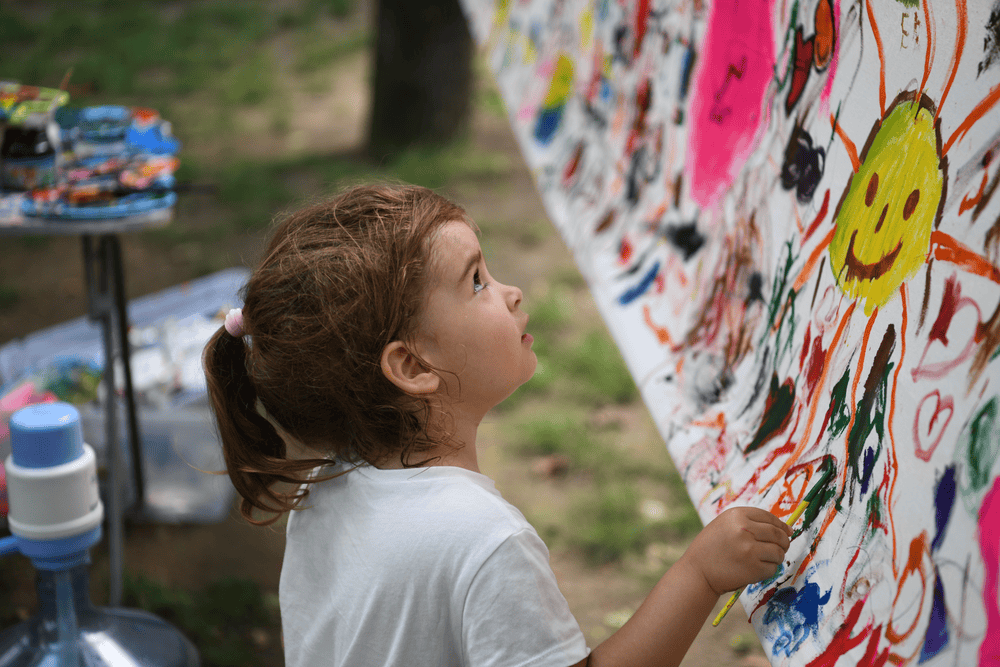
Children painted symbols of hope and togetherness at the Ludobus. | ©Plan Internationa
āAt Plan, we prioritize the holistic wellbeing of children and young people affected by the war in Ukraine by integrating play-based learning into our programming,ā Lucy Strickland, education in emergencies specialist, says. āPlay is so much more than a recreational activity; it’s an integral component that complements education, child protection, mental health and psychosocial support initiatives.ā
These safe spaces help kids feel like they belong and give them hope.
People in and around Ukraine still need help, including almost two million children. Supporting education, mental health and protection programs is key to helping them recover. For these children, play is more important than ever; it’s how they heal, how they get their childhood back and how they begin to build a better tomorrow.
- Blog
As a child growing up in Haiti, Vixony participated in Plan Internationalās sponsorship program for nearly a decade. Today, he lives in the U.S., where he works as a psychiatric mental health nurse practitioner ā and he sponsors a child through Plan. Here, Vixony shares the inspiring story of how sponsorship transformed his life, and why itās so important to pay it forward.
I was 6 years old when I became a sponsored child, and I was sponsored for 9 years.
Before joining Plan International, I struggled to afford school supplies. Through their support, I received the necessary materials which allowed me to focus on my studies. The program connected me with a local school that had qualified teachers and a supportive learning environment, which significantly improved my academic performance.
The mentorship I received from Plan staff encouraged me to set higher academic goals and believe in my potential. Also, we had the opportunity to participate in workshops and community activities, and that helped me develop my public speaking skills, which boosted my confidence significantly.
I learned valuable life skills such as leadership and teamwork through group projects organized by Plan, which taught me the importance of collaboration. Being part of Plan made me more aware of the challenges faced by children in my community, inspiring me to advocate for their rights and needs.
I corresponded with my sponsor regularly through letters. Each letter was a source of motivation and connection, helping me feel supported in my educational journey. I shared my school progress, dreams and even my family life. In return, my sponsor shared their experiences and encouraged me to keep striving for my goals.
My relationship with my sponsor was a pivotal part of my journey as a sponsored child. Knowing that someone believed in me and was invested in my future gave me the confidence to pursue my studies with determination. Their words of encouragement were like a guiding light during challenging times. This gave me a sense of connection that made me feel less alone. It was comforting to know that someone far away cared about my well-being and success.
A special message for my sponsor
Dear Michele, I would like to take a moment to express my deepest gratitude for the incredible support you provided during my time as a sponsored child. Your encouragement and belief in my potential not only helped me receive an education but also instilled in me the confidence to dream bigger.
I remember how your letters inspired me during challenging times, reminding me that I was not alone in my journey. It made me feel valued and motivated, knowing that someone cared about my future.
I completed a nursing program in Haiti, then later moved to the U.S. in 2017, where I am still pursuing my career in nursing. I just graduated and became a psychiatric mental health nurse practitioner in the United States. Your belief in me played a crucial role in my success.

Vixony now lives in the U.S., where he works as a nurse practitioner and sponsors a child of his own through Plan.
One day, not too long ago, a representative stopped me at a neighborhood store to talk about Plan. I took the time to talk to him and decided to become a sponsor immediately. I finally told him I had been a sponsored child after completing the whole registration process.
My personal experience as a sponsored child has profoundly influenced my approach to sponsorship. I am committed to being a supportive and engaged sponsor, ensuring that I contribute to creating opportunities for future generations, just as I was given the chance to thrive.
I introduced myself to my sponsored child and shared about my family and interests. Receiving his reply was incredibly touching. He wrote about his dream to become a teacher, and how excited he is to be in school. He reminded me of my own aspirations as a child.
To anyone considering sponsoring a child, I want to share how transformative this experience can be, not just for the child, but for you as well. Your sponsorship has the power to change lives and create a ripple effect of positive change in communities.
The joy and fulfillment of knowing that you are directly contributing to a child’s future is indescribable. The letters you receive in return will warm your heart and remind you of the powerful connection you share.
I share my story to highlight the importance of sponsorship. I want to inspire more people to take actions, knowing that their support can change lives.
- Blog
February is Donor Love Month here at Plan International ā a time to celebrate the appreciation we have for our incredible supporters who are the heart of our organization. Without your support, none of our work would be possible.
Today, weāre highlighting a dedicated sponsor named Sue from Washington who is crafting unique connections with her sponsored children around the world.
Sue first became a sponsor when she was in her mid-20s, sponsoring a child from Nepal. At that time, our name was Foster Parents Plan. She went on to sponsor girls and boys from Sri Lanka and Indonesia.
āI loved getting responses back from them, and because it was pre-internet, it was black and white photos and hand typed letters on lightweight āair mailā stationery,ā Sue shares. āI had no children of my own, then and now, so I had the time to dedicate to corresponding with them.ā
After retiring, Sue reconnected with Plan. This time, she wanted to do even more ā she now sponsors over a dozen girls ranging in age from 2 to 14, from all over the world.

Sue sponsors more than a dozen girls from around the world.
āI made the recent decision to do as much good as possible to bring a small bit of hope and joy to girls in places where itās sorely needed,ā Sue says. āIāve added more children as Iāve watched the world become harsher and more difficult for so many. With climate change, political instability, post-pandemic issues, wars and hunger rampant in the world, I wanted to be a tiny part of the solution rather than a deer in the headlights.ā
For Sue, the personal connection is still the most rewarding part of sponsorship, and she looks forward to receiving letters and photos from her sponsored children.
āAlso, when I write to them and especially when I make something for them, it fills me with joy and a sense of purpose,ā Sue says.
Sue started creating small homemade dolls to send to her sponsored children, each one uniquely designed with a particular child in mind. āI also make clothespin dolls, friendship bracelets, knitted tiny purses and little zippered pouches,ā she says. āMost everything is made from recycled, upcycled and repurposed materials.ā

Sue loves to make homemade gifts for her sponsored children, including rag dolls (left) and clothespin dolls.
Sue loved this creative outlet so much that she even created her own Etsy store. But the gifts that she makes for her sponsored children have a special place in her heart.
āI’m an artist and a crafter so it’s fun to make little gifts that bring joy,ā Sue says.

Sue makes other homemade gifts for her sponsored children, like small knitted purses and friendship bracelets.
When you sponsor a child, you have the opportunity to develop a meaningful connection with a determined girl or boy, while helping to improve the community and resources surrounding them. And, you join a global community of a million sponsors working together to create a brighter future.
This February, we celebrate sponsors like Sue, who make this critical work possible. Thank you for all that you do. Together, we wonāt stop fighting until weāre all equal.